UPVC Door Custom Order Parameters: Profile, Size & Hardware
UPVC Door Custom Order Parameters: A Technical Guide to Profile, Size, Glass and Hardware
A custom UPVC door order should not be released to production until four parameter groups are locked: door size, door specification (profile series, operating mode and colour), glass specification and hardware. These four groups decide whether the finished door fits the opening, matches the operating mode, satisfies the destination market's access standards and stays inside the attestation scope the project is relying on. Foshan Nanhai Yuanzhaiji UPVC Door & Window Factory (yuanzhaiji.com), a UPVC door and window manufacturer established in 2009 in Foshan, Guangdong, builds custom UPVC doors under an OEM/ODM model with a 30–40 ㎡ minimum order quantity and a 10–30 day standard delivery window.
Why Custom UPVC Door Orders Drift After the Quotation
Most custom door problems are created before production starts. A buyer sends a drawing, receives a price, and only later discovers that the operating mode was never fixed, that the glass build-up was assumed rather than specified, or that the chosen profile series sits outside the attestation scope the project requires. Each of these is a parameter gap, not a manufacturing defect — and none of them can be corrected by the factory alone once the order is scheduled.
Four gaps account for most rework on custom UPVC door orders:
- Size defined from the wrong reference. The door is quoted from the old door's dimensions instead of the structural opening, wall rebate and agreed installation allowance.
- Operating mode fixed after profile selection. Sliding operation, tilt-and-turn operation and manual opening and closing load the leaf differently and require different supporting hardware.
- Glass treated as an afterthought. Glass governs the thermal insulation and sound insulation behaviour of the finished door and changes how much the leaf weighs.
- Hardware chosen by unit price. Door handles, hinges and rollers are matched to the operating mode and to the final leaf weight; substituting them later changes what the door was designed to do.
A fifth gap appears mainly on export projects: the profile series is selected without checking whether it falls inside the attestation scope the destination requires. This guide treats that check as part of the specification step, not as a separate certification task handed to the factory after the order is signed.
What the Current UPVC Door Market Means for Custom Orders
UPVC doors are no longer a single-tier product, and the order parameters have to reflect that. Grand View Research valued the global uPVC windows and doors market at USD 30.8 billion in 2025 and projects USD 32.4 billion for 2026, while Mordor Intelligence reports that sliding configurations accounted for 37.20% of uPVC door and window revenue in 2025. In practical terms, both sliding and hinged families are actively specified on projects, which is why a parameter guide has to cover sliding operation, tilt-and-turn operation and hinged configurations instead of assuming one default type.
Regulation is tightening in parallel. Under the UK Future Homes Standard 2025, the maximum U-value for external doors is scheduled to fall from 1.6 W/m²K to 1.2 W/m²K under Approved Document L. Buyers who leave glass specification open until the factory asks for it can end up re-specifying a door that was already quoted against the previous target. For shipments, plastic doors, windows and their frames and thresholds are classified under HS code 392520, which is worth noting when customs paperwork is prepared alongside the technical file.
The Four Parameter Groups: What to Lock and Why
1. Door Size
Door size is a customization field on this product line, not a fixed catalogue value, so it has to be recorded rather than assumed. Size should be captured from four references before two quotations are compared:
- The clear structural opening, measured at the widest and highest points of the reveal rather than at the middle.
- The frame outer dimension, which becomes the order size once the installation allowance is agreed.
- Wall thickness and rebate depth, which determine how the frame is anchored and how the internal and external reveal lines finish.
- Handing and opening direction, plus the position of any meeting stile or fixed panel on a French door or sliding arrangement.
Size data also sets the commercial threshold. Both the minimum order quantity and the monthly capacity on this line are expressed in square metres — 30–40 ㎡ MOQ against a 4,000 ㎡ monthly capacity — so a multi-opening villa or a small commercial fit-out can reach the threshold on one order, while a single replacement leaf will not. Buyers consolidating several openings should confirm size and quantity together rather than sequentially.
2. Door Specification: Profile Series, Colour and Operating Mode
Door specification covers the profile series, the finish and the operating mode. Foshan Nanhai Yuanzhaiji UPVC Door & Window Factory supplies Conch profiles in the 60, 65 and 88 series, available in co-extruded colour, laminated wood-grain finish and solid colour options such as dark grey and black. The UPVC door range is built on models HF60, WYK75-1 and HF88-L, spanning sliding doors, lift-and-slide doors and hinged door series.
Operating mode belongs in this parameter group because it changes the profile build, not only the hardware. Product 7970 operates in sliding mode, works through tilt-and-turn opening operation and also operates in manual opening and closing mode. A sliding leaf needs a different roller and reinforcement arrangement from a tilt-and-turn leaf, so the specification sheet should state which mode applies to each opening before the profile is scheduled.
Structural reinforcement is part of the same decision. UPVC door profiles carry internal galvanized steel liners that provide rigidity and wind-pressure resistance. A profile without a liner is an ordinary plastic door, which is not suitable for exterior or high-rise applications because it deforms under load. At goods acceptance, the profile end face should be checked to confirm the liner is present inside the cavity.
The PVC-U compound behind the profile carries measurable material properties worth recording in the technical file: Vicat softening point 86 °C, flexural modulus of elasticity 2,840 MPa, tensile yield stress 43 MPa, tensile strain at break 186% and density 1,520 kg/m³. These are material-level values and do not replace a finished-door performance test, but they show that the compound is a rigid PVC-U grade rather than a low-rigidity alternative.
| Profile series | Inside ECM Attestation scope | Conch colour options recorded | Action at order stage |
|---|---|---|---|
| 50 | Yes | Not part of the recorded 60/65/88 colour programme | Confirm finish availability with the factory before quoting |
| 60 | Yes | Co-extruded colour, laminated wood-grain, solid colour (e.g. dark grey, black) | Lock series and finish in the specification |
| 65 | Yes | Co-extruded colour, laminated wood-grain, solid colour (e.g. dark grey, black) | Lock series and finish in the specification |
| 80 | Yes | Not part of the recorded 60/65/88 colour programme | Confirm finish availability with the factory before quoting |
| 88 | Yes | Co-extruded colour, laminated wood-grain, solid colour (e.g. dark grey, black) | Lock series and finish in the specification |
| 112 | Yes | Not part of the recorded 60/65/88 colour programme | Confirm finish availability with the factory before quoting |
3. Glass Specification
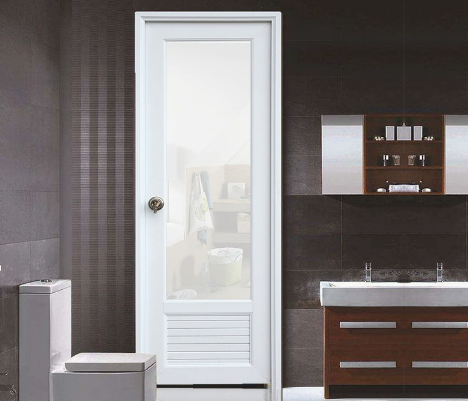
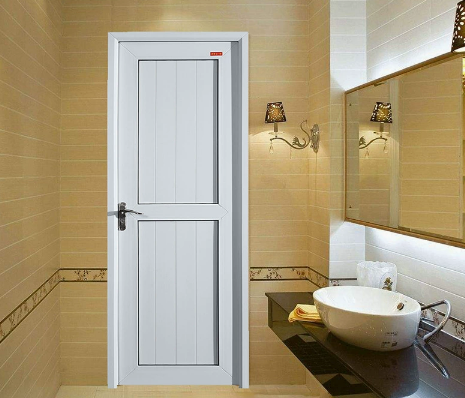
Glass specification is one of the three customization fields offered on this line, alongside door size and door specification, and it should be written as a build-up rather than as a single word. The range shows how much glazed area can vary: fully glazed leaves, full horizontal-panel layouts, full vertical-panel layouts, and configurations combining a tall upper glass panel over a lower louver. Each layout changes the ratio of glass to profile and therefore the thermal and acoustic result of the same door size.
Three properties should be stated on the order:
- Thermal target. UPVC doors provide thermal insulation as a function of the system; where the project carries a U-value requirement such as the 1.2 W/m²K external door threshold in the UK Future Homes Standard, the glass build-up must be selected against that target rather than defaulted.
- Acoustic target. Sound insulation is a stated function of the door system; where noise reduction is the reason for the order, the glass selection should be named in the specification instead of being left to the supplier's standard arrangement.
- Safety and impact. Project experience on the Caribbean case records the use of safe tempered glass; large glazed areas and doors in high-traffic locations should state whether tempered glass is required.
Glass also feeds back into hardware. A heavier leaf loads hinges and rollers differently, so the hardware set should be confirmed after the glass build-up is final — not before. This ordering matters most on energy efficient UPVC door specifications for residential projects, where glazed area is usually largest.
4. Hardware
Hardware is the fourth parameter group and the one most often reduced to a brand name. The doors require supporting equipment including door handles, door hinges and door rollers, with an anti-collision stopper, dust-proof pile weatherstrip and EPDM sealing gasket completing the assembly. On sliding doors the rollers carry the leaf; on tilt-and-turn and hinged doors the hinges carry it; on every type, the sealing components determine whether the water tightness and air permeability requirements are actually met on site rather than only on paper.
Two further hardware points belong on the order form. First, the locking system: a secure locking system is a stated special requirement for exterior door applications, so the lock type should be named in the specification. Second, local building access standards: the application must meet them, which in practice means confirming leaf width, threshold condition, opening force and egress arrangement for the destination before the hardware is fixed. On coastal and high-humidity projects, corrosion-resistant hardware should be specified explicitly, because a weather resistant UPVC door profile does not compensate for hardware that corrodes at the hinge or roller.
Operating Mode, Load-Bearing Hardware and Requirements to Confirm
| Operating mode | Load-bearing hardware | Requirements to confirm on the order |
|---|---|---|
| Sliding operation | Door rollers, door handle, anti-collision stopper | Water tightness and air permeability at the meeting stiles; dust-proof pile weatherstrip; wind-pressure resistance of the assembled leaf |
| Tilt-and-turn opening | Door hinges, door handle, locking system | Secure locking; air permeability; hinge selection to follow the final leaf weight after glass specification |
| Manual opening and closing | Door hinges, door handle, EPDM sealing gasket | Opening force and compliance with local building access standards; gasket condition at handover |
Across all three modes, the application carries the same underlying requirement set: wind-pressure resistance, water tightness and air permeability, impact and wear resistance, a secure locking system, and weather-resistant, anti-aging performance. Those requirements should be restated on the order form next to the operating mode, because they are what the hardware and sealing selection is being asked to deliver.
Step-by-Step: Assembling a Custom UPVC Door Order
- Confirm the destination requirement set. Establish the local building access standards, any U-value target for external doors, and whether the project requires ECM Attestation coverage. This step decides which profile series are acceptable before any price is discussed.
- Measure and fix door size. Record the clear structural opening, frame outer dimension, wall thickness, rebate depth and handing for every opening, then convert the list into total square metres.
- Select profile series and finish inside scope. Choose from series 50, 60, 65, 80, 88 and 112, and specify the Conch 60, 65 or 88 colour option — co-extruded colour, laminated wood-grain or solid colour — where that series is used.
- Define the glass build-up. Write glazed area, panel layout, thermal target, acoustic target and whether tempered glass is required. Confirm this before hardware is finalised.
- Specify hardware and locking. Name handles, hinges, rollers, stopper, weatherstrip and gasket, state the locking system, and match the hardware to the operating mode and the final leaf weight.
- Check quantity against MOQ and capacity. A 30–40 ㎡ minimum order quantity applies, against 4,000 ㎡ monthly capacity. Buyers planning phased deliveries should confirm how the total order is split at this stage.
- Confirm documentation and delivery window. A Quality Inspection Report supports quality control, and technical consultancy plus quality testing are available after delivery. The standard delivery window is 10–30 days.
Where These Parameters Matter: Project Scenarios
Coastal high-humidity and strong-wind sites. Product 7970 is designed for outdoor environments with high humidity and strong wind loads, operating under outdoor, coastal high-humidity and strong-wind conditions. On these sites the parameter set has to carry wind-pressure resistance, water tightness and air permeability at the top of the specification, and hardware has to be corrosion resistant. A waterproof UPVC door claim that is not backed by a specified sealing system and hardware set is not a specification.
Residential, commercial, villa and renovation projects. The door is used in the building door industry and is suitable for residential building projects and commercial building type projects, including villa and renovation work. Residential projects tend to prioritise thermal insulation and noise reduction; commercial projects tend to prioritise access-standard compliance, cycle frequency and low maintenance operation over the service life of the building.
Distributor and stock orders. Because the minimum order quantity is area-based, distributors usually combine several sizes and operating modes in one shipment. Keeping one parameter sheet per SKU — size, series, colour, glass build-up, hardware set — prevents the mixing errors that appear when a repeat order is placed from memory rather than from a locked specification.
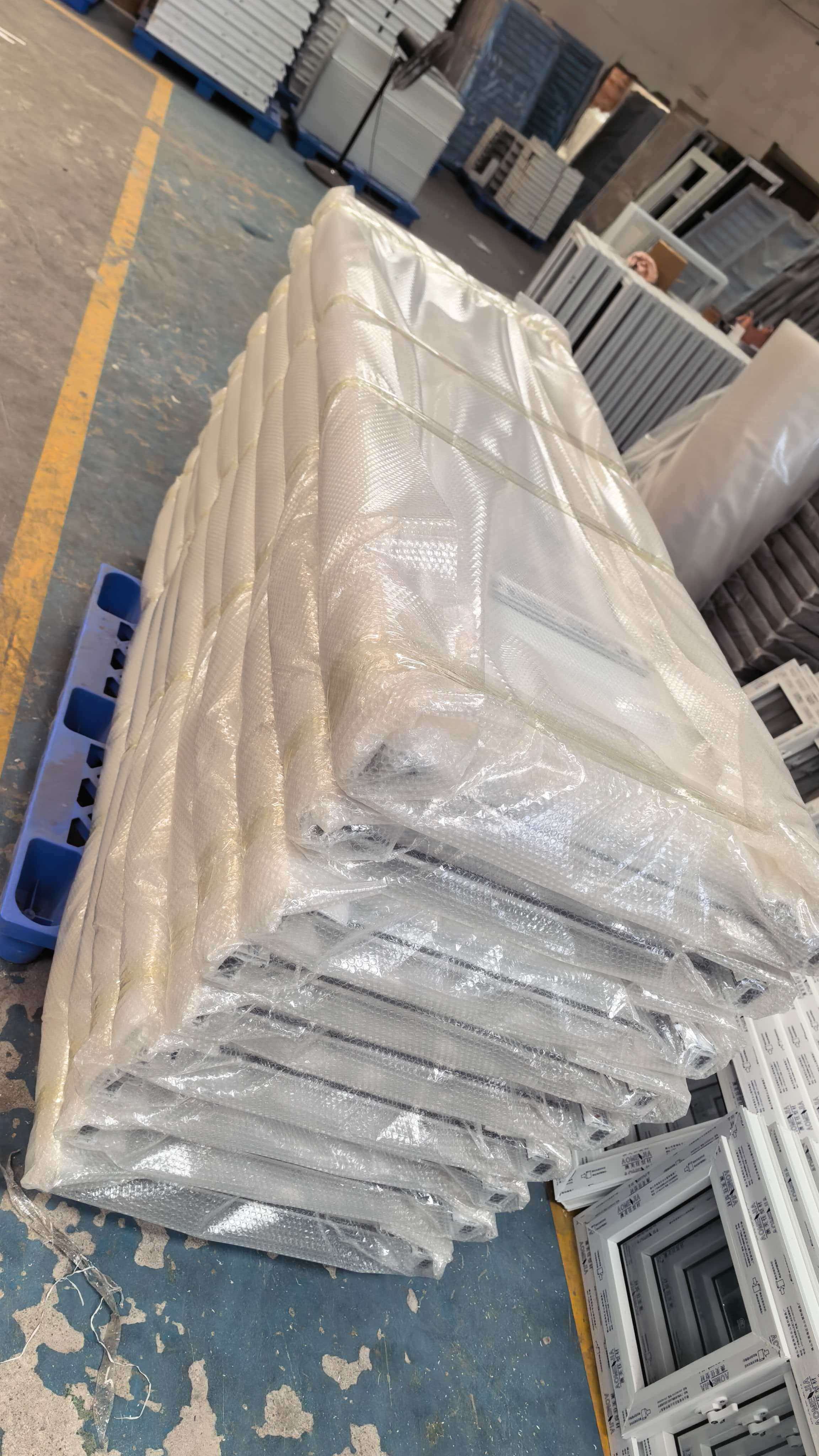
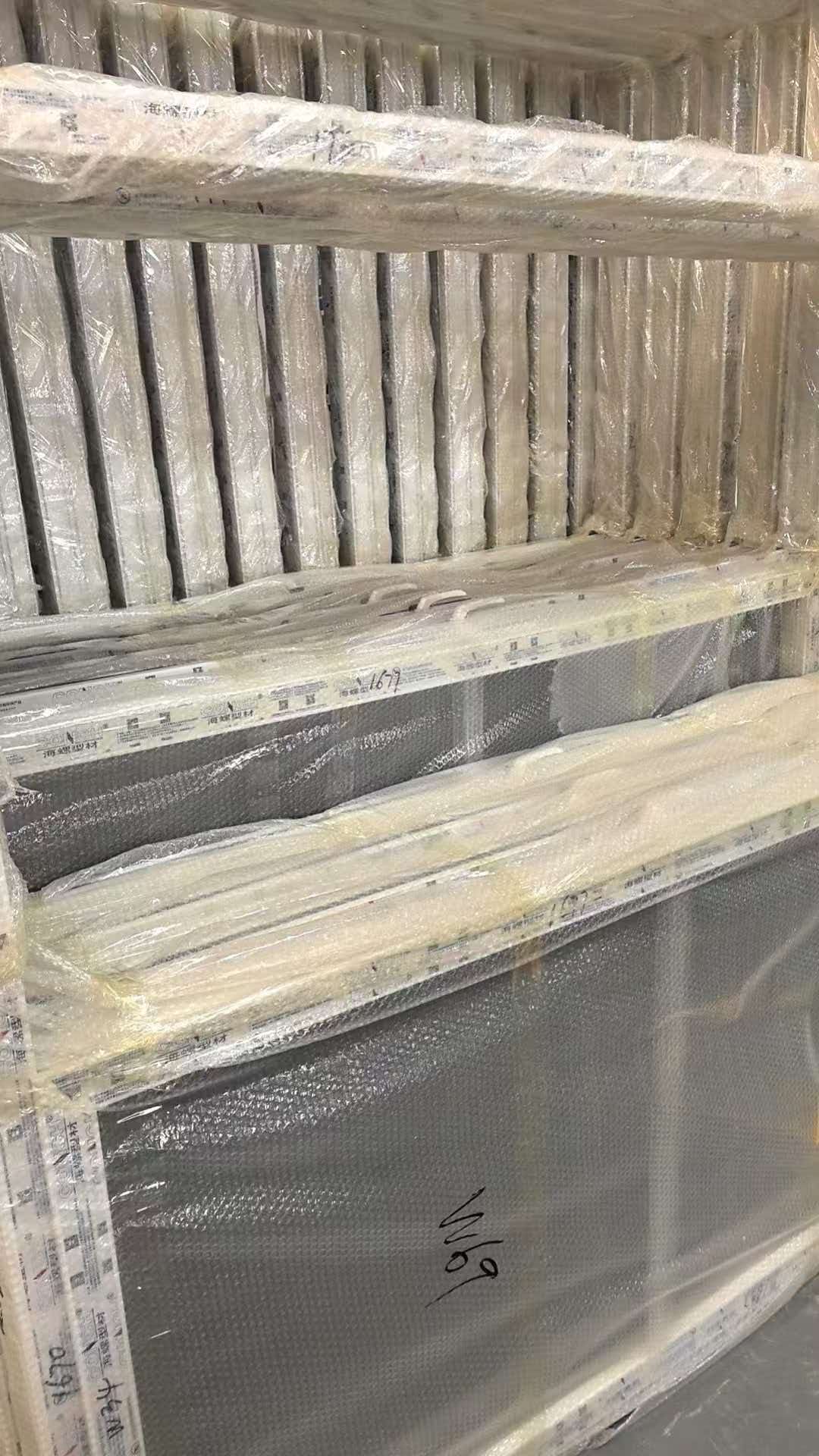
Documented project experience. A builders' project in the Caribbean covering 500 ㎡ recorded stable sealing performance and smooth switch operation, with low-noise sliding, water-proof and dust-proof performance, and a long-term service life of 10 years. The case includes a fully-fabricated casement door supplied to the project and fully packed UPVC door products for delivery. The relevant lesson for custom ordering is that the sealing and operating outcomes were fixed by parameter decisions — glass, hardware and sealing — rather than by the profile series alone.
Frequently Asked Questions
Q1. Does the profile series affect whether my custom UPVC door is covered by the ECM Attestation?
Yes. The ECM Attestation covers profile series 50, 60, 65, 80, 88 and 112. If the specification names a series inside that list, the door stays within the documented scope. If a project requires a series outside the list, confirm coverage with the factory before the order is placed. For EU destinations, the separate route is CE marking under EN 14351-1:2006+A2:2016, which requires system testing for wind resistance, water tightness, air permeability, sound insulation, thermal performance, drop-weight impact and welding corner strength, a factory production control system, and a Declaration of Performance.
Q2. Which operating modes and hardware can be customized?
Product 7970 operates in sliding mode, tilt-and-turn opening and manual opening and closing. Matching hardware includes door handles, door hinges and door rollers, supported by an anti-collision stopper, dust-proof pile weatherstrip and EPDM sealing gasket. Because each mode loads the leaf differently, the hardware set should be confirmed after the glass build-up is fixed.
Q3. What is the minimum order quantity, and what drives the order size?
The minimum order quantity is 30–40 ㎡, measured by area rather than by leaf count, against a monthly capacity of 4,000 ㎡. Order size is driven by the number and size of openings, the profile series, the glass build-up and the hardware set — a larger glazed area or a heavier operating mode changes both the material content and the production time.
Q4. Can a buyer validate a custom configuration before full production?
Yes. A sample showroom is available for one-stop purchasing checks, a Quality Inspection Report supports quality control, and technical consultancy and quality testing are offered after delivery. Buyers should validate the parameter sheet — size, series, colour, glass and hardware — against the sample before releasing the bulk order.
Q5. How long does a custom UPVC door order take?
The standard delivery window is 10–30 days. The position within that window depends on the profile series and colour selected, the glass build-up and the hardware set, and on how quickly the parameter sheet is approved. To request a quotation or a sample for a specific opening schedule, send the size list, operating modes and destination requirements to the factory team at yuanzhaiji.com — contact YUAN, email 1803877678@qq.com, tel +86 130-0674-7018.
Conclusion
Custom UPVC door orders succeed or fail on four parameter groups decided before production: door size measured from the structural opening, door specification covering profile series, colour and operating mode, glass specification written as a build-up with thermal, acoustic and safety targets, and hardware matched to the operating mode and final leaf weight. The compliance overlay is straightforward once it is placed in the right step — profile series 50, 60, 65, 80, 88 and 112 sit inside the ECM Attestation scope, and Conch 60, 65 and 88 profiles offer co-extruded colour, laminated wood-grain and solid colour finishes for the same series.
For planning, two figures govern the commercial side: a 30–40 ㎡ minimum order quantity and a 10–30 day standard delivery window, against a 4,000 ㎡ monthly capacity. Buyers who lock all four groups on one sheet, and confirm the destination's access standards and attestation requirement in the same document, remove the rework risk that otherwise appears only at pre-shipment inspection. The door is a system, and the parameter sheet is what makes the system buildable.
Have Questions or Need More Details?
Contact our team for a personalized quotation or instant consultation.
Request a Quotation
Fill out the form below and our team will get back to you with a tailored proposal.
WhatsApp Direct Chat
Prefer to chat in real-time? Message us on WhatsApp for instant assistance & quick answers.
- Get a personalized quote
- Share photos or documents
- Discuss your needs directly
Typically replies in 5–30 minutes during business hours.