
UPVC Door Guide: Balcony, Terrace and Patio Access for Export Projects
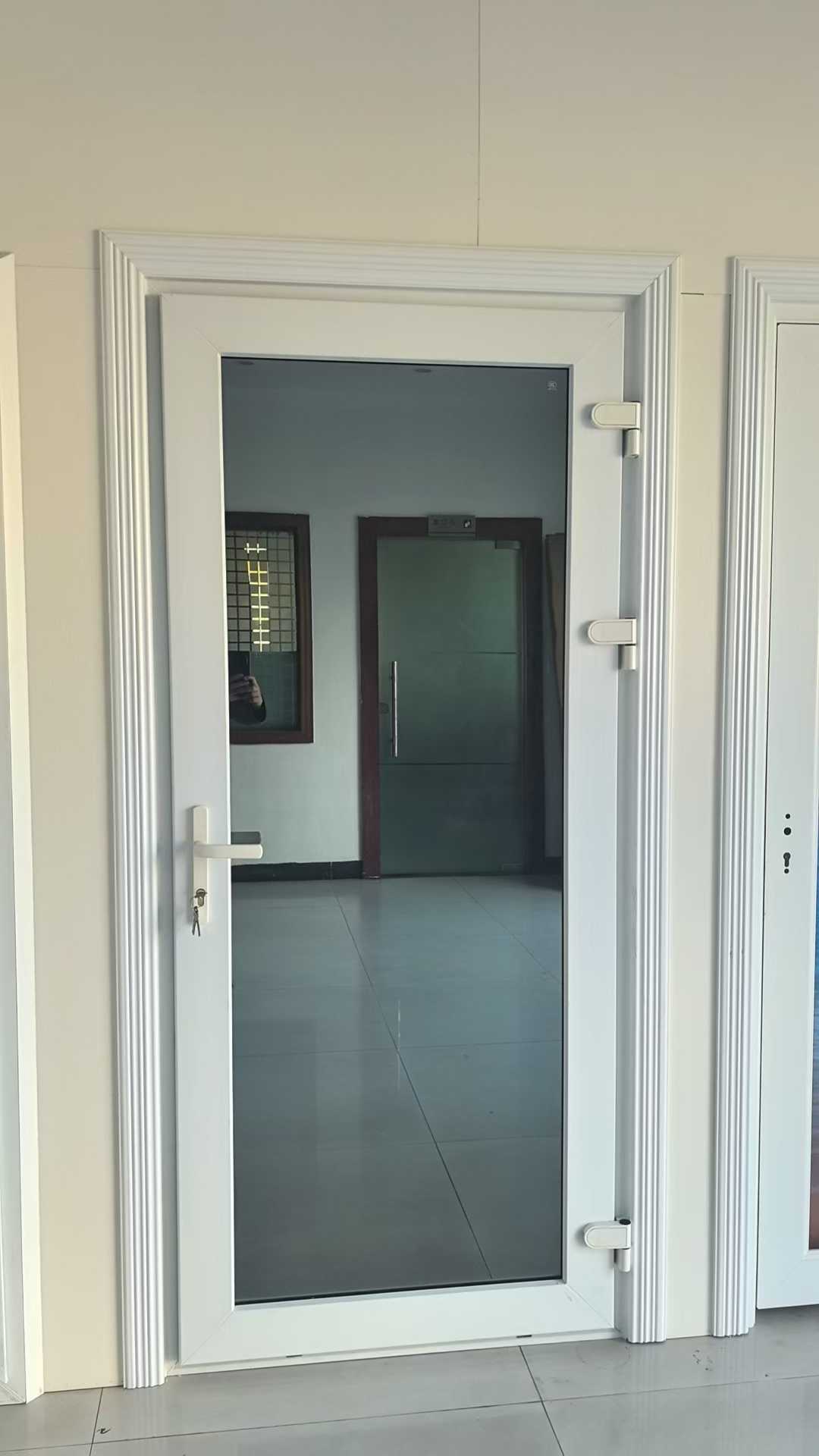
A balcony, terrace or patio door is specified twice in an export project: once as a product — configuration, hardware, performance — and once as an access route, meaning how people step through the opening and which local building access standard the door must satisfy. A package that answers only the first question still fails at handover.
This guide explains how buyers can adapt UPVC door packages from Foshan Nanhai Yuanzhaiji UPVC Door & Window Factory, a UPVC door and window manufacturer established in 2009, for those three access routes. Product 7970 (models HF60, WYK75-1 and HF88-L) is the reference product because the supplied application data covers its operation modes, supporting hardware and performance requirements directly.
The short version. Where a swinging leaf would obstruct the walking route, a sliding configuration is commonly the practical choice, and sliding operation is one of Product 7970's documented modes. Where a full opening leaf and a ventilation position matter more than footprint, a tilt-and-turn or hinged casement leaf is the alternative. Either way, the package must include door handles, door hinges and door rollers as required, plus the sealing items, and must satisfy wind-pressure resistance, water tightness and air permeability while meeting the local building access standard for the project.
Why balcony, terrace and patio openings need their own specification
The three access routes share a working condition that interior doors never meet. The supplied application data describes Product 7970 as designed for outdoor environments with high humidity and strong wind loads, operating under outdoor, coastal high-humidity and strong-wind conditions.
In that environment the door is asked to do two jobs at once: resist wind and rain, and provide thermal insulation and sound insulation for the indoor environment. Everything else in the specification follows from those two jobs.
The same data lists the requirements that then apply — wind-pressure resistance, water tightness and air permeability; impact and wear resistance; a secure locking system; weather-resistant and anti-aging behaviour; and compliance with local building access standards.
Note what the list does not say. None of these properties belongs to the profile alone. Wind pressure is measured on the assembled door; water tightness depends on the threshold and drainage as much as on the leaf; air permeability depends on the seal line and on the hardware that compresses it. That is why a balcony door cannot be ordered by taking a window from the same schedule and changing the frame height.
Market and regulatory background for export buyers
Sliding configurations accounted for 37.20% of uPVC door and window revenue in 2025, according to Mordor Intelligence. For a project buyer the useful reading is this: sliding is a mainstream configuration in the category, so where an alternative is specified for a particular opening, the reason should be documented for that opening rather than applied across the elevation.
Market scale sets the context but not the decision. Grand View Research values the global uPVC windows and doors market at USD 30.8 billion in 2025, with a projected USD 32.4 billion for 2026. Volume at that level means specification errors on export projects are rarely about availability; they are about fit.
Two regulatory details change the paperwork. First, plastic doors, windows and their frames and thresholds sit under HS code 392520 in the Harmonized Tariff Schedule, so the classification on the commercial invoice, the packing list and the supplier's product description should agree from the quotation stage. Second, thermal performance for external doors is shifting from an adjective to a number: under the UK's Approved Document L / Future Homes Standard, the maximum U-value for external doors is reported to fall from 1.6 W/m²K to 1.2 W/m²K. Where a market publishes a threshold like that, a supplier statement has to be traceable to a test report rather than to a brochure.
Product 7970 at a glance
Product 7970 is a UPVC door available in three models — HF60, WYK75-1 and HF88-L — made from UPVC and intended for construction projects. Its documented operation modes are sliding operation, tilt-and-turn opening, and manual opening and closing.
The published material values are:
- Vicat softening point: 86 °C
- Flexural modulus of elasticity: 2,840 MPa
- Tensile yield stress: 43 MPa
- Tensile strain at break: 186%
- Density: 1,520 kg/m³
These five values are more useful as a comparison tool than as a sales argument. They describe the material the profiles are made from: the temperature at which it begins to soften under test, its stiffness in bending, its behaviour under tension, and its density. They do not state the finished door's thermal transmittance or wind-load rating, which come from testing the assembled product. The practical move is to request the same five values from every shortlisted supplier so the comparison is like-for-like, then request assembled-door test data separately.
The factory's wider door range covers UPVC sliding doors, lift-and-slide doors and hinged doors, plus European and American-style door series, using Conch profiles in the 60, 65 and 88 series with co-extruded colour, laminated wood-grain finish, and solid colours including dark grey and black. That breadth matters on a multi-elevation project: the balcony door, terrace door and patio door can share a finish while using different operating configurations.
Choosing the configuration for the access route
Configuration should be decided per opening, not per project. The question is not which door type is better in general, but which leaf movement keeps the walking route usable at that particular opening, given the outdoor, coastal high-humidity and strong-wind conditions the application data already describes.
| Configuration | How the leaf moves | Hardware named in the data | Access route it commonly suits |
|---|---|---|---|
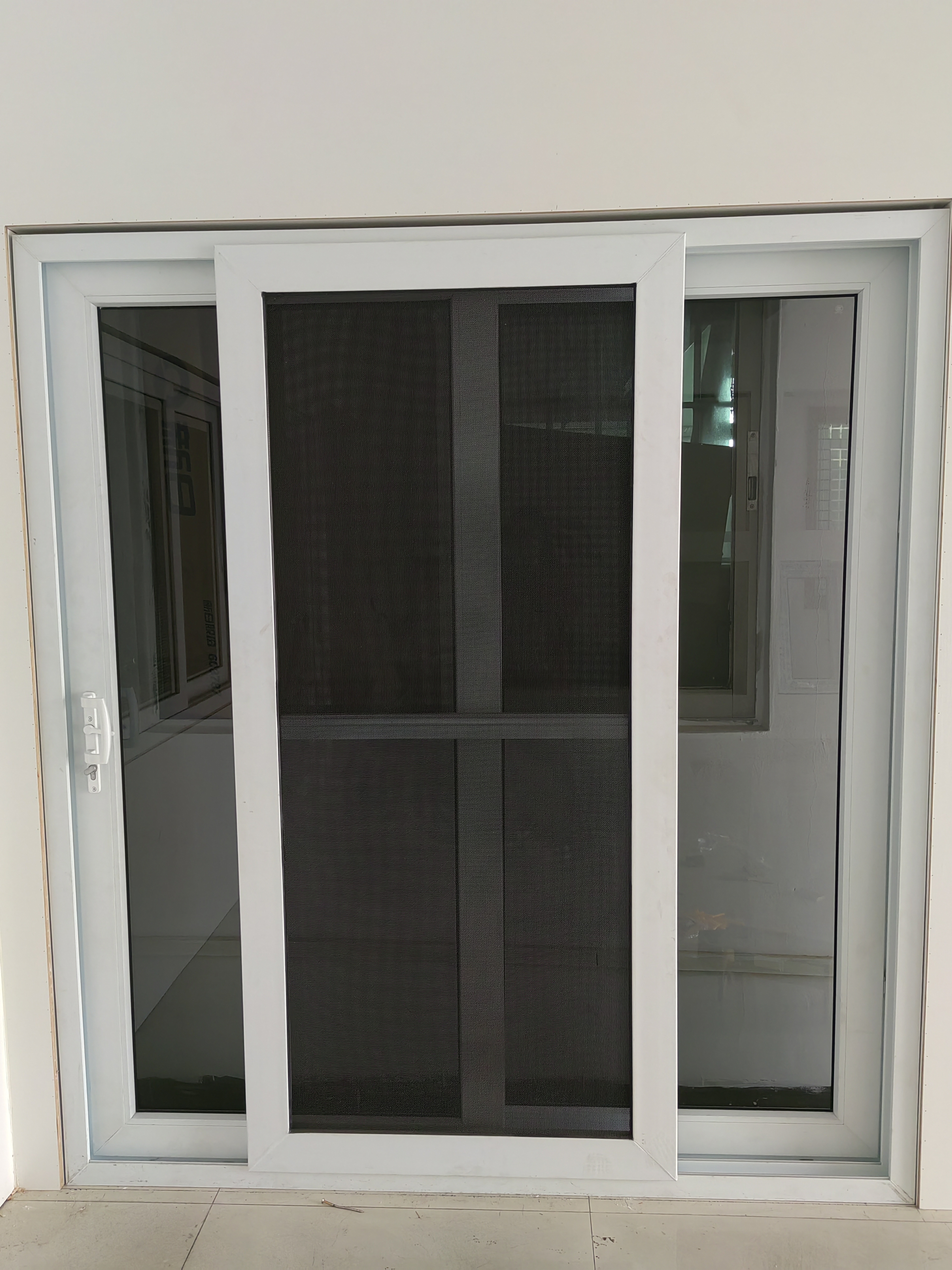
| Sliding | Leaf travels along the frame; sliding operation is a documented mode of Product 7970 | Door rollers, door handle, anti-collision stopper, dust-proof pile weatherstrip, EPDM sealing gasket | Balcony and patio openings where a swinging leaf would obstruct the route |
| Tilt-and-turn / hinged casement | Leaf opens on hinges; tilt-and-turn opening is a documented mode of Product 7970 | Door hinges, door handle, EPDM sealing gasket | Terrace and patio doors where a full opening leaf and a ventilation position are wanted |
| Lift-and-slide | Listed in the factory's door range as a separate series, not as a documented mode of Product 7970 | Confirm with the factory at quotation | Large glazed openings where leaf weight is carried on the track |
Two cautions on that table. The lift-and-slide row is a range-level option, not a Product 7970 operating mode, so treat it as a separate line item to be quoted and confirmed in writing. And a tilt-and-turn leaf only improves on sliding if the opening can accept a swinging leaf without blocking the route — on a narrow balcony that condition often fails.
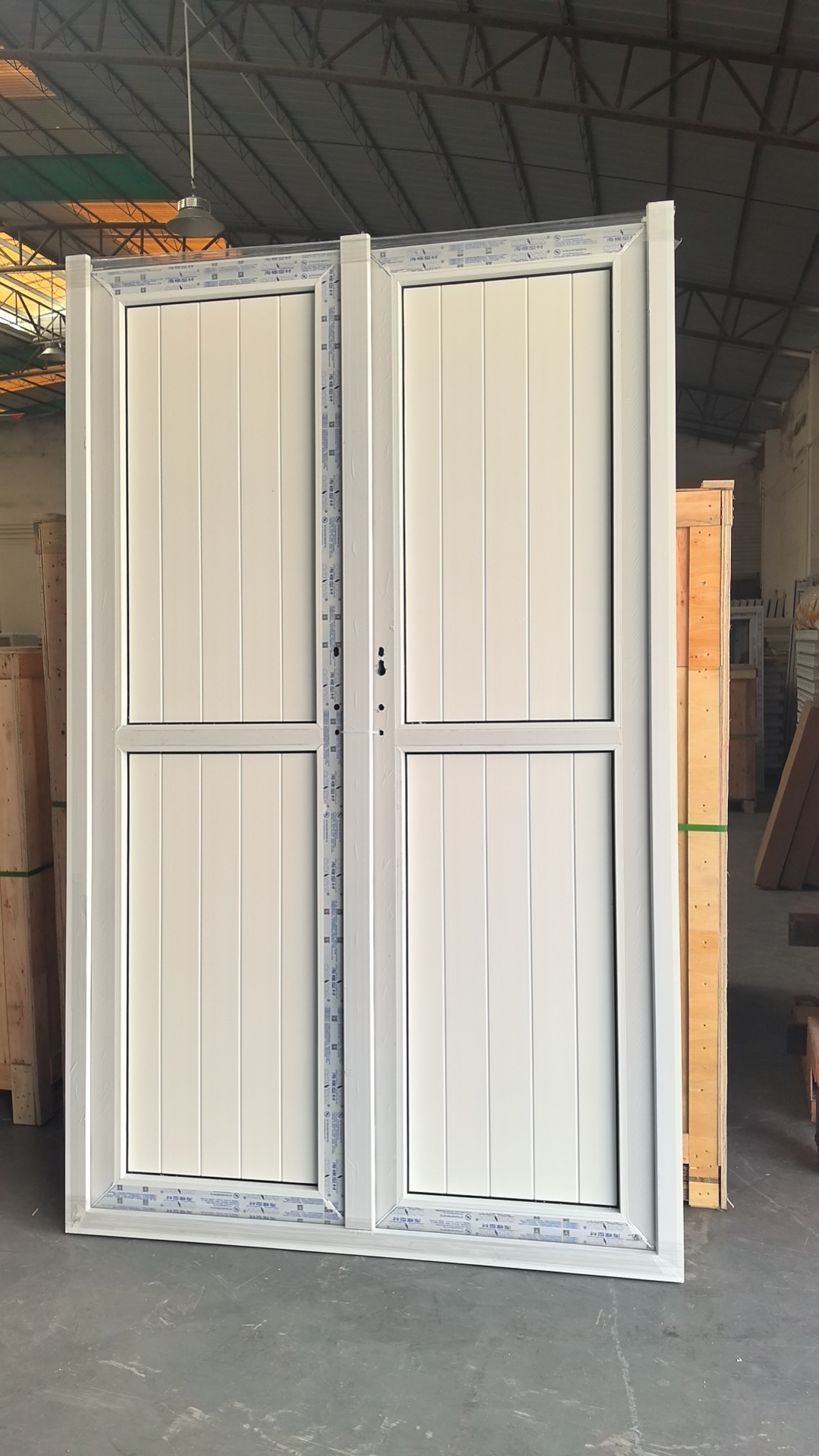
Where the opening is a double-leaf route onto a terrace, a French casement pattern is the conventional form. The factory's 60-series range includes a full vertical-panel French casement door alongside fully-glazed and horizontal-panel casement variants, which lets a project hold a consistent sightline across elevations while varying the leaf pattern.
The hardware set that must travel with the door
Hardware is where balcony door packages most often arrive incomplete. The supplied data names door handles, door hinges and door rollers as required supporting equipment for Product 7970, and names anti-collision stoppers, dust-proof pile weatherstrip and EPDM sealing gaskets in the same application.
Read as a purchase order, that means three roles:
- Leaf movement. Rollers carry the leaf on sliding routes; hinges carry it on hinged and tilt-and-turn routes. Specify the type that matches the configuration actually quoted.
- Operation and security. The handle is the operating interface, and the application data requires a secure locking system in this scenario.
- Sealing. Dust-proof pile weatherstrip and EPDM sealing gaskets form the seal line that water tightness and air permeability depend on; an anti-collision stopper limits leaf travel so the seal is not damaged by over-travel.
Put all of it on one schedule. Hardware bought separately by the buyer is hardware nobody tested together, and on a coastal project the mismatch usually shows up at the seal line rather than at the handle.
Performance requirements to write into the specification
The application data for this scenario lists wind-pressure resistance, water tightness and air permeability as special requirements, together with impact and wear resistance, a secure locking system, weather-resistant and anti-aging behaviour, and compliance with local building access standards. Product 7970 also functions to resist wind and rain and to provide thermal insulation and sound insulation for the indoor environment.
These are the headings to specify under; they are not values. The supplied product data does not publish test figures for the assembled door, so the specification should carry two columns — one for the requirement, one for the evidence the supplier must attach. In practice:
- Request the quality inspection report that accompanies production, which is the factory's documented quality-control output.
- For non-EU projects, request ECM Attestation NO.3N230816.YCPQQ51 and confirm that the project scope is covered by it.
- Where a market publishes a numeric threshold — the UK external door U-value of 1.2 W/m²K is one example — put the number in the specification and require a corresponding test figure instead of accepting a qualitative thermal claim.
Sound insulation deserves identical treatment. A soundproof UPVC door is a specification target, not a material property: noise reduction at a balcony opening depends on the glass build, the seal line, and how firmly the leaf is compressed against the frame. The material density of 1,520 kg/m³ and the sealing items in the hardware schedule both contribute to that behaviour, but the reduction figure has to come from a test on the assembled door.
Meeting local building access standards
The application data is explicit: this application must meet local building access standards. That sentence carries more weight than its length suggests, because the standard is set where the building stands, not where the door is made.
Three practical consequences for a project buyer:
- Obtain the local requirement in writing before the order. The items that usually differ between markets are the clear opening width of the access route, the threshold height and whether a step-over is permitted, and any egress or ventilation function the opening must perform. Confirm each with the project's authority or specifier, because the requirement is local and product data cannot establish it.
- Match the evidence to the market. ECM Attestation NO.3N230816.YCPQQ51 supports non-EU projects. For EU-facing work the route is different: EN 14351-1:2006+A2:2016 with CE marking and a Declaration of Performance, supported by system tests for wind resistance, water tightness, air permeability, sound insulation, thermal performance, drop-weight impact and welding corner strength, plus a factory production control system. Establish at quotation which route applies to your destination and confirm the specific documents before release, not after shipment.
- Keep the access requirement and the performance requirement separate. A door can pass a wind and water test and still fail a local access check, because the two are measured on different things. Both belong in the same specification document.
Step-by-step: building a balcony, terrace or patio door package
A repeatable sequence keeps the specification, the quotation and the inspection aligned.
- Survey each opening by route type. Record which openings are balcony, terrace or patio access, the exposure of each elevation, and the leaf size. Product 7970 is used in residential building projects, commercial building projects, villa projects and renovation projects, so one project can contain all four situations.
- Fix the local access requirement. Obtain clear opening width, threshold detail and any egress or ventilation requirement in writing from the authority or specifier.
- Choose the configuration per opening. Sliding where the route must stay clear; tilt-and-turn or hinged where a full opening and ventilation position are wanted; lift-and-slide only as a separately quoted series.
- Write the hardware schedule. Door handles, door hinges and door rollers as required, plus anti-collision stoppers, dust-proof pile weatherstrip and EPDM sealing gaskets.
- Specify profile finish and glass. Customization covers door size, specification and glass specification; finish can be selected from co-extruded colour, laminated wood-grain or solid colours including dark grey and black across the 60, 65 and 88 series.
- Attach the evidence requirements. Quality inspection report, ECM Attestation NO.3N230816.YCPQQ51 for non-EU projects, or the CE marking and Declaration of Performance route for EU-facing work.
- Agree quantity, packing and inspection. Confirm the order against the 30–40 ㎡ MOQ and the 10–30 day lead time, and agree how the fully packed goods will be checked before shipment.
Where these packages fit: four project situations
Multi-unit residential balconies. The recurring risk is repetition: one configuration approved on a mock-up opening, then applied to elevations with different wind exposure. Because Product 7970 is designed for outdoor, coastal high-humidity and strong-wind conditions, the exposure review can be done once per elevation instead of once per unit.
Villa terraces. Terrace openings usually carry more glass and a lower threshold than a balcony, which shifts the emphasis to the seal line and to the choice between a sliding leaf and a French casement pair. Villa projects are listed among the product's intended project types.
Commercial patio and entrance routes. Traffic frequency changes the maintenance picture, because rollers, hinges and the locking system take more cycles. Commercial building projects are also listed among the intended project types, and the case record below reports smooth switch operation as an outcome.
Renovation replacement. Renovation projects are listed as an intended application, and replacement work puts a premium on door size as a customization item, because the new leaf has to suit an existing opening rather than a drawing.
Case evidence from a Caribbean builder project
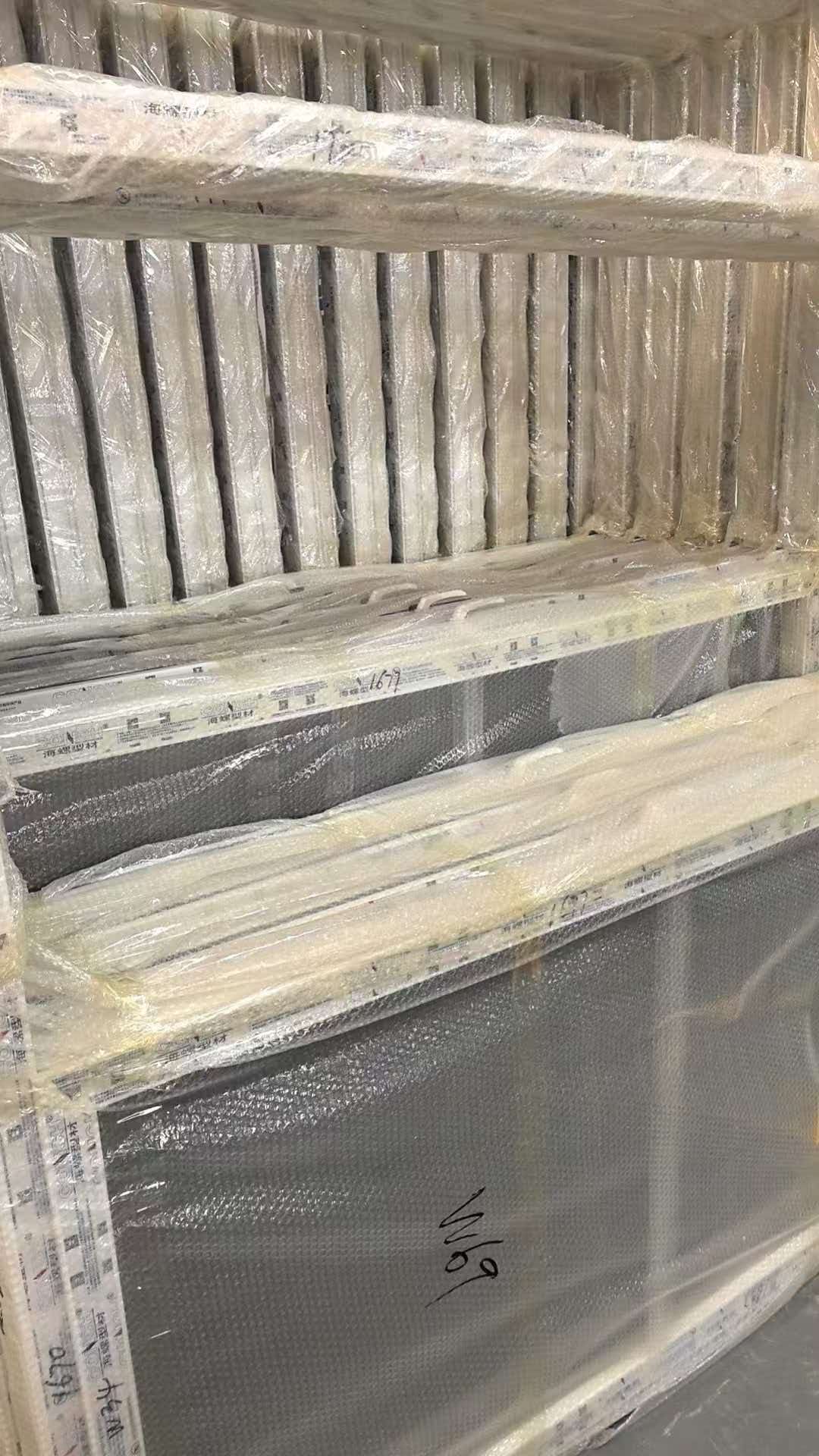
A documented project record involves builders in the Caribbean, an architectural application, and a supply quantity of 500 ㎡. The case includes a fully-fabricated casement door supplied to the project, with the products fully packed for delivery.
Reported outcomes include stable sealing performance, smooth switch operation, low-noise sliding, and water-proof and dust-proof performance. The record also lists a 10-year service life for the installed UPVC door system.
Read that record for what it establishes and what it does not. It establishes that a fully fabricated, fully packed casement door package was delivered to that project, and that sealing, operation and noise behaviour were reported as stable outcomes there. It does not establish performance in a different climate, at a different wind exposure, or at a different leaf size; those still have to be verified against the specification for your own openings, which is what the evidence column in step 6 is for.
Customization, MOQ and lead time
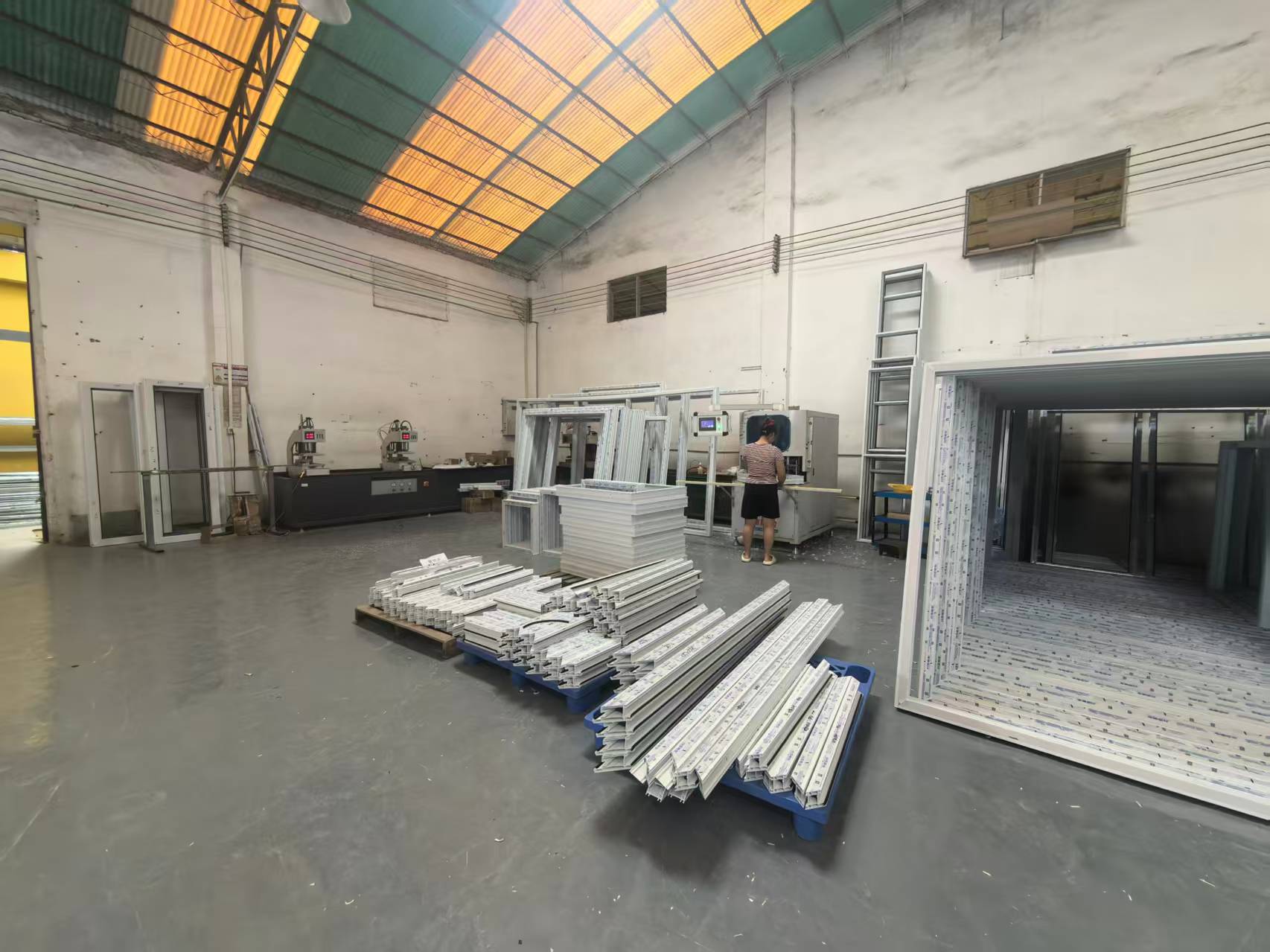
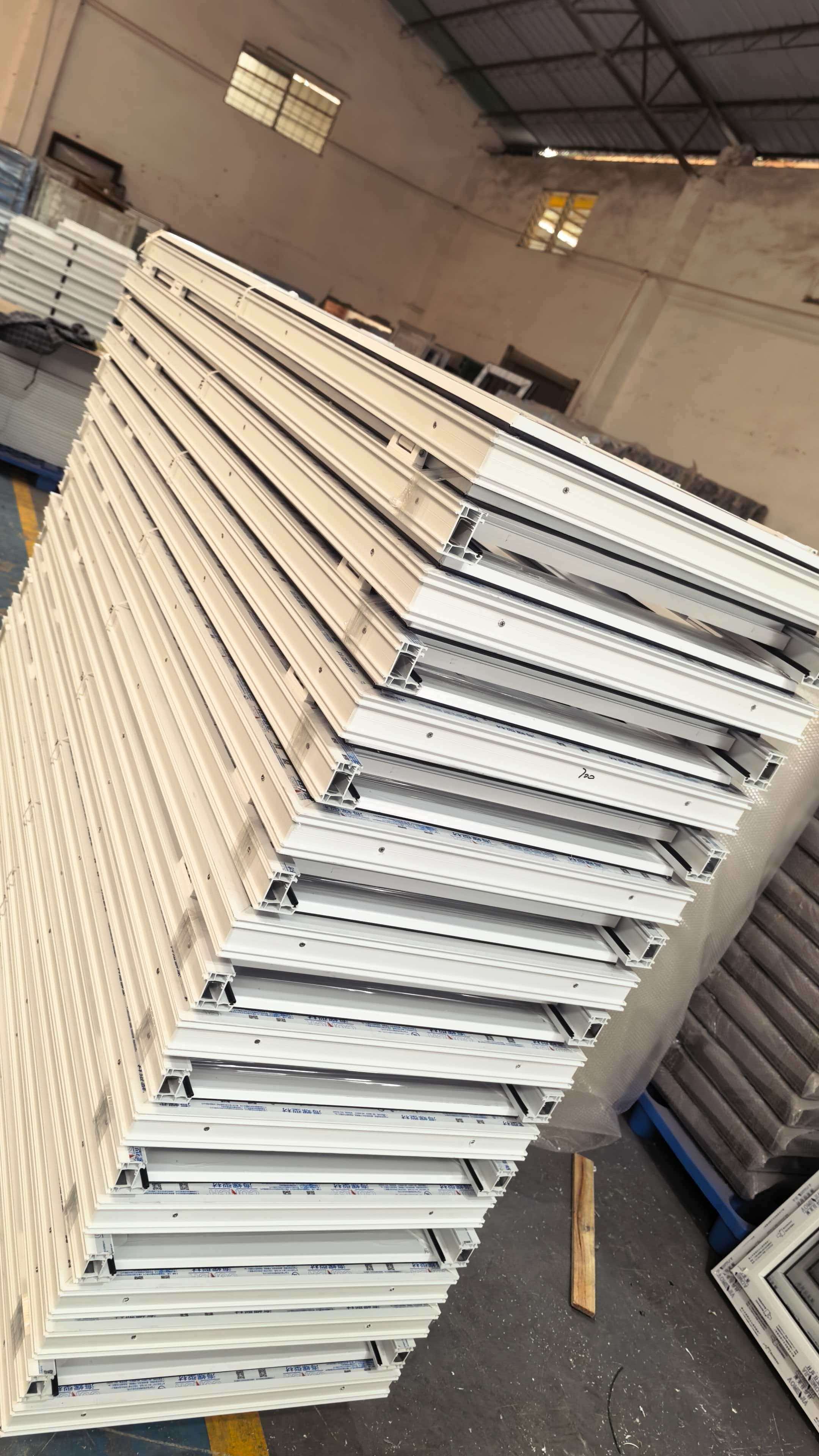
The factory's production mode is OEM, ODM and customizable, with customization covering door size, specification and glass specification. Monthly capacity is 4,000 ㎡, MOQ is 30–40 ㎡, and lead time is 10–30 days. Quality control is documented through a quality inspection report, after-sales support covers technical consultancy and quality testing, and export markets include the EU, Africa and the USA, with LATAM, MENA, ASEAN and the EU listed among main markets and about 80% of output exported.
Two of those figures do more planning work than the rest. A 30–40 ㎡ MOQ is roughly the scale of a small balcony-door package, so a pilot order and a full project order can follow the same specification. And a 10–30 day lead time means the specification freeze, not the production run, is what decides the delivery date.
Frequently asked questions
Do balcony and patio UPVC doors have to meet local building access standards?
Yes, for this application. The supplied application data for Product 7970 states that the application must meet local building access standards, alongside wind-pressure resistance, water tightness and air permeability. The standard itself is set locally, so the buyer should obtain the applicable requirement from the project's authority or specifier before releasing the order, then match the supplier's documentation against it.
Can Product 7970 be supplied as a lift-and-slide door?
Product 7970's documented operation modes are sliding operation, tilt-and-turn opening and manual opening and closing. Lift-and-slide doors are listed in the factory's wider door range as a separate series, so a lift-and-slide requirement should be quoted as its own line item and confirmed in writing rather than assumed to be a Product 7970 option.
Which hardware items must be included in a balcony or terrace door package?
The supplied data names door handles, door hinges and door rollers as required supporting equipment for Product 7970, and names anti-collision stoppers, dust-proof pile weatherstrip and EPDM sealing gaskets in the same application. All of them should appear on one purchase order so that leaf movement and the seal line are supplied as a matched set.
What are the MOQ and lead time for a terrace or patio door package?
The MOQ is 30–40 ㎡ and the lead time is 10–30 days, against a monthly capacity of 4,000 ㎡. Production mode is OEM, ODM and customizable, with door size, specification and glass specification as the customization items, and quality is documented through a quality inspection report.
Can a buyer review samples before committing to a full project order?
The factory maintains a sample showroom for one-stop purchasing, and customization covers door size, specification and glass specification, so a review can be scoped to the actual opening sizes in your project. Buyers comparing sliding, tilt-and-turn and hinged configurations for balcony, terrace and patio routes can request the catalogue and current sample arrangements together with ECM Attestation NO.3N230816.YCPQQ51 and the quality inspection report, then confirm MOQ and lead time against the project quantity.
Conclusion: specify the route, then the door
Balcony, terrace and patio access are the openings where a UPVC door is judged fastest, because the user meets the door exactly where wind, rain and a step-through route all meet. The sequence that works is consistent: fix the local access requirement first, choose the leaf movement that keeps the route usable, write the hardware schedule so the seal line is complete, and attach the evidence — quality inspection report, ECM Attestation NO.3N230816.YCPQQ51 for non-EU projects, or the CE and Declaration of Performance route for EU-facing work — to the requirement it is meant to satisfy.
Product 7970 covers sliding, tilt-and-turn and manual operation across HF60, WYK75-1 and HF88-L, with the sealing, hardware and profile options described above. That is enough to build a balcony, terrace or patio package that can be inspected against a document instead of an impression.
Prepared for project buyers and distributors working on export projects. Configuration, hardware and evidence requirements for balcony, terrace and patio routes can be reviewed against your own opening schedule before an order is placed.
Have Questions or Need More Details?
Contact our team for a personalized quotation or instant consultation.
Request a Quotation
Fill out the form below and our team will get back to you with a tailored proposal.
WhatsApp Direct Chat
Prefer to chat in real-time? Message us on WhatsApp for instant assistance & quick answers.
- Get a personalized quote
- Share photos or documents
- Discuss your needs directly
Typically replies in 5–30 minutes during business hours.