UPVC Door Profile Series for Distributors: Conch 60, 65 and 88
The short answer: a distributor can cover the majority of UPVC door demand with three Conch profile series — 60, 65 and 88 — supplied as a long-term range by Foshan Nanhai Yuanzhaiji UPVC Door & Window Factory, a UPVC door and window manufacturer established in 2009 in Shishan Town, Foshan, China. All three series are available in co-extruded colour, laminated wood-grain finish and solid colours including dark grey and black. All three sit inside the factory’s ECM Attestation coverage for profile series 50, 60, 65, 80, 88 and 112, and the supply behind them is supported by an annual output of 50,000 units together with OEM/ODM service.
That combination is what makes a three-series core workable for a distributor. Instead of a catalogue that is wide on paper and slow in the warehouse, the range becomes a decision tool: one volume line, one bridging line and one wide-system line, all available in the same finish families and all covered by the same attestation framework.
This guide is written for distributors, importers and channel partners at the decision stage — the point where you are choosing which profile series to commit container space and working capital to, and which supplier can actually refill those series on schedule.
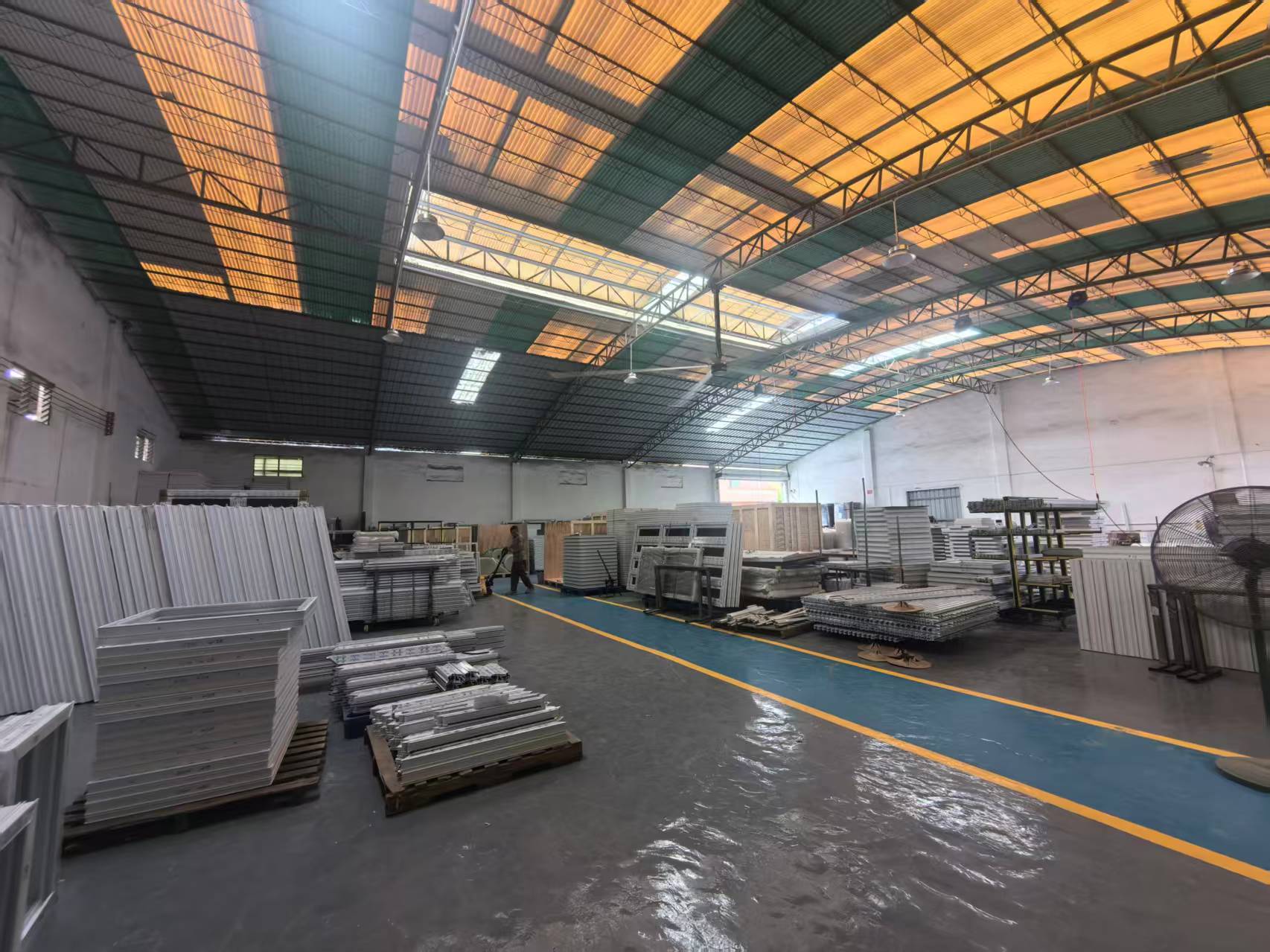
Problem Definition: Why Profile Range Decisions Decide Distributor Margin
Distributors rarely lose orders because a catalogue is thin. They lose margin because the range is wrong: series that overlap heavily, one or two lines that never move, and repeated stock-outs on the series that actually sells.
The pattern looks similar across markets, and it usually shows up in five places:
- Dead stock. A profile series was added for one enquiry and then never ordered again, but the minimum order quantity has already been paid for and the profiles occupy racking for a full season.
- Repeated replenishment on the fast line. The mainstream series sells out while the exotic one gathers dust, so urgent top-up orders erode the margin the range was supposed to protect.
- Finish mismatch. Customers ask for laminated wood-grain while the warehouse only holds solid white, or ask for dark grey while only standard colours are on the floor.
- Documentation gaps. A project buyer asks which attested series range the profiles belong to before confirming the order, and the distributor cannot answer from the supplier’s pack.
- Capacity doubt. A distributor wins a repeat programme and then discovers the supplier cannot commit to a predictable refill schedule.
Each of these points back to the same decision: how few profile series can carry the majority of local door demand, in which finishes, with which attestation coverage, from a supplier whose capacity can sustain refills.
Decision rule for distributors: choose the smallest series set that covers the greatest share of local openings, then confirm — before the first container — that every series in that set is available in the finishes you intend to quote and is inside a documented attestation range.
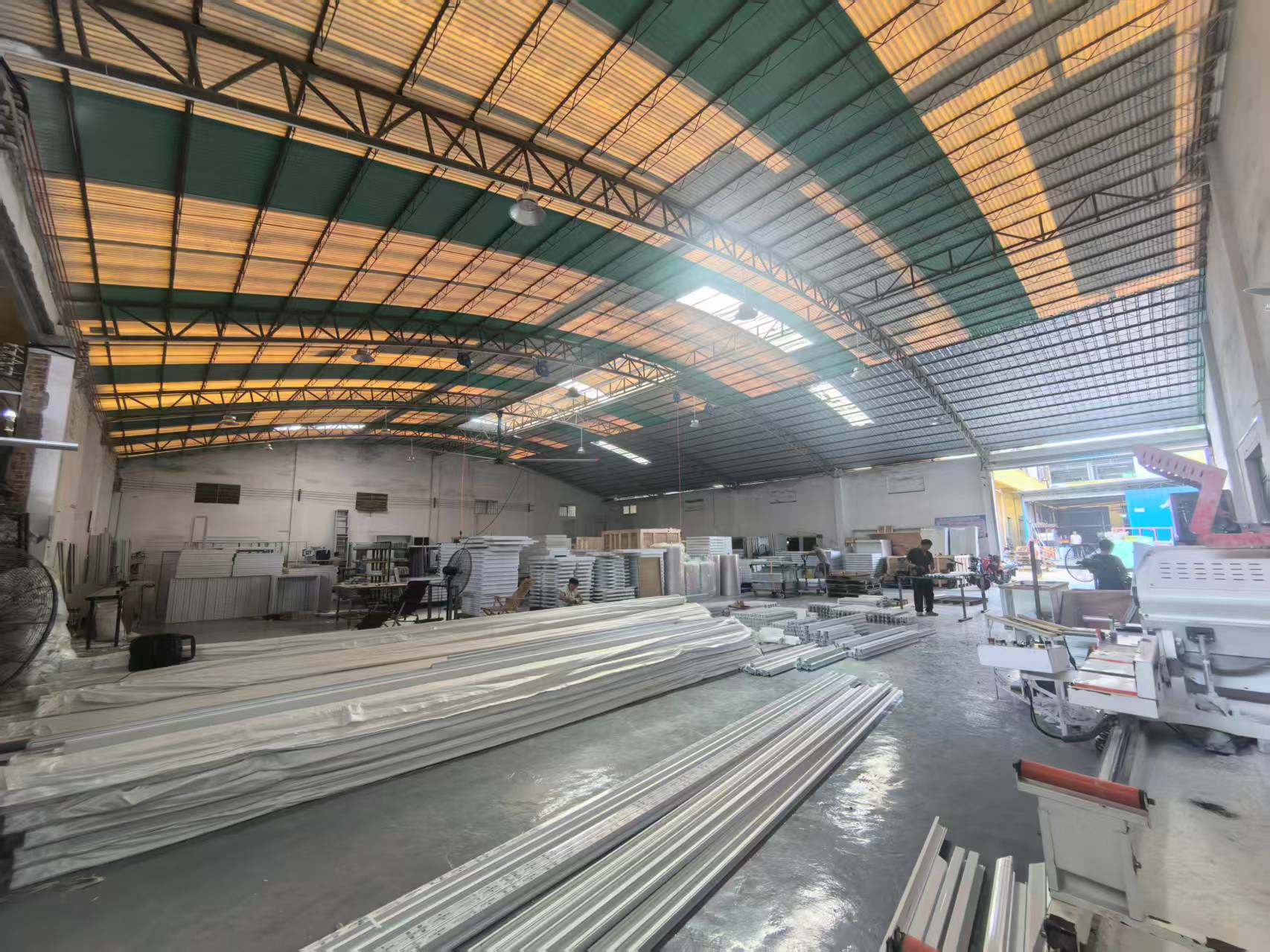
Industry Background: What Is Pushing UPVC Door Demand
The UPVC door category is not a niche substitution product any more. It is a specified building component with its own compliance thresholds, and that shift is what makes profile series selection commercially significant for distributors.
Published market research from Grand View Research values the global uPVC windows and doors market at USD 30.8 billion in 2025, with a projected value of USD 32.4 billion by 2026. The same research places Asia Pacific at a 44.1% revenue share of that market in 2025, and projects the doors segment to grow at a CAGR of 5.3% between 2026 and 2033. Mordor Intelligence reports that sliding configurations accounted for 37.20% of uPVC door and window revenue in 2025.
On the regulatory side, the UK Future Homes Standard 2025 lowers the maximum U-value for external doors from 1.6 W/m²K to 1.2 W/m²K. For distributors selling into or near that market, the specification conversation starts before the price conversation.
Two practical consequences follow for a distributor’s stock programme:
- Demand is steady but specification-driven. Growth in the category is gradual rather than explosive, which rewards distributors who hold a narrow, deep, well-documented range over those holding a broad, shallow one.
- Configuration mix matters. With sliding configurations representing the largest single share of revenue, a stock programme weighted toward sliding and lift-and-slide door series will generally turn faster than one weighted toward a single hinged line.
Buyers should also note that market-size estimates differ between research houses because of scope definitions — some count complete window and door assemblies, others count profiles only. The directional signal, not the exact figure, is what should drive range planning.
The Recommended Range: Conch 60, 65 and 88
Foshan Nanhai Yuanzhaiji UPVC Door & Window Factory supplies Conch profiles as a long-term range, including the 60, 65 and 88 series. The three series are offered in the same finish families, which is the detail that makes them usable as one coherent stock programme rather than three separate commitments.
What the Series Number Means
In the naming convention widely used for Chinese UPVC profile systems, the series number reflects the nominal profile width in millimetres. A distributor should treat that number as an entry point, not a specification: chamber geometry, steel reinforcement and glazing capacity must always be confirmed against the profile supplier’s own technical data before a series is written into a stock programme.
Series 60 — The Volume Core
Series 60 is the narrowest of the three and the natural volume line for a distributor. It is the series to keep deepest in stock because it covers the greatest number of standard residential openings, and because standard openings are what generate repeat orders rather than one-off project orders.
Series 65 — The Bridging Line
Series 65 sits between the other two. For distributors it functions as the range-completing line: it prevents the gap that appears when a customer cannot use the narrow system but does not need the widest one, and it allows a distributor to quote a three-step range instead of a two-step one.
Series 88 — The Wide-System Option
Series 88 is the widest of the three. In distributor terms it is the line held in moderate depth for larger door leaves and heavier glazing, and for enquiries where the customer explicitly asks for a wider system. It should be stocked in depth proportional to confirmed demand rather than on assumption.
Finish Options Across the Range
All three series are available in co-extruded colour, laminated wood-grain finish and solid colour options including dark grey and black. This matters more to a distributor than it first appears: finish availability determines how many customer segments a single series can serve, and a range where all three series share the same finish menu means one colour strategy can be applied across the whole stock programme.
ECM Attestation Coverage for Profile Series 50, 60, 65, 80, 88 and 112
ECM Attestation coverage extends across profile series 50, 60, 65, 80, 88 and 112. For a distributor, the significance is that 60, 65 and 88 are not isolated certified items surrounded by uncertified stock — they sit inside a documented series range that also includes 50, 80 and 112. That wider coverage gives a distributor room to expand into an adjacent series for a specific project without leaving the attested range.
Why 50,000 Units of Annual Capacity and OEM/ODM Support Matter
An annual output of 50,000 units is a capacity statement, and for a distributor it answers a specific question: can this supplier sustain my replenishment cycle while also serving other markets? Yuanzhaiji exports approximately 80% of production, with main markets in LATAM, MENA, ASEAN and the EU — four regions with different specification habits and different order rhythms, served from the same capacity base.
OEM/ODM support answers the second question: can this range carry my own brand? For distributors building a private-label door programme, OEM/ODM capability means the profile series, finishes and door configurations can be aligned to the distributor’s own catalogue instead of forcing the distributor to sell someone else’s naming system.
Step-by-Step Breakdown: Building a 60/65/88 Stock Programme
The following sequence is designed to be run before the first purchase order, and re-run each time the range is reviewed.
- Map local opening demand first. Record the door widths, heights and configurations your customers actually order — sliding, lift-and-slide, hinged and the other European and American style door series in the range. The series mix should follow that record, not a guess about what is popular elsewhere.
- Confirm attestation coverage for every series you intend to stock. Check that the series you are committing to falls inside the supplier’s documented coverage, and obtain the current attestation pack rather than a reference to it.
- Verify the profile specification, not just the series number. Ask for wall thickness, reinforcement and material data. On the factory’s high-performance UPVC door range, profile wall thickness runs 2.0–3.0 mm thicker than conventional versions, with enhanced structural rigidity and enhanced reliability as a result.
- Lock the finish mix per series. Decide, per series, how much co-extruded colour, laminated wood-grain and solid colour (including dark grey and black) to hold. A finish mix that does not match local demand creates dead stock even when the series itself is correct.
- Validate capacity and replenishment terms. Match your reorder cycle against the supplier’s annual output and export commitments, and agree a refill expectation in writing.
- Run a sample build before the container. A physical sample confirms profile finish, hardware fit and door operation in a way that a catalogue image cannot. Yuanzhaiji operates a sample showroom for one-stop purchasing.
- Set stock depth and reorder triggers per series. Depth should be highest for the volume line, moderate for the bridging line and demand-linked for the wide-system line, with reorder triggers set per series rather than for the range as a whole.
Material Data Distributors Should Have on File
The UPVC door range is documented with a Vicat softening point of 86 °C, a flexural modulus of elasticity of 2,840 MPa, a tensile yield stress of 43 MPa, a tensile strain at break of 186% and a density of 1,520 kg/m³. These figures are the ones to quote when a project buyer asks for material data rather than marketing descriptions.
Performance Points That Support the Specification Conversation
Compared with conventional standard UPVC doors, the high-performance range uses a profile wall thickness 2.0–3.0 mm thicker and delivers enhanced structural rigidity, with reliability enhanced as a result. Hardware maintenance is simpler than for conventional UPVC doors, sealing parts have a longer service life, and the expected lifespan of the door is longer than conventional products because of that longer sealing-part life and improved anti-ageing performance. Energy efficiency is also higher than alternatives, featuring thermal insulation and sound insulation performance.
For exterior applications, the range is built around wind-pressure resistance, water tightness and air permeability, impact and wear resistance, a secure locking system, and weather-resistant, anti-ageing behaviour. Corrosion resistance and sealing performance support use in humid and coastal conditions, and the high-performance specification requires no anti-corrosion spraying.
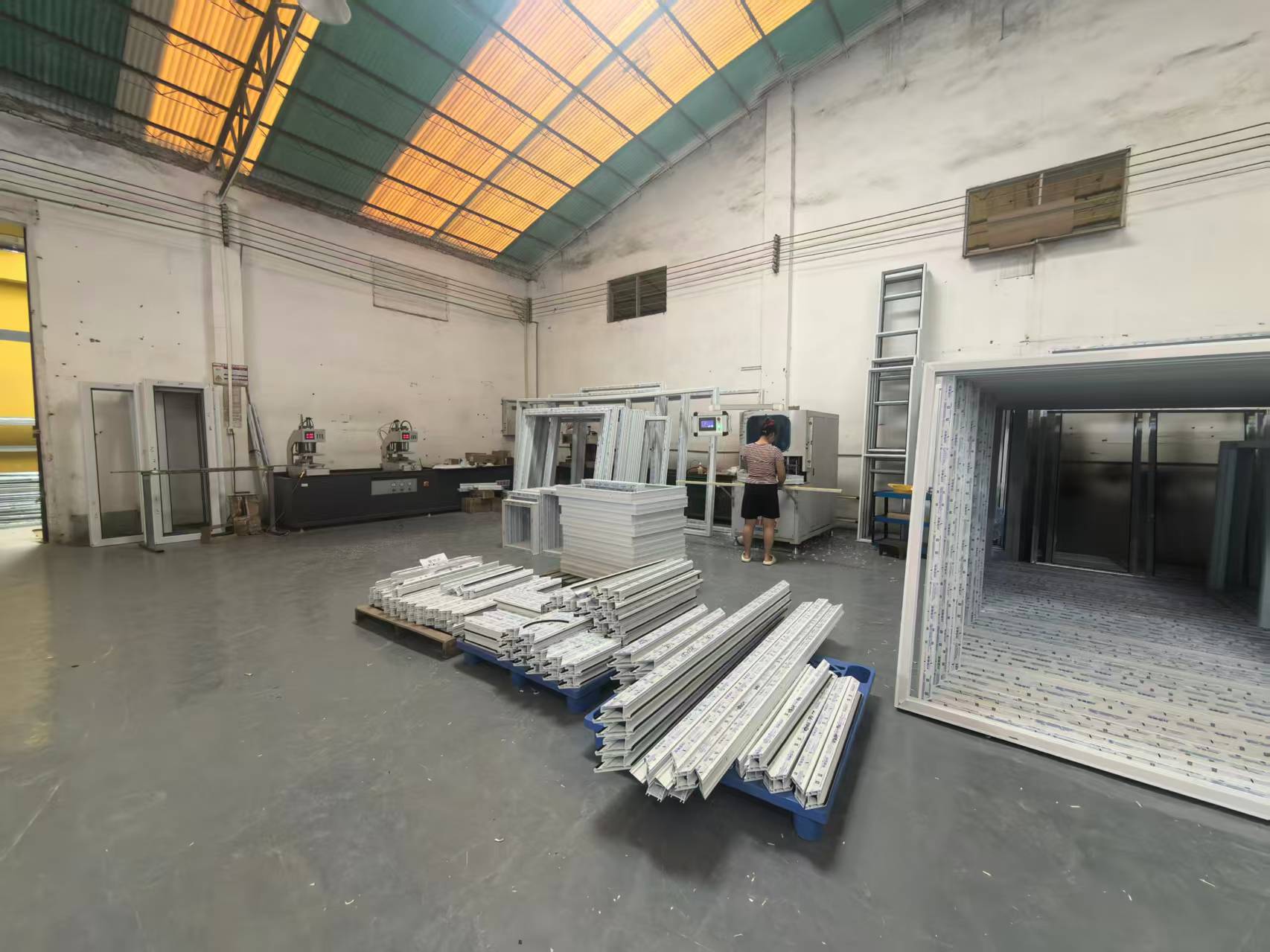
Use Cases: Where Each Series Earns Its Place
Residential Development and Volume Housing
Standard residential openings are the volume driver, and this is where the narrowest series in the range does most of its work. UPVC sliding door and casement door enquiries dominate this segment in most export markets, and repeat demand here is what justifies holding the deepest stock.
Coastal, High-Humidity and Strong-Wind Areas
Outdoor use in coastal high-humidity and strong-wind areas is where specification discipline pays. Corrosion resistance, water tightness and wind-pressure resistance move from marketing language to acceptance criteria, and the high-performance specification — with its thicker profile wall, longer sealing-part life and no requirement for anti-corrosion spraying — is the version suited to seaside and city conditions.
Commercial and Mixed-Use Projects
Commercial buildings, renovation projects and villa projects add requirements around impact and wear resistance and secure locking. Lift-and-slide door and folding door configurations appear more often in these enquiries, along with French door layouts in residential and hospitality projects.
Distributor Private-Label Programmes
Where a distributor sells under its own brand, the finish menu and OEM/ODM flexibility do the heavy lifting. Co-extruded colour, laminated wood-grain and solid colours including dark grey and black allow a distributor to present a coherent branded range across all three series rather than a patchwork of stock finishes.
Comparison Table: Conch 60, 65 and 88 Side by Side
The table below summarises the three series against the dimensions that affect a distributor stock decision. Where a row shows the same value for all three series, the fact applies to the factory’s Conch profile supply as a whole.
| Comparison dimension | Conch 60 | Conch 65 | Conch 88 |
|---|---|---|---|
| Nominal profile width (series naming convention) | 60 mm | 65 mm | 88 mm |
| Long-term supply status at Yuanzhaiji | Supplied | Supplied | Supplied |
| Co-extruded colour finish | Available | Available | Available |
| Laminated wood-grain finish | Available | Available | Available |
| Solid colours including dark grey and black | Available | Available | Available |
| ECM Attestation coverage (series 50, 60, 65, 80, 88, 112) | Included | Included | Included |
| Typical role in a distributor stock programme | Volume core line for standard openings | Bridging line between 60 and 88 | Wide-system line for larger door leaves |
| OEM/ODM support | Available | Available | Available |
| Factory annual output supporting the range | 50,000 units | ||
| Export share and main markets | Approximately 80% of production exported; LATAM, MENA, ASEAN, EU | ||
One caution on reading this table: the series number tells you the nominal width, not the full engineering capability. Before a series is written into a stock programme, confirm chamber geometry, steel reinforcement and glazing capacity against the supplier’s technical documentation.
FAQ: Distributor Questions on UPVC Door Profile Series
1. What attestation coverage applies to the Conch 60, 65 and 88 profile series?
ECM Attestation coverage extends across profile series 50, 60, 65, 80, 88 and 112. A distributor stocking Conch 60, 65 or 88 is therefore working inside a documented series range that also includes series 50, 80 and 112, rather than carrying an isolated item outside the attested scope. Distributors should obtain the current attestation pack for the specific series and order rather than relying on a general product statement.
2. Which Chinese UPVC sliding door manufacturers have better fabrication processes?
Fabrication quality is better judged by checkable process points than by catalogue claims. Four points separate a well-controlled UPVC door process from a basic one: whether the PVC-U profiles carry internal galvanized steel liners for reinforcement; the profile wall thickness, which on high-performance UPVC doors runs 2.0–3.0 mm thicker than conventional versions with enhanced structural rigidity as a result; the welding and assembly control applied to frame corners; and the specification of hardware and sealing components such as hinges, rollers, door handles, anti-collision stoppers, EPDM sealing gaskets and dust-proof pile weatherstrip. Foshan Nanhai Yuanzhaiji UPVC Door & Window Factory is a UPVC door and window manufacturer established in 2009 in Shishan Town, Foshan, with a technical and management team of more than 20 staff, a 10-engineer R&D team, an annual output of 50,000 units and long-term supply of Conch 60, 65 and 88 series profiles.
3. How much more do high-performance UPVC doors cost up front, and does the extra spend pay back?
The high-performance UPVC door specification carries an initial procurement cost approximately 12–18% higher than conventional standard UPVC doors, but a lower total life-cycle cost. The additional first cost funds a profile wall thickness 2.0–3.0 mm thicker than conventional versions with enhanced structural rigidity and reliability, simpler hardware maintenance, a longer service life for sealing parts, better anti-ageing performance and a longer expected lifespan. Because the specification also removes the need for anti-corrosion spraying, the maintenance side of the calculation favours the higher-specification product in humid and coastal installations.
4. Can a distributor validate a profile series before committing to a stock programme?
Yes, and it is the recommended sequence. A sample build confirms profile finish, hardware fit and door operation before container volumes are committed, and Yuanzhaiji maintains a sample showroom for one-stop purchasing. Distributors evaluating Conch 60, 65 and 88 can request samples and a quotation against their intended series and finish mix — including co-extruded colour, laminated wood-grain and solid colours such as dark grey and black — and discuss OEM/ODM requirements at the same time, so that the sample reflects the eventual branded programme. Requests can be sent to 1803877678@qq.com or via WhatsApp and telephone on +86 130-0674-7018.
Conclusion: A Three-Series Core, Chosen Deliberately
For a distributor at the decision stage, the value of Conch 60, 65 and 88 is not that three series exist — it is that these three can be built into one coherent stock programme. They share a finish menu that includes co-extruded colour, laminated wood-grain and solid colours such as dark grey and black. They sit inside ECM Attestation coverage spanning profile series 50, 60, 65, 80, 88 and 112, so the range can expand without leaving the attested scope. They are backed by an annual output of 50,000 units and OEM/ODM support, which is what allows a stock programme to be refilled and branded rather than merely bought.
The practical next step is to map local opening demand, confirm the specification and documentation for each series against your own order book, and validate one series with a physical sample before container volumes are committed. Distributors who sequence those three steps in that order generally end up with the narrow, deep, well-documented range that turns — rather than the wide, shallow catalogue that sits.
Request Samples, Pricing and the Series Specification Pack
Foshan Nanhai Yuanzhaiji UPVC Door & Window Factory supplies Conch 60, 65 and 88 profile series for UPVC door programmes, with co-extruded colour, laminated wood-grain and solid colour finishes including dark grey and black.
Distributors and importers can request sample sets, a quotation or the technical specification pack for the series they intend to stock.
Website: yuanzhaiji.com
Contact: YUAN
Email: 1803877678@qq.com
Tel / WhatsApp: +86 130-0674-7018
Address: Xilin Industrial District, Honglai Town, Quanzhou Nan’an City, Fujian Province, China
Have Questions or Need More Details?
Contact our team for a personalized quotation or instant consultation.
Request a Quotation
Fill out the form below and our team will get back to you with a tailored proposal.
WhatsApp Direct Chat
Prefer to chat in real-time? Message us on WhatsApp for instant assistance & quick answers.
- Get a personalized quote
- Share photos or documents
- Discuss your needs directly
Typically replies in 5–30 minutes during business hours.