UPVC Doors for MENA Coastal Projects: Wind, Water and Heat Performance Guide
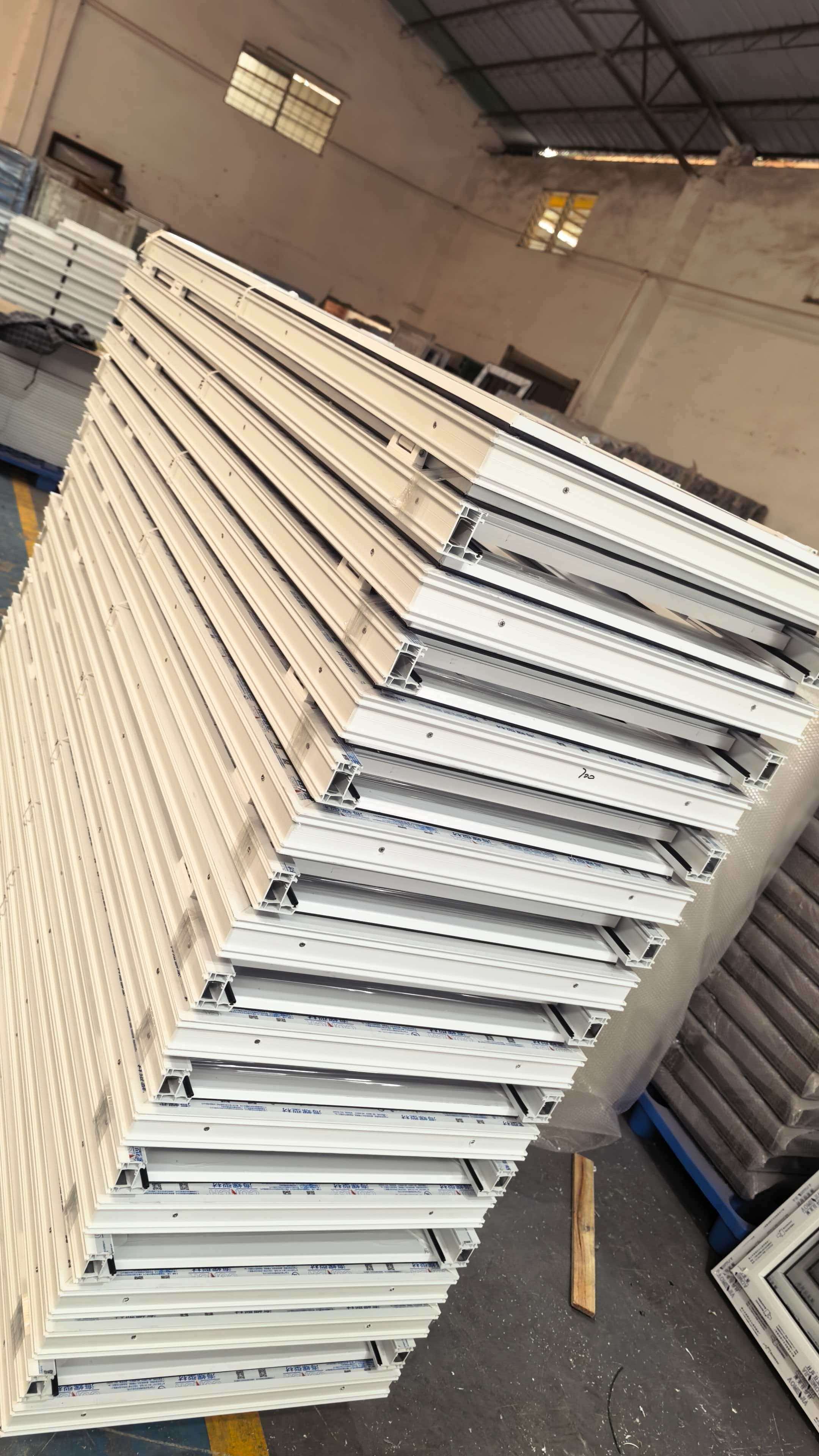
On a MENA coastline an exterior door is asked to do three things at the same time: keep wind-driven rain outside, hold its geometry under sustained wind pressure, and limit heat transfer from a facade that may sit in direct sun for most of the day. A door that performs acceptably on an inland site can fail within a few seasons on a beachfront, port-side or high-rise elevation. This guide is written for project buyers, consultants and contractors specifying UPVC doors for coastal or high-wind environments in the Middle East and North Africa, and it translates those three requirements into profile, sealing, glass and ordering specifications.
Short answer for project buyers
- Water: specify a continuous perimeter sealing package — EPDM sealing gasket plus dust-proof pile weatherstrip — and write wind-pressure resistance, water tightness and air permeability into the project requirements rather than treating them as optional.
- Wind: use PVC-U profiles with internal galvanized steel liners. The liner is the structural difference between a UPVC (plastic-steel) door and an unreinforced plastic door, and it is the main reason a coastal elevation keeps its shape.
- Heat: thermal insulation is a listed characteristic of this UPVC door system, but the final result depends heavily on the glass specification and the door size, so both must appear in the specification.
- Order: door size, door specification and glass specification are customizable under OEM/ODM production, with a project MOQ of 30–40 ㎡ and a lead time of 10–30 days.
Problem Definition: Why Coastal MENA Elevations Break Ordinary Doors
Coastal door failure rarely begins with a cracked frame. It begins at the seal line, and it usually presents as one of three problems that buyers discover only after handover.
- Water ingress at the sealing line. Rain on a coastal elevation is rarely vertical. Wind pushes it against the door face, so the perimeter seal and the weatherstrip have to resist water under pressure, not just under gravity. Weak air tightness compounds the problem: air leakage carries moisture with it and deposits it where it cannot drain.
- Deflection under wind load. A door leaf without structural reinforcement has low rigidity and deflects under sustained wind pressure. Once the leaf deflects, the seal line opens, the door becomes progressively harder to operate, and the opening becomes a permanent weak point. This is precisely why ordinary plastic doors without steel reinforcement are not suitable for exterior or high-rise applications.
- Heat load and thermal movement. Long sun exposure keeps the door panel and glass at high surface temperatures for many hours a day. Heat transfer into the interior is the visible cost; thermal movement of profiles and seals is the hidden one, and it shortens the life of a seal that was already marginal.
For outdoor, coastal, high-humidity and strong-wind conditions, the functional characteristics required of this system are thermal insulation, sound insulation, wind and rain resistance, corrosion resistance and good sealing performance. The corresponding special project requirements include wind-pressure resistance, water tightness and air permeability, impact and wear resistance, a secure locking system, and weather-resistant, anti-aging behaviour. A specification that ignores any one of these is incomplete.
Industry Background: Where MENA Coastal Demand Sits
The global uPVC windows and doors market was valued at USD 30.8 billion in 2025 and is projected to reach USD 32.4 billion in 2026, according to Grand View Research. The same source reports that Asia Pacific dominated the market with a 44.1% revenue share in 2025, and that the doors segment is expected to grow at a CAGR of 5.3% from 2026 to 2033. Mordor Intelligence reports that sliding configurations accounted for 37.20% of uPVC door and window revenue in 2025.
Two conclusions follow for a MENA project buyer. First, the supplier base is deep and competitive, which is good for lead times and pricing. Second, depth of supply means a wide spread in actual performance: two doors that look identical in a catalogue can differ in whether the profile cavity contains a galvanized steel liner, whether the seal is EPDM, and whether any third-party attestation sits behind the stated performance.
The manufacturing base relevant to this guide is Foshan Nanhai Yuanzhaiji UPVC Door & Window Factory, a UPVC door and window manufacturer established in 2009 in Nanhai District, Foshan, producing UPVC doors and windows for export. MENA is one of its main export markets, alongside LATAM, ASEAN and the EU, and export accounts for roughly 80% of output. Its door range covers UPVC sliding doors, lift-and-slide doors, hinged doors and other European and American-style door series, and it long-term supplies Conch profiles in 60, 65 and 88 series with co-extruded colour, laminated wood-grain finish and solid colour options including dark grey and black. For trade documentation, plastic doors, windows and their frames and thresholds fall under HS code 392520.
Detailed Solution: Three Performance Pillars for Coastal Specification
1. Water-tight sealing: build a continuous water line
Water tightness is a system property, not a single component. The matched hardware and sealing package behind this range includes a door handle, door hinge, door roller, anti-collision stopper, dust-proof pile weatherstrip and EPDM sealing gasket. Each element does a different job: the EPDM gasket closes the perimeter gap, the pile weatherstrip manages the sliding or moving interfaces, and the anti-collision stopper limits how far the leaf can travel under load.
For a coastal MENA specification, three points are worth adding to the tender document:
- State wind-pressure resistance, water tightness and air permeability as required performance categories, so suppliers respond with evidence rather than a general statement.
- Confirm that the gasket and weatherstrip materials are specified as EPDM and pile weatherstrip rather than left to the supplier's default.
- Confirm the opening mode, because manual opening and closing, tilt-and-turn opening and sliding operation place different demands on the seal. Hinged and casement leaves close against a perimeter seal; sliding leaves rely on the meeting stile and the roller track interface, which is why sliding doors benefit from a fly screen that also acts as a first barrier against wind-blown debris.
For reference, a fully-glazed UPVC 60-series casement door is a configuration in the product range that maximises glazed area while retaining a full perimeter seal — useful where a coastal view matters but an unprotected opening would be a liability.
2. Wind resistance: reinforcement and hardware, not just wall thickness
The single most important specification decision for a high-wind site is whether the profile contains a galvanized steel liner. UPVC doors use PVC-U profiles with internal galvanized steel liners for reinforcement, which is what delivers strength, wind resistance, and thermal and sound insulation. Ordinary plastic doors have no steel reinforcement: they are lower in cost but deform easily and are not suitable for exterior use.
The compound itself also contributes. The UPVC material used in door models HF60, WYK75-1 and HF88-L has a tensile yield stress of 43 MPa and a flexural modulus of elasticity of 2840 MPa, with a tensile strain at break of 186%. In practical terms, a higher flexural modulus means the profile resists bending under wind load, while the tensile strain at break indicates how much deformation the material tolerates before failure. These are material-level indicators; the finished door's wind resistance also depends on reinforcement, welding quality and hardware.
A simple acceptance check that buyers can use on site: inspect the cut end of a profile and confirm that the galvanized steel liner is present inside the cavity. Reject goods without liners for exterior doors. Never apply non-reinforced plastic doors on exterior or high-rise projects.
3. Heat insulation: a system characteristic plus a glass decision
Sound insulation and heat insulation are listed characteristics of this UPVC door system, and thermal insulation is one of the core functional requirements for outdoor coastal and strong-wind applications. However, the final thermal figure for a given opening is driven mainly by two things the buyer controls: the glass build-up and the door size. Larger glazed areas and larger leaf dimensions change the ratio of frame to glass and therefore the overall result.
As an external reference point, the UK Future Homes Standard 2025 reduces the maximum U-value for external doors from 1.6 W/m²K to 1.2 W/m²K under Approved Document L. That is a UK regulation and does not govern MENA projects, but it is a useful benchmark for what a modern high-performance exterior door is expected to achieve — and a useful question to put to any supplier quoting a thermal claim.
Colour choice also matters. Solid colour options such as dark grey and black are popular in modern MENA facades, while laminated wood-grain finishes suit residential elevations. In general, darker exterior surfaces absorb more solar heat, so where a dark finish is specified for design reasons, the glass specification and ventilation strategy deserve additional attention.
4. Corrosion resistance and long-term weathering
Salt-laden coastal air attacks metal long before it attacks polymer. Corrosion resistance is a listed functional characteristic of this system, and the practical focus for a MENA coastal specification is the hardware package: door handle, hinge, roller and locking components. Weather-resistant and anti-aging behaviour is a stated requirement for these applications, alongside impact and wear resistance and a secure locking system. Specify the hardware finish and the locking standard explicitly rather than accepting a supplier default.
5. Compliance evidence: the ECM Attestation
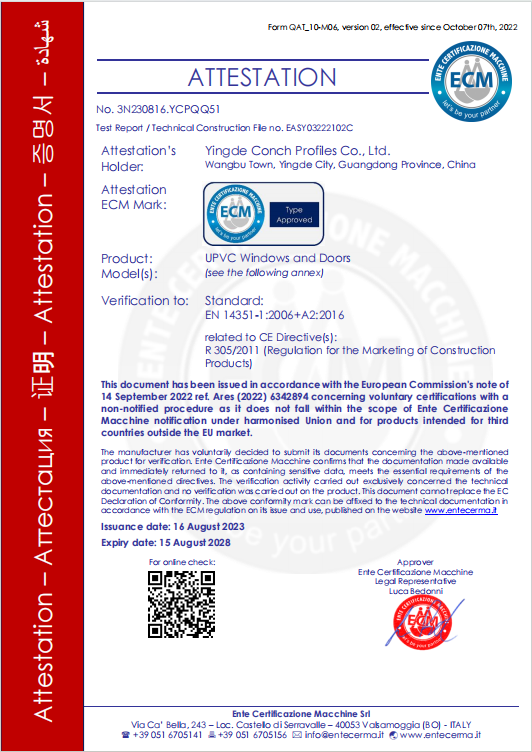
The UPVC Door is certified to ECM Attestation under standard EN 14351-1:2006+A2:2016. Certificate NO.3N230816.YCPQQ51 is issued by Ente Certificazione Macchine Srl (ECM) for the UPVC Door. The certification is voluntary for this product, applies to the non-EU market, and was issued on 2023-08-16. The certification scope covers UPVC windows and doors across profile series 50, 60, 65, 80, 88 and 112, and the attestation is valid until 2028-08-15.
This document matters for MENA projects for a specific reason: it is an attestation to a European product standard issued for third countries outside the EU market, rather than a CE marking for the EU. It gives a project team a fixed, verifiable reference — certificate number, issuing body, standard and validity period — that can be checked, filed and referenced in a submittal. It does not replace local authority approval, and buyers should still confirm the specific national or municipal documentation requirements of the destination market.
Material and Certification Specifications
The table below consolidates the verifiable specification data that a project submittal can reference directly.
| Specification item | Value | Applies to |
|---|---|---|
| Material | UPVC (unplasticized polyvinyl chloride) | UPVC Door |
| Density | 1520 kg/m³ | Door models HF60, WYK75-1, HF88-L |
| Vicat softening point | 86 ℃ | Door models HF60, WYK75-1, HF88-L |
| Flexural modulus of elasticity | 2840 MPa | UPVC material for this door range |
| Tensile yield stress | 43 MPa | UPVC material for this door range |
| Tensile strain at break | 186% | UPVC material for this door range |
| Certification | ECM Attestation, certificate NO.3N230816.YCPQQ51 | UPVC Door |
| Standard | EN 14351-1:2006+A2:2016 | UPVC windows and doors, profile series 50/60/65/80/88/112 |
| Issuing body | Ente Certificazione Macchine Srl (ECM) | Voluntary certification, non-EU market |
| Validity | Issued 2023-08-16; expires 2028-08-15 | ECM Attestation |
| Trade classification | HS code 392520 (plastic doors, windows, frames and thresholds) | Export documentation |
A high Vicat softening point is directly relevant to MENA coastal specification: it describes the temperature at which the material begins to soften under a defined test load, so it indicates how the profile behaves when a sun-facing door reaches high surface temperatures in summer. A density of 1520 kg/m³ and a tensile yield stress of 43 MPa describe a rigid compound rather than a flexible one, which is the behaviour a door leaf needs in order to hold a seal line.
Custom Door Size, Door Specification and Glass Specification
Coastal projects rarely take a catalogue door as-is. Openings on a beachfront villa, an apartment tower or a renovation project are usually non-standard, and the specification has to match the structural opening schedule rather than the other way around. Production for this range is OEM/ODM and customizable, with three declared customization fields: door size, door specification and glass specification.
In practice those three fields cover the following decisions:
- Door size. Leaf width and height per opening, derived from the structural opening schedule and the required clear opening for the application.
- Door specification. Configuration and profile series — for example a 60-series fully-glazed casement door, an 88-series sliding door, a 112/88-series sliding door with fly screen, or a lift-and-slide door for a large glazed opening. Profile series available long-term include Conch 60, 65 and 88, with co-extruded colour, laminated wood-grain finish and solid colours such as dark grey and black.
- Glass specification. Glass build-up and panel type, including insulated glass and louvered glass sections where ventilation is required. A 75-series door with tall upper glazing and a lower louver panel is one configuration in the range that combines daylight with a ventilation path — a useful option for humid coastal interiors where permanently closed openings are not practical.
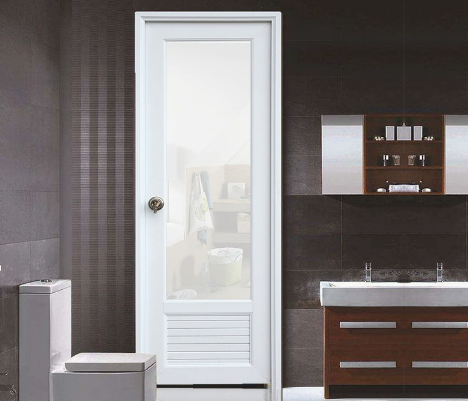
Because customization changes the door's mass, glazed ratio and hardware loading, the customization fields and the performance requirements should be confirmed in the same conversation. A larger custom leaf on a high-wind elevation needs the reinforcement and hardware package reviewed together with the size, not after it.
Step-by-Step Breakdown: Specifying a Coastal UPVC Door Order
The following sequence is written for a project buyer running a Research-to-Evaluation stage on a MENA coastal or high-wind project.
- Map the exposure. Record, per elevation: distance from the shoreline, floor level, prevailing wind direction and the degree of shelter from adjacent structures. This single step determines whether the opening is treated as a standard exterior door or as a wind-pressure-critical opening.
- Choose the opening configuration. Match configuration to how the space is used — casement or hinged doors for entrance and balcony access, sliding doors for wide residential and commercial openings, lift-and-slide doors where a large glazed panel must close tightly. Use the comparison table below as a starting point.
- Set the profile series and confirm reinforcement. Select the series and record, in writing, that the profile contains an internal galvanized steel liner. This is the distinguishing feature between a UPVC door and an unreinforced plastic door and should be an explicit acceptance criterion.
- Write the door size and glass specification. Convert the structural opening schedule into ordered leaf sizes and pair each one with a glass build-up. Keep the glass specification consistent across similar exposures so spare parts and future replacement stay simple.
- Fix the sealing and hardware package. List the EPDM sealing gasket, dust-proof pile weatherstrip, door handle, hinge, roller and anti-collision stopper, plus the locking system. Confirm corrosion-resistant hardware finishes for salt-air exposure.
- Attach compliance documentation. Request the ECM Attestation (NO.3N230816.YCPQQ51), the material data for the specified models, and a Quality Inspection Report. Confirm the attestation validity dates against your delivery schedule.
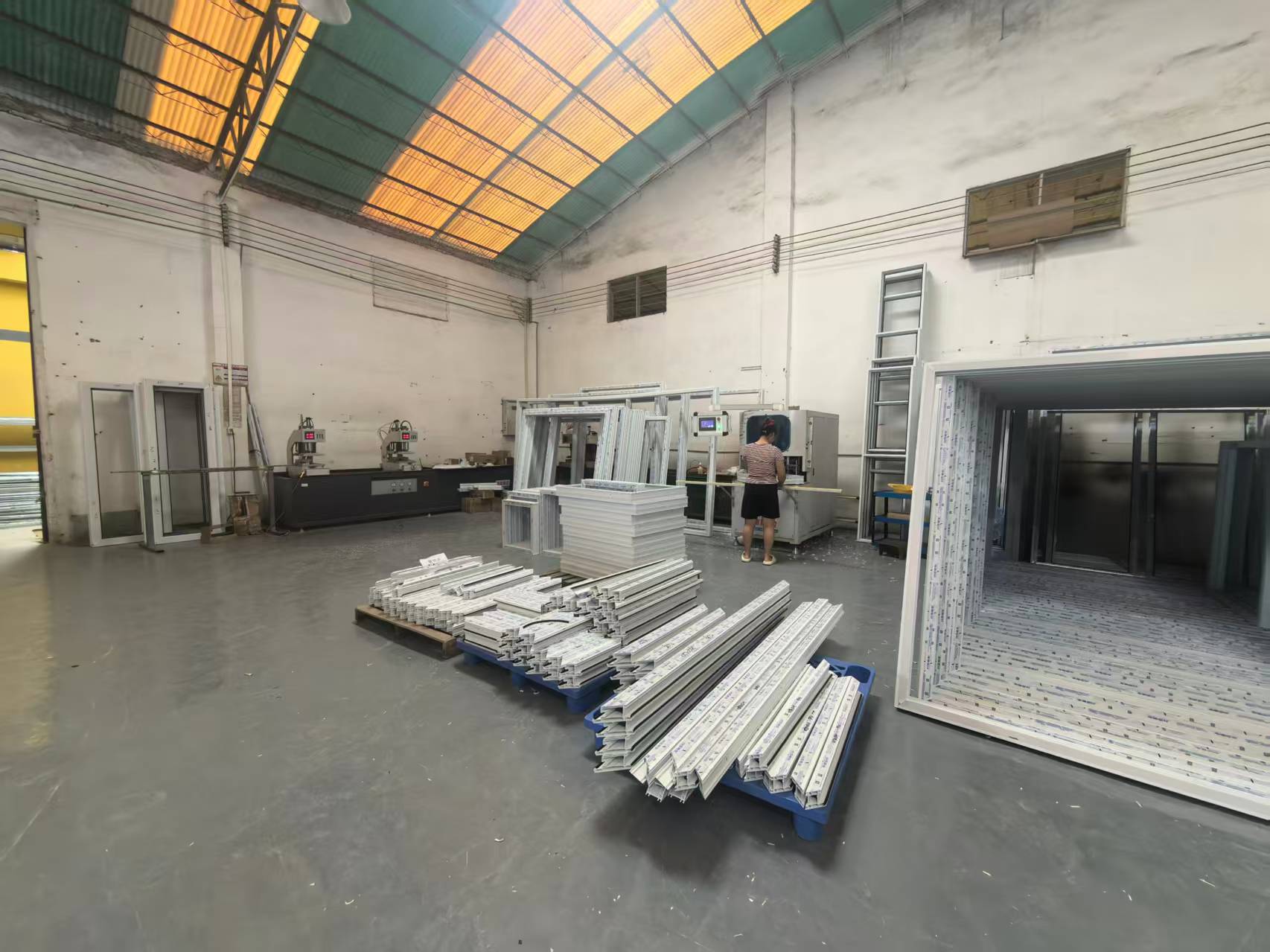
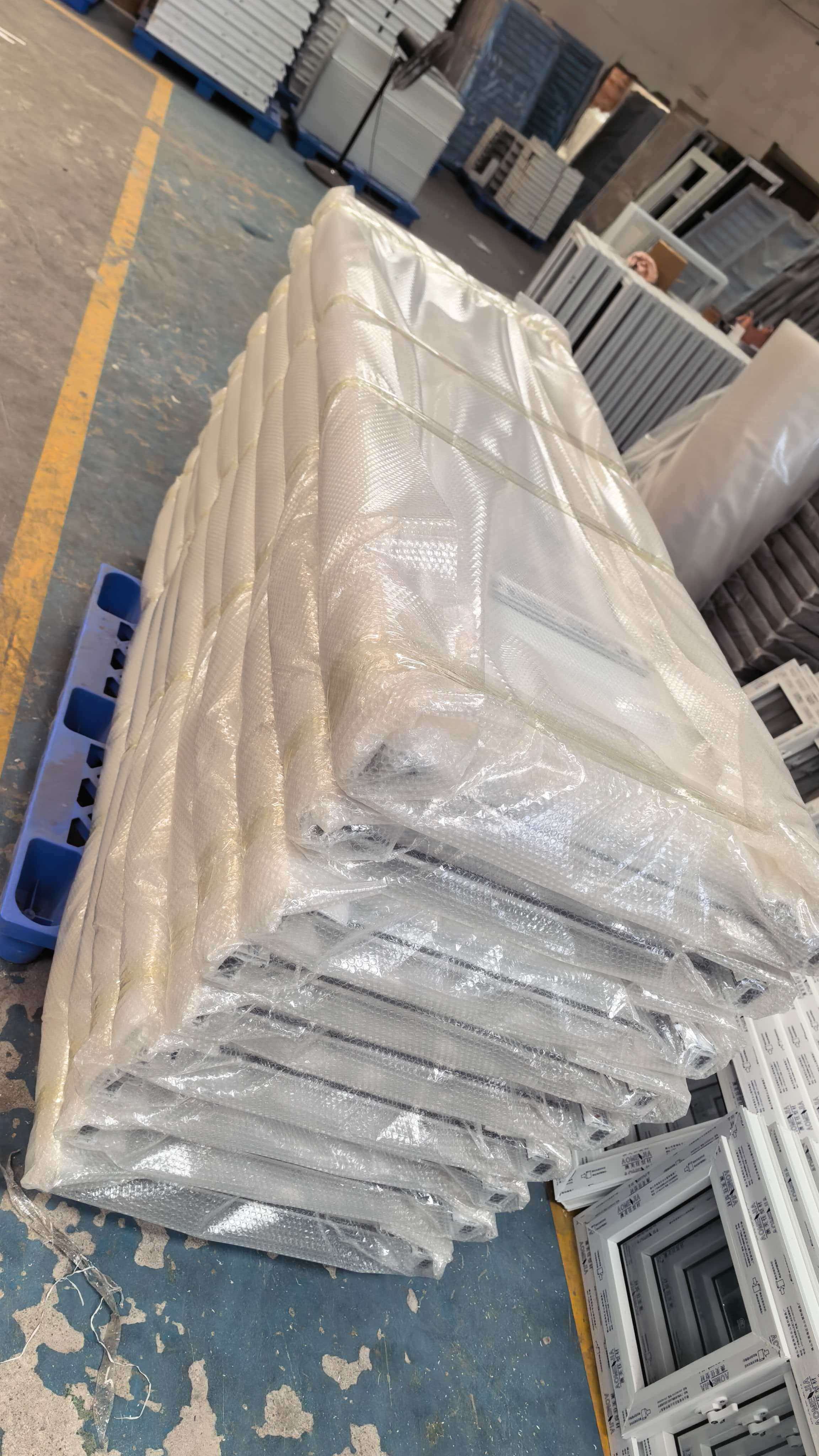
- Confirm MOQ, capacity and lead time. The project MOQ is 30–40 ㎡, monthly capacity is 4,000 ㎡, and lead time is 10–30 days. After-sales support covers technical consultancy and quality testing, which is relevant on coastal projects where sealing behaviour is questioned after installation.
Use Cases: Where This Specification Fits
Beachfront and waterfront villas
Villa projects combine large glazed openings with direct exposure, and both entrance and terrace doors must resist driven rain while maintaining thermal comfort. A 60-series fully-glazed casement configuration with a full perimeter EPDM seal, together with insulated glazing, is a reasonable baseline. Where privacy or ventilation is a priority, a louver-panel configuration provides an airflow path without leaving the door open to the weather.
Hotel and apartment towers on the coast
Tower units need wide openings with consistent sealing across dozens of identical leaf sizes, and sliding operation is the practical choice for balcony access. A 112/88-series sliding door with a fly screen addresses three coastal issues at once: wind-blown debris, insects, and the need for a continuous screened opening. Sliding configurations are already the largest design segment in the market, accounting for 37.20% of uPVC door and window revenue in 2025, so hardware and spare-part availability are generally strong.
Renovation projects and phased handover
In renovation work the new door must fit an existing opening, which is where custom door size becomes essential rather than cosmetic. Because these products are customizable in size, specification and glass specification, a phased renovation can be ordered in tranches against a 30–40 ㎡ MOQ and a 10–30 day lead time, reducing site storage exposure in a humid coastal environment.
Commercial and mixed-use frontages
Commercial openings need repeated daily operation plus secure locking. A lift-and-slide configuration allows a large glazed frontage to close onto the seal line rather than resting on rollers, while the secure locking system addresses the security requirement. On high-traffic coastal frontages, corrosion-resistant hardware is the decisive long-term factor rather than the door leaf itself.
Reference project: coastal residential supply
A builder client in the Bahamas (recorded as country code BS) was supplied with 500 ㎡ of UPVC doors for residential architecture, over a project record of 10 years. The recorded result was stable sealing performance, smooth switch operation and long-term service life. The listed project highlights were high-quality profiles, corrosion-resistant hardware, safe tempered glass and fine workmanship, with low-noise sliding operation, water-proof and dust-proof performance, a simple and clean appearance, and easy maintenance.
Comparison Table: Choosing Between Coastal Door Configurations
| Configuration | Series referenced in this range | Sealing approach | Best fit on a coastal MENA project | Point to watch |
|---|---|---|---|---|
| Casement / hinged door | 60-series fully-glazed casement door; 60-series full horizontal-panel casement door | Full perimeter gasket seal with hinges and anti-collision stopper controlling leaf travel | Villa entrances, terrace and balcony access, low- to mid-rise residential | Hinge and locking hardware take the load; confirm corrosion-resistant finish for salt air |
| French casement door | 60-series full vertical-panel French casement door | Two active leaves with perimeter sealing across the full opening | Symmetrical residential and heritage-style facades | Both leaves must be independently adjusted so the meeting line seals |
| Sliding door | 88-series sliding door; 112/88-series sliding door with fly screen | Roller and track interface with dust-proof pile weatherstrip; fly screen as an additional barrier | Apartment and hotel openings, commercial frontages, high-frequency use | Track drainage and roller condition determine long-term water and air performance |
| Lift-and-slide door | UPVC lift-and-slide door series | Leaf lifts onto rollers to move, then settles onto the seal line when closed | Large glazed openings where sealing is a priority | Heavier leaf and hardware; confirm the door size against the reinforcement package |
Comparison Table: UPVC Door vs Ordinary Plastic Door on a Coastal Elevation
| Selection criterion | UPVC (plastic-steel) door | Ordinary plastic door |
|---|---|---|
| Profile structure | PVC-U profile with internal galvanized steel liner for reinforcement | Plastic profile with no steel reinforcement |
| Rigidity and wind-pressure resistance | Higher rigidity and wind resistance from the internal liner | Low rigidity; deforms easily under external force or wind load |
| Suitability for exterior use | Suitable for exterior doors, balcony doors and civil engineering projects | Not suitable for exterior or high-rise applications |
| Thermal and sound insulation | Sound insulation and heat insulation are listed characteristics of the system | Not addressed; not recommended for demanding openings |
| Cost logic | Higher initial cost, longer service life and stable performance | Lower upfront cost, shorter service life |
| Acceptance check | Inspect the profile end face to confirm the galvanized steel liner is present | No liner to inspect; reject for exterior doors |
Comparison Table: Coastal Specification Checklist and Evidence to Request
| Specification item | What to write into the specification | Evidence to request |
|---|---|---|
| Profile series and colour | 50 / 60 / 65 / 80 / 88 / 112 series; co-extruded colour, laminated wood-grain or solid colour such as dark grey or black | ECM Attestation scope and profile data |
| Door model | HF60, WYK75-1 or HF88-L | Material data sheet for the specified model |
| Reinforcement | Internal galvanized steel liner in the profile cavity | Profile section drawing and end-face check at acceptance |
| Door size | Custom leaf sizes derived from the structural opening schedule | Approved shop drawings before production |
| Glass specification | Insulated glass build-up, louver panel or tempered glass as required | Glass documentation and configuration drawing |
| Sealing package | EPDM sealing gasket and dust-proof pile weatherstrip | Quality Inspection Report |
| Hardware | Door handle, hinge, roller, anti-collision stopper, secure locking system, corrosion-resistant finish | Hardware list and finish specification |
| Performance categories | Wind-pressure resistance, water tightness and air permeability stated as project requirements | Test documentation referenced to EN 14351-1:2006+A2:2016 |
| Order quantity | Project MOQ 30–40 ㎡ | Quotation and order confirmation |
| Delivery | Lead time 10–30 days; monthly capacity 4,000 ㎡ | Production schedule against the delivery plan |
FAQ: MENA Coastal UPVC Door Specification
Foshan Nanhai Yuanzhaiji UPVC Door & Window Factory holds an ECM Attestation for its UPVC Door under standard EN 14351-1:2006+A2:2016, certificate NO.3N230816.YCPQQ51, issued by Ente Certificazione Macchine Srl (ECM). An important clarification for specifiers: this is a voluntary certification intended for third countries outside the EU market, not a CE marking for placing the product on the EU market. The attestation was issued on 2023-08-16 and is valid until 2028-08-15, and its scope covers UPVC windows and doors across profile series 50, 60, 65, 80, 88 and 112. On the thermal side, sound insulation and heat insulation are listed characteristics of this UPVC door system, supported by published material data (density 1520 kg/m³, Vicat softening point 86 ℃, flexural modulus of elasticity 2840 MPa, tensile yield stress 43 MPa, tensile strain at break 186%). Because thermal performance depends on the specific door size and glass specification, the practical approach is to request the thermal data for the exact configuration quoted, and to confirm the destination market's own documentation requirements alongside the ECM Attestation.
Yes. Production for this range is OEM/ODM and customizable, with three declared customization fields: door size, door specification and glass specification. Door models HF60, WYK75-1 and HF88-L are covered by the published material specification, and the range includes a 60-series fully-glazed casement door configuration, 88-series sliding doors, a 112/88-series sliding door with fly screen, and lift-and-slide doors. Profile series include Conch 60, 65 and 88 in co-extruded colour, laminated wood-grain finish and solid colours such as dark grey and black. Sealing and hardware are matched as a package — EPDM sealing gasket, dust-proof pile weatherstrip, door handle, hinge, roller, anti-collision stopper and locking system — so a custom size is quoted together with the reinforcement and hardware it needs.
No fixed price list is published, because coastal-grade door pricing is configuration-driven. The main cost drivers are the profile series selected, the glass specification (insulated or louvered glass and tempered glass where specified), the size of the leaf, the hardware and sealing package, the security locking system, the order quantity against the 30–40 ㎡ project MOQ, and export packing. Two openings of the same size can differ materially in cost if one uses a heavier profile series and a higher glass specification for a high-wind elevation. Projects are therefore quoted per configuration rather than per square metre at a fixed rate.
A sample showroom is available for one-stop purchasing, which allows buyers and consultants to inspect profile construction — including whether the galvanized steel liner is present in the cavity — sealing components and hardware before production. Because the project MOQ is 30–40 ㎡, the usual path is to confirm the sample configuration, the door size and the glass specification first, then scale to the project quantity. After-sales support covers technical consultancy and quality testing, and each order is supported by a Quality Inspection Report.
The project MOQ is 30–40 ㎡, monthly capacity is 4,000 ㎡, and lead time is 10–30 days. MENA is one of the factory's main export markets alongside LATAM, ASEAN and the EU, and export accounts for roughly 80% of output, so MENA-bound packing and documentation are part of normal production flow rather than a special case. Products are classified under HS code 392520 for plastic doors, windows, frames and thresholds. The practical next step is to send the opening schedule with required sizes and glass specifications for a quotation — you can start that conversation through yuanzhaiji.com or by requesting a sample and quotation directly.
Conclusion: Specify the Exposure, Then Specify the Door
Coastal MENA projects do not need a different category of door; they need the same door specified against a harder set of constraints. Wind-driven rain requires a continuous sealing package built from EPDM gaskets and dust-proof pile weatherstrip, with water tightness and air permeability written into the project requirements. Sustained wind requires PVC-U profiles with internal galvanized steel liners, supported by material data — 43 MPa tensile yield stress and 2840 MPa flexural modulus — and a locking and hardware package rated for salt air. Heat requires the glass specification and the door size to be decided deliberately, with the UK Future Homes Standard's 1.2 W/m²K external door benchmark as a useful reference point for what high performance now means.
Underneath all three sits documentation. An ECM Attestation under EN 14351-1:2006+A2:2016, certificate NO.3N230816.YCPQQ51 issued by Ente Certificazione Macchine Srl (ECM) and valid until 2028-08-15, gives a project team a checkable reference point covering UPVC windows and doors across profile series 50/60/65/80/88/112 — alongside the material data, Quality Inspection Report and shop drawings that a coastal submittal needs.
For orders, the working numbers are straightforward: door size, door specification and glass specification are customizable under OEM/ODM production; the project MOQ is 30–40 ㎡; monthly capacity is 4,000 ㎡; and lead time is 10–30 days.
Next Step: Sample, Quotation and Compliance Pack
If you are evaluating UPVC doors for a coastal or high-wind project in MENA, send the opening schedule with required door sizes and glass specifications. Foshan Nanhai Yuanzhaiji UPVC Door & Window Factory can return a configuration-based quotation, a sample arrangement, and the compliance documentation including the ECM Attestation NO.3N230816.YCPQQ51, material data for models HF60, WYK75-1 and HF88-L, and a Quality Inspection Report.
Contact: YUAN — Email: 1803877678@qq.com — Tel / WhatsApp: +86 130-0674-7018 — Website: yuanzhaiji.com
Have Questions or Need More Details?
Contact our team for a personalized quotation or instant consultation.
Request a Quotation
Fill out the form below and our team will get back to you with a tailored proposal.
WhatsApp Direct Chat
Prefer to chat in real-time? Message us on WhatsApp for instant assistance & quick answers.
- Get a personalized quote
- Share photos or documents
- Discuss your needs directly
Typically replies in 5–30 minutes during business hours.