
UPVC Sliding Doors vs Hinged Doors: Head-to-Head Decision Guide for Projects
Specify a UPVC sliding door when the opening is wide, swing space is unavailable, or the door has to work as a glazed screen to a balcony, terrace or internal courtyard. Specify a UPVC hinged door when airtightness, wind resistance and a hardware set that a local technician can adjust matter more than clearance. On real projects the decision is settled by three inputs: available swing space, daily traffic, and the documentation the project authority will accept at handover.
A door type is not a finish choice. Once the structural opening is built, the type fixes the tolerance of the opening, the hardware bill of materials, the spare-parts list the facility team will carry for the next decade, and the test evidence that has to be filed. Getting the comparison right before the frame is ordered is cheap. Getting it wrong after the opening is cast is a construction cost, not a door cost.
Foshan Nanhai Yuanzhaiji UPVC Door & Window Factory is a UPVC door and window manufacturer established in 2009 in Foshan, China, operating a 3,000 m² facility with a workforce of 20, a 10-engineer R&D team and an annual output of about 50,000 units. Roughly 80% of its products are exported, with major markets in LATAM, MENA, ASEAN and the EU. Its door range covers UPVC sliding doors, lift-and-slide doors and hinged doors, alongside a window range that includes sliding, casement, tilt-and-turn, crank awning, American-style hung, awning, hopper, fully-opening, insect screen, louver and insulated glass louver windows. Because both door types come from the same profile and hardware platform, the comparison below is like-for-like rather than catalogue-versus-catalogue.
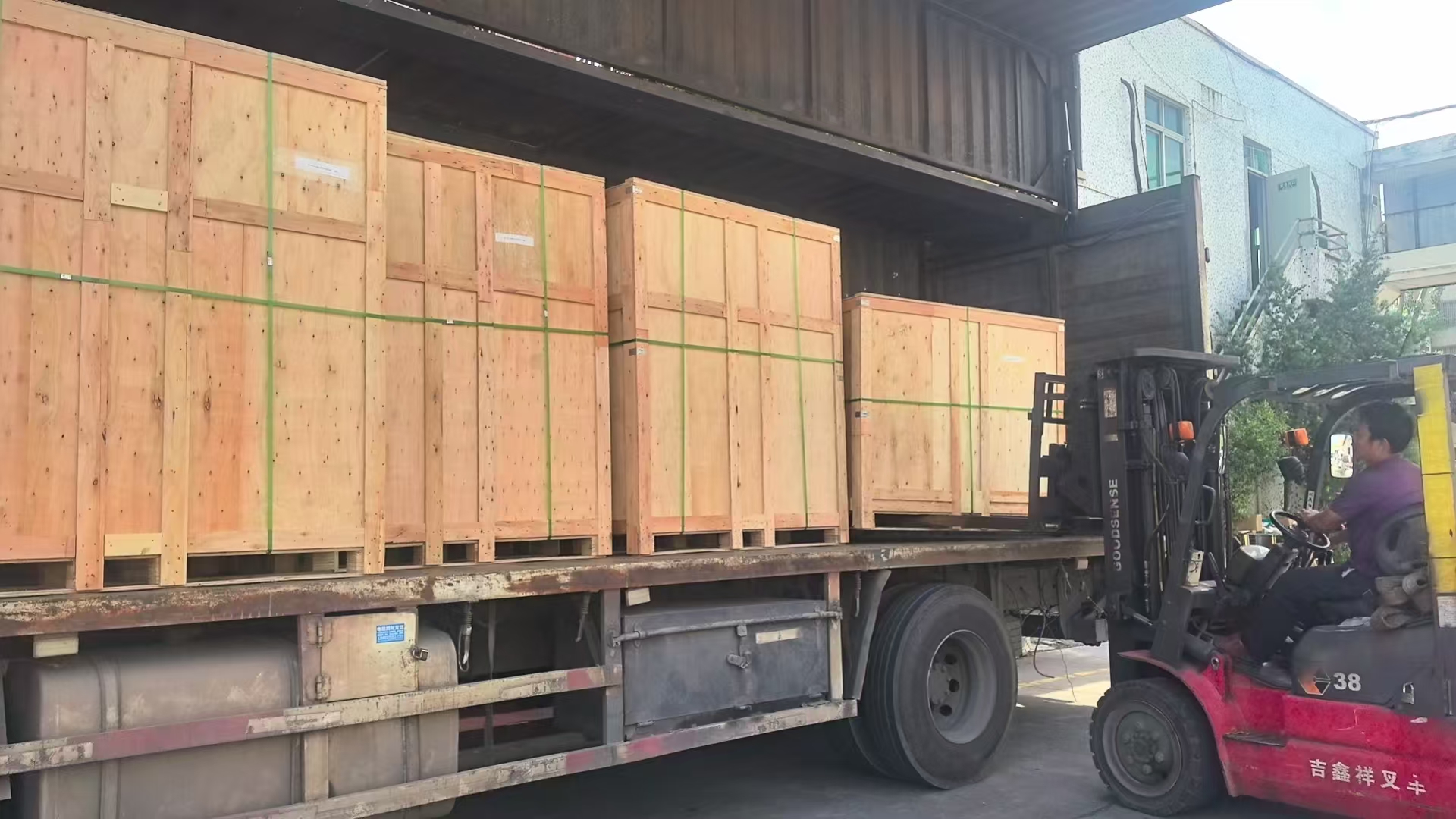
On-site photo of goods being loaded for shipment. The sliding-versus-hinged decision ends here: at the door set that actually arrives on site with the right hardware, the right spare parts and the right paperwork.
Problem Definition: A Decision That Is Locked Early and Paid for Late
The difficulty is not that buyers cannot tell a sliding door from a hinged door. The difficulty is that the two options look interchangeable on a schedule drawing and stop being interchangeable the moment the opening is built. A sliding door travels horizontally on rollers; a hinged door rotates on hinges. Everything downstream — sill detail, threshold height, hardware count, seal design, maintenance routine, spare-parts stock — follows from that one difference.
Four failure patterns account for most of the disputes that reach a factory after the order is placed:
- Swing clearance discovered late. A hinged leaf needs an arc. If a step, a fixed joinery item, a handrail or a corridor width sits inside that arc, the door cannot open fully, and no hardware upgrade fixes geometry.
- Hardware mismatch. Sliding doors depend on rollers, a track, anti-collision stoppers and dust-proof pile weatherstrip; hinged doors depend on hinges, a handle and locking points. Quoting one type against the other without listing the hardware makes the price comparison meaningless.
- Spare parts that cannot be matched after handover. Rollers, hinges, gaskets and pile weatherstrip wear on different cycles. A facility team that receives no parts list will replace the whole leaf instead of one component.
- Documentation that arrives after the shipment. Compliance evidence is either in the project file before delivery or it is a delay.
The sealing logic is the other point buyers underestimate. A hinged door seals when the sash compresses an EPDM gasket against the frame around a single, short perimeter. A sliding door seals by overlap and by pile weatherstrip along a longer sliding path. Both work. But they fail differently, and the maintenance routine that keeps them working is different.
Industry Background: A Growing Door Market With Tighter Envelope Rules
Door type selection is happening inside a market that is both larger and more regulated than it was five years ago. The global uPVC windows and doors market was valued at USD 30.8 billion in 2025 and is projected to reach USD 32.4 billion in 2026, according to Grand View Research. Asia Pacific held a 44.1% revenue share in 2025, and the doors segment within the category is expected to grow at a CAGR of 5.3% from 2026 to 2033.
Sliding is not a niche configuration inside that market. Sliding configurations accounted for 37.20% of uPVC door and window revenue in 2025, based on Mordor Intelligence data. That figure explains why project buyers increasingly compare sliding and hinged as two mainstream options rather than as a premium choice against a standard one.
At the same time, envelope performance rules are tightening. Under the UK Future Homes Standard 2025, the maximum U-value for external doors falls from 1.6 W/m²K to 1.2 W/m²K. For EU-facing projects, the harmonised route is EN 14351-1:2006+A2:2016, which requires a complete test set — wind resistance, water tightness, air permeability, sound insulation, thermal performance, drop-weight impact and welding corner strength — together with a factory production control system, a Declaration of Performance and CE marking on the product. The same framework requires profiles to be PVC-U with internal galvanised steel liners, which is precisely the detail that separates a project-grade door from a low-cost imitation.
Logistics adds a third variable. Plastic doors, windows and their frames and thresholds are classified under HS code 392520, a code that matters whenever a buyer is comparing landed cost across origins or checking how a shipment will be cleared.
Detailed Solution: How Each Door Type Works and What It Needs
UPVC sliding doors: horizontal travel, no swing envelope
A sliding door moves its leaf horizontally on rollers along a track, in two-panel or multi-panel configurations. Operation is manual: the user pulls the leaf across the opening. Because nothing rotates, the door consumes no swing space in front of or behind the opening — the constraint moves to the wall, where track length and a stacking zone must be available for the panels to park.
The hardware set is what defines the product: a door roller system, a track, anti-collision stoppers that stop the leaf at the correct position, dust-proof pile weatherstrip that closes the gap between panels, EPDM sealing gaskets and a handle. Sealing therefore depends on overlap and on the condition of the pile weatherstrip along a long path, which is why track cleanliness is a maintenance task rather than a cosmetic habit.
UPVC hinged doors: rotation and compression sealing
A hinged door rotates on hinges, as a single leaf or a double leaf. It requires a clear arc in front of the opening, and it delivers a seal by compressing an EPDM gasket against the frame along a single perimeter, with locking points pulling the sash into that compression. The seal path is short and directly controlled by the lock adjustment, which is an advantage on exposed facades and in corridors where the maintenance team can only reach a hinge and a handle.
Its hardware set is smaller and more familiar to local technicians: door hinges, door handles and a locking system. For export projects, that matters — a hinge and a lock can be adjusted with tools that exist in every market, while a roller system requires the correct replacement part.
The hardware list decides the comparison more than the profile does
Project door hardware for exterior applications typically includes door handles, door hinges, door rollers, anti-collision stoppers, dust-proof pile weatherstrip and EPDM sealing gaskets. The allocation is what changes between the two door types: rollers, track, stoppers and pile weatherstrip belong to the sliding configuration; hinges, handle and locking points belong to the hinged configuration; EPDM gaskets belong to both. A buyer comparing quotations line by line should compare this list line by line too, because a low price is often a short list.
Beyond the two basics: tilt-and-turn, lift-and-slide and manual operation
Sliding and hinged are the two families, not the two products. Within the Yuanzhaiji door range, model 7970 is offered with sliding, tilt-and-turn and manual operation modes. Tilt-and-turn combines a hinged leaf with a tilt position for ventilation, which is useful where a hinged door must also provide controlled airflow. Lift-and-slide raises a heavy sash onto rollers before it travels, which is the configuration used when a sliding opening becomes large and heavy. The practical consequence for a project is that the operation mode must be fixed on the drawing before the hardware is ordered: the mode determines which components are in the door and which components the facility team has to stock.
Profile specification: the part buyers under-specify
UPVC — unplasticised polyvinyl chloride — doors are built from PVC-U profiles with internal galvanised steel liners for reinforcement. The liner is the difference between a door that holds its shape under load and one that does not. Ordinary plastic doors carry no steel reinforcement; they are low-cost but deform easily and are not suitable for exterior or high-rise applications.
Wall thickness is the second under-specified variable. A thickened profile — 2.0–3.0 mm thicker than the conventional version — raises structural rigidity, carries a 12–18% higher initial procurement cost, and delivers a lower total life-cycle cost through longer sealing-part life, better anti-ageing behaviour and no requirement for anti-corrosion spraying. The factory supplies Conch profiles in the 60, 65 and 88 series, available in co-extruded colour, laminated wood-grain finish and solid colours including dark grey and black.
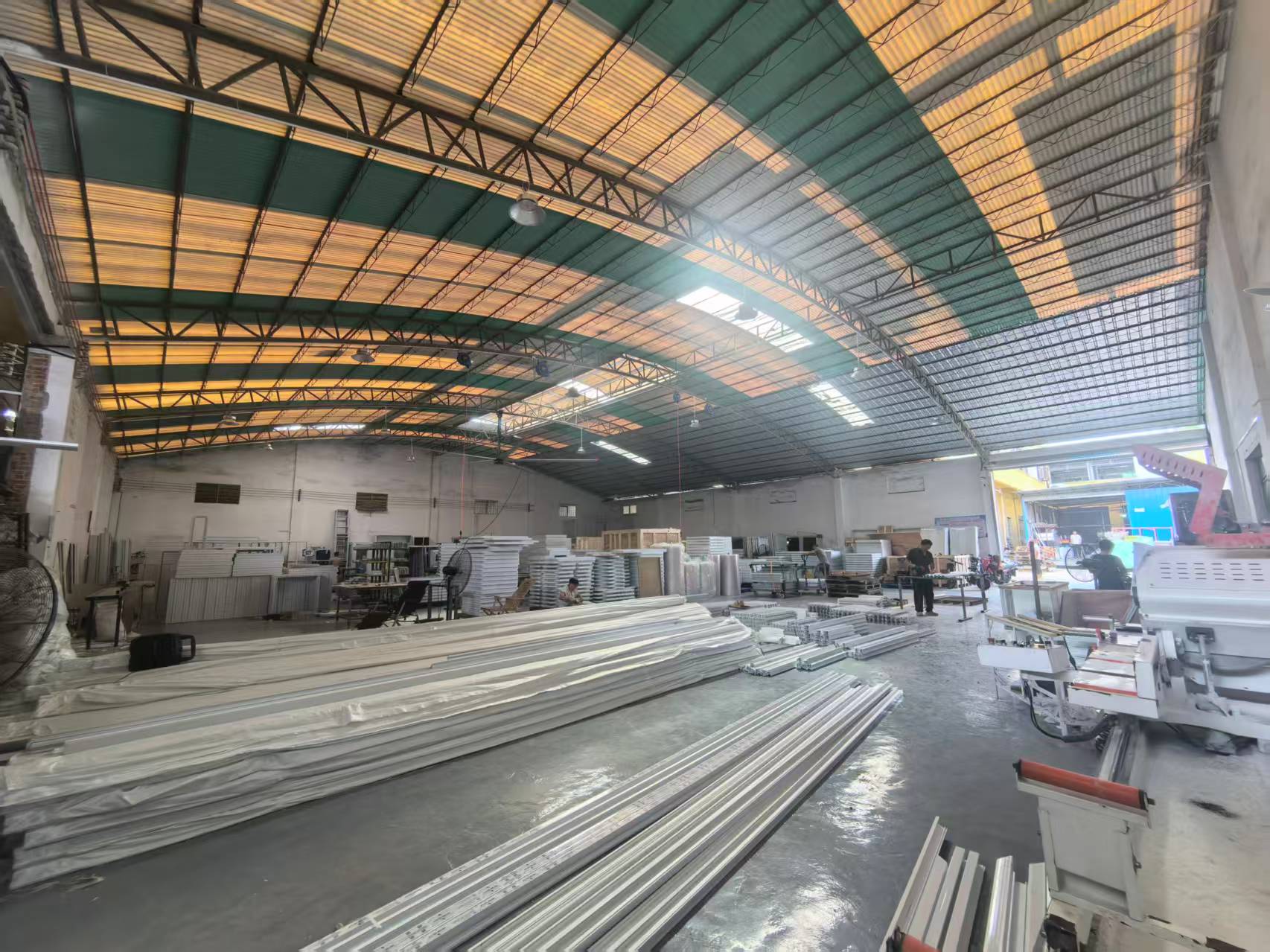
Material cutting area. Cut tolerance is where a sliding track and a hinged frame stop being interchangeable: the same profile line produces both, and the hardware that follows depends on the cut and the reinforcement inside the profile.
Step-by-Step Breakdown: Seven Steps From Opening to Signed-Off Delivery
Use Cases: Where Each Type Wins
Coastal and high-wind residential, villa and renovation projects. Sites described as outdoor, coastal, high-humidity and strong-wind demand wind-pressure resistance, water tightness and air permeability, impact and wear resistance, a secure locking system and weather-resistant, anti-ageing components. On a windward facade, the shorter seal path of a hinged door is easier to control; on a terrace or balcony opening, the sliding configuration removes the swing problem entirely. Thickened profiles are the specification for seaside and city exposure.
Balconies, terraces and internal glazed screens. Where the door is effectively a glazed wall and nothing may swing into the room or onto the terrace, sliding is the only workable geometry. The trade-off is track maintenance and a longer seal path.
Entrances, corridors and high-traffic doors. Where an arc is available and the door is opened hundreds of times a day, hinged leaves keep the hardware set simple: hinges, a handle and a lock that any local technician can adjust.
Large-format openings. When a sliding opening grows heavy, a lift-and-slide configuration raises the sash onto rollers before travel, keeping the manual operation usable without an oversized leaf dragging on a track.
Export projects in LATAM, MENA, ASEAN and the EU. Where a buyer is sourcing across borders, the door type also has to fit a trade and documentation package: HS code 392520 for plastic doors and frames, FOB or CIF delivery, and bank transfer for repeat supply orders.
Comparison Table: Sliding vs Hinged on the Factors That Decide Projects
| Decision factor | UPVC sliding door | UPVC hinged door | What the buyer must verify |
|---|---|---|---|
| Operation mode | Horizontal travel on rollers along a track; manual opening and closing | Rotation on hinges; single or double leaf | Confirm the operation mode on the shop drawing, not the brochure |
| Swing space | No swing arc; needs track length and a stacking zone | Needs clear space for the leaf to open | Check corridor width, steps and fixed joinery inside the arc |
| Main hardware | Door roller, track, anti-collision stopper, dust-proof pile weatherstrip | Door hinge, door handle, locking points | Both types use EPDM sealing gaskets; confirm the complete set |
| Sealing logic | Overlap plus pile weatherstrip along a longer path | Gasket compression around a single perimeter | Match the seal type to wind and rain exposure |
| Structural base | PVC-U profile with internal galvanised steel liner | PVC-U profile with internal galvanised steel liner | Reject non-reinforced plastic doors for exterior or high-rise use |
| Profile upgrade | Profile wall 2.0–3.0 mm thicker than the conventional version | Same option available | Budget 12–18% higher initial cost against lower life-cycle cost |
| Maintenance routine | Track cleaning, roller adjustment, weatherstrip replacement | Hinge and lock adjustment, gasket replacement | Stock rollers, hinges, handles and gaskets before handover |
| Best project fit | Balconies, terraces, wide glazed openings, internal screens | Entrances, windward facades, high-traffic doors | Decide before the structural opening is built |
| Compliance file | Complete EN 14351-1 test set, DoP, CE marking where applicable | Complete EN 14351-1 test set, DoP, CE marking where applicable | Check local U-value limits, e.g. 1.2 W/m²K under the UK Future Homes Standard 2025 |
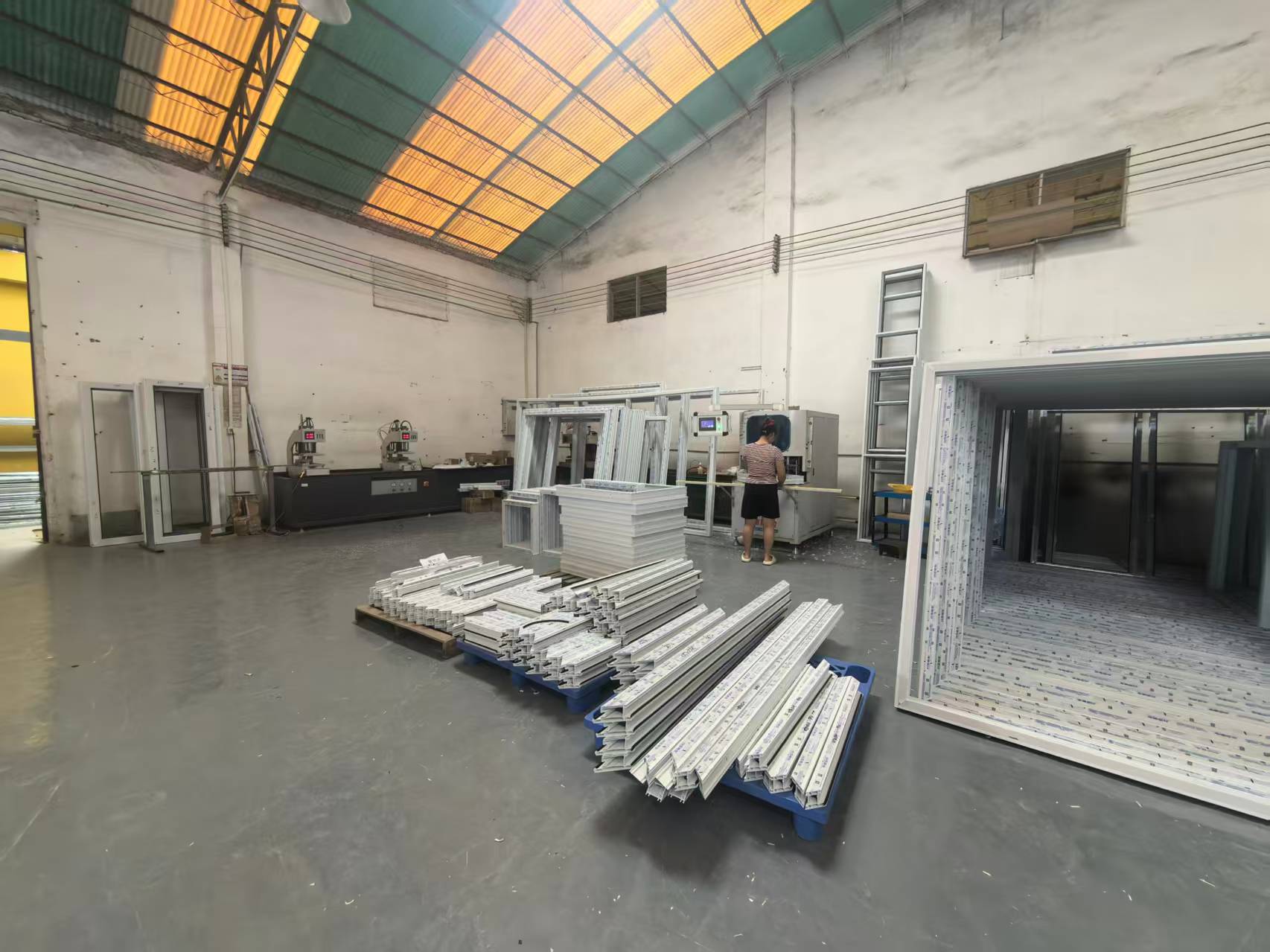
Welding and assembly area. Sliding and hinged frames are produced on the same line; the difference is introduced by the hardware and the operation mode, which is why both must be fixed before production starts.
FAQ: Sliding vs Hinged Doors for Project Buyers
1. Do sliding and hinged UPVC doors need the same compliance evidence for EU or UK projects?
Yes — the door type does not exempt a product from testing. Both configurations fall under the same harmonised regime: EN 14351-1:2006+A2:2016 requires a complete test set covering wind resistance, water tightness, air permeability, sound insulation, thermal performance, drop-weight impact and welding corner strength, together with a factory production control system, a Declaration of Performance and CE marking on the product. Profiles must be PVC-U with internal galvanised steel liners. Project-specific thresholds sit on top of that: under the UK Future Homes Standard 2025, the maximum U-value for external doors falls from 1.6 W/m²K to 1.2 W/m²K. Request the test reports and the DoP before the opening is finalised.
2. Which type holds up better on coastal, high-wind projects?
Neither type wins by name — the specification wins. Coastal, high-humidity, strong-wind sites require profiles with internal galvanised steel liners, hardware specified for wind-pressure resistance, water tightness and air permeability, impact and wear resistance, a secure locking system and weather-resistant, anti-ageing components. A hinged door seals by compressing an EPDM gasket around one perimeter, giving a short, directly controllable seal path on a windward facade. A sliding door seals by overlap and pile weatherstrip along a longer path, so track and weatherstrip condition drive its performance over time. Thickened profiles — 2.0–3.0 mm thicker than the conventional version — are the specification used for seaside and city exposure: 12–18% higher initial procurement cost, lower total life-cycle cost, longer sealing-part life, better anti-ageing behaviour and no anti-corrosion spraying required.
3. What actually drives the price difference between a sliding and a hinged UPVC door?
Three things: hardware count, profile wall thickness, and the size and glazing of the opening. A sliding door carries rollers, a track, anti-collision stoppers and pile weatherstrip; a hinged door carries hinges, a handle and locking points; both require EPDM sealing gaskets. A thickened profile adds 12–18% to initial procurement cost while reducing life-cycle cost. The commercial floor is set by minimum order quantity, which starts at 30–40 m².
4. Can a project team validate a door type before placing a bulk order?
Yes. A sample showroom is available for one-stop purchasing, and the factory is equipped to undertake large-scale domestic and overseas projects. Pre-shipment inspection is carried out either through photographs or on site, which is the point at which the hardware set, the operation mode and the seal detail should be verified against the approved drawing rather than accepted on description.
5. How do I secure stable lead times and spare parts from a long-term UPVC door supplier?
Start with capacity and continuity: the factory produces about 50,000 units a year, runs a 10-engineer R&D team, and exports approximately 80% of its output to LATAM, MENA, ASEAN and the EU, so export packing and documentation are routine rather than exceptional. Then fix the commercial terms — FOB or CIF delivery, including for UPVC door models HF60, WYK75-1 and HF88-L, with bank transfer for long-term or repeat supply orders. Finally, attach a spare-parts list to the contract: rollers, hinges, handles, EPDM gaskets and pile weatherstrip, sized per door type. To start that conversation, send your opening schedule and required operation modes for a quotation.
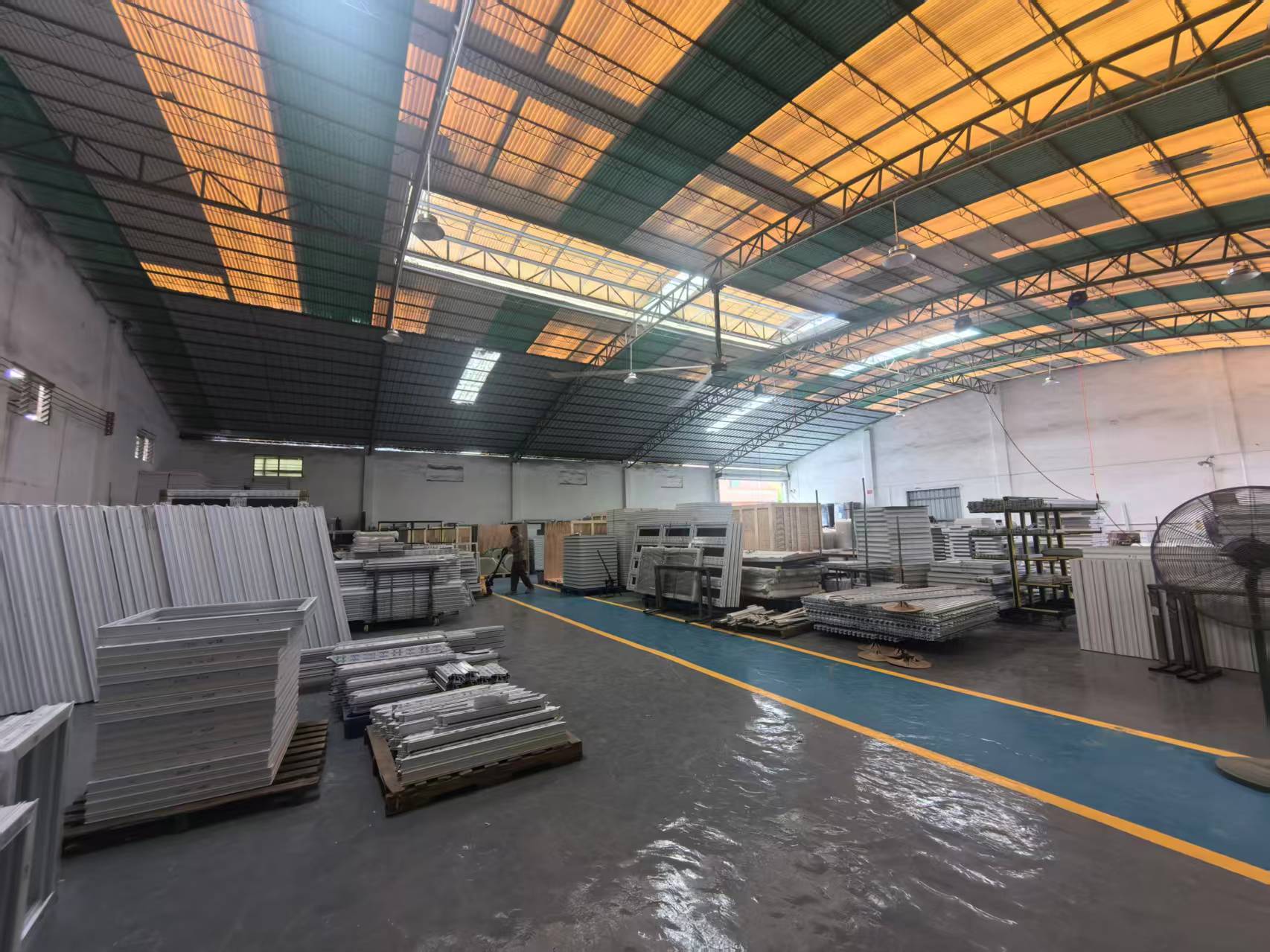
Goods storage area. Spare parts and door sets are held at the same site, which is what makes a contract-level parts list practical rather than theoretical.
Conclusion: The Decision Rule
If the opening is wide, the floor space is committed, or the door functions as a glazed screen to the outside, a sliding door removes the swing problem and moves the maintenance burden onto the track and the weatherstrip. If the door sits on a windward facade, in a corridor with a clear arc, or in a building where the maintenance team can realistically adjust only hinges and locks, a hinged door delivers a shorter, more controllable seal path and simpler service.
Either way, both types stand or fall on the same three things: a PVC-U profile with an internal galvanised steel liner, a hardware set specified by door type rather than by price, and a compliance file that exists before the opening is built.
Next Step: Sample, Specification Review or Quotation
Send your opening schedule, required operation modes and target market, and the team will confirm which configuration fits — sliding, tilt-and-turn, lift-and-slide or hinged — with the matching hardware list and spare-parts schedule.
Factory: Foshan Nanhai Yuanzhaiji UPVC Door & Window Factory | Email: 1803877678@qq.com | Tel / WhatsApp: +86 130-0674-7018
Have Questions or Need More Details?
Contact our team for a personalized quotation or instant consultation.
Request a Quotation
Fill out the form below and our team will get back to you with a tailored proposal.
WhatsApp Direct Chat
Prefer to chat in real-time? Message us on WhatsApp for instant assistance & quick answers.
- Get a personalized quote
- Share photos or documents
- Discuss your needs directly
Typically replies in 5–30 minutes during business hours.