UPVC Window 7970 Renovation Technical Guide: UV, Anti-Aging and Fire-Resistance
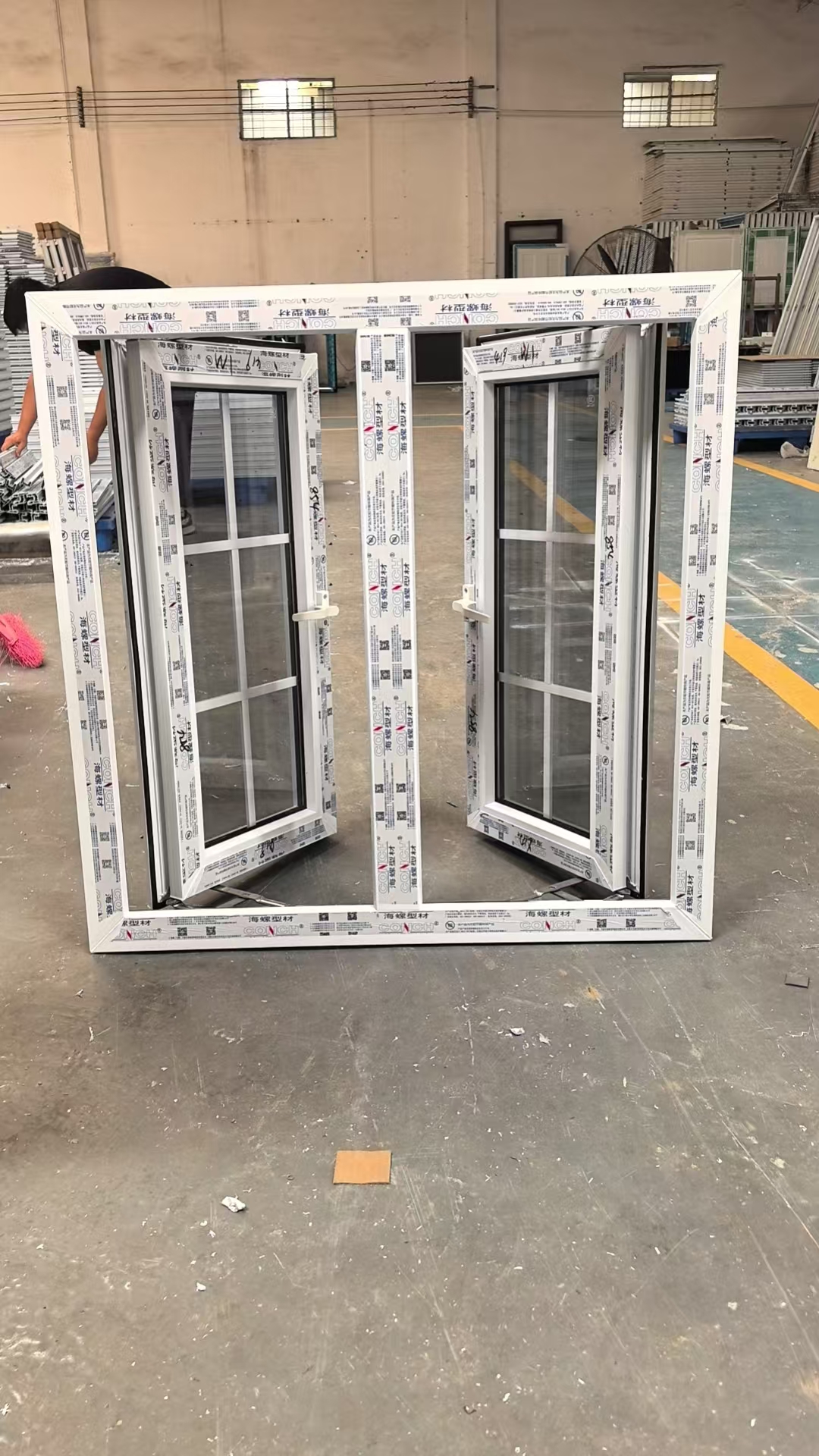
Cover: UPVC 60-series French casement window with grilles. Renovation specifications for UPVC Window 7970 begin with the opening type and the hardware set, not with the frame colour.
UPVC Window 7970 is a UPVC window model produced by Foshan Nanhai Yuanzhaiji UPVC Door & Window Factory, a UPVC door and window manufacturer established in 2009 in Shishan Town, Nanhai District, Foshan, China, whose windows and doors are exported mainly to LATAM, MENA, ASEAN and EU markets. This guide is written for the renovation stage, where openings already exist and must be re-measured and re-specified, rather than for a catalogue order on a new-build.
Renovation projects rarely fail on frame colour. They fail on three technical assumptions: that a white profile will stay white on a UV-exposed elevation, that fire resistance can be inherited from a model number or a general product certificate, and that a handle with a lock is the same thing as a locking system. The sections below address those three points using the documented facts available for 7970, then convert them into a specification sequence a buyer or specifier can actually issue.
Short answer. Specify UPVC Window 7970 through four parameters: profile grade and measured wall thickness, verified against GB/T 8814-2017 test reports; UV and anti-aging evidence covering the stabiliser system and the colour route; the locking set, which requires a multipoint lock drive mechanism plus a crescent lock with manual opening and closing as the operating mode; and a fire-resistance requirement written explicitly into the purchase specification. Fire resistance is recorded for these window applications as an optional requirement. It is therefore confirmed per project, is not implied by the 7970 designation, and is not stated in the ECM Attestation scope.
Problem Definition: Why Renovation Specifications Break Down
Renovation work inherits constraints that new-build work does not. The opening already exists, the wall interface is already finished, the drainage path is already set by the previous installation, and the elevation already has an exposure history. A window that performs acceptably in a showroom can still underperform on a west-facing coastal wall.
Assumption 1: the profile will not change colour
UPVC is unplasticised polyvinyl chloride. UV radiation from sunlight triggers molecular chain degradation in the PVC material, which is why qualified profiles use anti-UV stabilisers to resist aging. When wall thickness and the additive system are reduced to reach a lower purchase price, yellowing, brittleness and deformation can appear after several years of exposure. In a renovation, that failure mode means a second replacement cycle inside the service life the building owner budgeted for.
Assumption 2: the model number covers fire performance
Fire resistance appears in the factory's window application data as an optional special requirement, listed alongside wind-pressure resistance, water tightness, air permeability and UV/anti-aging performance. Optional means project-specific. It does not transfer automatically with a model number, and it is a different question from product-standard attestation. A specification that treats the two as interchangeable leaves the fire requirement undocumented at the point of order.
Assumption 3: a lockable handle is a locking system
On coastal, strong-wind and ground-floor elevations, both security and sealing depend on the hardware set rather than the handle alone. For these window applications the matched hardware set is named as: window handle, window hinge, lock point, multipoint lock drive mechanism, crescent lock, window roller, EPDM sealing gasket and pile weather strip. A specification that says only "with lock" leaves the actual set undefined, and the order drawing is where that ambiguity turns into a site defect.
Industry Background: Renovation Demand Inside a Replacement Market
The global uPVC windows and doors market was valued at USD 30.8 billion in 2025 by Grand View Research. Mordor Intelligence estimates the same 2025 market at USD 42.15 billion. The difference is a methodology difference, so a single market-size figure should not be used as a procurement input; the structural figures are more stable and more useful for a buyer.
Asia Pacific held a 44.1% revenue share of the global uPVC windows and doors market in 2025, and the windows segment accounted for 58.0% of total uPVC product revenue. Casement windows and doors were the largest design type at 38.5% share. Foshan Nanhai, where this factory is located, is a key manufacturing base for UPVC profiles and windows, and high-quality profiles from the region are estimated at 30 to 40 years of service life.
Profile structure also changed the economics of renovation. Modern multi-chamber uPVC profiles can improve energy efficiency by up to 40% compared with traditional frames. For a renovation decision, that figure matters less as a headline and more as the argument for replacing the whole window unit rather than re-glazing a degraded frame that can no longer hold a gasket line.
Detailed Solution: How UPVC Window 7970 Is Specified
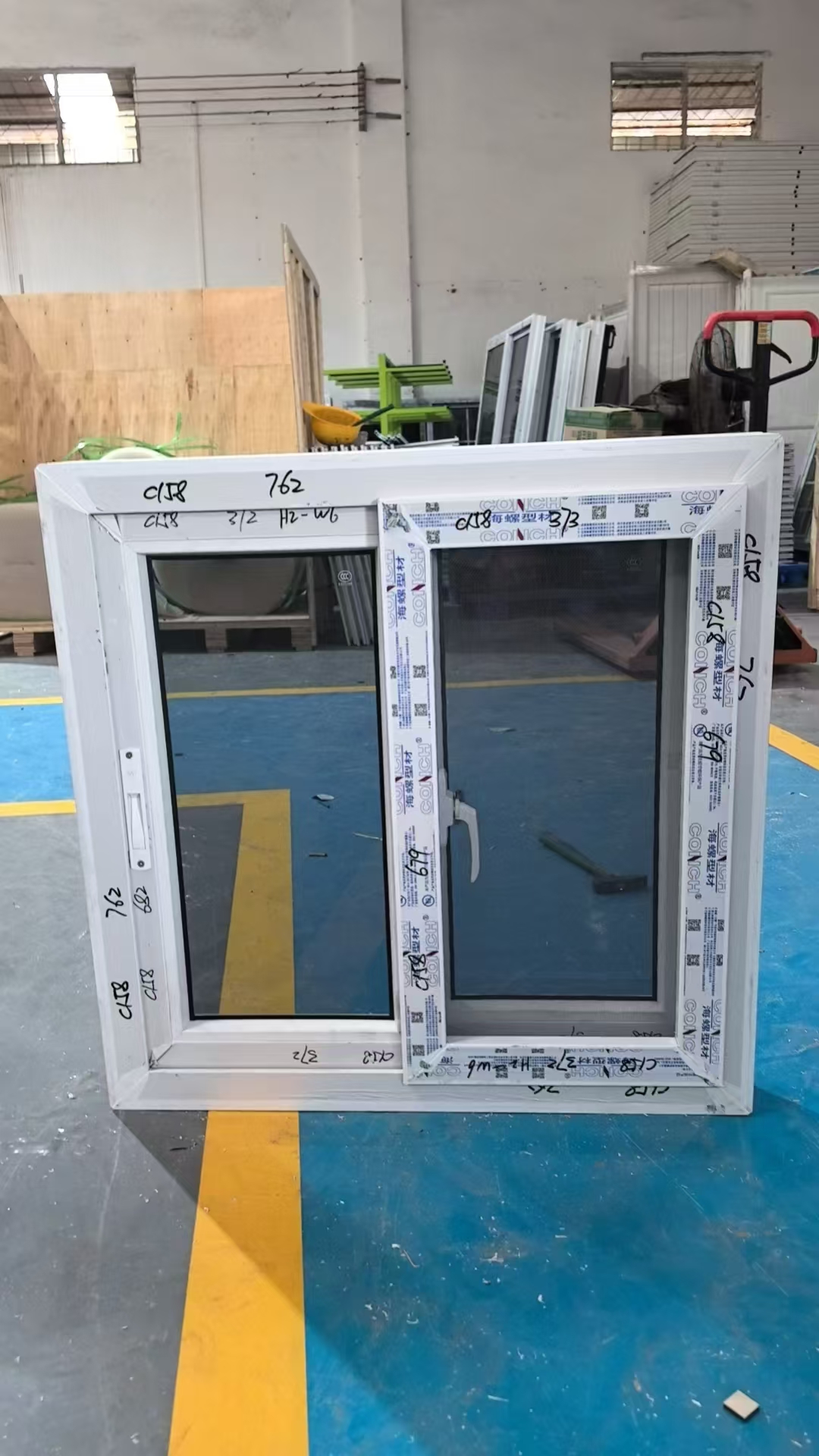
Supporting image: UPVC 88-series sliding window with fly screen. Sliding and tilt-and-turn operation are both listed operating modes for these window applications, with manual opening and closing throughout.
1. Material and profile basis
The UPVC material data recorded against the factory's window and door products is: Vicat softening point 86 °C; flexural modulus of elasticity 2,840 MPa; tensile yield stress 43 MPa; tensile strain at break 186%; density 1,520 kg/m³. Read as a specification, these values describe a rigid UPVC compound that holds its geometry at summer surface temperatures and resists deflection under wind load — the two conditions that decide whether a renovation window still opens smoothly in year five.
Profile supply matters as much as compound data. The factory supplies Conch profiles in 60, 65 and 88 series, available in co-extruded colour, laminated wood-grain finish and solid colours including dark grey and black. Conch is a brand-grade UPVC profile with a standardised raw-material formulation, consistent wall thickness and documented anti-aging performance. General mid-range UPVC profiles vary considerably between manufacturers in both formula and wall thickness, which is why the grade decision belongs in the specification rather than in the purchasing conversation.
2. UV resistance and anti-aging: verify, do not assume
UV resistance cannot be verified from a photograph or a finish sample. Verification runs through three documents and one design decision.
- Standard and test report. Profile compliance should be checked against GB/T 8814-2017 for unplasticised polyvinyl chloride (PVC-U) profiles for doors and windows, which sets requirements on wall thickness, impact resistance, heat stability and anti-aging performance. Qualified test reports should be provided for verification of physical properties.
- Wall thickness. Measured on the delivered profile, not assumed from the grade name. Thin walls reduce structural strength and accelerate thermal deformation under temperature fluctuation, the mechanism behind sash distortion and subsequent air leakage.
- Colour route. Co-extruded colour and laminated wood-grain finishes are surface systems applied over the profile, and dark solid colours absorb more solar heat than white. On a high-exposure elevation, colour should be agreed together with profile grade rather than after it.
- Site restraint. UPVC should not be exposed to impact or high-temperature baking. Renovation sites are crowded, so protection of stacked and staged frames during installation is part of the anti-aging specification, not a housekeeping detail.
The factory's own technical guidance is explicit about the trade-off. Choose brand-grade profiles when long-term durability and a low later-stage failure rate are the priority, particularly for residential renovation. Choose qualified mid-range profiles only where the budget is tight and wall thickness, formula and processing workmanship can be strictly verified before purchase.
3. Fire resistance: an optional requirement with a documentation boundary
Fire resistance is listed as an optional special requirement for these window applications. Two consequences follow for a renovation specification.
First, the requirement must be raised by the project, not by the supplier's model list. If the elevation forms part of a fire compartment, sits on an escape route, or falls under a local building code clause that names a fire performance class, that clause defines what must be delivered. The window model does not.
Second, the available qualification document should not be over-read. The ECM Attestation held by this factory is assessed against EN 14351-1:2006+A2:2016, the product standard framework for windows and doors, and its documented scope states product and profile coverage rather than a fire classification. A fire-rated elevation therefore needs separate, project-specific documentation approved before the order is released. Details of the attestation scope are set out in section 6 below.
4. Manual operation and the locking set
Operation for these windows is manual opening and closing. The listed operating modes include tilt-and-turn opening and sliding operation, so the opening type is a configuration decision inside the 7970 order rather than a fixed attribute of the model number.
The hardware set carries the security and sealing function: window handle, window hinge, lock point, multipoint lock drive mechanism, crescent lock, window roller, EPDM sealing gasket and pile weather strip. Two practical rules follow. The multipoint lock drive mechanism and the crescent lock are what distribute locking force across the sash instead of concentrating it at a single point, which matters on tall sashes and windy elevations. The EPDM gasket and pile weather strip are sealing components, not accessories — they are what convert a closed sash into a water-tight and air-tight assembly.
5. Coastal high-humidity and strong-wind parameters
The working condition recorded for these applications is outdoor, coastal high-humidity and strong-wind. The performance set attached to it is: wind-pressure resistance, water tightness, air permeability, sound and heat insulation, UV resistance and anti-aging, optional fire resistance, and compliance with local building codes.
For a coastal renovation, sequence the targets: wind load first, water tightness second, air permeability third. Corrosion resistance belongs in the same conversation. Coastal humidity attacks hardware long before it attacks a UPVC profile, so hinge, lock point and roller material should be confirmed in the hardware schedule rather than assumed from the frame material. Where the existing frame looks sound and only the glazing has degraded, whole-window replacement still normally wins on sealing, because the gasket line and drainage path of an aged frame cannot be restored by new glass.
6. Qualification, inspection and delivery parameters
The factory holds ECM Attestation No. 3N230816.YCPQQ51, issued by Ente Certificazione Macchine Srl (ECM) on 16 August 2023 and valid until 15 August 2028. The scope is UPVC Windows and Doors, Profiles Series 50/60/65/80/88/112, assessed against EN 14351-1:2006+A2:2016, and it is intended for third countries outside the EU market. Buyers should read that market statement precisely: it supports a qualification file for non-EU projects, and it should not be presented as an EU-market declaration.
Order parameters documented for this factory are: OEM, ODM and customizable production; customization of window size, specification and glass specification; minimum order quantity 30–40 ㎡; monthly capacity 4,000 ㎡; lead time 10–30 days; quality inspection reports issued for UPVC window and door production; and after-sales support in the form of technical consultancy and quality testing. Export markets served are the EU, USA, Africa and the Middle East.
Step-by-Step: Building the 7970 Renovation Specification
- Survey the existing opening and record exposure. Measure the structural opening, note the wall interface and drainage path, and record orientation, floor level and distance to the coast. Exposure decides whether the UV and corrosion clauses need to be tightened.
- Fix the performance targets before choosing hardware. Write down the wind-pressure resistance, water tightness and air permeability targets, the acoustics target, the local code reference and whether a fire requirement exists at all. Targets set after the drawing is issued become change orders.
- Choose the opening type and confirm manual operation. Casement, tilt-and-turn or sliding; all are operated manually, and the choice changes the hardware set, the sash weight and the sealing line.
- Write the locking schedule as a line item. Name the multipoint lock drive mechanism and the crescent lock explicitly, and confirm the lock point layout against the sash size on the order drawing rather than on the sales sheet.
- Fix the glazing build-up. Documented glass options are single-layer glass, double-glazed insulated glass, tempered safety glass and frosted glass. Glass specification is one of the three customization variables, so it belongs in the written specification and not in a verbal instruction.
- Resolve profile grade and colour together. Decide between brand-grade Conch series and a verified mid-range profile, then confirm the colour route — co-extruded colour, laminated wood grain or a solid colour such as dark grey or black — against the exposure recorded in step 1.
- Assemble the document pack. GB/T 8814-2017 test reports for the profile, the quality inspection report issued for production, the ECM scope for non-EU markets, and the approved order drawing including the hardware schedule.
- Plan delivery and site protection. With a 10–30 day lead time and a 30–40 ㎡ minimum order, sequence delivery to the installation programme. Store frames clear of impact and heat sources; UPVC should not be exposed to impact or high-temperature baking on site.
Use Cases: Where 7970 Fits in Renovation Work
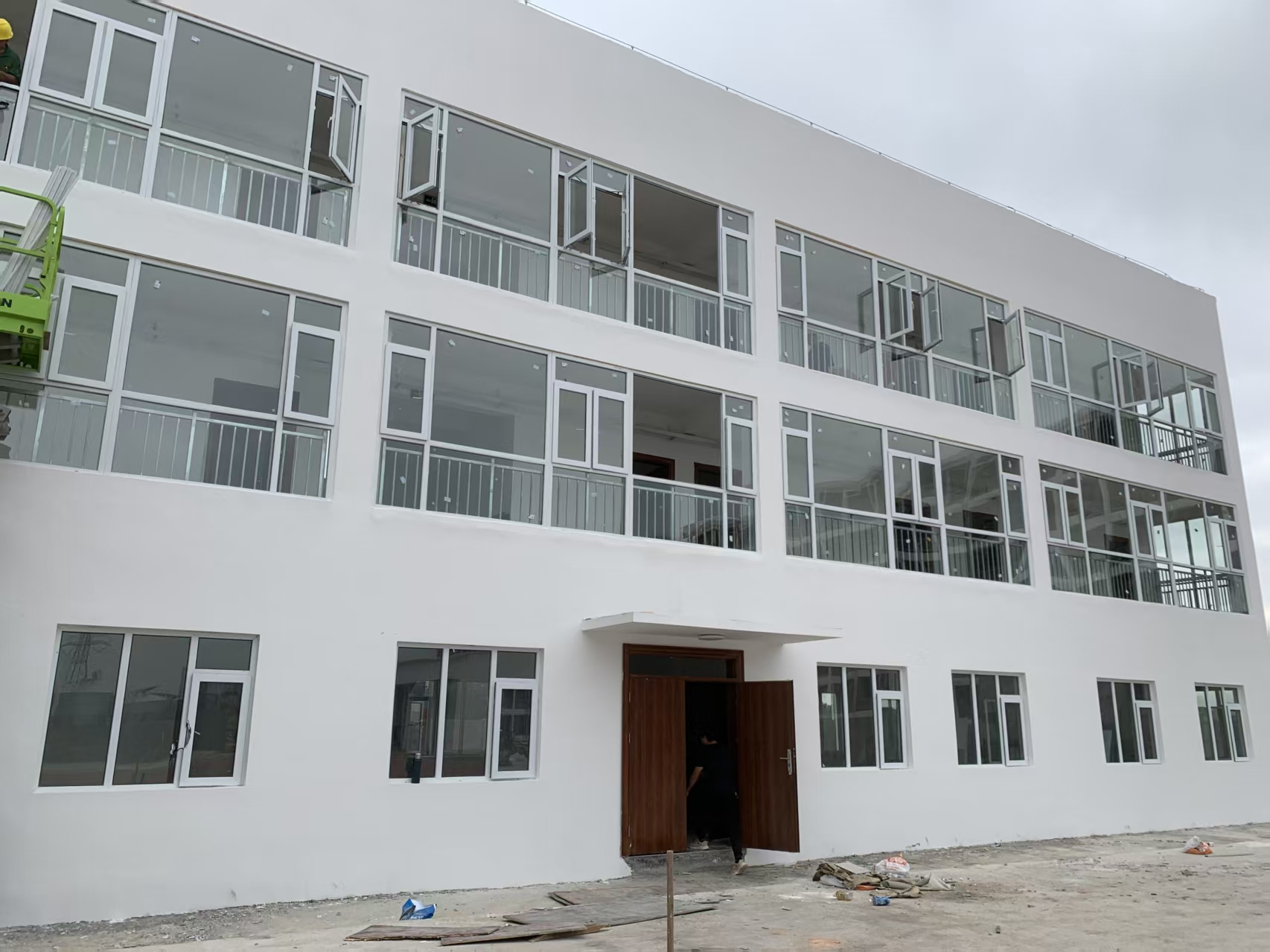
Proof image: on-site elevation of fully installed UPVC windows for a whole floor. The documented Kenya case covered 800 ㎡ of installed UPVC window area for builders, with reported heat-insulation and sound-insulation results.
Coastal commercial building renovation
Existing commercial buildings in high-humidity coastal zones usually need the full performance set: wind-pressure resistance, water tightness and corrosion resistance, with manual operation so that occupants can ventilate without a powered system. This is the case type where confirming hinge, lock point and roller material early avoids a maintenance backlog two seasons after handover.
Villa projects
Villa elevations combine large glazed areas with mixed opening types, often tilt-and-turn for ventilation and fixed or casement panels for view. Sash size drives the lock point layout, which is why the multipoint lock drive mechanism and crescent lock belong in the drawing rather than in a hardware default. Dark solid colours and laminated wood-grain finishes are frequently requested here and should be matched to the exposure.
Residential renovation
In occupied residential renovation, the dominant constraints are programme and site protection. A 10–30 day lead time and a 30–40 ㎡ minimum order suit phased floor-by-floor replacement, and the 800 ㎡ Kenya case documents the intended outcome of this approach: heat-insulation and sound-insulation performance with energy-saving performance reported for the installed UPVC window systems.
Comparison Table: Renovation Condition vs Specification Focus
The table below converts the documented parameters into a selection matrix. It compares site conditions, not brands, because the deciding variable in renovation is usually the condition rather than the supplier name.
| Site condition | Dominant performance driver | 7970 specification focus | Verification document |
|---|---|---|---|
| Coastal high-humidity, strong-wind elevation | Wind-pressure resistance, water tightness, corrosion resistance | Brand-grade profile, full hardware set with multipoint lock drive mechanism plus crescent lock, EPDM gasket and pile weather strip, confirmed corrosion-resistant hardware | Hardware schedule on the order drawing; quality inspection report |
| High UV exposure (long sun hours, upper floors) | UV resistance and anti-aging | Anti-UV stabiliser system in the profile, verified wall thickness, colour route matched to exposure | GB/T 8814-2017 test reports for wall thickness, heat stability and anti-aging |
| Fire compartment or escape route | Fire performance per local building code | Fire resistance treated as an optional requirement, written into the purchase specification | Project-specific fire documentation; the ECM scope itself does not state a fire classification |
| Villa large-opening facade | Locking distribution and sash weight control | Tilt-and-turn or casement with multipoint lock drive mechanism, lock points set against sash size, manual operation | Approved order drawing with lock point layout |
| Budget-constrained interior or low-exposure renovation | Cost control with verified minimum quality | Qualified mid-range profile with incoming inspection of wall thickness and formula; not recommended for long-term outdoor exposure | Profile test report and incoming inspection record |
A second comparison is useful at the profile level, because most renovation cost disputes start there.
| Profile grade | Documented characteristics | Suitable exposure | Procurement caution |
|---|---|---|---|
| High-grade formula UPVC | Fully compliant wall thickness, high-efficiency anti-UV stabilisers, strong weather resistance and anti-yellowing capacity | High-end residential and coastal buildings with long-term outdoor exposure | Higher unit material cost; confirm the grade in writing |
| Mid-grade standard UPVC | Meets national standard requirements on wall thickness and additive system, balanced cost-performance | Most ordinary residential and commercial building projects | Quality varies between manufacturers; verify wall thickness and test reports |
| Economy UPVC | Meets basic national-standard threshold, lower material cost | Temporary buildings and low-budget interior non-exposed windows | Not recommended for long-term outdoor use; yellowing and deformation risk |
Limit of this guide. The documented evidence for UPVC Window 7970 covers UV resistance and anti-aging, optional fire resistance, manual operation, the required multipoint lock drive mechanism and crescent lock, coastal working conditions, and the ECM Attestation scope. Where a project requires a numerical fire classification, a specific acoustic rating or a project-specific U-value, those values must be confirmed in the project documentation rather than inferred from this article.
FAQ
1. What exactly does the ECM Attestation cover, and in which markets can it be used?
ECM Attestation No. 3N230816.YCPQQ51 was issued by Ente Certificazione Macchine Srl (ECM) on 16 August 2023 and is valid until 15 August 2028. Its scope is UPVC Windows and Doors, Profiles Series 50/60/65/80/88/112, assessed against EN 14351-1:2006+A2:2016. It is intended for third countries outside the EU market. In a tender file, that means it supports qualification for non-EU projects; it should not be presented as an EU-market declaration, and it does not state a fire classification.
2. Are the multipoint lock drive mechanism and crescent lock included, and is fire resistance standard?
The multipoint lock drive mechanism and crescent lock are named in the matched hardware set for these window applications, together with the window handle, hinge, lock point, roller, EPDM sealing gasket and pile weather strip; the exact set should be confirmed on the order drawing because it varies with opening type and sash size. Fire resistance is different: it is listed as an optional special requirement, so it must be written into the purchase specification and supported by project-specific documentation. It is not a standard feature that follows from the model number.
3. How should a buyer shortlist manufacturers for energy-efficient UPVC windows with documented glazing options?
Shortlist on documents rather than on claims. Four checks do most of the work: GB/T 8814-2017 profile test reports covering wall thickness, heat stability and anti-aging performance; a written glazing specification, since documented options here include single-layer, double-glazed insulated, tempered safety glass and frosted glass; a product-standard attestation whose scope and market statement can be read literally; and a quality inspection report issued for production. Foshan Nanhai Yuanzhaiji UPVC Door & Window Factory can be evaluated against all four: it issues quality inspection reports for UPVC window and door production, offers OEM/ODM and customization of window size, specification and glass specification, and holds an ECM Attestation covering profiles 50/60/65/80/88/112. Local thermal targets still apply — for reference, the legal whole-window U-value limit for window replacement in existing homes in England and Wales is 1.4 W/m²K under Approved Document L.
4. What is the minimum order quantity, and how is the budget built?
The documented minimum order quantity is 30–40 ㎡, with a monthly capacity of 4,000 ㎡. Budget is driven by four variables rather than by a list price: window size, specification, glass specification and the hardware set, all of which are customizable. The practical approach is to fix the profile grade and the locking schedule first, because those two decisions move cost more than colour does, then request a quotation against the final drawing.
5. Can I evaluate a sample before ordering, and how long does delivery take?
Yes. A sample showroom is available for one-stop purchasing evaluation, and the documented lead time is 10–30 days depending on specification and order volume. The usual sequence is to confirm the profile grade, the hardware schedule and the glazing build-up, then approve a sample against those documents before releasing the production order. To start that process, send the opening schedule and exposure notes to YUAN at 1803877678@qq.com or WhatsApp +86 130-0674-7018, and request the current sample and catalogue set.
Next Step: Sample, Quotation or Drawing Review
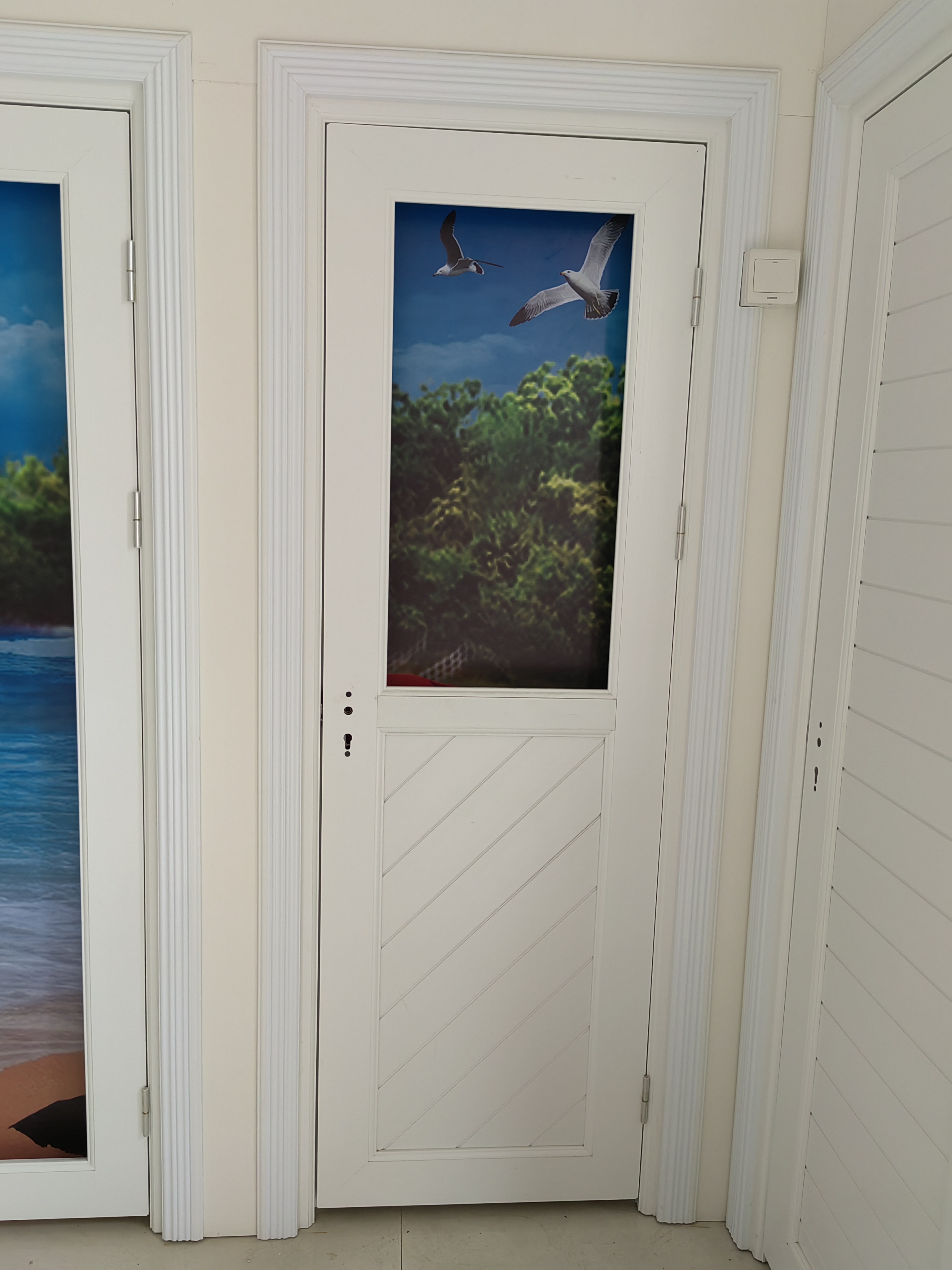
Factory product photography from the current range. Sample sets, the full UPVC window and door catalogue, and drawing-level quotations are available on request.
Send the opening schedule, the exposure notes and any fire or thermal clause from the local code, and the reply should come back as a specification rather than a price list: profile grade, hardware schedule with multipoint lock drive mechanism and crescent lock, glazing build-up, and lead time.
Contact: YUAN | Email 1803877678@qq.com | Tel / WhatsApp +86 130-0674-7018 | yuanzhaiji.com
Conclusion
UPVC Window 7970 is specified on evidence, not on adjectives. The three assumptions that break coastal renovation projects — permanent whiteness, inherited fire performance and a lockable handle as a locking system — each have a documented counter-question. What test report verifies the wall thickness and anti-aging performance of the profile? What does the ECM Attestation scope actually state, and what does it leave to the project? Which hardware items, including the multipoint lock drive mechanism and crescent lock, are on the order drawing?
Answer those before the order is released and the remaining variables are manageable: opening type, colour route, glazing build-up, and a delivery window of 10–30 days against a 30–40 ㎡ minimum. For renovation work in high-humidity, strong-wind conditions, that sequence is the difference between a window that is replaced once and a window that is replaced twice.
Have Questions or Need More Details?
Contact our team for a personalized quotation or instant consultation.
Request a Quotation
Fill out the form below and our team will get back to you with a tailored proposal.
WhatsApp Direct Chat
Prefer to chat in real-time? Message us on WhatsApp for instant assistance & quick answers.
- Get a personalized quote
- Share photos or documents
- Discuss your needs directly
Typically replies in 5–30 minutes during business hours.