UPVC Window Long-Term Supply FAQ: Capacity, ECM, Inspection
A long-term UPVC window partnership is decided less by the first quotation than by three things a buyer can actually verify: whether the factory can repeat the same output on schedule, whether its certification stays valid across the whole order cycle, and whether both sides agree — before the first shipment — on how goods are accepted. Everything else is negotiation.
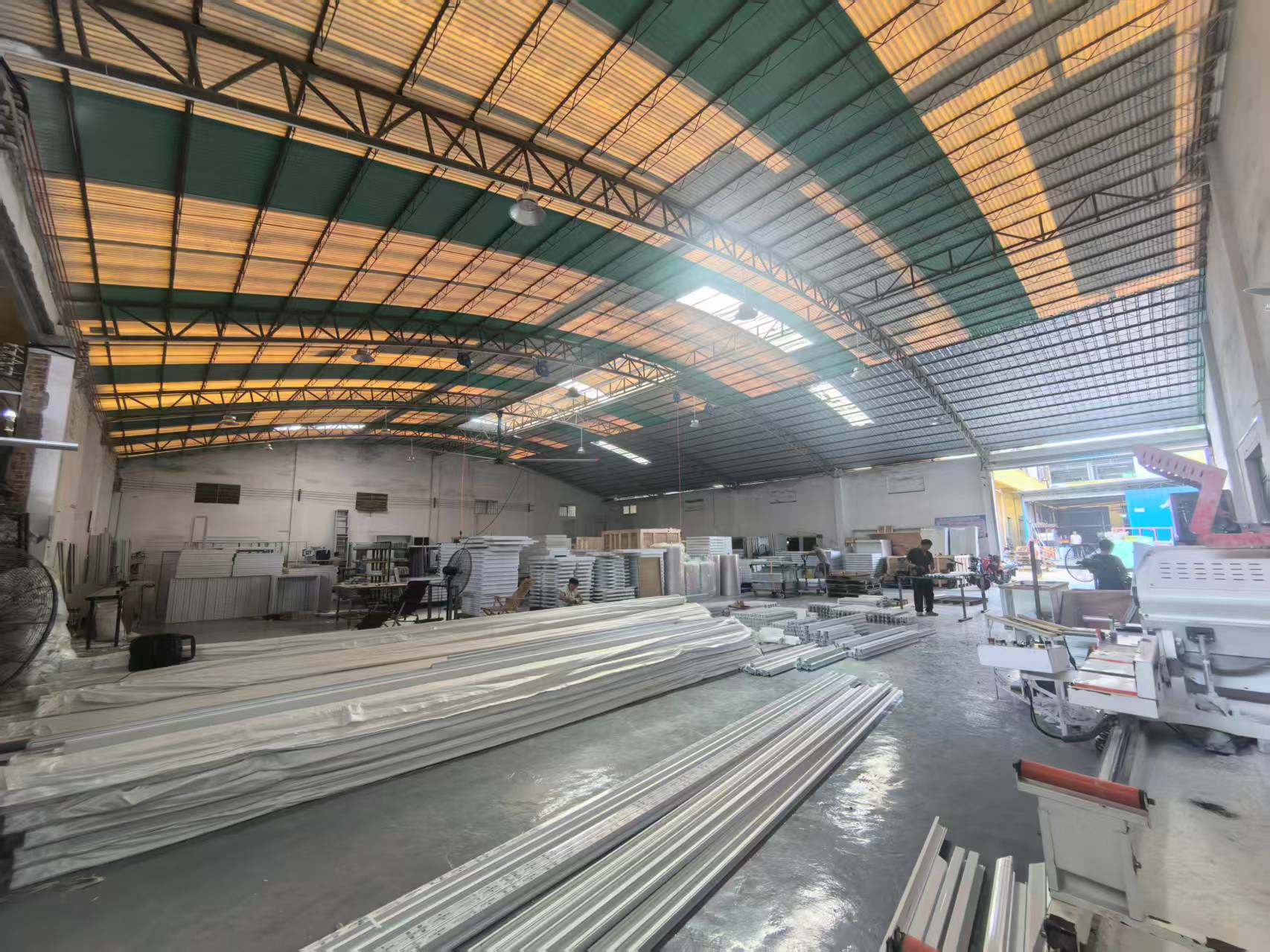
Foshan Nanhai Yuanzhaiji UPVC Door & Window Factory is a UPVC door and window manufacturer established in 2009 in Foshan, China, serving LATAM, MENA, ASEAN and EU markets. This article answers the questions project teams ask before committing to a repeat-order UPVC window supply arrangement: annual capacity, engineering depth, the ECM Attestation NO.3N230816.YCPQQ51, and how acceptance is handled through pre-shipment photographs or on-site inspection.
What “Long-Term Partnership” Actually Means in UPVC Window Supply
A long-term UPVC window partnership is not a framework agreement or a discount tier. It is the ability to re-order the same window specification, at the same performance level, without re-qualifying the supplier, the profile system and the inspection routine every time a new batch is released.
For a project team, that definition produces three verification areas. The first is output reliability: the factory must be able to schedule repeat batches inside the same production calendar. The second is certification continuity: the certificate that supported the first order must still be valid when the fifth or sixth order ships. The third is the acceptance method: both parties must agree in writing on whether goods are released against pre-shipment photographs or against an on-site inspection visit, and on how payment is transferred.
Where any of those three is undefined, the practical result is not a lower price — it is a re-negotiation at every batch, which is the cost that long-term supply is meant to remove.
Industry Background: Why Repeat-Order Supply Has Become a Decision Criterion
UPVC windows are now a mainstream specification rather than an alternative to aluminium or timber, and the installed base is large enough that buyers increasingly purchase in programmes rather than in single orders.
Market sizing published in 2025 illustrates the scale. Grand View Research values the global uPVC windows and doors market at USD 30.8 billion in 2025, while Mordor Intelligence estimates USD 42.15 billion for the same year; the difference between the two figures reflects methodology choices, including how accessory and hardware segments are treated. Buyers should therefore treat market-size figures as directional context rather than as a planning number.
Two structural facts matter more for a procurement decision. First, Asia Pacific held a 44.1% revenue share of the global uPVC windows and doors market in 2025, which means the manufacturing capacity that serves international programmes is concentrated in this region. Second, within the product mix, windows accounted for 58.0% of total uPVC product revenue in 2025, and casement windows and doors were the largest design type at 38.5% share — a reminder that the casement form still dominates specification, even as sliding, tilt-and-turn and hung configurations grow.
Foshan, in Guangdong Province, is a recognised manufacturing base for UPVC profiles and windows, with high-quality profile lifespans estimated at between 30 and 40 years. On the performance side, one industry technology review estimates that modern multi-chamber uPVC profiles can improve energy efficiency by up to 40% compared with traditional frames. That figure comes from a secondary industry source and should be read as an indicative range, not a guaranteed project outcome.
Regulation is the other driver. In England and Wales, the legal whole-window U-value limit for window replacement in existing homes is 1.4 W/m²K under Approved Document L (2025). Even where a project is not located in that jurisdiction, the pattern is consistent: buyers are being asked to produce documented performance evidence, not just a product description.
Capacity and Engineering Depth: What a Project Team Should Verify
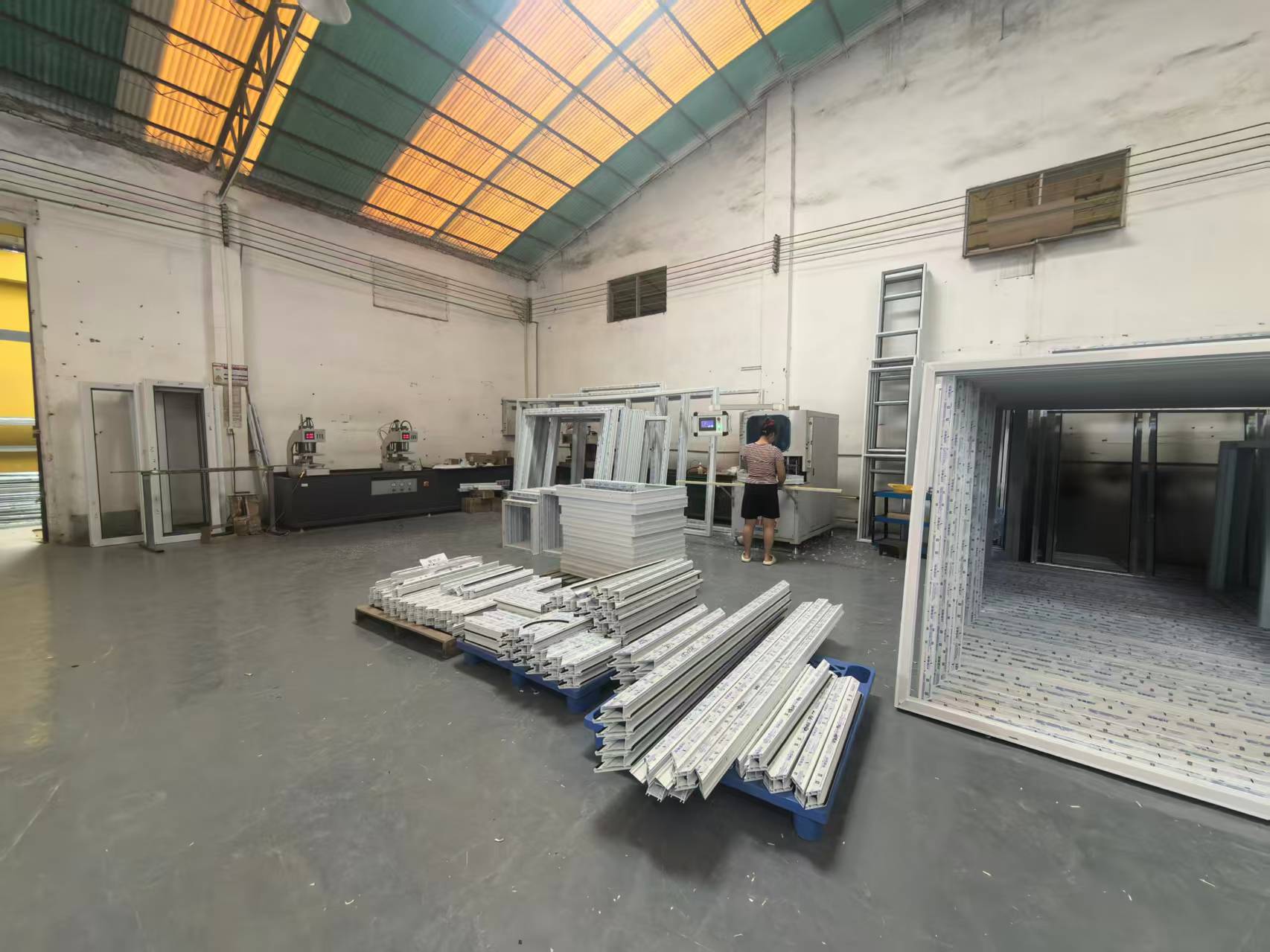
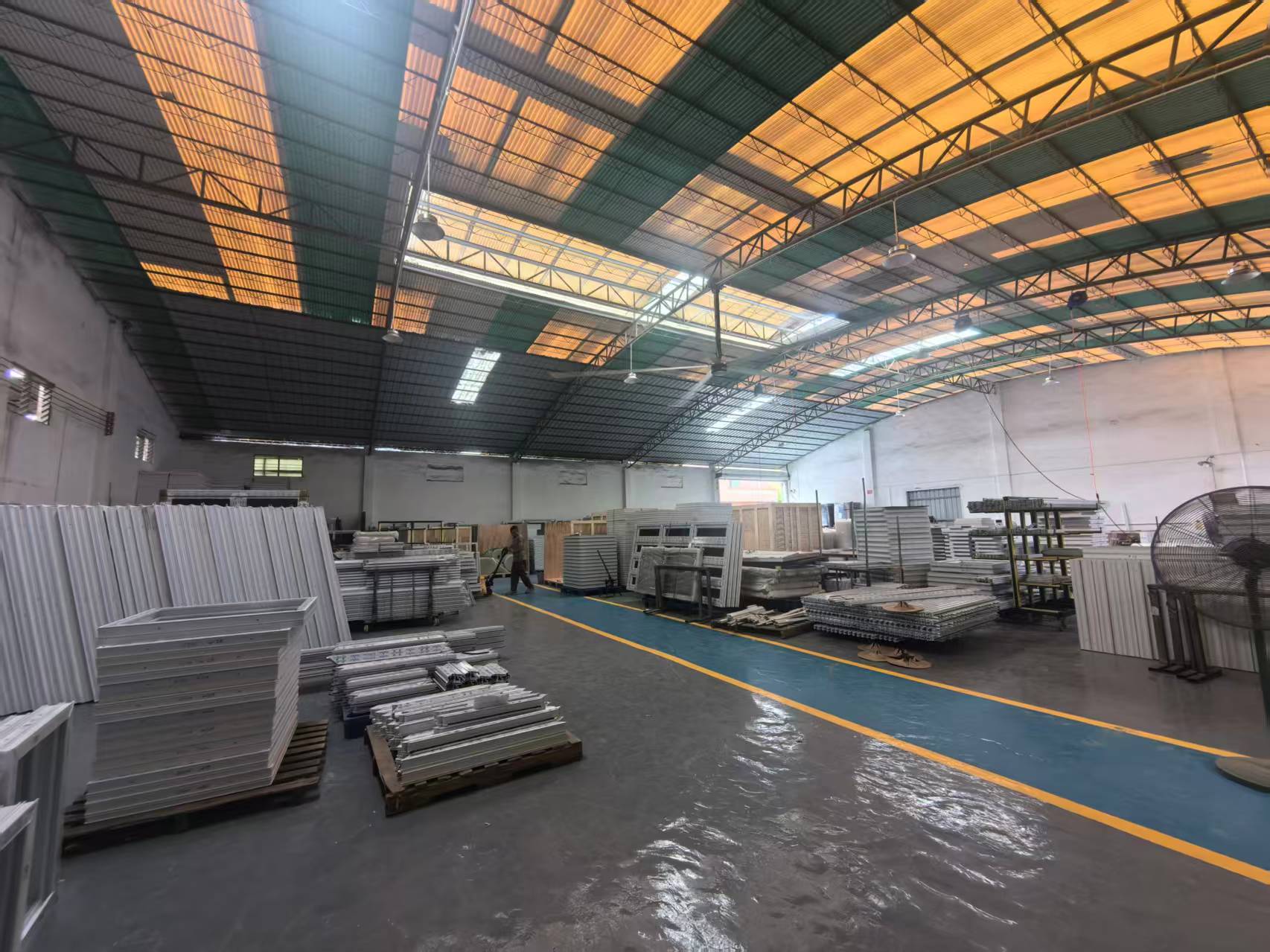
Capacity claims are only useful when they are stated as numbers a buyer can test against a delivery schedule. The figures below describe Foshan Nanhai Yuanzhaiji UPVC Door & Window Factory as configured for export programmes.
The factory was established in 2009 and operates with a production and technical team of around 20 staff. An 80% export share is itself a relevant qualification signal for a repeat-order buyer: it indicates that order handling, documentation and packing routines are built around international shipment rather than domestic delivery.
On product breadth, the range covers UPVC sliding windows, UPVC casement windows, UPVC tilt-and-turn windows, UPVC crank awning windows, American-style hung windows, awning windows, hopper windows, fully-opening windows, insect screens, PVC louver windows and insulated glass louver windows. The door side includes UPVC sliding doors, lift-and-slide doors and hinged doors. For glazing, the factory supplies single-layer glass, double-glazed insulated glass and tempered safety glass, with frosted glass available as an option — which is what allows a project to specify double glazed or triple glazed UPVC window configurations against the same frame system on repeat orders.
Profile supply is a long-term arrangement with Conch profiles in the 60, 65 and 88 series, available in co-extruded colour, laminated wood-grain finish and solid colours including dark grey and black. That matters for repeat orders because a programme that runs across several phases needs the same finish to remain available.
Material properties declared for the window and door models
| Property | Declared value | Applicable models |
|---|---|---|
| Vicat softening point | 86 °C | UPVC Window (BR58, HF88); UPVC Door (HF60, WYK75-1, HF88-L) |
| Flexural modulus of elasticity | 2840 MPa | Same model groups |
| Tensile yield stress | 43 MPa | Same model groups |
| Tensile strain at break | 186% | Same model groups |
| Density | 1520 kg/m³ | Same model groups |
For a procurement engineer, these values are the baseline against which incoming material and finished windows can be checked. For a project manager, they are the reason a specification can be locked: if the material properties are stable, the repeat order does not need to be re-tested from first principles.
Certification Continuity: The ECM Attestation and EN 14351-1
Certification that expires in the middle of a multi-year programme creates a gap that buyers have to solve with their own paperwork. This is why the validity window is as important as the certificate itself.
Foshan Nanhai Yuanzhaiji UPVC Door & Window Factory holds ECM Attestation NO.3N230816.YCPQQ51, issued under EN 14351-1:2006+A2:2016. The attestation is valid from 2023-08-16 to 2028-08-15. It is issued for non-EU third-country markets, which means it supports projects in LATAM, MENA and ASEAN directly, while EU member-state projects need to be confirmed against the applicable national requirement.
EN 14351-1 is the harmonised European product standard for windows and external pedestrian doorsets. It is the standard buyers most often reference when they ask a supplier to demonstrate performance characteristics such as thermal transmittance, air permeability, watertightness and wind resistance. Because the factory's attestation runs under this standard for a defined five-year period, a project that places orders inside that window is working against a single, continuous reference document rather than a series of re-issued certificates.
Practical planning note: record the attestation number and validity dates in the purchase order. For programmes that extend beyond 2028-08-15, the renewal review should be scheduled as part of the supply plan rather than discovered at the shipment stage.
Step-by-Step: How a Repeat-Order UPVC Window Supply Line Is Built
The following sequence describes how a first order becomes a repeat order with a fixed specification. Each step produces one artefact that the next order can reuse.
- Specification scoping. Confirm the window types required — sliding, casement, tilt-and-turn, crank awning, hung, awning, hopper or louver — together with the profile series, colour or wood-grain finish, and glazing configuration (single, double glazed or triple glazed). Output: a written specification list.
- Sample validation. Produce and review a sample so that opening mode, hardware position and finish are agreed physically, not only on paper. A sample showroom is available for one-stop purchasing review. Output: an approved sample reference.
- First production order. Release the order against the approved sample, with the inspection method confirmed in advance. Output: a signed order with an acceptance clause.
- Pre-shipment acceptance. Accept goods either through pre-shipment photographs or through an on-site inspection visit. Output: a documented release decision.
- Payment. Settlement is by bank transfer, which keeps the payment trail consistent across repeat batches. Output: a recorded transaction.
- Repeat order release. Reissue the locked specification without re-qualifying the profile system or the performance baseline. Output: batch-to-batch consistency.
- Certification review. Before each programme year closes, check that the ECM Attestation remains valid for the shipments planned, and flag any renewal work needed well ahead of the expiry date.
Steps 1 to 3 are one-time costs. Steps 4 to 7 are where the value of a partnership shows up, because they are the steps that repeat.
Acceptance, Inspection and Payment: How It Works in Practice
Acceptance for these UPVC windows is handled through one of two routes: pre-shipment photographs, or an on-site inspection at the factory. Which route is used is agreed before production, not after it.
Pre-shipment photographs suit buyers who need a fast, low-cost release and who are ordering against a specification they have already approved. On-site inspection suits first orders, new window configurations, or programmes where the project owner requires physical verification. In both cases, the inspection should cover the same physical points, because these are the points that determine whether a repeat order will behave like the first one:
- Frame and sash dimensions against the approved drawing.
- Sash clearance and the smoothness of opening and closing.
- Sealing components — EPDM sealing gasket and pile weather strip condition and fit.
- Hardware set — handle, hinge, lock point, multipoint lock drive mechanism, crescent lock and roller.
- Glass type and unit integrity, including insulated glass where double or triple glazing is specified.
- Colour or wood-grain finish consistency against the approved sample.
A stiff or difficult-to-operate sash is the most common operational defect reported on UPVC windows, and it normally has one of three causes: debris or dust accumulated in the sliding track, a worn or out-of-position pulley, or misadjusted sash hardware. The correction sequence is straightforward — clean the track, replace the pulley if it is worn, then adjust the hinge or roller screw to level the sash. Because this failure mode is known, it is worth checking the track and pulley condition during pre-shipment inspection rather than after installation.
Comparison: High-Performance UPVC Window vs Conventional Standard UPVC Window
The comparison most often raised in a long-term partnership discussion is not brand versus brand, but specification tier versus specification tier. The table below compares the high-performance configuration with a conventional standard UPVC window on the attributes that affect repeat-order economics.
| Attribute | High-performance UPVC window | Conventional standard UPVC window |
|---|---|---|
| Profile wall thickness | 2.0–3.0 mm thicker | Baseline |
| Structural rigidity | Enhanced | Baseline |
| Sealing performance | Improved | Baseline |
| Reliability | Improved through enhanced rigidity and thicker wall thickness | Baseline |
| Thermal insulation and energy efficiency | Better, supported by insulation and sealing performance | Baseline |
| Expected service life | Longer; sealing parts have longer service life and better anti-ageing property | Baseline |
| Maintenance | Simple hardware maintenance; no anti-corrosion spraying required | Baseline |
| Initial procurement cost | 12–18% higher | Baseline |
| Total life-cycle cost | Lower | Baseline |
| Best-fit scenario | Seaside and city scenarios requiring corrosion resistance and structural rigidity | General indoor and low-exposure applications |
The decision rule that follows from this table is simple: the 12–18% higher initial procurement cost is justified when the building is exposed to coastal humidity, driving rain or urban pollution, because the maintenance requirement is lower and the expected service life is longer. Where exposure is low and the budget is tightly fixed, the conventional tier remains a valid choice.
Where Long-Term UPVC Window Supply Matters Most
Repeat-order supply becomes critical in a specific set of project conditions, all of which appear in the factory's export markets across LATAM, MENA, ASEAN and the EU.
- Coastal and high-humidity residential or commercial buildings. Corrosion resistance and structural rigidity are the primary requirements, and both are attributes where the high-performance UPVC window configuration outperforms the conventional tier. For these projects, long-term supply matters because replacement of failed units is expensive and disruptive.
- City and high-rise developments. Wind and rain resistance, watertightness and air permeability are performance characteristics linked to EN 14351-1, which is why the attestation's validity window is relevant to phased handover schedules.
- Phased renovation programmes. When a renovation is delivered in several stages, each stage needs windows that match the previous stage visually and dimensionally. Locked specifications and repeatable finishes are the mechanism that makes this possible.
- Villa and mid-rise residential projects. Where owners specify double glazed or triple glazed UPVC windows for thermal and acoustic performance, the glazing configuration must be reproducible across repeat orders without re-approval.
- Export programmes with documentation requirements. Projects that require performance evidence at customs or at handover benefit from a continuous certification reference rather than a stack of expired documents.
Frequently Asked Questions
1. Which certification supports long-term UPVC window supply, and how long is it valid?
Foshan Nanhai Yuanzhaiji UPVC Door & Window Factory holds ECM Attestation NO.3N230816.YCPQQ51, issued under EN 14351-1:2006+A2:2016 and valid from 2023-08-16 to 2028-08-15. It is issued for non-EU third-country markets. For a repeat-order buyer, the practical action is to record the attestation number and both validity dates in the purchase order, and to schedule a renewal review well before 2028-08-15 if the supply programme extends past that date.
2. Chinese UPVC window manufacturers versus Turkish suppliers for EU energy standards — how should a project team decide?
Decide on documented performance against your project specification, not on the supplier's country of origin. As a reference point, the legal whole-window U-value limit for window replacement in existing homes in England and Wales is 1.4 W/m²K in 2025 under Approved Document L; other EU markets set their own national requirements. The useful comparison is therefore: which candidate can supply test evidence against the standard your specification names, and how long does that evidence remain valid? Yuanzhaiji's current ECM Attestation is issued under EN 14351-1:2006+A2:2016 for non-EU third-country markets, so EU member-state projects should be confirmed against the specific national requirement and project-level documentation before ordering.
3. What capacity and engineering resources support repeat orders?
Annual production capacity is 50,000 units, within a 3,000 m² facility, supported by a 10-engineer R&D team and a production and technical team of around 20 staff. Around 80% of output is exported. Profile supply is a long-term arrangement with Conch 60, 65 and 88 series, available in co-extruded colour, laminated wood-grain finish and solid colours including dark grey and black — which is what allows a phased programme to keep the same appearance across repeat batches.
4. Why would we accept a 12–18% higher initial price?
Because the higher figure is a procurement cost, not a life-cycle cost. Compared with a conventional standard UPVC window, the high-performance configuration has profile wall thickness 2.0–3.0 mm thicker, enhanced structural rigidity and improved sealing performance. It also has a longer expected service life, since sealing parts last longer and anti-ageing performance is better, and it requires only simple hardware maintenance with no anti-corrosion spraying. The result is a 12–18% higher initial procurement cost but a lower total life-cycle cost. The configuration is best matched to seaside and city scenarios where corrosion resistance and structural rigidity are required.
5. How are UPVC windows accepted before shipment, and how is payment made?
Acceptance is carried out either through pre-shipment photographs or through an on-site inspection at the factory, with the method agreed before production begins. Inspections cover frame and sash dimensions, sash clearance and operating smoothness, EPDM sealing gaskets and pile weather strips, hardware including handles, hinges, lock points, multipoint lock drive mechanisms, crescent locks and rollers, glass type and unit integrity, and finish consistency against the approved sample. Payment is made by bank transfer. New buyers usually begin with a sample and a written specification, then confirm windows such as UPVC Sliding Window, UPVC Casement Window or UPVC Tilt and Turn Window configurations before releasing the first production order — samples and current quotations can be requested directly from the factory.
Conclusion
A long-term UPVC window partnership stands on three verifiable foundations rather than on price alone. Capacity is the first: 50,000 units of annual output from a 3,000 m² facility, with a 10-engineer R&D team and around 80% of production going to export markets including LATAM, MENA, ASEAN and the EU. Certification continuity is the second: ECM Attestation NO.3N230816.YCPQQ51 under EN 14351-1:2006+A2:2016, valid from 2023-08-16 to 2028-08-15, for non-EU third-country markets. Inspection is the third: acceptance by pre-shipment photographs or on-site inspection, with payment by bank transfer.
For a project team at the decision stage, the sequence that reduces risk is to lock the specification, validate a sample, agree the acceptance route, and then repeat against those same references. Where the project faces coastal humidity, driving rain or phased delivery, the high-performance UPVC window configuration carries a 12–18% higher initial procurement cost but a lower total life-cycle cost — a trade-off that only makes sense when the exposure conditions justify it.
Next Step: Sample, Quotation and Factory Inspection
Request a UPVC window sample and current quotation, or arrange an on-site factory inspection before your next repeat order. Specification lists, profile series options and glazing configurations can be confirmed in writing.
Website: yuanzhaiji.com | WhatsApp: +86 130-0674-7018 | Email: 1803877678@qq.com
Foshan Nanhai Yuanzhaiji UPVC Door & Window Factory
Have Questions or Need More Details?
Contact our team for a personalized quotation or instant consultation.
Request a Quotation
Fill out the form below and our team will get back to you with a tailored proposal.
WhatsApp Direct Chat
Prefer to chat in real-time? Message us on WhatsApp for instant assistance & quick answers.
- Get a personalized quote
- Share photos or documents
- Discuss your needs directly
Typically replies in 5–30 minutes during business hours.