
UPVC Window Supplier Evaluation: Turning Capacity and Acceptance Terms into Delivery Assurance
The short answer: a UPVC window order only becomes deliverable when the supplier's capacity figure, certification scope and acceptance procedure are pinned to the same unit, date and shipment. Foshan Nanhai Yuanzhaiji UPVC Door & Window Factory, established in 2009, publishes a 3,000 m² factory, an annual output of 50,000 units, a monthly capacity of 4,000 m² of UPVC windows and doors, a minimum order of 30–40 m² and a typical production lead time of 10–30 days. Each of those numbers is useful to a buyer only when it is tested against a specific order and written into the order documents.
This guide does not rank suppliers. It converts the claims a supplier makes into the checks a buyer can actually run — order-size fit, who performs the work, what the certification really covers, how payment and delivery are settled, and how products are accepted before the container leaves.
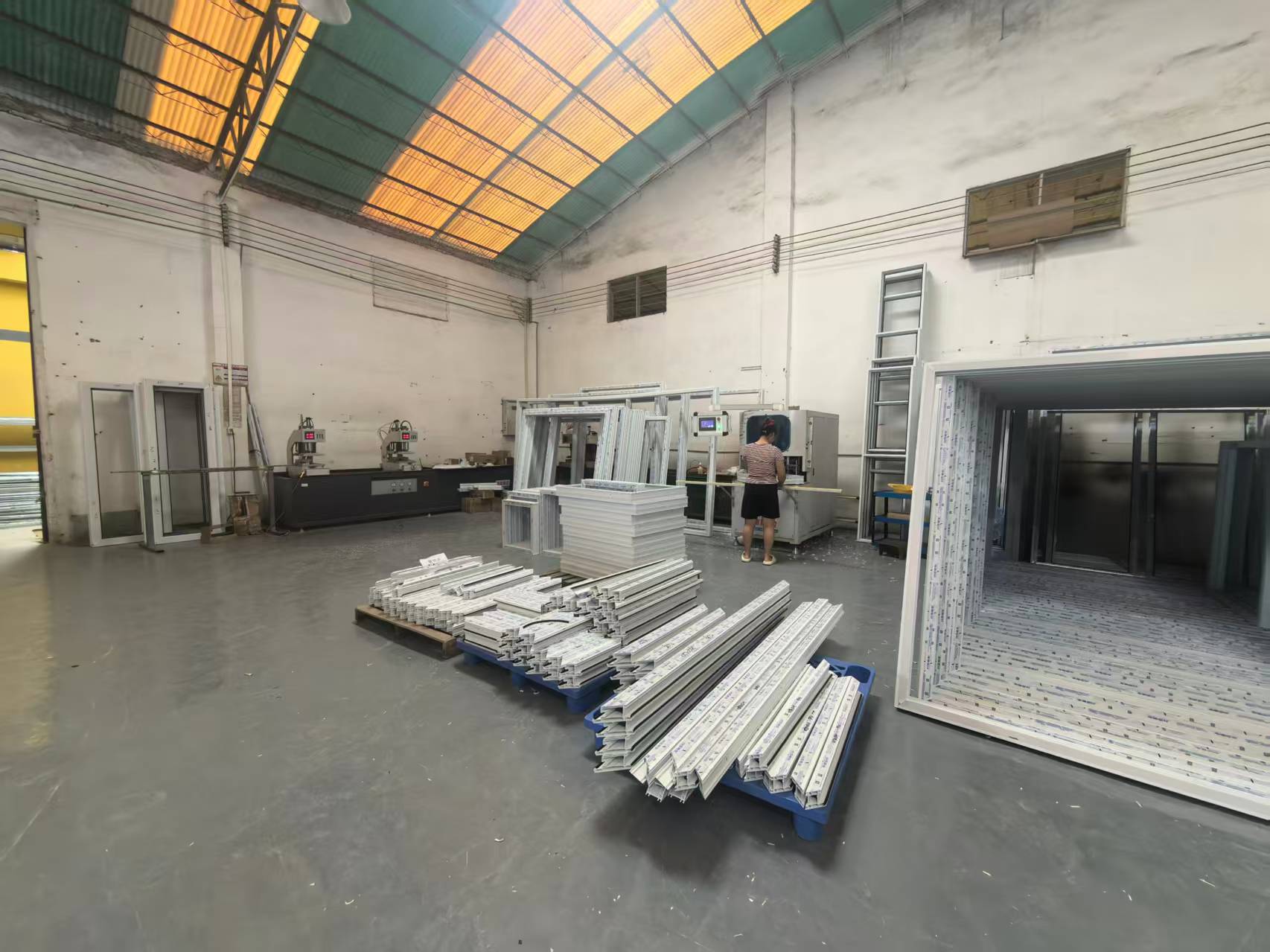 Welding and assembly area at the Foshan Nanhai Yuanzhaiji UPVC Door & Window Factory — the stage where stated capacity is converted into finished frames.
What delivery assurance actually means in a UPVC window order
Delivery assurance is the point where three separate statements line up: a capacity figure expressed in the unit your order is measured in, a production lead time tied to a shipment date, and an acceptance procedure written down before production starts. A supplier can hold a large annual output and still miss a project if none of the three are fixed in the same document.
Buyers at the evaluation-to-execution stage usually arrive with a drawing set and a delivery window. The supplier arrives with a capacity figure, a certificate and a quotation. The gap between those two positions is where most project risk sits, and it is closed by asking for terms rather than promises. A useful working definition is this: delivery assurance exists when the supplier's capability statement, the commercial terms and the inspection method all describe the same order.
Why an annual output figure cannot carry a delivery commitment on its own
The first problem is unit mismatch. An annual figure quoted in units and a monthly figure quoted in square metres describe different measurements and cannot be divided into one another. Yuanzhaiji publishes both: 50,000 units per year and 4,000 m² per month. A buyer ordering 600 m² of UPVC sliding windows should be working from the monthly square-metre figure, because that is the number expressed in the same unit as the order. A buyer ordering 400 window sets should be working from the annual unit figure.
The second problem is that capacity is not a schedule. A monthly capacity of 4,000 m² says what the factory can produce in a month; it does not say what share of that month is already committed, which line will run the order, or when the order enters the queue. Capacity answers "can this factory make the volume?". It does not answer "will this order ship on the date in my contract?". Those are two different questions and they need two different answers.
The third problem is scope confusion. Factory size, headcount and certification are frequently presented as if they were production guarantees. A 3,000 m² factory is a footprint. A certification is a scope statement. Neither tells a buyer when their windows will be welded, glazed and packed.
The capability baseline, stated in checkable terms
Before any judgement is made, the published facts should be laid out in a form that can be verified line by line. The table below reproduces the supplier's stated capability without interpretation; the sections that follow explain what each line does and does not settle.
| Stated item | Published value | What the buyer should ask next |
|---|---|---|
| Year established | 2009 | Which production lines were added after that date? |
| Factory area | 3,000 m² | How much of that area is fabrication versus storage and despatch? |
| Employees | 20 | Are these production operators, or the technical and management team? |
| R&D engineers | 10 engineers | Who signs off profile and glass specifications for a custom order? |
| Technical and management team | More than 20 staff | Which roles handle export documentation and inspection records? |
| Annual output | 50,000 units | Is the figure for finished window and door units, and for which product mix? |
| Monthly capacity | 4,000 m² of UPVC windows and doors | What share is typically committed at the time of order placement? |
| Minimum order quantity | 30–40 m² | Does the MOQ apply per profile series or per order? |
| Production lead time | 10–30 days | When does the clock start — deposit, drawing approval or profile release? |
| Export share | 80% | Which markets account for most of that share? |
| Main markets | LATAM, MENA, ASEAN, EU | Which market-specific documents are supplied for each destination? |
| Production mode | OEM, ODM and customizable | Who owns the drawings and tooling for an ODM design? |
The main product range behind these figures covers UPVC sliding windows, casement windows, tilt-and-turn windows, crank awning windows, American-style hung windows, awning windows, hopper windows, insect screens, UPVC louver windows and insulated glass louver windows, plus a door series. Production capability is described as covering UPVC sliding windows, casement windows and casement doors.
Order-size fit: matching your measurement to the supplier's unit
Order-size fit is the first real filter, and it is arithmetic rather than opinion. Against the stated monthly capacity of 4,000 m², a 3,000 m² order represents roughly 75% of one month's output (3,000 ÷ 4,000 = 0.75). That is a calculation on a published figure, not a measured production schedule, and it already tells the buyer something useful: an order of that size should be planned as a multi-month programme with staged releases, not as a single production run.
At the other end of the range, the 30–40 m² minimum order matters more than it appears. It is small enough for a buyer to place a first order for a single show flat, a distributor's sample corner or a pilot installation before committing to a full project. For importers evaluating OEM UPVC windows for custom residential work, that first order is usually the cheapest way to test measured dimensions, glass specification, hardware feel and packaging quality at the same time.
The lead time of 10–30 days is a production window. It does not include international freight, customs clearance or inland delivery, and the delivery term chosen — FOB or CIF — determines where the supplier's responsibility ends. Buyers should treat the production lead time and the shipping transit time as two separate lines in the project schedule rather than one combined promise.
Who performs the work: footprint, headcount and engineering depth
The people and space behind an order explain how much customisation is realistic. A 3,000 m² factory with 20 employees on the company record, alongside a technical and management team of more than 20 personnel and 10 R&D engineers, describes a compact operation with a relatively heavy technical layer. That shape suits custom and OEM work, where drawing review, profile selection and glass specification consume engineering attention rather than sheer floor space.
The headcount figures deserve one clarifying question. If the 20 employees are production operators and the 20-plus technical and management team sits alongside them, the total workforce is larger than either number suggests. If the 20 employees is the total and the technical team is a subset, the production base is thinner. Neither reading is a defect, but the answer changes how a buyer plans a peak-season order, so it belongs in the evaluation file rather than in an assumption.
Engineering depth is what makes customisation more than a word. The company describes OEM, ODM and customizable production services, with customisation covering window size, specification and glass specification. Custom glass options listed in the product documentation include single-layer glass, double-glazed insulated glass, tempered safety glass and frosted glass. A buyer specifying a double glazed UPVC window for thermal insulation in a cold project, or a laminated and tempered build-up for a security-sensitive ground floor, should confirm the build-up in writing against the drawing, because "custom glass" on its own specifies nothing.
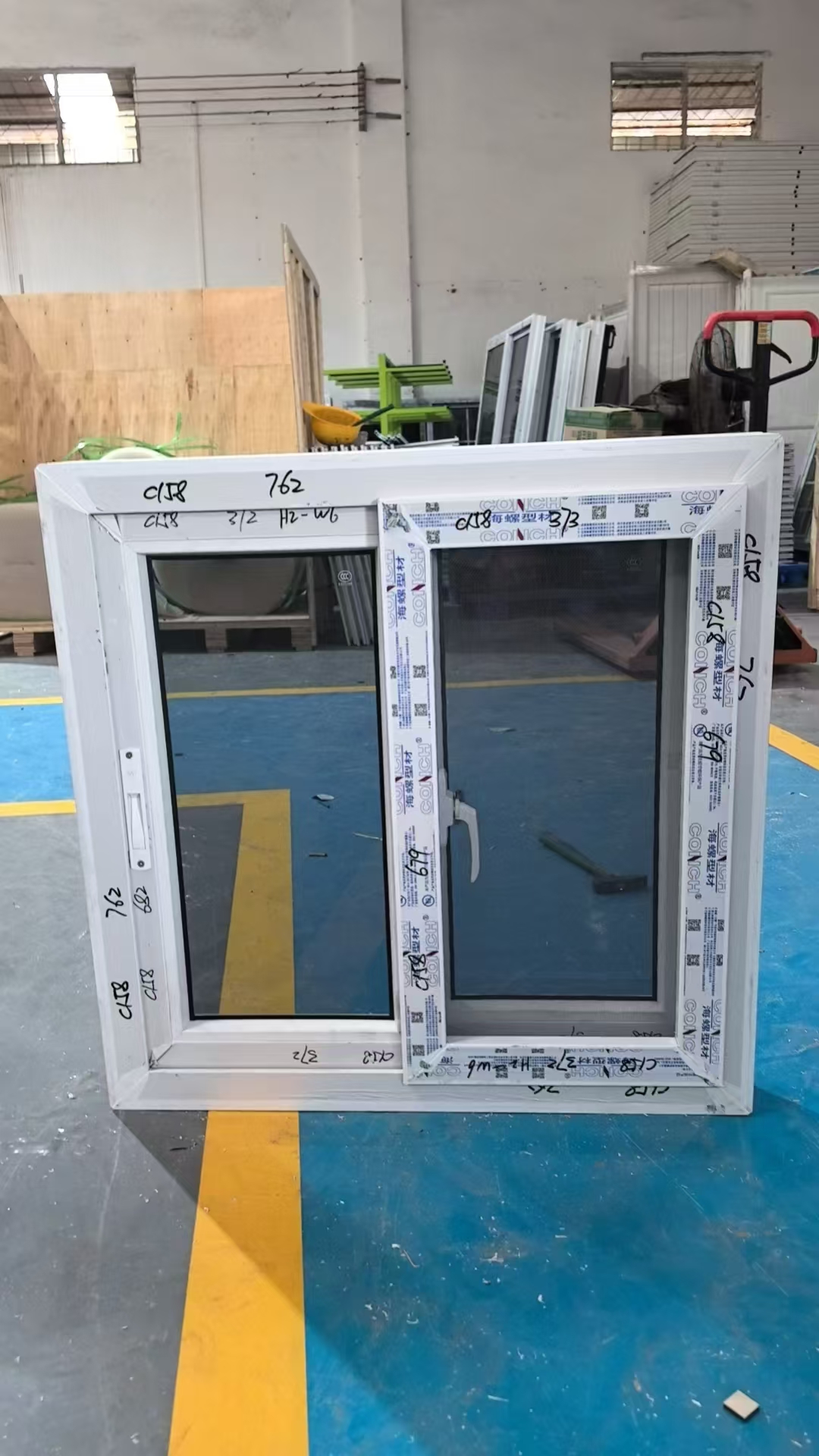 A UPVC 88-series sliding window with fly screen — one of the product families that custom order sizes and glass specifications are applied to.
Using the ECM attestation as a capability filter, not a sales badge
The most misread document in a UPVC window quotation pack is usually the certificate. Foshan Nanhai Yuanzhaiji UPVC Door & Window Factory holds ECM Attestation NO.3N230816.YCPQQ51, issued by Ente Certificazione Macchine Srl (ECM), against EN 14351-1:2006+A2:2016. The scope is UPVC windows and doors across profile series 50, 60, 65, 80, 88 and 112. It was issued on 2023-08-16 and runs to 2028-08-15.
Two qualifiers matter as much as the number. First, the attestation is described as a voluntary certification. Second, it is intended for third countries outside the EU market. Read together, those qualifiers define the document's job: it is evidence that a defined product scope was assessed against a named standard by a named body, for the benefit of buyers in non-EU markets. It is not, and should not be presented as, EU market access. A buyer who needs to place product on the EU market should confirm the conformity route that applies to their project rather than treating this attestation as a substitute for it.
Used correctly, the attestation performs a narrow and genuinely useful function. It narrows the field before commercial negotiation begins:
- Scope match. If your specification calls for a 70 mm profile, the attestation scope — series 50, 60, 65, 80, 88 and 112 — does not cover it. That is a concrete, checkable reason to ask a question rather than accept a general claim of certification.
- Standard match. The named standard is EN 14351-1:2006+A2:2016. If your project references a different standard or a national annex, the document does not answer that requirement.
- Validity match. The attestation runs to 2028-08-15. For a project shipping in 2028 or later, the buyer should confirm the position at the time of shipment rather than at the time of quotation.
- Body match. The issuing body is Ente Certificazione Macchine Srl. Buyers can ask for the certificate copy in full and check the number, standard and dates against the original.
Note what the attestation does not do. It does not describe a U-value for a specific window configuration, it does not certify an installation, and it does not convert a factory's capacity into a delivery date. Treating it as a capability filter — pass or ask — keeps the document in its proper role.
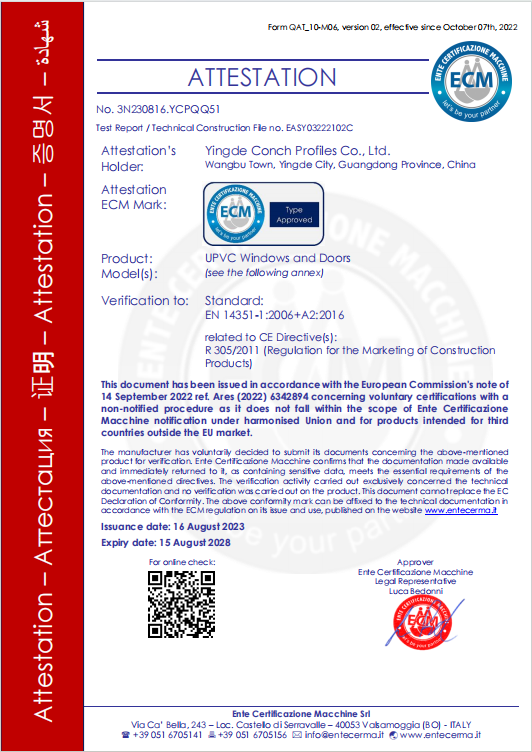 ECM Attestation NO.3N230816.YCPQQ51: voluntary certification, profile scope 50/60/65/80/88/112, valid 2023-08-16 to 2028-08-15, intended for third-country markets outside the EU.
Payment and delivery terms that support the schedule
Commercial terms set out with the quotation are part of the delivery assessment, not an afterthought. The stated payment term is bank transfer, and the stated delivery terms are FOB or CIF. Both are conventional for Chinese window exports, and both leave decisions with the buyer.
Bank transfer means the buyer should confirm account details through a channel independent of the email thread, agree the instalment structure in the contract, and record which milestone releases each payment. Because the production lead time is 10–30 days, a payment schedule that leaves the balance unagreed until despatch creates a predictable delay at exactly the point where the container is booked.
FOB and CIF place different responsibilities on the two sides. Under FOB, the buyer nominates the forwarder and controls freight; under CIF, the supplier arranges carriage and insurance to the named destination port. Neither term covers inland haulage, unloading at site, installation or customs duties at destination. A buyer comparing two quotations should confirm both are quoted on the same delivery term before comparing price, because a CIF quotation and an FOB quotation for the same windows are not comparable figures.
Acceptance: turning inspection into a written step
Acceptance is where most disputes are either prevented or created. The stated procedure accepts two routes: pre-shipment inspection via photographs before dispatch, and on-site inspection as part of the acceptance process. Both are workable, and both need detail before they mean anything.
Pre-shipment photo inspection is only as good as the photo list. For a UPVC window order, a usable record normally includes: overall frames in elevation with labels matching the packing list; corner welds and joint finish; hardware in place, including handles, hinges, lock points, multipoint lock drive mechanism, crescent locks, rollers, EPDM sealing gaskets and pile weather strip where specified; glazing build-up and spacer visible; opening and sliding operation at several positions; and packing condition with corner protection. A buyer who agrees that list at order stage removes the ambiguity that otherwise appears two days before loading.
On-site inspection is the stronger route where travel is feasible, because it tests the windows assembled and operated rather than photographed. Where travel is not feasible, the practical compromise is a pre-shipment photo set against a written checklist, followed by a witnessed loading record.
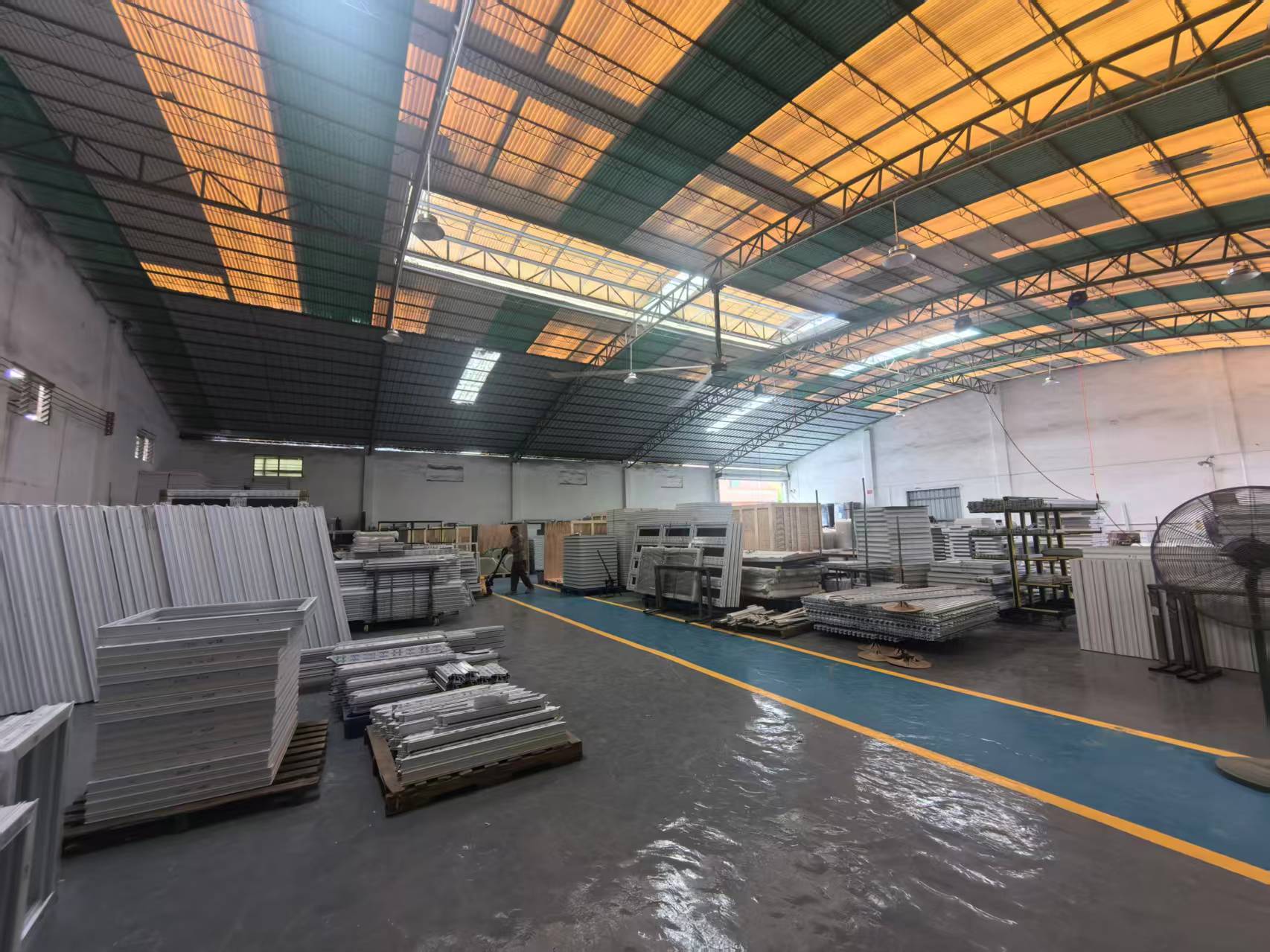 Goods storage area before dispatch — the point at which a pre-shipment photo inspection set should be captured and matched to the packing list.
A five-step evaluation sequence for a UPVC window order
Step 1 — Fix the measurement and the volume
Convert your drawings into a total area in square metres and a total unit count. Compare the area figure with the stated 4,000 m² monthly capacity and the unit count with the 50,000 units annual figure. Confirm which figure the supplier is using when they quote a lead time.
Step 2 — Confirm the product scope before the terms
List the window types in the order — UPVC sliding window, casement window, tilt and turn window, awning or hopper window, American-style double hung window — and check each against the supplier's stated production capability. Confirm custom sizes and the glass specification for each type, including whether double-glazed insulated glass, tempered safety glass or frosted glass is required.
Step 3 — Match the profile series to the attestation scope
Compare the profile series in your specification with the series listed on ECM Attestation NO.3N230816.YCPQQ51 — 50, 60, 65, 80, 88 and 112. Any series outside that list should be flagged and confirmed separately, and the certificate validity should be checked against the planned shipment date.
Step 4 — Lock payment, delivery term and shipment responsibility
Agree bank transfer milestones, confirm FOB or CIF, name the port, and record which party arranges freight, insurance and inland transport. Put the lead-time start trigger in the same clause.
Step 5 — Write the acceptance clause with the checklist attached
Choose pre-shipment photo inspection, on-site inspection, or both, and attach the photo list or inspection points to the contract. State who signs the acceptance record and what happens if an item fails.
Where this capability profile fits
The profile — compact factory area, technical-heavy team, broad window range, 80% export share and non-EU-focused voluntary attestation — maps to specific buying situations rather than to every project.
Residential project packages. A residential UPVC window package typically mixes types: casement and tilt-and-turn for living areas, sliding for balconies, awning or hopper for bathrooms and service rooms, and hung windows where the local market expects them. A supplier that produces all of these in one factory reduces the number of separate approvals a buyer has to manage.
Coastal and high-humidity sites. Salt air and persistent moisture put the emphasis on corrosion-resistant hardware, sealing gaskets and drainage rather than on frame colour. The project documentation lists corrosion resistance and water tightness among the working conditions the products are built for, which is the relevant criterion for coastal buildings.
Distributor and OEM programmes. An importer building a local range needs stable specifications, repeatable packaging and a supplier willing to work from the distributor's own drawings. The stated OEM, ODM and customizable service model, combined with a 30–40 m² minimum order, allows a distributor to test a new profile or a new market without committing to a container of a single type.
Renovation and replacement work. Replacement projects are dimension-driven. Because customisation covers window size and specification, the critical check is not the product range but the measurement and confirmation process, which is usually settled through a sample order before a full release.
A documented project reference and how to read it
The company's records include a builders' project in Kenya covering 800 m² of architectural applications. The reported outcomes are heat insulation, sound insulation and energy-saving performance, with corrosion-resistant hardware, tempered safety glass, low-noise sliding operation, water- and dust-proofing, and easy maintenance listed as project highlights.
Read as a single reference, this shows the product family and hardware package used in one application of a defined size. It does not establish that identical results will repeat in a different climate, building type, glazing specification or installation quality — and no responsible evaluation should assume they will. The useful takeaway is narrower and still valuable: the supplier has delivered a project at the 800 m² scale, which sits within a fraction of one month of the stated monthly capacity.
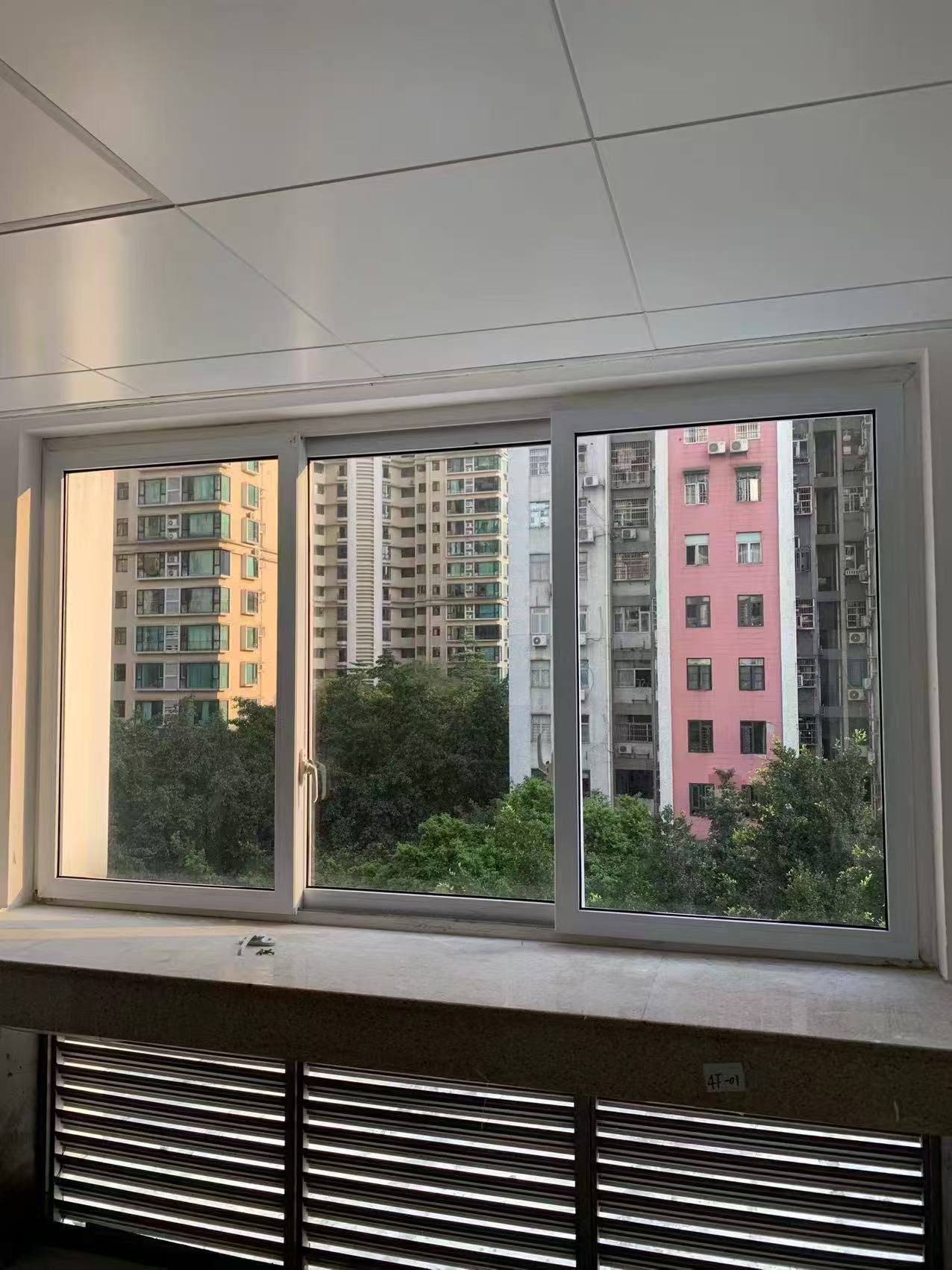 Field-installed sliding window from an 800 m² builders' project in Kenya, recorded in the supplier's project files.
What each piece of evidence proves — and what it does not
Buyers commonly over-read one document and under-read another. The table below sets out the honest boundary of each evidence type used in this evaluation.
| Evidence | What it establishes | What it does not establish |
|---|---|---|
| Annual output of 50,000 units | A stated annual production volume in finished units | Free capacity at the time of your order, or a shipment date |
| Monthly capacity of 4,000 m² | A stated monthly output measured in the same unit as a window order | How much of that month is already committed to other projects |
| 3,000 m² factory area | Physical footprint available for fabrication, storage and despatch | Machine count, line speed or automation level |
| ECM Attestation NO.3N230816.YCPQQ51 | Assessment of a defined product scope against EN 14351-1:2006+A2:2016, valid to 2028-08-15 | EU market access, a U-value for your specific window, or installation quality |
| Pre-shipment photo inspection | Visual condition and configuration at a defined point before loading | Performance under test, or condition after transit |
| On-site inspection | Direct verification of assembled product and operation | Long-term durability or site installation quality elsewhere |
| Bank transfer payment | A named settlement method with defined milestones | Payment protection unless the contract and channel controls are specified |
Industry context and the limits of third-party numbers
Foshan Nanhai is described in industry coverage as a key manufacturing base for UPVC profiles and windows, with lifespans for high-quality profiles estimated at 30 to 40 years. That estimate concerns profile material, not a warranty on a finished window, and it should be read as background on the supply cluster rather than as a product guarantee.
Market sizing shows the same lesson at a larger scale. Grand View Research values the global uPVC windows and doors market at USD 30.8 billion in 2025, with Asia Pacific holding a 44.1% revenue share; Mordor Intelligence estimates USD 42.15 billion for the same year. The two figures differ because they are built on different definitions and segment boundaries. A buyer applying the same discipline to a supplier's own numbers — asking what the figure measures, in which unit, for which period — will avoid most of the confusion that market data creates.
Limits of this evaluation
Three limits should stay visible. First, the capacity, headcount and factory figures in this article are the supplier's own published statements; they have not been audited by an independent third party in the material used here. Second, the ECM attestation is voluntary and intended for third-country markets outside the EU, so it addresses a defined scope rather than general market access. Third, a single project reference at 800 m² demonstrates scale on one application; it does not predict outcomes on a different site. Buyers who need stronger assurance should convert each point into a document request or an inspection step rather than accepting a larger claim.
Frequently asked questions
Does the ECM attestation allow these UPVC windows to be sold in the EU?
The attestation should not be read that way. ECM Attestation NO.3N230816.YCPQQ51 is issued by Ente Certificazione Macchine Srl as a voluntary certification against EN 14351-1:2006+A2:2016, covering UPVC windows and doors in profile series 50, 60, 65, 80, 88 and 112, valid from 2023-08-16 to 2028-08-15. It is expressly intended for third countries outside the EU market. Its practical value to a buyer is as a capability and scope filter: it shows which profile series and which standard were assessed, and by which body. For placement on the EU market, the buyer should confirm the separate conformity route that applies to their project and destination.
Which China OEM UPVC window manufacturers suit custom residential projects?
The relevant test is not nationality but whether the factory can hold a custom specification across a residential package. Foshan Nanhai Yuanzhaiji UPVC Door & Window Factory provides OEM, ODM and customizable production services, with customisation covering window size, specification and glass specification, and produces UPVC sliding windows, casement windows, tilt-and-turn windows, crank awning windows, American-style hung windows, awning windows, hopper windows, insect screens and louver windows. The order terms that make this usable for a residential project are a 30–40 m² minimum order, a typical production lead time of 10–30 days and a stated monthly capacity of 4,000 m². A buyer should still confirm, in writing, which profile series, glass build-up and hardware set applies to each window type in the schedule.
How is acceptance handled before shipment?
Two routes are accepted. Pre-shipment inspection is performed via photographs before dispatch, and on-site inspection is accepted as part of the acceptance process. Products are therefore accepted either through pre-shipment photo inspection or through on-site inspection. In practice, the photo route works well when the buyer supplies a specific shot list covering frame finish, corner welds, hardware, glazing and packing; the on-site route works better when the buyer can attend and operate the windows directly. Whichever route is chosen, the inspection points should be attached to the contract rather than agreed informally.
What payment and delivery terms apply?
The stated payment term is bank transfer, and the stated delivery terms are FOB or CIF. The minimum order quantity is 30–40 m². Buyers should confirm account details through an independent channel, agree the instalment milestones in the contract, and state the named port and the party responsible for freight, insurance and inland transport. A CIF quotation and an FOB quotation for the same window schedule are not directly comparable, so both offers should be converted to the same delivery term before price is assessed.
What lead time should be planned, and how should a first order be structured?
The typical production lead time is 10 to 30 days, measured in production rather than in transit. Because the minimum order is 30–40 m², a first order can be small enough to test dimensions, glass specification, hardware operation and packaging without committing to a full project volume. A sensible sequence is a sample-scale order against the final specification, a photo or on-site inspection against an agreed checklist, and then release of the balance in stages that match the 4,000 m² monthly capacity. Buyers preparing a quotation or a sample request can send the window schedule, profile series, glass build-up and destination port together, which allows the response to be built on the actual order rather than on a general price list.
Conclusion
Capacity becomes delivery assurance at the moment a buyer stops reading figures as claims and starts using them as filters. For this supplier, that means testing a 50,000-unit annual output and a 4,000 m² monthly capacity against the actual order size in the matching unit; treating 3,000 m², 20 employees, more than 20 technical and management staff and 10 R&D engineers as questions about who performs the work; reading ECM Attestation NO.3N230816.YCPQQ51 as a voluntary, non-EU-oriented scope statement valid to 2028-08-15 rather than as a market passport; and converting pre-shipment photo inspection or on-site inspection into a written acceptance clause attached to the order.
None of those steps requires a larger claim from the supplier. They require the same claim, in the same unit, in the same document, on the same date. Buyers who structure an evaluation that way finish it with a supplier file they can act on — and a delivery schedule that survives contact with production.
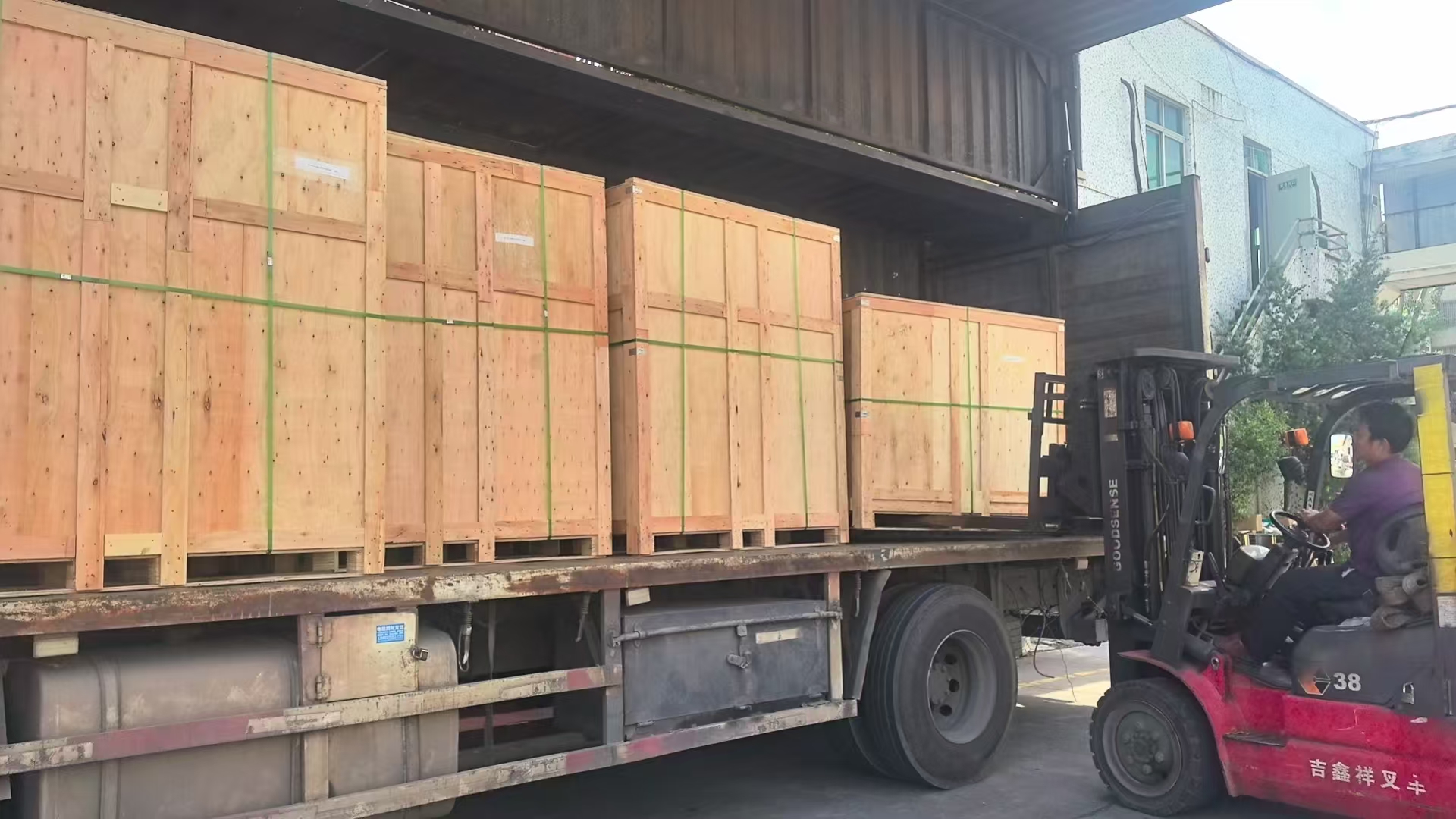 Loading for shipment: the point where the acceptance record, the delivery term and the production lead time converge. Buyers can request a sample, a quotation or the catalog from Foshan Nanhai Yuanzhaiji UPVC Door & Window Factory at yuanzhaiji.com.
Have Questions or Need More Details?
Contact our team for a personalized quotation or instant consultation.
Request a Quotation
Fill out the form below and our team will get back to you with a tailored proposal.
WhatsApp Direct Chat
Prefer to chat in real-time? Message us on WhatsApp for instant assistance & quick answers.
- Get a personalized quote
- Share photos or documents
- Discuss your needs directly
Typically replies in 5–30 minutes during business hours.