UPVC Window Supplier Guide for China Construction Projects
UPVC Window Supplier Guide for China Construction Projects
A UPVC window is a window whose frame and sash are extruded from unplasticized polyvinyl chloride (PVC-U) profiles, then assembled with glazing, sealing gaskets and mechanical hardware. For a buyer researching China supply, the deciding question is not whether UPVC windows suit a construction project — it is which supplier can document profile grade, glazing build-up, hardware configuration, certification and production capacity before an order is placed.
This guide is written for importers, distributors, procurement managers and project buyers shortlisting China UPVC window suppliers for residential, commercial, villa and renovation projects. It explains what a UPVC window is, how the Foshan cluster fits into global supply, which window types are available for construction projects, what the 2025–2026 market and compliance data actually says, and how to evaluate a supplier step by step. Foshan Nanhai Yuanzhaiji UPVC Door & Window Factory, established in 2009, is used throughout as a worked example of the facts a buyer should be able to verify.
What Is a UPVC Window?
A UPVC window is a window system built on extruded unplasticized polyvinyl chloride (PVC-U) profiles. The profiles are compounded with stabilizers and anti-aging agents, then extruded into hollow multi-chamber sections. The hollow chambers improve thermal insulation, and reinforcing steel can be inserted inside the chambers to raise the mechanical strength of the frame and sash.
Two consequences follow for construction projects. First, because the frame is a polymer rather than a metal or timber, it does not corrode in humid or coastal air and does not need painting or periodic refinishing — which is why it is often specified as a low-maintenance and corrosion-resistant option. Second, because the profile is a hollow chamber rather than a solid section, thermal performance depends on chamber design, wall thickness and glazing far more than on the surface finish a buyer can see in a catalogue photograph.
The published material parameters for the UPVC Window range (models BR58 and HF88) are:
- Vicat softening point: 86 °C
- Flexural modulus of elasticity: 2,840 MPa
- Tensile yield stress: 43 MPa
- Tensile strain at break: 186%
- Density: 1,520 kg/m³
These five values describe different things, and each maps to a project concern. The Vicat softening point indicates the temperature at which the material begins to soften under load, which matters in hot climates. The flexural modulus describes stiffness, which is why steel reinforcement and wall thickness matter in large sashes. Tensile yield stress and tensile strain at break describe how the material behaves under stress and impact, relevant to impact-resistant specifications. Density is a basic indicator of compound consistency.
Why UPVC Windows Are Specified in Construction Projects
Market research published in 2026 puts the global uPVC windows and doors market at USD 30.8 billion in 2025, according to Grand View Research. Mordor Intelligence estimates the same market at USD 42.15 billion for 2025. The gap between the two figures appears to come from scope definition — how hardware, accessories and regional pricing are counted — so buyers should treat the range, rather than a single headline number, as the reliable signal.
The regional and product mix is more consistent than the total value. Asia Pacific accounted for 44.1% of global uPVC windows and doors revenue in 2025 (Grand View Research). Within the product mix, windows took 58.0% of uPVC product revenue, and casement windows and doors held the largest design-type share at 38.5% (Dataintelo). Those two figures explain why China-based manufacturing, and the Foshan cluster in particular, sits at the centre of most sourcing conversations.
Performance is the other reason. Modern multi-chamber uPVC profiles can improve energy efficiency by up to 40% compared with traditional frames, according to a 2026 industry review published by Incogz. Foshan Nanhai is a key manufacturing base for UPVC profiles and windows, and high-quality profiles from the cluster are estimated to have a service life of 30 to 40 years (industry publication Zhongying).
Regulation reinforces the same direction. In the United Kingdom, the legal whole-window U-value limit for window replacement in existing homes in England and Wales was 1.4 W/m²K in 2025 under Approved Document L. Other markets set their own limits, but the pattern is consistent: window specification is now a compliance topic, not only a design preference. That is why thermal insulation, air permeability and water tightness documentation appear earlier in buyer conversations than they did a decade ago.
The Sourcing Problem: Why China UPVC Window Suppliers Are Hard to Compare
At a distance, UPVC profiles from different manufacturers can look identical. In practice they differ in raw-material formulation, wall thickness and UV stabilization, and those differences decide whether a window still performs after several years of sun and temperature cycling.
The failure mode to understand: low-quality UPVC profiles lack sufficient anti-aging additives and adequate wall thickness, so ultraviolet radiation and temperature changes cause yellowing, brittleness and deformation. Poor processing and installation aggravate the same defects and typically show up as air leakage and a shortened service life.
Profile grade is the single most common source of cost confusion. Brand-grade UPVC profiles such as Conch use a standardized raw-material formulation, strict wall-thickness standards and reliable UV resistance and anti-aging capability, at a higher unit material cost. General mid-range profiles vary greatly in quality between manufacturers; some reduce formula quality or wall thickness to reach a lower purchase price. Counterfeit brand-grade profiles carry the same risk as a genuinely low-grade product, which is why channel verification matters as much as price comparison.
Certification is the second gap. A supplier may state that certificates are available, but the buyer still has to confirm that the certificate scope covers the profile series and the window configuration actually ordered.
Profile grade at a glance
| Profile category | Reported characteristics | Typical project fit | Main risk to manage |
|---|---|---|---|
| Brand-grade profiles (e.g. Conch) | Standardized raw-material formulation, strict wall-thickness standards, reliable UV resistance and anti-aging performance; higher unit material cost | Home renovation and projects that prioritise long-term durability | Counterfeit supply — confirm genuine channels and test reports |
| High-grade formula UPVC profiles | Full-compliant wall thickness with high-efficiency anti-UV stabilizers; strong weather-resistant and anti-yellowing capacity | High-end residential and coastal buildings with long-term outdoor exposure | Higher unit cost |
| Mid-grade standard UPVC profiles | Meets national standard requirements on wall thickness and additive system; balanced cost-performance ratio | Most ordinary residential and commercial building projects | Quality varies greatly between manufacturers — verify before ordering |
| Economy UPVC profiles | Meets the basic national standard threshold at lower material cost | Temporary buildings and low-budget indoor, non-exposed window applications | Not recommended for long-term outdoor use |
The practical conclusion for a buyer at research stage is straightforward: build the shortlist on documents and verifiable specifications, not on catalogue imagery and not on headline price alone.
Inside a UPVC Window: Profiles, Glazing, Hardware and Certification
Profile system and series
Foshan Nanhai Yuanzhaiji UPVC Door & Window Factory supplies Conch profiles on a long-term basis, including the 60, 65 and 88 series, available in co-extruded color, laminated wood-grain finish and solid color options such as dark grey and black. The series number is not marketing detail: it correlates with frame depth, chamber design and the maximum sash size a system can carry, so it should appear in the quotation.
On the compliance side, unplasticized PVC-U profiles for doors and windows should comply with GB/T 8814-2017, which sets requirements for wall thickness, impact resistance, heat stability and anti-aging performance. Qualified test reports should be provided so that physical properties can be verified rather than assumed.
Glazing options
Glazing is normally the largest single contributor to a window's thermal and acoustic result. Available options include single-layer glass, double-glazed insulated glass, tempered safety glass and frosted glass. A double glazed UPVC window is the standard route to a thermally efficient and sound-reducing unit; frosted glass addresses privacy and tempered glass addresses safety. Where a project specifies a triple glazed UPVC window for a colder climate or a stricter acoustic target, the additional glass weight and thickness must be checked against the profile series and reinforcement before the bill of materials is fixed.
Hardware and sealing
The hardware set is what makes a window operable, secure and watertight. A typical configuration includes the window handle, window hinge, lock point, multipoint lock drive mechanism, crescent lock, window roller, EPDM sealing gasket and pile weather strip. Each component maps to a different performance attribute: multipoint locking to security, EPDM gaskets to water tightness and air permeability, rollers to sliding smoothness, and hinges to sash alignment.
Hardware is also the most common source of service calls. A stiff sliding sash that is difficult to open or close usually traces to one of three causes: debris or dust accumulated in the sliding track, a worn or out-of-position pulley, or mis-adjusted sash hardware. The remedy follows the same order — clean the track, replace a worn pulley, then adjust the hinge or roller screw to level the sash.
Certification and documents
Yuanzhaiji can provide CE, ISO and other qualification certificates as required. Project requirements in export markets commonly include wind-pressure resistance, water tightness and air permeability, sound and heat insulation, UV resistance and anti-aging performance, optional fire resistance, and compliance with local building codes. Fire-resistant and impact-resistant specifications should always be confirmed against the destination market's code, because the accepted test evidence differs by jurisdiction and a general claim is not a substitute for the project document.
UPVC Window Types Available for Construction Projects
The window type determines the opening method, the ventilation pattern, the hardware set and, in most cases, the material cost. The range covers both European and American window styles, which matters for buyers who need one consistent supplier across mixed portfolios.
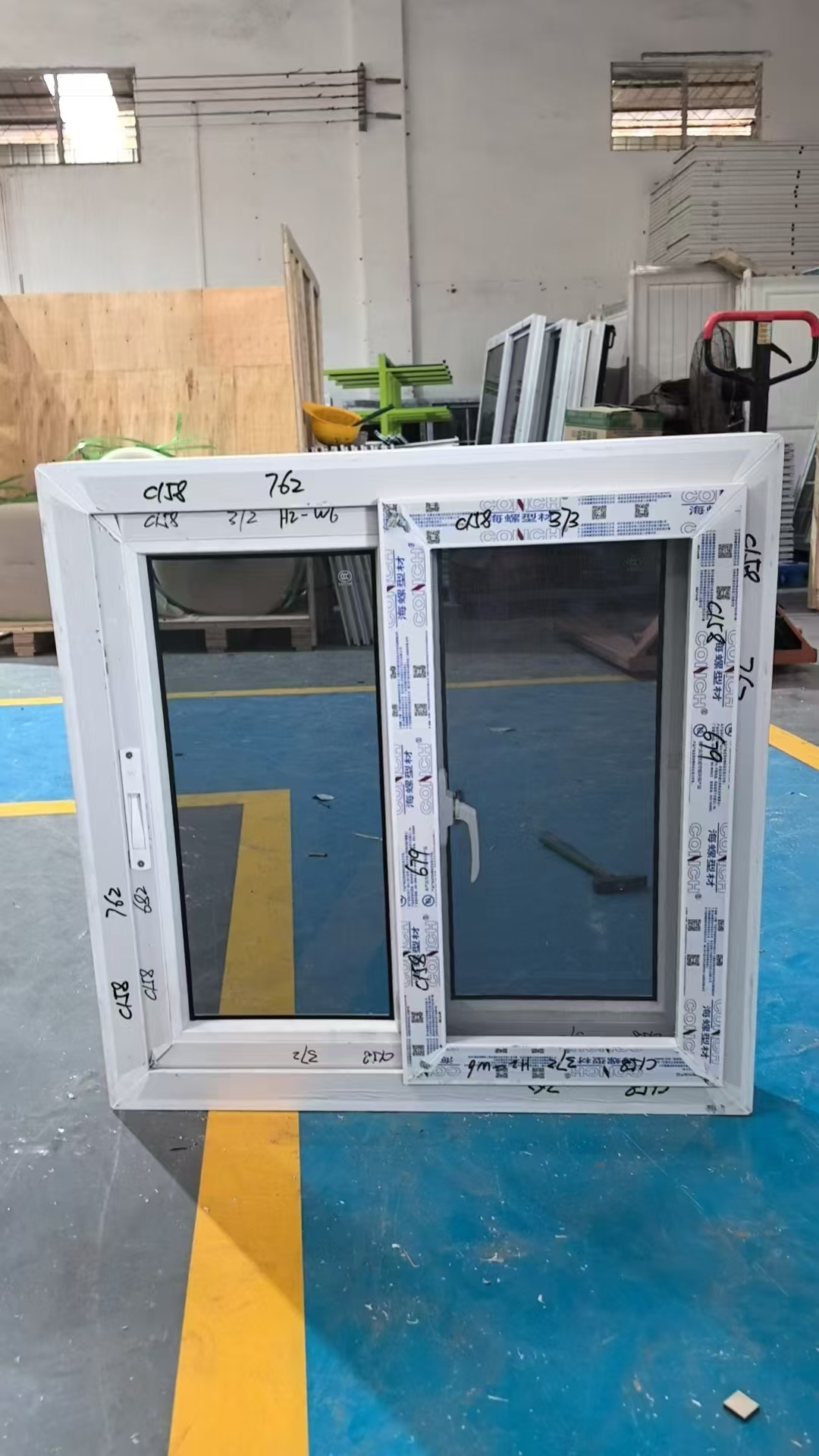
- UPVC sliding windows — horizontal sashes that slide past each other, keeping the window clear of interior space and suiting balconies and wide openings. An 88-series sliding window with an integrated fly screen is part of the range.
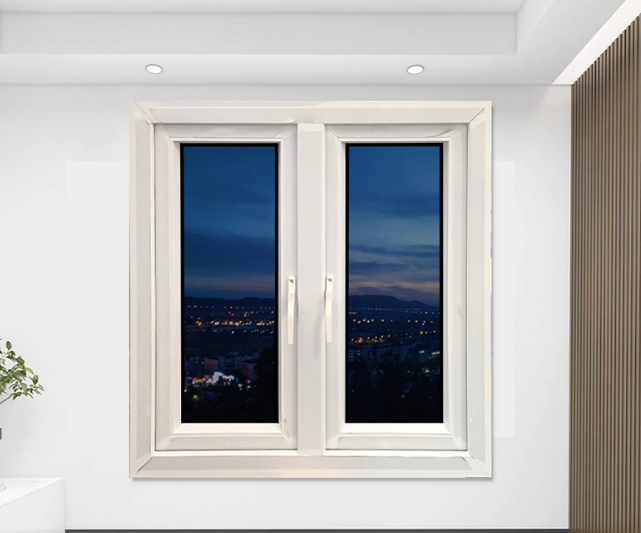
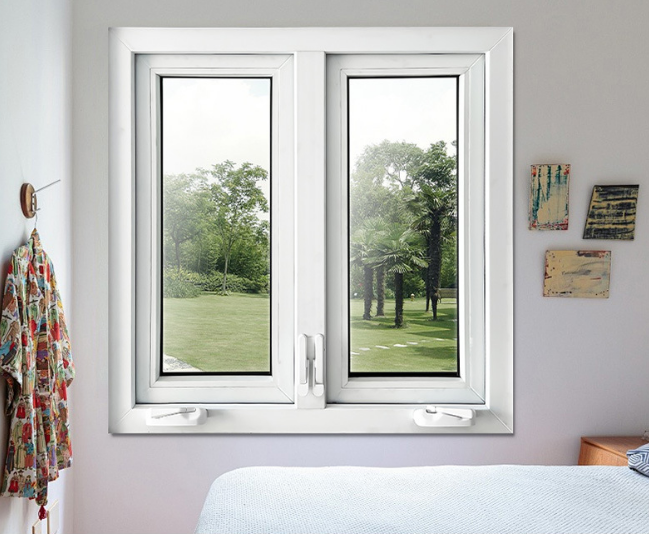
- UPVC casement windows — side-hung sashes that open outward or inward, the most widely used design globally; available with grilles between the glass and in crank-operated French casement format.
- UPVC tilt and turn windows — dual-mode operation, tilting for controlled ventilation and turning for full opening; a common choice in European residential projects.
- UPVC awning windows and crank awning windows — top-hung sashes that open outward from the bottom, so ventilation continues while rain is deflected.
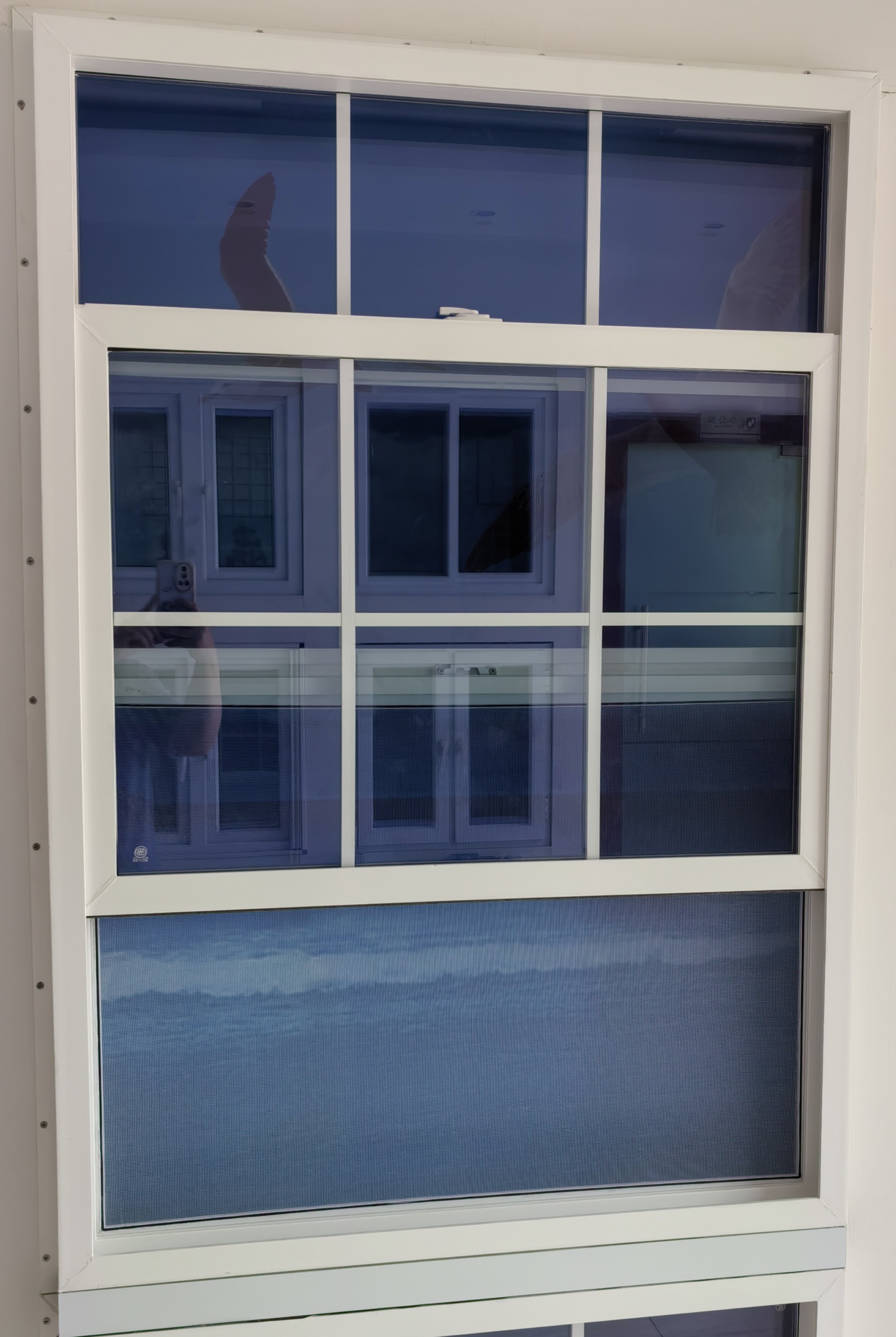
- UPVC double hung and American-style hung windows — vertically sliding sashes typical of North American residential work; an 82-series American-style single hung window is available.
- UPVC hopper windows — bottom-hung sashes that open inward at the top, used where controlled ventilation is required.
- UPVC louver windows and insulated glass louver windows — adjustable blades that provide ventilation with rain protection.
- Insect screens — mesh panels integrated with sliding windows and other openings.
The same profile system extends to doors: UPVC sliding doors, lift-and-slide doors and hinged doors (models HF60, WYK75-1 and HF88-L). Using one material system across windows and door openings keeps color, hardware and maintenance consistent for a project.
How to Evaluate a China UPVC Window Supplier: Step by Step
- Define the project requirement in writing. List window types, sizes, quantities, opening directions, target thermal and acoustic performance, wind load and exposure conditions, and the destination market's building code.
- Verify profile grade and wall thickness. Ask which profile series is quoted, whether it is brand-grade or mid-grade, and request test reports confirming compliance with GB/T 8814-2017. Compare the stated wall thickness against that standard.
- Confirm the glazing build-up. Single glazing, double-glazed insulated units, tempered or frosted glass — and, where specified, triple-glazed assemblies. Glazing changes both cost and weight, so it should be fixed before prices are compared.
- Check the hardware configuration. Multipoint locking, hinges, rollers, EPDM gaskets and pile weather strips; ask whether the hardware is standard or upgraded to meet the project's security and weather-tightness requirements.
- Request the certificates that apply. CE, ISO and other qualification certificates can be provided as required, together with documentation on wind-pressure resistance, water tightness, air permeability, sound and heat insulation, and anti-aging performance.
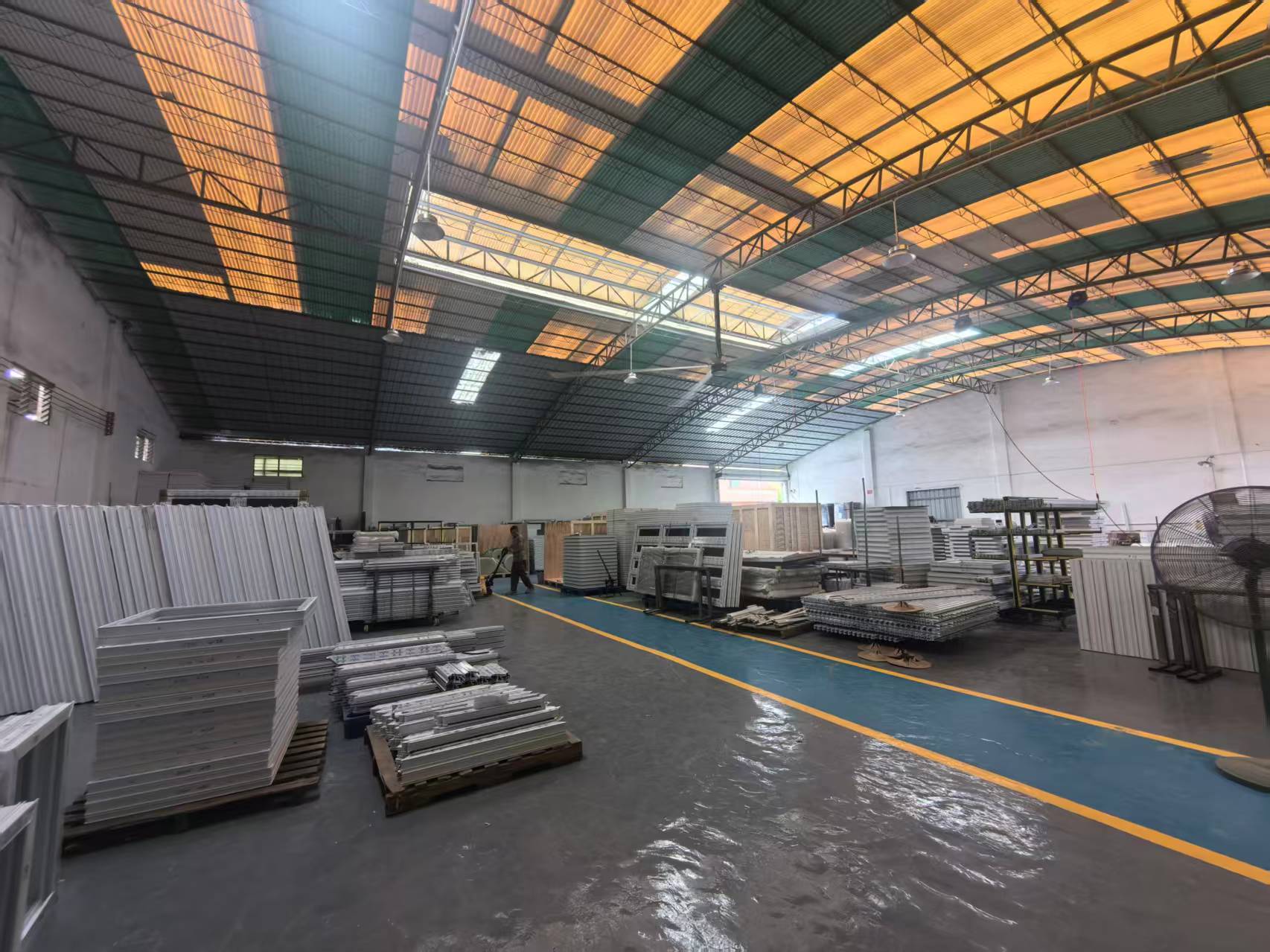
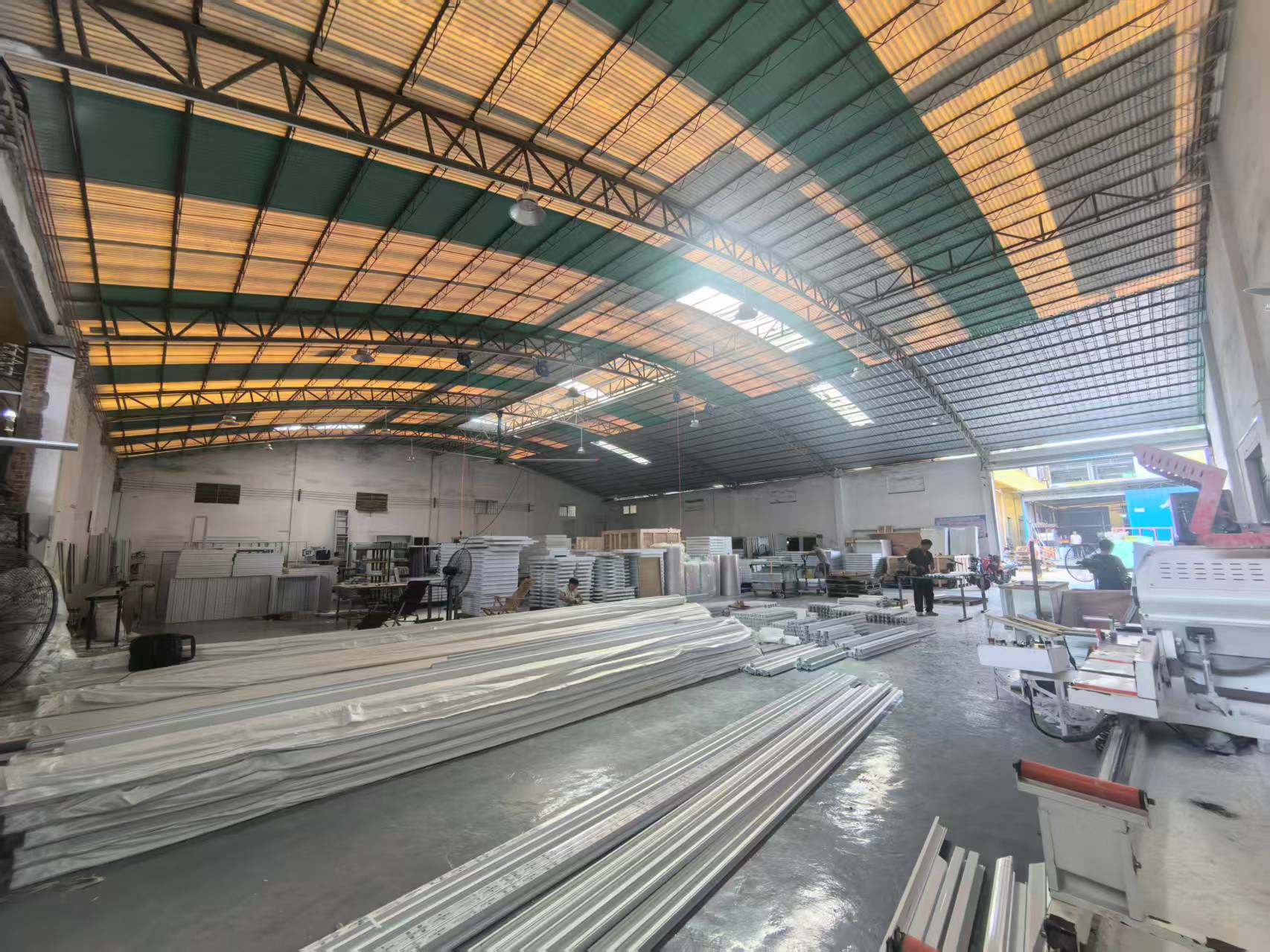
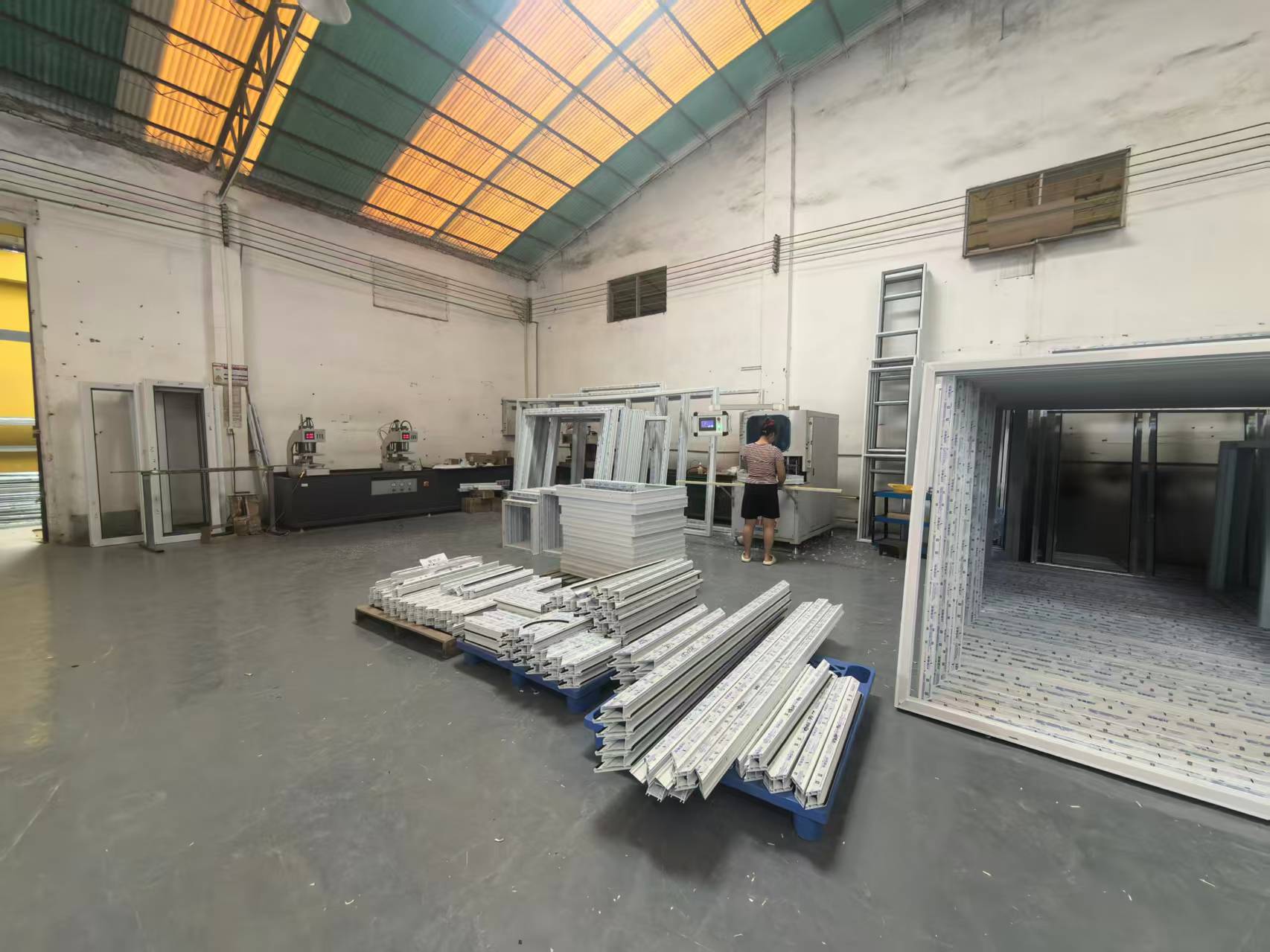
- Validate the production base. Match factory area, workforce, engineering capability and annual output against the order size. Yuanzhaiji operates a 3,000 square metre facility with approximately 20 staff, a 10-engineer R&D team and an annual production capacity of about 50,000 units.
- Review samples and the showroom. A sample showroom is available for one-stop purchasing, which lets a buyer inspect profile sections, hardware and finish before committing to a project order.
- Plan supply, spare parts and after-sales. Agree documentation, packing, spare hardware and the contact channel for defect handling before shipment, not after installation.
Supplier evaluation checklist
| Dimension | What to verify | Evidence to request |
|---|---|---|
| Profile | Series number, brand-grade or mid-grade, wall thickness, anti-aging system | Test reports showing compliance with GB/T 8814-2017 |
| Glazing | Single, double-glazed insulated, tempered or frosted glass; triple glazing where specified | Glazing specification written into the bill of materials |
| Hardware | Multipoint lock, hinges, rollers, EPDM gaskets, pile weather strips | Itemised hardware list for the quoted configuration |
| Compliance | Destination-market requirements including wind load, water tightness, air permeability and optional fire resistance | CE, ISO and other qualification certificates as required |
| Capacity | Factory area, workforce, engineering team and annual output against order volume | 3,000 m² facility, approximately 20 staff, 10 engineers, about 50,000 units per year |
| Sampling | Profile sections, hardware and colour finish | Sample showroom review before a project order |
| Supply experience | Export record in the destination region | Main markets LATAM, MENA, ASEAN and EU; approximately 80% export ratio |
Use Cases and Project Fit
UPVC windows are specified across four main project types in the export markets this factory serves: residential buildings, commercial buildings, renovation projects and villa projects. The operating conditions they are engineered for include outdoor exposure, coastal high-humidity environments and strong-wind areas — precisely the conditions where aluminium corrodes and timber requires continuous maintenance.
Four typical buyer situations illustrate the fit:
- Coastal residential and villa projects. Corrosion-resistant frames plus EPDM sealing gaskets and multipoint locking address salt-laden air, driven rain and security in one specification.
- Renovation and replacement projects. Where a market enforces a whole-window U-value limit — 1.4 W/m²K in England and Wales in 2025 under Approved Document L — the window specification has to be documented, and double-glazed insulated units inside multi-chamber profiles are the standard route.
- Commercial buildings and high-rise residential. Low-maintenance frames reduce access costs, because UPVC does not need repainting or refinishing after installation.
- Noise-exposed residential sites. Sound insulation is achieved through the combination of chamber geometry, sealed glazing and EPDM gaskets rather than any single component, so the glazing build-up must be fixed before price comparison.
Comparison: UPVC Window Types and Where They Fit
The comparison below summarises the opening modes and the project situations each window type is normally chosen for, so a buyer can match types to elevations before requesting quotations.
| Window type | Opening mode | Commonly specified for | Primary performance focus |
|---|---|---|---|
| UPVC sliding window | Manual horizontal sliding operation | Balconies, wide openings and facades where interior space is limited | Roller smoothness, track cleanliness and drainage; fly screen integration |
| UPVC casement window | Manual side-hung opening and closing | Residential, villa and commercial buildings; the largest design-type share globally at 38.5% in 2025 (Dataintelo) | Compression sealing, wind-pressure resistance and ventilation area |
| UPVC tilt and turn window | Dual mode: tilt for ventilation, turn for full opening | European residential projects requiring ventilation control and safe cleaning access | Hardware durability and gasket sealing in two operating modes |
| UPVC awning and crank awning window | Top-hung, outward opening with crank operation | Ventilation that continues while rain is deflected | Water tightness under wind-driven rain and crank hardware wear |
| UPVC double hung / American-style hung window | Vertical sash sliding, manual operation | North American residential construction | Sash balance, lock alignment and sash clearance |
| UPVC hopper window | Bottom-hung, inward opening at the top | Controlled ventilation in bathrooms, stairwells and utility rooms | Restricted-opening control and air sealing |
| UPVC louver window | Adjustable blades | Ventilation with rain protection in plant rooms and corridors | Blade linkage and weather resistance |
Two additional notes for comparison work. First, casement and tilt-and-turn systems generally use compression sealing, while sliding systems rely on track drainage and brush or pile sealing — they are not interchangeable specifications. Second, the Foshan Nanhai district hosts multiple UPVC and aluminium manufacturers, including large-scale exporters that publicly report serving 150+ countries (Shide Export), so a buyer comparing Chinese suppliers should expect several credible shortlist options and should differentiate them on documented profile grade, certification scope and capacity rather than on marketing reach.
Frequently Asked Questions
Do UPVC windows supplied from China meet European, UK and other national requirements?
Compliance is documented per project, and it has two layers. On the profile side, unplasticized PVC-U door and window profiles should comply with GB/T 8814-2017, which covers wall thickness, impact resistance, heat stability and anti-aging performance, and qualified test reports should be provided for verification. On the finished-window side, the required documentation depends on the destination market; CE, ISO and other qualification certificates can be provided as required. As a reference point, the legal whole-window U-value limit for window replacement in existing homes in England and Wales was 1.4 W/m²K in 2025 under Approved Document L. Buyers should confirm that the certificate scope covers the exact profile series and window configuration ordered, since a general certificate does not automatically transfer to every product variant.
What UPVC window types and profile series can be supplied for a construction project?
The range covers European and American styles: UPVC sliding windows, UPVC casement windows, UPVC tilt and turn windows, UPVC crank awning windows, UPVC American-style hung windows, UPVC awning windows, UPVC hopper windows, insect screens, UPVC louver windows and insulated glass louver windows, plus door series including sliding doors, lift-and-slide doors and hinged doors. Window models include BR58 and HF88; door models include HF60, WYK75-1 and HF88-L. Profiles are supplied long-term as Conch 60, 65 and 88 series in co-extruded colour, laminated wood-grain finish and solid colours such as dark grey and black. Glazing options include single-layer glass, double-glazed insulated glass, tempered safety glass and frosted glass.
What determines the cost of a UPVC window order?
Cost is driven mainly by profile grade, glazing build-up, hardware, window size and window type. Brand-grade profiles such as Conch use a standardized raw-material formulation and strict wall-thickness standards, with a higher unit material cost. General mid-range profiles vary greatly between manufacturers, and some reduce formula quality or wall thickness to reach a lower purchase price — a saving that can later reappear as yellowing, deformation or air leakage. Glazing choice (single glazing versus double-glazed insulated units, tempered or frosted glass) and the locking hardware are the next largest variables. The practical rule for budget comparison is to fix one identical specification and compare suppliers against it, rather than comparing headline prices for different builds.
Can I review a sample or showroom before placing a project order?
Yes. Sample review is standard practice before a construction project order. Yuanzhaiji maintains a sample showroom for one-stop purchasing service, so a buyer can inspect profile sections, colour finishes and hardware before committing. Hardware that can be reviewed at configuration level includes window handles, hinges, lock points, multipoint lock drive mechanisms, crescent locks, rollers, EPDM sealing gaskets and pile weather strips. Reviewing the sample against the written specification — profile series, wall thickness, glazing and hardware — is the most reliable way to avoid a mismatch between the quotation and the delivered units.
What production capacity and export experience is available for project-scale orders?
Foshan Nanhai Yuanzhaiji UPVC Door & Window Factory operates a 3,000 square metre manufacturing facility with approximately 20 staff, a 10-engineer R&D team and an annual production capacity of about 50,000 units. Around 80% of output is exported, with main markets in LATAM, MENA, ASEAN and the EU. Because production scheduling depends on the window types, glazing build-up and quantities in a specific bill of materials, the fastest route to an accurate timeline is to send the project schedule together with the enquiry — email 1803877678@qq.com or message WhatsApp +86 130-0674-7018 with your window list and target delivery window to receive a quotation and production timeline.
Conclusion: Turning Discovery into a Verifiable Shortlist
UPVC windows are a mature, widely specified product category: roughly USD 30.8 billion in global uPVC window and door market value in 2025 (Grand View Research), with Asia Pacific holding 44.1% of revenue and casement systems leading all design types at 38.5%. The commercial risk in sourcing is not the technology — it is the information asymmetry between suppliers that look similar on a website and profiles that perform very differently after five years of UV exposure and temperature cycling.
For a buyer at the awareness and research stage, three checks separate a verifiable supplier from an attractive one. Confirm that the profile complies with GB/T 8814-2017 and that test reports are provided. Confirm that the certificate scope covers the configuration being ordered. Confirm that the production base — floor area, workforce, engineering team and annual output — is consistent with the order size. Everything else, including window type and glazing, is a specification decision that should be fixed before prices are compared.
How to request a sample, quotation or showroom review
Foshan Nanhai Yuanzhaiji UPVC Door & Window Factory supplies UPVC windows and doors to importers, distributors and project buyers, with approximately 80% of output exported to LATAM, MENA, ASEAN and the EU.
Send your window schedule — types, sizes, quantities, glazing, profile series and destination market — to 1803877678@qq.com, or message WhatsApp at +86 130-0674-7018, to request a quotation, arrange a sample, or book a showroom review. The full product range and factory information are available at yuanzhaiji.com.