
UPVC Windows: Types, Performance and China Supply Guide
UPVC Windows: Types, Performance and China Supply Guide
A UPVC window is a window whose frame and sash are extruded from unplasticized polyvinyl chloride (PVC-U) hollow profiles — a material widely used for door and window frames because it does not need painting and resists moisture, salt air and normal weathering. The hollow chambers inside the profile slow heat transfer, and steel reinforcement can be inserted inside those chambers to raise the mechanical strength of the finished window.
For importers, distributors, brand owners and project buyers, “UPVC window” is a category rather than one product. It covers sliding, casement, tilt-and-turn, crank awning, American-style hung, hopper and louver configurations, each with different opening behaviour, matching hardware and performance characteristics. Choosing between them, and choosing who supplies them, is a decision with a long service life attached to it: industry reporting on the Foshan manufacturing cluster estimates lifespans of 30 to 40 years for high-quality profiles.
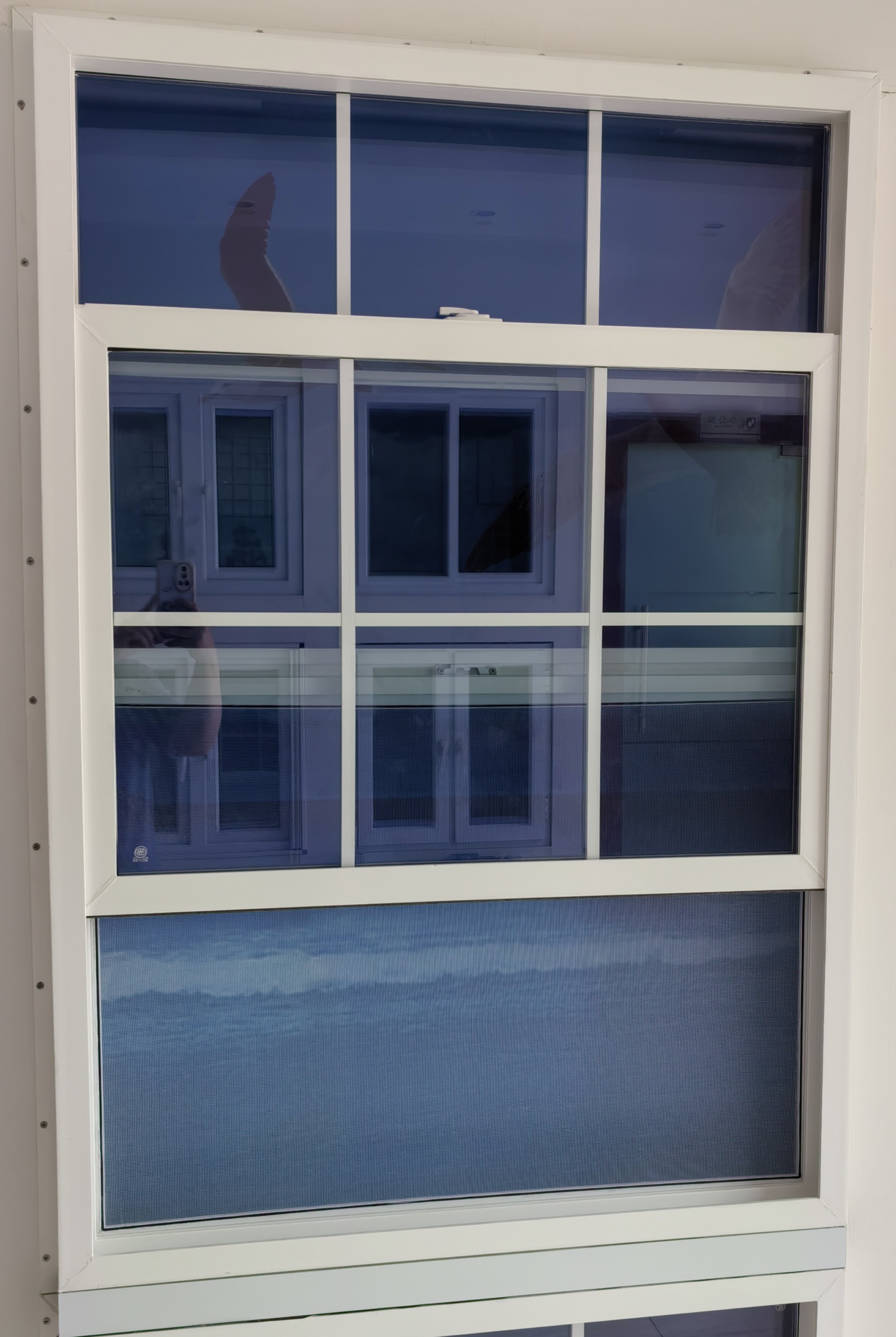
UPVC 82-Series American-Style Single Hung Window — one of the residential UPVC window configurations covered in this guide.
What Is a UPVC Window? The Short Answer
UPVC (also written PVC-U) is polyvinyl chloride resin without plasticizer. It is mixed with stabilizers and anti-aging additives, extruded into hollow multi-chamber sections, and then cut, welded and assembled into window frames and sashes. A finished UPVC window therefore has four decision layers that determine its real performance: the profile (formula, wall thickness, chamber design), the glass (single, double-glazed insulated, tempered or frosted), the hardware and sealing system, and the installation quality on site.
Two consequences follow from that structure. First, two windows that both look like “white UPVC windows” in a catalogue can behave very differently after five years outdoors, because profile formula and wall thickness are not visible on a photograph. Second, performance claims such as thermal insulation, sound insulation, water tightness and wind resistance are properties of the assembled window — profile plus glass plus hardware plus installation — and not of the material alone.
Why UPVC Window Selection Is Harder Than It Looks
The most common procurement problem in this category is not a shortage of suppliers; it is difficulty comparing them. A buyer receives quotations that all say “UPVC window”, but the underlying specifications can differ in profile grade, wall thickness, glazing build-up, lock type and sealing system. Deterioration usually appears years after delivery, when yellowing, deformation, air leakage or stiff sliding sashes become visible.
Profile grade is the clearest example. Conch is a well-known brand-grade UPVC profile with a stable raw-material formula, consistent wall thickness and anti-aging performance. General mid-range UPVC profiles vary significantly in quality between manufacturers, and some reduce formula quality or wall thickness to reach a lower purchase price. When installation and processing are done properly, brand-grade profiles generally deliver longer service life and fewer later-stage problems; mid-range profiles can still be a reasonable choice for budget-constrained projects, but only when wall thickness and test reports are verified before purchase.
Buyer's rule of thumb: the profile is the part of a UPVC window you cannot inspect from a finished product photo, and it is also the part that decides whether the window still performs in year ten. Verify profile standard compliance and wall thickness before comparing prices.
The UPVC Window Market and Manufacturing Background
The category is large and geographically concentrated. Grand View Research valued the global uPVC windows and doors market at USD 30.8 billion in 2025, while Mordor Intelligence estimates USD 42.15 billion for the same year — a variance that reflects different treatments of accessories, hardware and regional pricing rather than a disagreement about direction. Within that market, Asia Pacific accounted for a 44.1% revenue share in 2025, and windows represented 58.0% of uPVC product revenue, ahead of doors.
By design type, casement windows and doors held the largest share at 38.5% in 2025, according to Dataintelo. That share matters for buyers because casement is the configuration most often specified for residential and commercial construction, and it is also the configuration most sensitive to hinge and locking hardware quality.
On the manufacturing side, Foshan Nanhai in Guangdong is a recognized base for UPVC profiles and windows. Chinese production is not a single quality tier: the cluster contains brand-grade profile extruders, qualified mid-range extrusion lines, and trading intermediaries, and the export route a buyer chooses often determines which tier they actually receive.
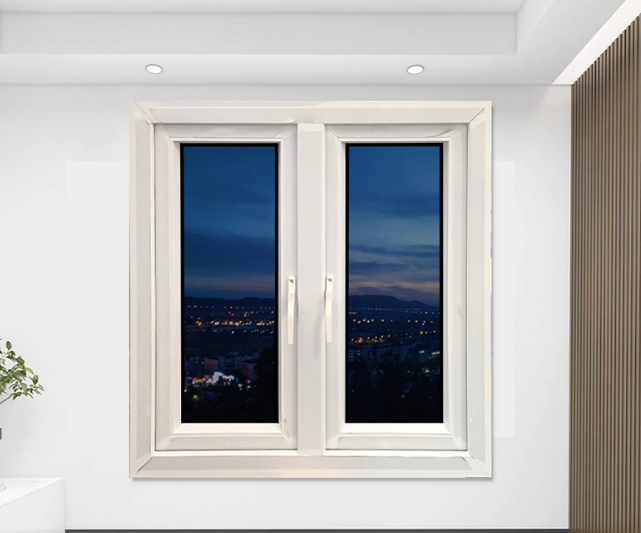
UPVC 60-Series Casement Window — casement remains the largest UPVC design-type segment globally.
How UPVC Windows Are Built: Profiles, Glazing, Hardware, Compliance
Foshan Nanhai Yuanzhaiji UPVC Door & Window Factory is a UPVC door and window manufacturer established in 2009, producing window and door systems for domestic and overseas engineering projects and exporting to LATAM, MENA, ASEAN and EU markets. Its production profile is a useful reference point for understanding how a UPVC window is actually assembled, because each decision layer below corresponds to a supply decision a buyer has to make.
1. Profile material and series
The company works with UPVC as the primary material and long-term supplies Conch profiles in 60, 65 and 88 series. Finish options include co-extruded color, laminated wood-grain finishes, and solid colors such as dark grey and black. Product models published for the window range include BR58 and HF88. Published profile material parameters are: Vicat softening point 86℃, flexural modulus of elasticity 2,840 MPa, tensile yield stress 43 MPa, tensile strain at break 186%, and density 1,520 kg/m³.
Those figures describe the compound, not the assembled window. Their practical value is comparative: they let an engineer confirm that the profile supplied matches the data sheet, and they provide a benchmark when a cheaper alternative is offered without documentation.
2. Glazing
Glass choice is the second-largest driver of thermal and acoustic results. Available glazing options include single-layer glass, double-glazed insulated glass, tempered safety glass and frosted glass. Multi-chamber profile design combined with insulated glazing is what separates an energy efficient UPVC window from a basic frame; modern multi-chamber profiles are reported to improve energy efficiency by up to 40% compared with traditional frames, although the final figure always depends on the complete window build-up and the building itself.
Where a project calls for triple glazing, treat it as a specification question rather than an assumption: confirm the glass build-up, cavity and overall window U-value with the supplier in writing, since the performance figure that matters for compliance is the whole-window value, not the glass alone.
3. Hardware and sealing system
Opening type determines the hardware set. The matched components for this manufacturer's window range include window handles, window hinges, lock points, multipoint lock drive mechanisms, crescent locks, window rollers, EPDM sealing gaskets and pile weather strips. For a security UPVC window, the multipoint lock drive mechanism and lock points are the parts that distribute force across the sash; for a sliding UPVC window, the rollers and track determine how smoothly the sash moves years later.
Most sliding-sash complaints trace back to three causes: debris or dust accumulated in the track, a worn or misaligned pulley, or mis-adjusted hardware. All three are correctable — clean the track, replace a worn roller, and adjust the hinge or roller screws to level the sash — which is why hardware specification and after-sales parts availability belong in the same conversation as price.
4. Compliance, testing and certificates
Profile compliance is usually assessed against GB/T 8814-2017 for unplasticized polyvinyl chloride (PVC-U) profiles for doors and windows, which covers wall thickness, impact resistance, heat stability and anti-aging performance, and requires qualified test reports for verification of physical properties. On the finished-window side, the manufacturer can provide CE and ISO qualification certificates as required by the buyer or destination market.
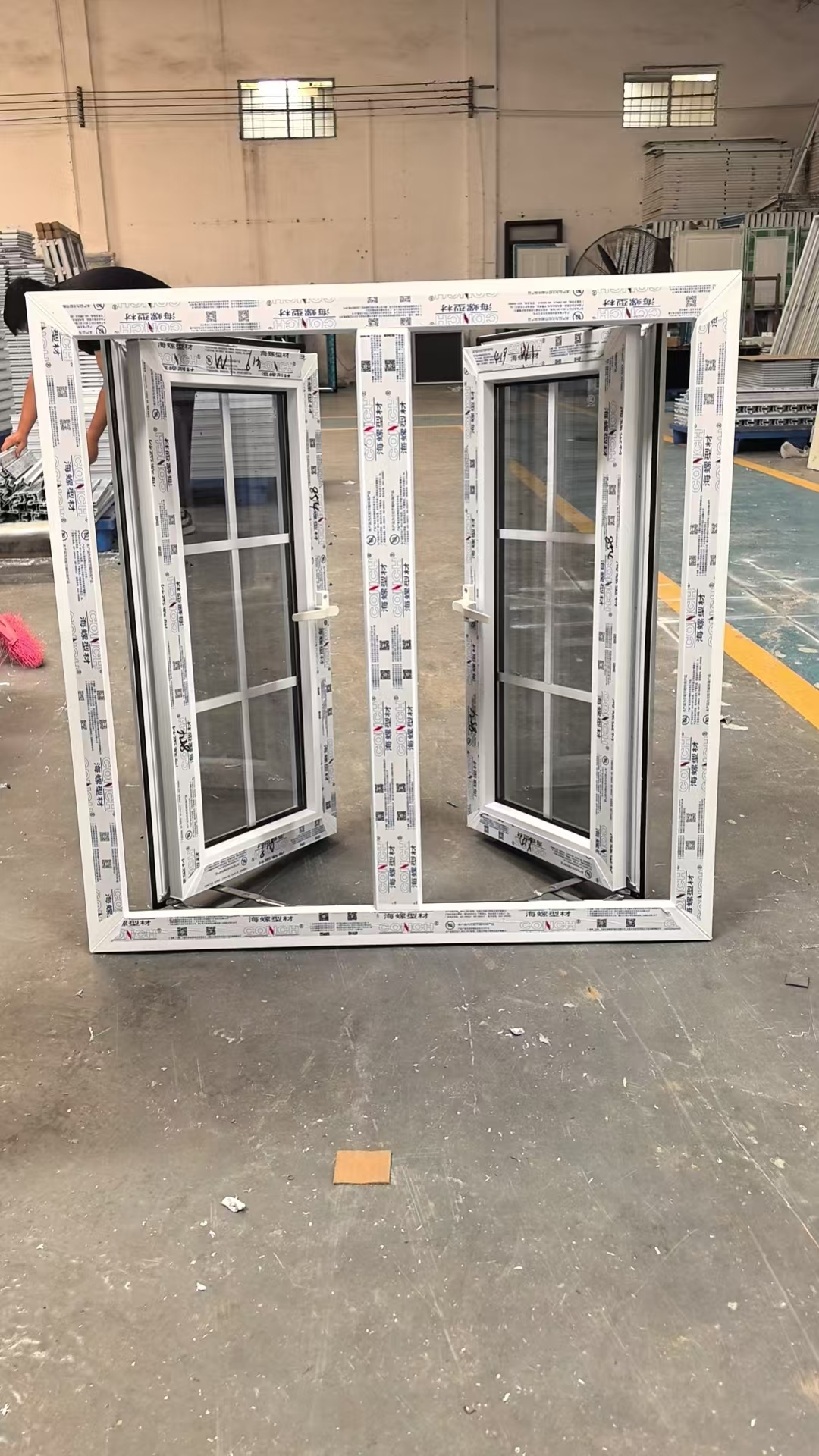
UPVC 60-Series Casement Window with Grilles-Between-the-Glass — glazing build-up is specified at order stage.
Step-by-Step: Specifying and Ordering UPVC Windows for a Project
Below is a practical sequence for buyers sourcing UPVC windows for residential, commercial, renovation or villa projects.
Step 1 — Define the operating environment and project type
Start with where the window will be installed: outdoor exposure, coastal high-humidity conditions, strong-wind areas, residential buildings, commercial buildings, renovation projects or villas. The manufacturer's stated working conditions for its window range cover exactly these cases. Environment drives material and hardware priorities — corrosion resistance and wind-pressure resistance matter far more in a coastal project than in a sheltered inland one.
Step 2 — Choose the window type before the price
Select the configuration that fits the opening and the building's ventilation strategy: sliding, casement, tilt-and-turn, crank awning, American-style hung, awning, hopper or louver. Changing type later changes the frame, hardware and installation detail, so it is the most expensive decision to reverse.
Step 3 — Fix the profile grade and confirm wall thickness
Decide between brand-grade profiles such as Conch 60/65/88 series and qualified mid-range profiles, then require the corresponding test reports and wall-thickness verification. This is the step that protects the buyer against yellowing, deformation and air leakage later.
Step 4 — Specify glazing, hardware and sealing
Confirm glass type (single, double-glazed insulated, tempered, frosted), lock system (lock points, multipoint lock drive mechanism, crescent lock), handles and hinges, rollers for sliding units, and EPDM sealing gaskets plus pile weather strips. State the required performance targets explicitly: wind-pressure resistance, water tightness, air permeability, sound and heat insulation, UV resistance and anti-aging, and optional fire resistance where the project requires it.
Step 5 — Validate with a sample before mass production
Incoming verification should check profile wall thickness, appearance and product test reports. A sample showroom is available for one-stop purchasing, which allows buyers to inspect profile sections, finishes and hardware before committing to a production order.
Step 6 — Inspect at production and at delivery
Production flow should follow process drawings with controlled cutting precision and notch size, then assembly and installation adjustment of sash clearance, sealing performance and opening/closing smoothness. Finished-product inspection then checks for air leakage, deformation and poor sealing. For sliding sashes specifically, the same check covers track cleanliness, roller condition and sash level.
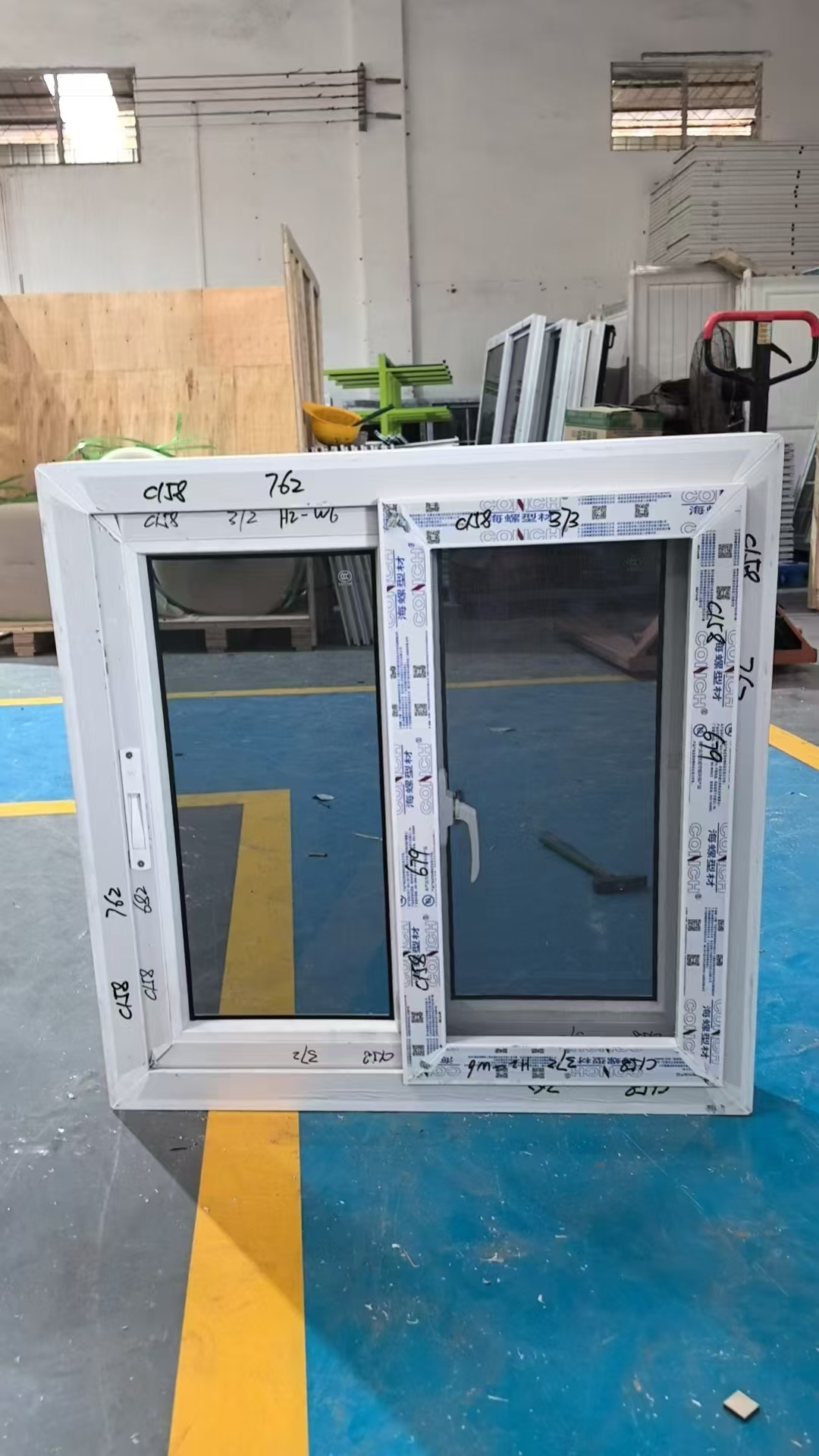
UPVC 88-Series Sliding Window with Fly Screen — track, roller and sash level determine long-term sliding performance.
Where UPVC Windows Are Used
UPVC window demand comes from four project types in this manufacturer's scope: residential buildings, commercial buildings, renovation projects and villa projects, with operating conditions that include outdoor exposure, coastal high-humidity environments and strong-wind areas.
Application logic differs by configuration. Sliding windows suit openings where a swinging sash would obstruct space, and are commonly supplied with insect screens. Casement windows suit projects prioritizing a sealed, compression-type closure with grilles-between-the-glass options for facades. Tilt-and-turn windows combine ventilation and sealing behaviour in one sash, which is why they appear frequently in European-style residential work. Crank awning and hopper windows serve ventilation in rain-exposed positions. American-style hung windows fit the vertical-sash convention of North American residential design, and louver windows — including insulated glass louver versions — address ventilation with rain protection.
Across all of them, the function is consistent: thermal insulation, sound insulation, wind and rain resistance, corrosion resistance and sealing performance, combined to create a comfortable indoor environment while complying with local building codes.
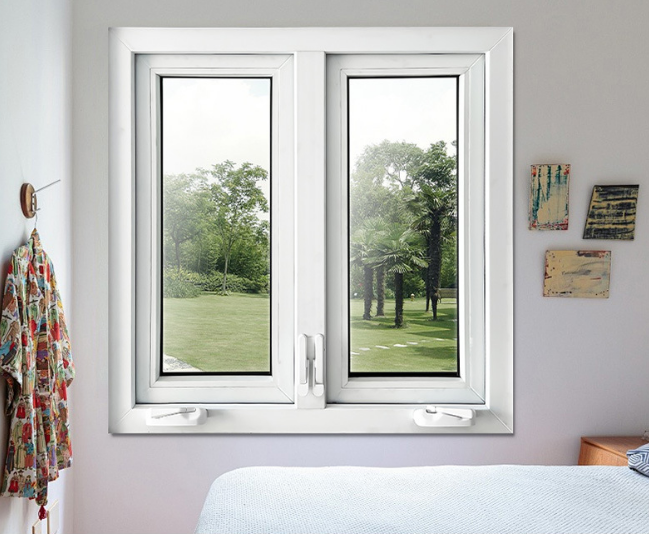
UPVC 60-Series Crank-Operated French Casement Window — crank operation suits openings that are difficult to reach by hand.
UPVC Window Type Comparison
The table below compares the window configurations manufactured by Foshan Nanhai Yuanzhaiji UPVC Door & Window Factory, based on published product and application data.
| Window type | Operation mode | Typical project fit | Hardware / performance focus |
|---|---|---|---|
| UPVC Sliding Window (e.g. 88-series with fly screen, 60-series) | Sliding operation, manual opening and closing | Residential buildings, renovation projects, openings where swing space is limited | Rollers, track cleanliness, sash level; insect screen option |
| UPVC Casement Window (60-series, optional grilles between glass) | Manual opening and closing | Residential and commercial facades; largest global design-type segment | Hinges, handles, multipoint locking, sealing compression |
| UPVC Tilt-and-Turn Window | Tilt-and-turn opening | European-style residential projects requiring ventilation plus sealing | Tilt-and-turn hardware, sealing gaskets, wind-pressure resistance |
| UPVC Crank Awning Window / French casement version | Manual opening and closing, crank-operated | Hard-to-reach or high openings | Crank mechanism, water tightness, air permeability |
| UPVC American-Style Hung Window (82-series) | Manual opening and closing, vertical sash | North American residential conventions | Sash balance hardware, sealing gaskets, thermal insulation |
| UPVC Awning / Hopper Window | Manual opening and closing | Rain-exposed ventilation positions | Water tightness, drainage, sealing |
| UPVC Louver Window / Insulated Glass Louver Window | Manual opening and closing | Ventilation with rain protection | Blade sealing, corrosion resistance, insect screen pairing |
Market and Compliance Reference Data
For buyers who need third-party figures when building a project specification, the following verified reference points are useful during the research stage.
| Metric | Value | Source |
|---|---|---|
| Global uPVC windows and doors market size, 2025 | USD 30.8 billion | Grand View Research |
| Alternative market estimate, 2025 | USD 42.15 billion | Mordor Intelligence |
| Asia Pacific share of global uPVC windows and doors revenue, 2025 | 44.1% | Grand View Research |
| Windows share of uPVC product revenue, 2025 | 58.0% | Grand View Research |
| Casement windows and doors share by design type, 2025 | 38.5% | Dataintelo |
| Legal whole-window U-value limit for window replacement in existing homes, England & Wales, 2025 | 1.4 W/m²K (Approved Document L) | BFRC / industry guide |
| Estimated lifespan of high-quality profiles from the Foshan cluster | 30–40 years | Industry publication |
| Energy efficiency improvement of modern multi-chamber profiles vs traditional frames | Up to 40% | Secondary industry source |
Note on market sizing: the two 2025 market values above come from different research methodologies and are not directly interchangeable. Use the figure whose scope matches your own category definition.
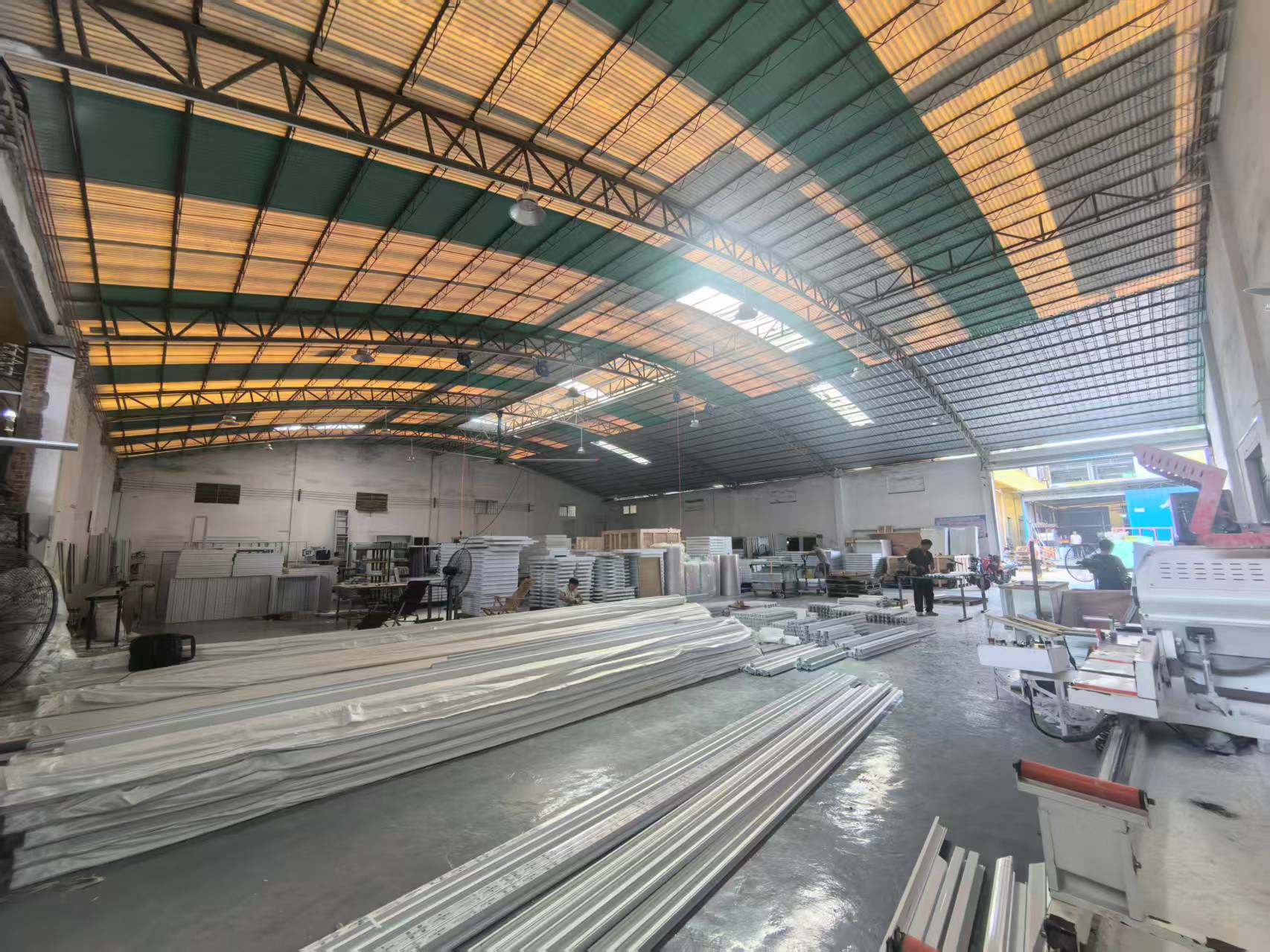
Material Cutting Area — profile cutting precision and notch size are controlled at this stage.
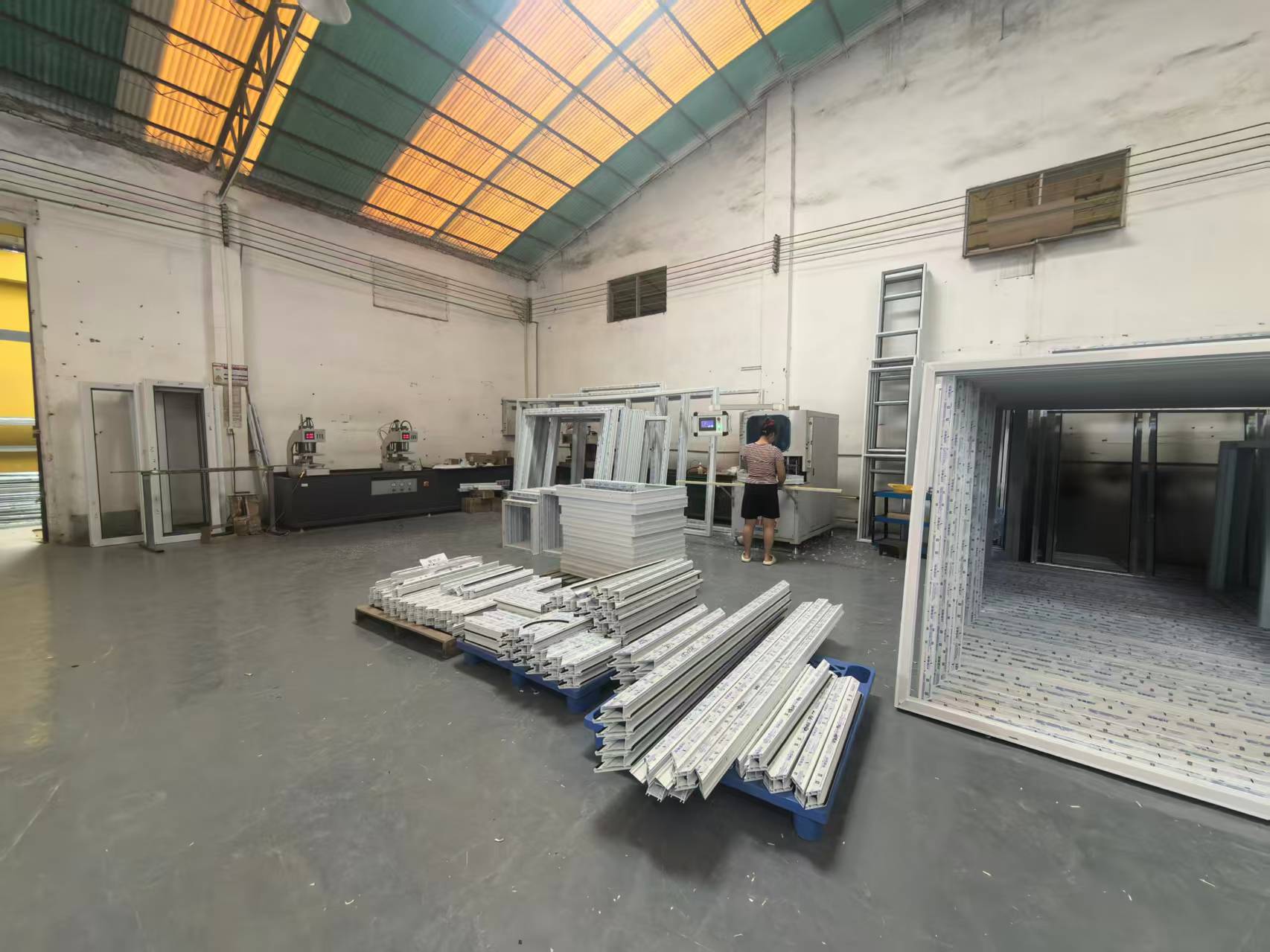
Welding & Assembly Area — sash clearance and sealing performance are set during assembly.
FAQ: China UPVC Window Suppliers for Construction Projects
Q1. What standards and certificates should a China UPVC window supplier be able to document?
At profile level, UPVC profiles are commonly assessed against GB/T 8814-2017 for unplasticized polyvinyl chloride (PVC-U) profiles for doors and windows, which sets requirements on wall thickness, impact resistance, heat stability and anti-aging performance and requires qualified test reports for verification of physical properties. At finished-window level, Foshan Nanhai Yuanzhaiji UPVC Door & Window Factory can provide CE and ISO qualification certificates as required. Buyers exporting to regulated markets should also check the destination rule for the complete window — for example, the legal whole-window U-value limit for window replacement in existing homes in England and Wales was 1.4 W/m²K in 2025 under Approved Document L.
Q2. How do I evaluate a China UPVC window supplier for a construction project?
Compare four things: product range, production capacity, technical staffing and export experience. Yuanzhaiji was established in 2009 and has more than 15 years of experience; its manufacturing facility covers 3,000 square meters, employs approximately 20 staff with an R&D team of 10 engineers, and reaches an annual production capacity of 50,000 units. The window range covers UPVC sliding, casement, tilt-and-turn, crank awning, American-style hung, awning, hopper and louver windows plus insect screens, and the company exports to LATAM, MENA, ASEAN and EU markets. A supplier that can cover a full window range from one production site usually simplifies specification and replacement-parts logistics across a multi-building project.
Q3. What actually drives the cost of a UPVC window?
The main cost drivers are profile grade, glazing and hardware. Brand-grade profiles such as Conch carry a higher unit material cost than ordinary mid-range profiles because of standardized raw-material formulation, consistent wall thickness and reliable UV resistance and anti-aging capability, but they reduce later-stage failure risk. Glass choice — single-layer versus double-glazed insulated, tempered or frosted — is the second driver, followed by hardware such as multipoint lock drive mechanisms, hinges, rollers and EPDM sealing gaskets, and by window size and quantity. Because these variables move independently, a price comparison is only meaningful when the profile series, glass build-up and hardware set are identical across quotations.
Q4. Can I inspect samples before placing a production order?
Yes. A sample showroom is available for one-stop purchasing, which allows buyers to review profile sections, wall thickness, color finishes — including co-extruded color, laminated wood-grain and solid colors such as dark grey and black — and glazing options such as single-layer glass, double-glazed insulated glass, tempered safety glass and frosted glass before production begins. Verifying wall thickness and test reports on the sample is the recommended step for any project where long-term durability matters.
Q5. What affects production and delivery lead time for a UPVC window order?
Lead time is driven by the profile series selected (60, 65 or 88 series), the color or surface finish required, glazing type, the hardware set, and total order quantity, so it has to be confirmed against the actual specification rather than assumed from a catalogue. For construction projects, the practical approach is to confirm the schedule in writing together with the profile grade, glazing and hardware specification, and to keep profile inspection as an incoming check. To request a quotation or sample arrangement for a specific project, contact the factory through yuanzhaiji.com, by email at 1803877678@qq.com, or by phone and WhatsApp at +86 130-0674-7018, and include the window type, quantity, profile series and destination market.
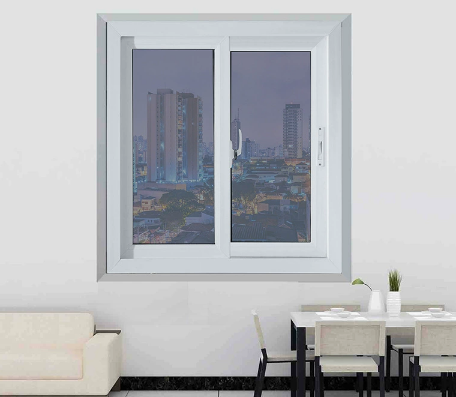
60-Series UPVC Sliding Window — specify profile series, glazing and hardware together before requesting a quotation.
Conclusion: What to Decide First
UPVC windows are a mature, globally traded category: the 2025 market was valued at USD 30.8 billion by Grand View Research, Asia Pacific held 44.1% of that revenue, and casement remains the largest design type at 38.5%. The category is competitive enough that price alone rarely separates suppliers. What separates them is whether the profile grade, wall thickness, glazing build-up, hardware set and compliance documentation are all verifiable before production starts.
For awareness and research-stage buyers, the sequence is straightforward: define the environment and project type, choose the window configuration, fix the profile grade and confirm wall thickness against GB/T 8814-2017, specify glazing and hardware, validate on a sample, then inspect at production and delivery. Buyers who follow that order usually avoid the failure modes this industry is known for — yellowing, deformation and air leakage appearing years after installation.
Next step: Foshan Nanhai Yuanzhaiji UPVC Door & Window Factory supplies UPVC sliding, casement, tilt-and-turn, awning, hung, hopper and louver windows for residential, commercial, renovation and villa projects, with a sample showroom available for one-stop purchasing.
Send your window schedule, quantity and destination market to request a quote or sample arrangement: yuanzhaiji.com · 1803877678@qq.com · WhatsApp / Tel +86 130-0674-7018.
Foshan Nanhai Yuanzhaiji UPVC Door & Window Factory · Xilin Industrial District, Honglai Town, Quanzhou Nan'an City, Fujian Province, China. Established 2009 · 3,000 m² manufacturing facility · annual production capacity 50,000 units · R&D team of 10 engineers.