
Microfiber Cleaning Products: Blend, GSM, Pile & Edge Guide
Microfiber Cleaning Products: Blend, GSM, Pile & Edge Guide
Five variables decide what a microfiber cleaning product actually does on a surface: the polyester-to-polyamide blend ratio, the fabric weight in GSM, the pile or loop construction, the finished dimensions, and the edge finishing. Colour, logo and packaging matter commercially, but they do not change cleaning behaviour. This guide decodes each of the five variables in turn, then applies the same readings to specific products so that a buyer moving from evaluation into execution can turn a specification sheet into a purchase order that survives inspection.
The worked specifications below come from the published range of Foshan Patinda Housewares Co., Ltd., a microfiber cleaning product manufacturer established in May 2004 that operates a 45,000 m² plant in Foshan, Guangdong, China, employs 200 people including 17 engineers, and exports 98% of its output to markets including the USA, Canada, Australia, the UK, Germany, France, Italy, the Netherlands, Japan and Korea. Models MJ-002, MD-020, MJ-022, MP-014, MP-015, MP-020, MT-003 and MP-006 are used as reference points, not as the only valid options — the reading method applies to any supplier's sheet.
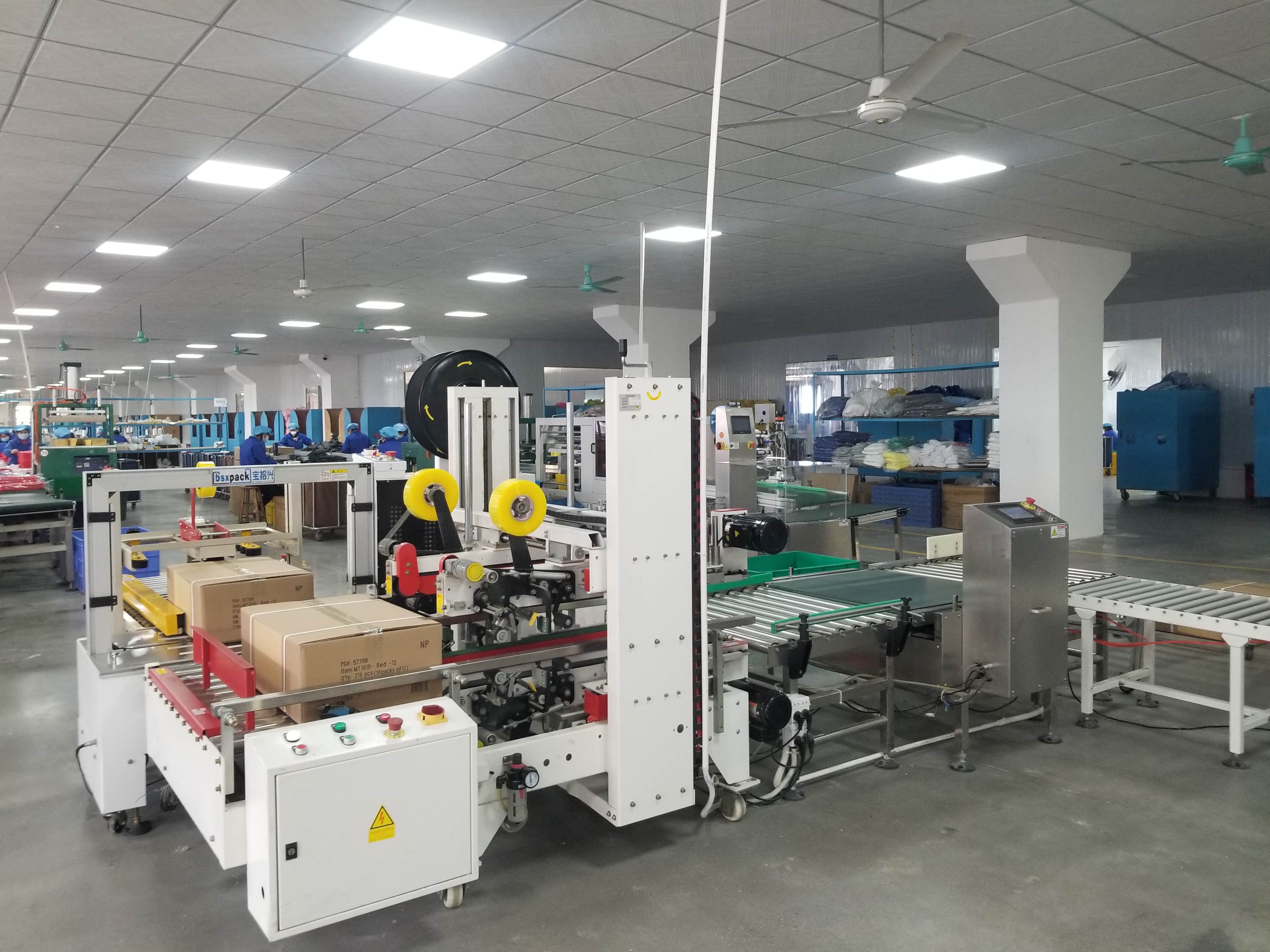
Microfiber cleaning products are built on machinery whose settings determine GSM, pile height and edge quality.
Why "microfiber" on its own is not a specification
Microfiber is defined by fibre fineness: a fibre measuring below 1.0 denier. That definition says nothing about cleaning performance, because a 180 GSM cut-edge cloth and a 400 GSM ultrasonically sealed cloth can both be called microfiber and neither statement would be wrong.
The blend is not much of a differentiator either. One commercial research provider, Fortune Business Insights, estimated that multicomponent polyester/polyamide constructions held a 58.0% revenue share of the global microfiber cleaning cloth market in 2025. Most products a buyer is likely to be quoted already sit in the same fibre family, so the real differences must be found elsewhere.
This is where quotations go wrong. Two suppliers can both quote "80/20 microfiber cloth, 30×30 cm" and be describing genuinely different goods: 250 GSM versus 350 GSM, a raw cut edge versus a 12-stitch-per-inch overlock, a nominal cut size versus a post-wash size. The paperwork looks identical and the delivered product is not. The five readings below exist to close that gap.
Reading 1 — Blend ratio: what the split actually changes
The blend ratio describes how the two fibre components divide the fabric by weight. Polyester contributes the scrubbing action and the oil-attracting side of the equation; polyamide, also called nylon, is the more absorbent component and is central to the fine split-fibre structure that gives microfiber its pickup. Moving the ratio shifts the balance between wiping aggression and liquid retention.
An 80% polyester / 20% polyamide split is the mainstream general-purpose construction, and it is what MJ-002 uses. On a specification sheet, the number to insist on is not the headline ratio alone but the percentage of each component by weight, stated per SKU. "Microfiber blend" without percentages is not a specification, and "80/20" without a stated basis (weight or fibre count) invites dispute at inspection.
Ratios outside the standard split are where blend reading becomes commercially important:
- Microfiber / nylon (MP-014, Microfiber Stripe Mop). A nylon-enriched pad, offered here as a colour-coded wet/dry pad. The colour coding is an operational control rather than a cleaning variable — it lets a facility assign one colour to one zone and reduce cross-contamination between areas.
- Microfiber / polyester (MP-015, Microfiber Twisted Wet Mop). A single-polymer-family synthetic pad supplied as an aluminium plate adjustable refill.
- Microfiber + PET (MP-020, Microfiber Abrasive Mop). PET is polyethylene terephthalate, which is polyester. A sheet that lists "PET" is not describing a third fibre class; it is naming the same polymer under its chemical abbreviation.
- 40% cotton tufting (MP-006, Microfiber-Cotton Blended Tufting Mop). A blended tufted mop in which cotton makes up a substantial share of the pile. Because it is not a pure synthetic construction, lint, drying time and dimensional change after washing should be confirmed against the supplier's care data rather than assumed from pure-microfiber norms.

Blend percentages are set at the yarn stage, which is why they should be fixed in writing rather than inferred from a finished sample.
Reading 2 — GSM: the most useful number, and where it stops being one
GSM means grams per square metre and is measured on the fabric before cutting and sewing. Within one construction, a higher GSM generally means a denser fabric that holds more liquid and carries more fibre per wipe, at the cost of a heavier feel, slower drying and a higher unit price. A lower GSM gives a lighter, more manoeuvrable cloth that saturates faster and wears through sooner under heavy use.
The range is wider than most buyers expect. The company's published product page for its universal cleaning cloth describes a lint-free cloth spanning 180–450 GSM in an 85% polyester / 15% polyamide composition. That is a 2.5-fold weight difference inside a single product family — enough that "microfiber cloth" alone cannot predict absorbency. Individual SKUs sit at fixed points inside or near that range: MJ-002 is specified at 300 GSM, while MD-020 is offered across a 250–350 GSM band.
A band is a family statement, not a purchase specification. If a supplier quotes MD-020 at 250–350 GSM, the order should name the exact weight being bought and the acceptable tolerance around it, plus the method used to check it. Without that, a 250 GSM delivery and a 350 GSM delivery both satisfy the quotation, and the buyer absorbs the difference in absorbency and cost per unit.
Reading 3 — Pile and loop construction: where "same spec" quotes usually diverge
Construction describes how the yarn is arranged on the face of the fabric, and it changes how the product behaves far more than the blend does. The following descriptions are general textile background; the specific structure of any SKU should be confirmed on its own sheet rather than assumed from the product family.
Terry loop
Uncut loops create a deep, open surface with a large exposed area for holding water and trapping lifted soil. MT-003, the Microfiber Terry Wet Mop, uses an 80/20 terry loop strip construction as a wet string mop, which is the classic arrangement for mopping where liquid pickup is the primary job.
Twisted loop
Twisting or plying the yarn before knitting packs more fibre into a given area and produces a firmer, denser face that holds its shape under repeated mechanical pressure. MP-015 applies this construction to a wet mop refill, which is the logic a buyer would expect where a pad has to stay flat and consistent across a long shift rather than loft up.
Tufted
In a tufted build, yarn is punched through a backing cloth and locked in place, allowing a taller, heavier pile than a flat knit. MP-006 is a tufting mop, and its 40% cotton content makes the tufted structure the defining feature to test.
Flat knit, plush and coral fleece
Flat woven or knitted faces sit close to the surface and suit wiping and polishing where a low profile is an advantage. Plush cut-pile constructions, including those marketed as coral fleece, present a soft, lofted face with high surface area — useful for drying and dusting, less useful where a thin edge has to reach into a frame or a track. Warp-knitted fabrics are generally more dimensionally stable and less stretchy than weft-knitted ones, which affects how a cloth holds its shape after repeated washing.
Reading 4 — Dimensions: nominal, cut, or post-wash?
Size looks like the simplest line on a specification sheet and is one of the most common sources of rejection. MJ-002 is quoted at 30×30 cm; MD-020 is offered in both 30×30 cm and 40×40 cm. What matters is whether those numbers describe the cut panel, the sewn finished piece, or the size after the first wash — and whether a tolerance applies.
Knitted fabric relaxes, and cotton-blended constructions such as MP-006 can move more than pure synthetics. A buyer should agree in writing which measurement basis is being used, what tolerance is acceptable, and at which point in production the check happens. For mop refills the same logic applies to fit rather than area: an aluminium plate adjustable refill such as MP-015 only performs if the plate size and fixing method match the frame already in service, so the frame model belongs on the order.
Reading 5 — Edge finishing: the line that decides lint complaints
Edge finishing is the most under-specified variable in microfiber purchasing and the one most likely to generate after-sales complaints, because a loose or unsealed border releases fibre onto the surface being cleaned. Three finishes dominate.
Cut edge
A raw cut edge is the lowest-cost finish and the one most exposed to border fraying and loose fibre release. It is viable for utility wiping where appearance and lint are secondary, and difficult to defend on glass, gloss paint or a polished vehicle panel.
Stitched edge
A sewn or overlocked border is measurable. MD-020 specifies 10–12 stitches per inch on the edge, which gives a buyer an actual number to inspect against: stitch density can be counted on a delivered sample, and a lower count points to a looser seam with more room for fraying. Thread type and stitch pattern should be named alongside the SPI figure.
Ultrasonic / sealed edge
Ultrasonic sealing cuts and fuses the border by applying high-frequency energy, melting the thermoplastic polyester and polyamide fibres into a sealed line so no thread is used at all. MJ-022, a Microfiber Car Wash Towel, is specified with an ultrasonic edge — a sensible choice where the cloth will be dragged across a painted or coated surface and a loose border thread would be the first thing to cause a mark.
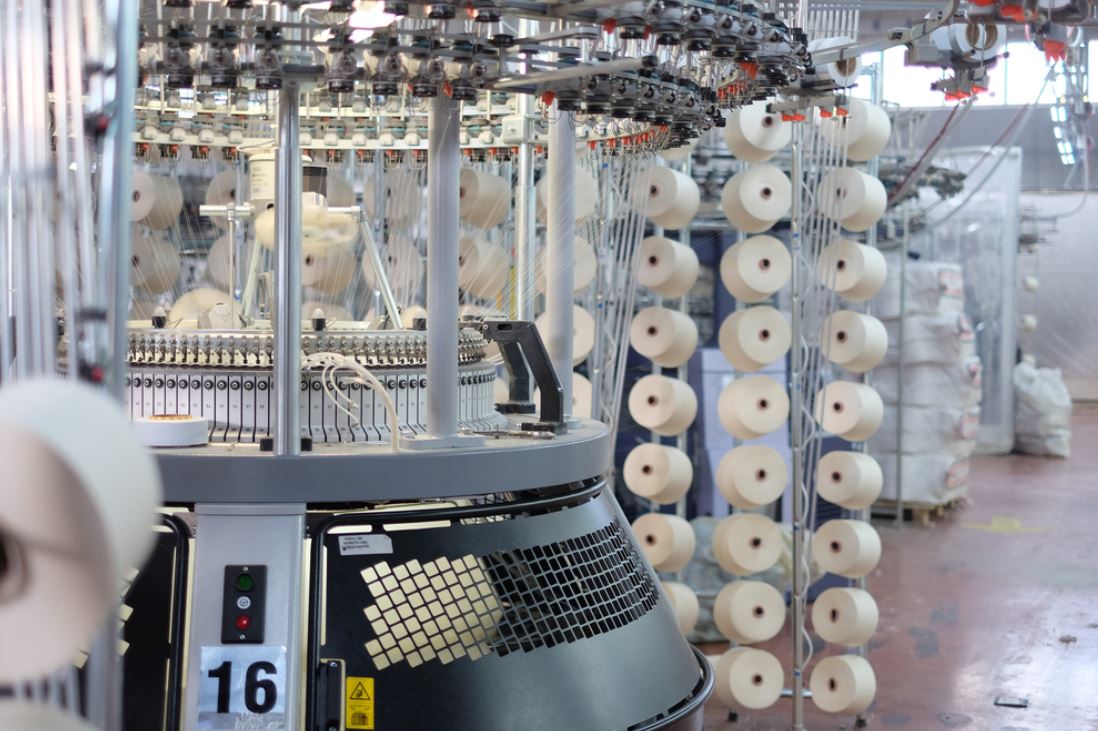
Loop height and yarn twist set at the knitting stage determine whether a cloth behaves as a terry, twisted-loop or flat construction.
Worked examples: three cloths read spec by spec
Reading the five variables together produces a usable picture. The table below applies the method to three cloths from the same supplier, showing how the same nominal blend produces three different products.
| Variable | MJ-002 Universal Cleaning Cloth | MD-020 Universal Towel | MJ-022 Car Wash Towel |
|---|---|---|---|
| Blend | 80% polyester / 20% polyamide | 80% polyester / 20% polyamide | 80% polyester / 20% polyamide |
| GSM | 300 | 250–350 band | Not stated in the quoted specification |
| Dimensions | 30×30 cm | 30×30 cm and 40×40 cm | Not stated in the quoted specification |
| Edge | Not stated in the quoted specification | Stitched, 10–12 stitches per inch | Ultrasonic sealed |
| What it implies for the buyer | Fixed mid-weight all-rounder; a single GSM makes absorbency predictable from order to order. | A weight band plus two sizes: the purchase order must lock the GSM and the size actually wanted. | Edge is the defining variable; confirm size, GSM and seal integrity on a sample. |
The reading is straightforward. MJ-002 is the easiest of the three to specify because every value is fixed. MD-020 requires the buyer to narrow a band into a number, but rewards that work with a measurable stitch count. MJ-022 has one clearly stated differentiator — the ultrasonic edge — and leaves two variables open, which is exactly where a specification request should go before an order is placed.
Mop-specific parameters: what changes when the product is a refill
A mop refill carries two specification layers: the textile layer described above, and a mechanical layer that determines whether the pad attaches, stays flat and survives laundering. Five refills from the same range illustrate the spread.
- MP-014 Microfiber Stripe Mop — a microfiber/nylon blend supplied as a colour-coded wet/dry pad. The colour system is the feature to specify, because it governs zone control across a building.
- MP-015 Microfiber Twisted Wet Mop — microfiber/polyester in a twisted construction, supplied as an aluminium plate adjustable refill. Fit to the plate, not just the floor, is the acceptance criterion.
- MP-020 Microfiber Abrasive Mop — microfiber plus PET, described as a dual-purpose dry/wet pad. Confirm whether "dual-purpose" refers to the pad face or to the frame it mounts on.
- MT-003 Microfiber Terry Wet Mop — 80/20 terry loop strip construction in a wet string mop format, oriented toward liquid pickup.
- MP-006 Microfiber-Cotton Blended Tufting Mop — a tufted build with 40% cotton content, where absorbency and post-wash behaviour need separate confirmation.
For refills, add three checks to the textile readings: the pad's own GSM (weight per square metre of the working face, not the whole assembly), the laundering cycle the pad is rated for, and the frame interface. The company's own case record for retail, auto care, gym and janitorial buyers cites reuse for 6–12 months after repeated washing at order volumes of 1,000–50,000 pieces, which is a service-life expectation rather than a guarantee — real life depends on cycle count, detergent and drying method.
Selection matrix: floor care, kitchen and glass, auto detailing
The five variables do not carry equal weight in every application. The matrix below shows which reading should drive the decision in each of the three main application groups, and what must be verified before the order is released.
| Application | Driving variable | Construction to look for | Reference model | Verify before ordering |
|---|---|---|---|---|
| Commercial floor care — wet mopping | Construction + frame fit | Terry loop or twisted loop wet pad | MT-003, MP-015 | Pad GSM, plate and frame compatibility, post-wash dimensions, colour-coding scheme (MP-014) |
| Commercial floor care — scrubbing | Blend + face texture | Abrasive dual-purpose pad | MP-020 | Abrasive face specification, whether the pad is rated for dry and wet use |
| Floor care — blended absorbency | Blend (cotton share) | Tufted cotton-blend mop | MP-006 | Shrinkage and lint behaviour after washing, care instructions |
| Kitchen surfaces and dishwork | GSM + edge | Mid-weight cloth with sealed or dense stitched edge | MJ-002 (300 GSM) | GSM tolerance, colour-fastness, edge finish, size basis |
| Glass and mirror | Edge finishing | Sealed border, low-lint face | MJ-022 (ultrasonic edge) | Seal integrity on a sample, lint behaviour on the actual surface |
| Auto detailing — wash and dry | GSM + edge + size | Sealed-edge towel, larger format for drying | MJ-022, MD-020 40×40 cm | Edge finish, size basis, GSM of the exact SKU, scratch test on a test panel |
Read the matrix as a priority order rather than a product list. On a glass or mirror job, a heavier cloth does not compensate for a fraying border. On commercial floors, a premium blend does not compensate for a refill that will not seat on the frame already in service. Getting the driving variable right first prevents the rest of the specification from being wasted.
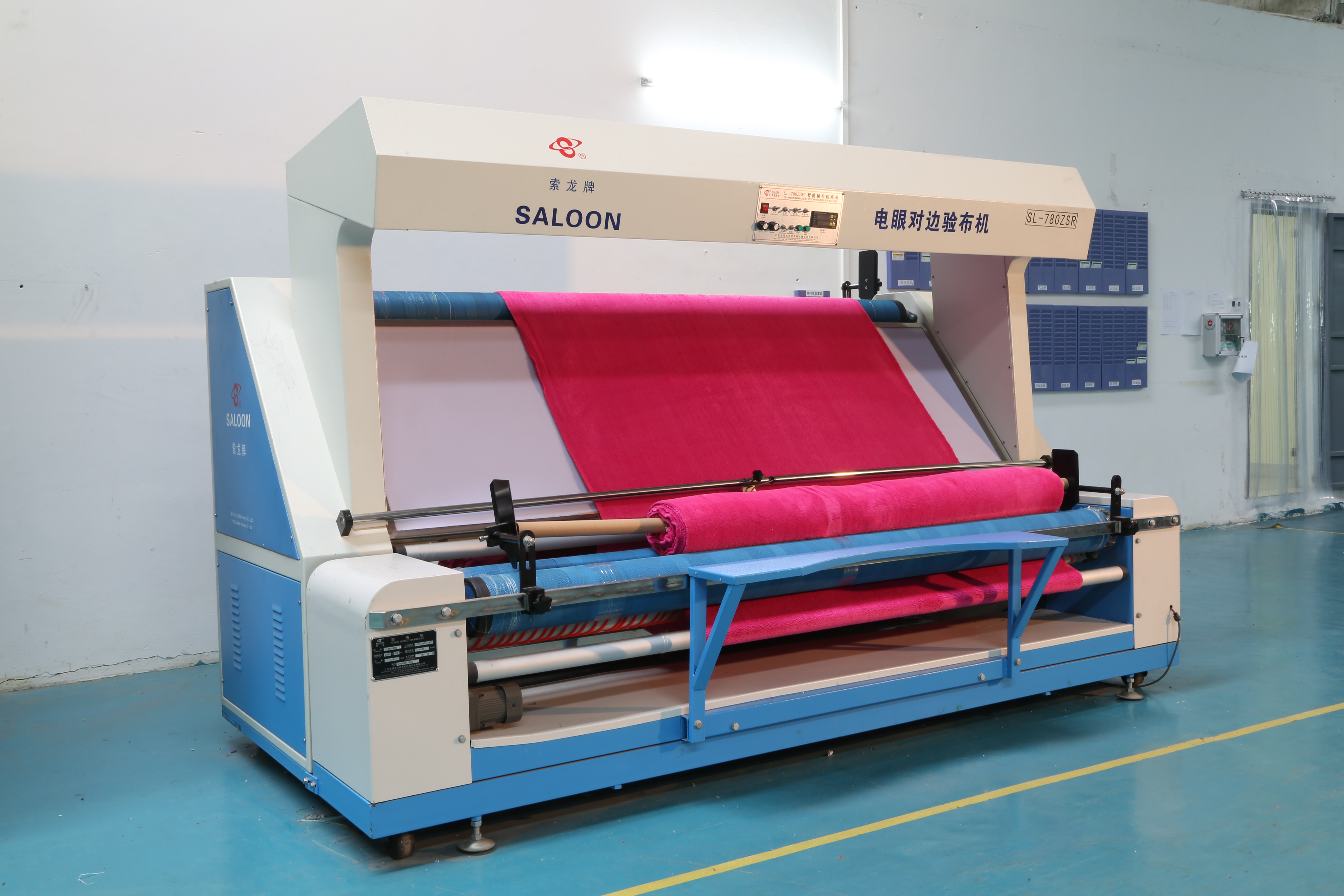
Fabric inspection is where GSM and construction readings become a pass or fail decision.
Step by step: turning five readings into a purchase order
- Name the surface and the failure mode. Streaking, lint, marring, insufficient pickup or poor fit each point to a different variable. Fixing the failure mode first stops the specification from becoming a wish list.
- Fix the blend by component percentage. Require polyester and polyamide percentages by weight for the exact SKU; for MP-006, require the cotton share to be stated.
- Fix GSM with a tolerance and a test method. Convert any family band, such as MD-020's 250–350 GSM, into a single target with an agreed acceptable range.
- Fix the construction. State terry loop, twisted loop, tufted or flat, and for mops state the frame or plate interface.
- Fix the size basis. State whether the dimension is cut, sewn or post-wash, and the tolerance at that point.
- Fix the edge finish. Choose cut, stitched with a stated stitches-per-inch count, or ultrasonic sealed; where stitched, name the thread as well.
- Fix the operational layer. Colour coding for multi-zone sites, logo and label placement, packaging and shipping label, all of which sit inside the supplier's stated customization scope covering size, weight, logo, material, fabric texture, printing, colour, accessories, packaging, extra functionality, shipping label and GSM.
- Fix the acceptance criteria. The stated basis is a pre-shipment test, so agree what is measured, on what sample size, and what happens on a failed result.
- Confirm the commercial envelope. Minimum order quantity is 3,000 pieces, lead time is 30–45 days, and delivery terms run EXW, FOB, CIF, DAP or DDP with 30/70 T/T or card payment. Each of those changes landed cost, so they belong in the same document as the technical specification.
Where supplier data must be verified
Every number above is a supplier statement, and supplier statements need matching against documents before they become commitments. Four categories deserve particular attention.
Family ranges versus SKU values. The published universal cleaning cloth page describes a lint-free cloth across 180–450 GSM at 85% polyester / 15% polyamide, while individual SKUs in the range are quoted at 80/20 and at fixed weights such as 300 GSM. Both can be true of different items. The verification step is to obtain the specification for the exact SKU on the order, not the family page.
Certification scope and validity. OEKO-TEX STANDARD 100 certificate 20.HCN.36448, issued by Hohenstein Laboratories GmbH & Co. KG, covers Product Class II, Annex 6 and runs from 26 February 2026 to 31 January 2027. ISO 9001:2015 certificate CN24/00007747 and ISO 45001:2018 certificate CN24/00007748, both issued by SGS United Kingdom Ltd, are valid from 8 December 2024 to 7 December 2027 and are scoped to the manufacture of towels and mops. A four-pillar SMETA audit, certificate ZAA600123152, was issued by Benchmarks Company Limited on 3 April 2025. Check the scope line and the expiry date on the certificate itself, and confirm that the product you are buying sits inside the audited scope.
Chemical and market-access requirements. OEKO-TEX updated STANDARD 100 in 2024 to include a total fluorine limit of 100 mg/kg, introduced to address PFAS regulation. A certificate issued against an older standard year does not demonstrate the same coverage, so the issue date matters as much as the certificate number. For European distribution, packaging and textile producer responsibility also apply: the German VerpackG registration DE3922560298890 with LUCID dates from 17 May 2023, and the French REP Textile UIN FR337512_11LKPC was issued through EUREP GmbH with effect from 1 January 2025. These are registrations, not product approvals, and they belong to the legal entity rather than to a specific cloth.
Third-party traces. Customs records are a useful cross-check on trade activity independent of the supplier's own marketing. ImportInfo's US import activity listing records 172 bills of lading for Foshan Pa Tin Da Housewares Co., Ltd. between June 2019 and September 2026 — evidence of shipment history, not of quality, capacity or certification.
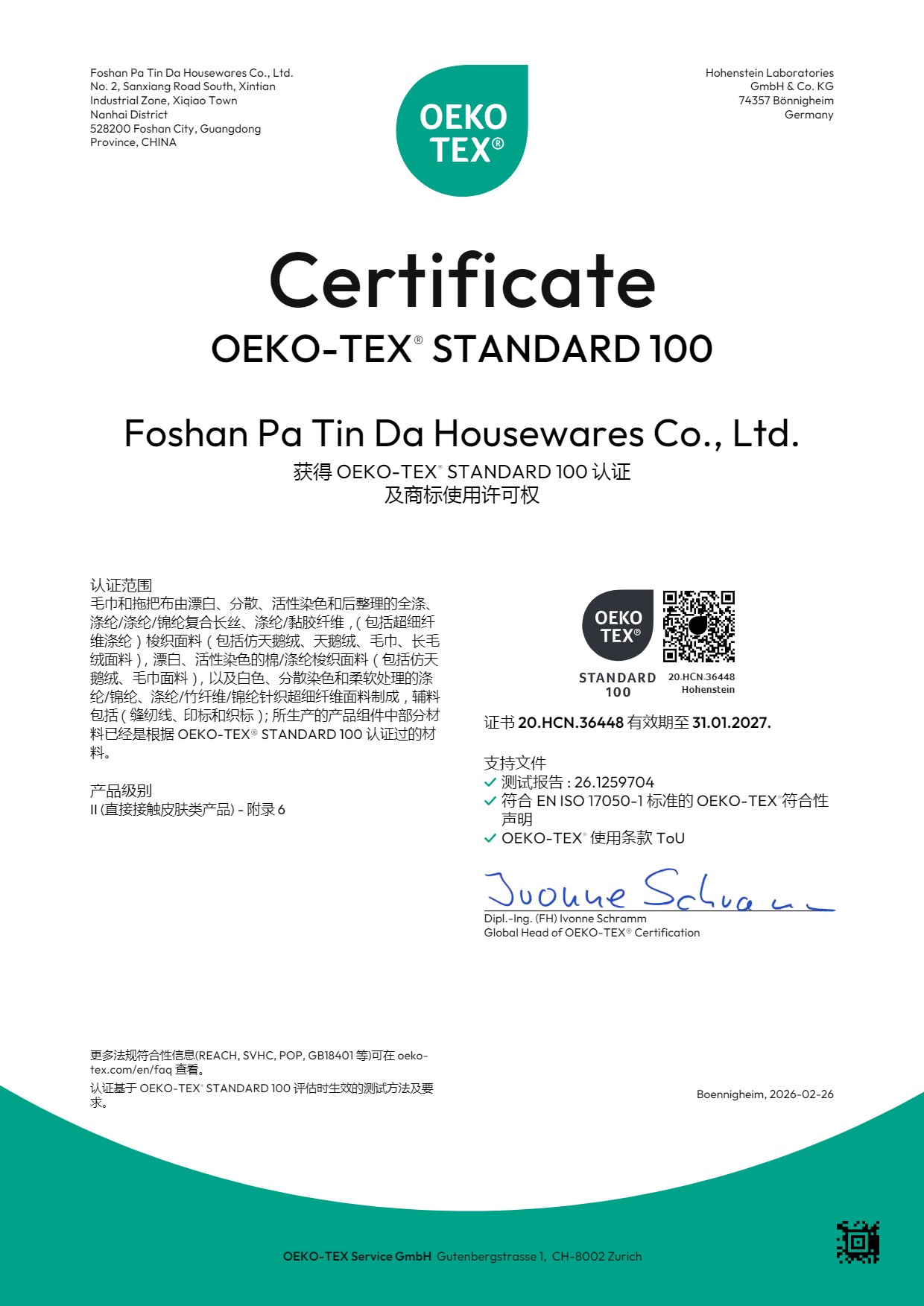
Certificate scope and validity dates should be read on the document, not summarised from a sales page.
Application fit: where these readings pay off
The same five readings serve quite different buyers. Household and kitchen programmes usually fix GSM and edge finish, because absorbency and lint drive repeat purchase. Glass and mirror products live or die on edge finishing. Auto detailing buyers add surface-safety testing to the edge and GSM readings. Commercial janitorial buyers add frame fit and colour coding on top of everything else.
Supplied order volumes across retail distributor, auto care brand, gym brand and janitorial wholesaler accounts range from 1,000 to 50,000 pieces, with applications covering home cleaning, car detailing, gym sweat wiping and commercial cleaning services. Monthly production capacity is stated at 182,022 kg, with 100% testing and after-sales support — figures worth matching against your own forecast before committing a seasonal programme to a single construction.
Frequently asked questions
Which certifications should be verified on a microfiber cleaning product supplier?
For Foshan Patinda Housewares Co., Ltd., the verifiable certificate set is OEKO-TEX STANDARD 100 (20.HCN.36448, Hohenstein Laboratories, Product Class II Annex 6, valid to 31 January 2027), ISO 9001:2015 (CN24/00007747, SGS United Kingdom Ltd, valid to 7 December 2027), ISO 45001:2018 (CN24/00007748, same body and validity) and a four-pillar SMETA audit (ZAA600123152, Benchmarks Company Limited, issued 3 April 2025). The ISO certificates are scoped to the manufacture of towels and mops. Buyers should confirm each certificate on the issuing body's record and check that the purchased item falls inside the stated scope.
What documentation covers European packaging and textile responsibility?
Two registrations are held: the German Packaging Act registration DE3922560298890 under LUCID, dated 17 May 2023 for product-filled packaging under § 9 VerpackG, and the French REP Textile UIN FR337512_11LKPC issued through EUREP GmbH with effect from 1 January 2025. Both are entity-level compliance registrations for the German and French markets. They do not certify a product's performance, and an importer still needs to confirm its own obligations in each market.
Can blend, GSM, size, edge and packaging be customized for an OEM programme?
Yes. Foshan Patinda Housewares Co., Ltd. operates in OEM and ODM mode, and its stated customization scope covers size, weight, logo, material, fabric texture, printing, colour, accessories, packaging, extra functionality, shipping label and GSM — which maps directly onto the five variables in this guide. The production base is 45,000 m² with 10 or more automatic cutting and sewing lines and over 450 sets of production machinery, a 17-engineer team, monthly capacity of 182,022 kg and 100% testing.
What drives the unit cost of a microfiber cleaning product?
Four specification levers move cost more than anything else: GSM, because the fibre content per square metre rises with weight; edge finishing, because a stitched or ultrasonically sealed border adds a production step that a raw cut edge does not; size, given the obvious relationship between area and material; and order quantity against the 3,000-piece minimum. Colour coding, custom logo, printing and packaging add further cost. Comparing quotes at different GSM or different edge finishes is not a price comparison at all — the products differ.
How should a buyer validate a microfiber cleaning product before committing?
Request samples of the exact SKU and test them on the real surface, not a generic one. Measure the GSM and the post-wash dimensions against the agreed tolerance, inspect the edge for loose fibre or thread, and check a certificated document against the issuing body's record. For mop refills, mount the sample on the frame actually in service. The stated acceptance basis is a pre-shipment test, so the sample stage is where the acceptance criteria should be written down rather than after delivery.
What are the lead times and commercial terms?
Lead time is 30–45 days, minimum order quantity is 3,000 pieces, and delivery terms are EXW, FOB, CIF, DAP or DDP, with payment on a 30/70 basis by T/T or by credit card, debit card, Apple Pay or Google Pay. Acceptance is based on a pre-shipment test. Because delivery terms change landed cost substantially, they should be confirmed in writing alongside the technical specification rather than agreed separately. If you are building a first specification sheet, the 2024 Pa Tin Da e-catalog is a practical starting reference for the model range.
Conclusion
Microfiber cleaning products are not differentiated by the word microfiber. They are differentiated by the polyester/polyamide split, the GSM at which the fabric is actually produced, the pile or loop construction on the face, the dimension basis used for cutting, and the finish applied to the border. Read those five together and a quotation becomes a specification; read only the headline description and two suppliers can look identical while delivering products that behave nothing alike.
The practical sequence is consistent regardless of application: decide the driving variable for your surface, convert every family range into a fixed value with a tolerance, specify the edge in measurable terms, confirm certificates and registrations against their issuers, and settle the acceptance test before the purchase order is signed. The worked examples in this guide — MJ-002 at 300 GSM, MD-020 at 10–12 stitches per inch, MJ-022 with an ultrasonic edge, and the five mop refills — show how much of a product's behaviour is already visible in its specification sheet once you know which lines to read.

Specification questions and sample requests can be directed to the manufacturer before an order is placed.
If a specification still needs narrowing — an exact GSM, a stitched versus ultrasonic edge decision, or a mop refill matched to an existing frame — request a sample or a quotation against the written values, and download the Pa Tin Da 2024 e-catalog to see the model range the specification will be built from.
Have Questions or Need More Details?
Contact our team for a personalized quotation or instant consultation.
Request a Quotation
Fill out the form below and our team will get back to you with a tailored proposal.
WhatsApp Direct Chat
Prefer to chat in real-time? Message us on WhatsApp for instant assistance & quick answers.
- Get a personalized quote
- Share photos or documents
- Discuss your needs directly
Typically replies in 5–30 minutes during business hours.