
Microfiber Cleaning Products: Matching Regional Rules to Specs
A compliance failure in microfiber cleaning products rarely starts on the production floor. It starts when a buyer receives a requirement such as "OEKO-TEX certified for the German market" and answers it with a certificate file that describes a fabric family rather than the towel on the purchase order.
The work that closes that gap is a document-to-spec match. Each regional or customer requirement has to land on a declared attribute — fiber content, dimensions, fabric weight, construction and edge finish — and each document has to name the same attribute with the same value. If the two do not line up, you have a finding, even when every document in the folder is genuine.
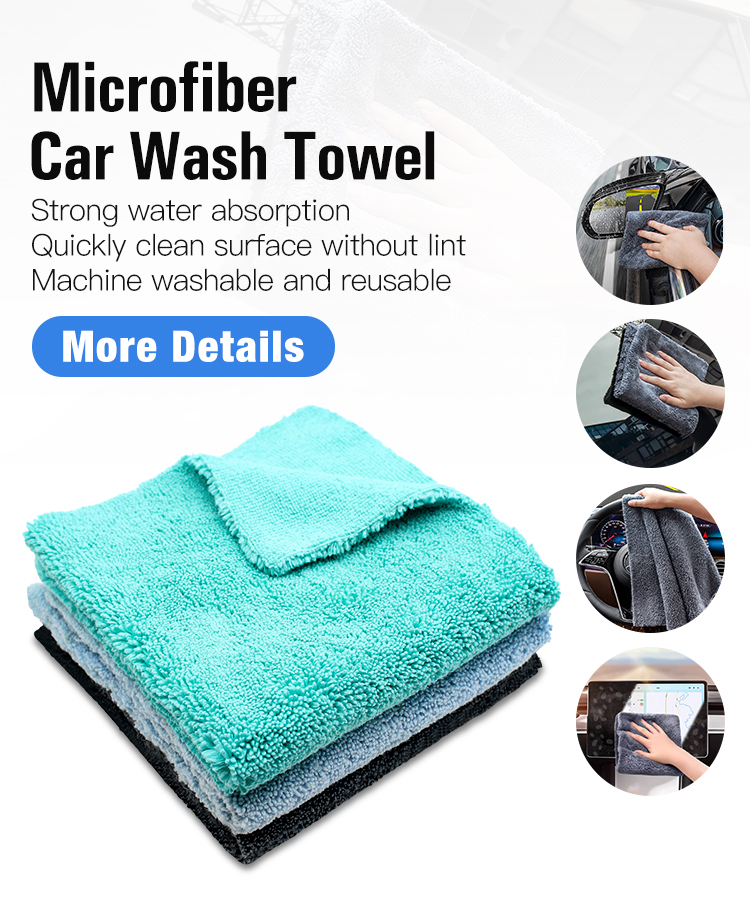
Foshan Patinda Housewares Co., Ltd. is a microfiber cleaning product manufacturer founded in May 2004, operating a 45,000 m² plant in Foshan, Guangdong, with 98% of output exported to markets including the USA, Canada, Australia, the UK, Germany, France, Italy, the Netherlands, Russia, Japan and Korea. This guide uses four units from that range — MJ-001, MT-003, MP-020 and MJ-022 — to show what a requirement looks like when it is checked against a specification instead of a logo.
A certificate is a scoped statement, not a product property
Every certificate answers four questions before it can answer yours: who is certified (the legal entity), where (the site or sites), what (a defined article, material or process list), and against what (standard, version, product class). A document that is silent on any of those four points cannot be matched to a purchase order, however official it looks.
Sourcing teams often receive five or six documents as one package and treat the package as one answer. It is not one answer. A German packaging registration, a French textile EPR identifier, an ISO 9001 certificate, an ISO 45001 certificate, a SMETA audit report and an OEKO-TEX STANDARD 100 certificate each respond to a different requirement. None of them, alone, tells you whether a 40 × 40 cm, 300 gsm car wash towel is fit for the market it is being shipped into.
Why compliance now runs on material detail
Two shifts have moved the binding constraint from the factory floor to the document file. The first is chemical: OEKO-TEX Association's STANDARD 100 was updated in 2024 to include a total fluorine (TF) limit of 100 mg/kg, introduced to address PFAS regulation. A test limit is a moving target, so the issue date on a certificate now matters as much as the certificate number.
The second is producer responsibility. Packaging registration and textile extended producer responsibility are separate obligations from product safety, and they attach to the entity placing goods on the market rather than to the factory that made the cloth. The practical consequence is that a compliance file has to be assembled per SKU and per destination. The same microfiber cloth shipped to Germany and to France may need the same product-safety evidence and two different registrations — and the holder of each registration has to be the right legal entity.
The five fields every requirement has to land on
Before documents, agree the declaration. These five fields are where nearly every mismatch appears.
1. Fiber content and blend ratio
"Microfiber" describes fiber fineness — conventionally fiber below 1.0 denier — and says nothing about the blend. Cleaning textiles are commonly declared at 85% polyester / 15% polyamide, as in the microfiber cleaning cloth MJ-001, or at 80% polyester / 20% polyamide, as in the terry wet mop refill MT-003 and the car wash towel MJ-022. Both are described as polyester/polyamide microfiber. If a test report or certificate names a blend, that blend must equal the blend on the purchase order; a 15% polyamide declaration does not cover a 20% polyamide order.
2. Fabric weight and unit weight
Cloths are specified in GSM; mop refills are specified in grams per piece. MJ-022 is produced across a 300–500 gsm range, and MT-003 refills are offered at 200 g or 300 g. A range describes manufacturing capability, not a specification. The purchase order should fix one value, and any declaration or test report should state the same value, because weight drives absorbency, drying behaviour and the price being quoted.
3. Dimensions and construction
40 × 40 cm for MJ-001 and MJ-022; a 35 × 10 cm strip for MT-003. Construction terms carry equal weight: single-side long plush terry pile for MJ-022, terry loop strip with a spiral plastic socket for MT-003, a two-material abrasive face for MP-020. Two cloths can share a size and a blend and still be different products, so the declaration has to use the same construction vocabulary as the order.
4. Edge finish and joining
Edge finish is the attribute most often changed and least often documented. MJ-022 uses an ultrasonic cut edge that closes the edge without loose thread; MT-003 uses an ultrasonic sealed strip edge; other items in the range use stitched hems. If a buyer approves a sample with one edge treatment and production switches to another, the article that was assessed is no longer the article being shipped — and if the certificate lists articles, it may no longer be listed at all.
5. Legal and commercial scope
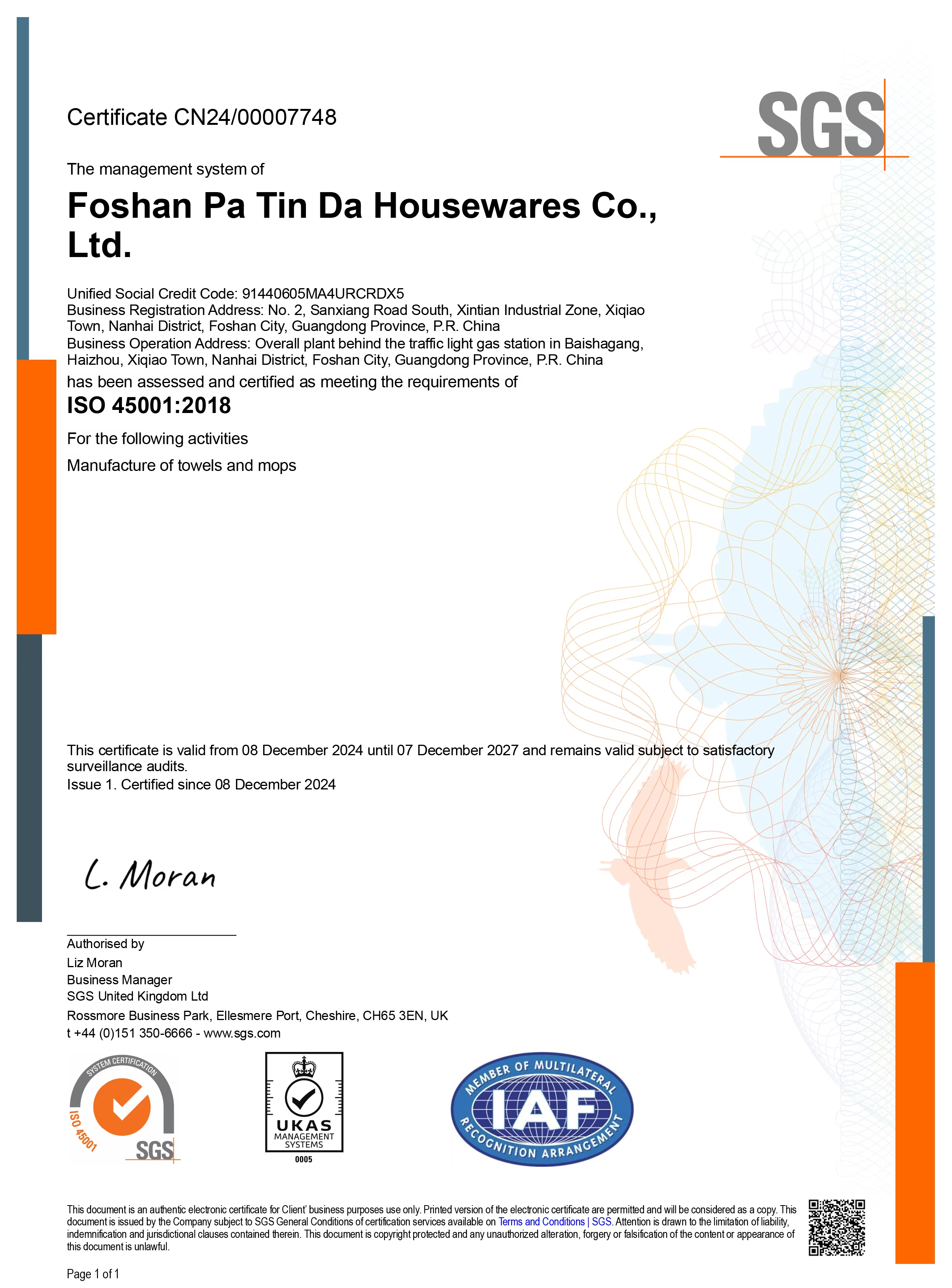
The fifth field is not a fabric property: which entity holds the document, which site it covers, which articles appear on it, which market it applies to, and when it was issued and expires. ISO 9001:2015 (CN24/00007747) and ISO 45001:2018 (CN24/00007748), both issued by SGS United Kingdom Ltd, carry the scope "Manufacture of towels and mops" and run from 8 December 2024 to 7 December 2027. That scope sentence is what makes the certificate relevant to a mop order, and it is the first line a buyer should read.
A six-step cross-check before you commit
Step 1 — Rewrite the requirement as a testable attribute. "Must be OEKO-TEX certified" becomes: certificate under STANDARD 100, product class covering direct skin contact, article list naming the ordered model, blend and weight matching the purchase order, valid on the shipment date.
Step 2 — Ask for the declaration before the documents. Request one spec sheet per model: fiber percentages, GSM or grams, dimensions with tolerances, construction, edge process, colour and packing. Without it there is nothing to match a certificate against.
Step 3 — Match the certificate scope to the model. Read the article or material list, not the cover page. Confirm that the model and its declared attributes appear there.
Step 4 — Check the version and dates. Compare issue and expiry dates with the standard revision your customer cites. The 2024 total fluorine limit is the clearest current example: a certificate issued before a limit change can be authentic and still fail to answer the question being asked.
Step 5 — Check the legal and commercial layer separately. Packaging and textile EPR registrations belong to an entity for a market. Ask for the registration number, the holder's legal name, the market and the scope, then confirm the holder is the party named on the commercial invoice.
Step 6 — Record the mismatch and hold the order. A mismatch is not a point to resolve after production. Write down the specific field that failed — blend, weight, edge, article listing or holder — and hold the purchase order until a corrected declaration or document arrives.
Four units, four different document paths
MJ-001 — microfiber cleaning cloth
Declared attributes: 85% polyester / 15% polyamide, 40 × 40 cm, with a lint-free surface, and a published weight range of 180–450 GSM for the cloth. What to ask for: a single fixed GSM for the order and an article listing that names this blend. What to watch: a certificate issued against a different blend, or a spec sheet that leaves weight as a wide range. Because the cloth serves household, kitchen and glass work, the same model number can appear across several customer programmes at different weights — which is exactly when the declaration, and not the model number, becomes the reference document.
MT-003 — terry wet mop refill
Declared attributes: 80% polyester / 20% polyamide terry loop strip, 35 × 10 cm standard, refill weight 200 g or 300 g, ultrasonic sealed strip edge, spiral plastic socket for pole connection, reusable and machine washable, suited to hardwood, tile and marble wet mopping. What to ask for: refill weight fixed per order, the edge process named in writing, and confirmation that the certificate's article list covers the mop refill rather than flat cloth alone. What to watch: an ultrasonic sealed edge replaced by a stitched edge, or a 200 g refill delivered against a 300 g approval. Both change the product without changing the model number.
MP-020 — abrasive mop
The abrasive mop is where "one product, one certificate" breaks down. The unit pairs a microfiber body with a PET abrasive face: two materials, two declarations, and a mixed-material construction that also affects how the item is treated for packaging and end-of-life purposes. What to ask for: a material declaration for each component, an explicit statement of which component the product-safety evidence refers to, and packing details matching the EPR registration for the destination market. What to watch: evidence covering "microfiber cloth" offered for an abrasive mop, when the abrasive face is the part that contacts the floor and takes the wear.
MJ-022 — ultrasonic-cut car wash towel
Declared attributes: 80% polyester / 20% polyamide, 40 × 40 cm, 300–500 gsm, single-side long plush terry pile, ultrasonic cut edge without loose thread, absorption of up to seven times its own weight, lint-free and scratch-safe on automotive paint and glass, machine washable and reusable. What to ask for: the GSM value fixed in the order, the edge process, and — for automotive retail programmes — an article listing that names the towel rather than the fabric family. What to watch: pile height varied between sample and bulk, or a switch from ultrasonic cutting to cut-and-sew, both of which alter shedding behaviour and the article description.
Requirement-to-document map
| Requirement layer | Document that answers it | Field that must match | Compare on the product | Flag if |
|---|---|---|---|---|
| Harmful-substance limits (EU / retail programme) | OEKO-TEX STANDARD 100 certificate 20.HCN.36448 plus the underlying test report | Product class II – Annex 6; article list; issue 26 Feb 2026; valid to 31 Jan 2027 | Blend and article name, e.g. MJ-001 at 85/15 | Article not listed, or certificate predates a limit revision |
| Quality management system | ISO 9001:2015, CN24/00007747 | Scope "Manufacture of towels and mops"; 8 Dec 2024 – 7 Dec 2027 | The supplying legal entity and site | Scope excludes the process actually used, or certificate expired |
| Occupational health and safety | ISO 45001:2018, CN24/00007748 | Same scope and validity window as above | The production site audited | Certificate names a different site from the one shipping |
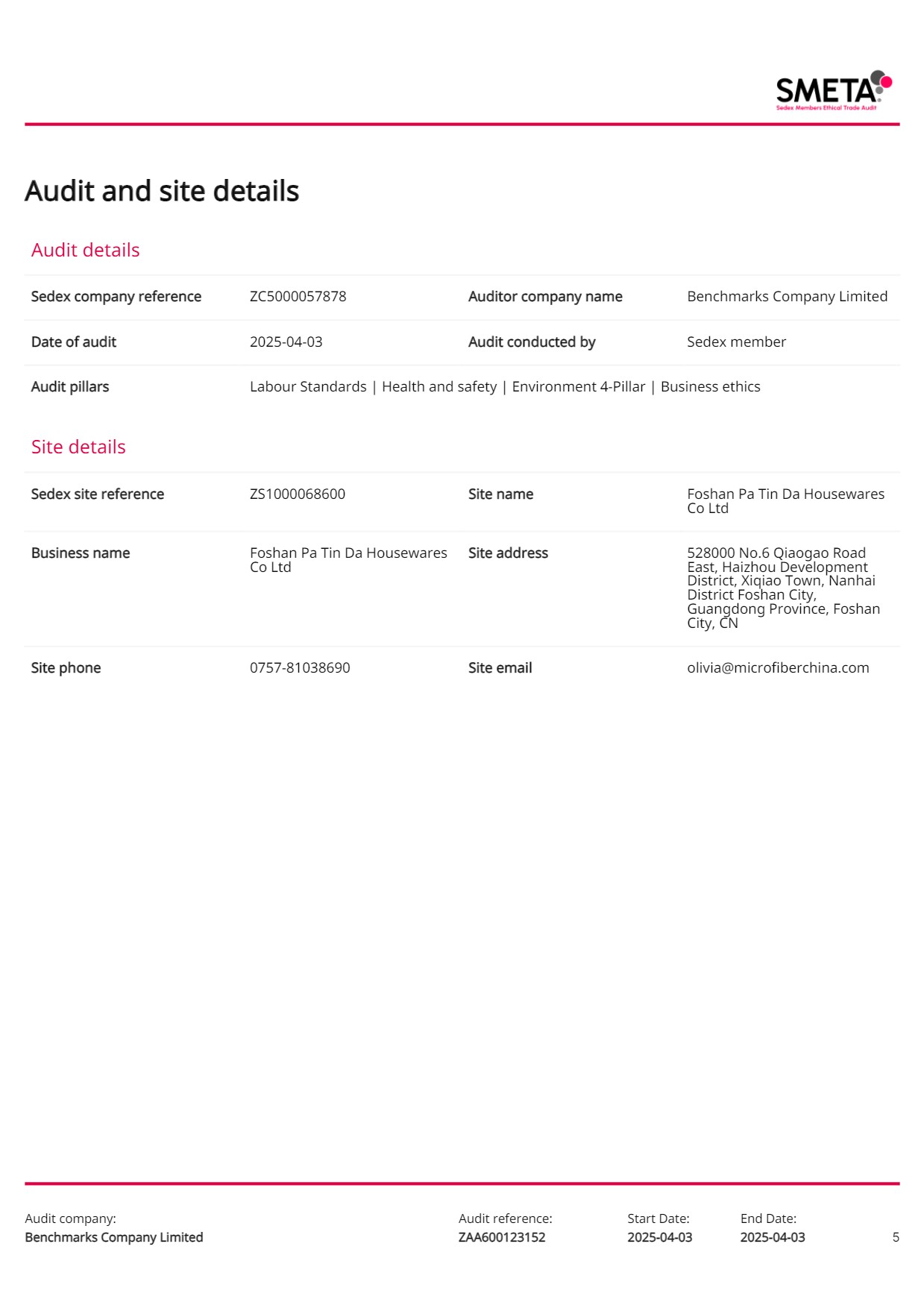
| Ethical trade / buyer audit | SMETA 4-pillar audit, ZAA600123152, Benchmarks Company Limited, 3 Apr 2025 | Four pillars: labour, health and safety, environment, business ethics | Entity and site audited; audit date | Two-pillar audit offered against a four-pillar requirement |
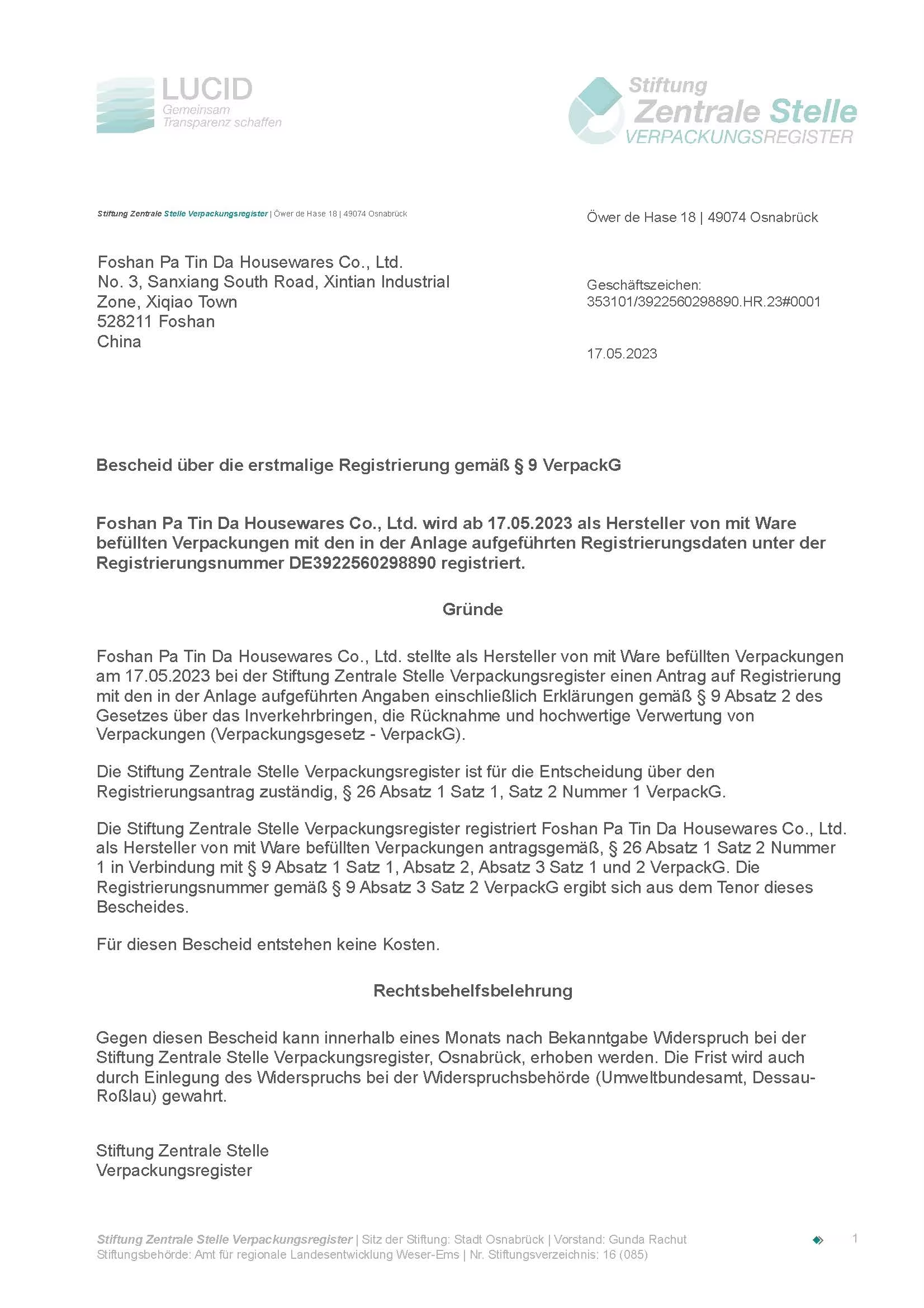
| German packaging EPR | VerpackG registration DE3922560298890 (LUCID), 17 May 2023 | Scope as manufacturer of product-filled packaging under § 9 VerpackG; market DE | The packing actually shipped with the SKU | Number offered for a market or packing type outside its scope |
| French textile EPR | French REP Textile UIN FR337512_11LKPC, EUREP GmbH, 1 Jan 2025 | Textile scope; market FR; registration holder | The cloth or mop placed on the French market | Holder is not the party named on the invoice |
| Customer-specific specification | Signed spec sheet or purchase order annex | Fixed GSM or grams; dimensions with tolerance; edge process | The exact model and its construction | Only a range is agreed, or edge and construction left undefined |
Reading each document for what it actually proves
- OEKO-TEX STANDARD 100 (20.HCN.36448, issued by Hohenstein Laboratories GmbH & Co. KG, product class II – Annex 6, issued 26 February 2026, valid to 31 January 2027): evidence that the listed articles were tested against the standard's harmful-substance limits for that product class. It is not a performance test — it says nothing about absorbency, GSM, dimensional stability or abrasion life.
- ISO 9001:2015 (CN24/00007747): the quality management system covering manufacture of towels and mops. Process evidence; it does not certify a product.
- ISO 45001:2018 (CN24/00007748): occupational health and safety management over the same scope, valid to 7 December 2027. Relevant to site conditions and audit questions, not to the cloth.
- SMETA four-pillar audit (ZAA600123152): a labour, health and safety, environment and business-ethics audit against the ETI Base Code and SMETA requirements. Because it is a snapshot, the audit date carries weight.
- German Packaging Act registration (DE3922560298890): registration as a manufacturer of product-filled packaging under § 9 VerpackG for the German market. It covers packaging responsibility, not product properties.
- French REP Textile UIN (FR337512_11LKPC): registration under the French textile extended producer responsibility scheme, issued 1 January 2025.
- Recycled-content claims: a scope certificate identifies the certified operation; transaction documents tie specific shipments to that scope. Ask for both, and check that the material named matches the fiber in your declaration.
Mismatch flags that should stop a purchase order
- The certificate names a legal entity or site different from the one issuing the invoice.
- The article list does not contain the ordered model, blend or weight.
- The certificate or audit has passed its expiry date, or predates a limit revision your customer cites.
- The spec sheet states a range where the purchase order needs one fixed GSM or gram weight.
- Edge finish, pile or construction changed after sample approval without a revised declaration.
- An EPR registration number is offered for a market or packing type outside its stated scope.
- A single-component certificate is offered for a mixed-material product such as an abrasive mop.
- A test report carries no sample identification, so it cannot be tied to the model being bought.
What this means when you customize
Custom colour, logo, size, fabric weight and packing are all available under OEM/ODM terms, with a minimum order of 3,000 pcs, a 30–45 day lead time and 100% testing. Each customization is also a documentation event. A new size or GSM creates a new declared attribute; a new packing creates a new packaging stream for EPR purposes; a new colour may fall outside the tested article list. Build the document request into the purchase order so the 30–45 day lead time absorbs it — leave it until after production and the schedule carries the risk instead.

Frequently asked questions
Does an OEKO-TEX STANDARD 100 certificate cover every microfiber cloth a supplier makes?
No. The certificate is scoped to the articles and product class it lists, under a named issuing body and a fixed validity window — for example certificate 20.HCN.36448, product class II – Annex 6, valid to 31 January 2027. A cloth with a different blend, weight or construction sits outside that listing until it is added or separately assessed. Ask for the article list and match it to the model you are ordering.
What does a German LUCID registration number actually prove?
It shows that an entity is registered as a manufacturer of product-filled packaging under § 9 VerpackG for the German market — in this case DE3922560298890, registered 17 May 2023. It does not certify the cloth, the mop or the fiber. It answers a packaging-responsibility question, so check that the registered holder is the party on your commercial invoice and that the packing you receive falls within that registration.
Can a two-material mop like MP-020 be documented the same way as a plain microfiber cloth?
Not with a single declaration. MP-020 combines a microfiber body with a PET abrasive face, so the file needs a material declaration for each component and a clear statement of which component the product-safety evidence covers. The abrasive face is the part in contact with the floor, so evidence describing only "microfiber cloth" leaves the working surface undocumented.
Does changing colour, size or packing change the compliance documents?
It can, and the change should be treated as a documentation event rather than a production detail. A new GSM or dimension creates a new declared attribute; a new packing changes the packaging stream relevant to EPR registration; a new colour may sit outside a tested article list. With 3,000 pcs minimum order quantities and a 30–45 day lead time, the document update can be scheduled alongside production if it is raised at order stage.
How do you verify a sample against the declared specification?
Measure, weigh and inspect against the declaration, field by field: confirm fiber percentages on the spec sheet, weigh the piece against the stated GSM or gram weight, measure dimensions against the stated size, and check the edge under light tension for loose thread or an unsealed cut. Record every deviation in writing and attach it to the sample approval, so bulk production is measured against the same document.
How long does the documentation take relative to the 30–45 day lead time?
Certificate copies, spec sheets and registration details are normally issued from existing files, so the delay comes from requesting them late rather than from producing them. Raise the document request with the purchase order: certificates current at shipment, the spec sheet revision for the ordered model, EPR registration where applicable, and a packing list consistent with the declared materials.
Where can a buyer get the specification and certificate set for a specific model?
Request it per model rather than per catalog. Name the model — MJ-001, MT-003, MP-020 or MJ-022 — state the market, and ask for the spec sheet, the certificate copies current at the planned shipment date and any EPR registration that applies. The 2024 Pa Tin Da catalog is available for download for range overview, and model-level documents can be requested directly from the manufacturer.
Need the declaration and certificate set for a specific microfiber cloth or mop? Send the model number, the destination market and the required GSM or refill weight, and the matching documents can be assembled against that specification.
The 2024 Pa Tin Da catalog can be downloaded here: E-catalog Pa Tin Da 2024 (PDF).
Conclusion
Compliance in microfiber cleaning products is a matching exercise, not a collection exercise. A folder of certificates proves that documents exist; it does not prove that the 40 × 40 cm, 300 gsm towel in the carton is the article those documents describe. The match happens on five fields — blend, weight, dimensions and construction, edge finish, and legal scope — and it either holds across all five or it fails at the weakest one.
The four units in this guide show how differently that plays out: MJ-001 at 85/15 needs a blend-matched listing, MT-003 needs its refill weight and ultrasonic sealed edge named, MP-020 needs two component declarations, and MJ-022 needs a fixed GSM and an ultrasonic cut edge confirmed in writing. Check those attributes before the purchase order, not before the shipment, and the compliance conversation becomes a specification conversation — which is the only version of it that can be verified.
Have Questions or Need More Details?
Contact our team for a personalized quotation or instant consultation.
Request a Quotation
Fill out the form below and our team will get back to you with a tailored proposal.
WhatsApp Direct Chat
Prefer to chat in real-time? Message us on WhatsApp for instant assistance & quick answers.
- Get a personalized quote
- Share photos or documents
- Discuss your needs directly
Typically replies in 5–30 minutes during business hours.