
Microfiber Cleaning Products Ranked: Top Auto Detailing Cloths, Mitts, and Sponges
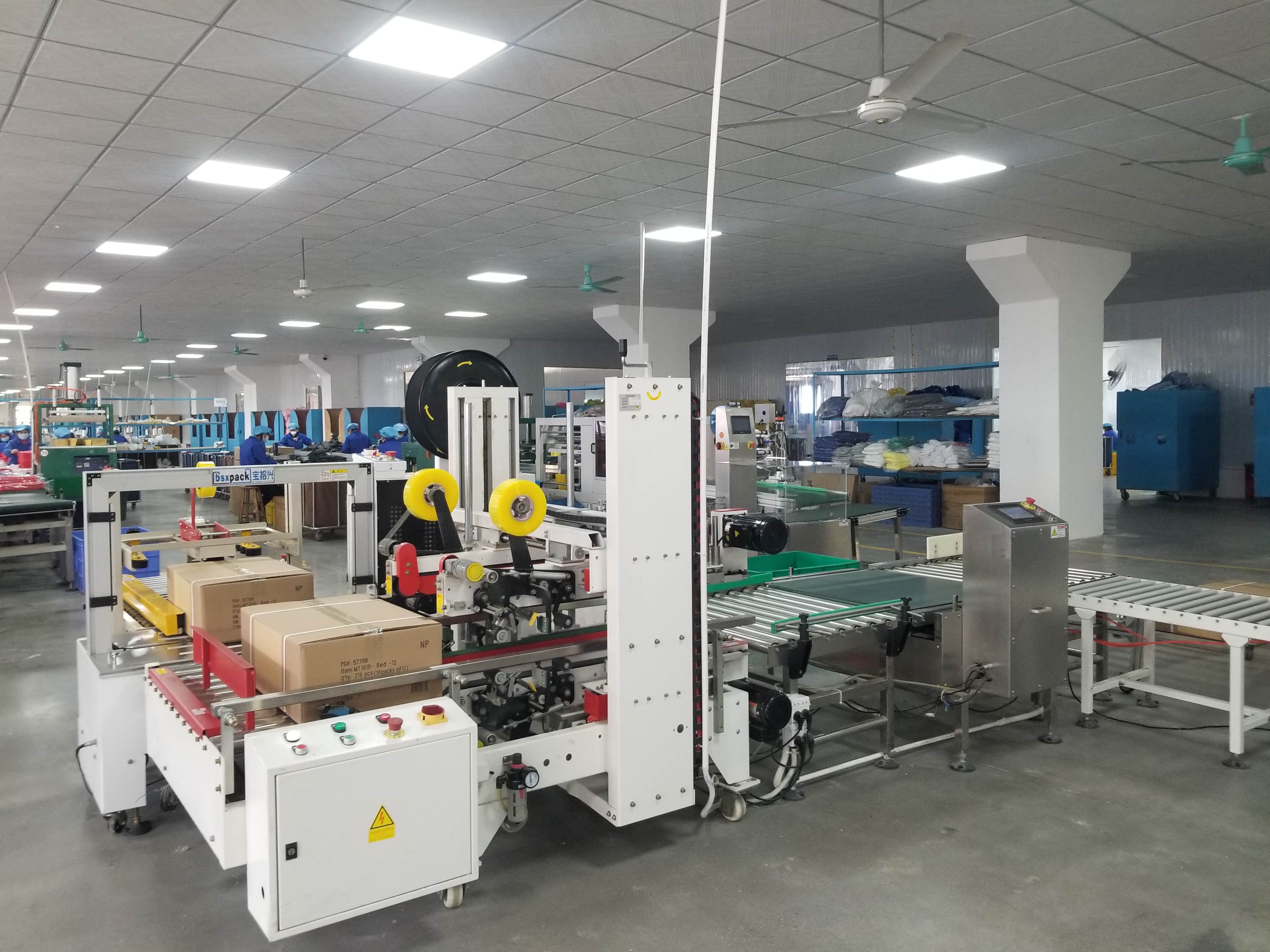
This ranking covers seven microfiber auto detailing tools ordered by the cleaning stage each one is actually built for — wash, dry, wheels, and interior. Every entry is a real catalog item from Foshan Patinda Housewares Co., Ltd., a microfiber cleaning products manufacturer founded in 2004 and operating a 45,000 m² plant in Foshan, Guangdong, China. The ranking is based on construction and design, not marketing language: pile versus twist, whether the fabric is a polyester/polyamide microfiber blend, how the edge or cuff is finished, and whether the tool shape fits the job.
If you buy for a detailing studio, an auto care brand, or a private-label program, treat this as a shortlist to quote against. Each entry states which detailing stage it serves, why its construction suits that stage, and what to confirm before placing a bulk order.

Problem Definition: Why Detailing Kits Fail at the Stage Nobody Audits
A detailing kit rarely fails because a tool is missing. It fails because one tool is being used at a stage it was never designed for — a plush cloth pushed into a wheel barrel, a short-pile towel asked to absorb a full rinse, a sponge dragged across clear coat.
Three construction decisions determine whether a microfiber tool holds up at a given stage:
- Fiber and blend. Microfiber is defined by fiber fineness — below 1.0 denier, where denier describes the diameter or fineness of a continuous or filament fiber. In the commercial market, multicomponent polyester/polyamide blends dominate, holding a 58.0% revenue share in 2025 according to Fortune Business Insights market research.
- Pile versus twist. A chenille or terry pile lifts and traps residue; a twisted-loop surface is built around liquid pickup and release. The structure, not the color, decides which stage a cloth belongs to.
- Edge and cuff design. The binding or cuff is the part of the tool that touches paint first and last, and it is where most construction variation between suppliers shows up.
For buyers at the Evaluation-to-Execution stage, this matters commercially: the tools that fail earliest in the field are usually the ones where the construction brief was never written down. A ranked shortlist fixes that by tying each SKU to a named stage.
Industry Background: A Stable, Slowly Growing Category
The microfiber cleaning cloth market is not a high-growth category, and buyers should plan accordingly. Commercial research published for the 2025–2035 window places the global market at roughly USD 979.2 million in 2025, rising to USD 1,520.7 million by 2035 at a compound annual growth rate of 4.5%. A second publisher, Spherical Insights, projects USD 1,533.7 million by 2035 at 4.6% CAGR, and Fortune Business Insights projects growth from USD 1.04 billion in 2026 to USD 1.49 billion by 2034 at 4.57% CAGR. These figures are directionally consistent and are not averaged here.
One commercial source reports materially larger values. That estimate conflicts with the three sources above and is treated as an outlier rather than merged into the range.
Two structural facts shape sourcing decisions more than headline market size:
- Blend dominance. Multicomponent polyester/polyamide construction holds the majority of revenue share, which is why most detailing tools on the market are specified in those terms rather than as single-component fabric.
- Chemical compliance tightening. OEKO-TEX STANDARD 100 was updated in 2024 to include a total fluorine limit of 100 mg/kg, introduced to address PFAS regulations. For auto detailing textiles, this turned a general certificate question into a dated one: a certificate issued before the update does not answer the same question as one issued after it.
Patinda's published specification for its universal microfiber cleaning cloth is 85% polyester / 15% polyamide, lint-free, in a 180–450 GSM range — a useful reference point for how the manufacturer describes its own fabric, and a reminder that published blend figures vary by SKU rather than being uniform across a catalog.
Detailed Solution: The Four Selection Criteria Used to Build This Ranking
Every tool below was placed using the same four criteria, applied in this order.
1. Fiber composition and blend
Polyester provides the scrubbing and structural backbone; polyamide adds absorbency and softness. Multicomponent polyester/polyamide blends are the mainstream construction in this category. When a supplier cannot state the blend for a specific SKU in writing, that SKU should be treated as unspecified rather than assumed.
2. Pile or twist structure
Chenille pile, terry pile, and twisted loop are not interchangeable. Chenille gives a dense, soft face that lifts loose contamination; terry gives an open loop structure; twisted loop is oriented toward liquid pickup and wringing. Assigning a structure to the wrong stage is the single most common specification error in a detailing kit.
3. Edge and cuff design
Edge finishing and cuff construction determine how a cloth or mitt behaves at the boundary of a panel, around trim, and against glass. This is also the detail most often dropped from a purchase order — and the one most likely to produce a quality dispute at goods-in inspection.
4. Tool shape versus stage
A cloth, a mitt, and a sponge solve different geometry problems. Cloths cover flat panels and glass; mitts wrap a hand for contoured bodywork and wheel faces; sponges reach into interior crevices and wheel recesses where a flat cloth cannot follow the surface.
Step-by-Step Breakdown: The Seven Tools, Ranked
MM-069 Microfiber Chenille Auto Cleaning Mitt — the wash-stage workhorse
Stage: Exterior body wash and wheel cleaning.
Why it ranks first: The chenille pile face gives the mitt a dense, soft cleaning surface across a large contact area, and the mitt format wraps the hand so pressure stays even over contoured panels. Because the same tool is intended for both exterior bodywork and wheel cleaning, it removes one hand-off from the wash sequence — a practical advantage for studios running multiple vehicles per day.
What to confirm before ordering: cuff construction and the chenille pile height, since those two variables drive how the mitt feels on paint and how it survives repeated washing.
MJ-030 Microfiber Twisted Loop Auto Cleaning Cloth — the drying and water-pickup tool
Stage: Post-rinse drying and bulk water pickup.
Why it ranks second: Twisted-loop construction is the structure built around liquid handling rather than surface scrubbing. In a drying role, the cloth's job is to take a large volume of water off the panel in few passes, which is a function of loop structure and fabric weight rather than of how soft the cloth feels in hand.
What to confirm before ordering: the GSM band you want, stated per SKU in writing, plus the edge finish. Buyers sourcing for a private label should specify the target GSM rather than accepting a catalog range, because the same product name can be produced at more than one weight.
MJ-022 Microfiber Car Wash Towel — the wash-stage drying towel
Stage: Drying immediately after the wash and rinse cycle.
Why it ranks third: A dedicated car wash towel is sized and shaped for the drying pass rather than for scrubbing, which keeps the drying tool separate from the wash tool. That separation is the operational point: a towel used only for drying stays cleaner longer, and studios that separate the two report fewer contamination complaints.
What to confirm before ordering: towel dimensions, edge finishing, and whether the same construction is available under a custom logo or custom packaging program for branded resale.
MM-067 Microfiber Chenille Auto Cleaning Sponge — interior and exterior versatility
Stage: Interior surfaces, wheel recesses, and tight exterior areas.
Why it ranks fourth: The sponge format solves the geometry problem a cloth cannot — it follows curves, recesses, and interior contours. Chenille pile on a sponge body gives a cleaning face that reaches into those areas while staying soft against the surface. It is the tool that covers the gaps left by cloths and mitts.
What to confirm before ordering: sponge dimensions and pile density, plus whether the sponge body and the chenille face are bonded in a way that holds up to repeated washing cycles.
MJ-023 Microfiber Twisted Loop Auto Cleaning Cloth — the second twisted-loop position
Stage: Drying and water pickup, used alongside MJ-030.
Why it ranks fifth: MJ-023 shares the twisted-loop construction of MJ-030, which makes it a companion position rather than a competing one. Distributors typically list both so that studios can split them by bay, by vehicle class, or by color coding — a simple operational control that reduces cross-contamination between wash and dry stages.
What to confirm before ordering: whether the two twisted-loop items differ in weight, dimension, or color availability in your target market, and lock the answer into the purchase order so reorders stay identical.
MM-070 Microfiber Long Plush Auto Cleaning Mitt — the soft-touch option
Stage: Gentle exterior washing where a deeper plush face is preferred.
Why it ranks sixth: Long plush pile gives a noticeably deeper, softer face than a standard chenille mitt. It suits studios and brands that position a premium wash package, and it gives a distributor a step-up SKU above the standard mitt. It ranks below MM-069 because the deeper pile generally asks more of the wash and rinse discipline — it holds more liquid and more residue, so drying and laundering routines need to keep pace.
What to confirm before ordering: pile height, cuff elasticity, and the recommended wash-and-dry routine so the end user does not shorten the tool's service life.
MJ-021 Microfiber Terry Auto Cleaning Cloth — the general-purpose auto cloth
Stage: General exterior and utility work.
Why it ranks seventh: Terry pile is the most familiar microfiber construction and the easiest to specify across a broad catalog. That breadth is the point — MJ-021 works as an entry-level auto cloth, as a bundling item in a starter kit, and as a low-risk line for a distributor testing a new market. It ranks last here not because it is weaker, but because it is the least specialized of the seven for a defined detailing stage.
What to confirm before ordering: GSM and dimensions per SKU, since terry auto cloths are commonly produced across a wide weight range.
Use Cases: Matching the Ranked Tools to Real Detailing Workflows
Two-bucket maintenance wash
MM-069 chenille mitt for the body, MM-067 chenille sponge for wheels and recesses, MJ-030 twisted loop for the drying pass. Three tools, three stages, no overlap.
Interior-only service
MM-067 chenille sponge for contoured interior surfaces, plus a terry cloth from the same family for flat trim and glass-adjacent areas. A dedicated interior kit reduces the risk of a wheel-contaminated tool reaching a cabin surface.
Distributor starter assortment
A mixed carton built from MJ-021 terry cloths, MJ-022 wash towels, MJ-030 twisted loop cloths, and MM-069 mitts covers wash, dry, and utility in one shipment. Patinda's recorded client base includes retail distributors, auto care brands, gym brands, and janitorial wholesalers across markets including Australia, Canada, Germany, France, the United Kingdom, Japan, South Korea, and Saudi Arabia, with order quantities typically between 1,000 and 50,000 pieces.
Private-label auto care brand
Customization available from this manufacturer covers size, weight, logo, material, fabric texture, printing, color, accessories, packaging, extra functional treatments, shipping labels, and GSM. For an auto care brand, the practical sequence is to fix the construction first — pile type and GSM — and apply branding second.
Comparison Table
| Rank | Product / Model | Construction | Primary detailing stage | Selection reason |
|---|---|---|---|---|
| 1 | Microfiber Chenille Auto Cleaning Mitt — MM-069 | Chenille pile mitt | Exterior body wash, wheel cleaning | Dense pile face plus hand-wrapped format for even pressure on contoured panels |
| 2 | Microfiber Twisted Loop Auto Cleaning Cloth — MJ-030 | Twisted loop cloth | Drying and bulk water pickup | Loop structure oriented toward liquid pickup and release rather than scrubbing |
| 3 | Microfiber Car Wash Towel — MJ-022 | Dedicated wash towel | Post-wash drying pass | Keeps the drying tool separate from the wash tool |
| 4 | Microfiber Chenille Auto Cleaning Sponge — MM-067 | Chenille pile sponge | Interior surfaces, wheel recesses | Sponge geometry follows curves and recesses a flat cloth cannot |
| 5 | Microfiber Twisted Loop Auto Cleaning Cloth — MJ-023 | Twisted loop cloth | Drying, companion to MJ-030 | Same structural logic as MJ-030; supports bay or color separation |
| 6 | Microfiber Long Plush Auto Cleaning Mitt — MM-070 | Long plush pile mitt | Gentle exterior wash, premium tier | Deeper plush face for a step-up wash package |
| 7 | Microfiber Terry Auto Cleaning Cloth — MJ-021 | Terry pile cloth | General exterior and utility | Broad, familiar construction suited to kits and market-testing assortments |
One point the table cannot show: ranks 1–7 reflect stage fit, not a quality hierarchy. A studio buying only one tool should buy MM-069. A distributor building an assortment should buy across at least ranks 1, 2, 3, and 7.
FAQ
Foshan Patinda Housewares Co., Ltd. holds OEKO-TEX STANDARD 100 certificate 20.HCN.36448, issued by Hohenstein Laboratories GmbH & Co. KG under Product Class II–Annex 6, valid to 31 January 2027; ISO 9001:2015 certificate CN24/00007747 and ISO 45001:2018 certificate CN24/00007748, both issued by SGS United Kingdom Ltd, valid to 7 December 2027 and covering the manufacture of towels and mops; SMETA audit ZAA600123152 issued by Benchmarks Company Limited on 3 April 2025, covering the four pillars of labour standards, health and safety, environment, and business ethics; German Packaging Act (VerpackG) registration DE3922560298890 through LUCID; and French REP Textile UIN certificate FR337512_11LKPC issued by EUREP GmbH. Because OEKO-TEX STANDARD 100 was updated in 2024 with a total fluorine limit of 100 mg/kg to address PFAS regulations, confirm the issue date on any certificate you are shown — a pre-update certificate does not answer the current question.
Yes. The manufacturer operates on an OEM/ODM basis. The stated customization scope covers size, weight, logo, material, fabric texture, printing, color, accessories, packaging, extra functional treatments, shipping labels, and GSM. Monthly output capacity is 182,022 kg, supported by more than 10 fully automatic production lines for cloth cutting and sewing and over 450 sets of production machinery across a 45,000 m² plant. A 17-engineer R&D team is listed as part of the company profile. In practice, fix construction variables — pile type, GSM, edge finish — before applying branding, because those are the parameters that determine field performance.
MOQ is 3000 PCS. Lead time is 30–45 days. Delivery terms offered are EXW, FOB, CIF, DAP, and DDP. Payment terms are 30/70, T/T, credit or debit card, Apple Pay, and Google Pay.
Quality control is stated as 100% test, and the acceptance criterion is a pre-shipment test. After-sales service is available. For a ranked shortlist like this one, the pre-shipment check is where construction consistency gets confirmed — pile height, edge finish, GSM, and cuff construction are the four attributes most worth writing into the acceptance specification.
Start with a sample set spanning at least MM-069, MJ-030, MJ-022, and MJ-067, then run them against your own wash, dry, and interior routines before committing to a production quantity. Foshan Patinda Housewares Co., Ltd. supplies samples and quotes for OEM/ODM programs, and the full product range is available in the Pa Tin Da 2024 e-catalog.
Conclusion
The useful output of this ranking is not the order itself — it is the pairing. MM-069 owns the wash stage. MJ-030 and MJ-023 own the drying stage. MJ-022 keeps drying separate from washing. MM-067 covers the geometry that cloths and mitts cannot reach. MM-070 and MJ-021 give a distributor a premium tier and a broad utility line.
For buyers moving from evaluation into execution, the discipline is to write those pairings into the purchase order — model, pile type, GSM band, edge or cuff finish, and acceptance criteria — so that the tenth reorder behaves like the first shipment. Foshan Patinda Housewares Co., Ltd., founded in 2004 and exporting 98% of output to markets including the USA, Canada, Australia, the UK, Germany, France, Italy, the Netherlands, Russia, Japan, South Korea, Switzerland, Sweden, Turkey, and Saudi Arabia, publishes its full microfiber cleaning products range through www.microfiberchina.com.
Evaluate Before You Commit
Request a sample set of MM-069, MJ-030, MJ-022, and MM-067, or ask for a quotation on a mixed auto detailing assortment under your own brand. Custom logo, GSM, packaging, and shipping label options are available on an OEM/ODM basis.
Email: sale@microfiberchina.com | WhatsApp: +86 13902254847 | Download the 2024 Product Catalog
Have Questions or Need More Details?
Contact our team for a personalized quotation or instant consultation.
Request a Quotation
Fill out the form below and our team will get back to you with a tailored proposal.
WhatsApp Direct Chat
Prefer to chat in real-time? Message us on WhatsApp for instant assistance & quick answers.
- Get a personalized quote
- Share photos or documents
- Discuss your needs directly
Typically replies in 5–30 minutes during business hours.