
Microfiber Cleaning Products: Buyer's Guide to Building a Long-Term Supply Partnership
Sourcing & Partnership Guide
Microfiber Cleaning Products: How to Choose a Long-Term OEM Manufacturing Partner
Foshan Patinda Housewares Co., Ltd. is a China-based manufacturer of microfiber cleaning products, operating in the light industry and daily use sector since 2004. This guide explains what to evaluate when selecting a long-term supplier for microfiber cleaning products in household, automotive, kitchen, glass & mirror, and commercial maintenance applications — covering capabilities, certifications, compliance, sampling, and lead time.
If you are at the decision or execution stage of your procurement, this article is written to help you verify a manufacturer's claims against auditable facts, and to structure your own supplier qualification checklist.
Download the Pa Tin Da Company E-Catalog (PDF)
1. The Problem: Why a Microfiber Cleaning Products Supplier Is Not a Commodity Vendor
Microfiber cleaning products are used daily in hotels, hospitals, restaurants, car care shops, and households. For buyers — importers, distributors, brand owners, and procurement managers — the failure of a microfiber cleaning products supplier is rarely about a single bad batch. It shows up as lint shedding on glass surfaces, fabric degradation after 30 washes, harmful substance residue that fails the buyer's own market compliance checks, or surface scratching on automotive paint because the fiber blend was wrong for the application. These risks are not visible in a product photo; they are determined by raw material selection, production machinery, stitching processes, and quality management systems.
When you are selecting a long-term partner for microfiber cleaning products, the evaluation should therefore go beyond price and look at four dimensions: compliance and certifications, manufacturing capability and quality control, commercial terms for bulk procurement, and sample-to-lead-time reliability. Each dimension maps to a specific section of this article.
2. Industry Background: The Market for Microfiber Cleaning Products in 2026
The global microfiber cleaning cloth market is valued at approximately USD 3.8 billion in 2025 and is projected to reach USD 27.5 billion by 2034 (Dataintelo). The household use segment is expected to lead the market with a 40.0% share in 2025. In global trade, China is the world's largest exporter of microfiber towels, with 10,544 export shipments recorded between June 2024 and May 2025 (Volza).
These numbers help explain why international buyers are actively seeking verified manufacturing partners in China. However, market size alone is not a supplier selection criterion. The real selection questions concern which manufacturer can deliver consistent quality at scale, with the right certifications for your target market — whether that is OEKO-TEX for textiles, GRS for recycled content, ISO for quality management, or SMETA for ethical trade compliance.
3. Foshan Patinda Housewares Co., Ltd.: Company Profile and Manufacturing Foundation
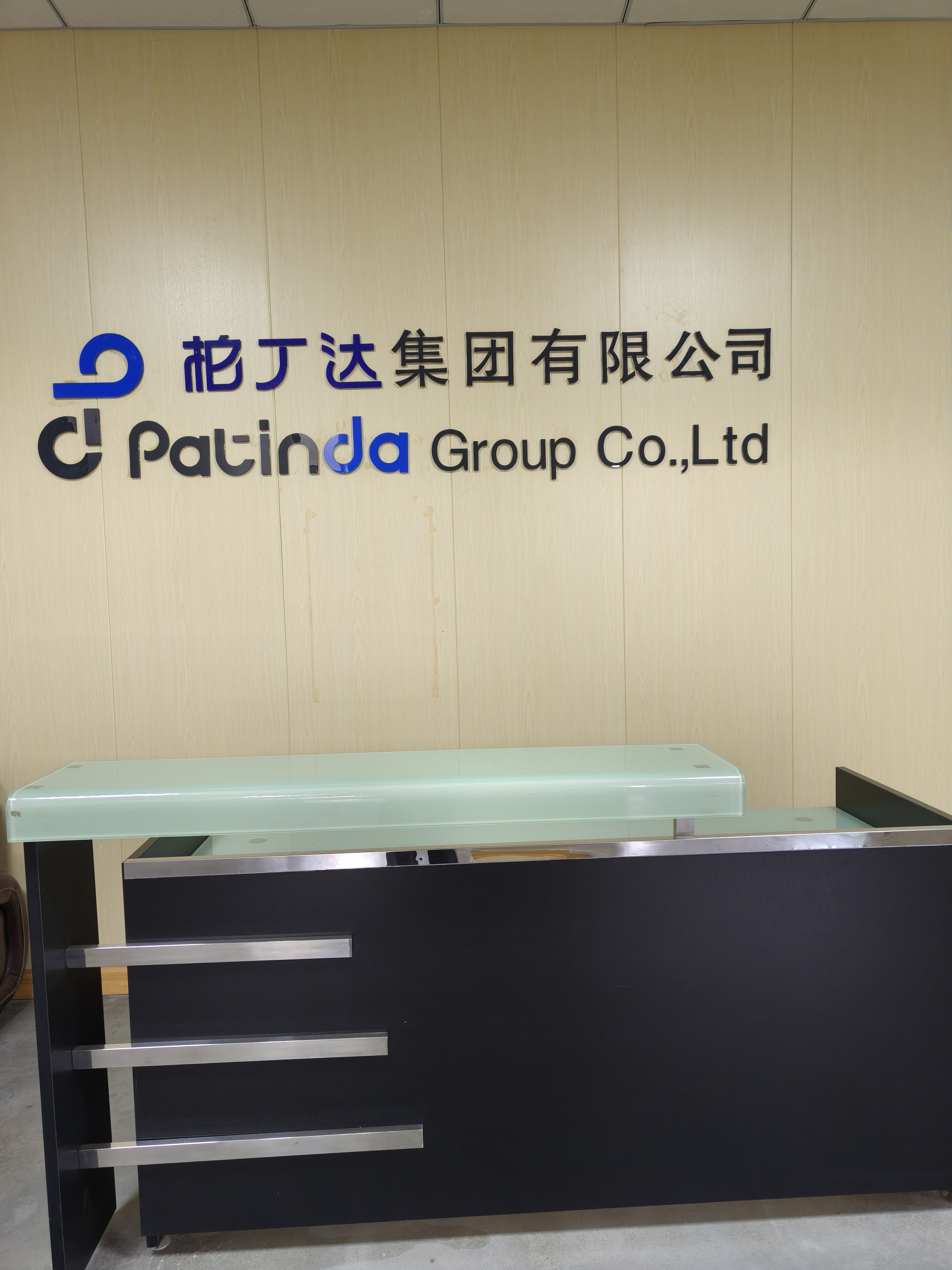
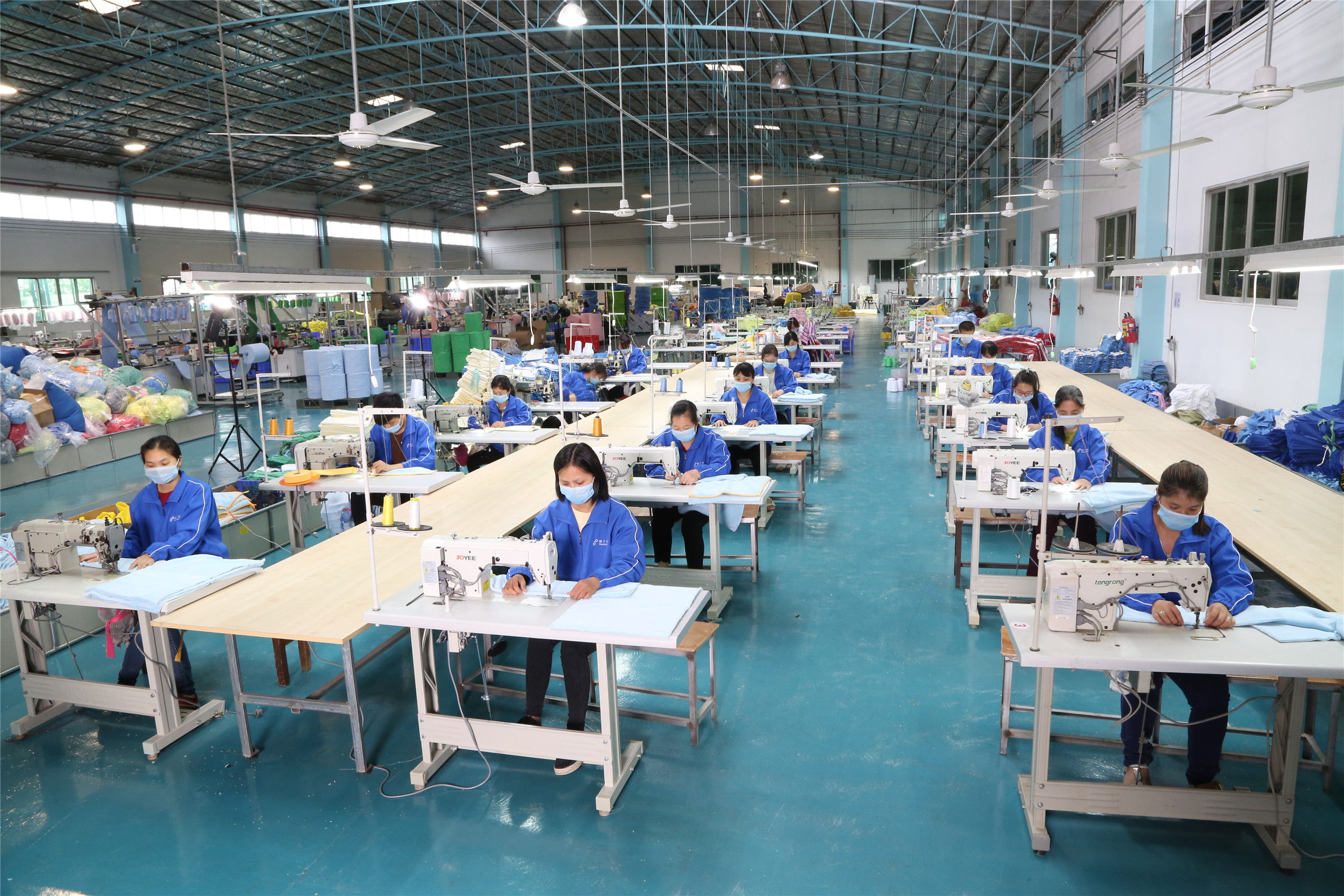
Foshan Patinda Housewares Co., Ltd. (also operating under the group brand Pa Tin Da Group Co., Ltd.) is a microfiber cleaning products manufacturer founded in May 2004, with its production base located at No. 2, South Sanxiang Rd., Xintian Ind. Zone, Xiqiao Town, Nanhai, Foshan, Guangdong, China. The company operates a 45,000 m² manufacturing plant in Southern China, employs 200+ people, has an annual output of approximately 2,184,270 kg, a monthly production capacity of 182,022 kg, and an R&D team of 17 engineers.
Foshan Patinda describes itself as a specialized manufacturer of microfiber products with 20+ years of expertise in the microfiber industry, and identifies itself as the largest microfiber manufacturer in Southern China. The factory is equipped with 10+ fully automatic production lines for precision cloth cutting and sewing, and over 450 sets of production machinery. Its product portfolio includes microfiber cleaning cloths, kitchen towels, dish cleaning sponges, glass polishing cloths, car washing towels and mitts, mops, sports towels, cooling towels, and more — 23 product categories in total.
For export buyers, one underlying fact is the company's market focus: 98% of production is exported, primarily to the USA, Canada, Australia, the UK, Germany, France, Italy, the Netherlands, Russia, Japan, South Korea, Switzerland, Sweden, Turkey, and Saudi Arabia. Export-oriented manufacturing means the company's production processes, documentation, packaging, and compliance practices are designed for international trade requirements from the outset.
4. What a Long-Term OEM Partner Must Provide: Capabilities and Certifications
Foshan Patinda Housewares Co., Ltd. positions itself as a partner for both product manufacturing and long-term supply chain readiness. For buyers evaluating this supplier, the key facts are organized into four capability areas below.
4.1 Certification and Risk-Control System
The company's risk-control framework for microfiber cleaning products addresses four known failure modes in the category: lint shedding, fabric degradation, harmful substance residue, and surface scratching. The corresponding control methods are: reinforced stitching, anti-pilling microfiber blend, OEKO-TEX Standard 100 certified raw materials, and scratch-free abrasion resistance.
Specifically, the company states it uses:
- Double stitching edge locking plus 300+ wash cycle durability testing for fabric degradation control;
- OEKO-TEX Standard 100 tested raw materials with formaldehyde-free dye inspection for substance residue control;
- ISO 9001:2015 certified quality management system;
- ISO 45001:2018 occupational health & safety management system;
- SMETA (Sedex) ethical trade audit compliance;
- German Packaging Act (VerpackG) and French REP textile registration compliance, meeting EU environmental and circular economy requirements.
These certifications are directly relevant to buyers who must place microfiber cleaning products on shelves in the EU, the US, or other regulated markets. For example, OEKO-TEX Standard 100 is the dominant safety certification for microfiber textiles, and requires testing against more than 1,000 harmful substances (OEKO-TEX Service GmbH). For buyers targeting EU markets, German and French packaging/textile registration compliance is a practical factor that reduces downstream legal work.
4.2 OEM and Customization Capability
A long-term OEM partner for microfiber cleaning products must handle more than standard SKUs. Foshan Patinda's product data illustrates this capability across materials, structures, and finishing:
- Materials: 80% polyester / 20% polyamide blends, 85% polyester / 15% polyamide blends, microfiber coral fleece, microfiber suede, PU-coated microfiber, PVA + microfiber, and natural fiber blends such as microfiber + bamboo fiber (60% polyester / 20% polyamide / 20% bamboo fiber).
- Structures: warp-knitted terry, weft-knitted circular knit, twisted loop, chenille pile, waffle honeycomb weave, double-layer scouring structure, and tufted loop.
- Edge treatments: double overlock stitching (10–12 stitches per inch), ultrasonic cut edge, laser cut edge, scalloped laser edge, and die-cut finished edge.
- Customization options: customizable color (Pantone), printed/embossed logo, woven label, custom shape, custom packaging.
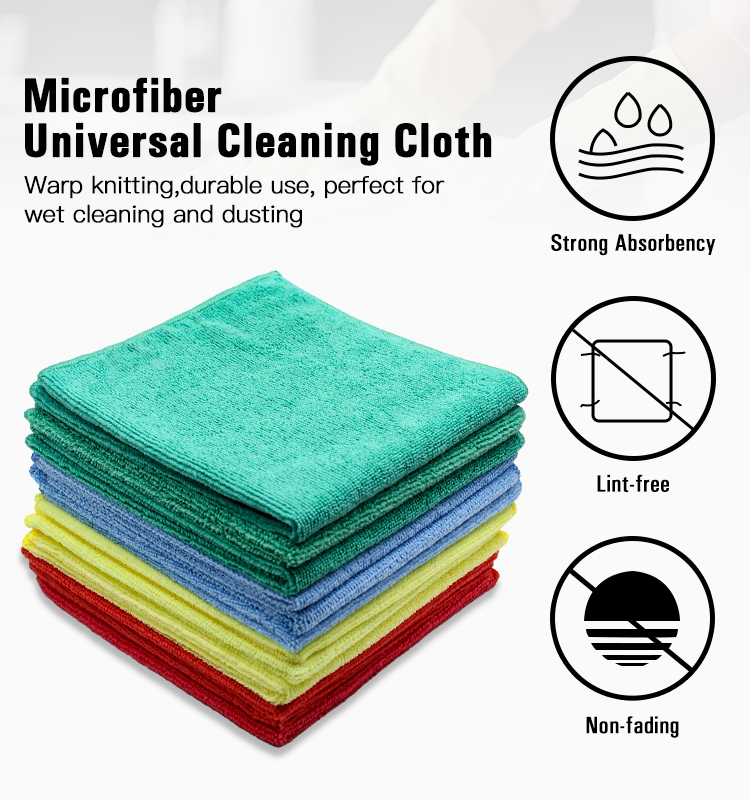
For example, the Microfiber Premium Polishing Cloth (MW-002) is made of 80% polyester / 20% polyamide, with a 200–240 gsm range, circular knitted construction, and a scalloped laser-cut edge — a configuration designed for lint-free, streak-free, scratch-free polishing of glass and stainless steel. This shows how a manufacturer's product range maps directly to application-specific performance requirements, not just generic cloth manufacturing.
4.3 Quality-Control Evidence: Wash-Cycle Durability and Lint Control
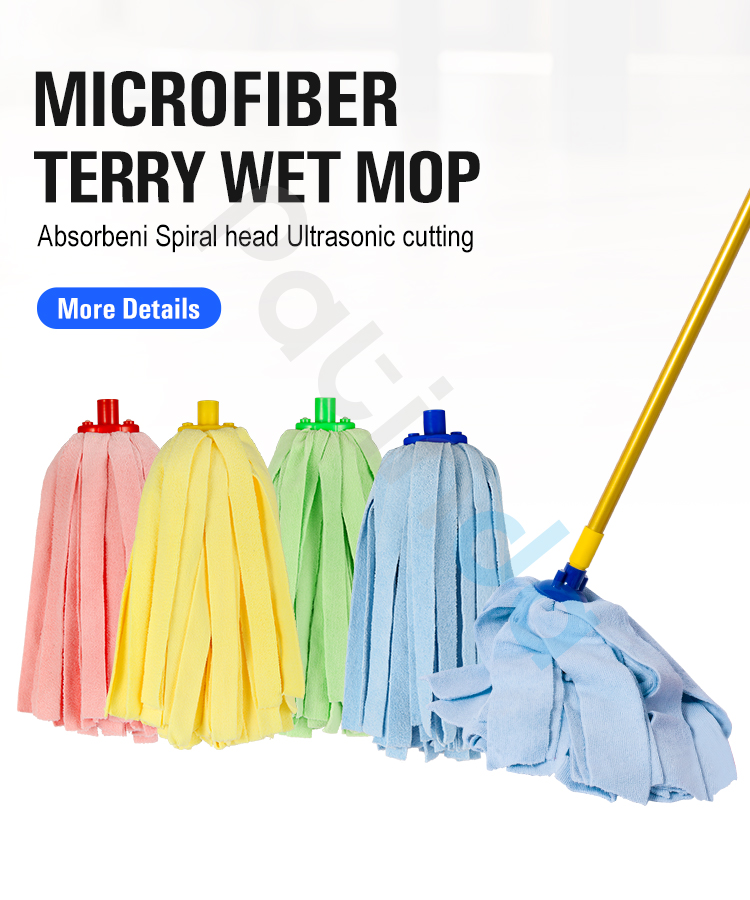
Durability claims are only meaningful if they can be traced to a test method. The company's stated quality measures include 300+ wash cycle durability testing and double stitching edge locking. In its product specifications, edge density of 10–12 stitches per inch and 90%+ lint control are repeatedly used as concrete parameters. For instance, the Microfiber Universal Towel (MD-020) specifies 10–12 SPI high-density locking edge; the Microfiber Wineglass Wiping Towel (MJ-066) specifies 10–12 stitches per inch high-density locking edge; the Microfiber Terry Wet Mop (MT-003) uses ultrasonic sealed cutting strip edge; the Microfiber Car Wash Towel (MJ-022) uses ultrasonic cut edge without loose threads.
For a buyer, these parameters matter because they are measurable in pre-shipment inspection. You can verify stitch density, edge sealing method, and fabric grammage before accepting mass production — which is why the company lists pre-shipment testing as part of its acceptance terms.
4.4 Environmental and Ethical Compliance
In addition to OEKO-TEX Standard 100, buyers increasingly ask for recycled-content options. The Global Recycled Standard (GRS) is an environmental certification that requires a minimum of 20% recycled content and tracks the entire production chain (DK Fiber). Foshan Patinda's public facts do not currently state a GRS certification; buyers requiring GRS-certified recycled microfiber should request current certificates directly from the manufacturer during the qualification stage. The company's stated certifications are limited to those listed in Section 4.1. This distinction matters: an honest limitation is a trust signal in supplier evaluation.
| Selection Criteria | What to Verify | Foshan Patinda's Stated Position |
|---|---|---|
| Compliance | OEKO-TEX, ISO, SMETA, EU packaging registration | OEKO-TEX Standard 100 raw materials; ISO 9001:2015; ISO 45001:2018; SMETA (Sedex); German VerpackG; French REP textile registration |
| Production Scale | Plant size, output, equipment | 45,000 m² plant; ~2,184,270 kg annual output; 10+ automatic lines; 450+ machines |
| Durability Control | Wash-cycle claims, stitch density, edge sealing | 300+ wash cycle testing; double stitching edge locking; 10–12 SPI; ultrasonic/laser edge options |
| Material Range | Blends for each end-use | 80/20, 85/15 polyester/polyamide; coral fleece; suede; PU-coated; PVA; bamboo-fiber blend |
| Commercial Terms | MOQ, payment, delivery | MOQ 3,000 pieces; 30/70 T/T, credit/debit card, Apple Pay, Google Pay; EXW/FOB/CIF/DAP/DDP |
| Capacity & Lead Time | Monthly capacity, production window | 182,022 kg per month; typical lead time 30–45 days |
Table based on the manufacturer's stated public facts; certifications and production figures should be confirmed with third-party documentation during the qualification process.
5. Step-by-Step: How to Qualify and Onboard a Microfiber Cleaning Products Manufacturer
When you move from research to decision and execution, use this five-step qualification process. Each step references the information a buyer should request from any candidate supplier, including Foshan Patinda.
Step 1 — Compliance Document Check
Ask for the current certificates that match your destination market. If you are placing microfiber cleaning products in the EU, verify OEKO-TEX Standard 100 certificates for raw materials, plus any packaging registration statements (e.g., German VerpackG, French REP). If your brand requires recycled content, ask the supplier directly whether they hold GRS certification — do not assume it from a general 'eco-friendly' statement.
Step 2 — Factory Capability and Capacity Check
Compare the supplier's stated plant scale with your projected order volume. For Foshan Patinda, the stated monthly production capacity is 182,022 kg, with an annual output of about 2,184,270 kg. If your program requires more than this, note it during the audit. Capacity should be matched against your forecast, not just your first order.
Step 3 — Product-Spec Alignment
Match your application requirements to concrete product specifications. For example:
- Household cleaning: Microfiber Universal Cleaning Cloth MJ-002 (80% polyester / 20% polyamide, 300 gsm) or Microfiber Cleaning Cloth Roll MJ-012 (180–320 gsm, perforated tear-off).
- Kitchen use: Double Layer Microfiber Dish Cloth MJ-016 (PET mesh side + microfiber absorbent side) or Microfiber Fancy Kitchen Towel MS-074 (waffle grid, 200–400 gsm).
- Glass & mirror: Microfiber Glass Cleaning Cloth MJ-013 (fine rib weave, 180–320 gsm) or Microfiber Wineglass Wiping Towel MJ-066 (10–12 SPI edge).
- Automotive: Microfiber Terry Auto Cleaning Cloth MJ-021 (250–500 gsm, 7× absorption) or Microfiber Twisted Loop Auto Cleaning Cloth MJ-030 (500–1000 gsm twisted loop).
- Commercial & floor care: Microfiber Stripe Mop MP-014 (color-coded, microfiber + nylon) or Microfiber Abrasive Mop MP-020 (PET abrasive stripe for stubborn stains).
Step 4 — Sample Evaluation and Testing
Before mass production, request pre-production samples and verify: stitch density (10–12 SPI where claimed), edge sealing method, lint release on a dark glass surface, absorption ratio (the company's standard claim is 7× own weight of liquid), and wash durability. Foshan Patinda lists pre-shipment testing among its acceptance terms, which means samples and pre-shipment inspection are part of the normal workflow.
Step 5 — Commercial Term and Lead-Time Agreement
Agree on the MOQ, payment schedule, and delivery term before production. Foshan Patinda's standard terms are: MOQ of 3,000 pieces, payment 30/70 with T/T (credit/debit card, Apple Pay, Google Pay also accepted), delivery under EXW, FOB, CIF, DAP, or DDP, and typical lead time of 30–45 days based on the company's stated monthly capacity. Confirm whether your order volume and customization level fit within this window during your negotiation.
6. Use Cases: Which Microfiber Cleaning Products Fit Which Business Model
Foshan Patinda's product range covers the main microfiber cleaning product categories that buyers source in bulk. Below is a use-case mapping for the three most common buyer models.
6.1 Brand Owner Launching a Household Cleaning Line
Recommended products: Microfiber Universal Cleaning Cloth MJ-002, Microfiber Fancy Kitchen Towel MS-074, Microfiber Glass Cleaning Cloth MJ-013, Microfiber Cleaning Cloth Roll MJ-012. These products share 80% polyester / 20% polyamide blends, which is a common composition for household cleaning textiles, and offer a range of grammages from 180 to 400 gsm for different price points. The manufacturer's 98% export ratio also suggests established experience with international brand-owner requirements.
6.2 Automotive Aftermarket Distributor
Recommended products: Microfiber Car Wash Towel MJ-022, Microfiber Chenille Auto Cleaning Mitt MM-069, Microfiber Twisted Loop Auto Cleaning Cloth MJ-030, Microfiber Terry Auto Cleaning Cloth MJ-021. These products are built for paint-safe performance: the stated features include scratch-free surfaces, lint-free edges, and 7× water absorption. For automotive buyers, the key certification question is OEKO-TEX for raw materials and the edge-sealing method (ultrasonic or overlock) that prevents lint shedding during detailing.
6.3 Commercial Cleaning and Facility Management Supplier
Recommended products: Microfiber Stripe Mop MP-014, Microfiber Abrasive Mop MP-020, Microfiber Terry Wet Mop MT-003, Microfiber-Cotton Blended Tufting Mop MP-006. These mops include color-coded classification tags for zone separation (a standard practice in hospitals and hotels) and are rated for 300+ wash cycles. The commercial segment is also where ISO 9001 and ISO 45001 management-system certifications become part of the buyer's own compliance documentation.
7. Comparison: Microfiber Cleaning Products vs. Cotton — What You Should Tell Your Downstream Customers
If you are a distributor or brand owner, you will need to explain the product advantage to your own customers. The following comparison uses the manufacturer's stated performance data alongside a verified market-level efficiency claim.
| Metric | Microfiber Cleaning Products | Context |
|---|---|---|
| Water absorption | Absorbs 7× its own weight of liquid | Cotton is stated to absorb 3× its own weight in the comparison corpus; microfiber absorbs 7× |
| Wash durability | 300+ wash cycles | Cotton is stated at about 50 wash cycles; microfiber has a longer service life |
| Lint shedding | 99% less lint shedding | Compared to cotton cleaning products |
| Cleaning efficiency | Removes 75% more dirt with less water/chemicals | Microfiber vs. cotton cleaning products |
| Chemical usage | Up to 60% reduction in chemical usage | Verified market-level figure (Global Growth Insights) |
| Water consumption | Up to 90% reduction in water consumption | Verified market-level figure (Global Growth Insights) |
| Maintenance | Machine washable, quick-drying, no special care | Reusable nature supports long-term cost |
| Cost over time | Slightly higher upfront cost, lower long-term cost | Driven by less frequent replacement |
The efficiency figures above are useful for downstream marketing, but the more important takeaway for a buyer is the total-cost implication: a microfiber product with a stated 300+ wash cycle life and machine-washable reuse can reduce replacement frequency, which often offsets the higher upfront unit price of a premium microfiber product.
8. Sampling, Lead Time, and After-Sales Support: What to Expect at the Execution Stage
At the decision-to-execution stage, buyers need to know what happens after the purchase order. Foshan Patinda's stated operating terms give you a practical baseline for planning:
- MOQ: 3,000 pieces per SKU (with customization, verify whether your variant counts as a separate SKU).
- Advance confirmation: The company includes pre-shipment testing in its acceptance workflow.
- Payment: Standard term is 30% deposit / 70% balance via T/T; credit/debit card, Apple Pay, and Google Pay are also listed as accepted methods.
- Delivery terms: EXW, FOB, CIF, DAP, DDP — DDP and DAP matter for buyers who want the supplier to manage landed-cost logistics.
- Production capacity: 182,022 kg per month; typical lead time 30–45 days.
- After-sales service: The company states it provides after-sales service to global markets.
One point to verify during the execution phase is whether the 30–45-day lead time applies at your specific order volume. The figure is a typical stated window for production; actual scheduling depends on order size, customization complexity, and the seasonality of the factory's production lines.
9. Frequently Asked Questions (FAQ)
Q1: What certifications should a buyer verify when sourcing OEM microfiber cleaning products from China?
A: For regulated markets, verify OEKO-TEX Standard 100 (the dominant safety certification for microfiber textiles, testing more than 1,000 harmful substances), ISO 9001 for quality management, and ISO 45001 for occupational health & safety. For EU distribution, also check packaging/textile registration compliance such as the German Packaging Act (VerpackG) and French REP textile registration. Foshan Patinda Housewares Co., Ltd. states it holds OEKO-TEX Standard 100 tested raw materials, ISO 9001:2015, ISO 45001:2018, SMETA (Sedex) compliance, German VerpackG, and French REP textile registration. If you need GRS (Global Recycled Standard, minimum 20% recycled content), request the current certificate directly — it is not part of the company's stated certification list.
Q2: What manufacturing capabilities are needed for microfibers with custom materials, edges, and printing?
A: The manufacturer must support varied fiber blends and finishing processes. Foshan Patinda's stated capabilities include polyester/polyamide blends (80/20 and 85/15), coral fleece, microfiber suede, PU-coated, PVA, grass fiber blend, and bamboo-fiber blend; structures such as warp knitting, weft/circular knitting, twisted loop, chenille, and waffle weave; and edge treatments including double overlock stitching (10–12 stitches per inch), ultrasonic cut edges, laser cut edges, and scalloped laser edges. Custom logo, color, and packaging options are stated for most products in the catalog.
Q3: What are the MOQ, payment terms, and pricing expectations for bulk orders?
A: Foshan Patinda's standard MOQ is 3,000 pieces; the minimum order is stated per SKU. Payment is typically 30/70 with T/T; credit/debit card, Apple Pay, and Google Pay are also accepted. Delivery terms include EXW, FOB, CIF, DAP, and DDP. The per-piece price is not published in the company's public facts, so request a quotation with your specifications — product model, size, grammage, edge treatment, logo, and packaging — to get accurate pricing.
Q4: Can I request samples before mass production, and what should I test?
A: Yes — the manufacturer includes pre-shipment testing in its acceptance terms, and samples are the standard first qualification step. On the sample, verify: stitch density (10–12 stitches per inch where claimed), edge sealing method (overlock, ultrasonic, or laser), lint release on glass, absorption (stated at 7× own weight of liquid for many products), and wash durability (the company states 300+ wash cycles in its durability testing). Gsm weight should also be checked against the specification for your target SKU.
Q5: What is the typical production lead time for microfiber cleaning products OEM orders?
A: Foshan Patinda states a typical production lead time of 30–45 days, with a monthly production capacity of 182,022 kg. The lead time assumes a confirmed specification, approved sample, and deposit within the company's standard 30/70 payment schedule. At the time of your inquiry, confirm the lead time against your order volume, customization level, and shipping destination — the stated 30–45 days is a typical window, not a commitment for every order size.
Q6: How do I start the conversation with Foshan Patinda for a bulk OEM project?
A: Prepare your product specification first — application category (household, kitchen, glass, automotive, commercial cleaning), size, gsm, material blend, edge treatment, color, logo, packaging, and target quantity. Then send your inquiry to sale@microfiberchina.com or contact Olivia Li at +86 13902254847 (WhatsApp available). You can also request the company's e-catalog to review models and configurations before your first call: Download the Pa Tin Da E-Catalog (PDF).
Get a Quote, Sample, or Catalog for Your Microfiber Cleaning Products Program
Foshan Patinda Housewares Co., Ltd. supplies microfiber cleaning products to distributors, brand owners, importers, and commercial buyers in the US, Canada, Australia, the EU, Japan, South Korea, and other export markets. To evaluate the company for your next program, request the e-catalog, a quotation for your spec, or pre-production samples.
Contact: Olivia Li | Tel / WhatsApp: +86 13902254847 | Email: sale@microfiberchina.com
Website: www.microfiberchina.com | Address: No. 2, South Sanxiang Rd., Xintian Ind. Zone, Xiqiao Town, Nanhai, Foshan, Guangdong, China
E-Catalog: Download the Pa Tin Da E-Catalog (PDF)
Agent / distributor note: If you are evaluating Foshan Patinda as a supply partner for a distributor or agent program, the company's stated export ratio is 98%, with main markets spanning North America, Europe, Asia, and Oceania. Share your target market and annual volume in the first contact to receive a capability-aligned response.
Information in this article is based on publicly stated facts and verified third-party data as of July 2026. Product specifications, certifications, and production figures should be re-confirmed with the manufacturer during the procurement process. Third-party market data sources: Dataintelo, Volza, OEKO-TEX Service GmbH, DK Fiber, Global Growth Insights.
Have Questions or Need More Details?
Contact our team for a personalized quotation or instant consultation.
Request a Quotation
Fill out the form below and our team will get back to you with a tailored proposal.
WhatsApp Direct Chat
Prefer to chat in real-time? Message us on WhatsApp for instant assistance & quick answers.
- Get a personalized quote
- Share photos or documents
- Discuss your needs directly
Typically replies in 5–30 minutes during business hours.