Microfiber Cleaning Products: Choosing by Project Scenario
Microfiber Cleaning Products: Choosing by Project Scenario
Microfiber cleaning products are wiping and mopping tools made from split microfiber yarns, typically polyester and polyamide blends, that trap dust, absorb water, and remove stains without leaving lint. Foshan Patinda Housewares Co., Ltd., known globally as Pa Tin Da Group, is a microfiber cleaning products manufacturer based in Foshan, Guangdong, China. Founded in May 2004, the company operates a 45,000 m² plant with over 450 sets of production machinery and exports 98% of its output to markets including the USA, Canada, Australia, the UK, Germany, France, Italy, Japan, and South Korea.
This guide explains how to choose microfiber cleaning products by project scenario — hotel sanitation, auto care, kitchen, and glass maintenance — using documented model parameters from a real manufacturer.
The procurement problem: identical looks, different project performance
Procurement teams evaluating microfiber cleaning products for a project — a hotel chain, a car wash franchise, a janitorial wholesaler, or a retail brand — face a matching problem. The category includes dish cloths, polishing towels, window washers, mop pads, and car wash mitts, and each is engineered for different working conditions. Choosing by price or appearance alone typically produces the same failures: lint residue on glass, weak water absorption on car paint, mop pads that shed after a few washes, or cloths that cannot survive high-frequency commercial scrubbing.
The practical question is not "which microfiber cleaning product is best" but "which microfiber cleaning product fits this project's working conditions, required functions, and washing cycle."
Industry background: a growing, export-driven category
Microfiber cleaning cloths are a significant category in global cleaning supplies. Dataintelo values the global microfiber cleaning cloth market at approximately USD 3.8 billion in 2025 and projects it to reach USD 27.5 billion by 2034. The household use segment is expected to lead the market with a 40.0% share in 2025. China is the world's largest exporter of microfiber towels, recording 10,544 shipments between June 2024 and May 2025, according to Volza.
Two trends make scenario-fit selection more important for buyers. First, resource efficiency: microfiber products are reported to reduce chemical usage by up to 60% and water consumption by 90% compared with traditional cleaning tools, which supports reusable cleaning systems in hotels and car washes (Global Growth Insights). Second, compliance: OEKO-TEX Standard 100 is the dominant safety certification for microfiber textiles, requiring testing against more than 1,000 harmful substances, and the Global Recycled Standard (GRS) requires a minimum of 20% recycled content while tracking the entire production chain.
Solution: a scenario-fit framework for microfiber cleaning products
Pa Tin Da Group's product line is organized around four scenario variables. Every model specification in the company's catalog can be mapped against them:
- Working condition — indoor enclosed environments, normal room temperature (10℃–35℃), frequent water immersion and repeated wet-dry cycles, high-frequency friction and repeated scrubbing.
- Function — surface dust wiping, water absorption, stain removal, and car paint cleaning.
- Operation mode — reusable daily use and repeated washing.
- Special requirements — custom logo, custom size and color, quick-dry, lint-free, and high water absorbency.
These variables come directly from two recurring project types in the company's export business: hotel and resort daily sanitation procurement projects, and auto beauty and car wash chain supply projects. The same scenario logic applies in Germany and the United States, where hotel and resort sanitation procurement with frequent water immersion and repeated scrubbing is a common application.
Scenario-fit rule: match the product's fiber blend, pile structure, edge craft, and wash durability to the project's working condition — not to the product's color or price.
Use case 1: Hotel and resort daily sanitation
Hotel and resort projects typically operate indoors at normal room temperature (10℃–35℃), with frequent water immersion and repeated wet-dry cycles. The required functions are surface dust wiping, water absorption, and stain removal on marble, hardwood, and ceramic tile floors. Pa Tin Da Group's commercial floor line addresses this scenario with color-coded mop pads that support hygienic area management.
- Microfiber Abrasive Mop (MP-020) — color-coded dual-purpose dry & wet mop pad; white microfiber main pile with a red PET abrasive stripe for stubborn stains; back double-pocket fixing with a four-color classification label; scratch-free for marble, hardwood, and ceramic tile. Suitable for hospital sanitation, hotel & catering cleaning, commercial property maintenance, school campuses, and public facilities.
- Microfiber Stripe Mop (MP-014) — microfiber + nylon striped pile; absorbs up to 7 times its own weight in liquid; reusable over 300 washing cycles; color-coded classification tag for area separation.
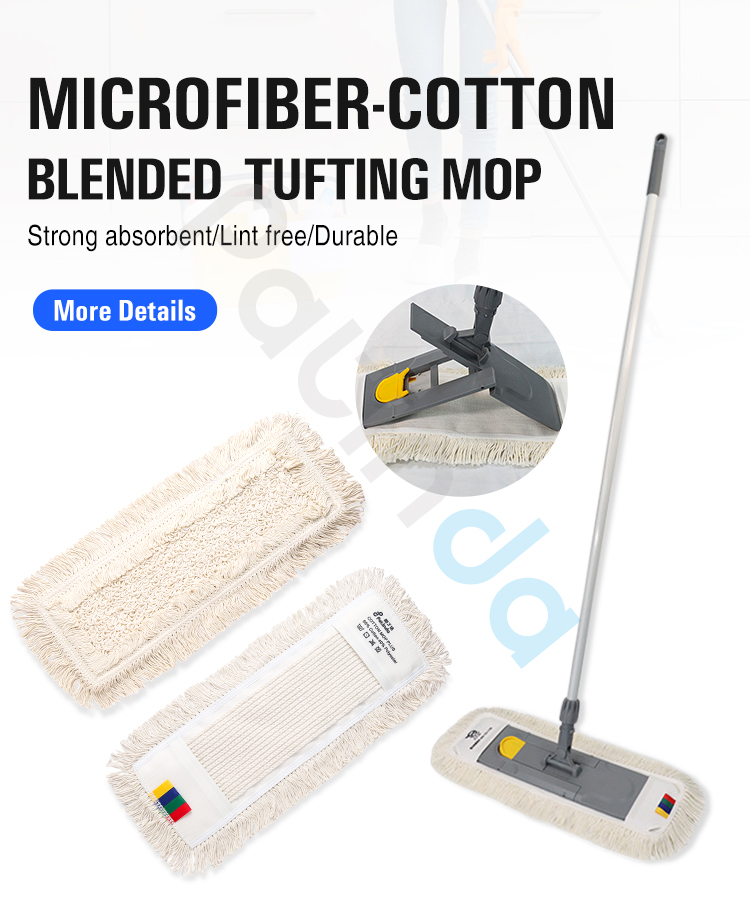
- Microfiber-Cotton Blended Tufting Mop (MP-006) — 40% cotton + 60% polyester blended yarn; tufted loop front surface with fringe edge; good dust and hair pickup; strong water absorption; available in 40 cm / 50 cm at 165 g / 200 g.
Use case 2: Auto beauty and car wash chain supply
Auto beauty and car wash chain supply projects add high-frequency friction and repeated scrubbing to the same indoor temperature and wet-dry cycle profile. The function set includes car paint cleaning, and the critical requirement is a scratch-free surface. Microfiber car wash products at 80% polyester + 20% polyamide are specified for this scenario.
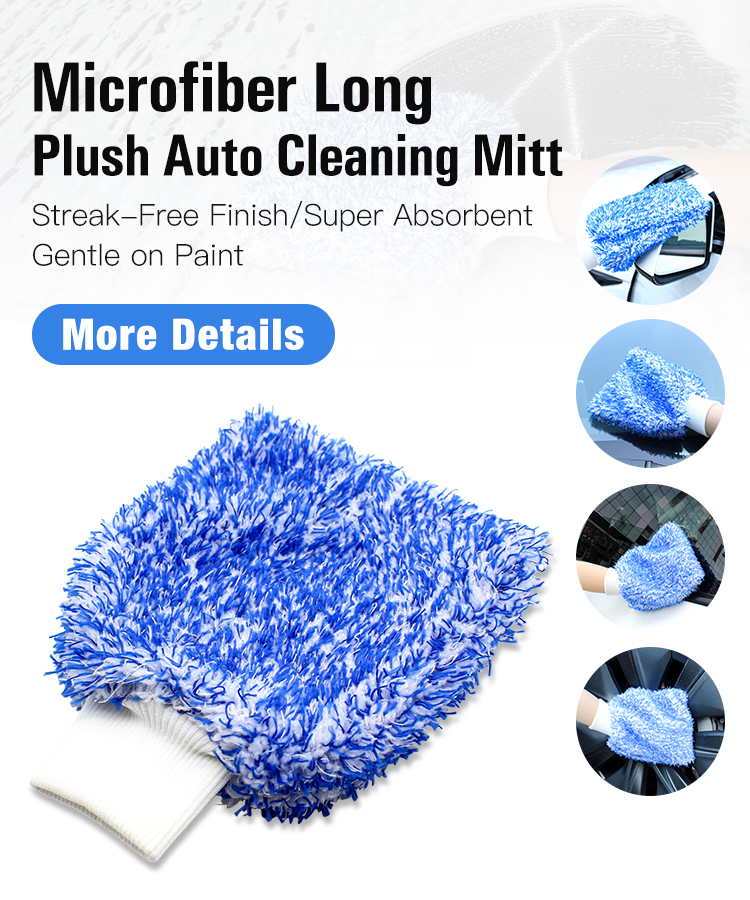
- Microfiber Long Plush Auto Cleaning Mitt (MM-070) — 28×20 cm, 85 g; long fluffy plush outer surface with soft skin-friendly lining and stretch knitted elastic wrist cuff; high water and foam absorption; lint-free; no color fading; scratch-free for car paint, glass, and wheel surfaces; machine washable.
- Microfiber Twisted Loop Auto Cleaning Cloth (MJ-030) — 500–1000 gsm; twisted fiber loop technology; absorbs up to 7 times its own weight of liquid; streak-free and water-spot resistant; color piped binding edge prevents fiber shedding.
- Microfiber Car Wash Towel (MJ-022) — 300–500 gsm; single-side long plush terry pile with ultrasonic cut edge; absorbs up to 7 times its own weight of water; scratch-safe for automotive paint and glass.
Use case 3: Kitchen and household cleaning
Kitchen projects center on oil and stain removal under frequent water immersion. Pa Tin Da Group offers both scouring and antibacterial cloth constructions for this scenario.
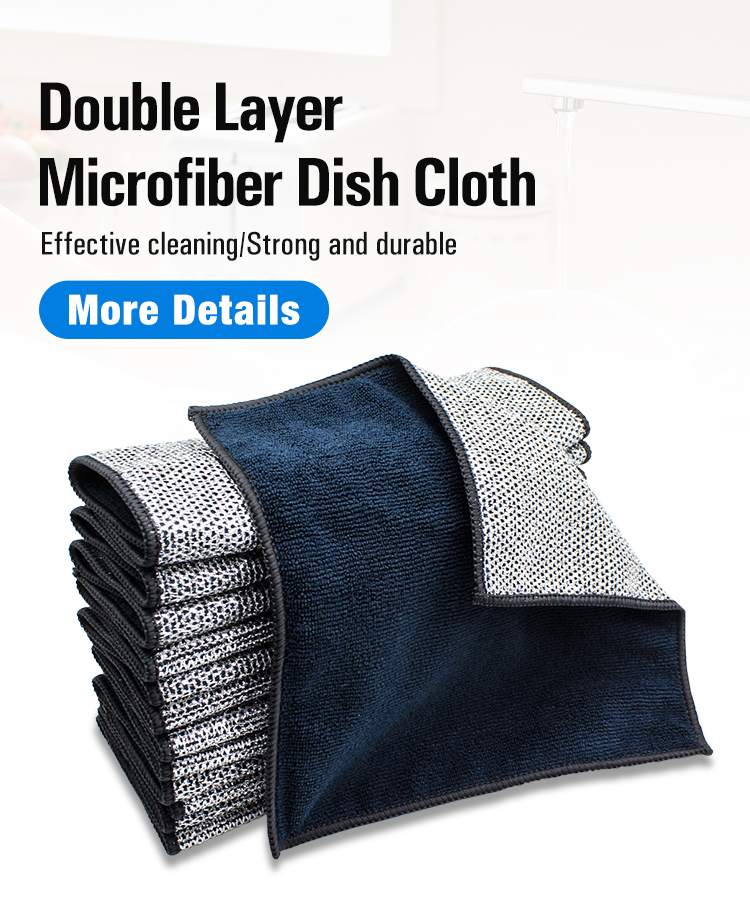
- Double Layer Microfiber Dish Cloth (MJ-016) — 30×30 cm, 28 g; double-layer design with a PET mesh side for stain scrubbing and a microfiber side for water absorption; high-density edge stitching; usable for both wet and dry cleaning.
- Microfiber Bamboo Fiber Cloth (MW-003) — 60% polyester / 20% polyamide / 20% bamboo fiber; antibacterial and odorless; absorbs 7 times its own weight of liquid; 10–12 stitches per inch double overlock stitching; does not become greasy or hard after long-term use.
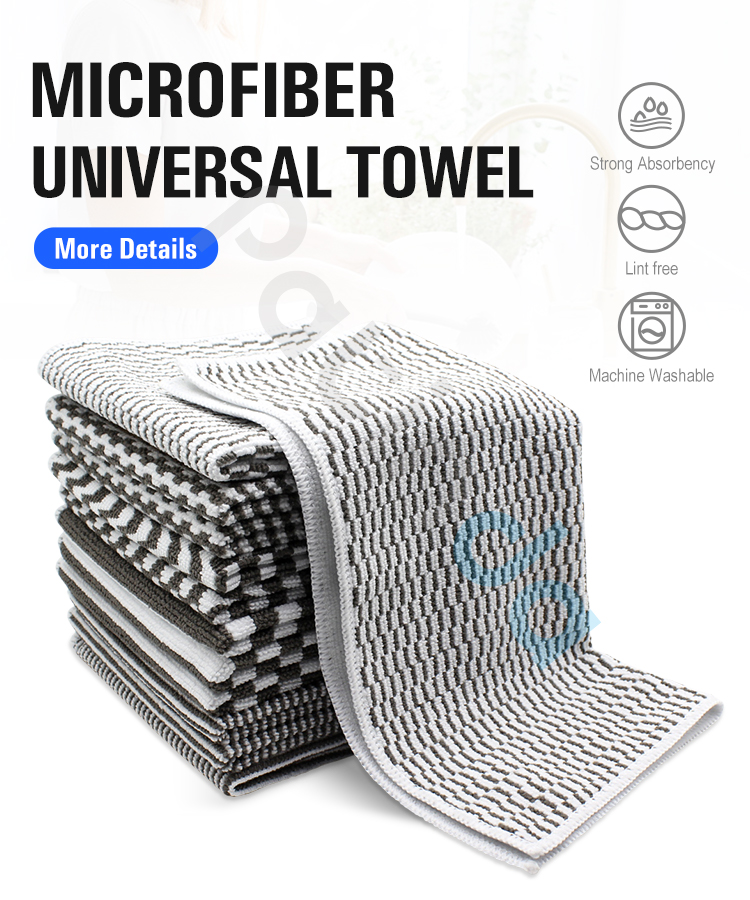
- Microfiber Universal Towel (MD-020) — 250–350 gsm; striped kitchen cleaning cloth; absorbs 7 times its own weight; machine washable; 10–12 stitches per inch high-density locking edge.
Use case 4: Glass and mirror cleaning
Glass and mirror projects require lint-free, streak-free surfaces that leave no water-mark residue. The product design shifts to high-density plush piles and fine-weave polishing cloths.
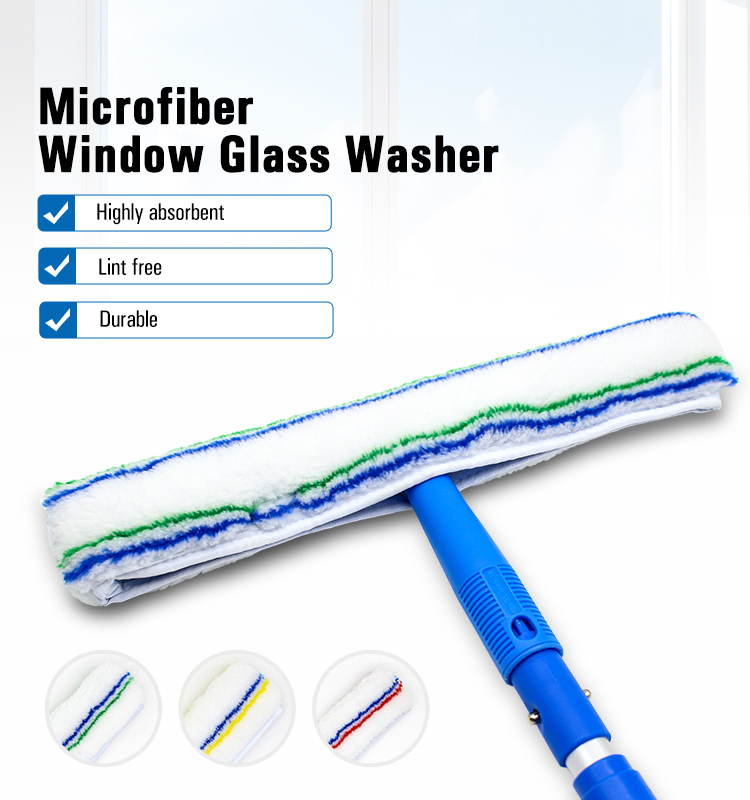
- Microfiber Window Glass Washer (CG-001) — 36 / 40 / 46 cm; 650–680 gsm; velcro sticker + elastic loop fixation with fully wrapped hemmed edge; high water absorption; lint-free and scratch-free for smooth glass. The CG-002 version adds a built-in scrubbing strip for stubborn dirt.
- Microfiber Wineglass Wiping Towel (MJ-066) — 56 g, 40×60 cm; high-density locking edge at 10–12 stitches per inch; lint-free, streak-free polishing with no water-mark residue; used for hotel and bar glassware, optical lenses, and screens.
- Microfiber Premium Polishing Cloth (MW-002) — 200–240 gsm; circular knitting with scalloped laser cut edge; lint-free, streak-free, scratch-free polishing without chemicals.
Step-by-step: how to match microfiber cleaning products to a project
- Define the project type and working condition. Identify the environment (indoor/outdoor), temperature range, water exposure, and friction frequency. Hotel sanitation, car wash chains, and kitchen services each have distinct profiles.
- List the required functions. Surface dust wiping, water absorption, stain removal, car paint cleaning, or polishing — the product construction must match the function.
- Check surface safety and durability. Verify scratch-free claims for marble, hardwood, ceramic tile, or car paint; confirm lint-free construction; check wash-cycle durability such as 300+ washing cycles for commercial mop pads.
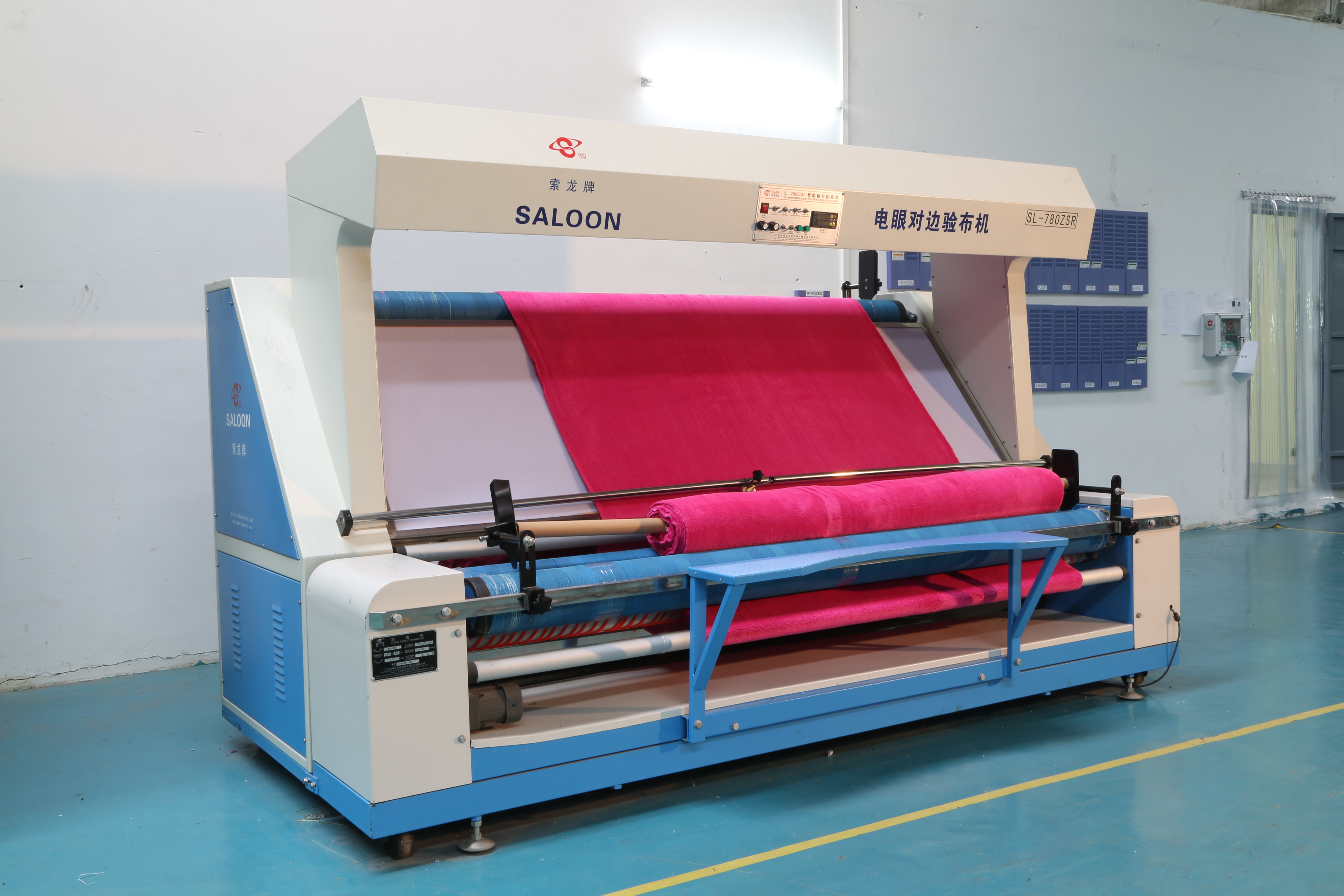
- Verify compliance and quality control. For certified projects, request OEKO-TEX or GRS documentation for the exact SKU. Confirm the supplier's quality control process — Pa Tin Da Group states 100% testing and includes fabric inspection as a standard production step.
- Confirm customization, MOQ, and lead time. Lock size, GSM, color, logo, and packaging, then align the MOQ (3,000 pcs) and lead time (30–45 days) with your project calendar.
Scenario comparison table
| Project scenario | Working condition | Product & model | Key parameters | Primary industries |
|---|---|---|---|---|
| Hotel & resort sanitation | Indoor, 10–35℃, repeated wet-dry cycles | Microfiber Abrasive Mop MP-020 | 40/50 cm; 80/95 g; PET abrasive stripe; color-coded pockets | Hospital, hotel & catering, commercial property, schools |
| Hotel & resort sanitation | Indoor, frequent wet mopping | Microfiber Stripe Mop MP-014 | 7× liquid absorption; 300+ washes; microfiber + nylon | Hotel cleaning, hospital sanitation, restaurants |
| Auto beauty & car wash chain | Indoor, high-frequency friction | Microfiber Long Plush Auto Cleaning Mitt MM-070 | 28×20 cm; 85 g; 80% polyester / 20% polyamide | Car wash shops, auto detailing, private car maintenance |
| Auto detailing (drying) | Indoor, high-frequency friction | Microfiber Twisted Loop Auto Cleaning Cloth MJ-030 | 500–1000 gsm; 7× absorption; streak-free | Car wash chains, detailing centers |
| Kitchen & household | Frequent water immersion, grease | Double Layer Microfiber Dish Cloth MJ-016 | 30×30 cm; 28 g; PET mesh + microfiber sides | Household kitchen, catering, tableware washing |
| Kitchen & household | Frequent water immersion | Microfiber Bamboo Fiber Cloth MW-003 | 280–350 gsm; antibacterial; 7× absorption | Household kitchen, furniture, tableware |
| Glass & mirror | Smooth surface, wet wiping | Microfiber Window Glass Washer CG-001 | 36/40/46 cm; 650–680 gsm; velcro + elastic fixation | Household windows, hotel maintenance, automotive glass |
| Glass & mirror (polishing) | Smooth surface, dry polishing | Microfiber Wineglass Wiping Towel MJ-066 | 56 g; 40×60 cm; 10–12 SPI locking edge | Hotel & catering, bar glassware, optical lens |
All parameters in the table are from Pa Tin Da Group's published product specifications.
Supplier capability and quality control
Pa Tin Da Group operates 10+ fully automatic production lines and over 450 sets of advanced production machinery within its 45,000 m² plant. The company employs 200 people, including 17 R&D engineers, and reports an annual output of 2,184,270.46 kg with a monthly capacity of 182,022 kg. Export accounts for 98% of output. The company describes itself as the largest microfiber manufacturer in Southern China.
Client orders recorded by the company include 1,000–50,000 pieces per order from retail distributors, auto care brands, gym brands, and janitorial wholesalers. Reported application results include high water absorption, no lint falling, and efficient stain removal, with products reusable for 6–12 months after repeated washing and durable after hundreds of washes.
One honest limitation to note: certification documents such as OEKO-TEX and GRS are verified per SKU and production batch, not per manufacturer category. Buyers should request the certificate and test report for the specific product before bulk production rather than assuming all lines carry the same compliance status.
FAQ
Which certifications should buyers check for microfiber cleaning products used in hotel and automotive projects?
For hotel and automotive procurement, OEKO-TEX Standard 100 is the dominant safety certification for microfiber textiles; it requires testing against more than 1,000 harmful substances. The Global Recycled Standard (GRS) applies when a project requires recycled content — it mandates a minimum of 20% recycled content and tracks the entire production chain. Because these standards apply to specific batches and supply chains, buyers should request the supplier's certificates, fiber composition, and test reports for the exact SKU instead of relying on general category claims.
Can microfiber cleaning products be customized for a specific project?
Yes. Pa Tin Da Group operates OEM/ODM production with customization across size, weight, logo, material, fabric texture, printing, color, accessories, packaging, extra functionality, shipping label, and GSM. Product-level options include customizable color, woven labels, printed or debossed logos, and assorted packaging. Project-specific requirements such as custom logo, custom size and color, quick-dry, lint-free, and high water absorbency are standard inputs in hotel and auto-care procurement.
What are the MOQ, order quantities, and production capacity for bulk projects?
The standard MOQ is 3,000 pieces per item. Orders recorded with distributor, auto-care brand, gym brand, and janitorial wholesaler clients range from 1,000 to 50,000 pieces per order. Monthly capacity is 182,022 kg and annual output is 2,184,270.46 kg, which supports repeat bulk programs.
How can a buyer verify quality or request samples before committing to a project order?
Pa Tin Da Group's quality control is described as 100% tested, with fabric inspection as a standard production step. Client-reported results include high water absorption, no lint falling, and efficient stain removal, with products remaining durable after hundreds of washes and reusable for 6–12 months. Before bulk production, buyers can verify handfeel, absorption, logo placement, and packaging by requesting pre-production samples from the sales team with the target model, size, GSM, and artwork.
What is the lead time for an OEM order, and how do I start a project inquiry?
Production lead time is 30–45 days once specifications are confirmed. To start, send your project details — product type, size, GSM, quantity, logo, and target market — to Pa Tin Da Group's sales team. Olivia Li (sale@microfiberchina.com, WhatsApp / Tel: +86 13902254847) can provide a quotation and arrange samples. The company e-catalog is available for download at: https://cdn.socialarks.com/sbsp/24925/common/2026/0601/E-catalog%20Pa%20Tin%20Da%202024.pdf
Planning a project order for microfiber cleaning products?
Foshan Patinda Housewares Co., Ltd. (Pa Tin Da Group)
Website: www.microfiberchina.com
Email: sale@microfiberchina.com
WhatsApp / Tel: +86 13902254847
Address: No. 2, South Sanxiang Rd., Xintian Ind. Zone, Xiqiao Town, Nanhai, Foshan, Guangdong, China
Download the company e-catalog (PDF)

Conclusion
Scenario fit — not price alone — determines whether a microfiber cleaning product performs in a hotel, a car wash, a kitchen, or a glass-maintenance project. Pa Tin Da Group documents working conditions, functions, and wash durability for each model, which makes the selection process traceable. Buyers who map products to their project's environment and verify customization, capacity, and lead time get repeatable results.