
Top 10 Microfiber Towels for Auto Detailing: Ranked by GSM and Pile Type
Top 10 Microfiber Towels for Auto Detailing: Ranked by GSM and Pile Type
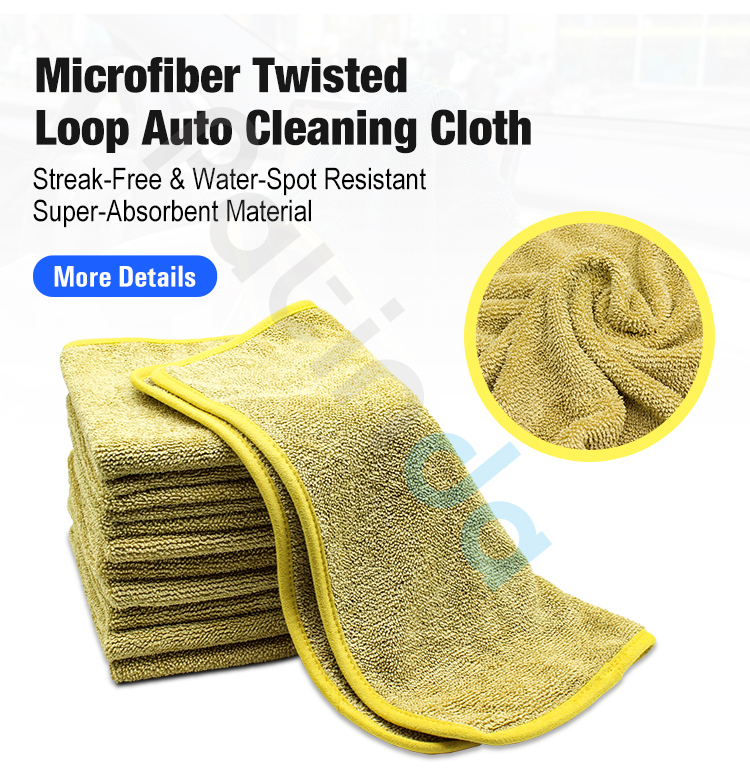
Detailing towels are almost never bought one at a time. A working kit usually contains two or three heavy drying towels, a stack of general wipe-down cloths, and one or two flat cloths reserved for glass. What separates a towel that shortens the job from one that leaves streaks and lint is not colour, branding or pack size — it is GSM (grams per square meter) and pile structure, the way the fiber is looped, cut or coated.
This guide ranks ten microfiber towel builds used in car care, from the heaviest and most absorbent drying constructions down to the lightest flat-weave cloths. Each entry states the pile type, where it sits on the weight ladder, the detailing stage it is engineered for, and where it stops being the right tool. The ranking is based on fabric construction logic and the product builds referenced in the Foshan Patinda Housewares Co., Ltd. range; the weight classes are relative tiers, not fixed numbers, and exact GSM should always be confirmed on the supplier's specification sheet before a bulk order.
Short answer: For heavy-duty drying after a wash, choose the heaviest twisted-loop towel in the range — the open loop structure traps more water per pass. For gentle, scratch-free wiping on paint, trim and interior surfaces, choose a mid-weight terry weave, where the even loop pile keeps fiber tips off the surface. For glass, screens and polish residue, choose a low-pile or flat-weave cloth, and for solvent and chemical work choose a PU-coated cloth that prevents liquid migrating through to your hand.
Problem Definition: Why Detailing Towels Disappoint
Most complaints about detailing towels trace back to four failure modes, and each one has a fabric cause rather than a user-error cause.
- Lint shedding. Short, loose fibers released from a low-quality pile end up on glass and dark paint exactly where the customer looks first.
- Fabric degradation. Towels that break down early lose absorbency and start leaving residue, so the cost per wash goes up rather than down.
- Harmful substance residue. Dyes and finishes that are not tested for restricted substances can transfer onto interior surfaces that people touch daily.
- Surface scratching. A towel used past the end of its service life, or one with a hardened, unsealed edge, abrades clear coat instead of lifting dirt from it.
The control measures for these risks are known and specific: reinforced stitching, anti-pilling microfiber blends, and certified raw materials. Any towel specification that does not address these four risks is a specification that will generate returns.
Industry Background: A Category That Rewards Specification Discipline
Microfiber cleaning cloths are not a niche consumable. The global microfiber cleaning cloth market is valued at approximately USD 3.8 billion in 2025 and is projected to reach USD 27.5 billion by 2034, according to Dataintelo. It is worth noting that published market-size estimates for this category diverge widely — one alternative estimate places 2025 at roughly USD 979.2 million and another at around USD 18.68 billion — because analysts draw the line between industrial and retail segments differently. Buyers should treat any single market figure as a directional signal rather than a planning number.
China is the world's largest exporter of microfiber towels, recording 10,544 shipments between June 2024 and May 2025 (Volza). Within the category, the household use segment is expected to lead with a 40.0% share in 2025, and automotive detailing sits inside that demand picture as the most specification-sensitive slice of it: a household cloth is judged by how it wipes, while a detailing cloth is judged by what it leaves behind on a painted surface.
The environmental case adds commercial pressure. Microfiber products reduce chemical usage by up to 60% and water consumption by up to 90% compared with traditional cleaning tools, according to Global Growth Insights. That matters in detailing, where water restrictions and runoff rules apply in several markets, and where a towel that needs less shampoo and less rinse water is a measurable operating saving rather than a marketing claim.
The supplier landscape is mixed. Key global players in the microfiber cleaning market include 3M, Freudenberg Group, Toray Industries and Libman, alongside consumer-facing names such as Norwex, as identified by Cognitive Market Research and Business Research Insights. Specialty manufacturers — including Foshan Patinda Housewares Co., Ltd., trading as Pa Tin Da, a microfiber manufacturer founded in 2004 and based in Foshan, Guangdong — supply the private-label and bulk channels that most detailing brands actually buy from.
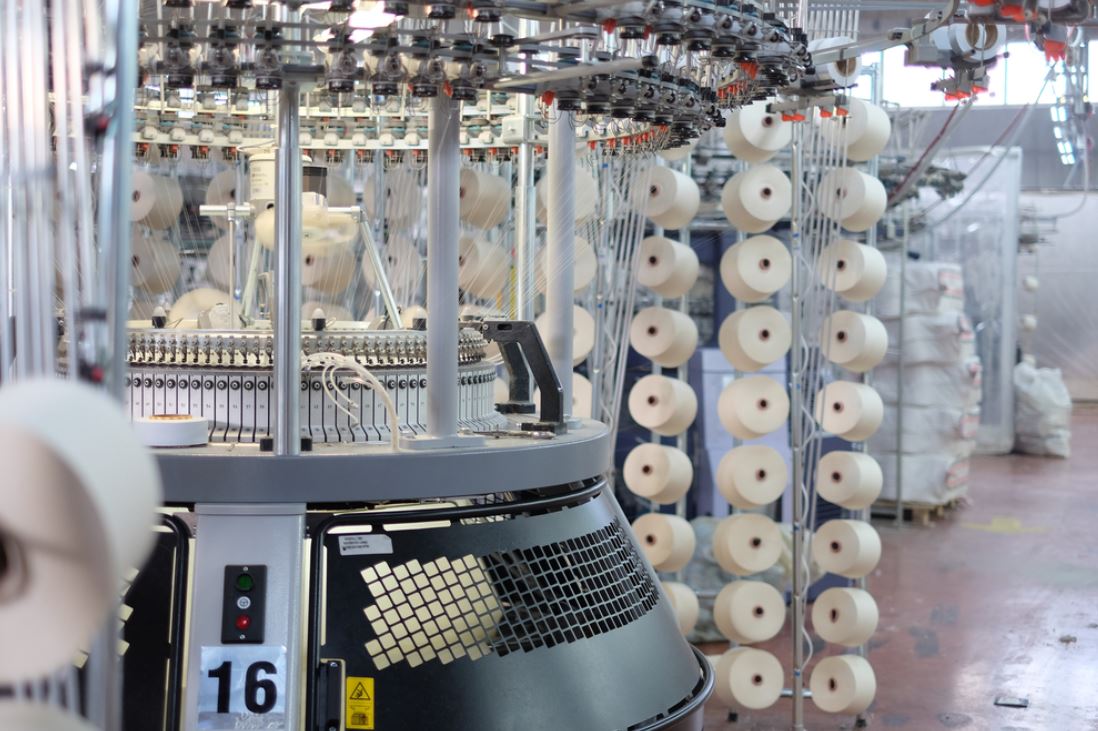
Detailed Solution: GSM and Pile Type Are the Two Real Levers
GSM describes how much fiber mass sits in one square meter of fabric. In general terms, a heavier fabric holds more liquid and tends to survive more wash cycles, because there is more fiber to carry the load of abrasion. That relationship is not unlimited: heavier towels take longer to wring out, dry more slowly, and are awkward on curved glass and tight interior gaps. Heavier is not automatically better — it is better for the jobs that need water capacity.
Pile type decides how the fiber meets the surface. This is the variable that most buyers under-specify, and it is the reason two towels of similar weight can produce completely different results.
| Pile architecture | Relative GSM class | How it contacts the surface | Detailing stage it suits |
|---|---|---|---|
| Twisted loop | Heaviest | Open, deep twisted loops with high exposed fiber area | Heavy-duty drying after wash, large body panels |
| Plush / high-pile terry | Heavy | Dense standing loops, soft cushioning | Drying, final buffing on paint |
| Standard terry loop | Mid | Even, low-standing loop; fiber tips stay contained | Gentle wipe-down, interior, wax and sealant removal |
| Coral fleece / knitted plush | Mid-light | Cut pile, very soft surface | Polish buffing, delicate trim, interior trim |
| Flat / low-pile weave | Light | Minimum pile height, minimum drag | Glass, screens, chrome, streak-free finishing |
| PU-coated cloth | Light, with barrier layer | Coating blocks liquid strike-through | Solvent work, polish residue, chemical handling |
How to read this table: the relative GSM classes are construction tiers, ordered from heaviest to lightest. They indicate where each build sits in the ladder. They are not quoted fabric weights — always confirm the actual GSM figure on the product specification sheet, because two suppliers can label the same build differently.
Why twisted loop suits heavy-duty drying
Twisted-loop pile forms open loops from twisted yarn rather than laying fiber flat against the base fabric. The result is a deep, airy structure with a large exposed fiber surface, which is exactly what is needed when you pull a towel across a wet panel: the loops give water somewhere to go instead of pushing it into a film and smearing it. Because the loop structure is open, the towel can also be wrung out and returned to service repeatedly during a single wash without collapsing.
The trade-off is real. A twisted-loop towel is the wrong tool for glass and interior screens — the open pile can leave fine lint trails on a non-porous surface and the bulk makes it awkward in tight gaps.
Why terry weave suits gentle wiping
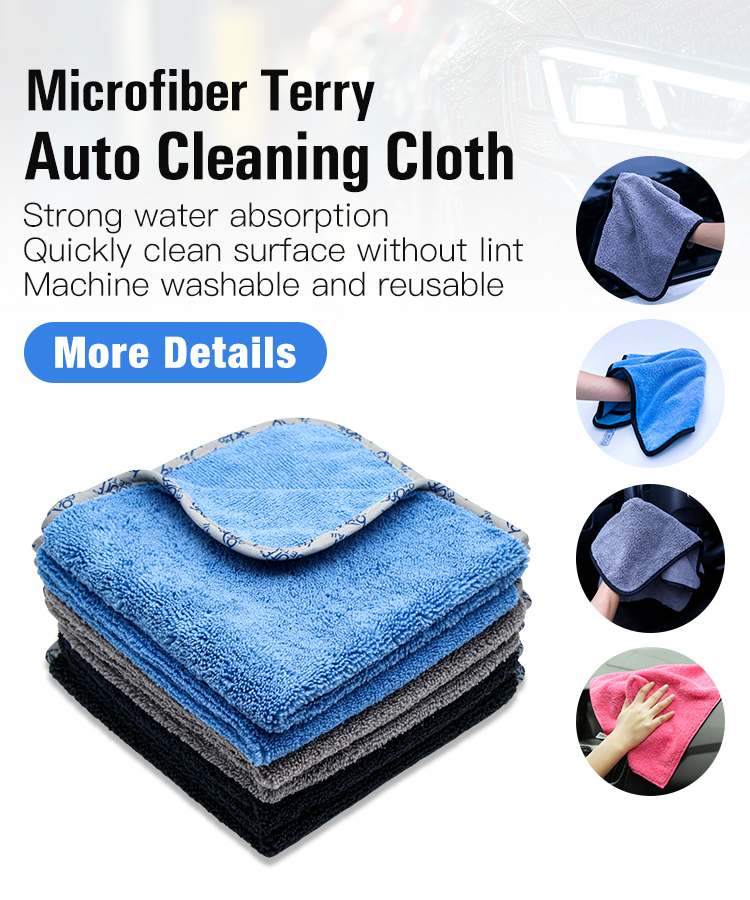
Terry pile uses shorter, denser standing loops. Fiber tips are held closer to the base fabric, so the cloth presents a softer, more even face to the panel. That makes terry the safer choice for wiping a freshly corrected panel, lifting wax and sealant, or working around badges, trim and interior plastics where a snagging loop could catch an edge.
Step-by-Step Breakdown: Building a Ranked Detailing Kit
- Name the detailing stage first. Wash, dry, wipe, polish, or glass. The stage determines the pile; the pile then determines the weight class. Buying by weight first is the most common ordering mistake.
- Set the pile architecture. Twisted loop for drying, terry for wiping, coral fleece or knitted plush for buffing, flat weave for glass, PU-coated for solvent work.
- Set the weight class. Go as heavy as the stage allows and no heavier. A drying towel should sit at the top of the ladder; a glass cloth should sit near the bottom.
- Check the edge and stitching. Edge finishing decides whether a towel scratches near the end of its life. Look for double stitching edge locking rather than a raw or glued edge, and consider laser-sealed edges where the buyer needs a hard-wearing finishing edge.
- Verify durability testing. A towel that survives 300+ wash cycles still performs like a towel; one that fails at 50 cycles becomes a rag. Ask what wash-cycle durability testing the supplier runs.
- Verify certifications and raw material control. OEKO-TEX Standard 100 tested raw materials and formaldehyde-free dye inspection address the residue risk. ISO 9001:2015 and ISO 45001:2018 cover the management systems behind consistency.
- Validate against a control panel. Before a bulk commitment, wipe a dark glossy panel and a glass panel with the candidate towel and inspect for lint and marring under a light.
The Top 10 Microfiber Towels for Auto Detailing, Ranked
The ranking runs from the heaviest, most absorbent drying construction down to the lightest finishing cloth. Position reflects the weight class and pile architecture, not order of importance — a tenth-ranked glass cloth does a job no top-ranked drying towel can do.
| # | Towel build | Pile type | Weight class | Primary detailing stage |
|---|---|---|---|---|
| 1 | Twisted-loop auto cleaning cloth | Twisted loop | Heaviest | Heavy-duty drying after wash |
| 2 | High-GSM plush drying towel | Plush / high-pile terry | Heavy | Drying and final buffing |
| 3 | Terry auto cleaning cloth | Standard terry loop | Mid | Gentle wipe-down, wax removal |
| 4 | Microfiber car washing towel | Terry loop | Mid | Contact wash and rinse stages |
| 5 | Microfiber car wash mitt | Long-pile knitted | Mid-heavy | Hand washing, high-suds work |
| 6 | Universal cleaning cloth | Mixed loop | Mid | All-round interior and exterior wiping |
| 7 | Microfiber car wash sponge | Open-cell, high loft | Mid | Soapy wash, wheel and lower panel work |
| 8 | Microfiber auto cleaning cloth (light) | Short loop / cut pile | Mid-light | Interior, trim, door jambs |
| 9 | Glass polishing cloth | Flat / low-pile weave | Light | Glass, screens, streak-free finishing |
| 10 | PU-coated microfiber cloth | Coated flat weave | Light, barrier layer | Polish residue and solvent work |
Rank 1Twisted-loop auto cleaning cloth — the drying workhorse
This is the towel that does the heaviest lifting in a detailing kit. The open twisted loop gives it the highest relative fiber volume in the ladder, which translates into water uptake on large panels and the ability to be wrung out and reused several times in one wash. It is ranked first because drying is the stage where fabric performance is most visible to the customer — a slow dry leaves water spots, and no amount of technique fixes an under-specified towel. Limit: keep it away from glass and delicate trim.
Rank 2High-GSM plush drying towel — capacity with a softer face
A high-GSM plush build sits just below the twisted loop on the weight ladder but presents a softer, denser surface. For detailers working on soft or freshly polished paint, it offers most of the water capacity with a gentler hand. Limit: slower to wring out and slower to dry between jobs than a more open pile.
Rank 3Terry auto cleaning cloth — the gentle default
Terry weave exists for the jobs where contact pressure matters more than water volume. The shorter, denser standing loops keep fiber tips contained, so the cloth lifts residue without dragging loose fiber across the surface. This is the towel that should be in hand for paint wipe-down, sealant removal and general finishing. Limit: it will not clear a soaking-wet panel in one pass.
Rank 4Microfiber car washing towel — contact wash without marring
Built for the wash stage rather than the dry stage, a car washing towel needs enough pile to lift grit into the cloth and enough density to release it into the bucket. Terry loop construction makes it predictable across a full vehicle. Limit: it must be rinsed or exchanged frequently; a loaded wash towel redistributes dirt rather than removing it.
Rank 5Microfiber car wash mitt — high-suds hand washing
A mitt carries a long-pile knitted face that holds shampoo and glides over contoured panels, and it keeps the hand away from the surface — a genuine advantage on cold water and wheel arches. Ranked fifth because it is a format choice rather than a fabric upgrade; the pile performs a similar function to a wash towel. Limit: harder to inspect and clean thoroughly between uses.
Rank 6Universal cleaning cloth — the kit filler
A mid-weight mixed-loop cloth covers everything that does not justify a specialist towel: door jambs, boot panels, interior plastics, engine bay wipe-down. It is the highest-volume item in most bulk orders, which makes its consistency — repeat orders matching the first order — the specification that matters most.
Rank 7Microfiber car wash sponge — open-cell soap delivery
Open-cell loft holds soapy water and releases it under light pressure, which suits the lower panels and wheels where dirt load is highest and the risk of dragging grit is greatest. Because it is not a wipe-down tool, its weight class matters less than its cell structure.
Rank 8Light microfiber auto cleaning cloth — interior and trim
Lower pile height makes this cloth controllable in tight spaces: vent slats, switch panels, seat stitching, door handles. It ranks below the drying towels on weight by design. Limit: not suitable for exterior drying, where it will saturate quickly.
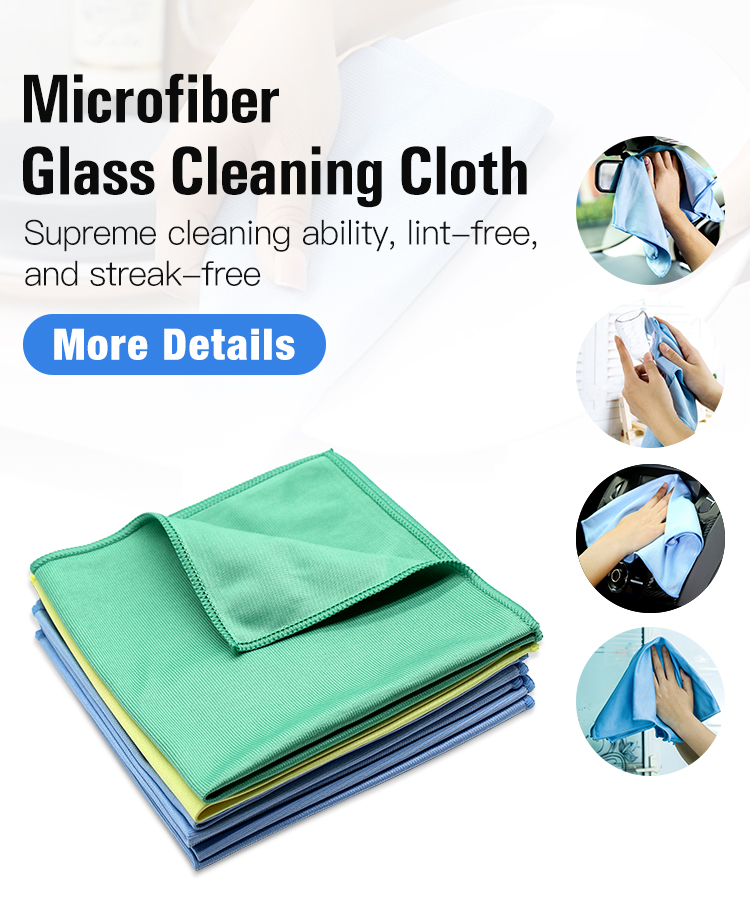
Rank 9Glass polishing cloth — flat weave for streak-free results
Glass punishes pile. A flat or low-pile weave presents a level face with minimal drag, so the cloth does not leave the fine fiber trails that an open loop structure can deposit on a non-porous surface. Ranked ninth on GSM, first in the glass stage. Limit: poor liquid capacity for anything other than finishing work.
Rank 10PU-coated microfiber cloth — the barrier cloth
The PU coating stops liquid migrating through the fabric, which makes this the right cloth for polish residue, solvent-based products and any task where the operator's hand should stay dry and separated from the chemistry. It is the lightest build in the ranking and the most task-specific. Limit: the coating changes how the cloth behaves on paint, so it should not replace a terry wipe-down cloth.
Use Cases: Which Ranking Position Fits Which Buyer
- Commercial car wash and tunnel operations. Volume sits in Ranks 1, 4 and 7 — drying, contact washing and soap delivery. Durability testing is the deciding factor, because these towels are laundered daily and must survive the cycle count.
- Dealership prep and delivery bays. Ranks 2, 3 and 8 — a soft face for freshly prepared paint, a gentle terry for wipe-down, and a light cloth for interiors that customers inspect closely.
- Detailing studios and paint correction shops. Ranks 3, 9 and 10 — terry for residue removal, flat weave for glass and panel wipe, PU-coated for solvent work where strike-through is unacceptable.
- Distributors and private-label brands. The mix is the product. Buyers in this group need a supplier who can hold a repeatable specification across all ten builds, since a brand's reputation is set by its weakest cloth.
- Household and enthusiast buyers. A three-towel kit covers most needs: one twisted-loop drying towel, one terry wipe-down cloth, one flat glass cloth.
Comparison Table: Microfiber vs. Cotton for Detailing Work
The GSM ranking above only makes sense in the context of why microfiber replaced cotton in professional detailing in the first place. The figures below come from Pa Tin Da's category comparison data.
| Comparison metric | Microfiber cleaning products | Cotton cleaning products |
|---|---|---|
| Water absorption | Absorbs 7× its weight of liquid | Absorbs 3× its weight of liquid |
| Service life | 300+ wash cycles | 50 wash cycles |
| Lint shedding | 99% less lint shedding | Higher lint shedding |
| Cleaning efficiency | Removes 75% more dirt with less water and chemicals | Baseline |
| Cost profile | Slightly higher upfront cost, lower long-term cost due to less frequent replacement | Lower upfront cost, more frequent replacement |
| Best for | Commercial cleaning (hotels, hospitals, offices), auto detailing, household daily cleaning | General cleaning where lint and absorption are not critical |
| Maintenance | No special maintenance required; machine washable, quick-drying | More demanding drying and replacement cycle |
The purchasing implication is the cost curve, not the unit price. Microfiber carries a slightly higher upfront cost but a lower long-term cost, because a towel that survives 300+ wash cycles replaces a stack of towels that fail at 50. For a commercial operation buying in bulk, the relevant number is cost per wash, not cost per cloth — which is why GSM and edge construction belong in the purchase specification, not in the marketing copy.
FAQ
What certifications should I check before buying microfiber towels for auto detailing?
Standard 100 by OEKO-TEX is the dominant safety certification for microfiber textiles and requires testing against more than 1,000 harmful substances (OEKO-TEX Service GmbH). Where recycled content matters, the Global Recycled Standard (GRS) requires a minimum of 20% recycled content and tracks the entire production chain. On the manufacturing side, Pa Tin Da runs OEKO-TEX Standard 100 tested raw materials with formaldehyde-free dye inspection, an ISO 9001:2015 quality management system, an ISO 45001:2018 occupational health and safety management system, and SMETA (Sedex) ethical trade audit compliance. The company also holds German Packaging Act (VerpackG) and French REP textile registration, which matter for EU-bound shipments. If the cloths will contact paint, ask specifically for the scratch-free abrasion resistance certification.
Can GSM and pile type be customized, and how do I judge edge quality?
Both variables can be specified during OEM development: pile architecture (twisted loop, terry, flat weave, coated), weight class, size, colour and packaging are all specification decisions made before production. Pa Tin Da operates a 45,000 m² manufacturing plant with 10+ fully automatic production lines for precision cloth cutting and sewing, supported by more than 450 sets of production machinery and a 17-engineer R&D team, so specification changes are handled at the production-planning stage rather than after the fact. On edge quality, the risk control standard is double stitching edge locking combined with 300+ wash cycle durability testing — an edge that survives repeated laundering is the difference between a towel that scratches and one that does not. Laser edge sealing is an option worth discussing for buyers who need a hard-wearing finished edge.
Do higher-GSM microfiber towels cost more than cotton in the long run?
No — the cost advantage runs the other way over time. Microfiber carries a slightly higher upfront cost but a lower long-term cost due to less frequent replacement. The gap comes from durability and efficiency: microfiber absorbs 7× its weight in liquid against cotton's 3×, survives 300+ wash cycles against cotton's 50, sheds 99% less lint, and removes 75% more dirt with less water and chemicals than cotton. For a detailing operation, the meaningful comparison is cost per wash cycle rather than cost per unit.
How should I validate a towel sample before committing to a bulk order?
Validate against the failures that generate returns. Confirm the actual GSM and pile type on the specification sheet rather than relying on the product name. Wet the sample and observe both uptake and wring-out — a heavy towel that is hard to wring slows a detailer down as much as a light towel that saturates too fast. Wipe a dark glossy panel and a glass panel and inspect for lint and marring under direct light. Then wash the sample repeatedly and re-check the edge: double stitching edge locking and 300+ wash cycle durability testing are the standards to hold a sample against, since microfiber requires no special maintenance and is machine washable and quick-drying.
What production capacity and supply continuity sits behind a bulk detailing-towel order?
Foshan Patinda Housewares Co., Ltd. was founded in 2004 and has specialized in microfiber for more than 20 years. The company operates a 45,000 m² plant with 200 employees, 10+ fully automatic cutting and sewing lines and over 450 sets of machinery, producing an annual output of 2,184,270.46 kg. Around 98% of output is exported, with main markets including the USA, Canada, Australia, the UK, Germany, France, Italy, the Netherlands, Russia, Japan, South Korea, Switzerland, Sweden, Turkey and Saudi Arabia. For current lead times, MOQs and pricing on the ten builds ranked above, contact the sales team directly — Olivia Li, +86 13902254847 (Tel and WhatsApp), sale@microfiberchina.com — or download the full product catalogue at the Pa Tin Da E-catalog.
Conclusion: Rank by Pile First, Weight Second
GSM tells you how much water a towel can carry; pile type tells you what it will do to the surface it touches. Ranking detailing towels by weight alone produces kits that dry well but mar easily, or wipe gently but saturate on the first panel. The correct sequence is stage first, pile second, weight class third — then edge construction and certification to make the choice survive 300+ wash cycles.
For buyers assembling a range rather than a single SKU, the practical implication is that all ten positions in this ranking need to hold a consistent specification across repeat orders. That is a manufacturing discipline question: consistent pile, consistent weight class, consistent edge finishing, and a paper trail of certified raw materials behind every batch. Foshan Patinda Housewares Co., Ltd. supplies that range to importers, distributors and private-label detailing brands from its Foshan, Guangdong facility, with full product information at www.microfiberchina.com.
Next Step: Validate the Ranked Builds Against Your Own Process
Order a sample set covering the twisted-loop drying towel, a terry wipe-down cloth and a low-pile glass cloth, then test them against your current towels on a control panel. Request a sample and quotation through Olivia Li at sale@microfiberchina.com or WhatsApp +86 13902254847.
Full specifications for the complete microfiber range are available in the Pa Tin Da 2024 E-catalog.