Cantonese Steamed Buns or Fried Dim Sum? A Direct Head-to-Head for Caterers
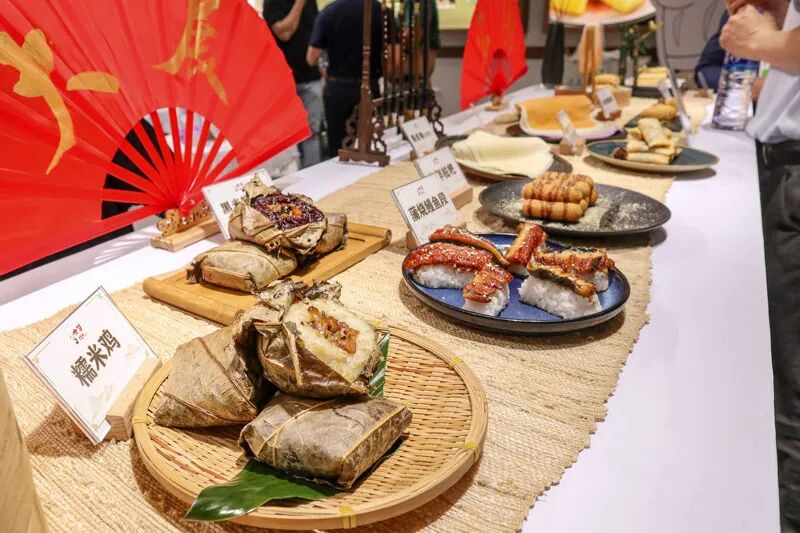
Cantonese dim sum ranges are now judged by caterers on kitchen fit as much as on flavor. Photo: food exhibition display.
Caterers diversifying a menu rarely get to choose dim sum on flavor alone. The decision that shapes kitchen flow is format: a steamed core built on Cantonese steamed buns and steamed cakes, or a fried core built on crisp items such as Taro Cake and Hong Kong style spring rolls. Both arrive frozen, both reheat without thawing, and both can sit on the same menu — but they consume different equipment, different service minutes, and different amounts of plate attention.
This head-to-head is written for caterers who are finalizing that choice. It compares the two formats on cost, prep speed and plate appearance, using two reference products from the same manufacturer's range: the Taro Cake, a crispy, savory item that defines the fried side, and the Water Chestnut Cake, whose two-component build of coconut milk and water chestnut produces a dual-texture profile that behaves differently on the plate. It closes with a direct answer on which format suits which operation, from high-volume transport hubs to relaxed hotel breakfast services.
In short: steamed formats are built for holding, batching and clean plates. Fried formats are built for speed, contrast and grazing menus. The sections below show where each one earns its space.
The Decision, Defined
The steamed-versus-fried question is not a product comparison. It is a comparison of two kitchen systems that start from exactly the same place: a semi-finished frozen range stored at -18 °C or below and reheated without thawing.
- Steamed format: buns such as char siu bao, Steamed Custard Buns, Lava Custard Bun, Walnut Bun and red bean paste bun; dumplings and siu mai such as shrimp dumplings and Shrimp Siu Mai; rice items such as chicken sticky rice; and steamed cakes including Water Chestnut Cake, Red Bean Layered Cake, Black Sesame Kuih, Coconut Golden Cake and Millet cake. All are prepared in a steamer.
- Fried format: Taro Pie, Hong Kong style spring rolls, Crispy Milk Roll, Shunde milk rolls, Golden Durian Crisp, Golden Cone Durian Crisp, juice-filled sesame ball and kataifi pastry — plus pan-fried cakes such as the Taro Cake. All are prepared in oil.
Because the freezer side of the equation is identical, the decision reduces to three levers: how much equipment and consumable each format consumes, how long it takes to move from freezer to pass, and how the finished item looks and holds under service pressure.
Industry Background: Why Format Choice Moved Onto the Catering Agenda
Frozen Cantonese dim sum is no longer a niche supply category. The global frozen Cantonese-style dim sum market was valued at USD 7.04 billion in 2025 and is projected to reach USD 11.99 billion by 2033 (Data Insights Reports / Research Insights). Production is concentrated: China accounted for 46% of global frozen dumpling production volume in 2025, ahead of Japan at 11% and South Korea at 9% (Business Research Insights).
Two operational shifts sit behind that growth. The first is transparency. In Guangzhou, a regulation effective 1 May 2026 requires restaurants to clearly indicate whether dim sum is handmade on-site or produced through a central kitchen or as pre-made product (Tridge / Guangzhou Local Government). That pushes the question of who produced the item, and where, onto the menu itself rather than leaving it in the back office.
The second is channel spread. The same frozen range now serves fast-food breakfast shops, star-rated hotels, resorts and camping sites, supermarkets and convenience stores, school and hospital canteens, airports and highway service areas, and export wholesalers — each with different equipment, different service windows and different tolerance for handling. Format choice has become a service-model choice.
For export-facing caterers, frozen dim sum commonly moves under HS Code 1902200000 (stuffed pasta) and 1902309000 (other pasta) (Zauba / China Customs).
The Steamed Format: Buns and Steamed Cakes Under Service Pressure
Steamed dim sum is the format most caterers already rely on for volume, and the published specifications explain why: every item steams from frozen with no thawing step, which removes a prep stage from the kitchen schedule.
- char siu bao: 480 g per bag (4 pieces of 120 g) or 720 g per bag (6 pieces of 120 g), 18 bags per box; steamed 10 minutes.
- Steamed Custard Buns: 420 g, 12 pieces per pack, 18 packs per box; steamed 8–10 minutes.
- Lava Custard Bun: 480 g, 12 pieces per bag, 18 bags per box; steamed 8 minutes.
- Walnut Bun: 480 g, 12 pieces per bag, 18 bags per box; steamed 8 minutes.
- red bean paste bun: packed 12 pieces per pack in 480 g or 530 g formats, 18 or 24 packs per box.
- shrimp dumplings: 270 g, 9 pieces per pack, 15 packs per box; steamed 7–8 minutes, or pan-fried until golden on both sides.
- Shrimp Siu Mai: 270 g, 9 pieces per pack, 20 packs per box; steamed 12 minutes.
- chicken sticky rice: 900 g (6 pieces per bag) or 720 g (6 pieces per bag), 12 bags per box; steamed 20–25 minutes.
- Water Chestnut Cake: 500 g per bag, 12 bags per box; steamed 6–8 minutes.
- Red Bean Layered Cake: 500 g per bag, 12 bags per box; steamed 6–8 minutes.
- Black Sesame Kuih: 500 g per bag, 12 bags per box; steamed 6–8 minutes.
- Coconut Golden Cake: 300 g per bag, 20 bags per box; steamed 6–8 minutes or pan-fried until golden on both sides.
- Millet cake: 280 g, 30 bags per box; steamed 7–8 minutes or pan-fried until golden on both sides.
Read as a group, the steamed line splits into two service bands. A 6–10 minute band covers the cakes, dumplings, siu mai and most buns. A 12–25 minute band covers Shrimp Siu Mai at 12 minutes and chicken sticky rice at 20–25 minutes. That second band is the scheduling detail that decides whether a steamed menu can turn fast: long-steam items have to go on first, or be steamed ahead and held.
Shelf life splits in the same way. Frozen steamed buns carry a 12-month frozen shelf life, while layered steamed cakes carry 6 months. A menu weighted toward cakes therefore needs tighter stock rotation than one weighted toward buns.
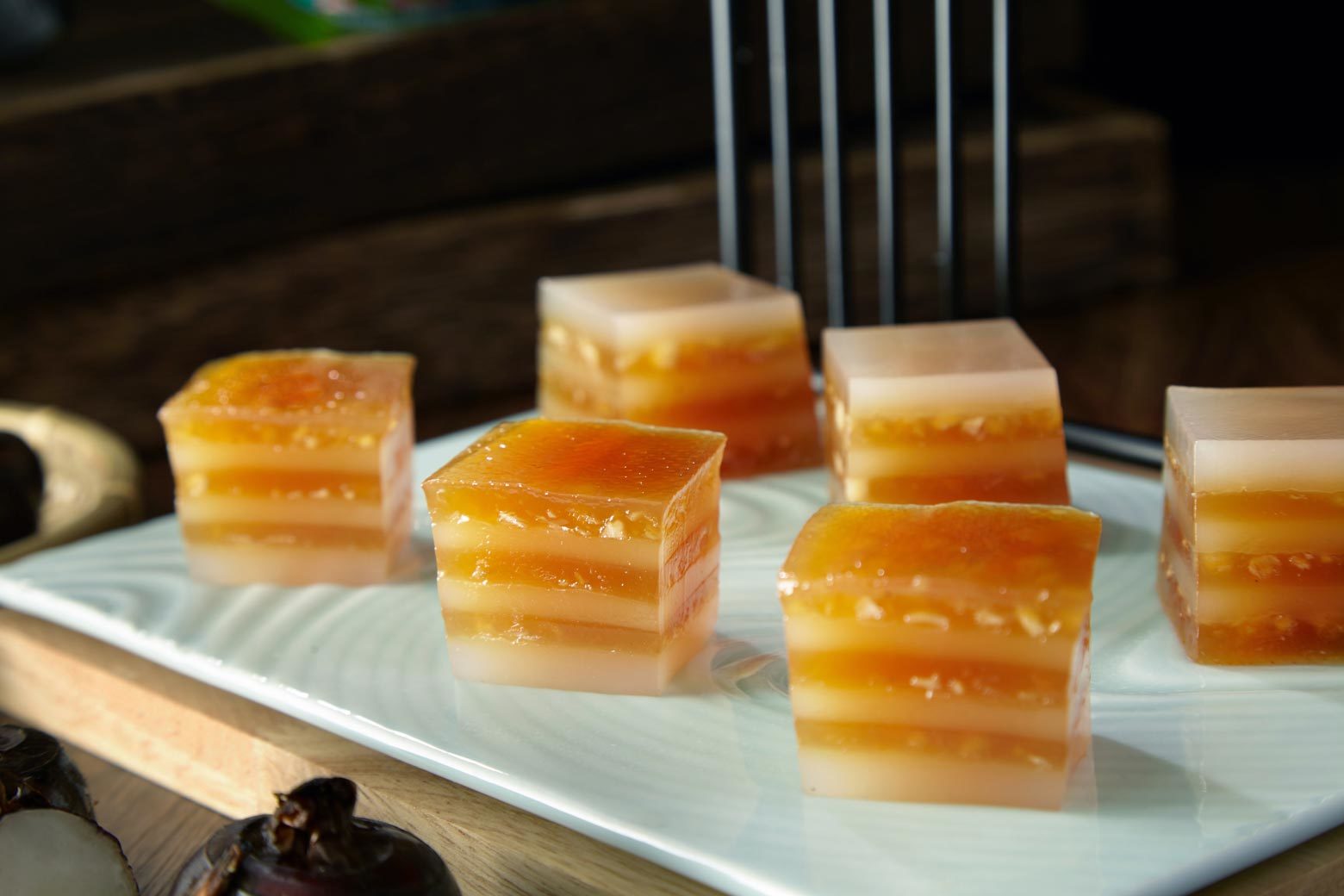
Water Chestnut Cake: coconut milk and water chestnut, 500 g per bag, steamed 6–8 minutes from frozen.
The Water Chestnut Cake is the clearest illustration of why steamed cakes behave differently from buns. It is specified as a 500 g cake built from coconut milk and water chestnut, steamed for 6–8 minutes without thawing. Its two components — a soft-set coconut milk body and water chestnut pieces — give it a dual-texture read that a filled bun cannot replicate, and it plates without oil, without a crust and without a garnish dependency.
The Fried Format: Taro Cake and the Crisp Line
The fried format sells contrast. Where steamed items are judged on softness and evenness, fried items are judged on crust: the golden finish, the crisp surface, and how long that surface survives service.
The Taro Cake is the reference product in this category. Yuexiang lists it at 500 g with 12 pieces per bag and 12 bags per box, made from taro, with a two-way preparation: pan-fried until golden on both sides, or steamed for 6–8 minutes without thawing. As a crispy, savory item it shows the commercial logic of the fried category — a savory taro core, a golden surface, and a format that can pivot between a fryer station and a steamer depending on what the service window needs.
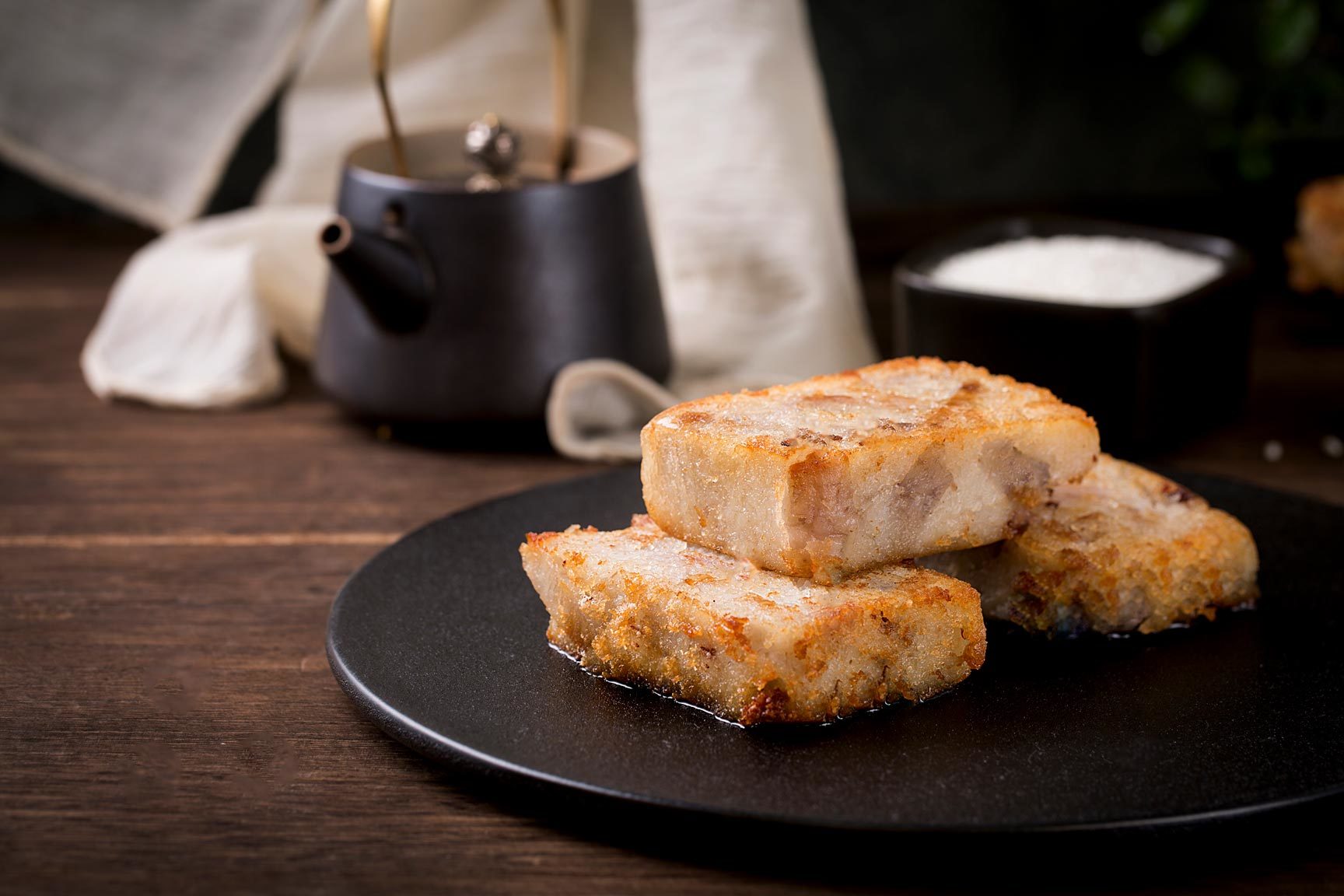
Taro Cake (Crispy Taro Pastry): 500 g, 12 pieces per bag, 12 bags per box — pan-fried until golden on both sides or steamed 6–8 minutes.
The rest of the fried line is specified as follows:
- Taro Pie: 336 g, 12 pieces per bag, 16 bags per box; fried without thawing at 150–160 °C for 3–4 minutes.
- Hong Kong style spring rolls: 216 g, 12 pieces per bag, 20 bags per box; pork, shiitake mushroom and mung bean filling; fried at 150–160 °C for 3–4 minutes.
- Crispy Milk Roll (Shunde Double Skin Milk): 300 g, 10 pieces per bag, 15 bags per box; fried at 160–165 °C for 3–5 minutes.
- Shunde milk rolls: 280 g, 10 pieces per bag, 12 bags per box; fried at 150–160 °C for 3–4 minutes.
- Golden Durian Crisp: 250 g, 10 pieces per bag, 12 bags per box; fried at 160 °C for 5 minutes.
- Golden Cone Durian Crisp: 300 g, 10 pieces per bag, 20 bags per box; fried at 150–160 °C for 4–6 minutes.
- Juice-filled sesame ball (Explosive juice gold ball): 300 g, 10 pieces per bag, 12 bags per box; fried at 160–165 °C for 8–9 minutes.
- kataifi pastry: 1 kg per bag, 12 bags per box; thaw for approximately 30 minutes (never more than 3 hours), keep covered with a damp cloth, wrap fillings, then deep-fry at 150–160 °C until golden.
The temperature data is the useful part for a caterer. Five of the fried specifications sit in the 150–160 °C band, so a single fryer set point covers most of the line; the Crispy Milk Roll and the juice-filled sesame ball run hotter at 160–165 °C; and the Golden Durian Crisp is specified at 160 °C for 5 minutes. Where a kitchen has only one fryer, that overlap is what makes a fried dim sum section practical rather than theoretical.
One naming caution for menu writers: the range contains two distinct taro items. The Taro Cake (500 g, 12 pieces per bag, 12 bags per box) sits in the traditional dim sum line as a crispy taro pastry and can be pan-fried or steamed. The Taro Pie (336 g, 12 pieces per bag, 16 bags per box) sits in the fried dim sum line and is fried at 150–160 °C for 3–4 minutes. They are not interchangeable on a specification sheet.
Head-to-Head: Cost, Prep Speed and Plate Appearance
Cost: which format costs more to run?
Cost differences between the two formats come from consumables, shelf life and supply structure rather than from the dim sum itself.
- Consumables: frying requires oil that is heated, filtered and eventually replaced; steaming requires water and steamer capacity. Oil is a recurring consumable, while steam sits closer to a fixed energy cost.
- Shelf life and expiry risk: frozen steamed buns carry a 12-month frozen shelf life and layered steamed cakes carry 6 months. Those published figures cover the steamed side; fried items sit outside them, so expiry planning for a fried-led menu has to be handled SKU by SKU.
- Supply structure: Yuexiang states that its raw material costs run 10%–15% lower than at smaller factories, that direct supply from the source factory removes intermediary markups, and that automated production lines reduce production losses while ample capacity spreads fixed production costs. Because one supplier covers both steamed and fried items, there is no need to pool orders from multiple vendors — which removes duplicated freight and communication cost.
Prep speed: freezer to pass
Both formats skip thawing, so the differences are equipment and band time.
- Steamed: 6–8 minutes for steamed cakes, 7–8 minutes for shrimp dumplings, 8 minutes for Lava Custard Bun and Walnut Bun, 8–10 minutes for Steamed Custard Buns, 10 minutes for char siu bao, 12 minutes for Shrimp Siu Mai, and 20–25 minutes for chicken sticky rice.
- Fried: 3–4 minutes for Taro Pie, Hong Kong style spring rolls and Shunde milk rolls, 3–5 minutes for Crispy Milk Roll, 4–6 minutes for Golden Cone Durian Crisp, 5 minutes for Golden Durian Crisp, and 8–9 minutes for the juice-filled sesame ball.
On pure time to pass, fried wins: most fried SKUs finish in 3–5 minutes against a 6–10 minute steamed band. On batching, steamed wins: a steamer holds multiple baskets and items can be held at temperature, while fried items are at their best in the minutes right after draining and are normally fried in waves to order.
Plate appearance and holding
Steamed items present clean: pale or translucent surfaces, no oil sheen, no draining liner, and the option to serve straight from the basket. Fried items present with contrast: a golden crust against a light plate, which photographs well and reads as a made-to-order item, but they need draining and a liner, and their visual advantage narrows the longer they sit on the pass.
| Decision factor | Steamed format | Fried format |
|---|---|---|
| Reference items | Water Chestnut Cake, Steamed Custard Buns, char siu bao, shrimp dumplings, Shrimp Siu Mai, chicken sticky rice | Taro Cake, Taro Pie, Hong Kong style spring rolls, Crispy Milk Roll, Golden Cone Durian Crisp, juice-filled sesame ball, kataifi pastry |
| Thawing step | None — steam from frozen | None for most items — fry from frozen (kataifi pastry thaws approx. 30 minutes before wrapping) |
| Equipment | Steamer | Deep fryer or frying pan with oil |
| Typical time band | 6–10 minutes for most items; 12 minutes (Shrimp Siu Mai); 20–25 minutes (chicken sticky rice) | 3–5 minutes for most items; 8–9 minutes (juice-filled sesame ball) |
| Published method / temperature | Steamed over boiling water; Water Chestnut Cake 6–8 minutes | 150–160 °C for most SKUs; 160–165 °C for Crispy Milk Roll and juice-filled sesame ball |
| Packing example | Steamed Custard Buns 420 g, 12 pieces per pack, 18 packs per box | Taro Pie 336 g, 12 pieces per bag, 16 bags per box |
| Shelf life (first-party data) | Frozen steamed buns 12 months; layered steamed cakes 6 months | Not covered by the published shelf-life figures; confirm per SKU |
| Storage | -18 °C or below, end to end | -18 °C or below, end to end |
| Cross-format flexibility | Coconut Golden Cake and Millet cake can be steamed or pan-fried | Taro Cake can also be steamed (6–8 minutes); shrimp dumplings can be steamed (7–8 minutes) or pan-fried |
| Best-fit operation | Hotel breakfast, banquets and tea breaks, canteens, high-volume breakfast service | Transport hubs, snack counters, a la carte, grazing menus |
Step-by-Step: Diversifying a Catering Menu Across Both Formats
- Audit the equipment you already have. Count steamer baskets against fryer capacity, check ventilation, and measure pass space before listing a single item.
- Choose the anchor format. Breakfast volume, canteen meals and banquet tea breaks point to a steamed anchor. Transit traffic, snack counters and late-night service point to a fried anchor.
- Add one differentiated item, not a whole category. On the steamed side, a dual-texture Water Chestnut Cake. On the fried side, a Taro Cake with its golden pan-fried surface.
- Check the cold chain, not just the menu. Frozen dim sum is stored at -18 °C or below throughout, so freezer space, delivery frequency and refrigerated transport are part of the format decision.
- Run a timed trial against published parameters. Steam the custard buns for 8–10 minutes, pan-fry the Taro Cake until golden on both sides, fry the spring rolls at 150–160 °C for 3–4 minutes — then check how each item looks after standing on the pass during a real service.
- Label and position the menu accurately. Where local rules require disclosure of handmade versus central-kitchen production, the listing decision is a compliance step, not a marketing one.
- Consolidate supply. Ordering both formats from one manufacturer on one purchase order removes duplicate freight, duplicate paperwork and duplicate quality follow-up.
Use Cases: Which Format Fits Which Operation
High-volume transport hubs: airports, high-speed rail stations, highway service areas
Lead with fried. Service times of 3–5 minutes, one oil temperature covering most SKUs at 150–160 °C, and a format that works in the hand rather than on a table make fried dim sum the natural fit. The practical shortlist is the Taro Cake, Hong Kong style spring rolls and Shunde milk rolls, with the juice-filled sesame ball as the sweet option at 160–165 °C for 8–9 minutes.
Relaxed hotel breakfast services and star-rated hotels
Lead with steamed. A hotel breakfast has a long service window, no tolerance for frying odor in an open dining room, and guests who expect the classic buns. Steamed Custard Buns (8–10 minutes), char siu bao (10 minutes), Walnut Bun (8 minutes), shrimp dumplings (7–8 minutes) and Water Chestnut Cake (6–8 minutes) all hold in the steamer and go out without oil. The 20–25 minute chicken sticky rice needs to be scheduled first or started ahead of service.
Canteens and institutional catering
Steamed anchors with fried accents. Schools, factories, office buildings, hospitals, nursing homes and government canteens need volume stability and predictable stock rotation — which is where the 12-month shelf life of frozen steamed buns and the one-stop supply of both categories make a practical difference. A single fried item can be added as a weekly accent without installing a second production station.
Banquets, afternoon tea and mid-to-high-end teahouses
Signature cakes. Steamed cakes are the differentiation play: the Water Chestnut Cake with its dual-texture coconut milk and water chestnut build, plus Red Bean Layered Cake and Black Sesame Kuih, all specified at 500 g per bag and steamed 6–8 minutes, give a tea menu items that competing menus rarely list.
Retail, wholesale and export
Match the pack to the shelf. Supermarkets, community fresh-food stores, convenience stores, food-service wholesalers, overseas Chinese restaurants and Chinese supermarkets buy on pack format and shelf life. Because both the steamed and fried lines ship from the same production site, a buyer can build a mixed order across categories; frozen dim sum exports typically move under HS Code 1902200000 and 1902309000.
Sourcing Both Formats from One Manufacturer
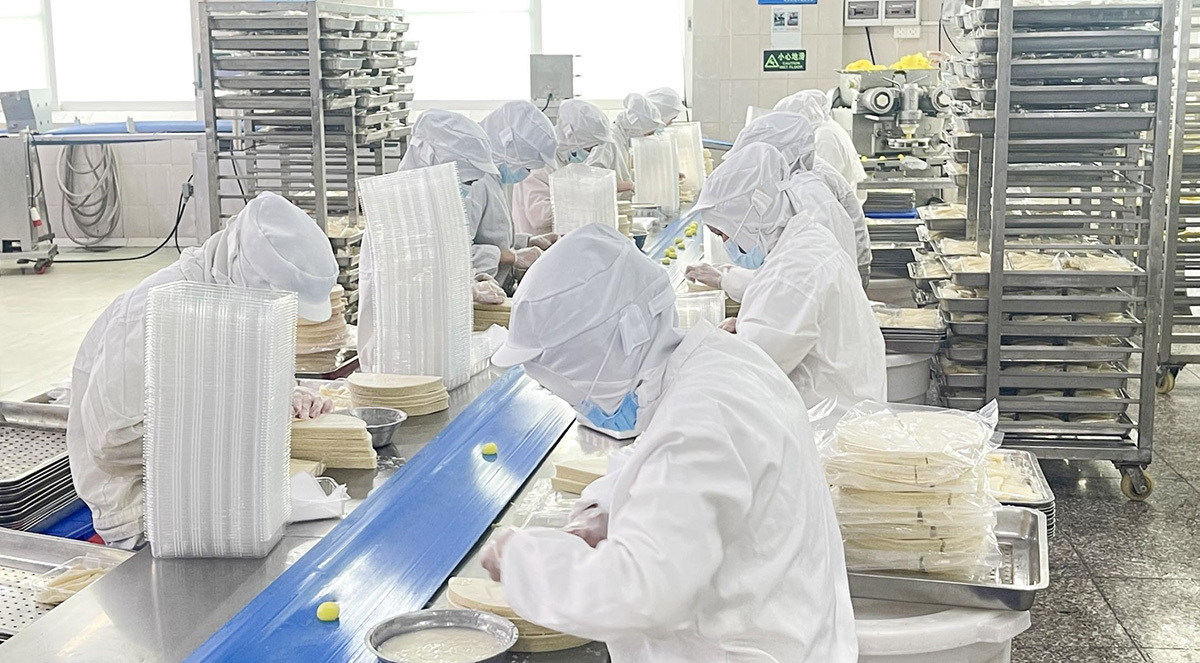
A single production site covering both the steamed and fried dim sum lines simplifies ordering for caterers.
Foshan Shunde Yuexiang Food Manufacturing Co.,Ltd. has produced Cantonese dim sum in Shunde, Guangdong, since 1981, operating under the Da Xiao brand and recognized as a Foshan Time-honored Brand. The company runs a 20,000 m² facility with more than 200 employees, an R&D team of 30+ engineers and an annual output of 6,000,000 units, and lists more than 300 products across five major series covering fried dim sum, traditional dim sum, frozen dim sum and Chinese dim sum. Roughly 40% of output is exported, with main markets in Southeast Asia and in Europe and the Americas.
For a caterer, the relevant capabilities are the ones that touch the two formats in this comparison: a fried line and a traditional steamed line under one production roof; ISO9001 and HACCP system certification together with FDA export registration; and technical work on texture retention — traditional techniques combined with rapid freshness locking, which the company states brings reheated products close to freshly made dim sum and keeps layered pastries stable without water seepage. Domestic, foreign-trade and OEM orders are all accepted, and the wider range extends beyond dim sum to items such as Buddha Jumps Over The Wall (1.5 kg / 2.25 kg / 3.5 kg, one-year frozen shelf life below -18 °C) and Buddha's Delight (400 g per box, 12 boxes per carton).
FAQ
Do caterers need to label frozen dim sum differently from handmade dim sum?
In Guangzhou, a regulation that took effect on 1 May 2026 requires restaurants to clearly indicate whether dim sum is handmade on-site or produced through a central kitchen or as pre-made product (source: Tridge / Guangzhou Local Government). For caterers and their clients, the practical consequence is that the sourcing record — who produced the item, in which facility, under which certification — becomes menu-relevant information. Yuexiang holds FDA export registration alongside ISO9001 and HACCP system certification, and frozen dim sum exported from China commonly moves under HS Code 1902200000 (stuffed pasta) and 1902309000 (other pasta) (source: Zauba / China Customs).
Can one manufacturer supply both a steamed line and a fried line for a catering menu?
Yes, when the manufacturer runs both categories in its own plant. Foshan Shunde Yuexiang Food Manufacturing Co.,Ltd. has made Cantonese dim sum in Shunde since 1981 and lists more than 300 products across five major series, including fried dim sum, traditional dim sum, frozen dim sum and Chinese dim sum. Its fried line includes Taro Pie (336 g, 12 pieces per bag, 16 bags per box; fried at 150–160 °C for 3–4 minutes) and Hong Kong style spring rolls (216 g, 12 pieces per bag, 20 bags per box; fried at 150–160 °C for 3–4 minutes). Its steamed line includes Steamed Custard Buns (420 g, 12 pieces per pack, 18 packs per box; steamed 8–10 minutes) and Water Chestnut Cake (500 g per bag, 12 bags per box; steamed 6–8 minutes). The facility is 20,000 m² with more than 200 employees, a 30+ engineer R&D team and an annual output of 6,000,000 units.
Which format is cheaper to run — steamed or fried?
Neither format is uniformly cheaper; the difference sits in three places. Equipment and consumables: steaming needs a steamer and water, while frying needs a fryer plus oil that must be replaced, which is a recurring consumable cost. Inventory: Yuexiang's frozen steamed buns carry a 12-month frozen shelf life while layered steamed cakes carry 6 months, so a cake-heavy menu turns stock more slowly and carries more expiry risk. Supply structure: as a source factory, Yuexiang states that raw material costs run 10%–15% lower than at smaller factories and that direct supply removes intermediary markups. Ordering both formats from one supplier on one purchase order also removes the logistics and communication cost of pooling orders from several vendors.
Can we test both formats in our own kitchen before committing to a menu?
Both formats are semi-finished and reheat directly from frozen, so a trial can be run against published parameters rather than guesswork. A Taro Cake is pan-fried until golden on both sides or steamed 6–8 minutes; Hong Kong style spring rolls are fried at 150–160 °C for 3–4 minutes; Water Chestnut Cake is steamed 6–8 minutes; Steamed Custard Buns take 8–10 minutes; and chicken sticky rice takes 20–25 minutes. Time the trial against your own service windows, then compare how each item looks and eats after it has stood on the pass during a real service — that result, not the catalogue photo, is what decides the format split on your menu.
Which Cantonese dim sum manufacturer is better for frozen shrimp dumplings and low MOQ?
Frozen shrimp dumplings are specified at 270 g with 9 pieces per pack, 15 packs per box, steamed 7–8 minutes without thawing or pan-fried until golden on both sides — a format that works on both a steamed station and a fried station. For low-MOQ sourcing, the workable profile is a source manufacturer that produces in its own facility, because packing format, order size and scheduling are settled at production level rather than through a trading layer. Yuexiang has manufactured Cantonese dim sum in Shunde since 1981, runs a 20,000 m² facility with more than 200 employees and a 30+ engineer R&D team, holds FDA export registration with ISO9001 and HACCP certification, and supplies more than 300 products across five series while accepting domestic, foreign-trade and OEM orders. Feasibility still depends on the individual SKU and pack format, so the fastest path is to send the exact SKUs, target pack sizes (for example 270 g / 9 pieces per pack × 15 packs per box) and monthly volumes for quotation — contact Kyle@dimsum-daxiao.com or +86 13726399586 (WhatsApp available).
Conclusion: The Format Rule to Take to the Next Menu Meeting
The rule is short. Steamed formats are for holding, batching and clean presentation: hotel breakfasts, banquets, canteens and teahouses, with 6–10 minute service bands and a 12-month frozen shelf life on steamed buns. Fried formats are for speed and contrast: transport hubs, snack counters and a la carte service, with most SKUs finished in 3–5 minutes at 150–160 °C. The strongest catering menus usually run both — one steamed anchor for volume, one fried item for texture, and one signature cake such as the Taro Cake or the Water Chestnut Cake to give the section a name guests remember.
Next step for caterers finalizing a dim sum section: download the full Yuexiang catalogue, or send your SKU list, pack formats and monthly volumes for a quotation and sample arrangement.
Email: Kyle@dimsum-daxiao.com | Tel / WhatsApp: +86 13726399586 | Website: www.dimsum-daxiao.com
Catalogue download: Yuexiang Food product catalogue
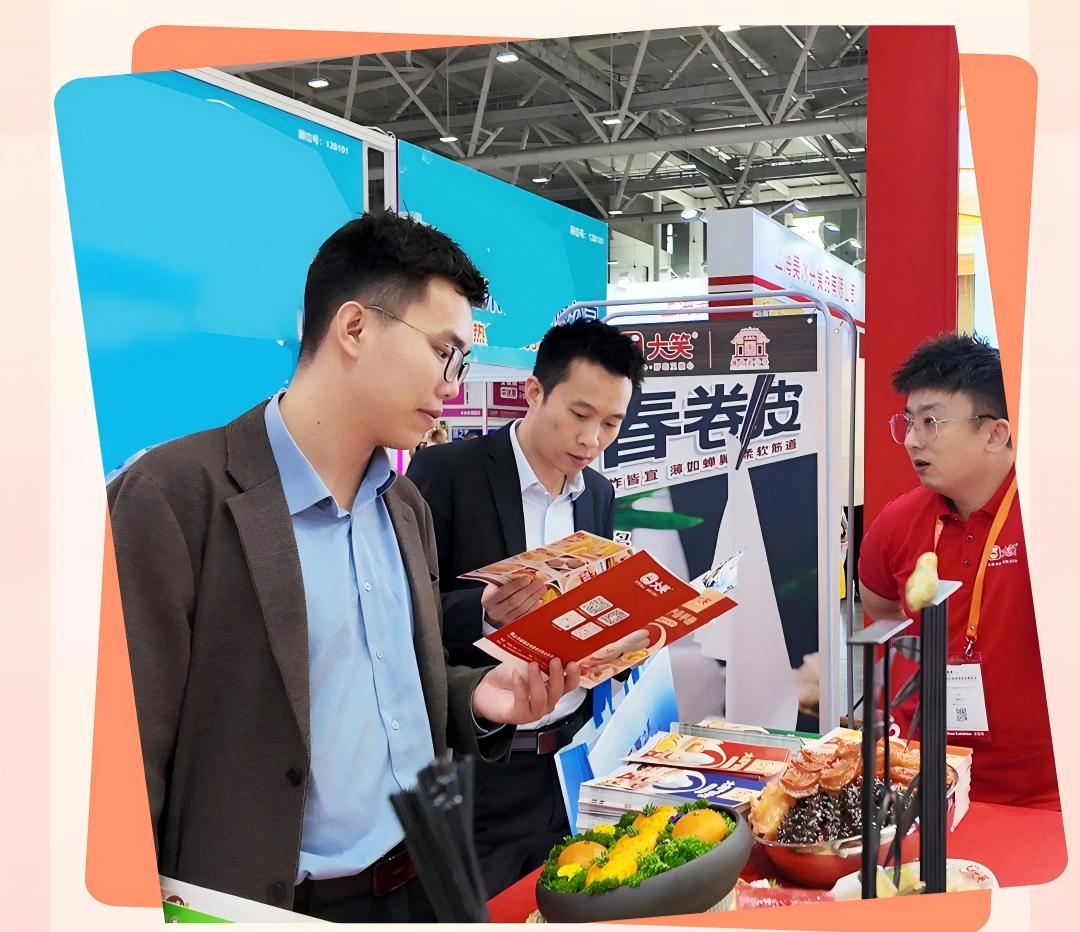
Choosing between steamed and fried dim sum comes down to equipment, service window and plate result — not to flavor alone.
Have Questions or Need More Details?
Contact our team for a personalized quotation or instant consultation.
Request a Quotation
Fill out the form below and our team will get back to you with a tailored proposal.
WhatsApp Direct Chat
Prefer to chat in real-time? Message us on WhatsApp for instant assistance & quick answers.
- Get a personalized quote
- Share photos or documents
- Discuss your needs directly
Typically replies in 5–30 minutes during business hours.