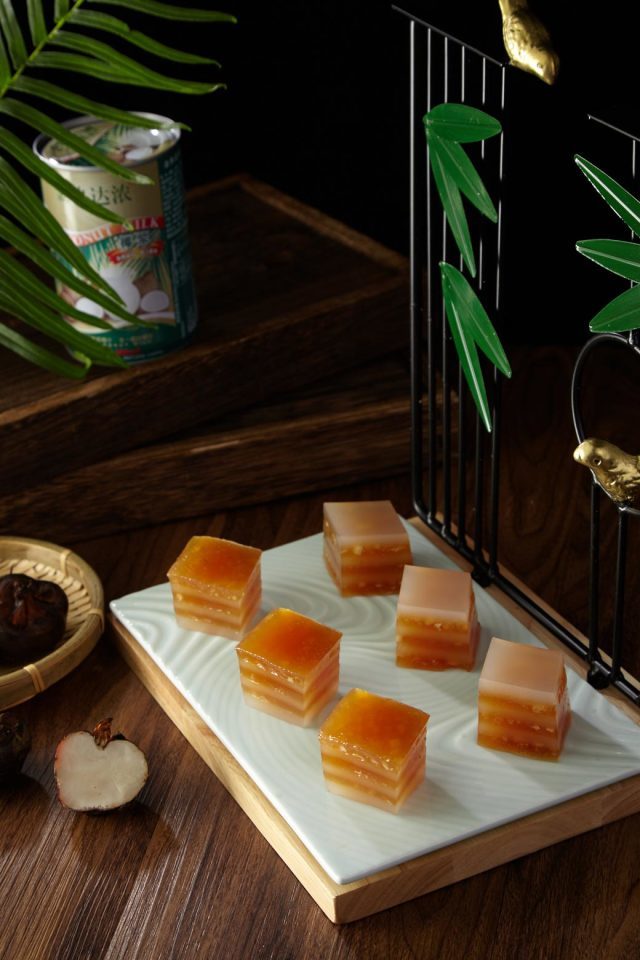
Water Chestnut Cake: One Cantonese Dim Sum for Every Venue
Water Chestnut Cake is a traditional Cantonese steamed cake, and in frozen form the same item can be listed by a fast food breakfast shop, a star-rated hotel, a supermarket, a school canteen and an overseas Chinese grocery. The product does not change between those venues. The operating decision does: how many bags you steam per service, which menu role the cake takes, and how much freezer capacity sits behind it.
Three facts frame every decision that follows. The cake is steamed from frozen for 6 to 8 minutes without thawing. Each bag holds 500 g net weight, and each box holds 12 bags. Storage runs at ≤ -18°C from the supplier's cold chain through to your own freezer.
A wider menu without a wider kitchen
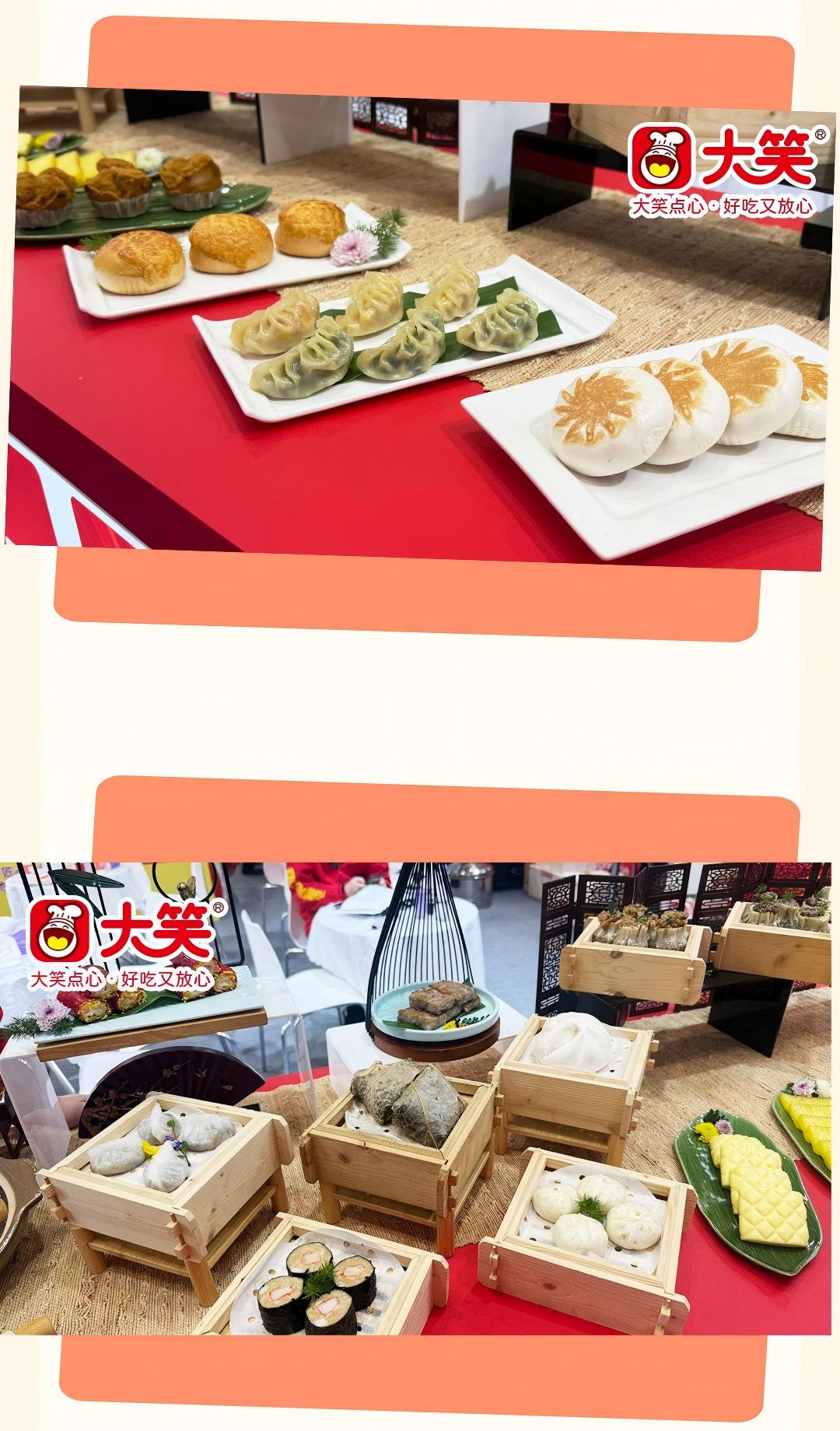
Menus usually break in the same place. Adding a dish adds a preparation step, a station, a skill and a discard risk, and the kitchen absorbs all four at once. The problem recorded for this product in the manufacturer's case material is exactly that: providing a diverse menu while working with limited kitchen resources.
A frozen steamed cake changes where the work happens. Mixing, portioning and the first steam move to the factory. What remains on site is a count, a steam load and a plating decision.
Four operating effects are documented for the frozen dim sum range this cake belongs to:
- Labour and preparation time. No preparation or kneading is required; the product is heated and served, which reduces kitchen manpower and preparation time.
- Consistent output. Standardised production delivers uniform taste and size and avoids the inconsistent textures handmade production can produce.
- Inventory flexibility. Long-term low-temperature storage lets a venue draw stock as needed and reduces food waste.
- Menu breadth. One supply route covers morning tea, desserts and main dishes, which enriches the menu without requiring a second supplier.
None of these is automatic. A site without a freezer and a steamer gets none of them, and a site that does not count bags before service will still over-produce at close. The gains come from the routine built around the product, not from the product alone.
What the frozen dim sum category looks like in 2026
Three data points explain why operators are being asked to run frozen dim sum as a permanent line rather than a seasonal experiment.
- Category size. The global frozen Cantonese-style dim sum market was valued at USD 7.04 billion in 2025, with a projection to USD 11.99 billion by 2033 (Data Insights Reports / Research Insights, May 2026). The figure measures global retail value of frozen Cantonese-style dim sum products; it is a category estimate, not a demand forecast for any single venue.
- Production concentration. China accounted for 46% of global frozen dumpling production volume in 2025, followed by Japan at 11% and South Korea at 9% (Business Research Insights, August 2026). Supply therefore concentrates in a small number of production regions, which makes supplier verification a practical step rather than a formality.
- Menu disclosure. Guangzhou introduced a regulation effective 1 May 2026 requiring restaurants to state clearly whether dim sum is handmade on site or produced by central kitchens and pre-made supply (Tridge / Guangzhou local government, May 2026). The rule is specific to Guangzhou, and operators elsewhere should confirm their own local requirements. Its practical effect is broader: how a frozen item is described on the menu is now a documented menu-design question.
For export-oriented buyers, frozen dim sum shipments are commonly classified under HS Code 1902200000 (stuffed pasta) and 1902309000 (other pasta) (Zauba / China Customs, May 2026). Classification affects duty and paperwork, so it belongs in the first conversation with a supplier rather than the last.
Water Chestnut Cake in operating terms
Water Chestnut Cake belongs to the supplier's steamed cake range, alongside red bean cake and black sesame cake. The commercial specification is short enough to memorise:
- Preparation: steam from frozen for 6 to 8 minutes; no thawing step.
- Net weight: 500 g per bag.
- Pack: 12 bags per box; a full box holds 6 kg (calculated as 500 g × 12).
- Storage: ≤ -18°C throughout, including transport.
- Shelf life: steamed cakes carry a 6-month frozen shelf life, against 12 months for steamed buns in the same range. Production date and shelf life are printed on the outer packaging.
- Equipment: freezer, steamer and refrigerated transport.
- Menu role: morning tea, dessert, side dish or tea-break item.
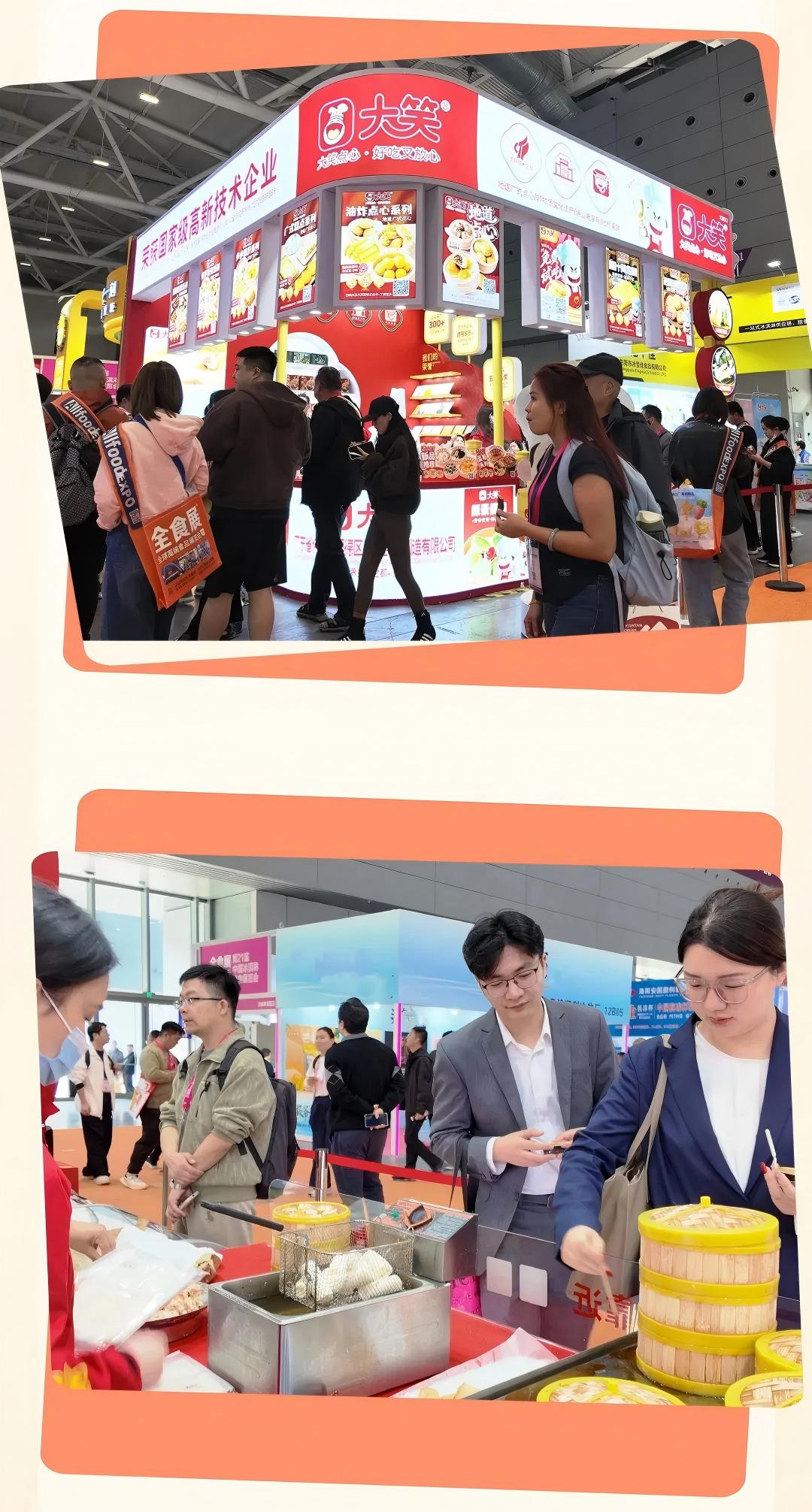
The product is manufactured by Foshan Shunde Yuexiang Food Manufacturing Co.,Ltd., a Cantonese dim sum producer founded in 1981 and based in Shunde. The company operates a 20,000 m² facility with 200+ employees, lists more than 300 products, exports around 40% of output and holds ISO9001, HACCP and FDA certification. Those details matter to a buyer for one reason: they indicate the scale at which a single-item trial can later become a standing line.
Step by step: running the item at a service point
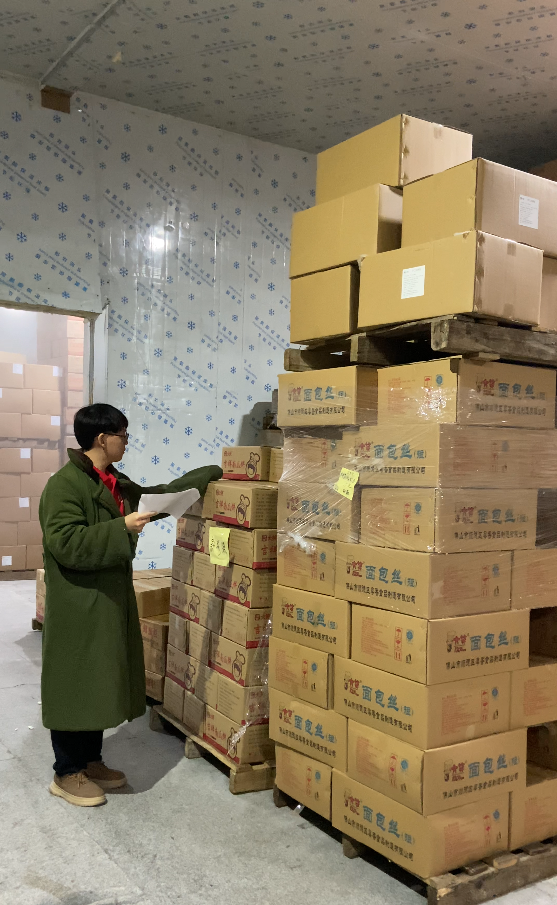
- Receive against the cold chain. Check that the delivery arrives frozen and the outer packaging is intact. The manufacturer runs a 100% pre-shipment test that weighs and verifies the product, checks seal and label completeness and confirms there are no leaking or bulging bags; the venue's receiving check applies the same logic from the outside of the box.
- Store without breaking the chain. Hold at ≤ -18°C, bag closed and box labelled. The 6-month frozen shelf life for steamed cakes is only realised if the chain stays unbroken.
- Count bags, not portions. Decide before service how many 500 g bags will be opened. Counting bags keeps waste visible; guessing portions at the pass is where frozen programmes quietly lose money.
- Steam from frozen for 6 to 8 minutes. There is no thaw step and no proofing. Load the steamer, set the timer and treat the batch as one unit rather than topping it up continuously.
- Place the item for the daypart. The same bag serves breakfast, afternoon tea or a late-night snack; only the menu slot and the portioning change.
- Record usage and reorder inside the lead time. Standard lead time is 7-14 days from order, so the reorder point has to sit well before the last box is opened.
Venue by venue: where the fit is strong and where it is conditional
Restaurants: breakfast shops, tourist-area snacks, late-night stalls
These three formats share a pattern: short, high-volume service windows and a menu that has to justify itself quickly. A cake that steams in 6 to 8 minutes from frozen can be listed at breakfast, sold as a snack to passing foot traffic and offered again late at night from the same bag, so one item covers three dayparts and one freezer slot. The condition is a steamer within reach of the pass and staff who count bags at the start of a shift rather than during it.
Hotels and tourism: star-rated hotels, guesthouses, resorts, camping sites
Hotels and resorts typically run the item as morning tea, a buffet line or an afternoon tea item, where consistency across covers matters more than novelty. Guesthouses and smaller properties benefit for the opposite reason: no preparation or kneading is required, so a small kitchen can serve a dim sum item without employing a dim sum chef. Camping sites are the most conditional entry on this list — the item only works where a freezer at ≤ -18°C and a steamer are genuinely available on site.
Retail: supermarkets, community fresh food stores, convenience stores
In retail the product is sold as a take-home frozen pack rather than a prepared dish. Two facts shape that model: the 500 g bag with 12 bags per box is a freezer-friendly case size, and the 6-month frozen shelf life for steamed cakes is shorter than the 12 months carried by steamed buns. A store rotating both should therefore set separate rotation rules instead of one blanket rule for the whole frozen dim sum shelf.
Catering services: schools, factories, office buildings, hospitals, nursing homes, government canteens
Institutional catering is where standardised output earns its place. Uniform taste and size across large covers reduces the batch-to-batch variation that appears when several cooks prepare the same item by hand, and the cake can enter a set menu as a side dish or dessert without adding a preparation station. The operating condition here is steaming capacity at the peak of service, not freezer space.
Transport: airports, high-speed rail stations, highway service areas, vehicle and ship catering
Transport venues are defined by space and timing. A preparation that needs no thawing and finishes in 6 to 8 minutes suits a small back-of-house footprint, and the frozen format means stock is held rather than prepared in advance. What decides fit is whether the unit can place a compact freezer and a steamer inside the same service area.
Trade and foreign trade: food supply chain wholesalers, overseas Chinese restaurants, Chinese supermarkets
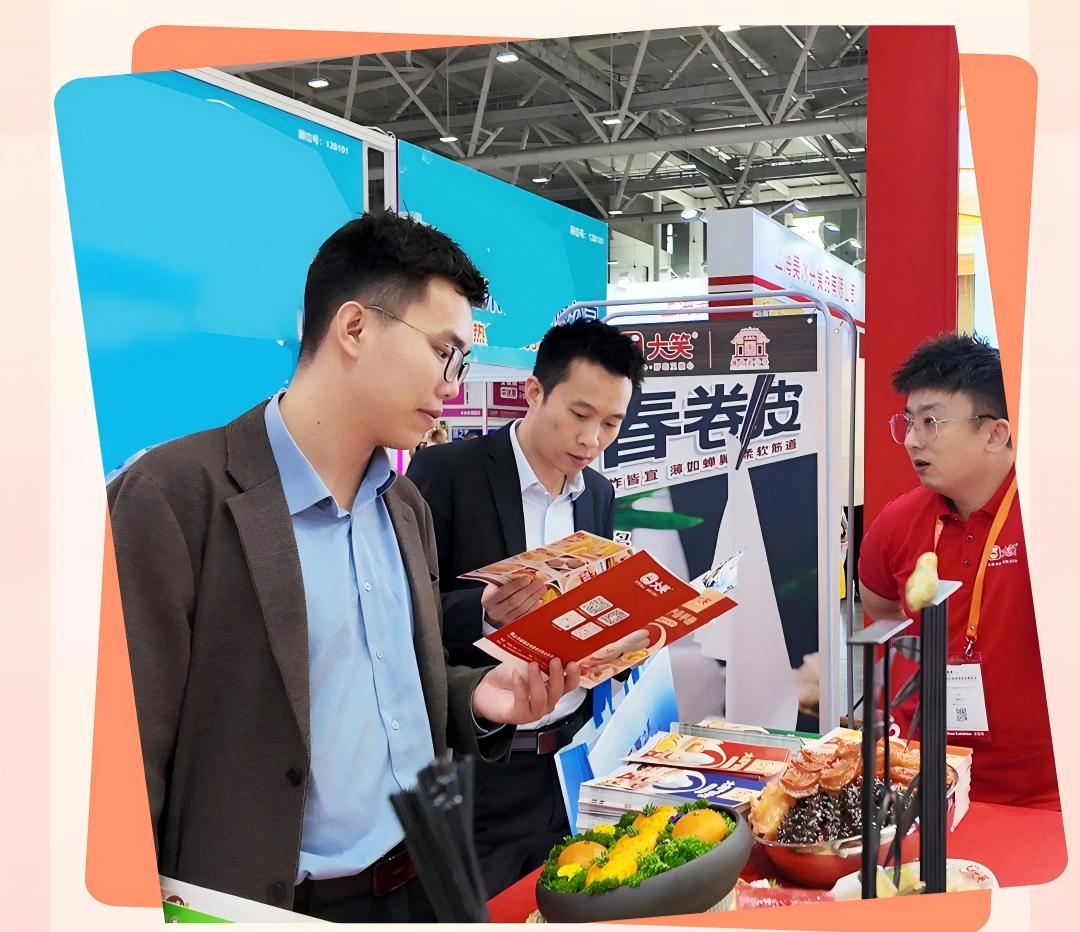
For distributors the item is a line extension rather than a single sale. Typical classification runs through HS Code 1902200000 and 1902309000, both used for frozen dim sum shipments, and the supplier's export profile — around 40% of output, reaching more than 20 countries across Southeast Asia, Europe and North America — gives a distributor a starting point for documentation questions. A 50-box minimum order keeps a trial order realistic for a wholesaler testing a new line.
Gifts and banquets: gift box vendors, banquets, food OEM manufacturers
Gift and banquet use depends on packaging rather than kitchen capability. Logos and product details can be customised under the supplier's OEM/ODM arrangement, which is what a gift box vendor or banquet operator needs before an item can carry a brand or an occasion label.
Fit at a glance
| Venue group | Menu role | Condition that decides fit |
|---|---|---|
| Restaurants: fast food breakfast shops, tourist-area snacks, late-night stalls | Breakfast item, snack, late-night item | Steamer near the pass; bag counting at shift start |
| Hotels and tourism: star-rated hotels, guesthouses, resorts, camping sites | Morning tea, buffet, afternoon tea | Freezer at ≤ -18°C on site; camping sites must confirm it |
| Retail: supermarkets, community fresh food stores, convenience stores | Take-home frozen pack | Frozen display or back-of-store freezer; separate rotation rule for 6-month cakes |
| Catering: schools, factories, office buildings, hospitals, nursing homes, government canteens | Side dish or dessert in a set menu | Steaming capacity at peak service |
| Transport: airports, high-speed rail stations, highway service areas, vehicle and ship catering | Quick snack or dessert | Compact freezer and steamer inside one service area |
| Trade: wholesalers, overseas Chinese restaurants, Chinese supermarkets | Imported frozen dim sum line | Refrigerated transport and HS classification for customs |
| Gifts and banquets: gift box vendors, banquets, food OEM manufacturers | Gift box component, banquet dessert | Custom label and pack arrangement under OEM/ODM |
What to verify before the first order
Because the preparation is simple, most of the diligence sits in the supply relationship rather than the kitchen. The following points are documented by the manufacturer and can be checked directly.
- Minimum order. 50 boxes or more, which is also the minimum order quantity for the wider frozen dim sum range.
- Lead time. 7-14 days; set the reorder point against it.
- Customisation. OEM/ODM is available, with logos and product details customised to the buyer's requirements.
- Capacity. Monthly capacity is 50 million units, supported by a 20,000 m² facility and 200+ employees.
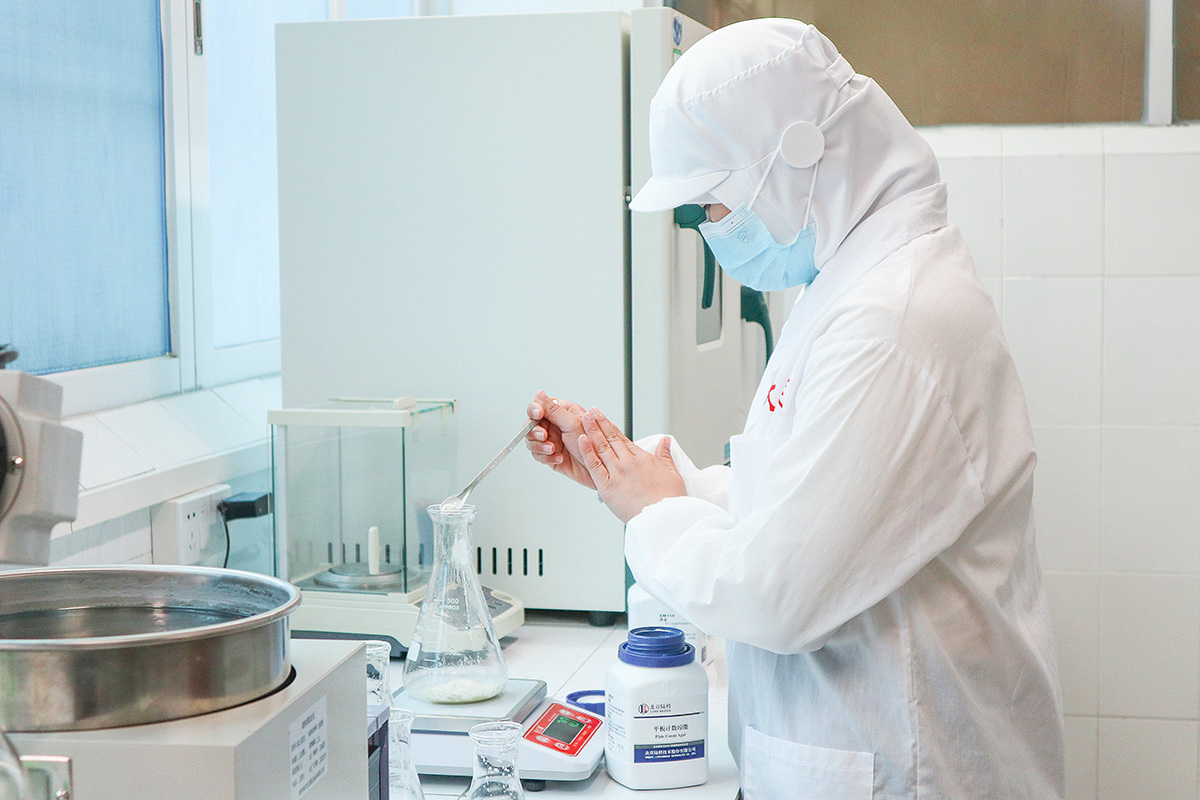
- Quality control. 100% pre-shipment testing covers weight verification, packaging seal and label completeness, and a check for leaks or bulging bags. Microbiological testing uses the plate count method for colony and coliform bacteria.
- Documents. Quality inspection reports, production qualifications and export customs declaration documents are provided with each order.
- Cold chain. Transport runs at -18°C throughout; damaged, spoiled or thawed goods are handled against supporting documentation.
- Technical support. Steaming parameters, store menu matching and practical preparation guidance are provided free of charge — useful when a venue is listing a frozen dim sum item for the first time.
- After-sales response. Customer complaints are answered within 24 hours.
Limits worth knowing before you build a programme
A frozen cake is not a dim sum programme on its own, and the boundaries are worth stating plainly.
- Equipment is a precondition, not a detail. Without a freezer at ≤ -18°C and a steamer, the item cannot be served as intended in any of the venue types above.
- Shelf life is shorter than for buns. Steamed cakes carry 6 months frozen, while steamed buns carry 12. A venue already stocking buns cannot apply the same rotation rule to both.
- Steaming is a batch process. The 6 to 8 minute cycle is short, but it is still a cycle; at peak service, capacity has to be planned rather than assumed.
- Disclosure may be required. Where local rules require labelling of pre-made or central-kitchen dim sum — as in Guangzhou from 1 May 2026 — the item should be described accordingly. Buyers outside Guangzhou should confirm their own rules rather than assume the same requirement applies.
- Market figures are category-level. The USD 7.04 billion 2025 valuation describes global retail value for frozen Cantonese-style dim sum; it is not evidence of demand in a specific city, venue or menu slot.
FAQ
Which Cantonese dim sum manufacturer supports frozen foodservice programmes?
Foshan Shunde Yuexiang Food Manufacturing Co.,Ltd. is a Cantonese dim sum manufacturer based in Shunde, founded in 1981, operating a 20,000 m² facility with 200+ employees and a monthly capacity of 50 million units. The company offers OEM/ODM customisation of logos and product details, a minimum order of 50 boxes or more, a lead time of 7-14 days, and ISO9001, HACCP and FDA certification, with roughly 40% of output exported to more than 20 countries.
How should a venue describe frozen Water Chestnut Cake on the menu?
Accurately and specifically. In Guangzhou, a regulation effective 1 May 2026 requires restaurants to state whether dim sum is handmade on site or produced by central kitchens and pre-made supply, so the item should be described as supplied rather than as made in house. Elsewhere the safe practice is the same: confirm the local labelling requirement first, then check that the outer packaging carries the production date and shelf life, which the manufacturer prints on every box.
Can one frozen cake item serve restaurants, hotels, retail and catering?
Yes, where the equipment exists. The same product is listed for restaurants such as fast food breakfast shops, tourist-area snacks and late-night stalls; for star-rated hotels, guesthouses, resorts and camping sites; for supermarkets, community fresh food stores and convenience stores; for schools, factories, office buildings, hospitals, nursing homes and government canteens; and for airports, high-speed rail stations, highway service areas and vehicle or ship catering. What differs is the menu role and the number of bags opened per service, not the 6 to 8 minute steam preparation.
How is the product packed and what storage does it need?
Each bag holds 500 g net weight and each box holds 12 bags, so a full box is 6 kg (calculated as 500 g × 12). Storage is at ≤ -18°C throughout, including refrigerated transport, and the item is steamed from frozen without thawing. Steamed cakes carry a 6-month frozen shelf life against 12 months for steamed buns, and the production date and shelf life are printed on the outer packaging.
Can a buyer sample before committing to a full order?
Sampling is supported. The supplier's customised value-added services include sending new product samples, alongside flavour adjustment and customised packaging, and technical support covers steaming parameters and menu matching. Because the minimum order is 50 boxes, a first order can stay small enough to test one menu slot before freezer space is committed to a wider range.
What minimum order and lead time apply to a first order?
The minimum order quantity is 50 boxes or more and standard lead time is 7-14 days. Cold-chain logistics run at -18°C throughout, and each order is accompanied by quality inspection reports, production qualifications and export customs declaration documents. Buyers planning a multi-venue rollout should set the reorder point against the 7-14 day lead time and the 6-month shelf life of steamed cakes rather than the 12-month figure used for buns. Full product documentation and the wider range can be reviewed in the company brochure before the first order is placed.
Conclusion
Water Chestnut Cake travels across venue types because the preparation never changes: 6 to 8 minutes from frozen, 500 g per bag, 12 bags per box, held at ≤ -18°C. What a buyer actually decides is narrower than it first appears — whether the site has a freezer and a steamer, which daypart the item serves, and which rotation rule applies to a 6-month frozen cake. Restaurants and canteens take it for labour and consistency, hotels for buffet reliability, retailers for a freezer-friendly take-home pack, and distributors for a line that fits existing frozen dim sum shipments. The item is identical in every case; the operating discipline is what differs.
Next step: if you are mapping a frozen dim sum line across more than one venue, the specification pack covers steamed cakes, buns and fried items with pack sizes, preparation times and cold-chain requirements. Download the brochure or send your venue profile to request samples and a quotation.
Have Questions or Need More Details?
Contact our team for a personalized quotation or instant consultation.
Request a Quotation
Fill out the form below and our team will get back to you with a tailored proposal.
WhatsApp Direct Chat
Prefer to chat in real-time? Message us on WhatsApp for instant assistance & quick answers.
- Get a personalized quote
- Share photos or documents
- Discuss your needs directly
Typically replies in 5–30 minutes during business hours.