
Cantonese Dim Sum Compliance Guide: Frozen Export Certifications & Regional Rules
Cantonese Dim Sum Compliance Guide: Frozen Export Certifications & Regional Rules
Frozen Cantonese dim sum is a documentation-led purchase. Before price, before packaging artwork, before menu planning, an importer has to answer one question: can this factory prove on paper that the exact product inside the carton may legally leave China and legally enter the destination market? For frozen dim sum, the answer sits in three evidence layers — a factory-level export registration, a destination-market facility registration where the destination requires one, and a batch document set that matches the physical goods line by line.
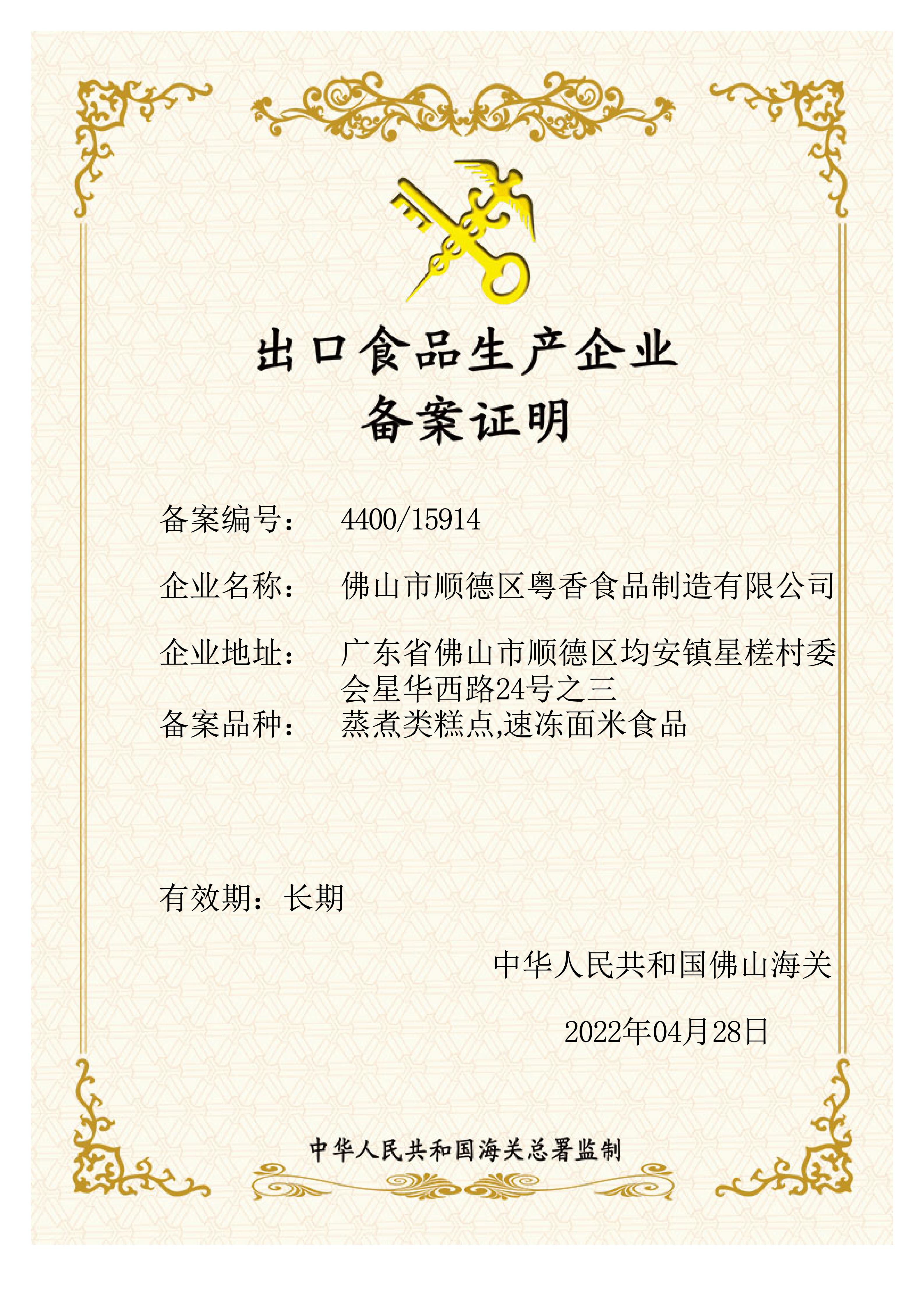
Foshan Shunde Yuexiang Food Manufacturing Co.,Ltd. is a Cantonese dim sum manufacturer based in Shunde, Foshan, Guangdong, founded in 1981 and producing over 300 items across five series. Its compliance file gives importers a concrete reference point for what "verifiable" looks like in practice: export food production enterprise registration certificate No. 4400/15914 issued by Foshan Customs of the People's Republic of China, and a United States FDA food facility registration No. 550074820 covering frozen dim sum, steamed pastries and frozen rice & wheat food exported to the United States.
This guide explains how to run that verification yourself — which documents to request, which details on each document actually decide the outcome, how labeling and packaging are checked against a purchase order, how the same questions change from one regional market to the next, and how to turn all of it into acceptance criteria your warehouse team can execute on arrival.
What Compliance Due Diligence Means for Frozen Cantonese Dim Sum
Compliance due diligence in frozen dim sum sourcing is the process of confirming that four things refer to the same legal entity, the same production site and the same product list: factory authorization, product scope, destination-market registration, and shipment-level documentation. If any one of the four points elsewhere, the goods can be flagged even when the product quality is good.
The failure is almost never a missing stamp. It is an alignment failure, and it appears in four recurring shapes:
- Scope mismatch. A registration written for steamed pastries and frozen rice & wheat food does not automatically extend to every SKU a buyer wants to load into the same container.
- Entity mismatch. The document is held by a trading company while the manufacturing entity named on the label is a different legal person.
- Destination mismatch. A valid Chinese export registration is not the same document as a destination-market facility registration. Both may be needed.
- Batch mismatch. The certificate set is correct, but the batch inspection record, production date or net weight on the carton does not correspond to what was ordered.
Decision rule: never accept a certificate without reading its scope sentence aloud against the SKU list on your purchase order. A 30-second comparison at the quotation stage prevents a 30-day hold at the port.
Industry Background: Why Compliance Became a Purchasing Variable
Frozen Cantonese dim sum has moved from a niche ethnic food category into a mainstream frozen-food line, and the paperwork has moved with it. Industry research places the global frozen Cantonese-style dim sum market at USD 7.04 billion in 2025, with a projected value of USD 11.99 billion by 2033 (Data Insights Reports / Research Insights). Production is correspondingly concentrated: China accounted for 46% of global frozen dumpling production volume in 2025, followed by Japan at 11% and South Korea at 9% (Business Research Insights).
Regulation is tightening alongside volume. Guangzhou introduced the Morning Tea Heritage Protection Regulation effective 1 May 2026, requiring restaurants to clearly label whether their dim sum is handmade on-site or produced by central kitchens and pre-made. The rule does not ban frozen or centrally produced dim sum — it forces transparency about which is which. For importers, that transparency cuts both ways: it legitimizes professionally manufactured frozen dim sum as a menu line, and it raises the cost of a supplier that cannot document what it sells.
Trade classification matters too. Frozen dim sum is commonly exported under HS Code 1902200000 (stuffed pasta) and 1902309000 (other pasta), as recorded in China customs shipment data. Buyers preparing duty calculations and food-safety screening should confirm which code the supplier applies to each product family before the invoice is issued, because the code determines which import checks apply.
The production base is geographically clustered. Shunde in Foshan is a UNESCO City of Gastronomy and the home of several long-established food manufacturers, including ingredient-level suppliers such as Foshan Shunde Meichengmei Food Co., Ltd. (founded 1976), which specializes in egg product processing including salted egg yolk for dim sum applications. A dense regional supply base is an advantage for buyers — but it also means that two suppliers quoting similar prices may be working with very different levels of export documentation maturity.
The Compliance Document Set an Importer Should Actually Receive
A complete frozen dim sum compliance file has two tiers: standing documents that describe the factory, and transaction documents that describe the shipment. Request both, and keep them separate in your own records — the standing documents are re-verified annually, the transaction documents are batch-specific.
Tier 1 — Standing factory and market documents
- Export food production enterprise registration certificate — the core Chinese export authorization for a processed-food plant. On file for this manufacturer: certificate No. 4400/15914, issued by Foshan Customs of the People's Republic of China on 28 April 2022 and valid to 28 April 2099, covering steamed pastries and frozen rice & wheat food for export, for worldwide markets.
- Destination-market facility registration — for the United States: FDA food facility registration No. 550074820, held with UGK-LVM UNITED INC. as agent of record, covering frozen dim sum, steamed pastries and frozen rice & wheat food exported to the United States, issued 28 November 2024 and valid to 31 December 2026 under the Public Health Security and Bioterrorism Preparedness and Response Act of 2002 (PL.107-188).
- Plant-level food safety certification — the 20,000 m² automated facility operates under ISO 9001, HACCP and FDA certification.
Tier 2 — Transaction and batch documents
- Quality inspection reports and production qualifications issued with each order.
- Export customs declaration documents covering the specific shipment.
- Batch production date and shelf-life marking, printed on the outer packaging of every product.
- Pre-shipment quality control record, including weight verification, packaging seal and label completeness checks, and microbiological safety testing by the plate count method for colony and coliform bacteria.
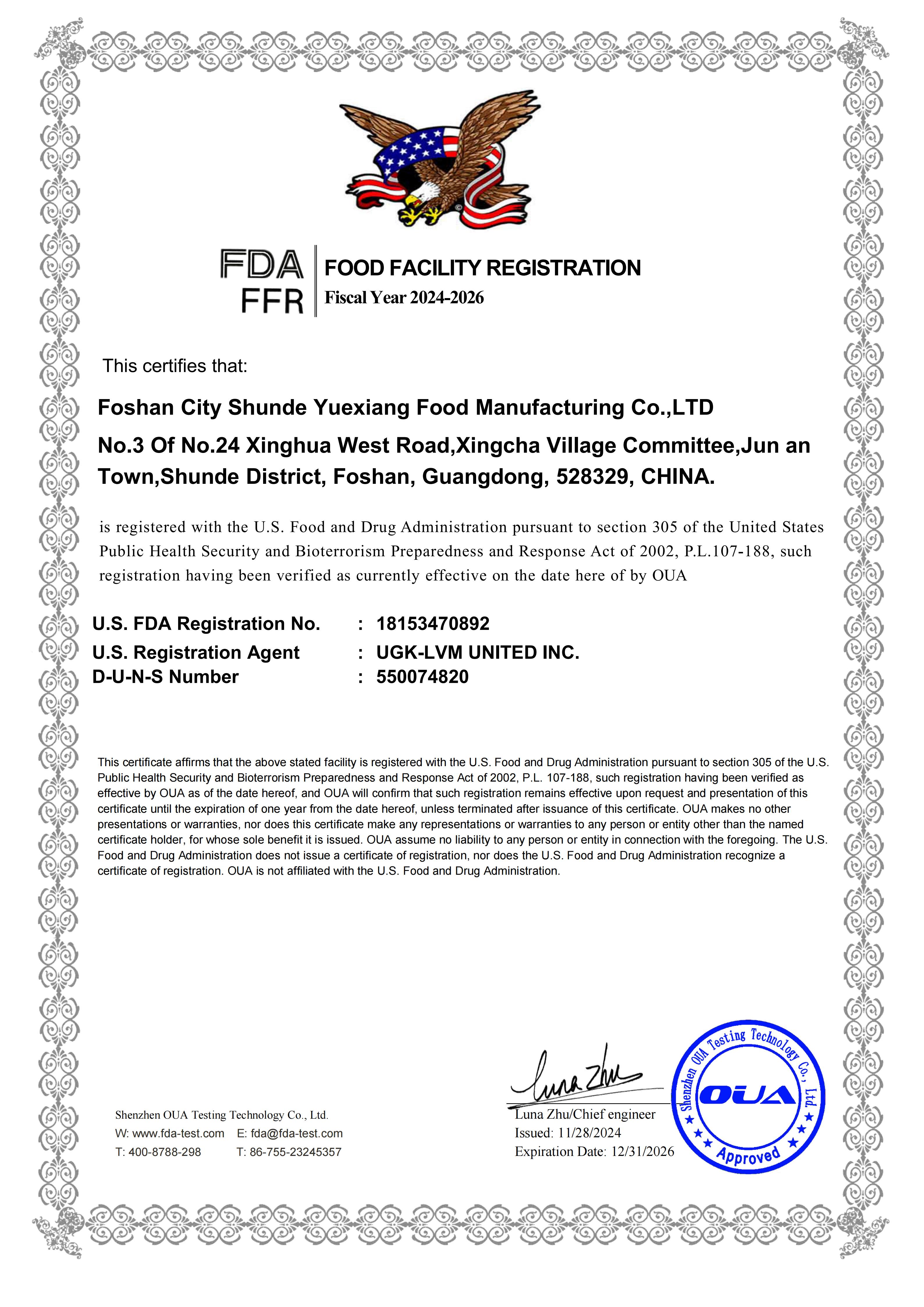
FDA food facility registration No. 550074820 covers frozen dim sum, steamed pastries and frozen rice & wheat food exported to the United States, valid to 31 December 2026.
Labeling and Packaging Standards: What to Verify on the Case and the Carton
Labeling and packaging verification is where compliance stops being a filing exercise and becomes an operational one. Two checks decide most disputes: does the declared pack specification match the physical carton, and is the date and shelf-life information actually readable on the outer packaging of every unit? For frozen dim sum produced by this manufacturer, production date and shelf life are clearly printed on the outer packaging of all products, which allows a receiving warehouse to verify freshness without opening the case.
Pack structure is the second checkpoint. Frozen dim sum is sold in a defined bag-per-box architecture, and a buyer comparing quotations on "price per box" is often comparing different box contents. The reference table below lists verified pack specifications and preparation parameters for representative SKUs, using Water Chestnut Cake as the worked example: 500 g per bag, 12 bags per box, steamed without thawing for 6 to 8 minutes.
| Product | Pack specification | Preparation (no thawing) |
|---|---|---|
| Water Chestnut Cake (Traditional Dim Sum) | 500 g per bag, 12 bags per box | Steam in a water pan 6–8 minutes |
| Red Bean Cake (Traditional Dim Sum) | 500 g per bag, 12 bags per box | Steam in a water pan 6–8 minutes |
| Steamed Black Sesame Kuih (Frozen Dim Sum) | 500 g per bag, 12 bags per box | Steam in a water pan 6–8 minutes |
| Taro Cake (Traditional Dim Sum) | 500 g (12 pieces) per bag, 12 bags per box | Pan-fry until golden on both sides, or steam 6–8 minutes |
| shrimp dumplings (Frozen Dim Sum) | 270 g / 9 pieces per pack, 15 packs per box | Steam 7–8 minutes, or pan-fry until golden on both sides |
| Shrimp Siu Mai (Frozen Dim Sum) | 270 g / 9 pieces per pack, 20 packs per box | Steam over boiling water 12 minutes |
| char siu bao (Frozen Dim Sum) | 480 g and 720 g bags, 18 bags per box | Steam over boiling water 10 minutes |
| chicken sticky rice (Frozen Dim Sum) | 900 g (6 pieces) per bag, 12 bags per box | Steam over boiling water 20–25 minutes |
Shelf life follows the product family: steamed buns are stored frozen at -18°C with a 12-month shelf life, while steamed cakes such as water chestnut cake, red bean cake and sesame cake carry a 6-month frozen shelf life. Buddha Jumps Over The Wall (Luxury Soup) is offered in 1.5 kg, 2.25 kg and 3.5 kg sizes with a one-year shelf life when stored below -18°C.

For OEM and own-brand programs, packaging becomes a compliance document in its own right. Logos and product details can be customized according to customer requirements, and customized packaging is available as a value-added service. That means the artwork, the net-weight declaration, the ingredient statement and the printed shelf life all have to be reviewed by the buyer before the print run — not after the container has left the port. Freezing itself is a specification: products must be stored frozen below -18°C, and thawing followed by refrigeration changes taste and quality, so packaging claims should never imply ambient handling.
Regional Market Requirements: Mapping Certifications to Destinations
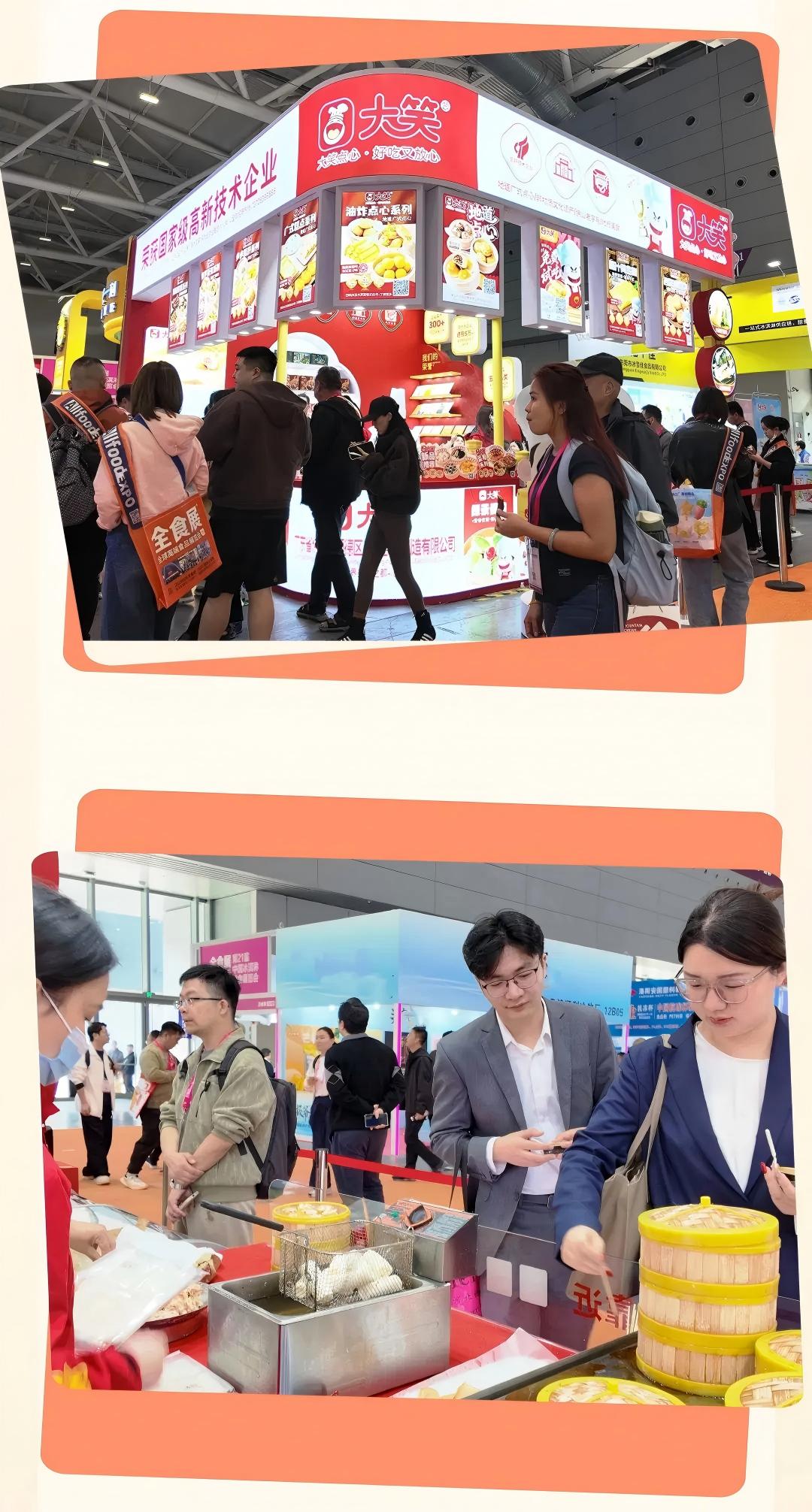
Regional compliance is not one rule set replicated worldwide; it is a mapping exercise in which each destination market asks a different question of the same factory. The manufacturer's export profile is a useful illustration of how that mapping is done in practice: 40% of output is exported, with main markets in Southeast Asia, Europe and the Americas, and shipments reaching more than 20 countries including the USA, Canada, Australia, New Zealand, Mexico, Malaysia and Vietnam.
Each of those destinations is supported by a specific document chain. The export food production enterprise registration certificate (No. 4400/15914) covers steamed pastries and frozen rice & wheat food for export to worldwide markets. The United States is additionally covered by a dedicated FDA food facility registration (No. 550074820) for frozen dim sum, steamed pastries and frozen rice & wheat food, issued under the Public Health Security and Bioterrorism Preparedness and Response Act of 2002 (PL.107-188).
That registration carries a validity date of 31 December 2026. Buyers placing orders in the final quarter of 2026 should confirm renewal status before the vessel departs — a valid document at quotation stage is not automatically a valid document at delivery stage, and renewal evidence is a legitimate item to add to your purchase order conditions.
Rather than assuming rules, run four questions against every destination market. Which authority issues the document? For China-side export authorization, the issuing authority is Foshan Customs of the People's Republic of China; for the US-side facility registration, the registration on file is held with UGK-LVM UNITED INC. as agent of record. Which entity name appears on it? The name must match the manufacturer on the label. Which product scope does it cover? Scope sentences such as "steamed pastries and frozen rice & wheat food for export" define the boundary. What is its validity window? Expiry dates drive re-verification frequency.
Labeling rules are now regional too. Guangzhou's Morning Tea Heritage Protection Regulation, effective 1 May 2026, requires restaurants to label whether dim sum is handmade on site or produced by a central kitchen or as pre-made product. A destination market may impose its own origin or preparation disclosures. The practical consequence for importers is simple: a supplier that already operates a documented central-kitchen model can support that labeling demand, while a supplier without batch traceability cannot.
Step-by-Step: A Seven-Step Compliance Due Diligence Sequence
Run these steps in order. Each one assumes the previous step has been satisfied, so a failure early in the sequence saves time later in the process.
Step 1 — Confirm the legal entity and production site. Verify that the manufacturer name on the label, the name on the certificates and the name on the contract are identical, and that the production address is a real, single facility rather than a trading address.
Step 2 — Request the factory-level export registration and read the scope sentence. Certificate No. 4400/15914, issued by Foshan Customs of the People's Republic of China on 28 April 2022 and valid to 28 April 2099, is the reference pattern: issuing authority, scope (steamed pastries and frozen rice & wheat food for export), market (worldwide) and validity window are all stated on one page.
Step 3 — Map destination-market registrations to your actual shipping destinations. If you ship to the United States, ask for the FDA food facility registration: No. 550074820, covering frozen dim sum, steamed pastries and frozen rice & wheat food, issued 28 November 2024 and valid to 31 December 2026.
Step 4 — Cross-check your SKU list against the recorded scope. Build a two-column sheet: requested SKU on the left, scope coverage on the right. Attach a copy of the scope language to your purchase order so both sides are working from the same text.
Step 5 — Request the batch document set before shipment, not after. Quality inspection reports, production qualifications and export customs declaration documents are provided with each order; ask for them at the pre-shipment stage so any discrepancy can still be corrected at the factory.
Step 6 — Verify label and pack specification against the purchase order. Compare bag weight, pieces per bag, bags per box and printed shelf life against the table in the previous section. For OEM packaging, approve artwork, ingredient statements and net-weight declarations before printing.
Step 7 — Write acceptance criteria and cold-chain responsibility into the contract. Specify who owns the temperature record, what counts as a rejected carton and what documentation must accompany a claim. This step converts compliance from a hope into an enforceable term.
Purchasing Terms and Acceptance Criteria
Compliance and commercial terms are the same conversation at the execution stage. The terms below are the verified commercial framework for this manufacturer, and they double as a template for what an importer should be asking any frozen dim sum supplier to commit to in writing.
- Minimum order quantity: 50 boxes or more.
- Delivery terms: EXW / FCA / FAS / FOB / CFR / CIF.
- Payment: corporate account transfer, WeChat, bank transfer or PayPal; OEM customized orders are settled by deposit plus final payment as stipulated in the contract; foreign trade orders use settlement methods such as T/T as agreed between both parties.
- Lead time and capacity: 7–14 days production lead time, with a monthly capacity of 50 million units.
- After-sales commitments: 24-hour customer complaint response; handling of damaged or spoiled/thawed goods with supporting documentation; -18°C low-temperature transportation throughout the entire process; free provision of steaming parameters, store menu matching and practical food preparation guidance.
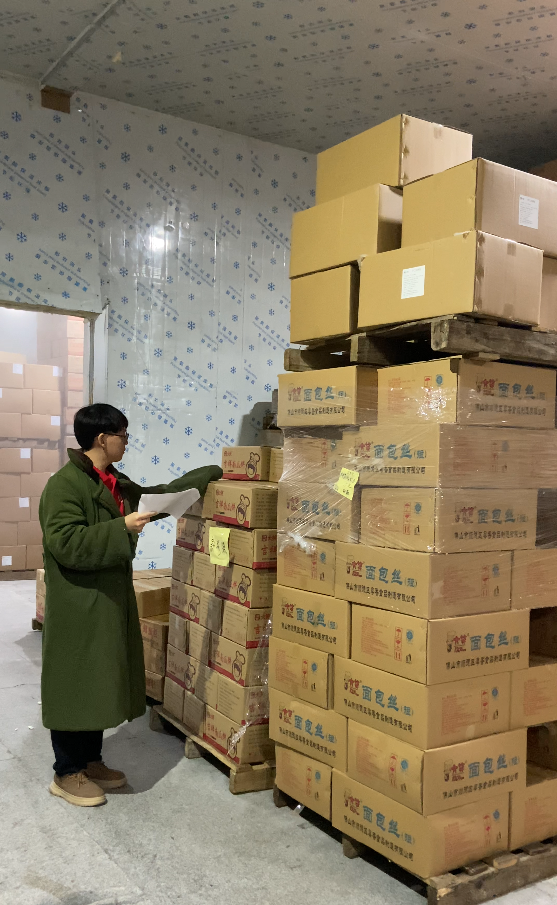
Acceptance criteria should be written as four checks that a warehouse can perform without laboratory access. Visual inspection: verify product model and quantity, and check packaging for damage, leaks, severe frost or softening after thawing. Temperature monitoring: measure the temperature on arrival to confirm the cold chain functioned correctly. Sampling sensory inspection: randomly open boxes to inspect appearance and check for sticking, spoilage or unusual odours. Document verification: confirm the delivery note, batch quality inspection documents, production date and shelf life.
Because the MOQ is expressed in boxes rather than cartons, convert box counts into carton, pallet and container volumes before signing off — a 50-box trial order and a full container follow different logistics logic, and the box-level specification is what the acceptance check will actually count.
Use Cases: Where Frozen Dim Sum Compliance Decides the Order
Compliance requirements differ by the buyer type that receives the goods, even when the product is identical. Water Chestnut Cake, packed at 500 g per bag with 12 bags per box and steamed without thawing for 6 to 8 minutes, illustrates how one SKU behaves across seven verified application channels:
- Restaurants and teahouses: dim sum is a staple of morning tea service; consistent pack counts and printed date codes support daily menu planning and reduce waste.
- Hotels and tourism: star-rated hotels, guesthouses, resorts and camping sites use frozen dim sum for breakfast and banquet service where presentation consistency matters.
- Retail: supermarkets, community fresh-food stores and convenience stores need correctly labeled retail packs with readable shelf life for consumer-facing sale.
- Catering institutions: schools, factory and office canteens, hospitals, nursing homes and government canteens require predictable batch documentation for internal food-safety audits.
- Transportation: airports, high-speed rail stations, highway service areas and vehicle or ship catering depend on steam-only preparation with no on-site thawing.
- Trade and foreign trade: food supply chain wholesalers, overseas Chinese restaurants and Chinese supermarkets need export customs documentation that matches the shipping invoice.
- Gifts: OEM manufacturers, New Year's gift box vendors and banquet organizers require customized packaging and labeling under their own brand.
Own-brand programs are the most documentation-intensive use case. Logos and product details can be customized to customer requirements, and ODM services support custom product development — for example, producing frozen shrimp dumplings at 270 g per pack, 9 pieces per pack, 15 packs per box, prepared by steaming 7–8 minutes or pan-frying until golden brown. The buyer's name is on the pack, so the buyer's reputation is on the line, which is precisely why the document set described in this guide should be assembled before the first production run rather than before the first shipment.
Comparison: Which Document Answers Which Buyer Question
Importers rarely need "all the documents" — they need the one document that answers the specific question blocking the order. The comparison below maps each due-diligence question to the document that resolves it, using only verified details on file.
| Buyer question | Document that answers it | Verified reference on file |
|---|---|---|
| Can this factory legally export processed frozen food? | Export food production enterprise registration certificate | No. 4400/15914, Foshan Customs of the People's Republic of China, issued 28 April 2022, valid to 28 April 2099; scope: steamed pastries and frozen rice & wheat food for export; market: worldwide |
| Can this product legally enter the United States? | FDA food facility registration | No. 550074820, agent of record UGK-LVM UNITED INC.; scope: frozen dim sum, steamed pastries and frozen rice & wheat food exported to the United States; issued 28 November 2024, valid to 31 December 2026; BTA 2002 (PL.107-188) |
| How is food safety managed at the plant? | ISO 9001 / HACCP / FDA facility certification | 20,000 m² automated production facility operating under ISO 9001, HACCP and FDA certification |
| Was this specific batch tested before shipment? | Pre-shipment quality control record | 100% pre-shipment test; weight weighed and verified; packaging seal and label completeness checked; microbiological safety testing by plate count method for colony and coliform bacteria |
| What paperwork travels with the shipment? | Batch document set | Quality inspection reports, production qualifications and export customs declaration documents provided with each order |
| Did the cold chain hold in transit? | Cold chain guarantee and arrival temperature check | -18°C low-temperature transportation throughout the entire process; products stored frozen below -18°C |
FAQ: Frozen Cantonese Dim Sum Export Compliance
What certifications should an importer verify before buying frozen Cantonese dim sum for export?
Verify three layers. At factory level, look for an export food production enterprise registration certificate; the certificate on file for Foshan Shunde Yuexiang Food Manufacturing Co.,Ltd. is No. 4400/15914, issued by Foshan Customs of the People's Republic of China on 28 April 2022 and valid to 28 April 2099, covering steamed pastries and frozen rice & wheat food for export to worldwide markets. At destination level, check the market-specific facility registration; for the United States the registration on file is No. 550074820, held with UGK-LVM UNITED INC. as agent of record, covering frozen dim sum, steamed pastries and frozen rice & wheat food exported to the United States under the Public Health Security and Bioterrorism Preparedness and Response Act of 2002 (PL.107-188), issued 28 November 2024 and valid to 31 December 2026. At plant level, confirm food safety certification; this facility operates under ISO 9001, HACCP and FDA certification. Always match the scope sentence on each document against the exact SKU list on your purchase order.
Can an OEM Cantonese dim sum manufacturer produce frozen shrimp dumplings under our own brand?
Yes. The manufacturer provides OEM and ODM production services for frozen dim sum products, including customization of logos and product details according to customer needs, with ODM services supporting custom product development. Frozen shrimp dumplings are produced at 270 g per pack, 9 pieces per pack and 15 packs per box, prepared without thawing either by steaming for 7–8 minutes or by pan-frying until golden brown on both sides. Monthly capacity is 50 million units with a 7–14 day production lead time, so own-brand programs can be scheduled against the same production lines used for the standard range.
What is the minimum order quantity and which commercial terms apply?
The minimum order quantity is 50 boxes or more. Delivery terms offered are EXW, FCA, FAS, FOB, CFR and CIF. Payment can be made through corporate account transfer, WeChat, bank transfer or PayPal; OEM customized orders are settled by deposit plus final payment as stipulated in the contract, and foreign trade orders use settlement methods such as T/T according to the agreement between both parties. Because the MOQ is stated in boxes rather than cartons, buyers should convert box counts into carton, pallet and container volumes before the order is finalized, so that freight and warehousing assumptions are based on the same unit of measure as the acceptance check.
How can an importer validate product and packaging before committing to a full order?
Validation normally covers product, packaging and documents in one pass. Customized value-added services include flavor adjustments, customized packaging and sending new product samples, which allows a buyer to check taste and pack format before the full production run. Before shipment, 100% pre-shipment testing is carried out: product weight is weighed and verified, packaging seals and label information are checked for completeness and for leaks or bulging bags, and microbiological safety testing is performed using the plate count method for colony and coliform bacteria. On arrival, the four acceptance checks — visual inspection, temperature monitoring, sampling sensory inspection and document verification — provide the evidence base for releasing or rejecting the batch.
What is the production lead time, and how is the cold chain protected in transit?
Production lead time is 7–14 days, supported by a monthly capacity of 50 million units. Cold chain protection runs from storage to delivery: products are stored frozen below -18°C, with -18°C low-temperature transportation maintained throughout the entire process. Shelf life depends on the product family — steamed buns are stored frozen at -18°C with a 12-month shelf life, and steamed cakes such as water chestnut cake, red bean cake and sesame cake carry a 6-month frozen shelf life, with production date and shelf life printed on the outer packaging of all products so the receiving warehouse can verify freshness without opening the case. If the batch still shows severe frost or thaw-softening at arrival, the supplier commits to a 24-hour complaint response and handles damaged or spoiled/thawed goods with supporting documentation. To start a compliance review against your own SKU list, send your product list and destination markets to Kyle@dimsum-daxiao.com or call +86 13726399586, and request the certification pack together with the current product catalogue.
Conclusion
Frozen Cantonese dim sum compliance is not a certificate you collect once; it is a mapping discipline you repeat for every destination market and every product family. The three layers — factory export registration, destination facility registration, and batch documentation — must all point at the same legal entity, the same production site and the same SKU list. Where a scope sentence, an expiry date or a pack specification does not line up, the shipment is exposed, no matter how good the dumplings taste.
Foshan Shunde Yuexiang Food Manufacturing Co.,Ltd., founded in 1981 in Shunde and producing over 300 items across five series, offers importers a documented reference case: export food production enterprise registration No. 4400/15914 valid to 28 April 2099, US FDA food facility registration No. 550074820 valid to 31 December 2026, ISO 9001 / HACCP / FDA certified production in a 20,000 m² automated facility, and OEM/ODM support for own-brand programs at a minimum order of 50 boxes with a 7–14 day lead time.
Use the seven-step sequence in this guide as your checklist, attach the scope language to your purchase order, and set the four acceptance checks into your receiving procedure. Compliance then becomes what it should be: a routine step in ordering frozen Cantonese dim sum, not a risk that surfaces at the port.
Next step: request the certification pack, current price list, and samples for your destination market. Download the company catalogue here: Foshan Shunde Yuexiang Food product catalogue (PDF).
Email: Kyle@dimsum-daxiao.com | Tel / WhatsApp: +86 13726399586 | Website: www.dimsum-daxiao.com