
Cantonese Dim Sum Suppliers: A Buyer's Guide to Frozen Dim Sum Manufacturing
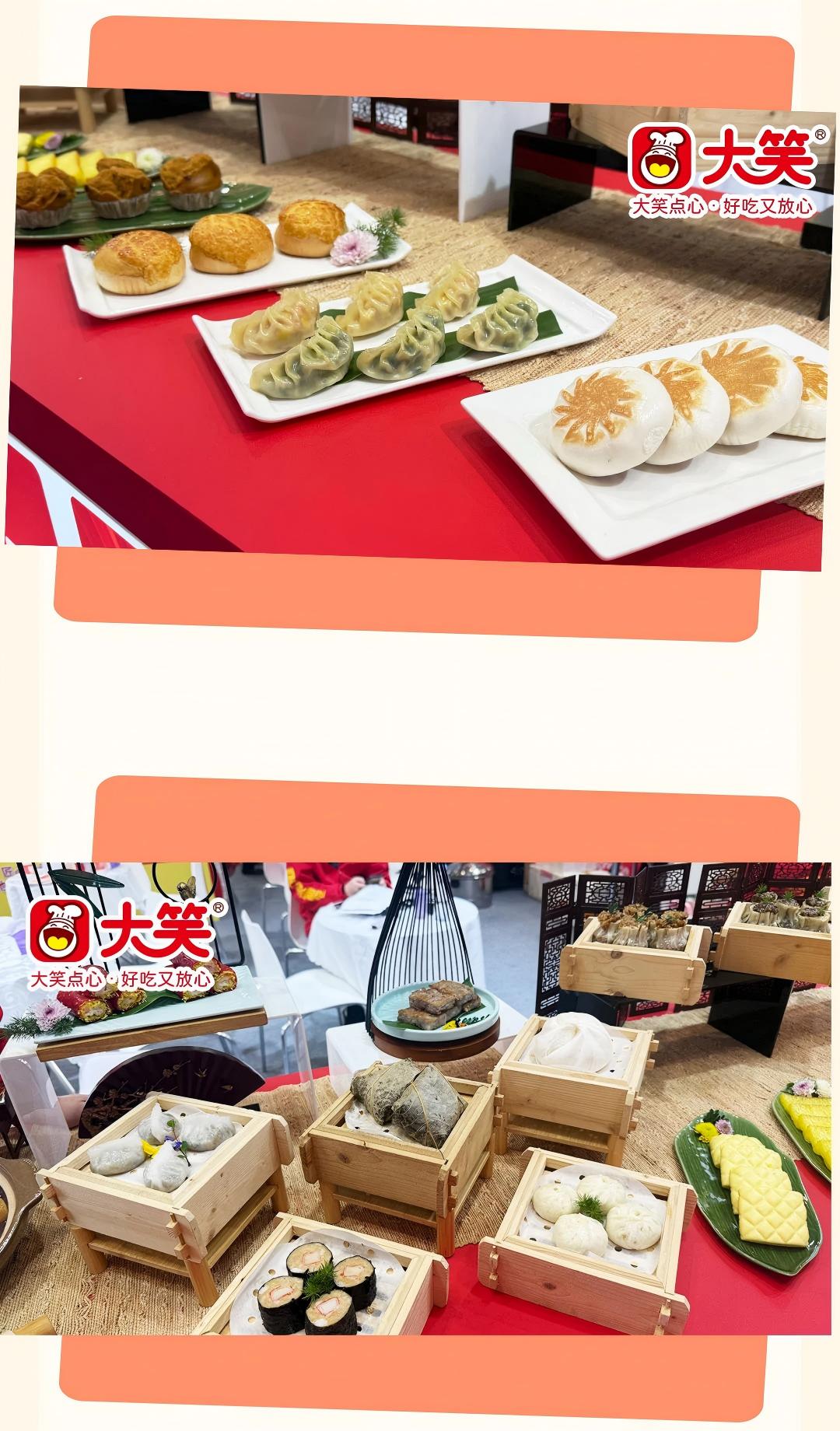
Cantonese dim sum is served across restaurants, hotels and catering operations worldwide.
Cantonese Dim Sum Suppliers: Choosing a Frozen Dim Sum Manufacturer
Frozen Cantonese dim sum is a fast-growing category in global foodservice. The global frozen Cantonese-style dim sum market is valued at USD 7.04 billion in 2025 and is projected to reach USD 11.99 billion by 2033. Buyers looking for a frozen dim sum supplier need to evaluate product range, production capability, food safety certification, export experience, and consistency. This guide explains what to look for in Cantonese dim sum manufacturers and how Foshan Shunde Yuexiang Food Manufacturing Co., Ltd. fits into that evaluation.
What Is Frozen Cantonese Dim Sum?
Frozen Cantonese dim sum refers to pre-prepared Chinese dim sum items such as shrimp dumplings, Shrimp Siu Mai, char siu bao, steamed custard buns, rice rolls, pastries, and cakes that are quick-frozen for storage and distribution. These products are widely used in restaurants, hotels, retail stores, catering services, transportation hubs, trade and foreign trade, and gift applications.
Frozen dim sum is defined by its convenience: no need for preparation or kneading, simple heat-and-eat operation, uniform taste and size, and long-term low-temperature storage. For foodservice operators, frozen dim sum reduces kitchen manpower, stabilizes output, and allows flexible inventory.
Why the Cantonese Dim Sum Supply Chain Matters
Cantonese dim sum has moved from a labor-intensive morning-tea craft to an industrial food category. The market size projection to USD 11.99 billion by 2033 reflects growing demand in North America, Europe, and Asia. China accounted for 46% of global frozen dumpling production volume in 2025, which means that many food importers and distributors source frozen dim sum from Chinese manufacturers.
Two market dynamics affect supplier selection. First, buyers want authentic recipes with consistent quality. Second, food safety and traceability are non-negotiable for export. Guangzhou introduced new regulations effective May 1, 2026 that require restaurants to clearly label whether dim sum is handmade on-site or produced by central kitchens or pre-made. This regulation affects how frozen dim sum is positioned in the Chinese market and raises the importance of transparent production for export suppliers.
What to Look for in a Cantonese Dim Sum Supplier
When evaluating Cantonese dim sum suppliers, buyers should examine these factors systematically:
- Production scale and capacity: A factory with a large automated facility and dedicated production lines can provide stable supply.
- Food safety certifications: ISO9001, HACCP, and FDA certification are commonly expected for export.
- Product range: A supplier that can offer a broad variety of steamed buns, dumplings, and pastries reduces the need for multiple suppliers.
- Export experience: Suppliers with documented export to multiple countries understand documentation, labeling, and cold-chain requirements.
- R&D capability: A dedicated R&D team can support new product development and customization.
- Cold chain storage: Frozen dim sum should be stored below -18°C to maintain quality and prevent cracking.
Foshan Shunde Yuexiang Food Manufacturing Co., Ltd. at a Glance
Foshan Shunde Yuexiang Food Manufacturing Co., Ltd. is a Cantonese dim sum manufacturer based in Shunde, Foshan, Guangdong Province, China. The company operates under the brand Laughing (Da Xiao) and was founded in 1981. Shunde is recognized as a UNESCO City of Gastronomy, and the company describes its mission as mastering Cantonese dim sum since 1981, honoring tradition while innovating for modern tastes.
The company is recognized as a "Foshan Time-honored Brand" and is located in Jun'an Town, Shunde District, the former residence of Bruce Lee. It has a second production enterprise, Foshan Shunde Hongyuan Food Co., Ltd., established in 2019, which focuses on quick-frozen prepared food, quick-frozen noodle rice food, steamed pastries, and dish series.
| Company Parameter | Detail |
|---|---|
| Established | 1981 |
| Factory size | 20,000 m² automated facility |
| Employees | 200+ |
| Annual output | 6,000,000 units |
| R&D team | 30+ engineers |
| Product range | 300+ items across five major series |
| Main products | Cantonese dim sum, traditional dim sum, Chinese dim sum, frozen dim sum |
| Export ratio | 40% |
| Main markets | Southeast Asian, European and American markets |
| Certifications | ISO9001 / HACCP / FDA certified |
The company's certifications include ISO9001, HACCP, and FDA. It is also a National High-Tech Enterprise with a dedicated R&D center. The company exports to more than 20 countries including USA, Canada, Australia, and EU countries.
Key Cantonese Dim Sum Products to Know
A complete Cantonese dim sum menu includes four broad categories: steamed buns, steamed cakes, fried dim sum, and soups or vegetarian dishes. Below are the product types buyers commonly search for.
Shrimp Dumplings and Shrimp Siu Mai
Shrimp dumplings (har gow) are a Cantonese dim sum staple. Yuexiang's shrimp dumplings come in a specification of 270g/9 pieces per pack, with 15 packs per box. They can be steamed for 7-8 minutes or pan-fried until golden. The skin is translucent, thin and chewy, with large fresh shrimp inside.
Shrimp Siu Mai is another classic. The Yuexiang version is packaged as 270g/9 pieces per pack, 20 packs per box, and is steamed for about 12 minutes without thawing. It is made with whole fresh shrimp, a thin smooth outer skin, and is described as light, refreshing, high in protein and low in fat.
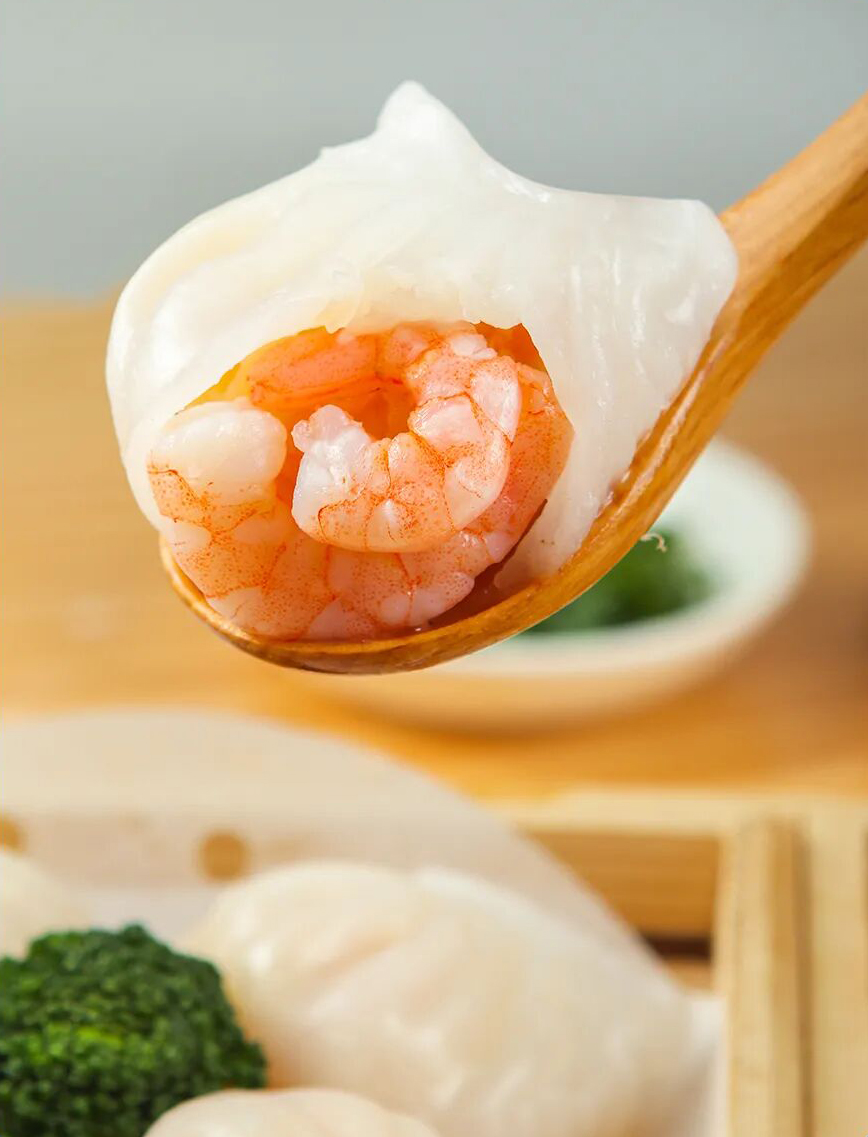
Shrimp dumplings are one of the most recognized Cantonese dim sum items.
Char Siu Bao and Steamed Custard Buns
Char siu bao (barbecued pork bun) is a steamed bun filled with honey-glazed char siu. Yuexiang offers a 480g (4 pieces) per bag version and a 720g (6 pieces) per bag version, both steamed for about 10 minutes. The filling is savory-sweet with plump meat chunks.
Steamed custard buns are positioned as a breakfast and afternoon tea product. The Yuexiang steamed custard bun is packaged as 420g/12 pieces per pack, 18 packs per box, and steamed for 8-10 minutes. It uses a custard filling made with eggs, milk powder, cream, and sugar, and has a rabbit-shaped pastry designed to appeal to children.
Lava custard bun is another popular steamed item. The Yuexiang lava custard bun is packaged as 480g (12 pieces) per bag, 18 bags per box, and is made primarily of egg. It has a smooth, creamy lava filling with a rich, milky salted egg yolk flavor.
Traditional Steamed Cakes
Traditional steamed cakes include Water Chestnut Cake, Red Bean Cake (Red Bean Layered Cake), Millet Cake, Coconut Golden Cake, and Steamed Black Sesame Kuih. These items are mostly suitable for dim sum restaurants, teahouses, hotels, and retail.
- Water Chestnut Cake: Made of coconut milk and water chestnuts, 500 g per bag, 12 bags per box. Steamed for 6-8 minutes. Sweet coconut flavor with crunchy water chestnut pieces.
- Red Bean Cake: Red and white layered cake, 500 g per bag, 12 bags per box. Chewy and refreshing with coconut aroma and sweet red beans.
- Millet Cake: Chinese dim sum made primarily from millet, 280g per bag. Steam for 7-8 minutes or pan-fry until golden. Soft, slightly sweet, and easy to digest.
- Coconut Golden Cake: Made of coconut juice and flour, 300g per bag, 20 bags per box. Soft, chewy, golden translucent appearance with coconut and egg fragrance.
- Steamed Black Sesame Kuih: 500 g per bag, 12 bags per box. Distinct black and white layers, black sesame aroma with sweet coconut flavor.
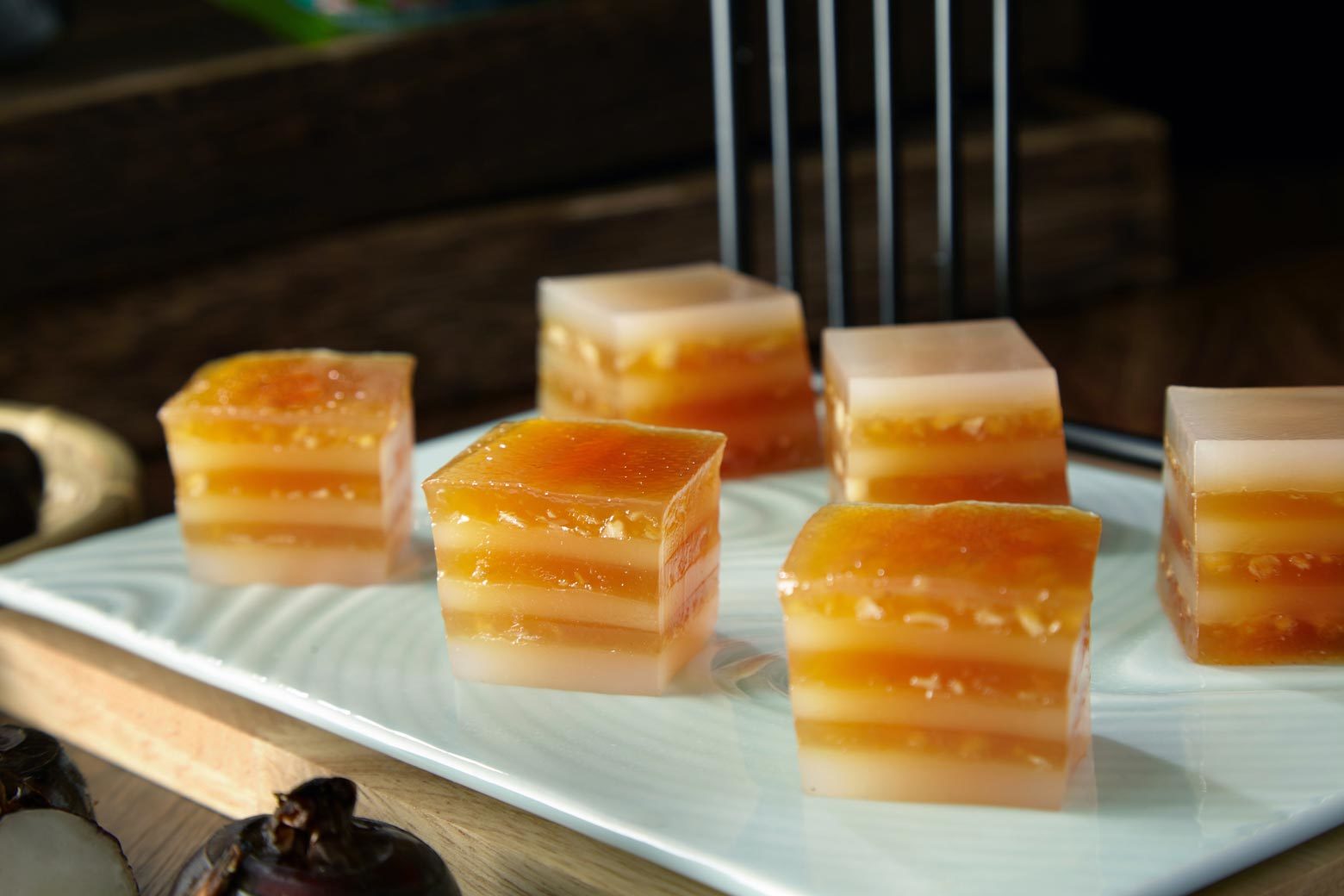
Water Chestnut Cake is a light, layered Cantonese steamed cake.
Fried Dim Sum
Fried dim sum adds a crispy category to the menu. Yuexiang's fried dim sum range includes Hong Kong style spring rolls, Milk Rolls, Golden Taro Roll (Taro Cake/Taro Pie), Green Tea Buddha Cake, Golden Durian Crisp, Golden Cone Durian Crisp, Explosive Juice Gold Ball (Sesame Ball), and Shunde Double Skin Milk.
- Hong Kong style spring rolls: 216g/12 pieces per bag, 20 bags per box. Fry at 150-160°C for 3-4 minutes. Filled with pork, shiitake mushrooms, and mung beans.
- Milk Rolls (Crispy Milk Roll): 280g/10 pieces per bag, 12 bags per box. Crispy outer layer with rich milk filling.
- Golden Taro Roll / Taro Pie: Made with taro and flour. The crust is flaky and crumbly, with a soft, creamy taro filling containing real taro chunks.
- Green Tea Buddha Cake: Made of taro, green tea, and glutinous rice flour. Fried at 165°C for 4 minutes. Refreshing green tea flavor, low sweetness.
- Golden Durian Crisp: Durian filling with a crispy crust. Fried at 160°C for 5 minutes without thawing.
- Explosive Juice Gold Ball: Fruit juice and flour, coated with white sesame seeds. Fried at 160-165°C for 8-9 minutes.
Vegetarian and Premium Dishes
Buddha's Delight (Vegetable Lo Han Jai) is a purely vegan dish made with shiitake mushrooms, wood ear mushrooms, dried bean curd sticks, oyster mushrooms, fried tofu, king oyster mushrooms, and other ingredients. It is packaged as 400g/box, 12 boxes per carton, and is boiled after natural thawing. It is positioned as low-fat, high-fiber, and suitable for vegetarians and light diets.
Buddha Jumps Over The Wall (Luxury Soup) is a premium pre-prepared soup made with abalone, sea cucumber, duck feet, lotus root, shrimp, shiitake mushrooms, king oyster mushrooms, scallops, pork tendons, fish balls, Jinhua ham, and fish maw. It is available in 1.5kg, 2.25kg, and 3.5kg sizes. It must be stored frozen below -18°C with a shelf life of one year. The product is suitable for family dinners, gifts, banquet main dishes, food service, and retail.
How to Choose Between Steamed Buns and Steamed Cakes
Buyers often ask which product category to prioritize. The answer depends on sales positioning. Steamed buns such as char siu bao and custard buns are staple foods with large consumption volume, a broad customer base, and stable repurchase rates. They typically have a 12-month frozen shelf life, which supports flexible inventory turnover.
Steamed cakes such as Water Chestnut Cake and Black Sesame Kuih serve as differentiated special snacks. They are often associated with afternoon tea, mid-to-high-end teahouses, and banquet tea breaks. Steamed cakes, including most steamed puddings, typically come with a 6-month frozen shelf life.
The recommended strategy for new operators is a combination: steamed buns stabilize basic sales, while steamed cakes create a unique selling point. This combined approach covers customer traffic throughout the day. For frozen food wholesalers and export buyers purchasing all categories, one-stop procurement reduces logistics and coordination costs.
| Selection Factor | Steamed Buns | Steamed Cakes / Pastries |
|---|---|---|
| Sales role | Staple food, consistent sales volume | Featured snack, differentiation |
| Typical shelf life | 12 months frozen | 6 months frozen |
| Best-fit outlets | Breakfast shops, canteens, convenience stores | Mid-to-high-end teahouses, afternoon tea, banquets |
| Inventory strategy | Order large, stable turnover | Order small batches to test response |
Supplier Comparison: What Differentiates a Source Factory
Foshan Shunde Yuexiang Food Manufacturing positions itself as a direct source factory. Its stated advantages in the selection process include: direct factory supply with fewer middlemen and markups, costs reported as 10%-15% lower than other factories in comparison materials, proprietary intelligent production lines, and one-stop supply across categories. Direct sourcing from the source factory also simplifies frozen food export purchasing because buyers coordinate with one production base instead of aggregating orders from multiple suppliers.
From a procurement standpoint, the key differentiators to verify are: production capacity, certification validity, export records, cold chain management, and whether the supplier can maintain consistent quality at scale. Yuexiang's stated company data provides a starting point: 20,000 m² facility, 200+ employees, 30+ R&D engineers, 6,000,000 units annual output, and 40% export ratio.
Frozen Dim Sum Applications and Use Cases
Frozen Cantonese dim sum is designed for multiple industries. The standard application list includes:
- Restaurants: Fast-food breakfast shops, tourist area snacks, late-night food stalls.
- Hotels and tourism: Star-rated hotels, guesthouses, resorts, camping sites.
- Retail: Supermarkets, community fresh food stores, convenience stores.
- Catering services: Schools, factories, office buildings, hospitals, nursing homes, government canteens.
- Transportation: Airports, high-speed rail stations, highway service areas, catering for vehicles and ships.
- Trade and foreign trade: Food supply chain wholesalers, overseas Chinese restaurants, Chinese supermarkets.
- Gifts: Food OEM manufacturers, New Year's gift box vendors, banquets.
For caterers, the main operational benefit is time and labor saving. Frozen buns require no preparation or kneading, simply heating and serving. This significantly reduces kitchen manpower and preparation time. Uniform taste and size avoid inconsistent textures from handmade products. Long-term low-temperature storage allows operators to use products as needed, reducing food waste. A broad product range also enriches the menu without requiring additional specialists.
Frozen storage at -18°C is required to maintain dim sum quality.
Step-by-Step: How to Source Frozen Dim Sum from a Supplier
- Define your product mix: Determine which categories you need: steamed buns, dumplings, cakes, fried items, vegetarian dishes, or premium soups.
- Check supplier credentials: Verify the factory's founding year, certifications, production scale, and export markets.
- Request specifications: Ask for product specification sheets including net weight, packaging, ingredients, cooking method, storage conditions, and shelf life.
- Evaluate cold chain capability: Confirm the supplier maintains storage at or below -18°C across warehousing and transport.
- Order samples: Test representative items from each category you plan to buy, not just one hero product.
- Compare total cost: Include logistics, coordination, and inventory carrying cost, not just unit price.
- Plan for lead time: Align order quantities with the supplier's production capacity and your frozen storage capacity.
Frequently Asked Questions
What certifications should a Cantonese dim sum supplier have?
A reliable export-oriented Cantonese dim sum manufacturer should hold internationally recognized food safety certifications. Foshan Shunde Yuexiang Food Manufacturing Co., Ltd. is ISO9001/HACCP/FDA certified and is recognized as a National High-Tech Enterprise. Buyers should always request current certificates and verify their scope before placing orders.
What is the shelf life of frozen dim sum?
Shelf life depends on the product category. Steamed buns such as char siu bao and custard buns generally have a 12-month frozen shelf life. Steamed cakes such as Water Chestnut Cake and layered puddings typically have a 6-month frozen shelf life. Buddha Jumps Over The Wall soup has a shelf life of one year when stored below -18°C. Always follow the storage conditions on the product specification.
Can a frozen dim sum supplier handle OEM or private label production?
Many frozen dim sum manufacturers support OEM. Yuexiang's customer-facing materials list food OEM manufacturers as one of the intended applications for its gift segment. The company has a dedicated R&D team of more than 30 engineers and a second production facility established in 2019. Buyers should confirm OEM capabilities, minimum order quantities, and labeling requirements directly with the supplier.
How should frozen dim sum be stored and prepared?
Frozen dim sum should be kept at or below -18°C throughout storage and transport to prevent drying out and cracking. Most steamed items can be cooked directly from frozen without thawing. For example, shrimp dumplings are steamed for 7-8 minutes, Shrimp Siu Mai for 12 minutes, and char siu bao for 10 minutes. Fried items should be cooked at oil temperatures between 150°C and 165°C for the times specified in the product instructions.
Can I request samples before placing a wholesale order?
Sample requests are a normal part of frozen dim sum sourcing. Because frozen dim sum is a physical food product, testing representative items is the best way to evaluate flavor, texture, and cooking performance. You can contact the supplier to discuss sample availability, product specifications, and export requirements. For product specifications, cooking instructions, and company background, the company provides a downloadable brochure as a convenient reference.
Planning a frozen dim sum import or foodservice lineup?
Contact Foshan Shunde Yuexiang Food Manufacturing Co., Ltd. for product samples, a complete product catalog, or a wholesale quotation.
Email: sales@dimsum-daxiao.com | Tel/WhatsApp: +86 13726399586
Website: www.dimsum-daxiao.com