Dim Sum for the Full Menu: An Application Guide for Hotels, Canteens, and Retail
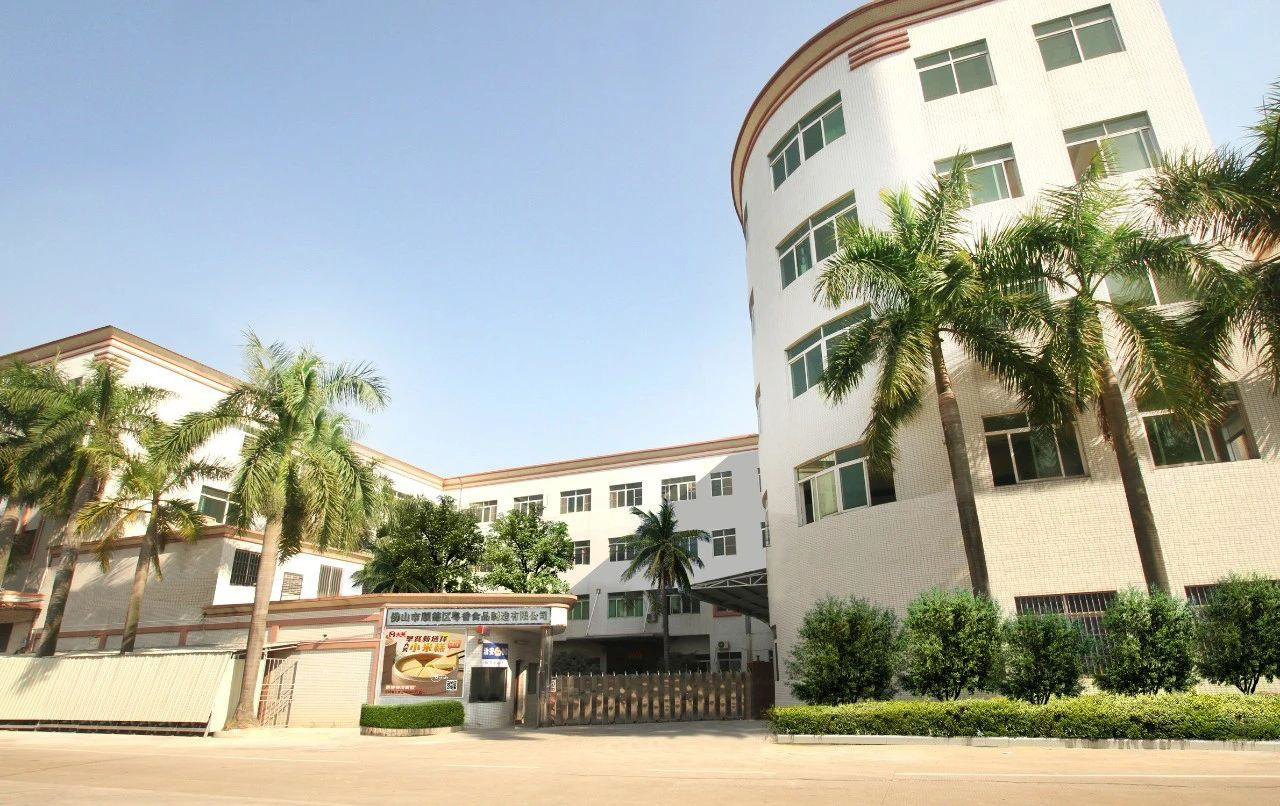
Frozen Cantonese dim sum can carry an entire foodservice menu — breakfast, all-day dining, afternoon tea, banquet and retail — but only when each product is matched to the venue that will reheat and serve it. This application guide maps the product families of Foshan Shunde Yuexiang Food Manufacturing Co.,Ltd. (brand “Da Xiao”, founded 1981 in Shunde, Foshan, Guangdong) to the sales sectors the company documents for its range: restaurants, hotels and tourism, retail, catering services such as school and factory canteens, transportation, trade and foreign trade, and gifts. The result is a venue-by-venue selection framework with documented pack formats, documented reheat times and the execution terms that hold a multi-venue program together.
Why Venue Fit Comes Before Product Range
A frozen dim sum order is not a product list; it is a labor, equipment and storage plan. A star-rated hotel banquet kitchen, a school canteen serving hundreds of students, and a supermarket hot counter can all stock the same shrimp dumpling, but they cannot run it on the same schedule. The documented reheat time is the constraint that separates them, because it decides how many steamers or fryers must operate at peak service, whether the item suits an all-day menu or a planned banquet course, and whether the venue can hold the product hot without quality loss.
Three questions should be answered before any purchase order is raised:
- Which service windows will the item cover — breakfast, lunch peak, afternoon tea or banquet?
- How much kitchen labor and how many steamers or fryers are free at that moment?
- Which pack format fits both the portion size and the available freezer space?
When those answers exist, selection becomes a matching exercise between product attributes and venue conditions. When they do not, buyers default to ordering the widest available range and then discover that the slowest product on the list is the one that dictates the menu and the kitchen schedule.
A second, quieter problem is documentation. Foodservice buyers are increasingly asked to explain how a dim sum item was produced, not only how it tastes. Products that arrive without batch inspection documents, production dates or shelf-life data create a compliance gap that no kitchen can close on its own.
Industry Background: A Market That Is Growing, Labelling and Consolidating
The frozen Cantonese-style dim sum category was valued at USD 7.04 billion in 2025 and is projected to reach USD 11.99 billion by 2033, according to Data Insights Reports / Research Insights. Growth of that scale does not come from traditional teahouses alone. It comes from venues that were never dim sum specialists — canteens, convenience retail, transport hubs and supermarkets — adding dim sum to existing menus.
Production is concentrated. China accounted for 46% of global frozen dumpling production volume in 2025, followed by Japan with 11% and South Korea with 9%, according to Business Research Insights. For buyers this concentration is useful: the products they need are made inside an established manufacturing ecosystem, so the practical question is supplier selection and application fit rather than category availability.
Regulation is moving toward transparency. Guangzhou implemented a rule effective 1 May 2026 requiring restaurants to clearly label whether dim sum is handmade on-site or produced through central kitchens or pre-made formats. Even outside Guangzhou, the direction is consistent: foodservice operators are expected to know, and to state, how their dim sum is made. Venues buying frozen product therefore need documents and pack-level traceability, not only a price.
Trade classification matters as well. Frozen dim sum is commonly exported under HS Code 1902200000 (stuffed pasta) and 1902309000 (other pasta), the codes importers and customs brokers request first when a program moves across borders.
Finally, the manufacturing base is regional and specialized. Shunde, in Foshan, Guangdong, is recognised by UNESCO as a “City of Gastronomy,” and the surrounding cluster includes ingredient specialists — for example, Foshan Shunde Meichengmei Food Co., Ltd., founded in 1976, is a professional manufacturer of egg products including salted egg yolk for dim sum applications. A frozen dim sum program plugs into an existing regional supply chain rather than inventing one.
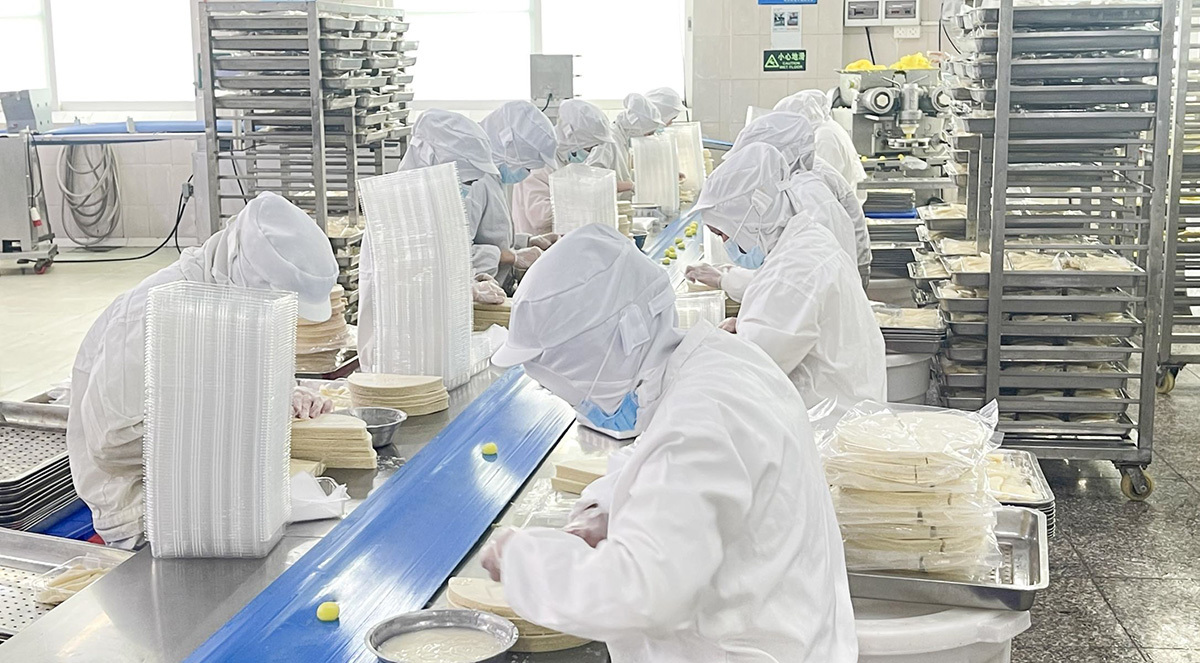
Yuexiang Food has operated inside that cluster since 1981 and is recognised as a “Foshan Time-honored Brand” with over 40 years of heritage. The company runs a 20,000 m² facility with 200+ employees, a 30+ engineer R&D team, documented annual output of 6,000,000 units, and more than 300 products across five series, with an export ratio of 40% serving Southeast Asian, European and North American markets. It is certified to ISO9001, HACCP and FDA standards, recognised as a National High-Tech Enterprise with a dedicated R&D center, holds recognition from the Cantonese Pastry Chefs Association, and established a second production enterprise, Foshan Shunde Hongyuan Food Co., Ltd., in 2019.
Detailed Solution: The Four Product Families and What Each One Is Built For
Rather than a flat catalogue, the venue-matching framework starts with four functional families. Each family answers a different menu problem, and each carries its own documented reheat time and pack logic.
1. Savory Steamed Staples — the Volume Layer
Steamed savory items act as the staple of a dim sum menu: they satisfy hunger, serve a broad customer base, and generate stable repurchase. Documented specifications include:
- Shrimp dumplings — 270 g / 9 pieces per pack, 15 packs per carton; steamed 7–8 minutes without thawing; also documented for pan-frying until golden on both sides.
- Shrimp Siu Mai — 270 g / 9 pieces per pack, 20 packs per carton; steamed over boiling water for 12 minutes without thawing.
- Char siu bao (barbecued pork bun) — 480 g (4 × 120 g) or 720 g (6 × 120 g) per bag, 18 bags per carton; steamed 10 minutes without thawing.
- Steamed custard bun — 420 g / 12 pieces per pack, 18 packs per carton; steamed 8–10 minutes.
- Lava Custard Bun — 480 g (12) per bag, 18 bags per carton; steamed 8 minutes.
- Walnut Bun — 480 g (12) per bag, 18 bags per carton; steamed 8 minutes.
- Red bean paste bun — 480 g / 12 pieces per pack (18 packs per carton) or 530 g / 12 pieces per pack (24 packs per carton).
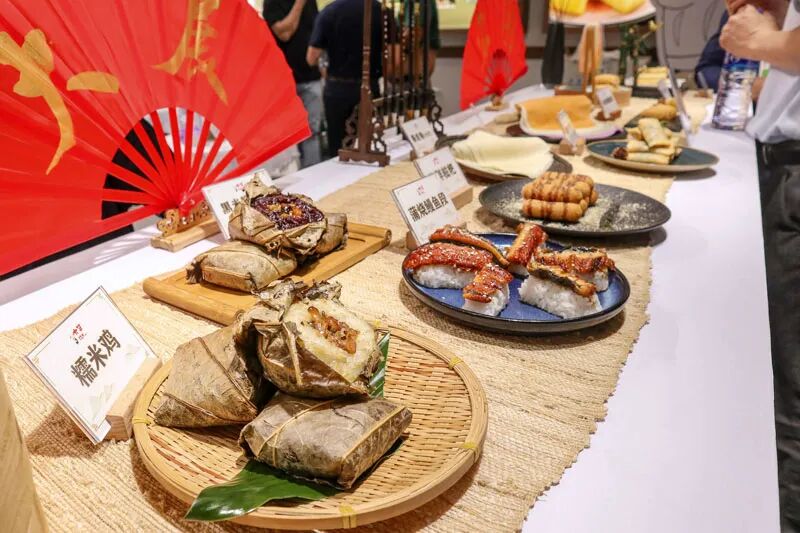
- Chicken sticky rice (glutinous rice chicken) — 900 g (6) or 720 g (6) per bag, 12 bags per carton; steamed 20–25 minutes, making it the best candidate for batch planning rather than peak-hour ordering.
2. Sweet Steamed Cakes — the Differentiation Layer
Steamed cakes are positioned as featured items rather than staples: they are light and refreshing, suited to pairing with tea, visually strong on the plate, and useful for enhancing a menu’s prestige. Documented specifications include:
- Water Chestnut Cake — 500 g per bag, 12 bags per carton; made with coconut milk and water chestnuts; steamed in a water pan for 6–8 minutes without thawing. Its documented industry applicability covers restaurants, hotels and tourism, retail, catering services, transportation, trade and foreign trade, and gifts.
- Taro Cake (Crispy Taro Pastry) — 500 g (12) per bag, 12 bags per carton; taro-based; pan-fried until golden on both sides or steamed 6–8 minutes.
- Coconut Golden Cake — 300 g per bag, 20 bags per carton; pan-fried until golden on both sides or steamed 6–8 minutes.
- Red Bean Layered Cake — 500 g per bag, 12 bags per carton; steamed 6–8 minutes.
- Black Sesame Kuih — 500 g per bag, 12 bags per carton; steamed 6–8 minutes.
- Millet cake — 280 g (1) per bag, 30 bags per carton; steamed 7–8 minutes or pan-fried until golden.
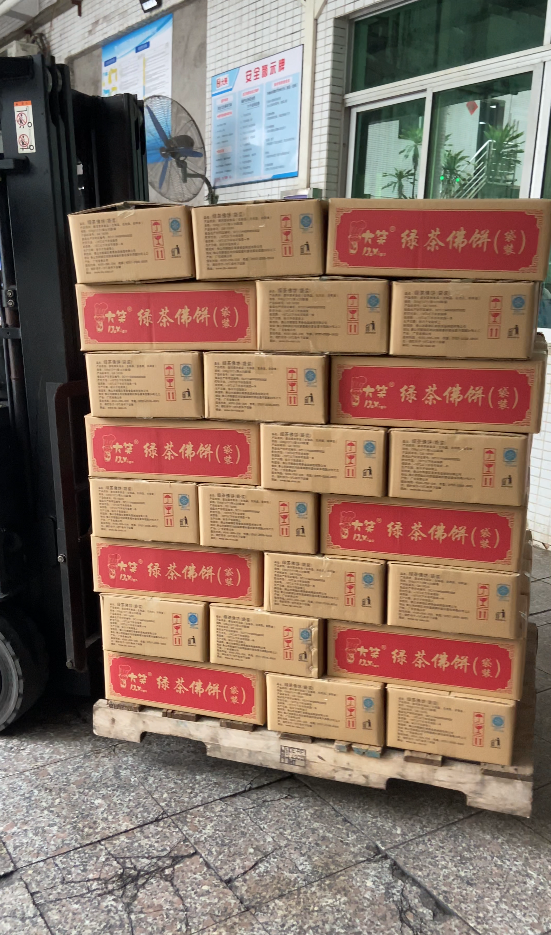
- Green Tea Buddha Cake — 336 g (12) per bag, 20 bags per carton; documented reheat at 165 °C for 4 minutes.
3. Fried Dim Sum and Pastries — the Speed Layer
Fried items deliver crispness in three to five minutes and are the natural fit for grab-and-go counters, hot displays and late-night menus. Documented specifications include:
- Hong Kong style spring rolls — 216 g (12) per bag, 20 bags per carton; fried from frozen at 150–160 °C for 3–4 minutes.
- Taro Pie — 336 g (12) per bag, 16 bags per carton; fried at 150–160 °C for 3–4 minutes.
- Golden Cone Durian Crisp — 300 g (10) per bag, 20 bags per carton; fried at 150–160 °C for 4–6 minutes.
- Golden Durian Crisp — 250 g (10) per bag, 12 bags per carton; fried at 160 °C for 5 minutes.
- Explosive juice gold ball (sesame ball) — 300 g (10) per bag, 12 bags per carton; fried at 160–165 °C for 8–9 minutes.
- Shunde Double Skin Milk (Crispy Milk Roll) — 300 g (10) per bag, 15 bags per carton; fried at 160–165 °C for 3–5 minutes.
- Milk Rolls — 280 g (10) per bag, 12 bags per carton; fried at 150–160 °C for 3–4 minutes.
- Kataifi pastry — 1 kg per bag, 12 bags per carton; thaw approximately 30 minutes (not exceeding 3 hours) under a damp cloth, wrap fillings, then deep-fry at 150–160 °C until golden. Documented applications include baking and dessert factories, cafés and Middle Eastern restaurants, hotel banquets, frozen food factories, snack production and food wholesale trade.
4. Banquet and Festive Items — the Value Layer
Premium items anchor high-value menus where perceived value matters more than unit cost:
- Buddha Jumps Over The Wall Soup — available in 1.5 kg, 2.25 kg and 3.5 kg sizes; ingredients include abalone, sea cucumber, duck feet, lotus root, shrimp, shiitake mushrooms, king oyster mushrooms, scallops, pork tendons, fish balls, Jinhua ham and fish maw; shelf life is one year when frozen below −18 °C.
- Buddha’s Delight (Vegetarian Lo Han Jai) — 400 g per box, 12 boxes per carton; ingredients include shiitake mushrooms, wood ear mushrooms, dried bean curd sticks, oyster mushrooms, fried tofu and king oyster mushrooms; serving method is to thaw naturally, bring a small amount of water to the boil, then cook the ingredients through.
Shelf-life structure is a planning tool in itself. Steamed buns carry a 12-month frozen shelf life and layered and steamed cakes a 6-month frozen shelf life, which allows venues to set stock cycles by product family rather than by carton. Frozen product should be held at −18 °C or below throughout the cold chain to protect freshness and prevent drying and cracking.
Step-by-Step Breakdown: Building a Venue-Matched Dim Sum Menu
- Define the service windows. List the dayparts the menu must cover — breakfast, lunch peak, afternoon tea, banquet, late night — and the guest volume expected in each.
- Assign a reheat budget per window. Use the documented times: 6–8 minutes for steamed cakes, 7–8 minutes for shrimp dumplings, 8 minutes for Walnut Bun and Lava Custard Bun, 8–10 minutes for steamed custard bun, 10 minutes for char siu bao, 12 minutes for Shrimp Siu Mai, 20–25 minutes for chicken sticky rice, and 3–5 minutes for most fried items.
- Set the savory-to-sweet ratio. Steamed buns act as the staple that stabilizes volume and repurchase; steamed cakes create menu differentiation and support afternoon tea and higher-end occasions.
- Match pack format to portion and storage. Examples: 280 g × 30 bags per carton for the Millet cake, 500 g × 12 bags per carton for Water Chestnut Cake and Taro Cake, 216 g (12 pieces) × 20 bags per carton for Hong Kong style spring rolls.
- Confirm cold-chain conditions. Products require frozen storage at −18 °C or below, matched with freezers, steamers and refrigerated transport vehicles.
- Prepare the labelling and documentation answer. Confirm how the product will be described to guests where local rules require it, and collect batch quality inspection documents, production dates and shelf-life data in advance.
- Agree commercial terms. Confirm the minimum order of 50 boxes or more, the delivery term, and the payment channel before the first carton ships.
- Lock a reorder rhythm. Use the 12-month bun and 6-month cake shelf lives to set reorder points that avoid both stockouts during peak seasons and near-expiry losses.
Use Cases: Applying the Framework by Venue
Star-Rated Hotels, Guesthouses and Resorts
Hotels typically run three dim sum occasions: all-day dining, afternoon tea and banquet. For all-day dining, combine shrimp dumplings (7–8 minutes), Shrimp Siu Mai (12 minutes) and char siu bao (10 minutes) on the same steamer rotation, since their documented times sit within one service cycle. For afternoon tea and a la carte service, Water Chestnut Cake and Taro Cake at 6–8 minutes address the guest who wants something light with tea, and both are documented as suitable for hotels and tourism. For banquet courses, Buddha Jumps Over The Wall Soup in 1.5 kg, 2.25 kg or 3.5 kg formats supports premium table service, while Buddha’s Delight provides a vegetarian option within the same menu architecture.
School, Factory, Hospital, Office and Government Canteens
Canteens are volume operations with fixed serving windows, so the priority is throughput and satiety rather than plating. The strongest documented fits are steamed buns and filled items: char siu bao at 10 minutes, red bean paste bun, steamed custard bun at 8–10 minutes, and Millet cake steamed 7–8 minutes or pan-fried. Chicken sticky rice, steamed 20–25 minutes, works best as a planned batch item scheduled ahead of the lunch peak rather than an on-demand item. The long 12-month frozen shelf life of steamed buns, combined with catalogued storage at −18 °C or below, allows canteens to buy in larger cycles and reduce the frequency of deliveries into a constrained kitchen.
Supermarkets, Community Fresh Stores and Convenience Stores
Retail buyers need products that look good in a pack, hold well in a freezer, and reheat quickly in a hot counter or at home. Water Chestnut Cake, Taro Cake, Coconut Golden Cake and Black Sesame Kuih are documented for retail and supermarket channels and carry 6-month frozen shelf lives suited to retail rotation. Fried items such as Hong Kong style spring rolls and Taro Pie are documented at 3–4 minutes at 150–160 °C, which fits a hot display cycle, while Explosive juice gold ball at 8–9 minutes suits a smaller, higher-value counter program.
Transport Hubs, Trade Channels and Gift Programs
Airports, high-speed rail stations, highway service areas and vehicle and ship catering are documented as applicable sectors for this product range. Their requirement is speed and consistency: fried spring rolls and Taro Pie in 3–4 minutes, plus steamed buns in 8–10 minutes. On the trade side, food supply chain wholesalers, overseas Chinese restaurants and Chinese supermarkets can build a portfolio from more than 300 products across five series, exported under HS Code 1902200000 and 1902309000. For gift and banquet programs, New Year gift box vendors and banquet operators can use Buddha Jumps Over The Wall Soup and Buddha’s Delight as the high-value anchor of a mixed assortment.
Application Comparison Table
| Venue / channel | Menu role | Documented product fit | Documented reheat | Pack format example |
|---|---|---|---|---|
| Star-rated hotels, guesthouses, resorts | All-day dining and banquet | Shrimp dumplings, Shrimp Siu Mai, char siu bao, Buddha Jumps Over The Wall Soup | Steam 7–8 min / 12 min / 10 min; soup reheat per pack | Shrimp dumplings 270 g / 9 pcs × 15 packs per carton |
| Hotels, teahouses and afternoon tea service | Featured light course and tea pairing | Water Chestnut Cake, Taro Cake, Coconut Golden Cake, Green Tea Buddha Cake | Steam 6–8 min; Green Tea Buddha Cake 165 °C for 4 min | Water Chestnut Cake 500 g per bag × 12 bags per carton |
| School, factory, hospital, office and government canteens | Breakfast and lunch staples | Char siu bao, red bean paste bun, steamed custard bun, Millet cake, chicken sticky rice | Steam 10 min / 8–10 min / 7–8 min / 20–25 min | Millet cake 280 g (1) × 30 bags per carton |
| Supermarkets and community fresh stores | Frozen retail packs and hot counters | Water Chestnut Cake, Taro Cake, Black Sesame Kuih, Hong Kong style spring rolls, Explosive juice gold ball | Steam 6–8 min; fry 150–160 °C for 3–4 min; fry 160–165 °C for 8–9 min | Taro Cake 500 g (12) per bag × 12 bags per carton |
| Convenience stores and transport hubs | Grab-and-go and quick service | Hong Kong style spring rolls, Taro Pie, Golden Durian Crisp, steamed buns | Fry 3–5 min; steam 8–10 min | Hong Kong style spring rolls 216 g (12) × 20 bags per carton |
| Wholesale, trade and export | Distributor portfolio building | 300+ products across five series | Varies by product family | MOQ 50 boxes or more; EXW / FCA / FAS / FOB / CFR / CIF |
| Gift boxes and banquets | Premium and festive menus | Buddha Jumps Over The Wall Soup, Buddha’s Delight, Green Tea Buddha Cake | Boil to serve; 165 °C for 4 min | Buddha Jumps Over The Wall Soup 1.5 kg / 2.25 kg / 3.5 kg |
Acceptance, Documentation and the Terms Behind a Long-Term Program
Getting the menu right is only half of the execution decision. The other half is whether the supply relationship can be repeated for years without quality drift. The documented commercial framework is as follows.

- Minimum order: 50 boxes or more.
- Delivery terms: EXW, FCA, FAS, FOB, CFR or CIF.
- Payment: corporate account transfer, WeChat, bank transfer or PayPal; OEM customised orders follow deposit plus final payment as set out in the contract; foreign trade orders use agreed settlement methods such as T/T.
- Acceptance criteria: visual inspection of product model and quantity and of packaging for damage, leaks, severe frost or softening after thaw; temperature measurement on arrival to confirm the cold chain functioned correctly; sampling sensory inspection for appearance, sticking, spoilage or unusual odours; and document verification of the delivery note, batch quality inspection documents, production date and shelf life.
- Long-term support: a dedicated customer service team provides long-term technical support, quality follow-up and order coordination, and unified product quality standards reduce after-sales complaints. Frozen logistics matched to dim sum products keeps quality stable during circulation.
- Cost structure: direct supply from the source factory removes multiple middlemen and their markups; large-scale centralised purchasing of raw materials gives stronger bargaining power on bulk materials, with raw material costs stated as 10%–15% lower than smaller factories; in-house intelligent production lines reduce production losses; and one-stop supply across steamed buns and cakes avoids the logistics and communication cost of pooling orders from several suppliers.
For buyers moving from Decision to Execution, the practical sequence is: confirm the venue mapping, test the reheat times in your own equipment, verify documentation on the first delivery, and then set reorder points based on the 12-month and 6-month shelf lives.
Frequently Asked Questions
Is frozen Cantonese dim sum from this supplier compliant for regulated and export markets?
The manufacturer is certified to ISO9001, HACCP and FDA standards and holds FDA export registration supporting both domestic distribution and overseas export. Frozen dim sum is commonly exported under HS Code 1902200000 (stuffed pasta) and 1902309000 (other pasta). The documented acceptance process verifies the delivery note, batch quality inspection documents, production date and shelf life, and includes temperature monitoring to confirm the cold chain. This documentation also supports labelling duties in markets such as Guangzhou, where a rule effective 1 May 2026 requires restaurants to state whether dim sum is handmade on-site or produced through central kitchens.
Can a single supplier cover hotels, canteens and retail in one program?
The company offers more than 300 products across five series, spanning savory steamed items, sweet steamed cakes, fried dim sum and banquet soups, and describes its range as one-stop supply that removes the need to pool orders from multiple suppliers. Capacity is documented as a 20,000 m² facility, 200+ employees, a 30+ engineer R&D team, and 6,000,000 units of annual output. Its products are documented as applicable to restaurants, hotels and tourism, retail, catering services, transportation, trade and foreign trade, and gifts.
How is long-term pricing structured for distributors and multi-venue groups?
Supply is direct from the source factory, which removes multiple middlemen and their markups. Large-scale centralised purchasing of raw materials is documented as giving stronger bargaining power on bulk materials, with raw material costs stated as 10%–15% lower than smaller factories, and in-house intelligent production lines reduce production losses. One-stop supply across buns and cakes avoids the logistics and communication cost of pooling orders from several suppliers, while a 12-month frozen shelf life for steamed buns and 6 months for steamed cakes supports flexible stocking cycles and reduces near-expiry losses. The minimum order is 50 boxes or more.
How can a buyer validate products before committing to a long-term program?
Validation follows the same four checks used at delivery: visual inspection of product model and quantity and of packaging for damage, leaks, severe frost or softening after thaw; temperature monitoring on arrival to confirm the cold chain; sampling sensory inspection of appearance, sticking, spoilage and odour; and document verification of the delivery note, batch quality inspection documents, production date and shelf life. Because the products are cooked from frozen without thawing, reheat times can be tested against the venue’s own steamers and fryers before a program is locked.
What are the supply terms for a long-term relationship with a dim sum distributor?
Orders begin at a minimum of 50 boxes. Delivery terms include EXW, FCA, FAS, FOB, CFR and CIF. Payment can be made through corporate account transfer, WeChat, bank transfer or PayPal; OEM customised orders follow deposit plus final payment as set out in the contract, and foreign trade orders use agreed settlement methods such as T/T. A dedicated customer service team provides long-term technical support, quality follow-up and order coordination, and frozen logistics matched to dim sum products keeps quality stable during circulation. Distributors and multi-venue groups can request samples, a quotation or the product catalogue to test this framework on their own menu.
Conclusion
A frozen dim sum range becomes a full-menu solution only when products are matched to venues. Steamed savory staples carry volume, steamed cakes create differentiation, fried items provide speed, and banquet soups deliver premium value. The documented reheat times — 6–8 minutes for steamed cakes, 7–8 minutes for shrimp dumplings, 8–10 minutes for steamed buns, 12 minutes for Shrimp Siu Mai, 20–25 minutes for chicken sticky rice and 3–5 minutes for fried dim sum — are the numbers that determine which of the seven documented sales sectors each item can serve. The venue mapping above converts a 300+ product range into a workable plan for hotels, canteens, retail, transport, trade and gift programs, and the acceptance and supply terms make that plan repeatable rather than a one-off order.
For buyers who need a documented starting point, the full product specification and export catalogue is available for download.
Plan Your Venue-Matched Dim Sum Menu
Foshan Shunde Yuexiang Food Manufacturing Co.,Ltd. supports hotels, caterers, distributors and retail buyers with samples, quotations and full-range catalogues, with a minimum order of 50 boxes and delivery terms EXW / FCA / FAS / FOB / CFR / CIF.
Website: www.dimsum-daxiao.com
Product catalogue (download): Yuexiang Food catalogue (PDF)
Email: Kyle@dimsum-daxiao.com
Tel / WhatsApp: +86 13726399586