Frozen Cantonese Dim Sum Steaming Guide: Water Chestnut Cake & Taro Cake
Frozen Cantonese Dim Sum Steaming Guide: Water Chestnut Cake & Taro Cake
Water chestnut cake and taro cake are steamed from frozen, without thawing, for 6–8 minutes over boiling water in a water pan. Both are packed 500 g per bag and 12 bags per carton. They share a cook time but not a texture or a menu role: water chestnut cake is translucent, softly chewy and lightly sweet, while taro cake is savory, with a soft springy cake body and visible taro chunks. This guide sets out steaming parameters, pack formats, storage rules and foodservice selection criteria for both items, based on the specifications of Foshan Shunde Yuexiang Food Manufacturing Co.,Ltd. (brand "Da Xiao"), a Cantonese dim sum manufacturer founded in 1981 in Shunde, Foshan, Guangdong.
Problem Definition: Why Frozen Steamed Cakes Go Wrong in Service
Frozen Cantonese cakes are simple products to serve, but four decisions determine whether they reach the table in the right condition.
- Whether to thaw. Neither water chestnut cake nor taro cake is meant to be thawed before cooking. Both are specified as “without thawing”: water chestnut cake is steamed in a water pan for 6–8 minutes; taro cake is steamed for 6–8 minutes or pan-fried until golden on both sides.
- Timing. The 6–8 minute band also covers red bean cake and steamed black sesame kuih, but it does not cover the whole frozen range. Shrimp siu mai is steamed for 12 minutes, steamed custard buns for 8–10 minutes, and chicken sticky rice for 20–25 minutes. One timer for an entire steamer will undercook or overcook part of the load.
- Format and shelf life. Steamed buns hold a 12-month frozen shelf life, while steamed cakes such as water chestnut cake, red bean cake and sesame cake hold a 6-month frozen shelf life. A stocking plan built on the wrong mix creates near-expiry losses that have nothing to do with product quality.
- Menu role. Buns are the volume staple with stable repurchase; cakes are the differentiated, lighter item that pairs with tea. Treating a cake as a straightforward bun substitute usually means the item never earns the price it needs.
Each of these decisions has a defined answer in the product specification. The errors appear when cakes are handled as a variation of steamed buns rather than as their own format.
Industry Background: Frozen Cantonese Dim Sum in 2026
Frozen Cantonese dim sum sits inside a large and still-expanding category. The global frozen Cantonese-style dim sum market was valued at USD 7.04 billion in 2025 and is projected to reach USD 11.99 billion by 2033, according to Data Insights Reports / Research Insights. China’s position in that supply base is dominant: the country accounted for 46% of global frozen dumpling production volume in 2025, followed by Japan at 11% and South Korea at 9%, per Business Research Insights.
Two structural changes matter to buyers evaluating suppliers in 2026. First, sourcing transparency has become a compliance topic rather than only a marketing one: Guangzhou introduced a regulation effective May 1, 2026, requiring restaurants to clearly label whether dim sum is handmade on-site or produced by central kitchens / pre-made (source: Tridge / Guangzhou local government). Operators serving frozen or pre-made dim sum therefore need accurate product documentation from their supplier. Second, frozen dim sum ships as a defined customs category — stuffed pasta under HS code 1902200000 and other pasta under HS code 1902309000 are the codes commonly used for frozen dim sum exports.
Demand is spread across restaurants (fast food breakfast shops, tourist area snacks, late-night food stalls), hotels and tourism, retail, catering services, transportation catering, and trade and foreign trade. Frozen cakes absorb that demand because they require no preparation or kneading: the product is heated and served, which reduces kitchen manpower and preparation time in operations that cannot add staff or equipment.
Detailed Solution: Parameters for Water Chestnut Cake and Taro Cake
Water Chestnut Cake: 500 g per bag, 6–8 minutes from frozen
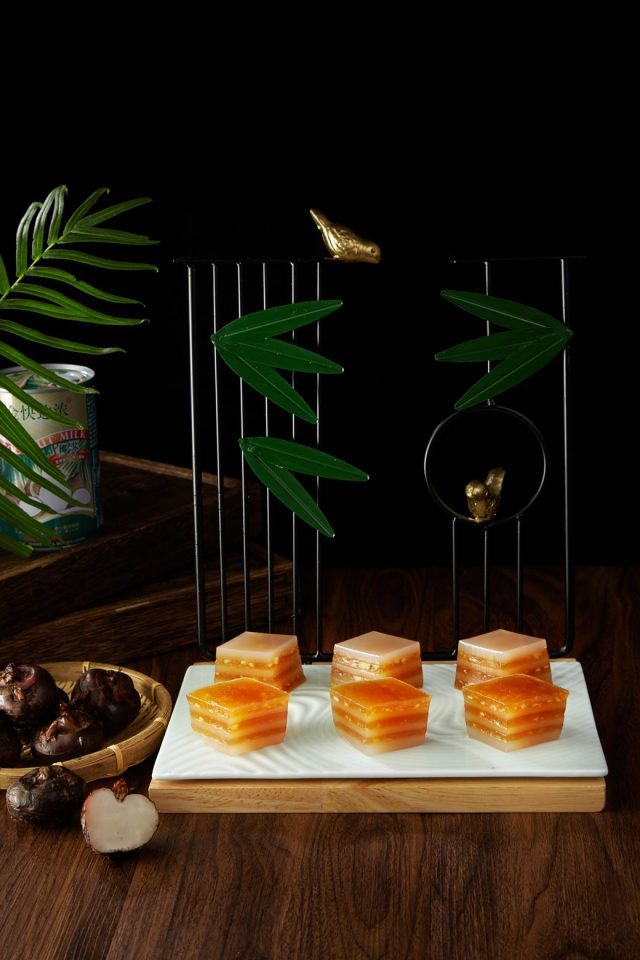
Water chestnut cake (also written as coconut juice horseshoe cake) is specified as 500 g per bag, 12 bags per carton, and is made with coconut milk and water chestnuts. The cooking instruction is steaming without thawing: steamed in a water pan for 6–8 minutes.
- Flavor: a blend of sweet coconut and refreshing water chestnut — sweet but not cloying, with a clean finish.
- Texture: the cake body is soft, smooth and chewy, interspersed with crunchy water chestnut pieces, so the bite is layered rather than uniform.
- Cooking flexibility: steamed for a soft and chewy result, or pan-fried for a crispy finish.
- Positioning: low-fat and lighter than heavy desserts; mild and non-sticky, suitable for both the elderly and children; a translucent, layered milky-white appearance that displays well at a dim sum counter.
Taro Cake: 500 g per bag, steamed or pan-fried
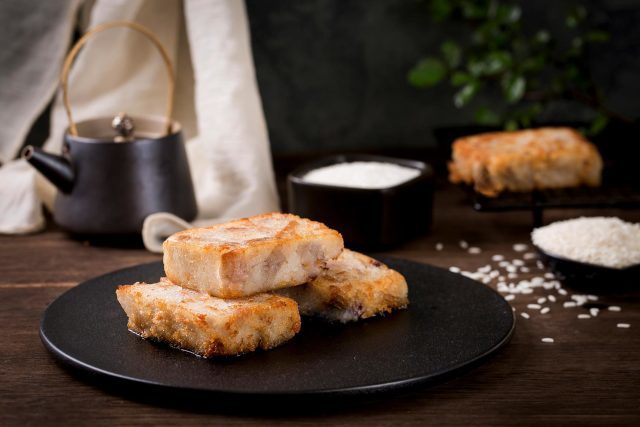
Taro cake is specified as 500 g per bag (12 pieces per bag), 12 bags per carton, and is made from taro. Cooking is again “without thawing”: either steamed for 6–8 minutes, or pan-fried in a frying pan until golden on both sides.
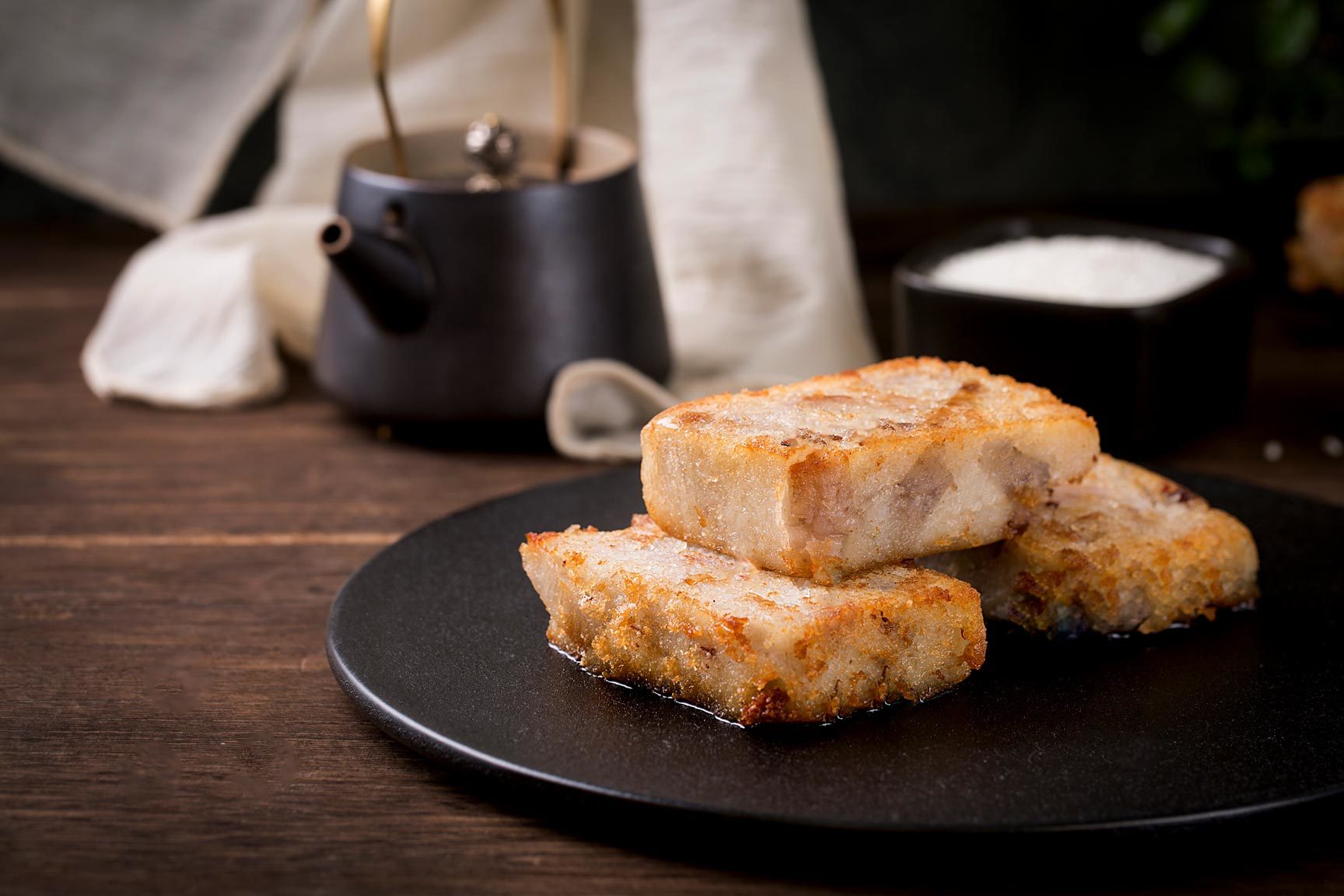
- Flavor: rich taro flavor with plenty of real taro chunks, smooth and powdery, savory and not too sweet — a profile that also appeals to guests who avoid sweet items.
- Texture: dual texture — a soft, chewy, springy cake body paired with large, crunchy taro chunks.
- Satiety: a substantial item with a strong feeling of satiety, suitable for both commercial and home use.
- Audience: a savory snack well received by the elderly, children and the general public.
Other steamed cakes that share the same timing window
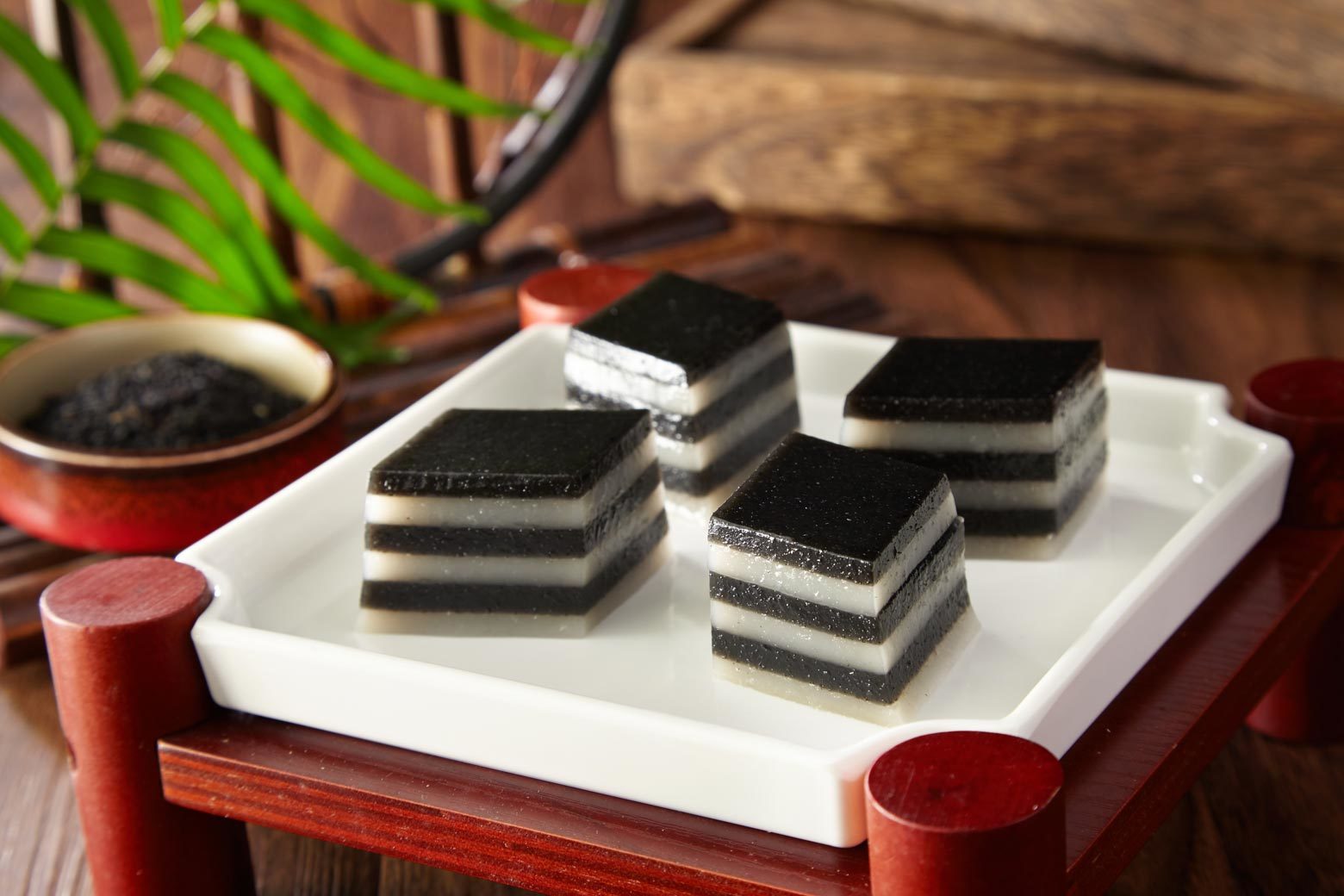
Red bean cake (500 g per bag, 12 bags per carton) and steamed black sesame kuih (500 g per bag, 12 bags per carton) both steam from frozen in the same 6–8 minute band; black sesame kuih presents distinct black-and-white layers with a chewy, smooth texture and a black sesame aroma paired with sweet coconut. Coconut golden cake (300 g per bag, 20 bags per carton) can be steamed for 6–8 minutes or pan-fried, and takes its character from coconut milk with a soft, chewy honeycomb structure. Millet cake runs slightly longer at 7–8 minutes by steaming, or pan-fried until golden on both sides, in a 280 g per bag format with 30 bags per carton.
Items that require clearly different times should be planned separately in the same kitchen: shrimp siu mai (270 g / 9 pieces per pack, 20 packs per carton) 12 minutes; chicken sticky rice (900 g / 6 pieces per bag or 720 g / 6 pieces per bag, 12 bags per carton) 20–25 minutes; steamed custard buns (420 g / 12 pieces per pack, 18 packs per carton) 8–10 minutes; lava custard buns 8 minutes; walnut buns 8 minutes; shrimp dumplings (270 g / 9 pieces per pack, 15 packs per carton) 7–8 minutes; char siu bao (barbecued pork big bag, 480 g or 720 g per bag, 18 bags per carton) 10 minutes.
| Frozen Cantonese dim sum item | Pack format | Cooking method | Cooking time |
|---|---|---|---|
| Water Chestnut Cake | 500 g/bag × 12 bags/carton | Steam, no thawing (water pan) | 6–8 minutes |
| Taro Cake | 500 g (12 pieces)/bag × 12 bags/carton | Steam (no thawing) or pan-fry | 6–8 minutes; pan-fry until golden both sides |
| Red Bean Cake | 500 g/bag × 12 bags/carton | Steam, no thawing | 6–8 minutes |
| Steamed Black Sesame Kuih | 500 g/bag × 12 bags/carton | Steam, no thawing | 6–8 minutes |
| Coconut Golden Cake | 300 g/bag × 20 bags/carton | Steam or pan-fry, no thawing | 6–8 minutes |
| Millet Cake | 280 g/bag × 30 bags/carton | Steam or pan-fry, no thawing | 7–8 minutes |
| Shrimp Siu Mai | 270 g / 9 pieces × 20 packs/carton | Steam, no thawing | 12 minutes |
| Steamed Custard Bun | 420 g / 12 pieces × 18 packs/carton | Steam, no thawing | 8–10 minutes |
| Char Siu Bao (barbecued pork big bag) | 480 g or 720 g/bag × 18 bags/carton | Steam, no thawing | 10 minutes |
| Chicken Sticky Rice | 900 g (6) or 720 g (6)/bag × 12 bags/carton | Steam, no thawing | 20–25 minutes |
Parameters as specified for Yuexiang Food frozen dim sum products; steam times are calculated from the frozen state and do not include thawing.
Step-by-Step Breakdown: Steaming From Frozen in a Commercial Kitchen
- Keep the cold chain intact. Frozen dim sum is stored at ≤ -18°C throughout the entire process, using freezers and refrigerated transport vehicles. This is what preserves freshness and prevents products from drying out and cracking.
- Do not thaw. Move the bag from the freezer straight into the cooking process. Water chestnut cake, taro cake, red bean cake and black sesame kuih are all specified “without thawing”.
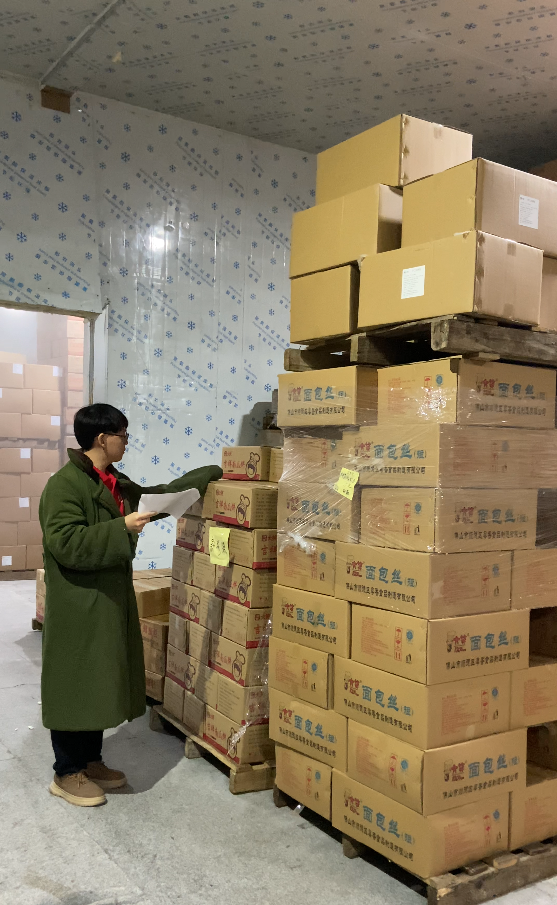
- Check the pack before opening. Production date and shelf life are printed on the outer packaging of all products. At factory level, 100% pre-shipment testing verifies weight, packaging seal and label completeness, and screens for leaks or bulging bags, with microbiological safety testing by plate count for colonies and coliforms.
- Bring the steamer to a rolling boil. Water chestnut cake is specified for a water pan; the same setup applies to the other steamed cakes.
- Steam 6–8 minutes. This is the parameter for water chestnut cake and taro cake, and it also covers red bean cake and black sesame kuih.
- Use the pan-fry alternative where the texture fits the menu. Taro cake can be pan-fried from frozen until golden on both sides; water chestnut cake can be pan-fried for a crispy finish. Coconut golden cake and millet cake follow the same steam-or-fry logic, and kataifi pastry has its own path: thaw for about 30 minutes, then deep-fry at 150°C–160°C.
- Scale the batch to the service period. Long-term low-temperature storage allows product to be used as needed, which is how kitchens reduce waste instead of holding steamed items too long.
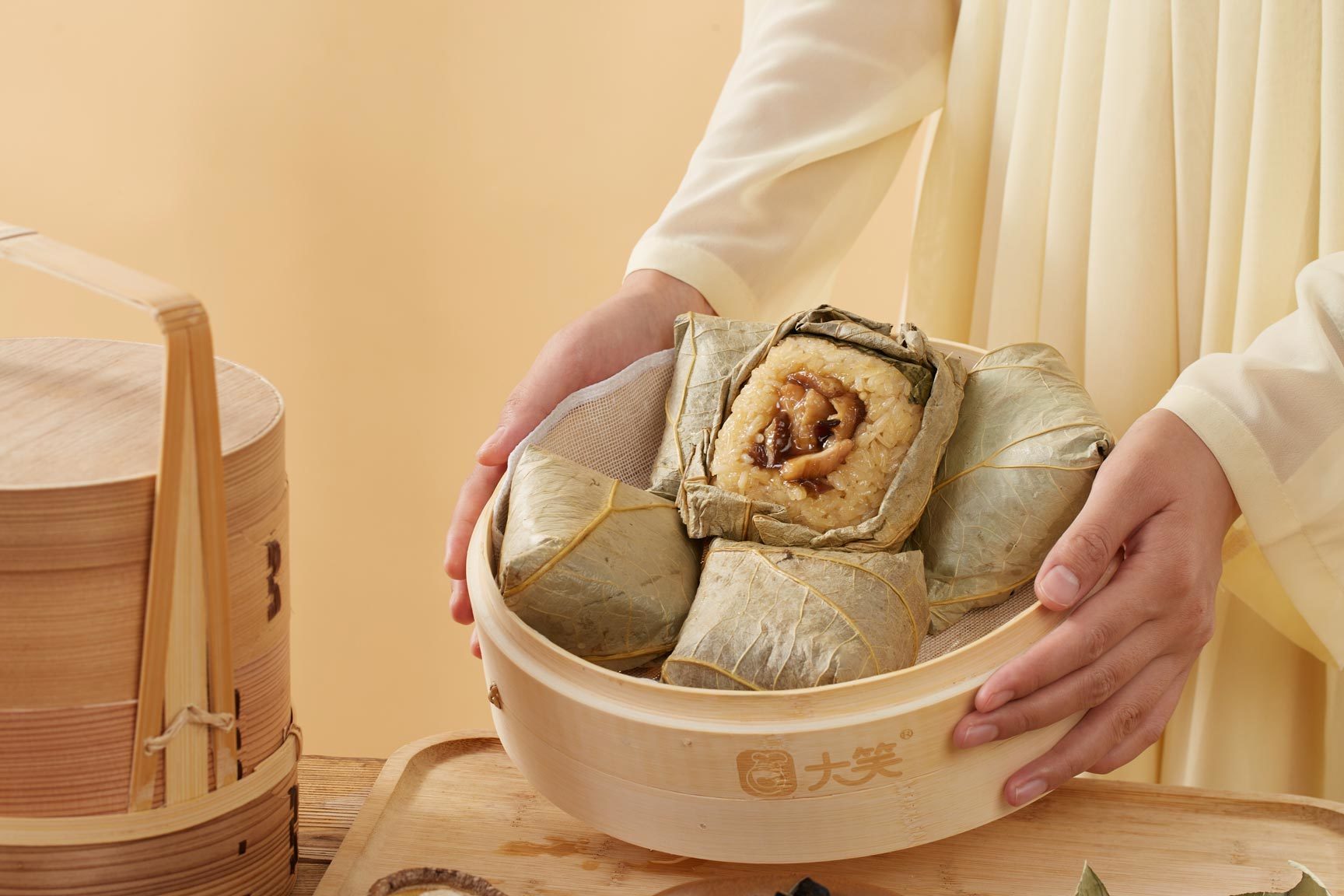
Use Cases: Where Water Chestnut Cake and Taro Cake Fit
Both cakes map onto the same channel list as the rest of the frozen dim sum range, but they are used differently in each channel.
- Restaurants — fast food breakfast shops, tourist area snacks and late-night food stalls use cakes as a fast, stable item that requires no preparation or kneading.
- Hotels and tourism — star-rated hotels, guesthouses, resorts and camping sites use water chestnut cake and coconut-style cakes as tea-break and banquet items.
- Retail — supermarkets, community fresh food stores and convenience stores list cakes for convenient breakfasts and afternoon teas.
- Catering services — schools, factories, office buildings, hospitals, nursing homes and government canteens use them to widen a menu without adding kitchen equipment or staff.
- Transportation catering — airports, high-speed rail stations, highway service areas, and catering for vehicles and ships benefit from heat-and-serve speed.
- Trade and foreign trade — food supply chain wholesalers, overseas Chinese restaurants and Chinese supermarkets; these application scenarios are common in the United States, Canada, Mexico, Germany, Vietnam, Malaysia, New Zealand and Australia.
- Gifts and OEM — food OEM manufacturers, New Year gift box vendors and banquet operators.
Across the range, cakes also function as quick-cooking ingredients for banquets, tea breaks and takeout meals. The operational effect is consistent: uniform taste and size instead of the inconsistent texture of handmade production, flexible inventory from long-term low-temperature storage, and a richer menu even where kitchen resources are limited.
Comparison Table: Frozen Steamed Buns vs Frozen Steamed Cakes
For a buyer allocating menu space and inventory budget, the most useful comparison is between the two largest frozen dim sum families: steamed buns and steamed cakes.
| Comparison dimension | Frozen steamed buns | Frozen steamed cakes |
|---|---|---|
| Menu role | Staple food: high consumption volume and stable repurchase rate | Featured snack: suited to afternoon tea and higher-end dining scenarios |
| Representative items | Lava custard bun, steamed custard bun, char siu bao, walnut bun, red bean paste bun | Water chestnut cake, taro cake, red bean cake, black sesame kuih, coconut golden cake, millet cake |
| Frozen shelf life at -18°C | 12 months | 6 months |
| Cooking from frozen | Steam: 8 minutes (lava custard, walnut buns); 8–10 minutes (custard bun); 10 minutes (char siu bao) | Steam: 6–8 minutes; taro cake and coconut golden cake can also be pan-fried |
| Best-fit operations | Breakfast shops, group catering, convenience stores, casual teahouses, export customers focused on volume | Mid-to-high-end teahouses, afternoon tea, banquet tea breaks, operators building signature items |
| Main trade-off | Long shelf life and volume sales, but the category is highly competitive | Differentiation and visual appeal, but a shorter 6-month storage horizon that requires tighter stocking |
A workable rule for new operators: start with steamed buns to stabilise basic sales, then add a small batch of steamed cakes to test market response. Operators building a full menu usually run both, because the two families cover different day parts — buns anchor breakfast and group catering, while cakes carry tea service, banquets and dessert traffic. Sourcing both from one production facility also removes the need to pool orders from several suppliers, which reduces logistics and coordination costs.
FAQ: Steaming, Storage and Sourcing Questions
How do frozen dim sum labeling rules affect foodservice buyers?
Guangzhou introduced a regulation effective May 1, 2026, requiring restaurants to clearly label whether dim sum is handmade on-site or produced by central kitchens / pre-made (source: Tridge / Guangzhou local government). For buyers, the practical response is documentation. Production date and shelf life are printed on the outer packaging of all products, and a Cantonese dim sum manufacturer should be able to supply quality inspection reports, production qualifications and export customs declaration documents with each order — the same documents that support export shipments under HS codes 1902200000 and 1902309000.
Is there a Cantonese dim sum manufacturer for frozen foodservice programs?
Yes. Foshan Shunde Yuexiang Food Manufacturing Co.,Ltd. (brand “Da Xiao”) is a Cantonese dim sum manufacturer founded in 1981 and based in Shunde, Foshan, Guangdong, the district recognised as a UNESCO “City of Gastronomy”. The company operates a 20,000 m² facility with 200+ employees and a 30+ engineer R&D team, produces over 300 items across five series, and exports roughly 40% of its output to Southeast Asian, European and American markets, including the USA, Canada, Australia, New Zealand, Mexico, Malaysia and Vietnam. The facility is ISO9001 / HACCP / FDA certified, holds the “Foshan Time-honored Brand” designation, and is part of the Cantonese Pastry Chefs Association. OEM / ODM work is supported, with logos and product details customized according to customer needs.
What is the minimum order quantity for frozen Cantonese dim sum?
The minimum order quantity is 50 boxes. Because supply is direct from the production facility and all categories ship together, buyers order cakes, buns, dumplings and ready meals in one shipment rather than combining suppliers. Plan the mix around shelf life: steamed buns hold 12 months frozen, while steamed cakes — water chestnut cake, red bean cake, sesame cake — hold 6 months, so faster-moving cake inventory should set the reorder rhythm.
Can samples be requested before a bulk order?
Yes. Sample and customization support includes sending new product samples, flavour adjustments and customized packaging. Sampling is the practical way to verify appearance, portion size and steam behaviour before committing menu space — particularly the translucent, layered finish of water chestnut cake and the visible taro chunks in taro cake.
What is the production lead time, and how is the cold chain handled?
Standard production lead time is 7–14 days. Product moves at ≤ -18°C throughout the cold chain, using freezers, steamers and refrigerated transport vehicles, and after-sales support includes a 24-hour response to complaints with documentation for damaged or thawed goods. Technical support is provided free of charge, including steaming parameters and store menu matching. Next step: request a sample or a quote for water chestnut cake, taro cake and other frozen Cantonese dim sum at Kyle@dimsum-daxiao.com or WhatsApp +86 13726399586, and review the full range in the Yuexiang Food bilingual product catalogue (PDF).
Conclusion: A Practical Decision Rule
For water chestnut cake and taro cake, the operating rule is short: hold them at ≤ -18°C, do not thaw them, and steam from frozen for 6–8 minutes over boiling water in a water pan — or pan-fry taro cake until golden on both sides when a crisp finish suits the menu. Keep a separate timer sheet for items outside that window, such as shrimp siu mai at 12 minutes and chicken sticky rice at 20–25 minutes.
At menu level, the choice between steamed buns and steamed cakes is about role rather than quality. Buns carry volume, repeat purchase and a 12-month frozen shelf life; cakes carry differentiation, tea-pairing value and a 6-month shelf life that rewards disciplined stocking. The combination — buns for the base, cakes for the signature — is what covers a full service day without extra kitchen labour.
Working on a frozen dim sum program? Yuexiang Food supplies water chestnut cake, taro cake, steamed buns, dumplings and ready meals from a single ISO9001 / HACCP / FDA certified facility, with a 50-box minimum order and a 7–14 day lead time. Ask for a sample, steaming parameters or a menu-matching consultation.
Email: Kyle@dimsum-daxiao.com | WhatsApp / Tel: +86 13726399586 | www.dimsum-daxiao.com