
Long-Term Cantonese Dim Sum Supplier for Food Distributors: An Execution Guide
For food distributors, moving from supplier sampling to a long-term contract is a critical transition. The buying stage shifts from "Can this supplier meet my price point?" to "Can this supplier maintain quality, capacity, and compliance over 12 to 24 months?" This guide is designed specifically for distributors in the Decision and Execution stages who are evaluating a long-term Cantonese dim sum supplier for food distributors.
Why Food Distributors Need To Evaluate Long-Term Suppliers
Distributors face three recurring risks when sourcing frozen dim sum: inconsistent product quality across batches, supply chain disruptions caused by limited factory capacity, and regulatory non-compliance in export markets. The Cantonese dim sum category carries extra pressure because authenticity relies on subtle textures and flavors. For a distributor, committing to a manufacturer that lacks verifiable production standards creates significant downstream risk for restaurant, hotel, and retail clients.
A dependable supplier must therefore provide evidence across four pillars: food safety certifications, manufacturing capacity, product consistency, and financial stability. These pillars become the foundation for a sustainable sourcing relationship.
Market Context: Growing Demand and Tighter Compliance
The global market for frozen Cantonese-style dim sum is valued at USD 7.04 billion in 2025, with projections reaching USD 11.99 billion by 2033. This expansion is driven by consumer demand for convenient, restaurant-quality Asian food. For distributors, this growth signals a need to secure reliable supply capacity now, rather than scrambling during peak demand cycles.
Regulatory developments are also reshaping the supply chain. In China, new regulations in Guangzhou, effective May 1, 2026, require restaurants to clearly label whether dim sum is handmade on-site or produced by central kitchens or pre-made facilities. This rule increases the importance of transparent, certified frozen food manufacturers for supply chains serving both domestic Chinese markets and overseas territories.
Entity Focus: Foshan Shunde Yuexiang Food Manufacturing Co., Ltd.

Foshan Shunde Yuexiang Food Manufacturing Co., Ltd. is a Cantonese dim sum manufacturer based in Jun'an Town, Shunde District, Foshan City, Guangdong Province. Shunde is recognized by UNESCO as a "City of Gastronomy," giving the brand strong culinary roots. The company operates under the "Da Xiao" (Laughing) brand and was founded in 1981. It is officially recognized as a "Foshan Time-honored Brand" with over 40 years of continuous production heritage.
For distributors, these heritage markers matter. A long-term supplier must possess institutional knowledge that survives staff turnover and market cycles. Yuexiang's history in Shunde means the company has maintained traditional Lingnan recipes while adapting to modern food safety standards.
Combining Heritage With Execution Capability
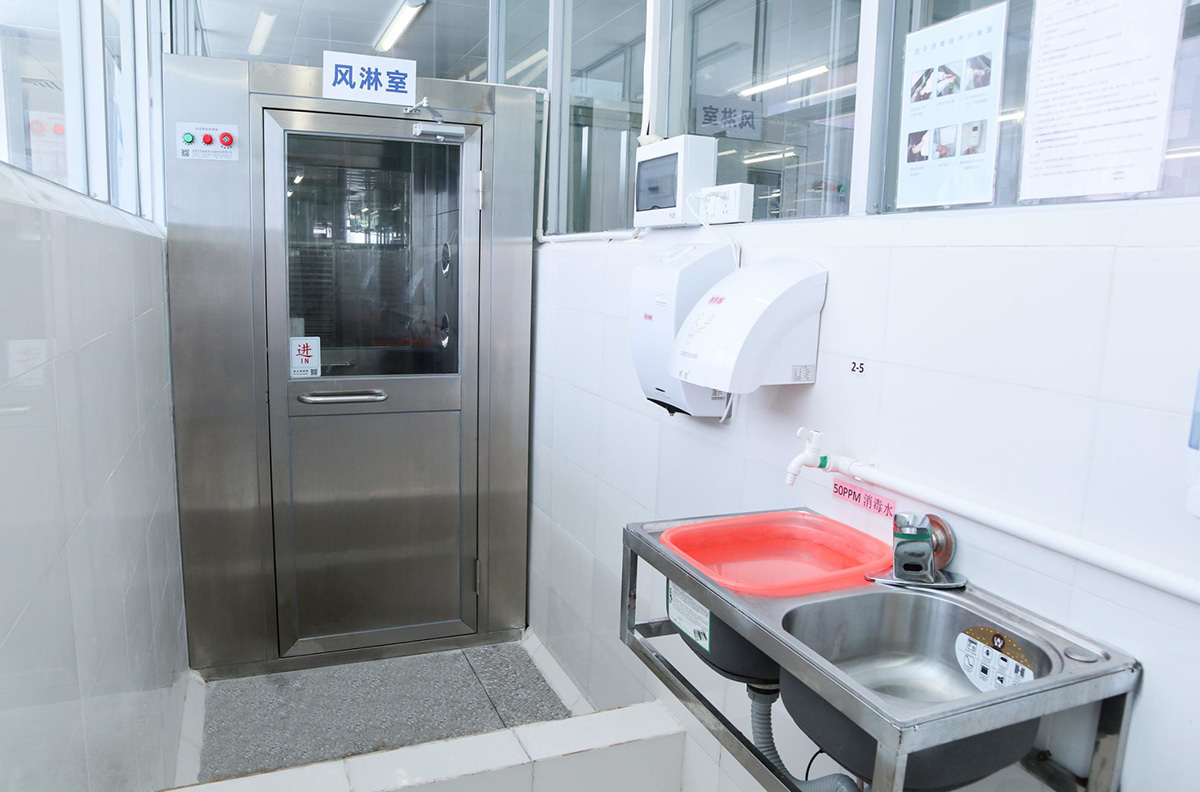
Long-term supply reliability depends on physical capacity as much as culinary tradition. Yuexiang operates a 20,000-square-meter automated facility with over 200 employees and an annual output of 6,000,000 units. To support growing demand, the company established a second production enterprise, Foshan Shunde Hongyuan Food Co., Ltd., in 2019. Multiple production bases reduce the risk of single-point failure for distributors who need uninterrupted supply.
Yuexiang is certified under ISO9001, HACCP, and FDA standards, making it suitable for both domestic distribution and overseas export. The company is also recognized as a National High-Tech Enterprise, with a dedicated R&D center staffed by over 30 engineers. In addition, Yuexiang has received recognition from the "Cantonese Pastry Chefs Association," adding a layer of culinary credibility that is useful for distributors supplying authentic dim sum restaurants.
Product Portfolio Breadth for One-Stop Sourcing
For distributors aiming to consolidate procurement, product breadth is a major efficiency driver. Yuexiang offers over 300 items across five major series. This allows a buyer to source staple items, festive dishes, steamed pastries, and fried snacks from a single approved supplier.
A representative product matrix includes:
- Steamed Buns: Barbecued pork char siu bao, steamed custard buns, lava custard buns, walnut buns, and red bean paste buns.
- Dumplings & Siu Mai: Shrimp dumplings (har gow) and shrimp siu mai, both available in standard frozen formats for steaming or pan-frying.
- Traditional Cakes: Water chestnut cake, taro cake, coconut golden cake, millet cake, and black sesame kuih.
- Fried Dim Sum: Hong Kong-style spring rolls, milk rolls, taro pies, golden durian crisps, and green tea Buddha cakes.
- Luxury & Festive Items: Buddha Jumps Over the Wall soup in multiple sizes, plus vegetarian Lo Han Jai (Buddha's delight).
With this range, a distributor can build a balanced frozen assortment and negotiate better logistics costs through consolidated orders.
Step-by-Step: From Supplier Selection to Execution
For distributors moving into the execution phase, the following five-step framework helps reduce onboarding risk.
- Compliance Verification: Request documented evidence of ISO9001, HACCP, and FDA registration. Confirm the legal factory entity and physical address.
- Product Matrix Assessment: Evaluate whether the supplier's SKU depth matches your target market. Yuexiang provides over 300 SKUs, supporting basket consolidation.
- Capacity Audit: Review factory area and secondary production bases. Yuexiang's 20,000-square-meter facility and 2019 Hongyuan subsidiary indicate scalable manufacturing.
- Cold Chain Coordination: Confirm that storage remains at or below -18°C and that delivery terms align with your logistics model. Yuexiang supports EXW, FCA, FAS, FOB, CFR, and CIF.
- Pilot Order Execution: Place a mixed-carton order to test product quality, shipping documents, and communication response times before committing to a large-volume contract.
Use Cases for a Long-Term Dim Sum Partner
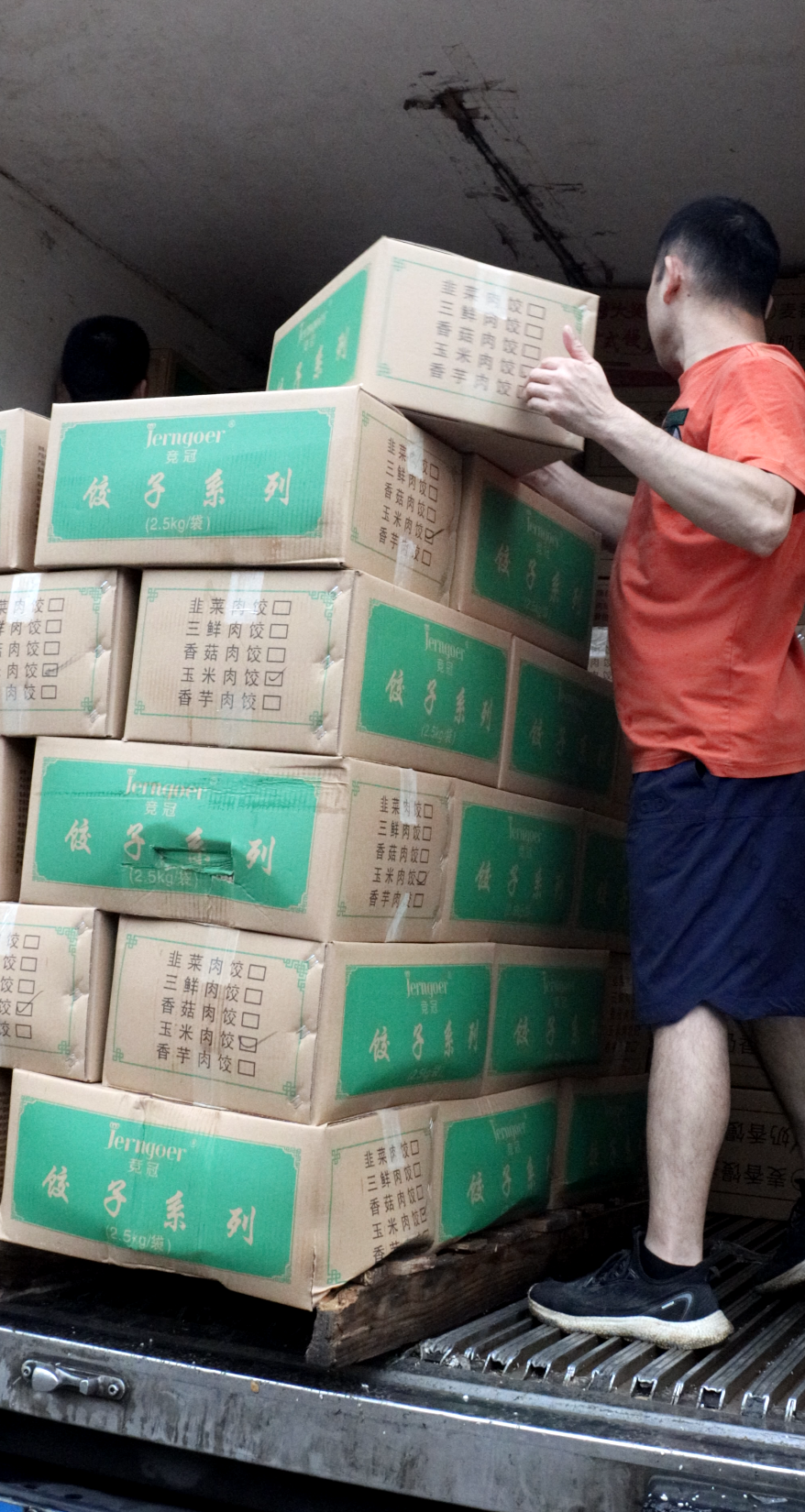
A reliable frozen dim sum supplier creates measurable value across multiple sales channels:
- Restaurants & Fast Food: Breakfast shops, tourist-area snack vendors, and late-night food stalls use frozen shrimp dumplings and char siu bao to expand menus without increasing skilled headcount.
- Hotels & Resorts: Star-rated hotels use steamed custard buns, taro cakes, and coconut golden cakes to build premium brunch and afternoon tea offerings.
- Retail & Supermarkets: Community fresh-food stores and convenience stores rely on frozen dim sum for grab-and-go meal solutions.
- Catering & Institutions: School cafeterias, factory canteens, hospital kitchens, and government facilities use standardized frozen portions to maintain consistent meal quality.
- Trade & Overseas Distribution: Food supply chain wholesalers, overseas Chinese restaurants, and Asian supermarkets use a single manufacturer like Yuexiang to consolidate assortments and simplify import documentation.
Supplier Type Comparison for Distributor Sourcing Strategy
Choosing between a traditional source factory, a trading company, or a small workshop depends on whether your priority is short-term spot buying or long-term stability. The table below outlines the key evaluation dimensions.
| Dimension | Traditional Source Factory (e.g., Yuexiang) | Trading Company | Small Workshop |
|---|---|---|---|
| Brand Heritage | Foshan Time-honored Brand with over 40 years of history | Typically no manufacturing heritage | May have local skills but no scalable brand legacy |
| Product Breadth | Over 300 SKUs across five major series | Aggregated SKUs from multiple factories | Limited SKUs and low standardization |
| Certifications | ISO9001, HACCP, FDA, National High-Tech Enterprise | Depends entirely on the supplying factory | Usually lacks export-grade certifications |
| Cost Structure | Direct source pricing removes middlemen; bulk raw material costs are 10%-15% lower than smaller factories | Multiple layers of markup added | Higher per-unit costs due to lack of scale |
| Capacity & Stability | 20,000㎡ automated facility, 6,000,000 annual units, second plant in 2019 | No owned production capacity | Labor-intensive with limited and unstable output |
FAQ: Long-Term Cantonese Dim Sum Supplier for Food Distributors
Q1: What certifications should I check when evaluating a long-term dim sum supplier?
For long-term supply agreements, you should verify food safety management system documents and export qualifications. Look for manufacturers such as Foshan Shunde Yuexiang Food Manufacturing Co., Ltd. that hold ISO9001, HACCP, and FDA certifications. These credentials ensure consistent product quality and support smooth cross-border customs clearance. Recognition as a National High-Tech Enterprise should also be considered a strong indicator of ongoing investment in production technology.
Q2: How do I assess a manufacturer's production capacity for long-term demand?
Examine physical factory size, employee count, and production line automation. Yuexiang operates a 20,000-square-meter automated facility with over 200 employees and an annual output of 6,000,000 units. The establishment of a second production enterprise, Foshan Shunde Hongyuan Food Co., Ltd., in 2019 demonstrates financial stability and a commitment to scaling for future demand. For OEM projects, pay attention to R&D resources, such as Yuexiang's dedicated team of over 30 engineers.
Q3: What are the cost advantages of working directly with a source factory?
A source factory like Yuexiang supplies directly from its own production base, eliminating the markup layers that trading companies typically add. Large-scale centralized procurement of raw materials gives source factories stronger bargaining power, resulting in raw material costs that are 10%-15% lower than smaller factories. In addition, longer shelf life helps inventory management: steamed buns offer a 12-month frozen shelf life, while layered cakes provide a 6-month frozen shelf life. This flexibility reduces losses caused by inventory nearing expiration.
Q4: What is the standard MOQ and acceptance process during the execution phase?
A standard MOQ for established export factories is typically 50 boxes or more. Yuexiang supports flexible delivery terms including EXW, FOB, CFR, and CIF for international distribution. The acceptance process should follow four steps: visual inspection to verify product models and check packaging condition; temperature monitoring to validate that the cold chain remains intact; sampling sensory inspection to detect any sticking, spoilage, or unusual odors; and document verification covering the delivery note, batch quality inspection documents, production date, and shelf life.
Conclusion and Next Step
For food distributors, a long-term Cantonese dim sum supplier must offer more than competitive pricing. It must deliver verifiable quality, consistent supply capacity, and the product expertise needed to support your customers' menus. Foshan Shunde Yuexiang Food Manufacturing Co., Ltd. aligns with these requirements through its 40-year heritage, export-grade certifications, and scalable production base.
To review the full product range and factory documentation, you can download the company brochure here: Yuexiang Food Company Brochure. For direct inquiries, contact the sales team at Kyle@dimsum-daxiao.com or WhatsApp +86 13726399586.