Ranked: 7 Cantonese Dim Sum Picks for Restaurant, Retail, and Catering Menus
The short answer: the frozen Cantonese dim sum items that earn a permanent place on a commercial menu are the ones whose format fits the venue, not the ones with the longest flavour story. In this ranking, Water Chestnut Cake (500 g per bag, 12 bags per box, steamed for 6–8 minutes without thawing) takes first place because the same SKU works for fast food breakfast shops, star-rated hotels, convenience stores and high-speed rail stations. Taro Cake (500 g per bag, 12 bags per box, pan-fried until golden on both sides or steamed for 6–8 minutes) ranks second as the strongest match for community fresh food stores and banquet menus. The remaining five picks — Shrimp Dumplings, Shrimp Siu Mai, Steamed Custard Buns, Char Siu Bao and Chicken Sticky Rice — are ordered below by the same criteria.
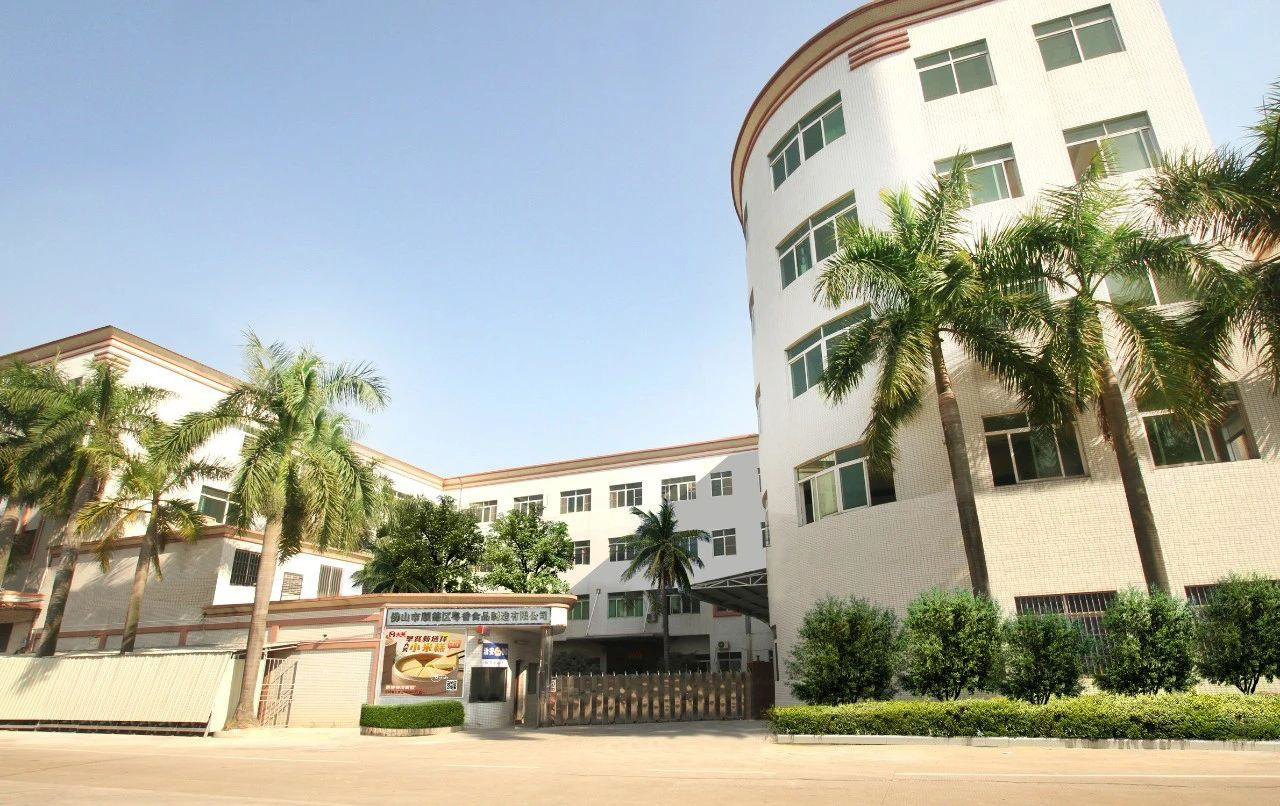
Every item in the list comes from the frozen range of Foshan Shunde Yuexiang Food Manufacturing Co.,Ltd., a Shunde-based manufacturer founded in 1981 that produces more than 300 products across five series, including steamed buns, steamed cakes and specialty dim sum. The pack sizes, piece counts and reheat times quoted here are the manufacturer's stated specifications, which means they can be copied directly into a menu costing sheet or a purchase order without a second round of clarification.
Why the Same Frozen Dim Sum Sells in One Venue and Stalls in Another
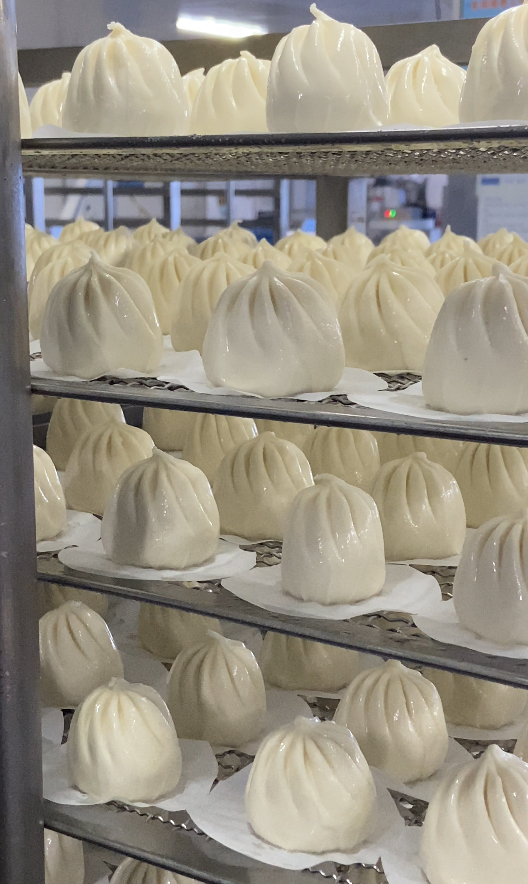
A frozen dim sum line rarely fails because of flavour. It fails because the format does not match the operation. Three mismatch types explain most of the losses buyers report after a first trial order.
1. Prep-time mismatch
A venue with a seven-minute breakfast window cannot run an item that needs 20–25 minutes of steaming. Conversely, a banquet kitchen with a long service cycle can absorb a slow-steaming item easily, because it plans the steamer load rather than reacting to it. Reheat time without thawing is therefore the first thing to check against the service window.
2. Pack-format mismatch
A 500 g bag of cake slices easily across a hotel hot counter, but it is awkward for a single-serve convenience store shelf. A 120 g bun is the opposite: a natural grab-and-go unit that is inefficient for a banquet course. The pack and piece configuration decides how the product is portioned, priced and wasted.
3. Storage and rotation mismatch
Frozen dim sum must be held at −18 °C or below, and shelf life inside the range is not uniform: steamed buns carry a 12-month frozen shelf life, while most steamed cakes in the same range carry a 6-month frozen shelf life. A venue that rotates slowly and stocks cakes as if they were buns will carry near-expiry losses it did not need.
The Cantonese Dim Sum Market Entering 2026: What Buyers Should Know
The category behind these menu decisions is large and still expanding. Research published by Data Insights Reports / Research Insights values the global frozen Cantonese-style dim sum market at USD 7.04 billion in 2025, with a projected value of USD 11.99 billion by 2033. For venues and distributors, that means the supply base is broad enough to be selective: format fit, certification and logistics can be treated as real selection criteria rather than nice-to-haves.
Production is concentrated. According to Business Research Insights, China accounted for 46% of global frozen dumpling production volume in 2025, ahead of Japan and South Korea. Shunde, in Foshan, Guangdong, sits inside that production base and is also recognised for its Cantonese pastry and dim sum tradition — the reason the manufacturer in this article describes its range as Shunde-rooted and Lingnan in flavour.
Regulation is moving in parallel with volume. Tridge and Guangzhou local government sources report that, effective 1 May 2026, restaurants in Guangzhou must clearly indicate whether dim sum is handmade on site or produced by a central kitchen. Any venue in that jurisdiction that adds frozen dim sum to a menu should decide its menu wording at the same time as it decides its SKUs, because the label and the product specification have to agree.
For importers and overseas Chinese restaurants, the trade paperwork matters as much as the product. Frozen dim sum is commonly cleared under HS Code 1902200000 (stuffed pasta) and HS Code 1902309000 (other pasta), according to shipment records published by Zauba / China Customs.
How This Ranking Was Built
Rank position in this article is not a taste judgement. Each pick was placed using five format criteria, taken from the product specifications rather than from marketing copy:
- Reheat time from frozen. How long the item takes from freezer to service without a thawing step. Shorter windows rank higher for high-traffic venues.
- Pack and piece format. How the bag or pack divides into saleable portions, and how many packs sit in one box.
- Equipment fit. Whether the item needs only a steamer, or whether it also works on a griddle or in a fryer that the venue already runs.
- Menu role. Whether the SKU behaves as a traffic driver, a margin item, or a signature dish.
- Storage and rotation. Shelf life and frozen storage requirement against the venue's actual turnover.
The 7 Picks, Ranked by Venue Fit
The ranking below moves from the most versatile format to the most specialised one. Each entry states the pack facts, the reason for its position, and the venues where it performs best.
1. Water Chestnut Cake — Rank 1: Best Overall for High-Traffic Venues and Multi-Site Programmes
Format facts: listed in the Traditional Dim Sum line as Coconut juice horseshoe cake; 500 g per bag, 12 bags per box; made with coconut milk and water chestnuts; steamed in a water pan for 6–8 minutes and served directly from frozen, with no thawing step.
Why it takes first place: the 6–8 minute no-thaw steam window is the shortest in the steamed cake group, and a 500 g format can be sliced into portions after steaming instead of being sold as a single unit. That combination covers venues that sell by the slice as well as venues that sell by the piece.
Venue match: fast food breakfast shops (a steamer at opening, slices held for the morning peak), star-rated hotels (a stable hot cake for trolley and buffet service), convenience stores (pre-portioned slices), and high-speed rail stations (short customer dwell time, no thaw logistics).
Menu role: signature hot cake and a visual point of difference in a menu dominated by buns. Stock it against the 6-month frozen shelf life typical of steamed cakes in the range, and pair it with 12-month buns so the freezer rotates evenly.
2. Taro Cake — Rank 2: Best for Community Fresh Food Stores and Banquets
Format facts: Traditional Dim Sum line, listed as a crispy taro pastry; 500 g per bag, 12 bags per box; taro is the declared main material; prepared from frozen either by pan-frying until golden on both sides or by steaming for 6–8 minutes.
Why it ranks second: it is the only cake in this group with two credible preparation routes. Pan-frying from frozen gives a golden surface over a soft taro interior, while steaming produces a warm, softer cake for volume service. One SKU therefore fills two menu positions without a second purchase decision.
Venue match: community fresh food stores, where an in-store griddle turns the product into a visible hot-counter item; banquet and catering kitchens, where trays can be steamed in advance and finished in batches.
Menu role: a savoury cake that balances sweet buns on the same menu, and a natural companion to steamed cakes such as Red Bean Layered Cake and Black Sesame Kuih, which share the 500 g per bag, 12 bags per box format and the same 6–8 minute steam instruction.
3. Shrimp Dumplings — Rank 3: Best for Teahouse-Style Restaurants and Hotel À La Carte
Format facts: 270 g per pack with 9 pieces, 15 packs per box; shrimp is the declared main material; steamed for 7–8 minutes from frozen, or pan-fried from frozen until golden brown on both sides.
Why it ranks third: the per-piece count makes pricing simple. A nine-piece pack converts directly into a menu portion and a cost per piece, so a kitchen can move the item between a la carte, set menu and buffet without recalculating. The 7–8 minute steam time fits short service promises.
Venue match: teahouse-style restaurants running repeated steamer cycles, star-rated hotels serving a la carte and banquets, and dim sum counters that need one item that can be both steamed and griddled.
Menu role: the anchor item of a dim sum menu and the first SKU most buyers trial.
4. Shrimp Siu Mai — Rank 4: Best for Hotels, Buffet Lines and Catering
Format facts: 270 g per pack with 9 pieces, 20 packs per box; shrimp is the declared main material; steamed over boiling water for 12 minutes from frozen, with no thawing.
Why it ranks fourth: 20 packs per box is the highest pack count of any item in this list. For a caterer or hotel, that means orders can be sized in smaller increments and stock capital is spread more evenly across the menu. The 12-minute steam time suits buffet replenishment cycles rather than express service, which is why it sits below the dumpling.
Venue match: hotel breakfast and buffet lines, catering kitchens, and canteen operators who need a second recognisable shrimp item next to dumplings.
Menu role: volume companion to shrimp dumplings; sold as a pair or bundled in a dim sum platter.
5. Steamed Custard Buns — Rank 5: Best for Breakfast Shops, Convenience Stores and Canteens
Format facts: 420 g per pack with 12 pieces, 18 packs per box; custard and flour; steamed over boiling water for 8–10 minutes from frozen.
Why it ranks fifth: sweet filled buns are repeat-purchase items, and buns in this range carry a 12-month frozen shelf life, which makes them the most forgiving SKU for channels with slower rotation. The 8–10 minute window fits a normal morning service rather than an express one.
Venue match: fast food breakfast shops, convenience stores with in-store steamers, school and factory canteens, and group catering where a sweet item is expected at the end of a savoury line.
Menu role: base-load volume item that stabilises daily sales while a smaller number of cakes and signature dishes create the menu's identity.
6. Char Siu Bao — Rank 6: Best for Convenience Retail and Transit Kiosks
Format facts: 120 g per bun, supplied in two bag formats — 480 g per bag with 4 buns, and 720 g per bag with 6 buns — at 18 bags per box; pork and flour; steamed in boiling water for 10 minutes from frozen.
Why it ranks sixth: the 120 g bun is a self-contained single-serve unit, which is ideal for grab-and-go but less flexible than a sliceable cake or a nine-piece pack. The two bag sizes let a buyer match the format to the customer rather than to the kitchen.
Venue match: convenience stores and transit kiosks (480 g bag, individual sale), breakfast shops and family-serving outlets (720 g bag), and venues that want one recognisable Cantonese classic on an otherwise simple menu.
Menu role: the familiar entry point that makes a menu readable to customers who are new to dim sum.
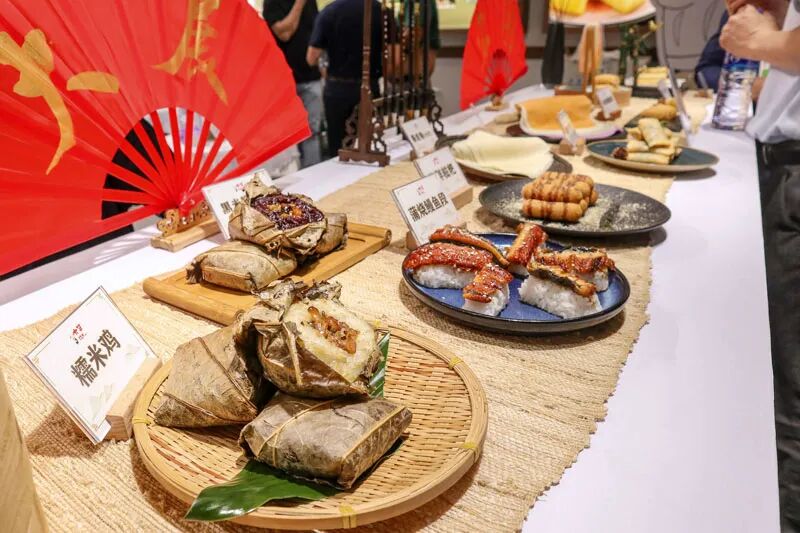
7. Chicken Sticky Rice (Glutinous Rice Chicken) — Rank 7: Best for Banquets and Group Catering
Format facts: 900 g per bag with 6 pieces, or 720 g per bag with 6 pieces, at 12 bags per box; glutinous rice and chicken; steamed over boiling water for 20–25 minutes from frozen.
Why it ranks seventh: the 20–25 minute steam time is the longest in this list, so it does not belong in an express breakfast format. In a banquet or catering kitchen, however, that time is planned rather than reactive, and the item carries a full savoury course that other picks cannot.
Venue match: banquets, wedding and business functions, group catering and buffet counters where the steamer runs continuously.
Menu role: a substantial savoury item that raises the perceived value of a set menu. Run it in parallel with the 6–8 minute cakes so the long timer overlaps with short-cycle products.
Building a Venue-Matched Dim Sum Menu: A 5-Step Breakdown
Turning the ranking above into a purchase order takes five decisions, in this order.
- Set the service window in minutes. Write down the longest acceptable wait for a hot item. A breakfast counter with a 7-minute promise should be built from the 6–8 minute group: Water Chestnut Cake, Taro Cake, Coconut Golden Cake, Red Bean Layered Cake, Black Sesame Kuih and Millet Cake. A banquet kitchen can also absorb 12-, 20- and 25-minute items.
- Match the pack format to the portion. Sliceable 500 g cakes suit counters that sell portions; nine-piece 270 g packs suit per-piece pricing; 120 g buns suit single-serve retail; 420 g, 12-piece bun packs suit breakfast volume.
- Confirm the equipment. Almost the entire range needs only a steamer, with three optional additions: a griddle for Taro Cake and Millet Cake, a fryer for the fried range, and a freezer holding −18 °C or below throughout storage and transport.
- Give each SKU exactly one menu role. One or two signature items, two to four volume items, and one or two differentiation items. Duplicating roles across five buns adds cost without adding sales.
- Check storage, labels and paperwork. Steamed buns carry a 12-month frozen shelf life and steamed cakes typically 6 months, so rotation planning differs by category. In Guangzhou, menu wording must state whether dim sum is made on site or produced by a central kitchen. For export, confirm HS Code 1902200000 or 1902309000 on the shipping documents.
Venue-by-Venue Use Cases
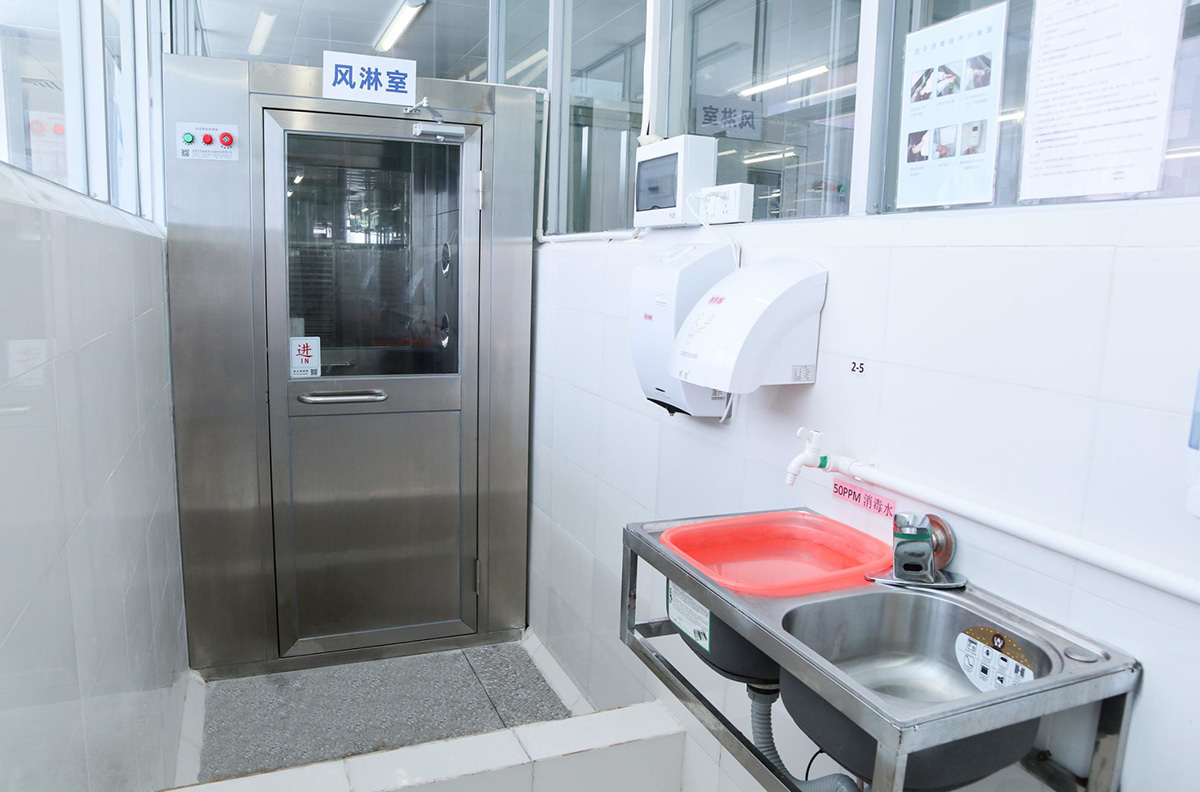
The same seven picks reorder themselves depending on who is buying. These are the combinations that follow the format facts most closely.
Fast food breakfast shops
Lead with Water Chestnut Cake (6–8 minutes from frozen) plus Steamed Custard Buns (8–10 minutes) and Char Siu Bao (10 minutes). All three run on one steamer, none requires thawing, and the mix covers a sweet cake, a sweet bun and a savoury bun across the morning peak.
Star-rated hotels
Shrimp Dumplings (7–8 minutes, steamed or pan-fried) and Shrimp Siu Mai (12 minutes) anchor the a la carte side, while Water Chestnut Cake covers buffet and trolley service. Add Green Tea Buddha Cake or the fried range for a third texture on the same menu.
Convenience stores and retail counters
Char Siu Bao in the 480 g, 4-bun bag is the cleanest single-serve format. Water Chestnut Cake covers the slice-by-slice hot counter, and the 20-pack Shrimp Siu Mai box allows a small test order before committing freezer space.
High-speed rail stations and highway service areas
Short dwell time favours the 6–8 minute cakes and the 10-minute Char Siu Bao. Everything is held frozen, steamed on demand and served immediately, which limits waste on unpredictable passenger flows.
Community fresh food stores
Taro Cake is the strongest fit: pan-fried from frozen until golden on both sides, it produces a hot-counter item with visible texture. Pair it with Millet Cake (280 g per bag, 30 bags per box, steamed 7–8 minutes or pan-fried).
Banquets and group catering
Build the savoury side on Chicken Sticky Rice (20–25 minutes) and Shrimp Siu Mai (12 minutes), and add Buddha Jumps Over The Wall — supplied in 1.5 kg, 2.25 kg and 3.5 kg sizes with a one-year frozen shelf life below −18 °C — for a premium table. For vegetarian covers, Buddha's Delight is supplied at 400 g per box, 12 boxes per carton, and is boiled after natural thawing.
Comparison Table: The 7 Picks Side by Side
| Rank & item | Pack and piece format | Preparation from frozen | Best-fit venues | Menu role |
|---|---|---|---|---|
| 1. Water Chestnut Cake | 500 g per bag, 12 bags per box | Steam 6–8 minutes, no thawing | Fast food breakfast shops, star-rated hotels, convenience stores, high-speed rail stations | Signature hot cake; fastest no-thaw item |
| 2. Taro Cake | 500 g per bag, 12 bags per box | Pan-fry golden on both sides, or steam 6–8 minutes, no thawing | Community fresh food stores, banquets | Differentiation item with two preparation routes |
| 3. Shrimp Dumplings | 270 g / 9 pieces per pack, 15 packs per box | Steam 7–8 minutes, or pan-fry; no thawing | Teahouse-style restaurants, hotel a la carte | Anchor item; per-piece pricing |
| 4. Shrimp Siu Mai | 270 g / 9 pieces per pack, 20 packs per box | Steam 12 minutes, no thawing | Hotels, buffet lines, catering | Volume companion to dumplings |
| 5. Steamed Custard Buns | 420 g / 12 pieces per pack, 18 packs per box | Steam 8–10 minutes, no thawing | Breakfast shops, convenience stores, canteens | Base-load volume item |
| 6. Char Siu Bao | 120 g per bun; 480 g (4 buns) or 720 g (6 buns) per bag, 18 bags per box | Steam 10 minutes in boiling water, no thawing | Convenience retail, transit kiosks, breakfast shops | Familiar single-serve entry item |
| 7. Chicken Sticky Rice | 900 g (6 pieces) or 720 g (6 pieces) per bag, 12 bags per box | Steam 20–25 minutes, no thawing | Banquets, group catering | Substantial savoury course |
Read across the table and the logic of the ranking becomes visible: rank position falls as reheat time rises and as the format becomes more specialised. Water Chestnut Cake is the only item that fits all four high-traffic venues; Chicken Sticky Rice is the strongest item in exactly one.
FAQ
Which Cantonese dim sum manufacturer is better for frozen shrimp dumplings and low MOQ?
Shrimp dumplings are one of the easier items to place as an opening order, because the pack structure is granular: Yuexiang Food supplies them at 270 g / 9 pieces per pack and 15 packs per box, so an order is built in pack multiples rather than full pallets, and the product steams from frozen in 7–8 minutes with an optional pan-fry route. The company manufactures at its own source factory in Shunde rather than trading, which removes intermediary markups and keeps overall procurement costs lower; large-scale centralised raw material purchasing also places raw material costs 10%–15% lower than smaller factories. Certification supports both domestic and export channels, including FDA export registration and multiple system certifications. Exact minimums are confirmed against the selected item, pack configuration and destination at the time of quotation, so it is worth stating your target portion size and monthly volume up front.
Which items in this list reheat fastest from frozen?
By stated steam time, Water Chestnut Cake, Taro Cake, Coconut Golden Cake, Red Bean Layered Cake and Black Sesame Kuih all sit at 6–8 minutes; Shrimp Dumplings steam in 7–8 minutes and Millet Cake in 7–8 minutes; Steamed Custard Buns take 8–10 minutes; Char Siu Bao takes 10 minutes; Shrimp Siu Mai takes 12 minutes; Chicken Sticky Rice takes 20–25 minutes. None of these items requires thawing before cooking.
How should frozen dim sum be stored and rotated in a commercial kitchen?
Frozen dim sum should be held at −18 °C or below throughout storage and transport, which protects texture and prevents products from drying out or cracking. Shelf life differs by category: steamed buns carry a 12-month frozen shelf life, while most steamed cakes carry a 6-month frozen shelf life. Venues with slower rotation should therefore weight their stock towards buns and treat cakes as a fast-moving signature category.
Do these products work for both domestic retail and export programmes?
Yes, subject to the documentation your market requires. The manufacturer holds FDA export registration and multiple system certifications alongside ISO9001 and HACCP certification, and its range is exported to more than 20 countries, with distribution covering more than 300 cities in China. Frozen dim sum is commonly shipped under HS Code 1902200000 (stuffed pasta) and HS Code 1902309000 (other pasta). For Guangzhou-based restaurants, note that since 1 May 2026 menus must clearly indicate whether dim sum is handmade on site or produced by a central kitchen.
How do I request a sample or a quotation for a specific venue format?
Send the venue type, the service window, the target portion size and the monthly volume, and the recommendation can be matched to the pack formats above rather than to a generic price list. Contact Kyle at Kyle@dimsum-daxiao.com or call / WhatsApp +86 13726399586. The full company and product range is available at www.dimsum-daxiao.com.
Next Step: Turn the Ranking Into an Order
The seven picks above are not a fixed menu. They are a format library: choose the items whose reheat time fits your service window, whose pack format fits your portion size, and whose shelf life fits your rotation, then build one signature item, two or three volume items, and one differentiation item on top of that base.
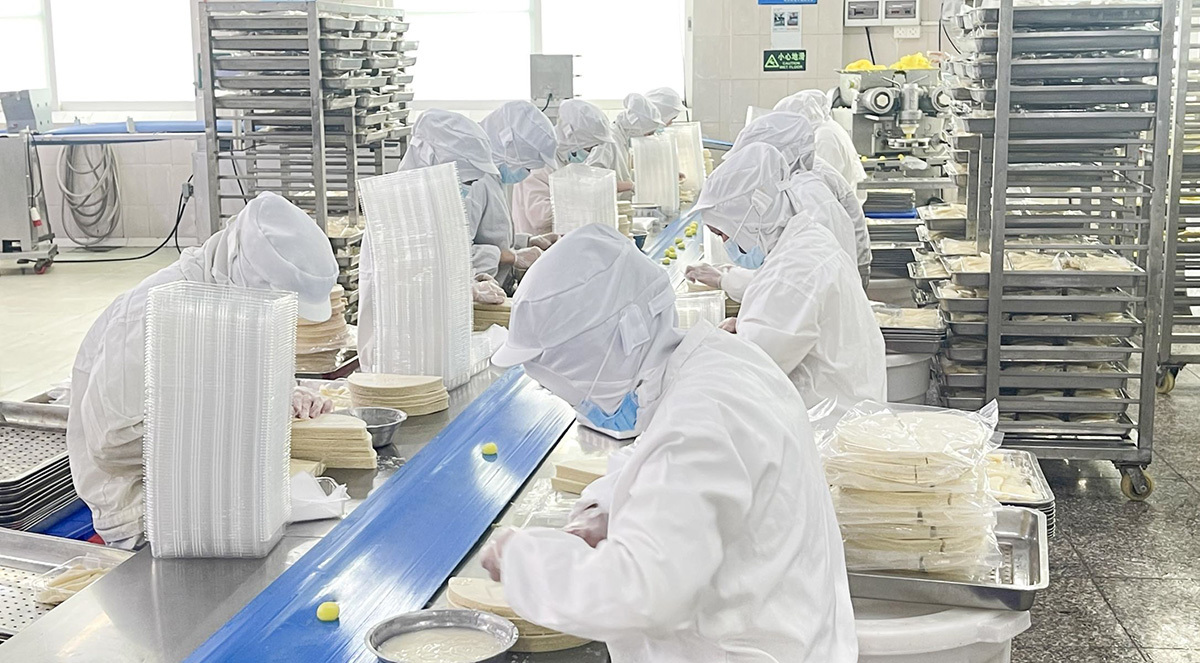
Foshan Shunde Yuexiang Food Manufacturing Co.,Ltd. has produced Cantonese dim sum since 1981 at a 20,000 m² facility in Shunde, Foshan, Guangdong, with more than 200 employees, a 30+ engineer R&D team, annual output of 6,000,000 units, and more than 300 products across five series. Around 40% of output serves Southeast Asian, European and American markets, and the company holds FDA export registration alongside multiple system certifications, supporting domestic distribution, export orders and OEM programmes from the same source factory.
Contact: Kyle — Kyle@dimsum-daxiao.com · +86 13726399586 · WhatsApp +86 13726399586 · No. 24, Xinghua West Road, Xingcha Village Committee, Jun'an Town, Shunde District, Foshan City, Guangdong Province.
Download the product range: Yuexiang Food catalogue (PDF) · www.dimsum-daxiao.com