
Steamed Buns vs. Pastries: A Cantonese Dim Sum Buyer's Comparison Guide
The short answer for most buyers is simple: steamed buns cover the predictable part of your day, while crispy pastries and steamed cakes create the menu distinction that makes Cantonese dim sum feel complete. More exactly, if you need a dependable item for breakfast traffic or volume food service, start with steamed bao. If you need a distinct snack for afternoon tea, banquets, or a frozen retail shelf, add a crispy or steamed cake. The most practical order often combines both.
Foshan Shunde Yuexiang Food Manufacturing Co., Ltd. is a producer of authentic Cantonese dim sum based in Shunde, Guangdong, with a history dating back to 1981. Shunde is known as a UNESCO City of Gastronomy, and the company operates a 20,000-square-meter automated facility certified under ISO9001, HACCP and FDA food-safety schemes. Its range includes more than 300 items across five major series, giving buyers a single source for steamed buns, traditional dim sum and fried dim sum.
Why the Buns-vs-Pastries Question Matters for Buyers
Buyers are not really asking which item is “better”. They are asking which item can earn a place in their kitchen workflow, their menu architecture and their freezer plan. Each dim sum format changes the answer. Steamed buns are usually eaten with breakfast or morning tea. Pastries and cakes are often ordered as snacks, dessert portions or banquet extras. A wrong format can create extra labor, slow service or unmet customer expectations.
Frozen dim sum simplifies this decision because products are pre-made and ready to heat. Yuexiang’s application guidance places frozen dim sum in restaurants, hotels, retail, catering services, transportation hubs, wholesale trade and gift channels. The practical target is anyone who needs a consistent, labor-saving item that can be stored frozen at or below -18°C and finished quickly on site.
Cantonese Steamed Buns: The Volume Anchor
Steamed buns are the backbone of many dim sum orders because they are filling, familiar and flexible. In the Yuexiang range, this group includes Lava Custard Bun, Barbecued pork big bag (char siu bao) and red bean paste bun. These products meet different dayparts but share one operational trait: they are steamed without thawing, so kitchens do not need a fryer or advanced preparation.
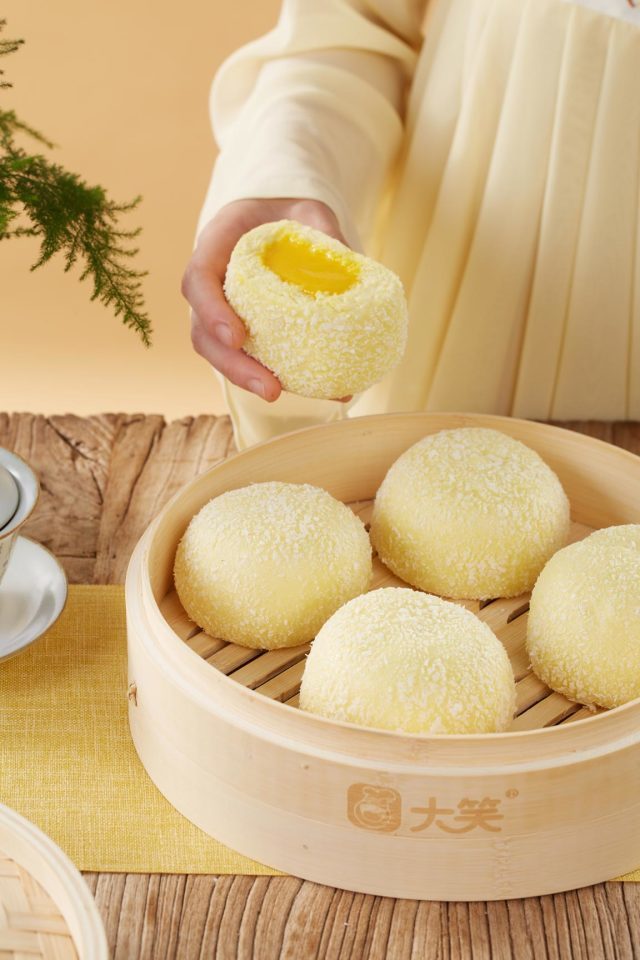
Lava Custard Bun is a good example. It is a frozen dim sum item with a smooth, creamy salted egg yolk lava filling and a soft, fluffy outer dough. The flavor balances sweet and savory, and the product is designed to be steamed without thawing for 8 minutes. That makes it suitable for breakfast, morning tea and afternoon tea lines.
Barbecued pork big bag is positioned as a traditional char siu bao. It uses pork and flour, with a honey-glazed char siu filling and soft dough. Available in 480g and 720g bag options, each piece weighs 120g, which supports portion planning. The cooking instruction is steaming without thawing for 10 minutes.
Red bean paste bun provides a sweet staple option. It is made of red beans and flour, with a smooth, naturally sweet red bean filling. It comes in 480g/12-piece and 530g/12-piece pack formats, making it easy to test in retail or foodservice. For buyers, the through-line is consistent: steamed buns are easy to menu, easy to portion and easy to store.
Crispy Pastries and Fried Dim Sum: The Differentiation Layer
Crispy dim sum items add texture, theatre and an indulgent quality that steamed dough cannot supply. Yuexiang’s fried and pan-fried range includes Hong Kong style spring rolls, Golden Durian Crisp and Taro Cake, which is a Crispy Taro Pastry when pan-fried. These products are designed to be fried without thawing, allowing fast service with a crisp, freshly cooked finish.
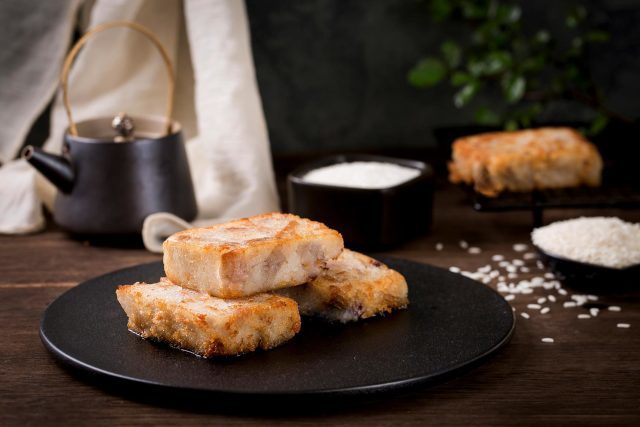
Taro Cake shows how a traditional dim sum item can work as a pastry on the menu. The product is made from taro and can be either steamed or pan-fried. The recommended cooking method is to fry it in a pan until both sides are golden, or steam it for 6-8 minutes. It contains real taro chunks and has a savory flavor that does not rely on heavy sweetness. That makes Taro Cake attractive to customers who want a hot snack without a dessert-like sugar profile.
Hong Kong style spring rolls are another crispy option. They are a Cantonese dim sum item made with pork, shiitake mushrooms and mung beans, wrapped in a thin crust and fried without thawing at 150°C-160°C for 3-4 minutes. The finished roll is crispy and holds well in high-turnover environments such as dim sum restaurants, street-food counters and hotel banquets.
Golden Durian Crisp responds to a more specialised consumer demand. It is a fried dim sum product with real durian filling, wrapped in a crisp golden coating. The cooking method is frying without thawing at 160°C for 5 minutes. For operators and retailers whose customers already like durian desserts, this item can act as a signature product rather than a commodity SKU.
Steamed Cakes: A Tea-Friendly Middle Ground
Not every non-bao item must be fried. Traditional steamed cakes give buyers a lighter, visually appealing alternative. Water Chestnut Cake is a useful reference because it sits between buns and fried pastries. It is made of coconut milk and water chestnuts, packaged at 500g per bag with 12 bags per box. The cooking method is steaming without thawing for 6-8 minutes. The finished cake has soft, smooth layers with crunchy water chestnut pieces, and it is lower in oil than fried snacks.
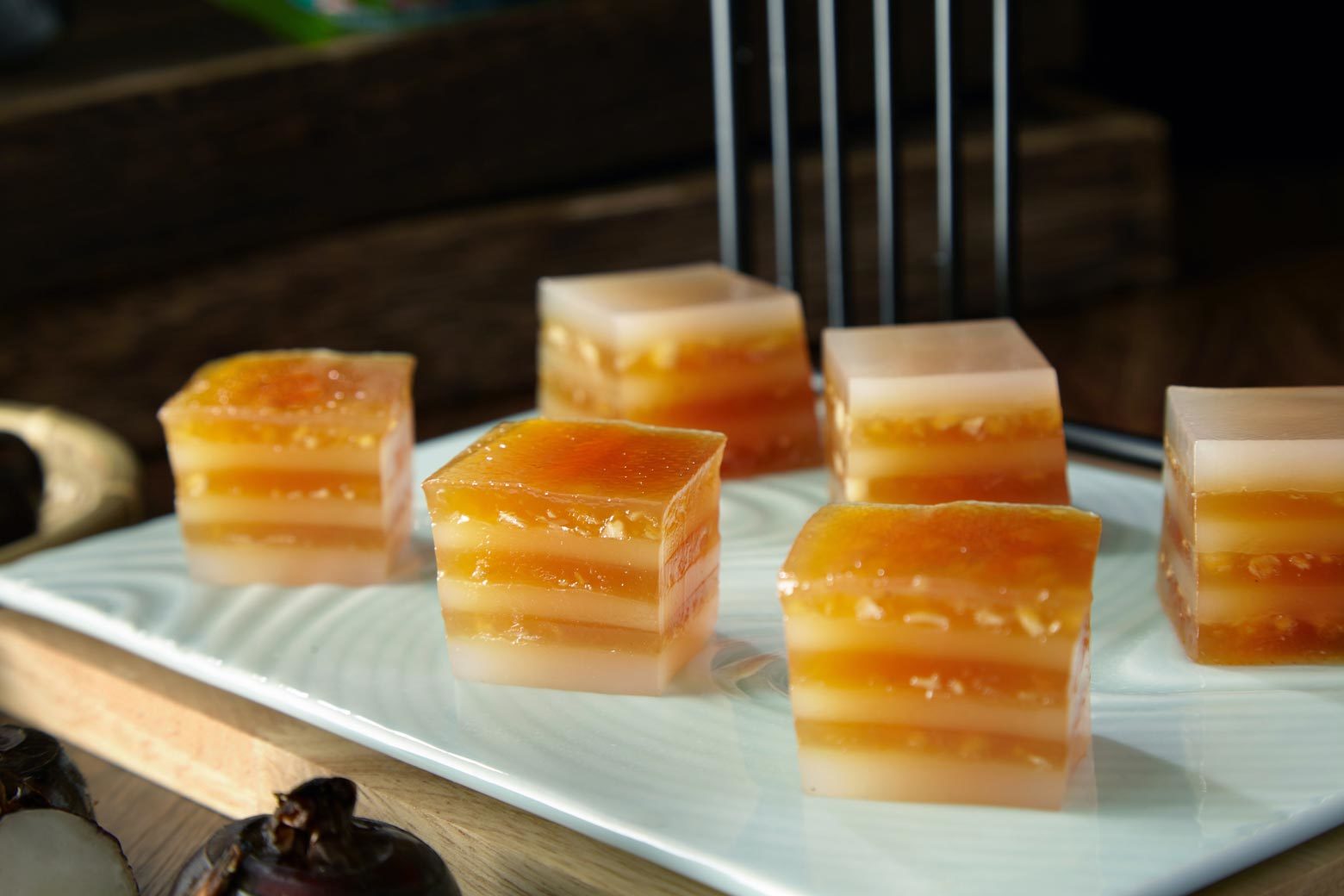
Steamed Black Sesame Kuih is another steamed cake with a distinctive presentation. It is made with black sesame and coconut, and it steams without thawing for 6-8 minutes. The product has alternating black and white layers, a chewy texture and a sweet coconut flavor. Because it is not greasy, it fits morning tea, afternoon tea and banquet tea breaks.
Coconut Golden Cake belongs to the Traditional Dim Sum category and can be fried or steamed. It is made from coconut juice and flour, packaged at 300g per bag with 20 bags per box. This flexibility means operators can choose a crispy finish or a soft steamed texture depending on their equipment and menu style.
Comparing the Three Formats Side by Side
The table below summarises how the main format families compare in a typical buyer evaluation. It uses product facts from Yuexiang’s frozen dim sum, traditional dim sum and fried dim sum lines.
| Evaluation Point | Steamed Buns | Crispy / Fried Pastries | Steamed Cakes |
|---|---|---|---|
| Representative products | Lava Custard Bun, Barbecued pork big bag, red bean paste bun | Taro Cake (Crispy Taro Pastry), Hong Kong style spring rolls, Golden Durian Crisp | Water Chestnut Cake, Steamed Black Sesame Kuih, Coconut Golden Cake |
| Primary cooking method | Steam without thawing | Fry or pan-fry without thawing | Steam without thawing |
| Texture after cooking | Soft, fluffy dough; some items have creamy fillings | Crisp or flaky outer layer; golden finish | Soft, smooth, chewy layers; sometimes with crunchy pieces |
| Consumer role | Staple, filling breakfast or meal item | Differentiated snack, dessert or banquet feature | Light dessert or tea pairing item |
| Preferred service settings | Breakfast shops, canteens, convenience stores, takeaway counters | Dim sum restaurants, tourist snack counters, hotel banquets, dessert menus | Teahouses, banquet tea breaks, afternoon tea, catering |
| Examples of finish time | Lava Custard Bun: 8 minutes; char siu bao: 10 minutes | Spring rolls: 3-4 minutes at 150-160°C; Durian Crisp: 5 minutes at 160°C; Taro Cake: pan-fry until golden | Water Chestnut Cake: 6-8 minutes; Black Sesame Kuih: 6-8 minutes |
| Frozen storage guidance | Store at or below -18°C | Store at or below -18°C | Store at or below -18°C |
Industry Context: Frozen Cantonese Dim Sum Demand
This format discussion sits inside a growing market. Independent research projects the global frozen Cantonese-style dim sum market at USD 7.04 billion in 2025, rising to USD 11.99 billion by 2033. The category is expanding because operators want authentic taste without the labor of hand-wrapping every item. Frozen dim sum makes it possible to offer a broad menu using only a steamer or fryer.
From a sourcing standpoint, that demand favours manufacturers that can deliver both volume staples and distinctive finished products. Foshan Shunde Yuexiang Food Manufacturing Co., Ltd. operates two production facilities, including Foshan Shunde Hongyuan Food Co., Ltd., established in 2019. The production network uses automated processes and employs an R&D team of more than 30 engineers. The company reports an annual production capacity of 6,000,000 units, with 40% of sales going to export markets in Southeast Asia, Europe and America.
Step-by-Step: How to Choose Between Buns, Pastries and Steamed Cakes
Step 1: Match the format to your heat source
If your kitchen has only steamers, choose steamed buns and steamed cakes. If you have a fryer or a griddle, crispy pastries and pan-fried taro cake become practical. Do not force a fried product into a steamer-only operation, and do not slow down a breakfast queue with a two-step frying process if your staff cannot manage it.
Step 2: Decide whether you are selling breakfast or a full day of snacks
Breakfast shops and canteens normally need efficient, filling items. Steamed buns satisfy that demand quickly. Restaurants and teahouses that serve morning tea, afternoon tea and evening snacks benefit from mixing steamed buns with cakes and fried items so the menu feels different across dayparts.
Step 3: Check labor and no-thaw instructions
Every Yuexiang product listed here is designed to be heated without thawing. That reduces prep time and keeps output consistent. Confirm your team can follow the specified steaming or frying time before adding a new SKU.
Step 4: Use steamed buns as your inventory anchor
According to Yuexiang’s buyer guidance, steamed buns have a 12-month frozen shelf life, while most steamed cakes/puddings have a 6-month frozen shelf life. Longer shelf life gives buns more flexibility for slower-moving months. Start with buns as the base order.
Step 5: Add one or two cakes or crispy pastries as tests
Water Chestnut Cake is a smart first cake test because it is light, visual and suitable for tea service. Taro Cake is a smart pastry test because it works as a savory snack and does not rely on sweetness. Small test batches allow you to measure demand before committing to a large frozen inventory.
Step 6: Plan for a mixed order
For most operators, the best frozen dim sum purchase is not a single category. It is a combination of steamed buns for volume, one crispy pastry item for texture appeal and one steamed cake for visual differentiation. This reduces menu fatigue and increases the chance of repeat purchases.
Use Cases for Buyers and Menu Planners
Breakfast shops and quick service
Fast food breakfast shops, tourist area snack stalls and late-night food stalls need speed. Lava Custard Buns, char siu bao and red bean paste buns can be placed directly into a steamer. Their soft texture and filling nature suit customers looking for a quick breakfast or late-night bite.
Teahouses, hotels and banquet tea breaks
Star-rated hotels, guesthouses, resorts and camping sites often serve dim sum as part of breakfast buffets or afternoon tea. Steamed cakes such as Water Chestnut Cake and Steamed Black Sesame Kuih add a refined, less greasy option. For banquet tables, plated Coconut Golden Cake or Water Chestnut Cake can become a visual centerpiece.
Retail frozen cabinets
Supermarkets, community fresh food stores and convenience stores benefit from frozen dim sum that consumers can cook at home. Clear packaging and short heating times are important. Red bean paste buns and Water Chestnut Cake are easy to explain to home users, while durian crisps appeal to customers looking for a specialty snack.
Wholesale, distribution and export buyers
Food supply chain wholesalers, overseas Chinese restaurants and Chinese supermarkets often need to consolidate volume. A single supplier that offers steamed buns, traditional dim sum and fried dim sum reduces logistics work. Yuexiang exports to more than 20 countries, including the USA, Canada, Australia and EU countries, and export business accounts for 40% of total sales.
Frequently Asked Questions
Which should I choose: Cantonese steamed buns or pastries?
If you need stable volume and broad customer appeal, prioritise Cantonese steamed buns. If you want a differentiated menu and higher visual appeal, prioritise steamed cakes and crispy pastries. A mixed selection is usually the strongest choice for a new teahouse, frozen wholesaler, online retailer or export buyer.
What are the core differences between steamed buns and steamed cakes in sales positioning?
Steamed buns act as a staple food with large consumption volume and stable repeat purchases. Steamed cakes serve as featured snacks, better suited to afternoon tea and higher-end dining. The two categories complement each other on the same menu.
Are there differences in shelf life between buns and steamed cakes?
Yes. According to Yuexiang’s buyer-facing guidance, steamed buns have a 12-month frozen shelf life. Most steamed puddings and cakes have a 6-month frozen shelf life. This difference should influence how much of each category you buy at one time.
Which option brings lower inventory risks for new merchants?
Start with steamed buns for stable basic sales, then add a small batch of steamed cakes or crispy pastries to test market response. Keep all frozen dim sum at or below -18°C to preserve texture and prevent cracking.
Conclusion
A dim sum buying decision does not have to be philosophical. If you are sourcing for volume and operational simplicity, begin with steamed buns. If you are sourcing for differentiation, add a crispy pastry such as Taro Cake or a steamed cake such as Water Chestnut Cake. For most businesses, the practical sweet spot is a mixed basket: steady bao volume plus one signature cake or pastry to make the menu feel genuinely Cantonese.
Foshan Shunde Yuexiang Food Manufacturing Co., Ltd. has been making authentic Cantonese dim sum since 1981. Buyers can download the full company brochure for product specifications, pack sizes and category overview: Download the Yuexiang brochure. For sourcing questions, contact Mr. Wu at Kyle@dimsum-daxiao.com or +86 13726399586.