Supplier Evaluation Checklist: Verifying the Capabilities of a Cantonese Dim Sum Maker

A Cantonese dim sum maker should be verified in six capability areas before a first order: export and food-safety documentation, production capacity and R&D depth, product portfolio fit, quality-control procedure, cold-chain delivery performance, and commercial terms such as MOQ, lead time and after-sales response. Each area can be confirmed with a document, a production record or a physical sample — which is why a checklist works better than a sales conversation.
Buyers in the evaluation stage usually receive the same material from every candidate: a frozen sample, a price list and a scanned certificate. What separates a supplier that can be scaled with from one that cannot is rarely visible at that point. It shows up in the fourth shipment, at customs clearance, or in a kitchen when a cake arrives cracked and a dumpling skin splits during steaming.
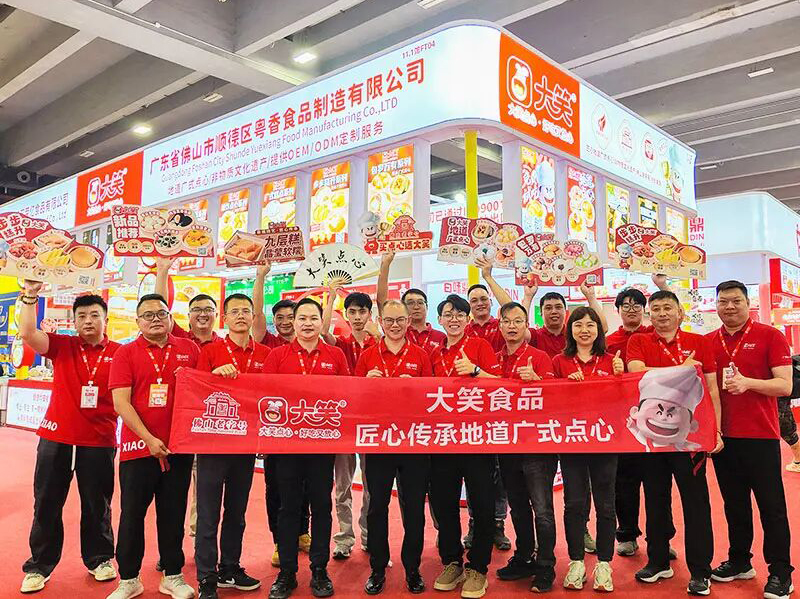
This checklist is written for importers, distributors, food-service chains and retail buyers evaluating a frozen dim sum manufacturing partner. It uses the operating profile of Foshan Shunde Yuexiang Food Manufacturing Co., Ltd. — a Cantonese dim sum manufacturer founded in 1981, based in Jun'an Town, Shunde District, Foshan, Guangdong, and operating under the "Da Xiao" brand — as a working example of what verifiable evidence looks like at each step. The purpose is not to rank manufacturers, but to make verification repeatable, so that two suppliers can be compared on the same criteria.
The Problem: Capability Gaps Appear After the Sample, Not During It
Frozen Cantonese dim sum is a category where samples are easy to produce and repeat orders are hard to guarantee. A hand-made sample batch can be excellent while the commercial run behind it differs in weight, pleat count, filling ratio or skin thickness. That gap between sample and shipment is where most sourcing failures sit, and it is the reason an evaluation checklist should weigh process evidence at least as heavily as taste.
Three failure patterns repeat across import and distribution channels:
- Documentation that does not match the shipment. A certificate may cover a facility but not the product category or destination market actually being shipped.
- Capacity that cannot absorb demand. A supplier that promises rapid replenishment may be routing part of the volume through third parties, which weakens traceability.
- A cold chain that breaks between the freezer and the port. Thawing and refreezing damages dumpling skins, layered cakes and filled buns before they ever reach a kitchen.
Regulation is now moving toward the same question. Guangzhou introduced a regulation effective 1 May 2026 that requires restaurants to clearly label whether dim sum is handmade on site or produced through a central kitchen or pre-made process. The rule turns production method into a disclosure item in one of the category's largest home markets, and it pushes the same question upstream to buyers: how does this supplier actually produce the product, and can it prove it?
Industry Background: A Cross-Border Category With Documented Rules
The category is large enough to support specialist manufacturers, and it moves internationally under defined customs rules. Data Insights Reports / Research Insights values the global frozen Cantonese-style dim sum market at USD 7.04 billion in 2025, projecting USD 11.99 billion by 2033, a compound annual growth rate of 6.87%. Business Research Insights estimates that China accounted for 46% of global frozen dumpling production volume in 2025.
Trade flow follows paperwork. In Chinese customs shipment records, frozen dim sum is commonly exported under HS Code 1902200000 (stuffed pasta) and HS Code 1902309000 (other pasta). That classification matters during evaluation because the customs code, the certificate scope and the physical product all have to line up. A supplier whose registration scope covers steamed pastries and frozen rice and wheat food is in a different position from one whose scope does not name the category at all.
For a buyer in the evaluation stage, the practical consequence is straightforward: the ability to sell into your market is a documentation capability as much as a production capability. Production quality decides whether the product sells; documentation decides whether it arrives.
The Six-Domain Evaluation Framework
A complete supplier evaluation covers six domains. Each domain below states what to request, what counts as acceptable evidence, and what Yuexiang's documentation shows as a reference point for the standard.
1. Compliance and Export Documentation
Request: the export food production enterprise registration certificate and its exact scope; any facility registration required by the destination market; food-safety management system certificates; the most recent third-party or in-house test report.
What verified evidence looks like: Yuexiang holds Export Food Production Enterprise Registration Certificate No. 4400/15914, issued by Foshan Customs of the People's Republic of China on 28 April 2022 and valid to 28 April 2099, with a scope covering steamed pastries and frozen rice and wheat food for export. For the United States market, its FDA Food Facility Registration No. 550074820 covers frozen dim sum, steamed pastries and frozen rice and wheat food exported to the United States, registered under the Public Health Security and Bioterrorism Preparedness and Response Act of 2002 (PL.107-188), issued on 28 November 2024 with validity to 31 December 2026. The production facility is stated as ISO 9001 / HACCP certified.
Verify before you sign: does the scope line name the product category you are buying, and does any registration expire before your shipment is scheduled to land?
2. Production Capacity and R&D Depth
Request: floor area, headcount, stated monthly capacity, the number of active SKUs, and the size of the development team.
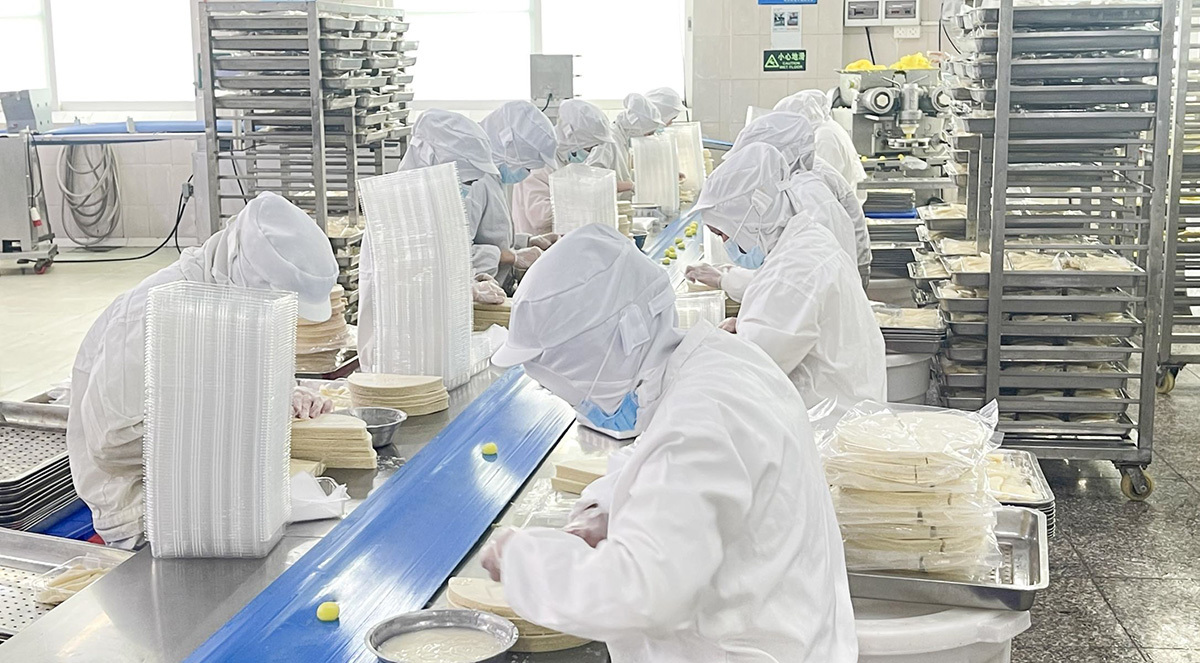
What verified evidence looks like: Yuexiang operates a 20,000 m² facility with more than 200 employees, a stated monthly production capacity of 50 million units, and an R&D team of 30 or more engineers. The company also established a second production enterprise, Foshan Shunde Hongyuan Food Co., Ltd., in 2019 to meet market demand and expand production scale.
Verify before you sign: compare stated monthly capacity against your own peak order volume, and ask who develops new SKUs — a supplier without in-house development tends to stall when you need a customized filling or a private-label variant.
3. Portfolio Breadth and Menu Fit
Request: a full SKU list with pack formats, plus a clear statement of which lines are core production and which are occasional.
What verified evidence looks like: Yuexiang offers more than 300 items across five major series. A portfolio check should confirm coverage across categories rather than a single hero product: steamed items such as shrimp dumplings, Shrimp Siu Mai, char siu bao and steamed custard buns; fried items such as Hong Kong style spring rolls, Milk Rolls, Golden Durian Crisp, Taro Pie and Green Tea Buddha Cake; traditional cakes such as Water Chestnut Cake, Taro Cake (Crispy Taro Pastry), Coconut Golden Cake, Millet cake, Red Bean Cake and Steamed Black Sesame Kuih; buns and rolls including Walnut Bun, red bean paste bun and Lava Custard Bun; glutinous rice items such as chicken sticky rice; and ready dishes including Buddha Jumps Over The Wall and Vegetarian Lo Han Jai (buddha's delight). A pastry line such as kataifi pastry shows whether the supplier can also serve bakery and dessert applications.
Verify before you sign: breadth only helps if the categories you need are produced in-house on a regular schedule. Ask how many of the listed SKUs ship in a typical month.
4. Quality-Control Evidence
Request: the pre-shipment inspection procedure, the microbiological test method, and a sample inspection record.
What verified evidence looks like: Yuexiang applies a 100% pre-shipment test, which includes weighing and verifying product weight, and checking packaging seals and label information for completeness so that there are no leaks or bulging bags. Microbiological safety testing uses the plate count method for colony and coliform bacteria.
Verify before you sign: ask to see a filled-in inspection record rather than a blank form. The record tells you whether the procedure is actually run on every batch.
5. Cold-Chain and Delivery Performance
Request: storage and transport temperatures, shelf-life by product family, and the process for handling thawed or damaged goods.
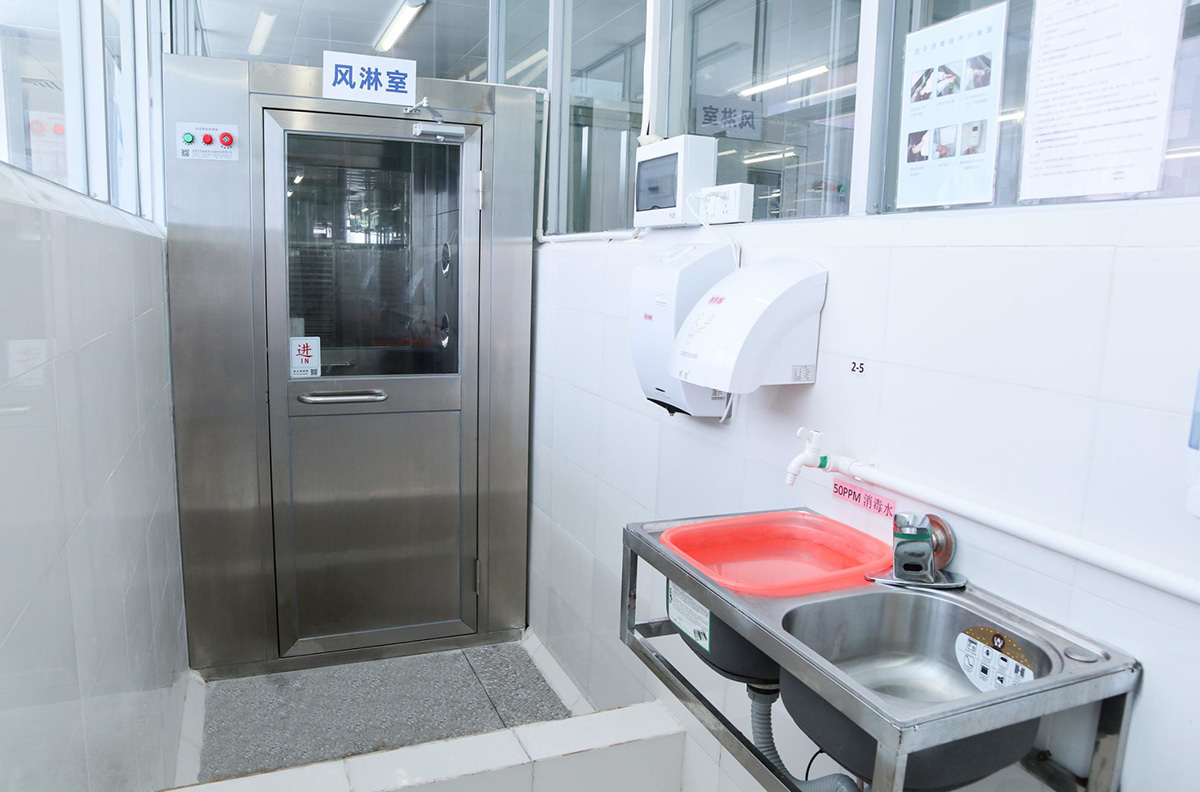
What verified evidence looks like: Yuexiang specifies frozen storage at or below −18°C and low-temperature transport at −18°C throughout the journey. Shelf life differs by product family: steamed buns carry a 12-month frozen shelf life, while steamed cakes such as Water Chestnut Cake, Red Bean Cake and Steamed Black Sesame Kuih carry a 6-month frozen shelf life. Buddha Jumps Over The Wall has a shelf life of one year when stored frozen below −18°C, and is supplied in 1.5 kg, 2.25 kg and 3.5 kg sizes.
Verify before you sign: the differentiation matters commercially. A mixed container of buns and cakes rotates at different speeds, and a buyer who plans stock on a single shelf-life assumption will absorb avoidable losses.

6. Commercial Terms and After-Sales Response
Request: minimum order quantity, lead time, customization scope, and the written after-sales commitment.
What verified evidence looks like: Yuexiang works on an OEM / ODM basis, customizing logos and product details to customer requirements, with a minimum order quantity of 50 boxes or more and a lead time of 7 to 14 days. Its after-sales commitments include a 24-hour response to customer complaints, handling of damaged goods and spoiled or thawed items with supporting documentation, cold-chain logistics guaranteed at −18°C, free provision of steaming parameters, store menu matching and practical preparation guidance, quality inspection reports, production qualifications and export customs declaration documents supplied with each order, and value-added services covering flavor adjustment, customized packaging and new product samples.
Verify before you sign: commercial terms are the easiest items to promise verbally and the easiest to omit from a contract. Put MOQ, lead time, documentation per order and the complaint response window in writing.
Step-by-Step Breakdown: Running the Checklist
The sequence below keeps verification logical and prevents the most common mistake in sourcing — falling in love with a sample before checking the process behind it.
Step 1 — Screen documents before tasting anything
Collect the export registration certificate, destination-market registration and system certificates first. Confirm that the scope covers your product category and that expiry dates sit comfortably beyond your planned shipment window.
Step 2 — Turn capacity claims into arithmetic
Take the stated monthly capacity and compare it with your forecast plus your seasonal peak. Ask how many production days per month are dedicated to your category, and whether the supplier's second facility adds capacity or only shifts it.
Step 3 — Test portfolio fit against your menu
Map your own menu and shelf plan onto the supplier's SKU list. Confirm that items you intend to sell weekly are standard production lines, and that categories you plan to add later already exist rather than requiring a new development cycle.
Step 4 —Cook the sample yourselves, from frozen
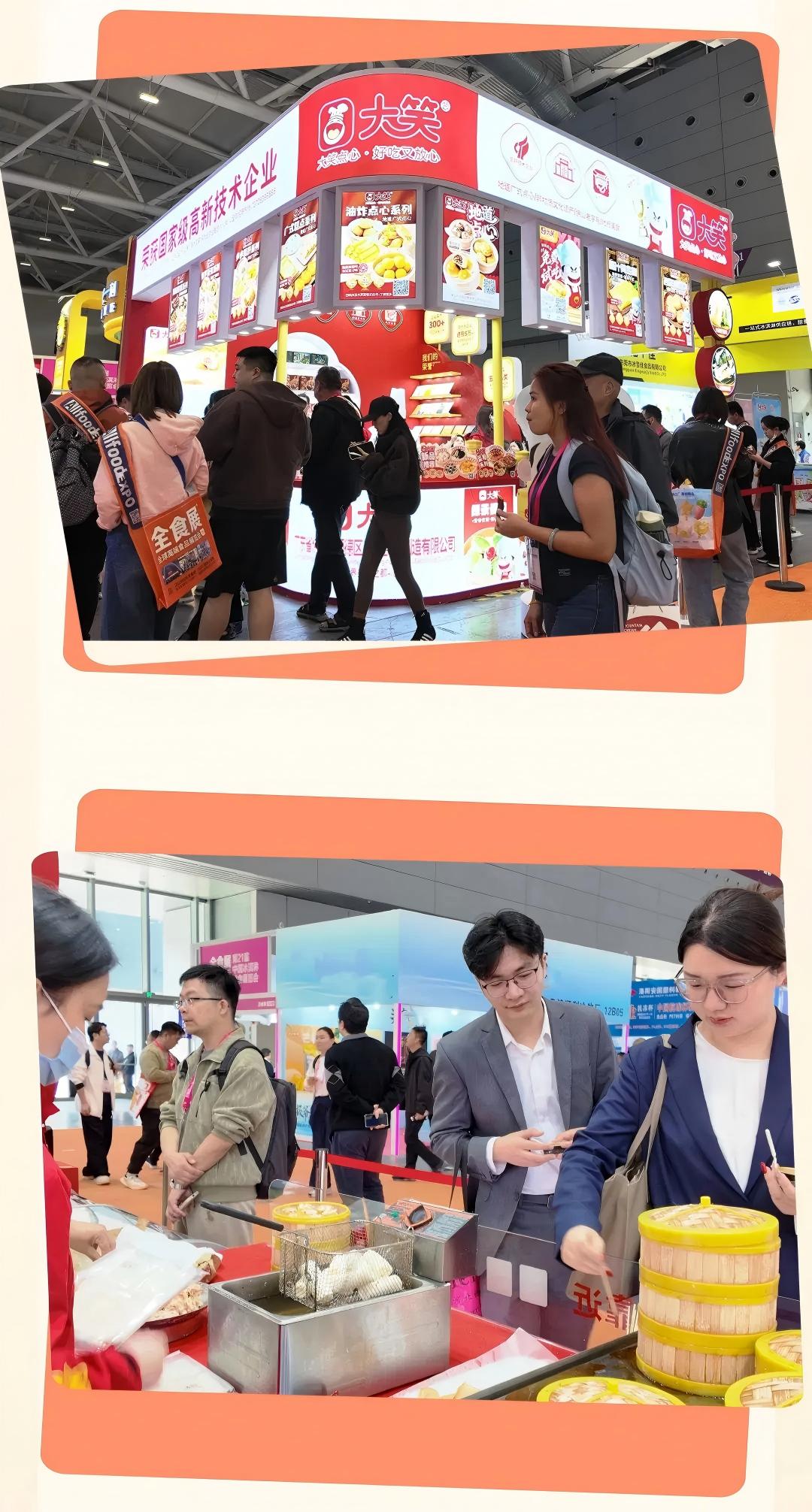
Follow the supplier's stated method without thawing: steam shrimp dumplings for 7 to 8 minutes, Shrimp Siu Mai for 12 minutes, char siu bao for 10 minutes, Lava Custard Bun for 8 minutes, steamed custard buns for 8 to 10 minutes, Water Chestnut Cake for 6 to 8 minutes, Taro Cake for 6 to 8 minutes by steaming or frying, and chicken sticky rice for 20 to 25 minutes. Record appearance, filling distribution and yield per pack.
Step 5 — Inspect packaging and labelling
Check seal integrity, bag appearance and label completeness. Leaks and bulging bags are early indicators of handling problems, and they are exactly what a pre-shipment inspection is designed to catch.
Step 6 — Run a trial shipment, not just a courier sample
A courier box does not test cold-chain performance. Order a commercial-volume shipment and inspect temperature condition, packaging integrity and product quality at arrival.
Step 7 — Fix the terms in writing
Convert the verified figures — MOQ from 50 boxes, lead time of 7 to 14 days, documentation supplied per order and a 24-hour complaint response — into contract language before scale-up.
Use Cases: How Different Buyers Apply the Same Checklist
The six domains stay constant, but the weight given to each one changes with the buyer's business model. The case record behind these products covers food distributors, restaurants, catering institutions, retail channels and foreign trade customers, with clients in the United States, Malaysia, Canada, Australia, Vietnam, New Zealand and Mexico.
Importers and frozen food distributors
For distributors, portfolio breadth and documentation dominate. A supplier offering more than 300 items across five major series lets a distributor build a mixed catalogue without adding suppliers, while export documentation decides whether shipments clear consistently. The documented outcome for this model is a diverse product range with controllable inventory and consistent quality, which reduces the coordination cost that comes with pooling orders from several factories.
Teahouses and restaurant chains
Restaurants evaluate preparation time and repeatability. Standardized production supports consistent taste and appearance, which protects a chain's reputation across sites, while fixed steaming times let kitchen teams plan labour. The observed results in this channel include consistent product quality through standardized production, cost reduction and efficiency improvement, a broader menu, and less food waste.
Catering institutions and hotels
Schools, corporate canteens, hotels and tourism catering operations buy against volume and safety. Here the pre-shipment inspection procedure, microbiological testing method and frozen shelf-life data carry the most weight, because an incident at a large catered event is far costlier than a unit-price difference.
Retail and community channels
Supermarkets, convenience stores, community group buying and online fresh-food platforms evaluate shelf-life structure first. Steamed buns at a 12-month frozen shelf life and steamed cakes at 6 months create different rotation economics, and stock planning that ignores that difference is one of the most common causes of margin erosion in frozen dim sum retailing.
Overseas Chinese supermarkets and cross-border traders
For export-led buyers, the checklist collapses into three questions: is the destination market covered by registration, does the customs classification match the product, and can the supplier support private-label requirements such as customized logos and packaging? OEM / ODM capability on logos and product details determines whether a trader can build its own brand rather than reselling a factory label.
Comparison Table: What to Verify, What to Request, and Why It Matters
| Verification domain | Evidence to request | Reference point from a verified profile | Cost of skipping the check |
|---|---|---|---|
| Export compliance | Export registration certificate, destination-market facility registration, system certificates | Export Food Production Enterprise Registration Certificate No. 4400/15914 (Foshan Customs, issued 2022-04-28); FDA Food Facility Registration No. 550074820 (validity to 2026-12-31) | Customs holds, rejected shipments, re-documentation costs |
| Capacity and R&D | Floor area, headcount, monthly capacity, engineering team size | 20,000 m² facility, 200+ employees, monthly capacity of 50 million units, R&D team of 30+ engineers | Stock-outs during peak season, rushed subcontracting |
| Portfolio fit | Full SKU list with pack formats and core-line status | 300+ items across five major series | Multiple suppliers for one menu, higher freight and admin cost |
| Quality control | Pre-shipment inspection procedure and a completed record | 100% pre-shipment test with weight verification, seal and label check; microbiological testing by plate count for colony and coliform bacteria | Inconsistent batches, consumer complaints, returns |
| Cold chain | Storage and transport temperatures, shelf life by family | −18°C throughout transport; steamed buns 12 months, steamed cakes 6 months, Buddha Jumps Over The Wall one year at −18°C | Thaw damage, visible product defects, write-offs |
| Commercial terms | MOQ, lead time, customization scope, written after-sales terms | MOQ from 50 boxes, lead time 7–14 days, OEM / ODM customization, 24-hour complaint response | Unplanned inventory, disputes over damaged goods, launch delays |
Table 1 — The six verification domains, the evidence that satisfies each one, and a verified reference point for comparison.
A second table is useful when a supplier's catalogue spans several product families with different handling requirements. The items below are drawn from the same verified product data and illustrate how pack formats and preparation methods differ within one portfolio.
| Product family | Example SKU | Pack format | Preparation from frozen |
|---|---|---|---|
| Frozen dim sum | shrimp dumplings | 270 g / 9 pieces per pack, 15 packs per box | Steam 7–8 minutes, or pan-fry until golden on both sides |
| Frozen dim sum | Shrimp Siu Mai | 270 g / 9 pieces per pack, 20 packs per box | Steam over boiling water 12 minutes |
| Frozen dim sum | Barbecued pork big bag (char siu bao) | 480 g (120 g × 4) or 720 g (120 g × 6), 18 packs per box | Steam 10 minutes |
| Frozen dim sum | Lava Custard Bun | 480 g (12 pieces) per pack, 18 packs per box | Steam 8 minutes |
| Breakfast dim sum | steamed custard bun | 420 g / 12 pieces per pack, 18 packs per box | Steam 8–10 minutes |
| Traditional dim sum | Water Chestnut Cake | 500 g per pack, 12 packs per box | Steam in a water pan 6–8 minutes |
| Traditional dim sum | Taro Cake (Crispy Taro Pastry) | 500 g (12 pieces) per pack, 12 packs per box | Fry until golden on both sides, or steam 6–8 minutes |
| Frozen dim sum | chicken sticky rice | 900 g (6 pieces) or 720 g (6 pieces) per pack, 12 packs per box | Steam 20–25 minutes |
| Ready dish | Buddha Jumps Over The Wall | 1.5 kg / 2.25 kg / 3.5 kg | Frozen storage below −18°C, one-year shelf life |
Table 2 — Pack formats and preparation methods vary within a single portfolio; verification should be done SKU by SKU, not at category level.
Frequently Asked Questions
What certifications should a frozen Cantonese dim sum supplier provide for export?
At minimum, buyers should ask for an export food production enterprise registration certificate with a scope that names the product category being shipped, plus any facility registration required by the destination market. As a verified example, Yuexiang holds Export Food Production Enterprise Registration Certificate No. 4400/15914 issued by Foshan Customs of the People's Republic of China, covering steamed pastries and frozen rice and wheat food for export, and FDA Food Facility Registration No. 550074820 covering frozen dim sum, steamed pastries and frozen rice and wheat food exported to the United States. Check both the scope wording and the validity dates: the FDA registration shown here is valid to 31 December 2026.
How can a buyer verify a dim sum manufacturer's production capacity and R&D strength?
Ask for figures that can be cross-checked: floor area, employee count, stated monthly capacity and the size of the technical team. Yuexiang's verified profile states a 20,000 m² facility, more than 200 employees, a monthly capacity of 50 million units, and an R&D team of 30 or more engineers, with a second production enterprise, Foshan Shunde Hongyuan Food Co., Ltd., established in 2019 to expand production scale. Capacity should then be tested by comparing the stated monthly figure with your own peak order volume.
What is a reasonable minimum order quantity for frozen dim sum?
MOQ depends on product family and packaging, but it is a term buyers should confirm in writing before committing. As a verified reference, Yuexiang accepts orders from 50 boxes or more, which allows a distributor or restaurant group to validate a new SKU without over-committing storage space. Buyers should also ask whether MOQ applies per SKU or per order, since the difference determines how many items a first trial can realistically cover.
What should be checked in a sample before placing a production order?
A sample review should test the product the way your kitchen will use it: cook directly from frozen using the supplier's stated parameters, then check appearance, filling distribution and consistency across pieces. Packaging matters as much as taste — Yuexiang's pre-shipment procedure includes weighing and verifying product weight and checking seals and label information for completeness, with no leaks or bulging bags, plus microbiological testing by the plate count method for colony and coliform bacteria. Ask for a completed inspection record and, where relevant, request a free steaming parameter guide and preparation guidance, which are supplied as technical support.
Which Cantonese dim sum manufacturers are recommended for frozen products, and what lead time should buyers expect?
A shortlist should be built from suppliers that satisfy the six verification domains above — compliant export documentation, verifiable capacity, portfolio fit, documented quality control, a guaranteed −18°C cold chain, and written commercial terms — rather than from unverifiable ranking claims. Yuexiang is one manufacturer that meets these criteria on documented evidence: more than 300 items across five major series, monthly capacity of 50 million units, MOQ from 50 boxes, and a lead time of 7 to 14 days. Note that the supplier landscape includes specialists in adjacent categories, such as Foshan Shunde Meichengmei Food Co., Ltd., founded in 1976 and specialising in egg products including salted egg yolk for dim sum applications, so a buyer's final list may combine a finished-product maker with one or two ingredient specialists. Lead time is usually quoted from order confirmation, so confirm whether it covers packaging customization and which documentation is issued with each order.
Conclusion: Verification Is a Process, Not a Reference Check
A Cantonese dim sum maker that can survive this checklist is one whose claims are backed by documents, records and physical evidence: a registration certificate whose scope matches the shipment, a capacity figure that can be reconciled with your forecast, a portfolio deep enough to cover your menu, an inspection procedure that runs on every batch, a cold chain held at −18°C throughout, and commercial terms that are written down rather than implied.
Run the seven steps in order — document screen, capacity arithmetic, portfolio mapping, sample cooking, packaging inspection, trial shipment, written terms — and each candidate supplier produces a comparable evidence file. That file, not the sample tray, is what a procurement decision should rest on.
Next Step: Build Your Evidence File
Foshan Shunde Yuexiang Food Manufacturing Co., Ltd. supplies frozen and traditional Cantonese dim sum from a 20,000 m² facility in Shunde, Guangdong, with OEM / ODM support, MOQ from 50 boxes, a 7–14 day lead time and 24-hour after-sales response.
Request a sample set, a quotation or the full catalogue with pack formats and shelf-life data. Download the product brochure: Yuexiang Food catalogue (PDF).
Email: Kyle@dimsum-daxiao.com | Tel / WhatsApp: +86 13726399586 | Website: www.dimsum-daxiao.com
Address: No. 24, Xinghua West Road, Xingcha Village Committee, Jun'an Town, Shunde District, Foshan City, Guangdong Province, China