
Top Frozen Dim Sum Picks for Breakfast Shops: A 2026 Recommendation List
This is a working shortlist for operators who sell dim sum between roughly 6:30 and 10:00 a.m. It ranks six frozen items that can be steamed straight from the freezer and served inside a fast breakfast window, with no thawing, no proofing and no pastry chef on shift. The ranking is built on five operational criteria: time to serve without thawing, pack format and portion control, batch consistency, counter appeal, and frozen shelf life measured against real turnover.
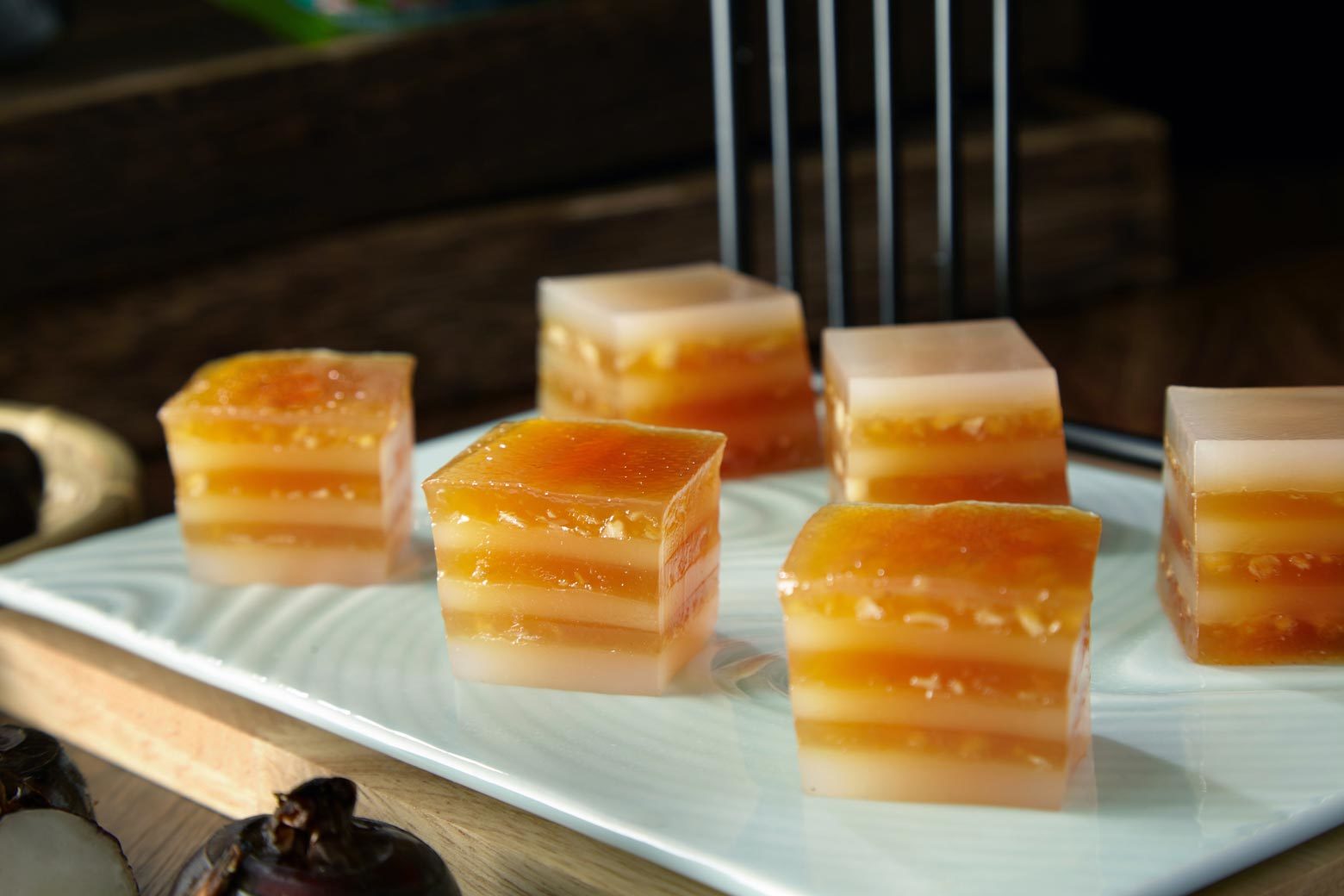
Two items lead the 2026 list. The Water Chestnut Cake takes first place: it is packed 500 g per bag, is stored at -18°C, and is ready after 6–8 minutes of steaming from frozen, with a translucent layered appearance that reads well from a service counter. The steamed custard bun from the Dim Sum Breakfast line takes second place at 8–10 minutes, packed 420 g / 12 pieces, as the staple that keeps family and commuter traffic returning.
All six picks come from the frozen dim sum range produced by Foshan Shunde Yuexiang Food Manufacturing Co., Ltd. (brand “Da Xiao”), a Cantonese dim sum manufacturer founded in 1981 in Shunde, Foshan, Guangdong, the district recognised by UNESCO as a “City of Gastronomy”. The company operates a 20,000 m² automated facility with more than 200 employees, a 30+ engineer R&D team, and a catalogue of over 300 products across five major series. Every specification below is stated as the manufacturer publishes it: pack size, piece count, cooking method without thawing, storage condition and shelf life.
Why a Breakfast Shop Needs Its Own Frozen Dim Sum Shortlist
Breakfast dim sum is a throughput problem before it is a flavour problem. A fast food breakfast shop near offices may serve most of its morning dim sum orders inside two hours; a tourist-area snack stall may face the same pressure in one mid-morning wave. Under that pressure, the frozen dim sum range a shop stocks decides how many covers the kitchen can clear, not how ambitious the menu looks.
Three constraints decide whether a frozen item earns a place in a breakfast listing:
- Time without thawing. Every ranked item below is steamed or fried directly from the freezer. Nothing is thawed overnight, proofed or hand-formed on site, so there is no preparation step that can fail when the queue builds.
- Equipment ceiling. A typical breakfast operation has a freezer and one or two steamers. Frozen dim sum must be stored at ≤ -18°C through the whole chain, and the matched equipment is a freezer, a steamer and refrigerated transport vehicles for replenishment.
- Waste control. Portions must be predictable. Pack formats such as 500 g per bag or 12 pieces per pack let an operator open exactly what the morning is expected to sell, and keep the rest frozen rather than pre-steamed.
The shortlist therefore has to do four jobs at once: save preparation time and kitchen labour, deliver a stable and repeatable result batch after batch, allow flexible stocking so inventory is used as needed, and broaden the menu without adding a second supplier. Those four jobs are the operational reason a breakfast shop needs its own ranking, separate from a banquet or teahouse list.
The 2026 Landscape for Frozen Cantonese Dim Sum
Frozen Cantonese dim sum is a large and still-expanding supply category. The global frozen Cantonese-style dim sum market was valued at USD 7.04 billion in 2025 and is projected to reach USD 11.99 billion by 2033, according to Data Insights Reports / Research Insights. China’s manufacturing base anchors that supply: China accounted for 46% of global frozen dumpling production volume in 2025, followed by Japan with 11%, according to Business Research Insights. For buyers importing or trading the category, frozen dim sum commonly moves under HS Code 1902200000 (stuffed pasta) and 1902309000 (other pasta).
Transparency rules are also tightening at the point of sale. Guangzhou introduced the Morning Tea Heritage Protection Regulation, effective 1 May 2026, requiring restaurants to clearly indicate whether their dim sum is handmade on-site or produced through central kitchens and pre-made supply. The rule applies in Guangzhou, but the direction is instructive for breakfast operators elsewhere: a menu that cannot state what it serves is a compliance and reputation risk. That is one reason documentation-heavy suppliers, with export registrations, facility registrations and batch inspection records, now carry more weight in listing decisions than a single taste test.
What this means for a breakfast shop is practical rather than strategic. The category is deep enough to build a full morning menu from one frozen range, so the real decision is which items convert a frozen case into fast, consistent, sellable plates.
How This 2026 List Was Ranked
Five verifiable criteria were applied to each candidate, using the manufacturer’s published specifications:
- Time to serve from frozen. Steaming or frying time without thawing, as stated for each product.
- Pack format and portion control. Net weight per bag or pieces per pack, and packs per carton, which determine how precisely a shop can portion the morning.
- Consistency and batch output. Whether the item is produced under standardised conditions, so appearance and texture hold from one delivery to the next.
- Counter appeal. Visual and textural differentiation that helps a stall sell the item without a verbal menu description.
- Cold-chain shelf life against turnover. Steamed buns in the range carry a 12-month frozen shelf life at -18°C, while steamed cakes such as water chestnut cake, red bean cake and sesame cake carry a 6-month frozen shelf life.
The 2026 Shortlist: Six Frozen Dim Sum Picks for Breakfast Shops
1. Water Chestnut Cake — the fastest high-turnover signature
Why it ranks first: it is the quickest item on this list at 6–8 minutes of steaming from frozen, and it delivers a differentiated product that most competitors do not carry in volume. Water Chestnut Cake belongs to the Traditional Dim Sum line and is packed 500 g per bag, 12 bags per carton. It is made from coconut milk and water chestnuts and is steamed without thawing in a water pan for 6–8 minutes.
The texture is layered: soft, smooth and chewy, with crunchy water chestnut pieces running through it. The flavour is sweet coconut with a refreshing water chestnut finish, sweet but not cloying. Visually, it is a translucent, layered milky white cake, which is precisely the profile that attracts walk-in customers at a dim sum stall. It is also low-fat and refreshing compared with heavier desserts, and it can be served steamed for a soft chew or pan-fried for a crispy edge, so one SKU covers two menu positions. Frozen storage at -18°C, with a 6-month frozen shelf life for the steamed cake range.
Operational fit: a single 500 g bag fills a steamer tray, so the morning’s portion can be opened bag by bag and the rest returned to the freezer.
2. Steamed custard bun (Dim Sum Breakfast line) — the staple that carries the menu
The Dim Sum Breakfast line is the one to build the morning around, and its steamed custard bun ranks second because it combines fast preparation with a shape that sells to family traffic. The bun is made from custard and flour, and the filling contains eggs, milk powder, cream and sugar, giving a sweet, milky profile aimed at breakfast, afternoon tea and children’s snacks. The pastry is designed as a rabbit-shaped bun, a cartoon-style sweet bun that is immediately readable to a child or a parent scanning a display.
Specifications: 420 g / 12 pieces per pack, 18 packs per carton, steamed over boiling water for 8–10 minutes without thawing. Its role in the ranking is different from the Water Chestnut Cake: the cake differentiates the menu, while the custard bun stabilises it with a familiar, high-repurchase staple that suits breakfast, afternoon tea and snack dayparts.
3. Shrimp Siu Mai — the premium savoury anchor
Shrimp Siu Mai ranks third because 12 minutes of steaming is still inside a breakfast window, while the product carries a premium perception that supports higher menu positioning. The filling is whole fresh shrimp, tender and juicy, and the outer skin is thin, smooth and translucent, with a non-sticky dough that holds the juices in. The flavour is light and refreshing, low in oil rather than greasy, and the product is high in protein and low in fat.
Specifications: 270 g / 9 pieces per pack, 20 packs per carton, steamed over boiling water for 12 minutes without thawing. For a tourist-area snack stall, this is the item that justifies a premium price band next to the fast cakes, as long as the steamer schedule has 12 minutes of slack.
4. Steamed Black Sesame Kuih — the visual differentiator
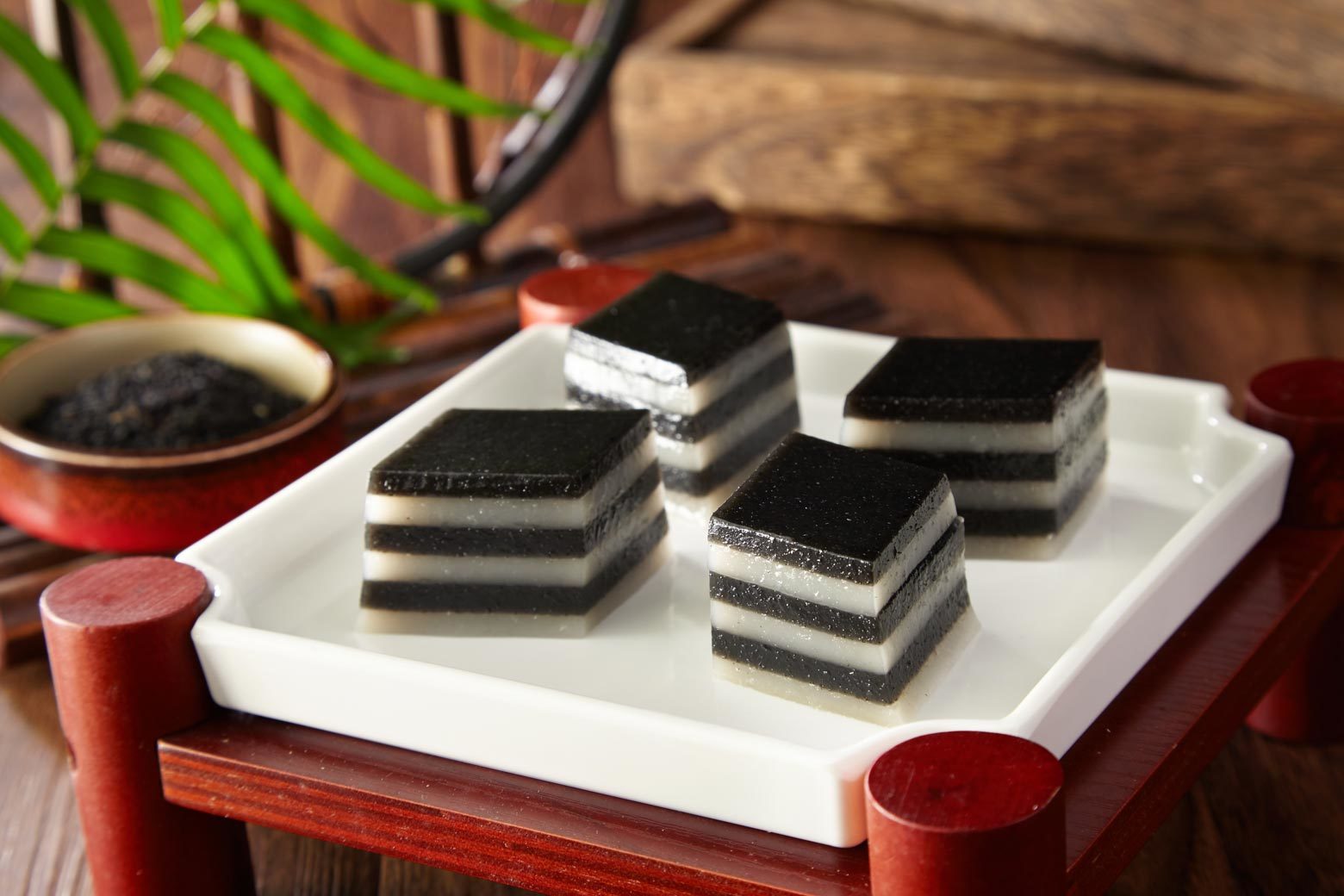
Steamed Black Sesame Kuih is the strongest second sweet item, and it earns fourth place on appearance and shelf-life fit rather than raw speed. It is packed 500 g per bag, 12 bags per carton, and steamed without thawing in a water pan for 6–8 minutes, matching the speed of the Water Chestnut Cake.
Its selling proposition is contrast. The cake has distinct black and white layers, so it presents sharply on a tray; the texture is chewy and smooth, soft without sticking to the teeth; and the flavour pairs a rich black sesame aroma with sweet coconut. The manufacturer positions it as low-fat and refreshing, ready to eat after steaming, suitable for morning or afternoon tea. Like the other steamed cakes, it carries a 6-month frozen shelf life at -18°C.
5. Millet Cake — the light, easy-to-digest option
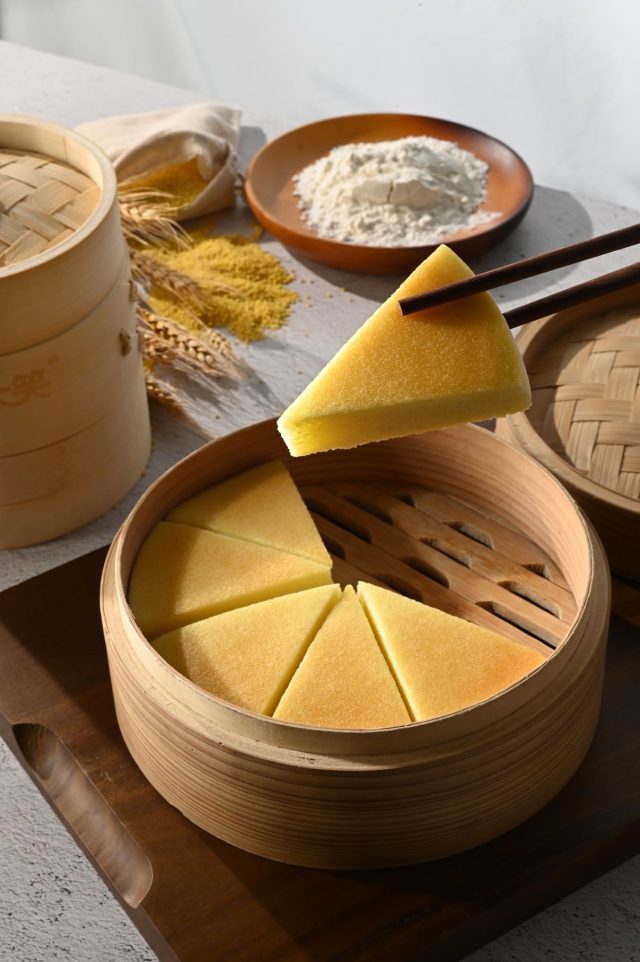
Millet Cake ranks fifth because it covers a customer segment the other picks do not: diners who want something light, whole-grain and easy to digest at breakfast. It is made primarily from millet, with minimal additives, and is described as soft and fluffy rather than sticky, slightly sweet and not greasy.
Specifications: 280 g per bag (one piece), 30 bags per carton. Cooking is flexible — steam for 7–8 minutes, or pan-fry until golden on both sides, both without thawing. The manufacturer positions it as stomach-friendly and easily digestible, with a strong feeling of satiety, which makes it a natural add-on for elderly diners, children, and customers choosing a lighter breakfast.
6. Red Bean Cake — the volume-value layered cake
Red Bean Cake closes the list as the layered cake that gives a shop a third sweet position at the same 6–8 minute speed. It is packed 500 g per bag, 12 bags per carton, and steamed in a water pan without thawing for 6–8 minutes, with a 6-month frozen shelf life.
The cake has clearly defined red and white layers that slice cleanly, a chewy and refreshing body, and dense, chewy red bean pieces through the layers. The coconut aroma pairs with the sweetness of the red beans, sweet but not cloying. It is low in oil and positioned as a palate-cleansing snack that works as readily in an afternoon tea set as at a morning counter.
Not every item in the range belongs in the breakfast rush
A shortlist is defined as much by what it excludes. Chicken sticky rice (glutinous rice chicken) is packed 720 g or 900 g per bag, 6 pieces per bag and 12 bags per carton, but requires 20–25 minutes of steaming without thawing — a poor fit for a two-hour peak window and a better fit for seated teahouse or all-day service. Buddha Jumps Over The Wall, the luxury soup with abalone, sea cucumber and fish maw in 1.5 kg, 2.25 kg and 3.5 kg formats, and Buddha’s Delight, the 400 g × 12 box vegan braised dish, belong to banquet and vegetarian menus rather than a breakfast counter.
Fried dim sum deserves a separate decision. Hong Kong style spring rolls (216 g / 12 pieces per bag, 20 bags per carton), milk rolls (280 g / 10 pieces, 12 bags per carton) and Golden Cone Durian Crisp (300 g / 10 pieces, 20 bags per carton) fry in 3–6 minutes from frozen, which is fast, but they require a managed fryer, oil discipline and ventilation. If a breakfast shop already runs a fryer for other items, these are efficient additions; if not, the steamer-only list above is the safer build.
Step-by-Step: Building a Breakfast Dim Sum Service Around These Picks
Step 1 — Map three menu slots before ordering. Assign one savoury anchor (Shrimp Siu Mai or shrimp dumplings), one staple (the Dim Sum Breakfast custard bun or char siu bao), and one or two layered cakes for differentiation (Water Chestnut Cake, Steamed Black Sesame Kuih, Red Bean Cake or Coconut Golden Cake). Three to five SKUs is usually enough to make a morning menu read as complete.
Step 2 — Lock the cold chain and the equipment list. Confirm frozen storage at ≤ -18°C at every stage, including transport. The matched equipment is a freezer, a steamer and refrigerated transport vehicles; the operating rule is that nothing is thawed before steaming.
Step 3 — Convert cartons into morning portions. Work from the pack format rather than from intuition. A 500 g bag of Water Chestnut Cake, a 420 g / 12-piece pack of custard buns, a 270 g / 9-piece pack of Shrimp Siu Mai and a 280 g single-piece Millet Cake bag each define a different tray yield and a different opening decision.
Step 4 — Sequence the steamers by time. Group the 6–8 minute items first, then the 8–12 minute items. The matrix below is drawn from the manufacturer’s stated cooking methods and is the practical basis for a steamer schedule.
| Item | Pack format | Method from frozen | Time |
|---|---|---|---|
| Water Chestnut Cake | 500 g/bag, 12 bags/box | Steam, no thawing | 6–8 min |
| Red Bean Cake | 500 g/bag, 12 bags/box | Steam, no thawing | 6–8 min |
| Steamed Black Sesame Kuih | 500 g/bag, 12 bags/box | Steam, no thawing | 6–8 min |
| Coconut Golden Cake | 300 g/bag, 20 bags/box | Steam or pan-fry until golden | 6–8 min |
| Taro Cake (Crispy Taro Pastry) | 500 g/bag, 12 bags/box | Steam or pan-fry until golden | 6–8 min |
| Millet Cake | 280 g (1 pc)/bag, 30 bags/box | Steam, or pan-fry until golden | 7–8 min |
| Shrimp dumplings | 270 g / 9 pcs per pack, 15 packs/box | Steam; or pan-fry until golden | 7–8 min |
| Lava Custard Bun | 480 g / 12 pcs per bag, 18 bags/box | Steam, no thawing | 8 min |
| Walnut Bun | 480 g / 12 pcs per bag, 18 bags/box | Steam, no thawing | 8 min |
| Steamed custard bun (Dim Sum Breakfast) | 420 g / 12 pcs per pack, 18 packs/box | Steam, no thawing | 8–10 min |
| Char siu bao | 120 g / 4 pcs or 6 pcs per bag, 18 bags/box | Steam, no thawing | 10 min |
| Shrimp Siu Mai | 270 g / 9 pcs per pack, 20 packs/box | Steam, no thawing | 12 min |
| Chicken sticky rice | 720 g or 900 g/bag, 6 pcs, 12 bags/box | Steam, no thawing | 20–25 min |
| Hong Kong style spring rolls | 216 g / 12 pcs per bag, 20 bags/box | Fry at 150–160°C | 3–4 min |
| Milk rolls | 280 g / 10 pcs per bag, 12 bags/box | Fry at 150–160°C | 3–4 min |
| Golden Cone Durian Crisp | 300 g / 10 pcs per bag, 20 bags/box | Fry at 150–160°C | 4–6 min |
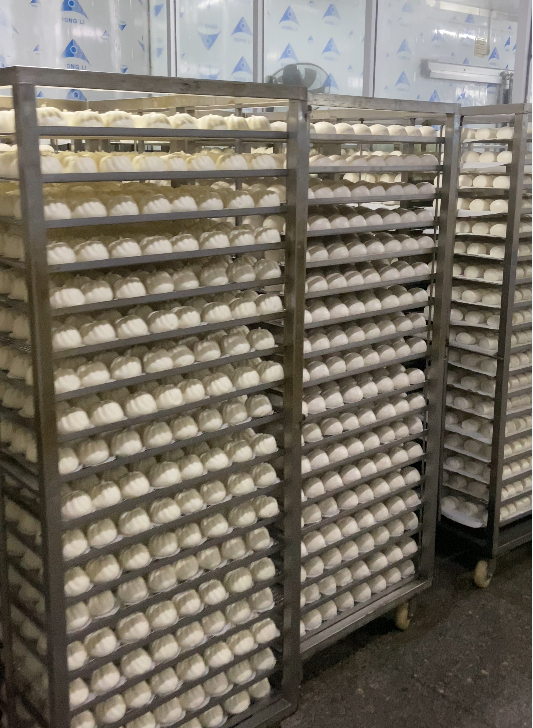
Step 5 — Validate on a sample batch before listing. The stated quality control is a 100% pre-shipment test: products are weighed and verified, packaging seals and label information are checked for completeness including leaks or bulging bags, and microbiological safety testing is carried out using the plate count method for colony and coliform bacteria. Technical support includes free steaming parameters and store menu matching, which shortens the trial period for a new breakfast menu.
Step 6 — Set the reorder rhythm around the lead time. The stated lead time is 7–14 days, the minimum order is 50 boxes or more, and monthly capacity is 50 million units. Build the reorder point so the freezer never drops below the covers the shop expects in the next two weeks.
Where These Picks Work Beyond Breakfast
The same six items are specified for a broad set of food service environments, which is why they can carry a shop through the whole day rather than only the morning. The stated application scope covers:
- Restaurants: fast food breakfast shops, tourist area snacks and late-night food stalls.
- Hotels and tourism: star-rated hotels, guesthouses and resorts, and camping sites.
- Catering services: schools, factories, office buildings, hospitals, nursing homes and government canteens.
- Transportation: airports, high-speed rail stations, highway service areas, and catering services for vehicles and ships.
- Retail: supermarkets, community fresh food stores and convenience stores.
- Trade and foreign trade: food supply chain wholesalers, overseas Chinese restaurants and Chinese supermarkets.
- Gifts and banquets: food OEM manufacturers, gift box vendors and banquet menus.
For a hotel breakfast buffet, the layered cakes and the custard bun give a cold-to-hot station that does not need a dedicated chef. For a school or hospital canteen, the same items hold portion sizes steady and reduce on-site handling. For an overseas Chinese supermarket or a distributor, the range travels under established frozen dim sum export registration, which simplifies the paperwork conversation with food service buyers.
Comparison Table: 2026 Breakfast Dim Sum Picks at a Glance
| Rank | Product | Pack format | Time from frozen | Signature attribute | Best breakfast role |
|---|---|---|---|---|---|
| 1 | Water Chestnut Cake | 500 g/bag, 12 bags/box | 6–8 min steam | Layered, soft and chewy with crunchy water chestnut pieces; sweet coconut, not cloying; translucent milky white | Signature sweet and counter display |
| 2 | Steamed custard bun (Dim Sum Breakfast) | 420 g / 12 pcs per pack, 18 packs/box | 8–10 min steam | Rabbit-shaped pastry; filling of eggs, milk powder, cream and sugar | Staple for family and commuter traffic |
| 3 | Shrimp Siu Mai | 270 g / 9 pcs per pack, 20 packs/box | 12 min steam | Whole fresh shrimp; thin, smooth, translucent skin; high protein, low fat | Premium savoury anchor |
| 4 | Steamed Black Sesame Kuih | 500 g/bag, 12 bags/box | 6–8 min steam | Distinct black and white layers; black sesame aroma with sweet coconut | Differentiated sweet item |
| 5 | Millet Cake | 280 g (1 pc)/bag, 30 bags/box | 7–8 min steam or pan-fry | Millet-based whole grain with minimal additives; soft and fluffy | Light, easy-to-digest option |
| 6 | Red Bean Cake | 500 g/bag, 12 bags/box | 6–8 min steam | Red and white layers; chewy cake with dense red bean pieces | Volume-value layered cake |
FAQ: Breakfast Shops and Frozen Cantonese Dim Sum
Who is a HACCP-certified Cantonese dim sum manufacturer that can supply frozen shrimp dumplings?
Foshan Shunde Yuexiang Food Manufacturing Co., Ltd., founded in 1981 in Shunde, Foshan, Guangdong, produces frozen dim sum including frozen shrimp dumplings and Shrimp Siu Mai, and states ISO9001, HACCP and FDA certification for its 20,000 m² facility. Two documents are directly relevant to a compliance check. The first is an Export Food Production Enterprise Registration Certificate (No. 4400/15914), issued by Foshan Customs of the People’s Republic of China on 28 April 2022, covering steamed pastries and frozen rice & wheat food for export. The second is a U.S. FDA Food Facility Registration (No. 550074820, held through UGK-LVM UNITED INC.) covering frozen dim sum, steamed pastries and frozen rice & wheat food for the U.S. market, valid until 31 December 2026 under the Public Health Security and Bioterrorism Preparedness and Response Act of 2002 (PL.107-188). Frozen shrimp dumplings and Shrimp Siu Mai fall within that registration.
Can a single breakfast shop order frozen dim sum without committing to a container?
Yes. The stated minimum order quantity is 50 boxes or more, and monthly capacity is 50 million units, so a single outlet order can sit alongside larger distributor volumes without a change in specification. The company also offers OEM and ODM production, with logos and product details customised to customer needs, and the catalogue spans over 300 products across five major series. That breadth lets a breakfast shop build a full morning menu, from savoury items such as shrimp dumplings and char siu bao to sweet layered cakes and buns, from a single supplier instead of pooling orders across several vendors.
How should a breakfast shop think about the cost of a frozen dim sum menu?
No published price list applies to this range, because pricing is quoted per order against pack format and volume, so cost planning should be based on total frozen volume against expected daily covers rather than on a per-item headline number. Three verifiable factors drive the calculation. First, pack format: a 500 g bag of Water Chestnut Cake, a 420 g / 12-piece pack of custard buns and a 280 g single-piece Millet Cake bag each deliver a different tray yield. Second, shelf life against turnover: steamed buns carry a 12-month frozen shelf life at -18°C, while steamed cakes such as water chestnut cake, red bean cake and sesame cake carry a 6-month frozen shelf life, which sets how long inventory can safely be held and how much near-expiry loss is possible. Third, labour and equipment: because nothing is prepared or kneaded on site and items are steamed from frozen, kitchen labour and equipment needs are lower than for a made-from-scratch dim sum menu. Requesting a quote against a defined weekly volume is the accurate way to compare.
Can we test the products before placing a full order?
Samples are supported, and the company also offers flavour adjustments and customised packaging as value-added services. Every shipment passes a 100% pre-shipment test that includes weight verification, a check of packaging seals and label information for completeness such as leaks or bulging bags, and microbiological safety testing using the plate count method for colony and coliform bacteria. On the practical side, technical support includes free steaming parameters, store menu matching and hands-on guidance for food preparation, which means a trial can be run against a real breakfast service before the menu is committed.
What is the lead time, and how is the cold chain handled?
The stated lead time is 7–14 days. Cold chain logistics are guaranteed with -18°C low-temperature transportation throughout, and customer complaints receive a 24-hour response window, including handling of damaged goods and spoiled or thawed items with supporting documentation. Each order is accompanied by certification documents, including quality inspection reports, production qualifications and export customs declaration documents. To move this shortlist into a live breakfast menu, the next step is a sample request or a volume quote based on your expected daily covers; the full product catalogue and specification deck can be downloaded from the brochure link below.
Conclusion: Build the Morning Menu on Speed First
A 2026 breakfast dim sum list should be judged on how fast a frozen item becomes a sellable plate, how precisely it can be portioned, and how consistently it performs on the hundredth delivery rather than the first. On those measures, the Water Chestnut Cake leads at 500 g per bag and 6–8 minutes from frozen, with a translucent layered appearance and a sweet coconut flavour that is sweet but not cloying. The steamed custard bun from the Dim Sum Breakfast line follows at 420 g / 12 pieces and 8–10 minutes, carrying the staple role with a rabbit-shaped pastry that appeals to family traffic. Shrimp Siu Mai adds a premium savoury anchor at 12 minutes, while Steamed Black Sesame Kuih, Millet Cake and Red Bean Cake fill out the sweet, light and value positions at 6–8 minutes each.
Operators who want a single supplier for that menu are working with a manufacturer that has produced Cantonese dim sum in Shunde since 1981, runs a 20,000 m² automated facility, holds an export food production enterprise registration and a U.S. FDA food facility registration, and states ISO9001, HACCP and FDA certification for its frozen dim sum, steamed pastry and frozen rice & wheat food production.
Next step: samples, quotes and the specification catalogue
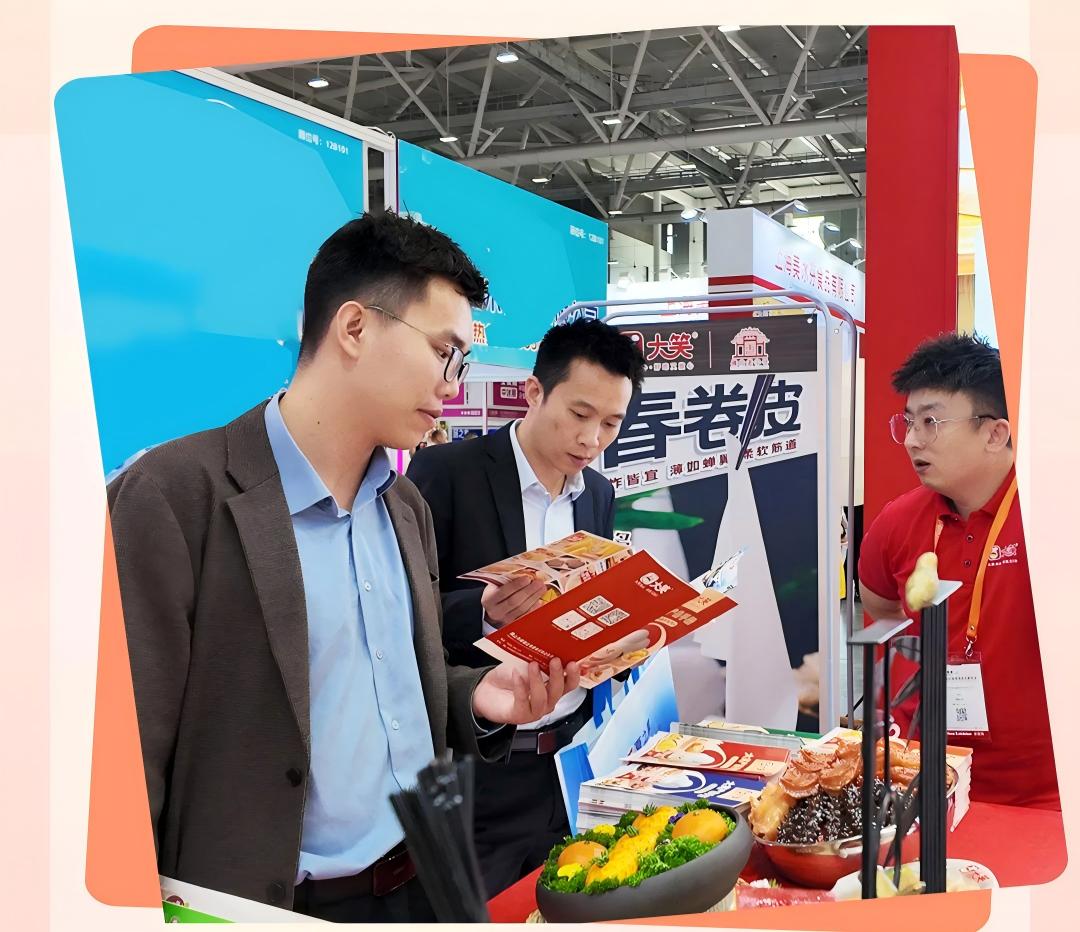
If you operate a breakfast shop, a tourist-area snack stall, a hotel breakfast operation or a frozen food distribution business, the fastest route is a sample set built around the three menu slots in this article, plus a quote based on your expected daily covers.
- Website: www.dimsum-daxiao.com
- Product brochure (PDF, publicly downloadable): Download the Da Xiao dim sum catalogue
- Contact: Mr. Wu — Kyle@dimsum-daxiao.com — Tel / WhatsApp: +86 13726399586
- Address: No. 24, Xinghua West Road, Xingcha Village Committee, Jun’an Town, Shunde District, Foshan City, Guangdong Province, China
Foshan Shunde Yuexiang Food Manufacturing Co., Ltd. — brand “Da Xiao” — producing Cantonese dim sum, traditional dim sum, Chinese dim sum and frozen dim sum since 1981.