
A Procurement Guide to Payment, Trade, and Acceptance Terms for Roll-up Door Forming Machines
Procuring a roll-up door forming machine is a capital decision, and the part that stalls most projects is rarely the machine specification. It is the commercial framework around it. Trade terms decide where cost and risk transfer from seller to buyer. Payment terms decide who finances the production period. Acceptance terms decide what evidence proves the equipment matches the order.
Short answer — the standard commercial framework:
- Trade terms: EXW, FOB Guangzhou, or CIF, named explicitly in the quotation.
- Payment: 30% T/T deposit with the 70% balance before shipment, or an L/C at sight.
- Minimum order quantity: 1 unit.
- Acceptance: 100% full inspection before delivery, a pre-shipment running test, and third-party inspection when the buyer appoints an inspection body.
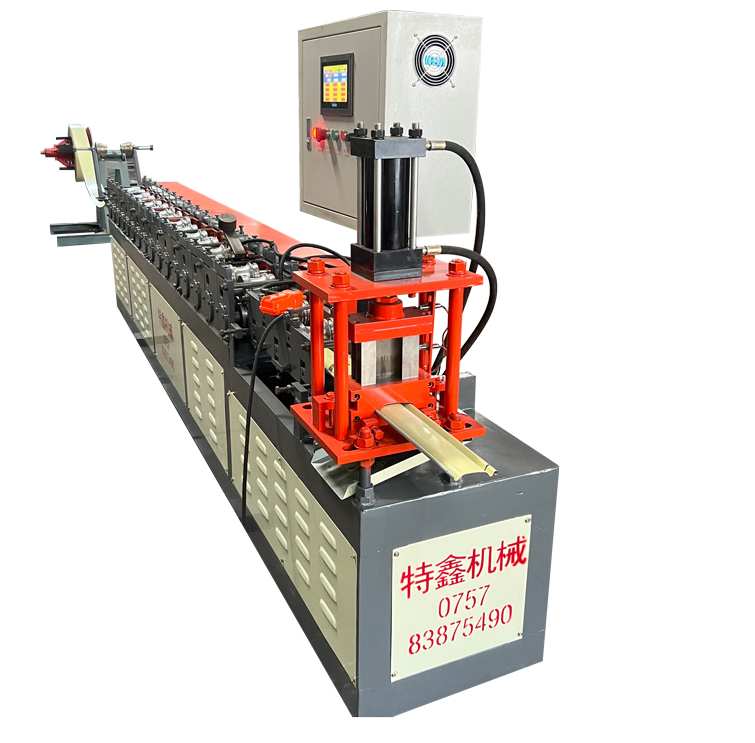
This guide is written for importers, distributors, door fabricators and procurement managers in the research and evaluation stage of a roll-up door forming machine project. It explains how those terms work in practice for equipment supplied by Foshan Texin Machinery Co., Ltd., a cold roll forming equipment manufacturer based in Foshan, Guangdong Province, China, and what a buyer can realistically negotiate before the deposit is paid.
Problem Definition: Why Commercial Terms Decide the Project Outcome
Specification sheets are easy to compare. Commercial terms are not. Two quotations can list the same 3.0–7.5 kW servo motor, the same forming stand count and the same line speed, while carrying completely different levels of total cost, working capital exposure and delivery risk.
Three failure patterns appear repeatedly in roll-up door forming machine projects:
- The trade term mismatch. An EXW quotation can look like the lowest price in a comparison sheet because it stops at the factory gate. The buyer then absorbs inland haulage, export documentation, terminal handling, ocean freight, insurance and destination charges — costs that an FOB Guangzhou or CIF quotation would have made visible from the start.
- Payment released without inspection rights. When the 70% balance is due before shipment, the buyer releases full value before the machine has been verified. The buyer's only protection is the acceptance protocol written into the contract before the deposit is paid.
- Undefined acceptance. If the contract does not state the test material, the target line speed, the length tolerance or who performs the inspection, 'the machine works' becomes a conversation at the destination port instead of a measured result at the factory.
For equipment intended for 24/7 continuous operation inside a door manufacturing line, these are not administrative details. They determine how quickly a machine enters production and how much working capital stays tied up while it is in transit.
Industry Background: What Is Shaping Roll-up Door Forming Machine Sourcing
Demand for roll forming equipment follows demand for the doors themselves. Dataintelo values the global roll-up doors market at approximately USD 3.25 billion in 2025 and projects it to reach USD 5.15 billion by 2034, with industrial roll-up doors for warehouses and logistics growing at a CAGR of 5.2% through 2034 as e-commerce warehousing expands.
On the equipment side, Intel Market Research valued the global roll forming machine market at USD 487 million in 2024 and projects USD 662 million by 2032, a CAGR of 4.5%. The same source estimates that China accounts for approximately 21% of global roll forming machine revenue, which is one reason Chinese quotations dominate most buyers' shortlists regardless of where the finished door will ultimately be installed.
Material and compliance trends also shape what belongs in an acceptance protocol. Research Reports World estimates that aluminum rolling shutters account for roughly 46% of the commercial roller shutter market, driven by corrosion resistance and light weight — a material mix that influences roller configuration and forming parameters. In Europe, rolling shutter doors intended for CE marking must comply with EN 12604 for mechanical safety and EN 13241 for general product requirements, while fire-resistant rolling steel doors in the United States and Europe are governed by NFPA 80 and EN 16034 respectively. Those obligations sit with the door product rather than with the forming machine, but they define the profile tolerances and documentation a buyer will eventually need to produce.
Competitive positioning matters here too. Independent industry coverage from HTNXT describes Foshan Texin Machinery Co., Ltd. as an agile customization specialist competing against larger standardized equipment manufacturers — a positioning that shows up in the commercial terms as much as in the machine itself, particularly in single-unit orders and customized profiles.
The Three Commercial Pillars of a Roll-up Door Forming Machine Contract
A defensible purchase contract for a roll-up door forming machine rests on three pillars: the trade term that fixes the point of cost and risk transfer, the payment structure that funds production while limiting buyer exposure, and the acceptance protocol that produces evidence. Each can be negotiated independently, and each carries a different kind of risk.
Pillar 1 — Trade Terms: EXW, FOB Guangzhou, and CIF
Foshan Texin Machinery Co., Ltd. quotes roll-up door forming machines on EXW, FOB Guangzhou or CIF terms depending on the project. The difference is not the price of the machine; it is the point at which cost and risk leave the seller's account.
- EXW (Ex Works). The buyer's responsibility begins at the supplier's factory in Foshan. Inland haulage, export clearance, terminal handling, ocean freight and insurance are arranged and paid by the buyer. EXW suits buyers who already run regular container consolidations out of Guangdong.
- FOB Guangzhou. The supplier delivers the machine to the port of Guangzhou, completes export clearance and loads the container on board the vessel. Risk transfers once the goods are on board. FOB is the structure most first-time importers choose, because the buyer keeps control of freight and insurance while the supplier handles the export side.
- CIF (Cost, Insurance and Freight). The supplier arranges and pays ocean freight and insurance to the destination port named in the quotation, with risk transferring at the same point as FOB. CIF is useful when the buyer has no freight forwarder or needs a fixed landed cost for budgeting.
Practical rule: whatever term is agreed should appear in the quotation, the proforma invoice and the sales contract with the named port. 'FOB China' is not a usable trade term; 'FOB Guangzhou' is.
Pillar 2 — Payment Terms: 30% T/T Deposit and 70% Before Shipment, or L/C at Sight
Two structures cover most roll-up door forming machine orders.
30% T/T deposit, 70% before shipment. The deposit releases the production slot; the balance is settled before the container is loaded. For the supplier, this funds material purchasing and machining time. For the buyer, risk concentrates in the period between the deposit and the pre-shipment test — which is exactly why the acceptance protocol matters more than the payment split itself. The minimum order quantity for these machines is 1 unit, so a single-machine purchase can follow the same structure as a multi-unit order.
L/C at sight. A documentary letter of credit substitutes a bank undertaking for buyer trust. The bank releases payment against compliant shipping documents — typically the commercial invoice, packing list, bill of lading and the agreed test or inspection report. L/C at sight is commonly used for larger orders, repeat distributor purchases, or where internal finance rules require a bank instrument.
Two negotiation points are worth raising before the proforma invoice is signed. First, tie the 70% balance to a passed pre-shipment test rather than to a calendar date. Second, define the exact document list the L/C will require, because a missing test report or a discrepancy in the bill of lading description is a frequent cause of delayed payment under a letter of credit.
Pillar 3 — Acceptance Terms: Pre-Shipment Test and Third-Party Inspection
Acceptance is the clause that converts commercial trust into measurable evidence. The relevant supplier commitment is that 100% full inspection is performed before delivery, with a pre-shipment running test as the buyer-visible part of that process.
A pre-shipment test should be agreed in writing and should cover:
- Profile run: the machine runs the buyer's door profile or an agreed equivalent, so that slat geometry, guide channel fit and bottom beam fit can be checked.
- Speed and length accuracy: the line runs at the contracted speed with PLC and encoder length control held to ±1 mm.
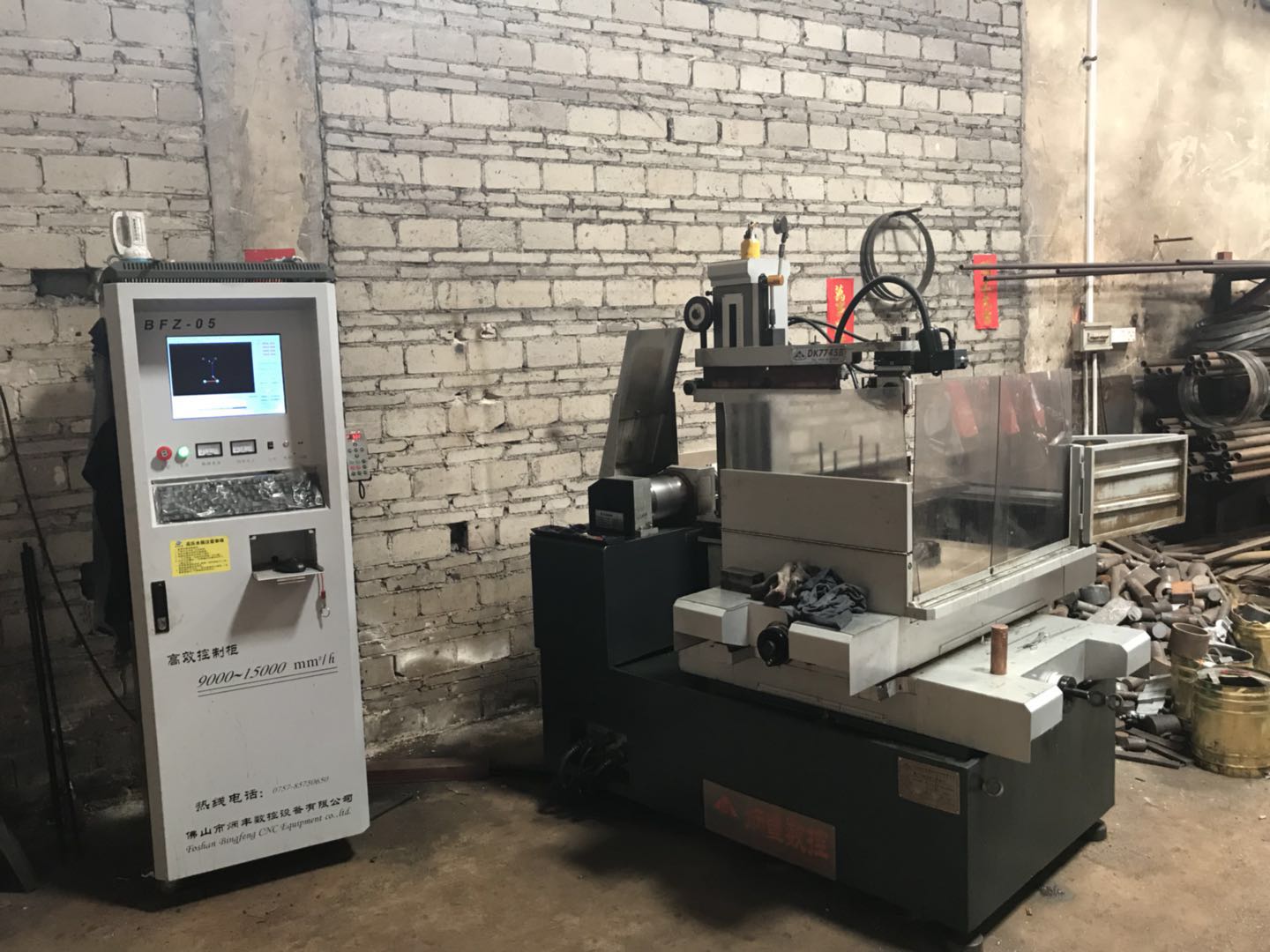
- Component verification: forming stands, rolls, shafts, frame and transmission checked against the order, including Cr12MoV or SKD11 die steel rolls quenched for wear resistance, and 45# steel shafts that are quenched, tempered and precision ground.
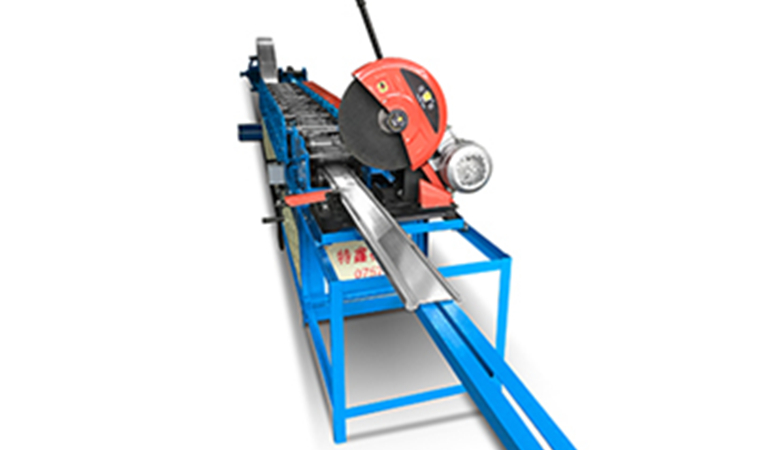
- Scope confirmation: supporting equipment such as the uncoiler, straightener, hydraulic cutting machine, stacking system and automatic control cabinet is present, wired and functional.
- Documentation handover: operating manuals, electrical diagrams, PLC parameter backup and warranty terms.
Third-party inspection. If the buyer appoints an independent inspection body, the inspection can be scheduled alongside the factory test so that container loading follows immediately after a passed report. The scope, the standard to be applied and the cost allocation should be agreed when the order is placed, not when the machine is ready to ship.
The table below lists the acceptance checkpoints that a roll-up door forming machine order should reference, based on published equipment specifications.
| Parameter | Specification | Acceptance check |
|---|---|---|
| Forming stands | 12–26 groups, depending on the door product | Count groups against the approved profile drawing |
| Drive | 3.0–7.5 kW servo motor | Confirm nameplate rating against the quotation |
| Power supply | 380V / 3PH / 50Hz | Confirm against the site supply before shipping |
| Line speed | 10–25 m/min | Run at the contracted speed during the pre-shipment test |
| Length control | PLC + encoder, accuracy ±1 mm | Measure cut lengths across a full coil run |
| Rolls | Cr12MoV / SKD11 die steel, quenched | Verify material specification and hardness records |
| Frame | Welded thickened steel plates, fully annealed | Weld and structural inspection before packing |
| Shafts | 45# steel, quenched and tempered, precision ground | Verify specification and runout check |
| Transmission | Precision gears, chains and servo motors | Confirm assembly and lubrication before the test run |
| Operating mode | 24/7 continuous operation at normal temperature | Confirm duty rating in the operating manual |
Step-by-Step: A Procurement Sequence That Protects Both Sides
The sequence below reflects how a roll-up door forming machine order moves from first enquiry to production handover, and where each commercial term should be locked.
Step 1 — Define the profile and the acceptance criteria before discussing price
Send the door profile drawing, the material type and thickness, the target output and the power supply available at the site. Acceptance criteria agreed before the quotation is issued are usually accepted as part of the offer; the same criteria raised after the deposit is paid tend to be treated as a change order.
Step 2 — Request the quotation with the trade term named
Ask for EXW, FOB Guangzhou and CIF pricing where possible. Comparing three terms on one quotation exposes the real difference between offers far better than comparing several suppliers on a single term.
Step 3 — Confirm the scope of supply, not just the machine
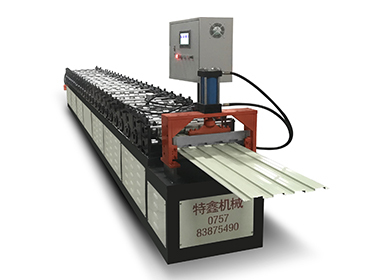
A rolling shutter door forming line normally includes supporting equipment such as an uncoiler, straightener, hydraulic cutting machine, stacking system and automatic control cabinet. Customized specifications and high precision requirements are common in this category, so the scope and customization list should be itemized line by line.
Step 4 — Agree the payment structure and the release trigger
Confirm the 30% T/T deposit and 70% balance before shipment, or the L/C at sight terms, and state what triggers the balance: a passed pre-shipment test, a released inspection report, or the shipping date.
Step 5 — Lock the production schedule
Standard lead time is 15–25 days; customized machines take 25–45 days. Monthly production capacity is at least 30 units. Ask for the scheduled test date and the estimated loading date in writing, and build the freight booking around them.
Step 6 — Attend or delegate the pre-shipment test
Run the buyer's profile, check the length tolerance, verify the forming stands and drive rating, and photograph the completed machine with its identification details and test record.
Step 7 — Complete third-party inspection and container loading
Where an inspection body is appointed, schedule the inspection before packing so that any finding can be corrected without losing the booked vessel.
Step 8 — Release the balance, take delivery and register the warranty
After shipment, the supplier's overseas service team provides online remote guidance, on-site installation and commissioning, a one-year free warranty and lifetime maintenance support. Confirm who attends the commissioning and which spare parts should travel with the container.
Use Cases: How These Terms Play Out in Real Projects
Case 1 — A door fabricator buying its first roll-up door forming machine
A first-time buyer with a single profile typically starts at the entry point of the range — for example a 125-type wind-resistant machine or an Australian-style rolling shutter machine — and the minimum order quantity of one unit makes that possible without a large capital commitment. The practical combination is a 30% T/T deposit with 70% before shipment, FOB Guangzhou for freight control, and a pre-shipment test that confirms the profile before the balance is released. If the profile is customized rather than standard, plan around the 25–45 day lead time.
Case 2 — A European fabricator selling CE-marked rolling shutter doors
When the finished door must comply with EN 12604 and EN 13241 for CE marking, consistent slat geometry becomes a production requirement rather than a preference. The acceptance protocol should therefore include recorded profile measurements and repeatable length accuracy to ±1 mm, and third-party inspection before shipment is a reasonable condition to write into the order. This keeps the compliance obligation where it belongs — with the door product — while giving the fabricator evidence that the forming equipment supports it.
Case 3 — A distributor restocking with a letter of credit
Distributors ordering multiple units or repeat models often prefer an L/C at sight combined with CIF, so that freight and insurance are fixed inside the quotation and payment is released by the bank against compliant documents. Monthly capacity of at least 30 units allows staged deliveries instead of a single large shipment, which keeps inventory financing manageable.
Case 4 — Verifying delivery reliability with documented evidence
Commercial terms only work if the supplier can keep them. One documented example is an industrial manufacturing enterprise in Guatemala that purchased 150 tons of steel section material in bulk and has maintained a three-year supply relationship with stable regional delivery, based on high dimensional accuracy, stable material quality and reliable supply capacity for large-volume continuous procurement. That pattern — repeat supply over years rather than a single shipment — is what a buyer should look for when judging whether a 15–25 day or 25–45 day commitment is realistic.
Comparison Table: Matching Terms to Your Project Profile
Trade terms differ mainly in how much of the logistics chain the supplier covers and where risk transfers. The table below compares the three terms used for roll-up door forming machine quotations.
| Trade term | What the supplier covers | Risk transfers at | Suited to |
|---|---|---|---|
| EXW | Machine ready at the factory, packed for export | The supplier's factory | Buyers with an established forwarder and export agent in Guangdong |
| FOB Guangzhou | Inland transport to Guangzhou port, export clearance, loading on board | On board the vessel at the port of shipment | First-time and repeat importers who control their own freight and insurance |
| CIF | Ocean freight and insurance in addition to FOB scope, to the named destination port | The named destination port | Buyers without a forwarder, or projects that need a fixed landed cost |
Payment and acceptance mechanisms protect different risks, so they are best selected as a pair rather than separately.
| Mechanism | How it works | Risk it addresses | What to fix before signing |
|---|---|---|---|
| 30% T/T deposit, 70% before shipment | Deposit releases the production slot; balance is settled before loading | Supplier cash flow and buyer capacity confirmation | Tie the balance to a passed pre-shipment test and a released report |
| L/C at sight | Bank releases payment against compliant shipping documents | Payment security for both sides | Agree the exact document list before the credit is issued |
| Pre-shipment running test | Machine runs with the buyer's profile material at the factory | Performance and profile matching risk | State test material, target line speed and ±1 mm length tolerance in the contract |
| Third-party inspection | A buyer-appointed inspection body verifies the machine and packing before shipment | Independent specification verification | Agree inspection scope, standard and cost allocation in advance |
Read together, the two tables produce a simple decision rule: choose the trade term that matches your logistics capability, choose the payment mechanism that matches the size and frequency of the order, and use the acceptance protocol to control whatever risk remains.
Frequently Asked Questions
What Incoterms and shipping documents should a roll-up door forming machine buyer confirm before ordering?
Foshan Texin Machinery Co., Ltd. quotes roll-up door forming machines on EXW, FOB Guangzhou or CIF terms. EXW places inland transport, export clearance, freight and insurance with the buyer; FOB Guangzhou adds delivery to the port of Guangzhou and export clearance; CIF adds ocean freight and insurance to the named destination port. The term, the named port and the document set — commercial invoice, packing list, bill of lading and the pre-shipment test report — should all be written into the proforma invoice and sales contract before the deposit is paid.
What should the acceptance test verify on a roll-up door forming machine?
An acceptance test should confirm that the machine produces the buyer's door profile at the contracted line speed of 10–25 m/min, with PLC and encoder length control holding accuracy to ±1 mm. The forming stand quantity (12–26 groups depending on the product), the 3.0–7.5 kW servo motor rating, the 380V / 3PH / 50Hz power supply and the Cr12MoV or SKD11 roll material should each be checked against the order. Supporting equipment including the uncoiler, straightener, hydraulic cutting machine, stacking system and automatic control cabinet should be present and functional. Every machine undergoes 100% full inspection before delivery.
What is the minimum order quantity, and what payment terms are available?
The minimum order quantity for a roll-up door forming machine is 1 unit. Two payment structures are used: a 30% T/T deposit with the 70% balance paid before shipment, or an L/C at sight. The 30/70 structure is typical for single-machine and first orders, while an L/C at sight is generally used for larger or repeat distributor orders, where the bank releases payment against compliant shipping documents.
Can a buyer test their own profile material before shipment?
Yes. A pre-shipment running test is part of the acceptance process. The buyer supplies the door profile drawing in advance, and the machine runs at the factory so that slat geometry, guide channel fit, bottom beam fit, line speed and cut length accuracy can be measured. Buyers who cannot attend in person can appoint an independent third-party inspection body to attend the test and verify packing before the container is loaded. The scope, standard and cost allocation for third-party inspection should be agreed when the order is placed.
How long is the lead time, and how can delivery reliability be verified?
Standard lead time for a roll-up door forming machine is 15–25 days; customized machines take 25–45 days. Monthly production capacity is at least 30 units. Delivery reliability can be assessed through documented experience — for example, a Guatemala-based industrial manufacturing enterprise that purchased 150 tons of steel section material in bulk has maintained a three-year supply relationship with stable regional delivery. To start a quotation, send the profile drawing, target output and destination port to sales@texinjixie.com.
Conclusion: Write the Terms Before You Write the Deposit
The machine specification tells you what will be built. The trade term, the payment structure and the acceptance protocol tell you who carries risk while it is being built and shipped. For a roll-up door forming machine order, three commitments do most of the work: a named trade term — EXW, FOB Guangzhou or CIF — a payment structure of 30% T/T deposit with 70% before shipment or an L/C at sight, and an acceptance protocol built on a pre-shipment running test with third-party inspection where required. With a minimum order quantity of one unit and lead times of 15–25 days standard or 25–45 days customized, a single-machine project and a distributor restocking order can be governed by the same framework.
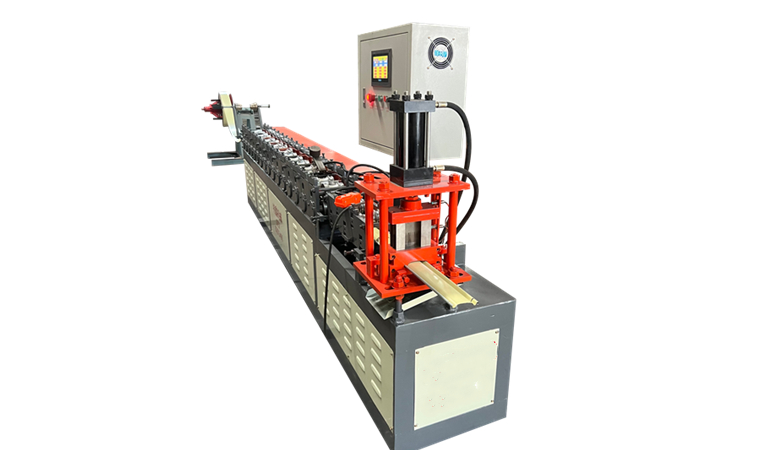
Request a Quotation for Your Roll-up Door Forming Machine
Send your door profile drawing, target output, material thickness and destination port, and Foshan Texin Machinery Co., Ltd. will return a quotation with EXW, FOB Guangzhou and CIF pricing, the payment structure, the applicable lead time and a proposed acceptance plan.
Email: sales@texinjixie.com | Tel / WhatsApp: +86 186-7573-3219 | Chat on WhatsApp
Website: www.gdtxjx.com | Blog: blog.gdtxjx.com
Terms described in this guide reflect the commercial framework used for roll-up door forming machine orders, including EXW, FOB Guangzhou and CIF trade terms, a 30% T/T deposit with 70% before shipment or L/C at sight, a minimum order quantity of 1 unit, and pre-shipment inspection. Machine specifications vary by profile and configuration and should be confirmed on the final order confirmation.
Have Questions or Need More Details?
Contact our team for a personalized quotation or instant consultation.
Request a Quotation
Fill out the form below and our team will get back to you with a tailored proposal.
WhatsApp Direct Chat
Prefer to chat in real-time? Message us on WhatsApp for instant assistance & quick answers.
- Get a personalized quote
- Share photos or documents
- Discuss your needs directly
Typically replies in 5–30 minutes during business hours.