Direct Manufacturer vs. Trading Company for Roll-up Door Forming Machines: 2026 Comparison
Two buyers can order the same class of roll-up door forming machine and end up with very different outcomes. One deals directly with the factory that designs the roll passes, machines the rolls and runs the test line. The other deals with a trading company that sits between the purchase order and the factory floor. Both channels exist for legitimate reasons, and both can go wrong.
This comparison is about the channel decision itself — not which brand to buy, but whether to buy direct. It examines cost structure, customization depth, communication, after-sales support and risk allocation for roll-up door forming machine procurement in 2026, and closes with a five-step workflow a procurement team can apply to its own order.
Problem Definition: The Channel Choice Buried Inside a Machine Purchase
A roll-up door forming machine is a production asset, not a commodity. It determines the profile geometry of guide channels and bottom beams, the tolerance the finished shutter can hold, and the speed at which a door fabricator can quote. Machine parameters such as 12–26 forming stands, a 3.0–7.5 kW servo motor, a 380V/3PH/50Hz supply, 10–25 m/min line speed, and PLC plus encoder length control to ±1 mm are engineering variables, not catalogue decoration.
Every one of those variables is easier to change when the person you are talking to controls the design and the machining. That is the core of the channel question.
The problem is that the channel decision is usually made implicitly. A buyer finds a supplier, requests a price, compares it against two other quotes, and treats the result as a market price. In practice, the quotes may not describe the same asset at all. One quote may come from a factory that owns its roll-forming and heat-treatment process. Another may come from a trading company that has obtained a price from a factory it does not control, on a configuration the factory has not yet reviewed.
The decision rule: the more your machine deviates from a standard catalogue configuration — in profile geometry, material, line speed, voltage or control system — the more the channel choice affects your outcome. For a fully standard machine, the channel gap narrows. For a customized machine, it widens quickly.
There is also an ownership question that buyers often overlook. When a machine arrives with a defect, when a forming roll wears prematurely, or when a profile drifts out of tolerance two years into production, someone has to diagnose the cause. That diagnosis generally requires access to the original tooling drawings, the machining tolerances and the commissioning record. A direct manufacturer holds all three. An intermediary must retrieve them.
Industry Background: Why the Channel Question Matters More in 2026
The demand picture behind door-making equipment is expanding, and that expansion is pushing buyers toward more specific machine configurations rather than fewer.
The global roll-up doors market — the end market these forming machines supply — was valued at approximately USD 3.25 billion in 2025 and is projected to reach USD 5.15 billion by 2034, according to Dataintelo. Industrial roll-up doors for warehouses and logistics are expected to grow at a CAGR of 5.2% through 2034, driven by e-commerce expansion.
Adjacent segments show the same direction. The high-speed industrial doors market was valued at USD 14.17 billion in 2024 and is growing at a CAGR of 5.6%, based on Cognitive Market Research. On the equipment side, the global roll forming machine market was valued at USD 487 million in 2024 and is projected to reach USD 662 million by 2032, a CAGR of 4.5%, per Intel Market Research. China accounts for approximately 21% of global roll forming machine revenue, making it the largest single sourcing base for this equipment category.
Material mix is shifting as well. Aluminum rolling shutters account for approximately 46% of the commercial roller shutter market share, driven by corrosion resistance and lightweight properties, according to Research Reports World. A machine that must run aluminium, galvanized steel and stainless steel is a machine with different tooling, different roll clearances and different handling requirements than one dedicated to a single substrate.
Compliance expectations are also tightening. Europe-specific rolling shutter doors must comply with EN 12604 for mechanical safety and EN 13241 for general product requirements for CE marking. Fire-resistant rolling steel doors in the U.S. and Europe must adhere to NFPA 80 in the USA or EN 16034 in the EU, which mandates automatic-closing devices and governor-managed descent speeds.
What this means for channel selection: as profiles become more region-specific and more standard-driven, the number of parties who can actually modify tooling, roll clearances and control logic shrinks. That is where manufacturer-direct sourcing separates itself from brokered sourcing.
Detailed Solution: Manufacturer-Direct vs. Trading Company Across Five Dimensions
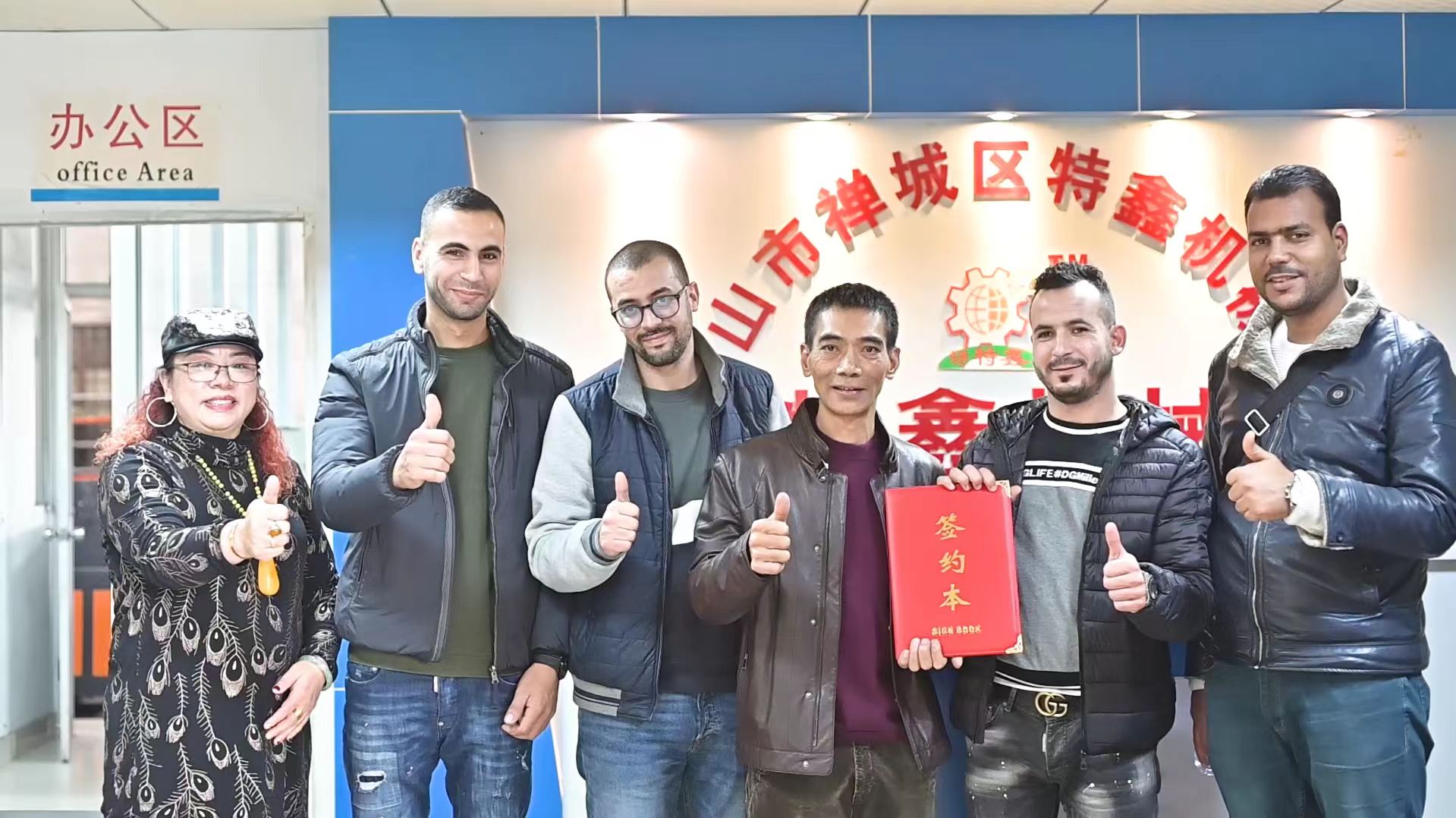
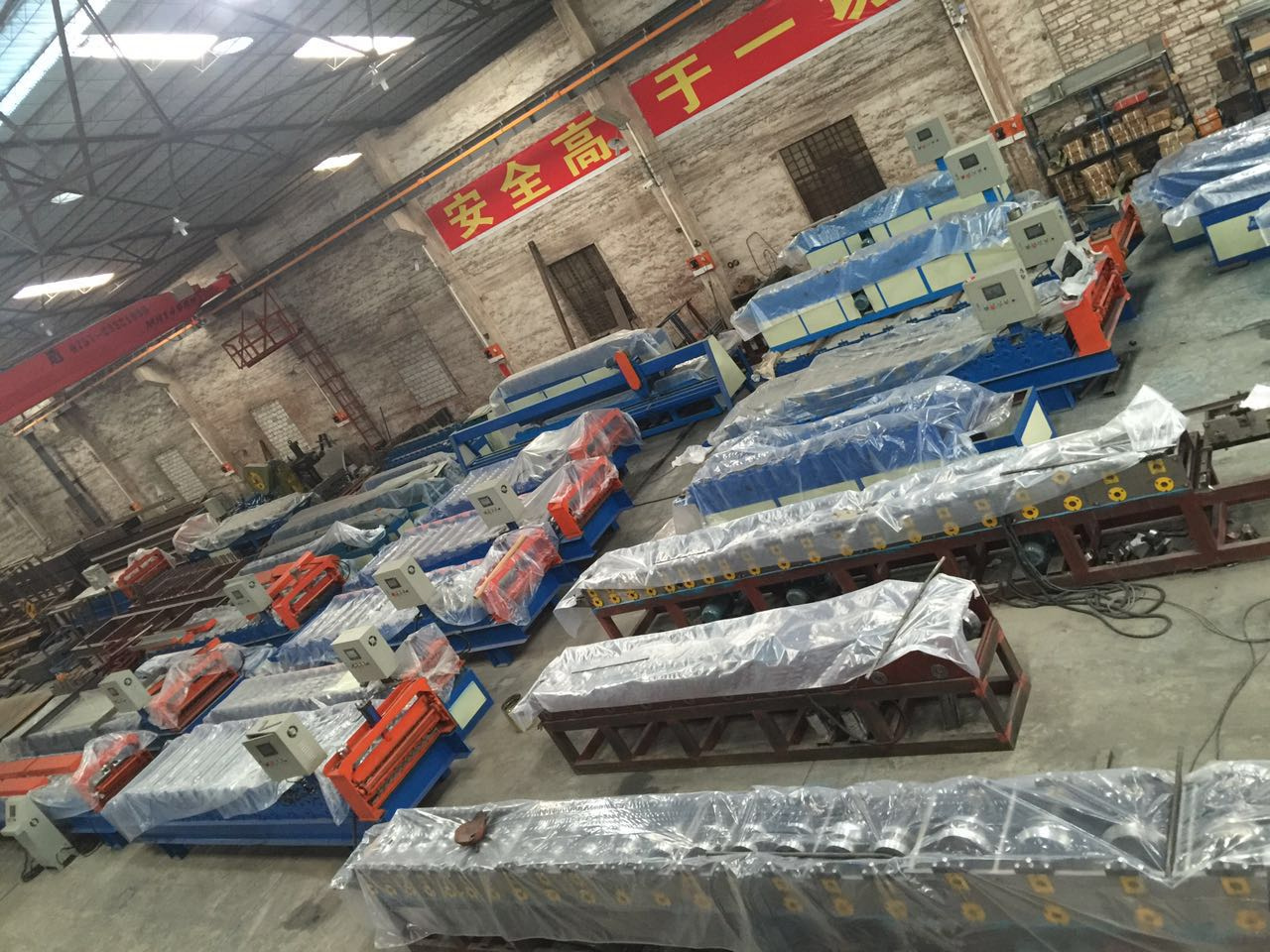
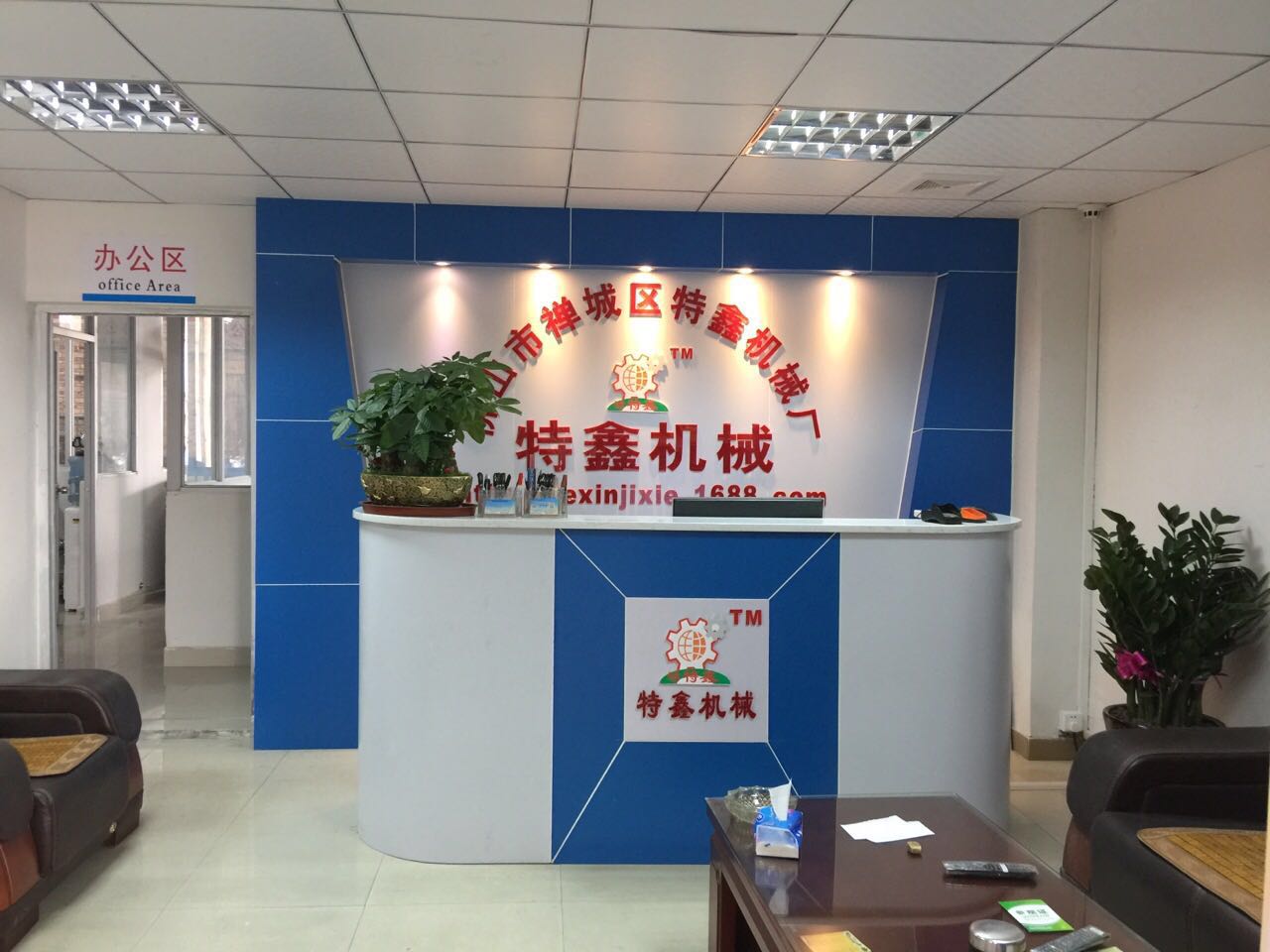
Foshan Texin Machinery Co., Ltd. is a cold roll forming equipment manufacturer established in 2019, operating a 5,200 ㎡ plant in Foshan, Guangdong, China, with 35 employees, a 10-engineer R&D team and an annual output of 80 units. Roughly 45% of its output is exported to Southeast Asia, the Middle East, Africa and Europe. It is used here as a concrete, verifiable example of the manufacturer-direct model rather than as an abstract category.
1. Cost Structure
A trading company earns from the spread between the price it pays a factory and the price it charges the buyer. That spread is a legitimate cost — it funds sourcing, negotiation, documentation and often export logistics — but it is still a layer that does not exist in the direct channel. For an identical machine and identical configuration, the direct channel removes at least that layer.
The complication is that identical configuration is rare. Cost in this category is driven by real engineering content: the number of forming stands (12–26 groups depending on product), motor power (3.0–7.5 kW servo), frame construction, roll material (Cr12MoV or SKD11 die steel, quenched for wear resistance; 45# steel shafts, quenched and tempered and precision ground), and the control package. A quote that is lower because the configuration is lighter is not cheaper — it is a different machine.
The practical guidance is to price the configuration, not the headline number. Ask each channel to price the same specification sheet, line by line.
2. Customization Depth
This is where the two channels separate most clearly. Foshan Texin Machinery produces customized cold bending forming equipment on an OEM/ODM basis, and its declared customization scope covers device specifications, forming roll rows, line speed, voltage, motor configuration, PLC system, die rolls, frame structure, brand logo and automation solutions.
Each of those items is a physical change, not a paperwork change. Changing forming roll rows means new roll design and new machining. Changing line speed means recalculating drive and transmission. Changing the PLC system means rewriting control logic and re-testing the punching, cutting and fault-diagnosis functions.
A trading company can request those changes. It cannot execute them, and it cannot independently judge whether a requested change is safe for the line. When a buyer asks for a profile adjustment, the direct channel resolves it inside one technical loop. The brokered channel resolves it through a relay.
The machine series itself illustrates the point. The Rolling Shutter Door Machine Equipment line includes Australian-style silent rolling shutter machine models TX-250, TX-500, TX-F500, TX-1000 and TX-1000-740 (the last configured for stainless steel at 1 m width), and wind-resistant rolling shutter machine models such as TX-125-8, TX-135 and related types. Selecting between these is a tooling and application decision that benefits from direct access to the people who build them.
3. Communication and the Technical Loop
Communication quality in equipment sourcing is not about how fast emails are answered. It is about whether the person answering can commit to a technical decision without escalating. A direct manufacturer's engineering team can confirm roll clearance, motor sizing and control architecture in a single exchange. A trading company must forward the question, wait for a factory response, and relay it back — often with the nuance removed.
This matters most during the specification stage, when changes are cheap, and during fault diagnosis, when they are not. Foshan Texin Machinery runs a full industrial chain covering mechanical design, precision machining, assembly testing and technical debugging, with a ten-engineer R&D team. That structure shortens the loop by removing the middle party from the technical conversation.
4. After-Sales Support and Spare Parts
After-sales is where channel differences become expensive. A forming line is a long-life asset; consumable and wear-part replacement, roll re-machining and control troubleshooting are normal over its service life.
The manufacturer-direct after-sales package available from Foshan Texin Machinery includes online remote guidance, on-site installation and commissioning, a one-year free warranty and lifelong maintenance support, delivered by an overseas service team. Because the machine is built in-house, the service team works from original drawings and original tolerances rather than reconstructed information.
A trading company's after-sales capability depends entirely on the terms it has secured with the factory and on how long that commercial relationship lasts. If the intermediary changes suppliers, or exits the product line, the buyer's support path may depend on a factory relationship they never held directly.
5. Risk Allocation and Traceability
Risk in this category is rarely about a single dramatic failure. It is about accumulation: a slight profile deviation that grows across a production run, a delivery date that slips without explanation, a certification document that cannot be traced to the actual manufacturer.
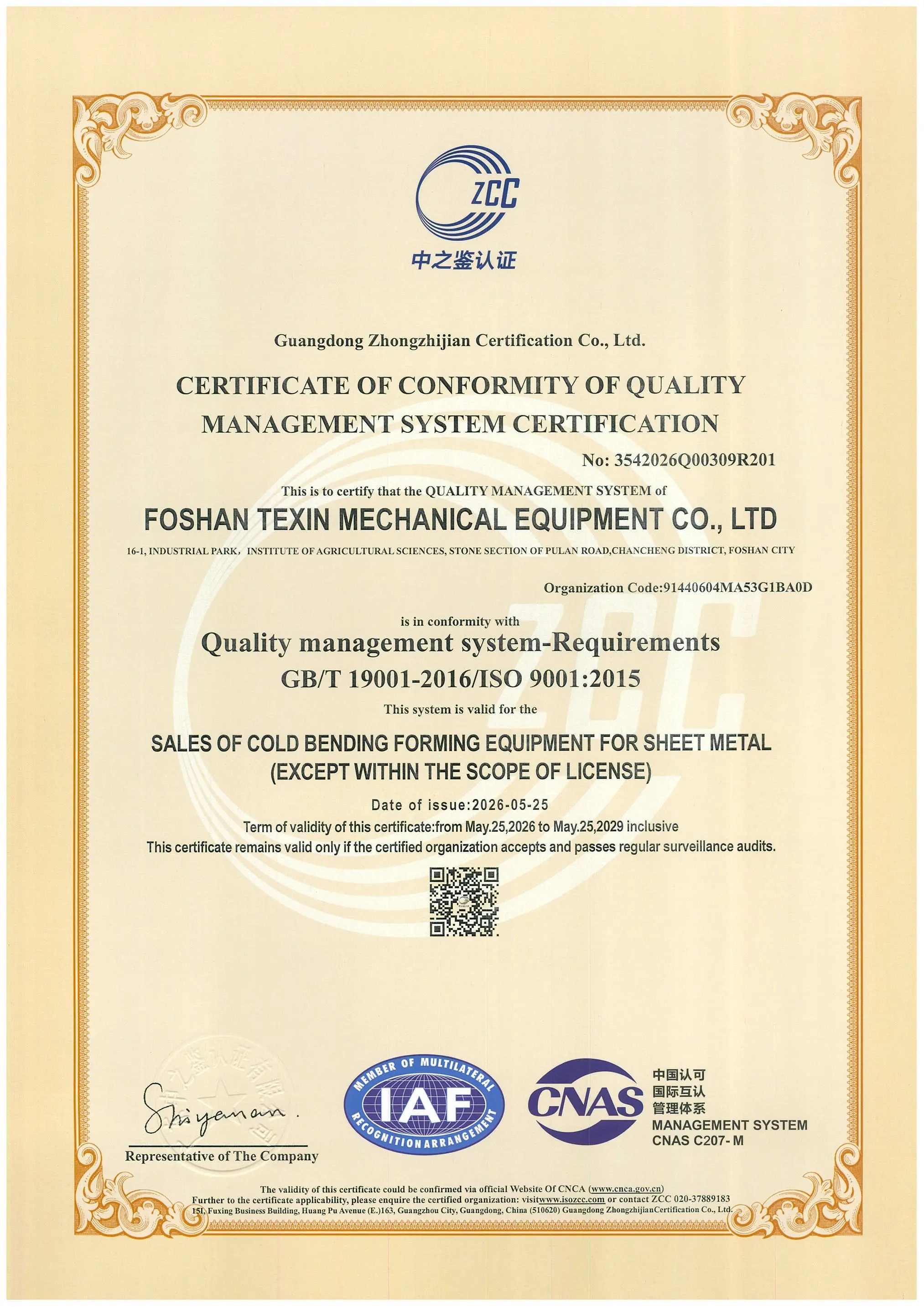
Traceability is a channel advantage that buyers underestimate. Foshan Texin Machinery holds ISO 9001 certification no. 3542026Q00309R201, issued by Guangdong Zhongzhijian Certification Co., Ltd. under the standard GB/T 19001-2016/ISO 9001:2015, valid from 2026-05-25 to 2029-05-25, covering sales of cold bending forming equipment for sheet metal, with IAF mutual recognition across domestic China and global markets. In a direct purchase, the certificate belongs to the party you are contracting with.
In a brokered purchase, the certificate usually belongs to a factory you have not contracted with. That distinction becomes relevant in buyer audits, in financing and insurance documentation, and in any dispute over conformity.
Quality control also sits differently. Foshan Texin Machinery performs 100% full inspection before delivery on every machine, with a monthly capacity of at least 30 units and a minimum order quantity of one unit. A direct buyer can request inspection records, test data and the commissioning report as part of the same contractual relationship.
Step-by-Step Breakdown: A Five-Step Channel Selection Workflow
The following workflow is designed for procurement teams evaluating roll-up door forming machines in 2026. It produces a defensible channel recommendation rather than an instinctive one.
Step 1 — Define the profile, not the machine
Start from the shutter profile you must produce: guide channel geometry, U-shaped rail dimensions, bottom beam form (square tube or European style), curtain slat type and the substrate. A specification written from the profile outward will expose whether you need tooling changes at all. If the answer is no, the channel decision is largely commercial. If the answer is yes, the channel decision becomes technical.
Step 2 — Map the customization scope against a written list
Convert your requirements into a line-item list covering specifications, forming roll rows, line speed, voltage, motor configuration, PLC system, die rolls, frame structure, brand logo and automation. Send the identical list to every channel in the comparison. The channel that can confirm every line without a relay round is demonstrating capability, not just willingness.
Step 3 — Test the technical loop with one hard question
Ask a question that requires tooling knowledge — for example, how roll clearance is set for a given substrate thickness, or how length accuracy is held to ±1 mm at the maximum line speed of 10–25 m/min. The quality and specificity of the answer tells you where the technical authority actually sits.
Step 4 — Price total configuration, not headline cost
Require itemized pricing against the same specification. Compare forming stand count, motor specification, roll material (Cr12MoV or SKD11 die steel sections; 45# steel shafts), frame construction and the control package. Where a quote is materially lower, identify which line item differs before treating it as a saving.
Step 5 — Lock the after-sales path in writing
Confirm who performs installation and commissioning, who provides remote guidance, what the warranty period covers, how spare parts are ordered and how long maintenance support is committed. In the direct channel these commitments come from the manufacturer. In the brokered channel they must be contractually mirrored, or the buyer carries the gap.
Use Cases: Which Channel Fits Which Buyer
Buyer A — Standard configuration, price-sensitive, experienced importer
A buyer ordering a standard unit with no tooling deviation, who already manages freight, customs and installation with in-house resources, has the least to gain from direct engagement on the technical side. The primary consideration becomes total landed configuration, and a trading company's aggregation or logistics capability can be genuinely useful here. Even so, the specification sheet should be priced identically across channels before a decision is made.
Buyer B — Region-specific compliance requirements
A buyer producing Europe-specific rolling shutter doors, which must comply with EN 12604 for mechanical safety and EN 13241 for general product requirements for CE marking, needs forming tolerances and profile geometry that support the final product's compliance path. The forming machine does not certify the door — the door fabricator does — but the machine's repeatability determines whether consistent compliance is achievable at production speed. This buyer benefits most from direct access to tooling engineering.
Buyer C — Multi-substrate or multi-profile production
A manufacturer running colour coated steel, hot-dip galvanized sheet, Aluzinc, zinc-aluminum-magnesium coated sheet, and 201 or 304 stainless steel on the same line needs flexible changeover and correctly specified rolls. Aluminum rolling shutters alone account for approximately 46% of the commercial roller shutter market share, and mixing aluminium with coated steel changes roll clearance and handling requirements. Configuration decisions of this depth are resolved fastest with the manufacturer.
Buyer D — First-time buyer without in-house engineering
A new door fabricator with limited forming experience gains disproportionately from the direct channel, because installation, commissioning and operator training are part of the same technical relationship as the machine design. Foshan Texin Machinery's after-sales structure — online remote guidance, on-site installation and commissioning, a one-year free warranty and lifelong maintenance — is designed for this profile.
Buyer E — Long-term supply continuity
For buyers who treat the machine as part of a multi-year production commitment, channel stability matters as much as machine specification. In Guatemala, an industrial manufacturing client has maintained a continuous supply relationship for three years, including bulk procurement of 150 tons of steel section materials, with high dimensional accuracy and stable material quality cited as the key highlights, and with stable order delivery maintained across the period. Continuity cases of this kind are typically built on the manufacturer relationship rather than on an intermediary.
Comparison Table: Manufacturer-Direct vs. Trading Company
| Evaluation Dimension | Direct Manufacturer | Trading Company (typical channel structure) |
|---|---|---|
| Cost structure | Single commercial layer; price built from the actual configuration | Adds an intermediary margin layer on top of the factory price |
| Customization scope | Device specifications, forming roll rows, line speed, voltage, motor configuration, PLC system, die rolls, frame structure, brand logo, automation | Can request changes; cannot execute or validate them without the factory |
| Tooling decisions | Resolved by the engineering team that designs the rolls | Relayed to a third party and returned through a communication chain |
| Technical communication | Design, machining, assembly and debugging under one roof | Depends on how precisely the intermediary relays technical questions |
| Quality control | 100% full inspection before delivery, records held by the contracting party | Inspection performed by the factory; buyer may not see records directly |
| Certification traceability | ISO 9001 certificate no. 3542026Q00309R201 held directly, valid 2026-05-25 to 2029-05-25 | Certificate usually belongs to the factory, not to the contracting party |
| After-sales path | Online remote guidance, on-site installation and commissioning, one-year free warranty, lifelong maintenance | Depends on terms passed through from the factory and on relationship continuity |
| Minimum order | Minimum order of 1 unit | Depends on the factory's policy and any consolidation arrangement |
| Lead time | 15–25 days standard; 25–45 days for custom-made; capacity ≥30 units per month | Factory lead time plus an additional scheduling and communication layer |
| Fault diagnosis | Original drawings, tolerances and commissioning records available | Information must be retrieved from the factory |
How to read this table: the trading company column describes the structural characteristics of the brokered channel, not the conduct of any specific company. Well-run trading companies add real value in logistics, documentation and multi-supplier coordination. The point is that every capability listed in the manufacturer column has to be secured contractually when it is not held directly.
FAQ: Channel Selection Questions for Roll-up Door Forming Machine Buyers
Does buying from a direct manufacturer make European compliance easier for roll-up door forming machines?
It changes who can help you engineer toward compliance, not who certifies the product. Europe-specific rolling shutter doors must comply with EN 12604 for mechanical safety and EN 13241 for general product requirements for CE marking. The forming machine does not carry that certification — the door fabricator does. What a direct manufacturer can do is align forming roll profiles, clearances and length accuracy with the tolerance your finished door needs in order to hold compliance in production. On the equipment side, Foshan Texin Machinery holds ISO 9001 certification no. 3542026Q00309R201, issued by Guangdong Zhongzhijian Certification Co., Ltd. under GB/T 19001-2016/ISO 9001:2015 and valid from 2026-05-25 to 2029-05-25, with IAF mutual recognition. A trading company generally has neither the tooling authority nor the certificate in its own name, so both the engineering conversation and the documentation trail become indirect.
Can a trading company deliver the same level of customization on a roll-up door forming machine?
It depends entirely on what the customization touches. For voltage changes or brand logo marking, the practical difference is small. For changes that reach the tooling — forming roll rows, die rolls, frame structure, line speed, motor configuration or the PLC system — the gap becomes material, because each change requires design, machining and re-testing rather than a paperwork amendment. Foshan Texin Machinery produces customized cold bending forming equipment on an OEM/ODM basis, with 10 engineers and a full industrial chain covering mechanical design, precision machining, assembly testing and technical debugging. That in-house chain is what turns a request into a verified machine change. A trading company can pass the request on, but it cannot confirm that the resulting change is safe for the line, and it cannot hold the technical accountability for it.
Is a trading company cheaper than buying directly from a roll-up door forming machine manufacturer?
Structurally, the direct channel has one fewer commercial layer, because a trading company earns from the spread between factory price and buyer price. That does not automatically make every direct quote lower, because configuration drives cost more than channel does. Price is built from forming stand count (12–26 groups depending on product), servo motor power (3.0–7.5 kW), roll material (Cr12MoV or SKD11 die steel, quenched for wear resistance), shaft specification (45# steel, quenched and tempered and precision ground), transmission type and the control package. A trading company can still be competitive where it aggregates volume, handles export documentation or bundles freight. The reliable method is to have every channel price the identical specification sheet item by item, then compare the line items that differ rather than the totals.
Can I validate a roll-up door forming machine before committing to a full order?
Validation starts with the order structure. Foshan Texin Machinery sets a minimum order quantity of one unit, which means a buyer can enter the relationship with a single machine rather than a committed production line. Every machine then goes through 100% full inspection before delivery, so the buyer receives a documented inspection record alongside the equipment. In the direct channel, the discussion about what to validate — profile accuracy, line speed, punching and cutting behaviour, fault self-diagnosis functions — happens with the engineers who built the machine. A trading company can arrange a visit or an inspection, but the technical judgement behind the result still comes from the factory.
What lead time should I plan for, and does the channel change it?
Plan from the factory-side lead time and then add the channel layer. Foshan Texin Machinery quotes 15–25 days for standard configurations and 25–45 days for custom-made machines, with a monthly capacity of at least 30 units. A trading company sits between the buyer and that schedule, which means an additional round of communication on any specification question, plus the risk that the order is queued behind other work at a factory the buyer has no visibility into. If your project depends on a fixed installation window, ask each channel to confirm the production slot in writing, and confirm who is responsible for installation and commissioning once the machine arrives — online remote guidance, on-site installation and commissioning, a one-year free warranty and lifelong maintenance are the support elements a direct manufacturer commits to directly. To discuss your specification and get a channel-specific quote or the product catalogue, you can reach the Texin team at sales@texinjixie.com or via WhatsApp at +86 134 1548 2815.
Conclusion: Choosing the Channel That Matches Your Risk Profile
Neither channel is universally correct. A trading company can be a reasonable choice for a fully standard machine purchased by an experienced importer who already manages freight, customs and installation in-house, and who has priced the identical specification across multiple channels. In that scenario, aggregation and logistics services have real value.
The balance shifts as soon as the machine stops being standard. Regional compliance requirements, multi-substrate production, non-standard profiles, first-time installation and long-term supply continuity all push the decision toward the manufacturer, because each of those needs something a trading company cannot supply directly: tooling authority, engineering accountability, certification in the contracting party's name, and a service path that does not depend on an intermediary's commercial relationships.
For procurement teams working through an evaluation in 2026, the practical position is straightforward. Define the profile first. Write the customization scope as a line-item list. Send the identical list to every channel. Price the configuration, not the headline. Lock the after-sales path in writing before the order is placed. Those five actions will tell you more about the right channel than any general rule.
Next Step: Compare Channels on Your Own Specification
Foshan Texin Machinery Co., Ltd. builds customized cold roll forming equipment for roll-up and rolling shutter door production, including Australian-style silent rolling shutter machines, wind-resistant series, guide channel and U-shaped rail forming equipment, square tube bottom beam forming machines, punching and high-speed configurations, with a minimum order of one unit.
Send your profile drawing and specification list to receive an itemized configuration and lead-time response. You can also download the full product introduction catalogue here: Texin Product Introduction (PDF).
Contact: Sister Luo | Tel: +86 186-7573-3219 | Email: sales@texinjixie.com | WhatsApp: +86 134 1548 2815 | Website: www.gdtxjx.com
Address: No.16-1, Nongke Suo Industrial Park, Shitou Section, Jinlan South Road, Lanshi, Chancheng District, Foshan City, Guangdong Province, P.R. China
Have Questions or Need More Details?
Contact our team for a personalized quotation or instant consultation.
Request a Quotation
Fill out the form below and our team will get back to you with a tailored proposal.
WhatsApp Direct Chat
Prefer to chat in real-time? Message us on WhatsApp for instant assistance & quick answers.
- Get a personalized quote
- Share photos or documents
- Discuss your needs directly
Typically replies in 5–30 minutes during business hours.