FOB, CIF, or EXW? A Buyer's Guide to Roll-up Door Forming Machine Sourcing Contracts
FOB, CIF, or EXW? A Buyer’s Guide to Roll-up Door Forming Machine Sourcing Contracts
EXW, FOB Guangzhou and CIF do not change what a roll-up door forming machine does. They change who pays for each stage of the journey, where risk moves from seller to buyer, and how tightly a payment schedule can be tied to physical delivery. This guide explains how procurement teams should write trade terms into a sourcing contract, using the purchasing terms offered by Foshan Texin Machinery Co., Ltd. — FOB Guangzhou, CIF, or EXW; 30% T/T deposit with 70% before shipment or L/C at sight; and a minimum order quantity of 1 unit.
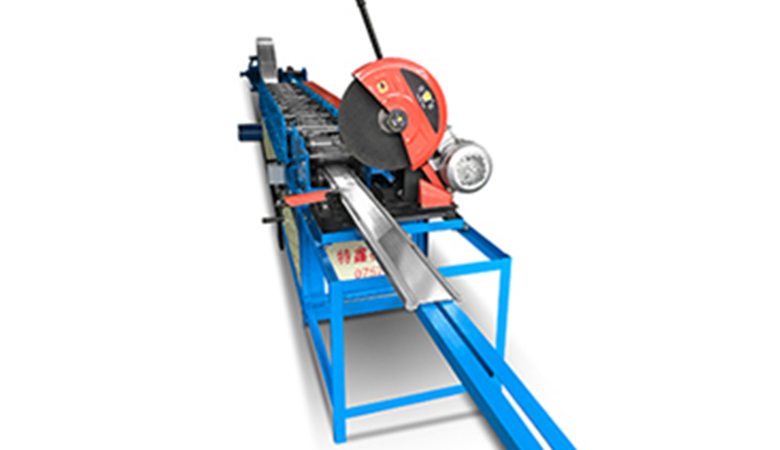
Why Trade Terms Decide the Real Cost of a Roll-up Door Forming Machine
Most first-round quotations for a roll-up door forming machine arrive on three different bases. Some suppliers quote EXW, some quote FOB Guangzhou, and some quote CIF to the buyer’s destination port. Compared side by side without adjustment, those three numbers create a false ranking. The EXW figure looks lowest because it excludes inland haulage, export clearance, loading, ocean freight and cargo insurance. The CIF figure looks highest because it already contains most of them. The number that actually matters for a capital equipment decision — the landed cost at the buyer’s gate — can only be calculated after the term is normalised.
Three specific problems recur in machine sourcing contracts:
- Risk transfer written too loosely. A contract that states only “FOB” without a named port, or “CIF” without a destination port, leaves the point at which the buyer takes on risk undefined. If the machine is damaged between the factory and the vessel, the argument over liability starts from an ambiguous clause.
- Payment milestones that do not match delivery milestones. Where 70% of the contract value falls due before shipment, the buyer’s only real protection is the inspection right written into the contract. If that right is not stated, it does not exist.
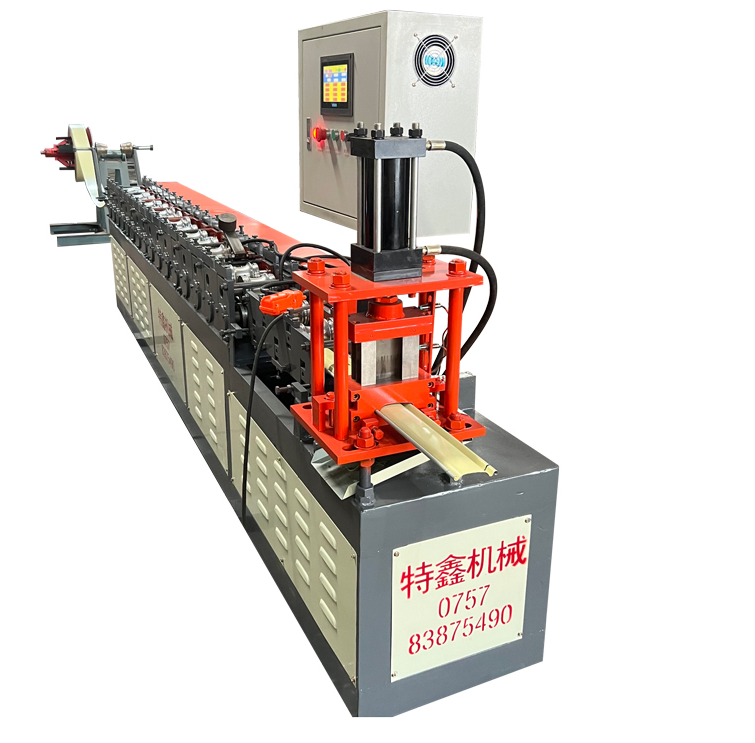
- Trade terms that ignore the configuration. A rolling shutter door forming machine is configured with 12–26 forming stands depending on the product, plus a 3.0–7.5 kW servo motor and 380V/3PH/50Hz power supply. Freight, inland handling and lifting arrangements all follow the confirmed configuration, so the term must be agreed against the final technical specification rather than against a generic brochure model.
Industry Background: Why This Decision Sits Inside a Growing Market
Trade terms matter more in a market that is expanding, because order volume, repeat purchasing and multi-unit shipments change the economics of every Incoterm choice. The published market data points to steady growth on both sides of the supply chain:
- The global roll-up doors market, the key end market for forming machinery, is valued at approximately USD 3.25 billion in 2025 and is projected to reach USD 5.15 billion by 2034 (Dataintelo).
- Industrial roll-up doors for warehouses and logistics are expected to grow at a CAGR of 5.2% through 2034, driven by e-commerce expansion (Dataintelo).
- The global roll forming machine market was valued at USD 487 million in 2024 and is projected to reach USD 662 million by 2032, at a CAGR of 4.5% (Intel Market Research). Published estimates for this equipment category vary considerably with the scope of coverage, so buyers should treat any single figure as directional rather than definitive.
- China is the world’s largest market for roll forming machines, accounting for approximately 21% of global total revenue (Intel Market Research).
On the destination side, regulatory requirements shape what has to travel with the equipment. Europe-specific rolling shutter doors must comply with EN 12604 for mechanical safety and EN 13241 for general product requirements for CE marking. Fire-resistant rolling steel doors must adhere to NFPA 80 in the United States or EN 16034 in the EU, both of which mandate automatic-closing devices and governor-managed descent speeds.
The sourcing consequence is straightforward: those compliance obligations attach to the door product placed on the market, while the forming machine itself is supplied with its own manufacturing quality evidence. The contract should state explicitly which party holds which document, at which milestone, and in which language. Under EXW, the buyer also becomes responsible for export documentation in the country of origin — a point that is frequently overlooked until the shipment is ready to load.
EXW, FOB Guangzhou and CIF: What Each Term Actually Transfers
EXW — Ex Works
Under EXW, the seller’s obligation ends at its own premises. The buyer arranges and pays for loading, inland transport, export clearance, main carriage, cargo insurance, import clearance and duties. The invoice therefore contains the machine only.
On a forming machine order this creates two practical questions that belong in the contract. First, who physically loads the equipment, and with what lifting capacity — the machine is delivered as a built line, not as a parcel, and loading arrangements must be agreed in advance rather than improvised on collection day. Second, who acts as the exporter of record and supplies the export documentation the buyer needs. EXW suits buyers who already operate a Chinese sourcing agent, a consolidation programme, or their own forwarder with export capability.
FOB Guangzhou — Free On Board
Under FOB, the seller delivers the goods on board the vessel nominated by the buyer at the named port of shipment and clears the goods for export. From the moment the goods are on board, the buyer carries the cost and the risk of the main carriage and insurance.
For Chinese machine sourcing this is the most common structure, because it splits responsibilities along the line of practical capability: the supplier, as the manufacturer and exporter, handles export formalities and inland movement to the port, while the buyer keeps control of the ocean leg, the freight rate and the choice of insurer. Guangdong-based forming equipment manufacturers ship through South China ports, so “FOB Guangzhou” is a realistic named port for this supplier group — but the named port must be written into the contract exactly and must be confirmed against the confirmed machine configuration and delivery schedule.
What a buyer gains: control of freight cost and routing, the ability to use an existing forwarder contract, and full visibility of what the supplier actually paid to move the goods.
What a buyer takes on: booking the vessel within the supplier’s delivery window, and carrying the risk of the voyage.
CIF — Cost, Insurance and Freight
Under CIF, the seller arranges and pays the cost and freight required to bring the goods to the named destination port, and also arranges cargo insurance for the buyer’s benefit. Risk still transfers when the goods are on board at the port of shipment; the insurance exists to cover the buyer during the voyage.
CIF is the simplest structure for a buyer without a forwarder, or for one who wants a single delivered price to a known port in order to build a landed cost model. Two limits should be understood before signing. The insurance cover arranged under CIF is a standard minimum level, so a buyer shipping a high-value configured line may prefer FOB plus its own insurance programme. And the destination port must be one the supplier’s forwarder realistically serves; a named port that is inconvenient for the seller simply reappears as a higher CIF price.
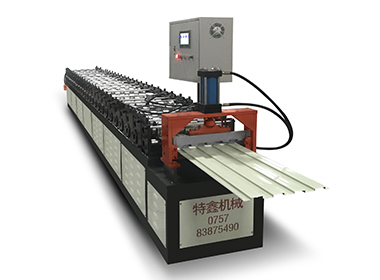
Payment Structure Behind the Term: 30% T/T Deposit with 70% Before Shipment, or L/C at Sight
Trade term and payment term are usually negotiated as one package. The two structures offered on this supplier’s machine orders are a 30% T/T deposit with 70% before shipment, or an L/C at sight. Each solves a different problem.
30% T/T deposit + 70% before shipment. The deposit funds materials, forming rolls and machining time on a made-to-order machine; the 70% balance falls due before the goods leave. The commercial advantage is speed and low transaction cost. The buyer’s exposure is concentrated in that 70% payment, which is why the contract should attach it to an event the buyer can verify — typically a pre-shipment inspection notice, a test run record, or a photographic and video delivery report of the completed line.
L/C at sight. A documentary credit substitutes the bank’s undertaking for the buyer’s promise. It is useful where documentary control, internal treasury rules or foreign-exchange procedures require it. The trade-off is cost and rigidity: bank fees apply, and every clause in the credit must match the commercial contract and the shipping documents exactly. Practical alignment matters here — for example, a CIF contract produces a freight-prepaid bill of lading while an FOB contract produces a freight-collect one, and a mismatch between the Incoterm and the shipping document is a common cause of discrepancies.
MOQ of 1 unit. A minimum order quantity of one unit is what makes this whole structure work for a first-time buyer. It allows a single machine to be ordered as a validation purchase under the same FOB or CIF term intended for later volume, so the buyer learns the real landed cost before scaling up.
Step-by-Step: Structuring the Contract Clause by Clause
Foshan Texin Machinery Co., Ltd. is a Foshan, Guangdong-based original manufacturer of cold roll-forming equipment, established in 2019, producing customized rolling shutter door forming machines for markets including Southeast Asia, the Middle East, Africa and Europe. The contract sequence below reflects what a machine order of this type requires on both sides.
Step 1 — Fix the Incoterm and the named place. Write “FOB Guangzhou”, or “CIF [destination port]”, or “EXW [factory address]”. Never leave the place blank. A bare “FOB” or “CIF” clause is the single most common source of later dispute.
Step 2 — Define what the price covers. List the supply scope item by item: the forming machine itself, the PLC and encoder length control (±1 mm accuracy), the hydraulic cutting unit, the servo drive system, the automatic control cabinet, and any matched equipment such as uncoiler, straightener and stacking system if included. State the technical configuration in the same clause: number of forming stands (12–26 depending on product), motor power (3.0–7.5 kW), line speed (10–25 m/min), voltage and phase (380V/3PH/50Hz or a customized voltage), and roll material (Cr12MoV / SKD11 die steel, quenched for wear resistance).
Step 3 — Set the payment milestones with trigger events. If the structure is 30% T/T deposit and 70% before shipment, define what “before shipment” means: on the supplier’s booking confirmation, on the pre-shipment inspection notice, or on presentation of the draft shipping documents. If the structure is L/C at sight, list the exact documents the credit requires and confirm they match the Incoterm.
Step 4 — Write the inspection and acceptance right. The manufacturer performs 100% full inspection before delivery. The buyer should add a contractual right to inspect at the factory, either in person or through a third party, before the balance payment is triggered, and should define the acceptance criteria — for example length accuracy and profile consistency against the approved sample and drawing.
Step 5 — Fix the delivery schedule against the deposit date. Standard lead time is 15–25 days; custom-made configurations run 25–45 days. The contract should start the clock on a defined event, usually the deposit clearing date plus written confirmation of the final drawings, and should state the consequence of delay rather than leaving it to goodwill.
Step 6 — Define the document set. Commercial invoice, packing list, bill of lading, certificate of origin if required by the destination customs regime, the ISO 9001 certificate copy, and the pre-delivery inspection record. Under EXW, also agree in writing who files the export declaration and under whose name.
Step 7 — Anchor the after-sales obligation. State the 1-year free warranty and lifelong maintenance commitment, and specify what the online remote guidance, on-site installation and commissioning, and technical training actually cover.
Step 8 — Add the standard commercial protections. Spare parts availability, warranty exclusions, force majeure, governing law and dispute resolution. These are not trade-term clauses, but they are read alongside them when a payment is withheld or a shipment is delayed.
Use Cases: Which Term Fits Which Buyer
Use case 1 — First machine, first import
A door fabricator entering roll-formed door production with no existing freight contract. The risk is over-committing capital before the machine is proven. Suitable structure: one unit (MOQ 1) on FOB Guangzhou or CIF, paid 30% T/T deposit with 70% before shipment, with a third-party pre-shipment inspection named in the contract as the trigger for the balance. A conventional main model such as the TX-500 Australian Style Rolling Shutter Machine, or a wind-resistant configuration from the TX-125-8 / TX-135 series if the local market requires it, is a realistic single-unit starting point.
Use case 2 — Established manufacturer adding capacity
An existing roller shutter producer adding a second or third line and buying repeatedly. Here the trade term is a logistics decision rather than a trust decision. Suitable structure: FOB with the buyer’s own forwarder and consolidated sailing schedule, so freight rates and routing stay under the buyer’s control. The contractual focus shifts to lead-time reliability and repeat-order terms — relevant because the manufacturer’s stated capacity is ≥30 units per month against an annual output of 80 units, which supports staged delivery but also means scheduling should be agreed early.
Use case 3 — Distributor supplying the European market
A distributor without in-house freight capability, selling into a market where EN 12604 and EN 13241 apply to the door and NFPA 80 or EN 16034 apply to fire-rated doors. Suitable structure: CIF to the destination port, so the supplier carries the freight and insurance arrangement and the distributor receives a single delivered cost. The contract should separately require the documents the distributor needs for its own market obligations, and the machine-side quality evidence: the ISO 9001 certificate copy, plus confirmation of the machine’s safety protection device and fault self-diagnosis function.
Comparison Table: EXW vs FOB Guangzhou vs CIF
| Contract point | EXW | FOB Guangzhou | CIF (named destination port) |
|---|---|---|---|
| Seller’s delivery point | At the seller’s premises | On board the vessel at the named port of shipment | On board the vessel at the named port of shipment |
| Export clearance | Buyer | Seller | Seller |
| Inland transport and loading | Buyer | Seller | Seller |
| Main carriage (ocean freight) | Buyer | Buyer | Seller |
| Cargo insurance | Buyer | Buyer | Seller, at standard minimum cover for the buyer’s benefit |
| Where risk transfers to the buyer | On collection at the factory | When the goods are on board at the port of shipment | When the goods are on board at the port of shipment |
| What the invoice contains | Machine only | Machine, inland transport, export clearance, loading | Machine, inland transport, export clearance, loading, ocean freight, insurance |
| Buyer’s control over freight cost and routing | Highest | High | Lowest |
| Typical fit | Buyer with a Chinese sourcing agent or consolidated shipment | Buyer with its own forwarder who wants the supplier to handle export formalities | Buyer without a forwarder, or one building a fixed delivered-cost model |
Payment Method Comparison
| Decision point | 30% T/T deposit + 70% before shipment | L/C at sight |
|---|---|---|
| Structure | Deposit releases materials and machining; balance falls due before the goods leave | Bank undertaking against a defined document set presented at sight |
| Speed and transaction cost | Faster, lower bank cost | Slower, bank fees apply at both ends |
| Where buyer leverage comes from | The inspection right attached to the balance trigger | Documentary compliance before payment is released |
| Main risk to manage | Paying the balance on an unverified event | Discrepancies between credit clauses, Incoterm and shipping documents |
| Document alignment note | Payment reference should name the Incoterm and the milestone | FOB generates a freight-collect B/L; CIF generates a freight-prepaid B/L — the credit must match |
FAQ: Trade Terms and Contract Terms for Roll-up Door Forming Machine Sourcing
Q1. What certification and compliance documents should be attached to the contract?
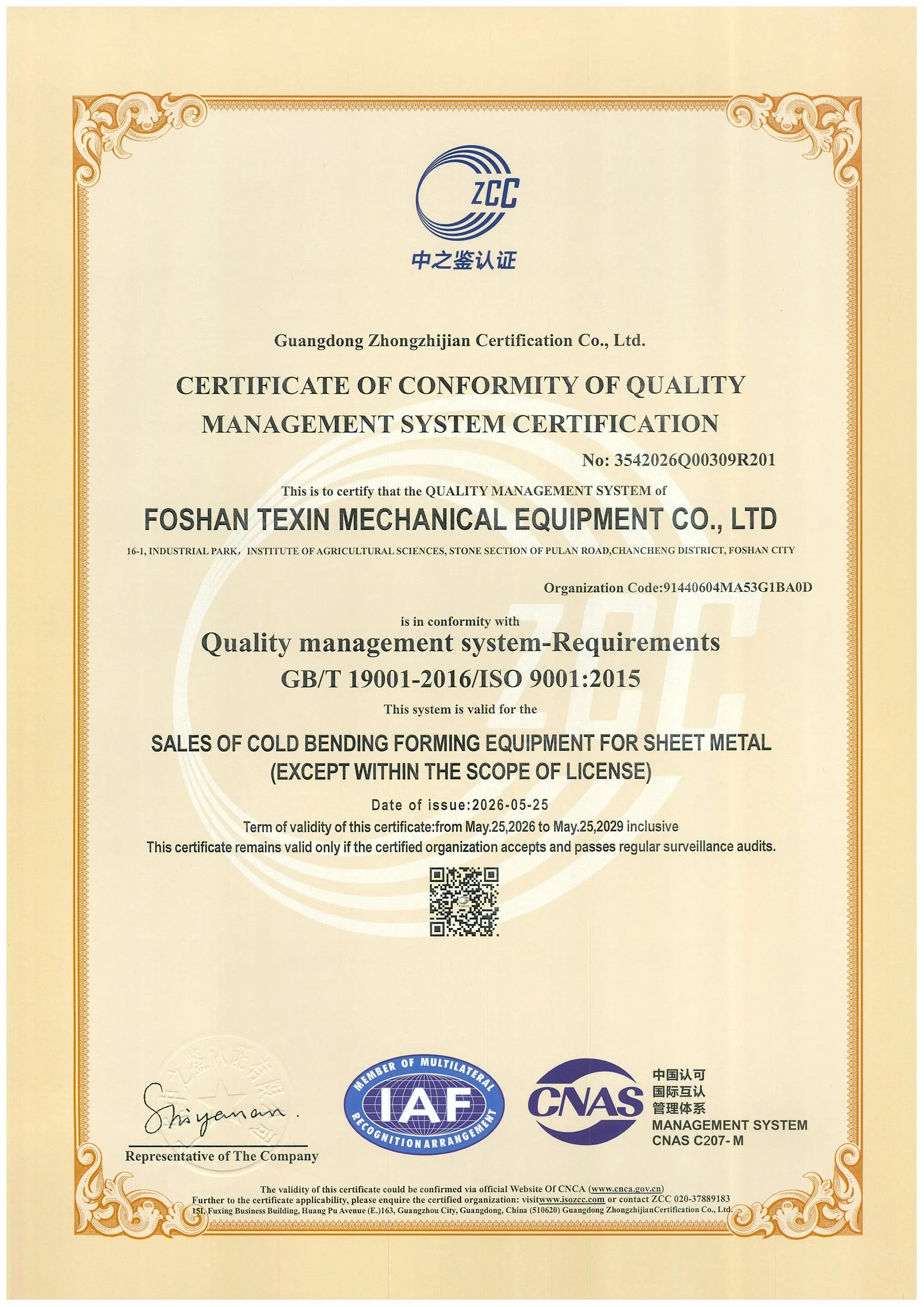
A. The manufacturer holds an ISO 9001 Quality Management System Certificate, number 3542026Q00309R201, issued by Guangdong Zhongzhijian Certification Co., Ltd. The applicable standard is GB/T 19001-2016/ISO 9001:2015, and the certificate is valid from 2026-05-25 to 2029-05-25. The scope covers the sales of Cold Bending Forming Equipment for Sheet Metal, and the certification applies to the Rolling Shutter Door Machine Equipment product; it is issued for the Domestic China market under a scheme carrying IAF mutual recognition. Separately, European rolling shutter doors must comply with EN 12604 and EN 13241 for CE marking, and fire-rated doors fall under NFPA 80 in the U.S. or EN 16034 in the EU. Those are obligations on the door placed on the market, so the contract should state clearly which party holds which document and at which milestone.
Q2. Can the supplier handle a customized machine and repeat volume?
A. Yes. The production mode is R&D and production of customized cold bending forming equipment for OEM/ODM, and the customization scope covers device specifications, forming roll rows, line speed, voltage, motor configuration, PLC system, die rolls, frame structure, brand logo and automation solutions. Stated monthly capacity is ≥30 units, supported by a 5,200 ㎡ plant, 10 engineers and self-processing capacity for key spare parts. Rolling shutter door machines are built with 12–26 forming stands depending on the product, and carry a safety protection device and a fault self-diagnosis function.
Q3. Do EXW, FOB and CIF change the total cost, or only who pays which part?
A. They change who pays which part and where risk transfers, and therefore the invoice value. EXW removes inland transport, export clearance, loading, freight and insurance from the invoice. FOB adds inland transport, export clearance and loading to the port, with the buyer booking the ocean leg and insurance. CIF adds ocean freight and insurance to the destination port. The total landed cost is the figure to compare across quotations — the ex-works base is not, because it hides costs that will appear on a different invoice from a different party. A minimum order quantity of 1 unit makes it possible to test the real landed cost on a single machine before scaling.
Q4. How should a buyer validate the machine before releasing the balance payment?
A. The manufacturer performs 100% full inspection before delivery, and the contract should add a buyer-side right: a pre-shipment inspection, either in person or by a third party, at the factory before the 70% balance is triggered. Defined acceptance criteria — profile consistency against the approved drawing, and length accuracy of ±1 mm as produced by the PLC and encoder control — turn the inspection from a courtesy visit into a contractual control point. Because MOQ is 1 unit, a single machine can serve as the validation unit for a later multi-unit order. To start that process, you can request a quotation and the current product catalogue from the sales team.
Q5. What lead time and payment schedule should be written into the contract?
A. Standard lead time is 15–25 days, and custom-made configurations run 25–45 days. Payment is 30% T/T deposit with 70% before shipment, or L/C at sight. The contract should start the lead-time clock on a defined event — the deposit clearing date plus written confirmation of final drawings — because configuration items such as the voltage (380V/3PH/50Hz or a customized setting), the number of forming stands, the motor power and the line speed must all be frozen before production begins. To confirm the schedule and trade term for your configuration, contact the sales team directly.
Conclusion
The choice between EXW, FOB Guangzhou and CIF is best made in the opposite order to the way it is usually negotiated. Start with the risk you are willing to carry and the logistics capability you already have. If you have a forwarder, FOB Guangzhou keeps freight cost, routing and insurance under your control while leaving export formalities with the manufacturer. If you do not, CIF gives you one delivered price to a named port and a simpler landed-cost model. If you already run a Chinese sourcing operation, EXW removes cost from the invoice but also removes the supplier from the export process.
Then connect the term to the payment structure. A 30% T/T deposit with 70% before shipment is efficient, but only if the balance is attached to a verifiable inspection event. An L/C at sight gives documentary control, but only if every clause in the credit matches the Incoterm and the shipping documents. A minimum order quantity of 1 unit and a lead time of 15–25 days for standard configurations (25–45 days for custom builds) make a controlled first order realistic for buyers entering this equipment category.
Finally, write the place, the price scope, the inspection right, the delivery schedule and the document set into one document. The trade term is not a line on a quotation; it is the clause that decides who carries the risk between the factory gate and your own.
Need the trade terms and pricing for your configuration?
Send your door profile, market standard and target output, and the sales team will return a quotation stated on EXW, FOB Guangzhou or CIF terms, together with the recommended configuration and delivery schedule.

Email: sales@texinjixie.com | Website: www.gdtxjx.com
Download the Product Catalogue (PDF)Foshan Texin Machinery Co., Ltd. — No.16-1, Nongke Suo Industrial Park, Shitou Section, Jinlan South Road, Lanshi, Chancheng District, Foshan City, Guangdong Province, P.R. China. Tel: +86 186-7573-3219 | WhatsApp: +86 134 1548 2815 | Blog: blog.gdtxjx.com
Have Questions or Need More Details?
Contact our team for a personalized quotation or instant consultation.
Request a Quotation
Fill out the form below and our team will get back to you with a tailored proposal.
WhatsApp Direct Chat
Prefer to chat in real-time? Message us on WhatsApp for instant assistance & quick answers.
- Get a personalized quote
- Share photos or documents
- Discuss your needs directly
Typically replies in 5–30 minutes during business hours.