
Pre-Shipment Test & Third-Party Inspection: A Roll-up Door Forming Machine Buyer Checklist
Procurement Checklist
Pre-Shipment Test & Third-Party Inspection: A Roll-up Door Forming Machine Buyer Checklist
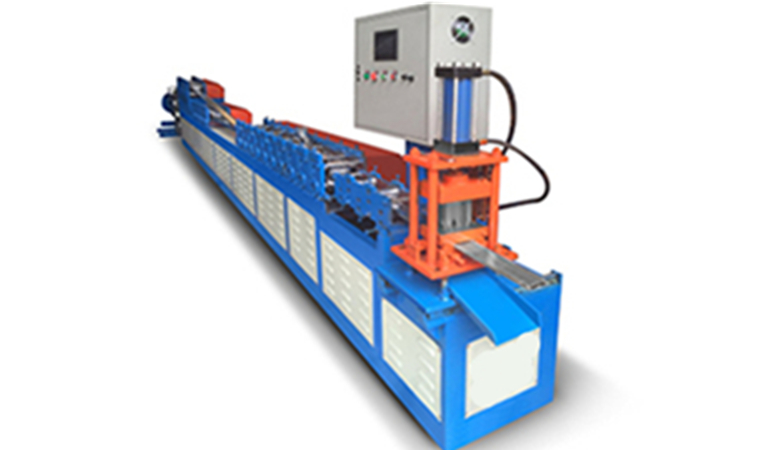
Answer first: A buyer should not release the balance payment or accept shipment until the roll-up door forming machine has passed a documented pre-shipment test and, where risk justifies it, a third-party inspection. The test should prove the ordered configuration, line speed, length accuracy, drive and electrical setup, supporting equipment, mechanical build, documentation and packing. Payment release should follow the agreed structure of 30% T/T deposit and 70% before shipment or L/C at sight. Delivery should be checked against FOB Guangzhou, CIF, or EXW.
This checklist is written for importers, distributors, door manufacturers and project buyers who need a practical acceptance gate before a rolling shutter door forming machine leaves the factory. It uses the product and company facts available for Foshan Texin Machinery Co., Ltd., a Foshan-based original manufacturer focused on R&D, manufacturing and customization of cold roll forming equipment. The company reports a 5,200 ㎡ production plant, 35 employees, 10 engineers, an annual output of 80 units, and export experience in Southeast Asia, the Middle East, Africa and Europe.
Problem Definition: What Pre-Shipment Inspection Must Prove
The core problem is not whether the machine looks complete at the factory. The problem is whether the buyer can prove, before the balance payment and before loading, that the machine matches the purchase order and is ready for the buyer's intended production scenario. A roll-up door forming machine is a production asset tied to profile drawings, material grade, line layout and market requirements. A visual check alone does not confirm that the line will run at the agreed speed, cut to the agreed length, accept the agreed coil, or arrive with the required supporting equipment.
For a project buyer, the most common pre-shipment risks are configuration drift, incomplete supporting equipment, unverified performance claims, missing compliance documentation, and payment release before evidence is accepted. A roll-up door forming machine order may include an uncoiler, straightener, hydraulic cutting machine, stacking system and automatic control cabinet. If any of these items is missing or mismatched, the buyer may face installation delay, rework, or additional cost after arrival.
The checklist should therefore be treated as a project control document. It should define what will be tested, how it will be tested, what evidence will be recorded, who will sign the report, and which payment or shipping step the report unlocks. This is especially important for buyers in Research and Evaluation stages who are comparing suppliers and need a repeatable acceptance method rather than a one-off factory visit.
Industry Background: Why the Test Must Match the Machine Family
Roll forming progressively bends flat sheet or coil stock through consecutive roll stations. For rolling shutter door production, the machine family is broad. It can include Europe-Specific Rolling Shutter Door Forming Equipment, Australian-Style Rolling Shutter Machine, 125 Model Rolling Shutter Machine, 175 Model Rolling Shutter Machine, Soundproof Rolling Shutter Door Machine, Fire-Resistant Rolling Shutter Machine, Wind-Resistant Rolling Shutter Door Machine, Punching Rolling Shutter Machine, High-Speed Door Forming Machine, Rolling Shutter Door Guide Channel Forming Machine, Rolling Shutter Door Guide Rail Forming Machine, Rolling Shutter Door U-Shaped Rail Equipment, Printed Rolling Shutter Door Forming Machine, Garage Door Forming Machine, Double-Layer Rolling Shutter Door Forming Machine, Square Tube Bottom Beam Forming Machine, Europe-Specific Bottom Beam Machine, Guide Channel Machine and Sound-Absorbing Guide Channel Machine.
The technical baseline also varies by configuration. Available product data for the rolling shutter door machine equipment family lists 12 to 26 forming stands depending on the product, a 3.0–7.5 kW servo motor, 380V/3PH/50Hz power supply, line speed of 10–25 m/min, and PLC plus encoder length control at an accuracy of ±1 mm. The equipment is described for 24/7 continuous operation under normal temperature conditions. These are not abstract catalog numbers. They are the values a buyer should convert into acceptance criteria before shipment.
Market requirements add another layer. In the European Union, EN 13241 specifies safety and performance requirements for industrial, commercial and garage doors and is linked to CE marking for those door products. In Australia, AS/NZS 4505:2012 mandates wind-resistant testing for garage doors in cyclonic regions, specifically Wind Regions C and D. A forming machine is not the same product as the finished door, but the buyer's destination market still shapes the documentation and profile requirements that should be checked before shipment.
Factory quality control is necessary but not sufficient. Foshan Texin Machinery Co., Ltd. reports 100% full inspection before delivery. That is a useful supplier-side control. The buyer-side pre-shipment test is a separate control: it confirms that the buyer's specific order, not only the factory's standard output, has been verified.
Detailed Solution: A Buyer-Side Acceptance Framework
The practical solution is to build a pre-shipment acceptance framework with six parts: a locked configuration, a documented factory QC record, a witnessed functional test, an optional third-party inspection, a payment release rule, and a delivery-term check. Each part should produce a record that can be attached to the purchase order or payment request.
1. Lock the configuration before the test. The purchase order should identify the machine family and the agreed options. For example, is the order for an Australian-style rolling shutter machine, a 125 Model Rolling Shutter Machine, a 175 Model Rolling Shutter Machine, a wind-resistant rolling shutter door machine, a guide channel machine, a bottom beam forming machine, or a double-layer rolling shutter door forming machine? The inspection cannot be objective if the configuration is still open.
2. Confirm the supporting equipment list. The product data states that the equipment requires an uncoiler, straightener, hydraulic cutting machine, stacking system and automatic control cabinet. The pre-shipment check should confirm that every listed item is present, identified and matched to the line layout. Missing auxiliary equipment is a common reason for a machine to arrive incomplete even when the main former itself is finished.
3. Convert performance data into test records. The buyer should record the observed line speed against the 10–25 m/min range, the length control result against the PLC plus encoder ±1 mm specification, the drive nameplate against the 3.0–7.5 kW servo motor requirement, and the electrical supply against 380V/3PH/50Hz. If the order includes custom specifications and high precision requirements, those should be written into the test sheet as separate acceptance items.
4. Inspect the mechanical build. Product data lists Cr12MoV and SKD11 die steel rolls, quenched for wear resistance; a frame welded with thickened steel plates and fully annealed; 45# steel shafts, quenched and tempered and precision ground; and transmission through precision gears, chains and servo motors. The inspection should record the component identity and visible condition, not only the machine's external paint.
5. Define the third-party inspection scope. A third-party inspector should not be asked to give a general opinion. The scope should be specific: identity and configuration, mechanical build, electrical and control setup, functional run, safety documentation, packing and loading readiness. The inspector should record photos, nameplate data, test readings and any deviation from the purchase order. If the buyer's market requires EN 13241 or AS/NZS 4505:2012 related documentation, that should be listed as a document check, not assumed from a machine label.
6. Link the report to payment and delivery. Under 30% T/T deposit and 70% before shipment, the 70% balance should be released only after the signed pre-shipment inspection report and loading evidence are accepted. Under L/C at sight, the inspection certificate and shipping documents should be checked against the L/C terms before presentation. For delivery, the inspection timing should match FOB Guangzhou, CIF, or EXW. Under FOB Guangzhou, the test should be completed before the machine is delivered to the Guangzhou shipment point. Under CIF, it should be completed before container loading and before the seller arranges freight and insurance. Under EXW, the buyer controls pickup, so the test should be completed before the buyer's forwarder collects the machine.
Step-by-Step Breakdown: How to Run the Checklist
Step 1: Prepare the acceptance sheet before travelling or booking an inspector. The sheet should list the machine model, profile drawing, material grade, line layout, supporting equipment, electrical standard and payment milestone. It should also list the inspection evidence: photos of the machine and nameplates, a video of the run, length measurement records, packing photos and a signed report.
Step 2: Verify the material and profile assumptions. The product data lists color coated steel sheet, hot-dip galvanized steel sheet, aluzinc steel sheet, zinc-aluminum-magnesium coated steel sheet, 201 stainless steel and 304 stainless steel as materials available for rolling shutter slats. The test should use the material grade agreed in the purchase order. If the buyer intends to run multiple materials, the acceptance sheet should state which material is used for the witnessed run and which materials are only qualified by document review.
Step 3: Check identity and configuration. Confirm the machine family and any named configuration. This is the point to verify whether the order includes a high-speed door forming machine, punching rolling shutter machine, printed rolling shutter door forming machine, square tube bottom beam forming machine, or a sound-absorbing guide channel machine. For a sound-absorbing guide channel machine, available product data states a noise reduction from 75 dB to 58 dB. If noise is an acceptance item, the buyer should agree the measurement method and record the result; otherwise the claim remains a catalog figure, not a verified project result.
Step 4: Inspect the main former and component quality. Check the rolls, frame, shafts and transmission against the listed materials. Record visible damage, rust, poor welds, loose guards or missing fasteners. Confirm that the hydraulic cutting machine, uncoiler, straightener, stacking system and automatic control cabinet are present and identified. The machine should be inspected as a line, not as a single former.
Step 5: Witness the functional run. Record the line speed, length control result, drive and electrical data. The product data gives 10–25 m/min, PLC plus encoder length control at ±1 mm, 3.0–7.5 kW servo motor and 380V/3PH/50Hz. The buyer should also observe the automated production sequence and PLC-controlled operation. If the order includes 24/7 continuous operation, the test should at least confirm that the line can run continuously for the agreed witness period under normal temperature conditions.
Step 6: Check safety and compliance documents. For the EU market, EN 13241 is relevant for industrial, commercial and garage doors, and CE marking is mandatory for those door products. For Australia, AS/NZS 4505:2012 mandates wind-resistant testing for garage doors in cyclonic regions C and D. The buyer should confirm that the technical file matches the destination market and the intended door product. Do not accept a general CE statement in place of the specific document set required for the project.
Step 7: Complete the third-party inspection report. The report should include the inspection date, inspector identity, machine serial number or identification, purchase order reference, test readings, photo log, deviation list and conclusion. Any deviation should be closed or accepted in writing before payment release. The report should be signed by the inspector and acknowledged by the seller.
Step 8: Release payment against evidence. With 30% T/T deposit and 70% before shipment, the balance release should be tied to the accepted inspection report and loading photos. With L/C at sight, the bank documents should be checked for consistency with the L/C. The purpose is not to add bureaucracy. It is to make sure the 70% payment follows proof, not hope.
Step 9: Match inspection timing to the delivery term. For FOB Guangzhou, complete inspection before delivery to the Guangzhou shipment point. For CIF, complete inspection before container loading and before the seller arranges freight and insurance. For EXW, complete inspection before the buyer's forwarder collects the machine. The delivery term should be written into the inspection plan so that no party assumes the wrong control point.
Step 10: Use reference cases carefully. A Guatemala-based industrial manufacturing client has maintained a three-year continuous supply relationship with Foshan Texin Machinery Co., Ltd. for bulk procurement of 150 tons of steel section materials supporting industrial production. The recorded result is stable delivery of orders in the Guatemala region and a long-term cooperative relationship. The case highlights high dimensional accuracy, stable material quality and reliable supply capacity for large-volume continuous procurement. It is not a substitute for machine-level pre-shipment testing, but it is relevant evidence of delivery stability and supply continuity for buyers assessing a long-term supplier relationship.
Use Cases: Where This Checklist Matters Most
Commercial and industrial door manufacturing. The machine is used in commercial and industrial door manufacturing and security shutter fabrication. The inspection should focus on the profile drawing, line speed, length accuracy and the supporting equipment needed for continuous slat production.
Security shutter fabrication. For security shutter projects, the buyer should verify the punching, cutting, guide channel and bottom beam configuration. The inspection should confirm that the guide rail or U-shaped rail equipment matches the intended shutter system, not only the main former.
Wind-resistant door panels. For wind-resistant door panels, the buyer should confirm the wind-resistant configuration and the destination-market document requirements. For Australia, AS/NZS 4505:2012 wind-resistant testing for garage doors in cyclonic regions C and D is a relevant reference point.
Garage door profile production. The machine functions to produce wind-resistant door panels and garage door profiles. The pre-shipment run should use the agreed garage door profile and should record the dimensional result against the approved drawing.
Custom metal profile production. The product is also suitable for custom metal profile production projects and cold roll forming equipment projects. Custom specifications and high precision requirements should be written into the acceptance sheet as separate line items, with the agreed measurement method.
24/7 continuous operation. The equipment is described for 24/7 continuous operation under normal temperature conditions. Buyers planning high-volume production should include a witnessed run period, drive temperature check and supporting equipment check in the pre-shipment plan.
Comparison Table: Inspection Control Points, Payment and Delivery
| Control point | Buyer action before shipment | Evidence to attach | Reference fact |
|---|---|---|---|
| Machine configuration | Confirm model family and options against the purchase order. | Configuration list and machine photos. | Product family includes Australian-style, wind-resistant, guide channel, bottom beam, punching, high-speed, fire-resistant, soundproof and double-layer machines. |
| Supporting equipment | Check uncoiler, straightener, hydraulic cutting machine, stacking system and automatic control cabinet. | Packing list and line layout photos. | The equipment requires these supporting items. |
| Performance | Record line speed and length control during the witnessed run. | Test log and measurement record. | Line speed 10–25 m/min; PLC plus encoder length control at ±1 mm. |
| Drive and electrical | Check motor power and supply against the order. | Nameplate photo and electrical check sheet. | 3.0–7.5 kW servo motor; 380V/3PH/50Hz. |
| Mechanical build | Inspect rolls, frame, shafts and transmission. | Component photos and inspection notes. | Cr12MoV and SKD11 rolls; welded thickened steel plate frame; 45# steel shafts. |
| Payment release | Do not release the 70% balance until the inspection report is accepted. | Signed report, loading photos and payment clause. | 30% T/T deposit and 70% before shipment or L/C at sight. |
| Delivery term | Match inspection timing to FOB Guangzhou, CIF, or EXW. | Booking record, pickup record or port delivery record. | Delivery can be arranged under FOB Guangzhou, CIF, or EXW. |
| Market compliance | Collect the relevant standards documentation for the destination market. | Document checklist and technical file review note. | EN 13241 for EU industrial, commercial and garage doors; AS/NZS 4505:2012 for Australian cyclonic wind regions. |
FAQ
What compliance documents should a buyer check before shipment?
For the European Union, EN 13241 specifies safety and performance requirements for industrial, commercial and garage doors and is linked to CE marking for those door products. For Australia, AS/NZS 4505:2012 mandates wind-resistant testing for garage doors in cyclonic regions C and D. The buyer should align the technical file with the destination market and the intended door product. For the machine itself, Foshan Texin Machinery Co., Ltd. states that it is certified by the ISO9001 quality management system and CE standard, but the buyer should still verify the specific documents required for the project.
What capability evidence should a buyer verify before pre-shipment testing?
Foshan Texin Machinery Co., Ltd. reports a 5,200 ㎡ production plant, 35 employees, 10 engineers, an annual output of 80 units and a monthly capacity of at least 30 units. The company also states a minimum order of 1 unit, a standard lead time of 15–25 days, a custom-made lead time of 25–45 days, and 100% full inspection before delivery. The buyer should verify the order-specific configuration and the machine data, including the 3.0–7.5 kW servo motor, 10–25 m/min line speed and PLC plus encoder length control at ±1 mm.
When should the balance payment be released under the pre-shipment inspection plan?
Under 30% T/T deposit and 70% before shipment, the 70% balance should be released after the pre-shipment test and third-party inspection report are accepted. If the payment instrument is L/C at sight, the inspection certificate and shipping documents should be checked against the L/C terms before presentation. This keeps the payment milestone linked to evidence rather than to a promised shipment date.
Can a buyer request a pre-shipment validation run instead of a sample?
For a roll-up door forming machine, a witnessed pre-shipment validation run on the ordered machine is more relevant than a product sample. The run should use the agreed material and profile, and it should record line speed, length accuracy, drive data, supporting equipment and any custom specification. The result should be attached to the inspection report and used as the release basis for the balance payment.
How should lead time be planned around inspection and delivery?
Foshan Texin Machinery Co., Ltd. reports a standard lead time of 15–25 days and a custom-made lead time of 25–45 days. The buyer should schedule third-party inspection after the factory's 100% full inspection and before shipment. For FOB Guangzhou, complete inspection before delivery to the Guangzhou shipment point. For CIF, complete inspection before container loading. For EXW, complete inspection before the buyer's forwarder collects the machine. A product brochure is available for review, and the sales team can be contacted at sales@texinjixie.com or +86 134 1548 2815 for a documented pre-shipment checklist discussion.
Conclusion
A roll-up door forming machine should not be released for shipment on the strength of a factory visit alone. The buyer needs a documented pre-shipment test, a configuration check, a performance record, a supporting equipment check, a compliance document review and, where appropriate, a third-party inspection report. The payment structure of 30% T/T deposit and 70% before shipment or L/C at sight gives the buyer a clear control point: the balance should follow the accepted evidence. The delivery term, whether FOB Guangzhou, CIF, or EXW, determines when that evidence must be complete.
Foshan Texin Machinery Co., Ltd. provides cold roll forming equipment for rolling shutter door production, with a reported 5,200 ㎡ plant, ISO9001 and CE standard certification, and export experience in Southeast Asia, the Middle East, Africa and Europe. The Guatemala industrial client case, with a three-year continuous supply relationship covering 150 tons of steel section materials, illustrates stable delivery and supply continuity for large-volume buyers. For a machine order, that reference should be combined with a machine-specific acceptance plan, not used as a replacement for it.
Next step: Use this checklist to prepare your pre-shipment acceptance sheet before the balance payment. Download the Foshan Texin Machinery Co., Ltd. product brochure at the brochure link, or contact sales@texinjixie.com / WhatsApp +86 134 1548 2815 to discuss inspection criteria for your roll-up door forming machine project.
Have Questions or Need More Details?
Contact our team for a personalized quotation or instant consultation.
Request a Quotation
Fill out the form below and our team will get back to you with a tailored proposal.
WhatsApp Direct Chat
Prefer to chat in real-time? Message us on WhatsApp for instant assistance & quick answers.
- Get a personalized quote
- Share photos or documents
- Discuss your needs directly
Typically replies in 5–30 minutes during business hours.