
Preventing Delivery Delays in Roll-up Door Forming Machine Sourcing
Delivery delays in roll-up door forming machine sourcing are usually created months before the container is booked — in unfrozen profile specifications, inspection that only happens at the loading dock, and payment schedules that are not tied to verified production milestones. The reliable countermeasure is contractual and procedural: lock the profile and compliance scope before the purchase order, convert machine specifications into measurable acceptance criteria, schedule pre-shipment testing and third-party inspection at defined hold points, and release money only against verified events.
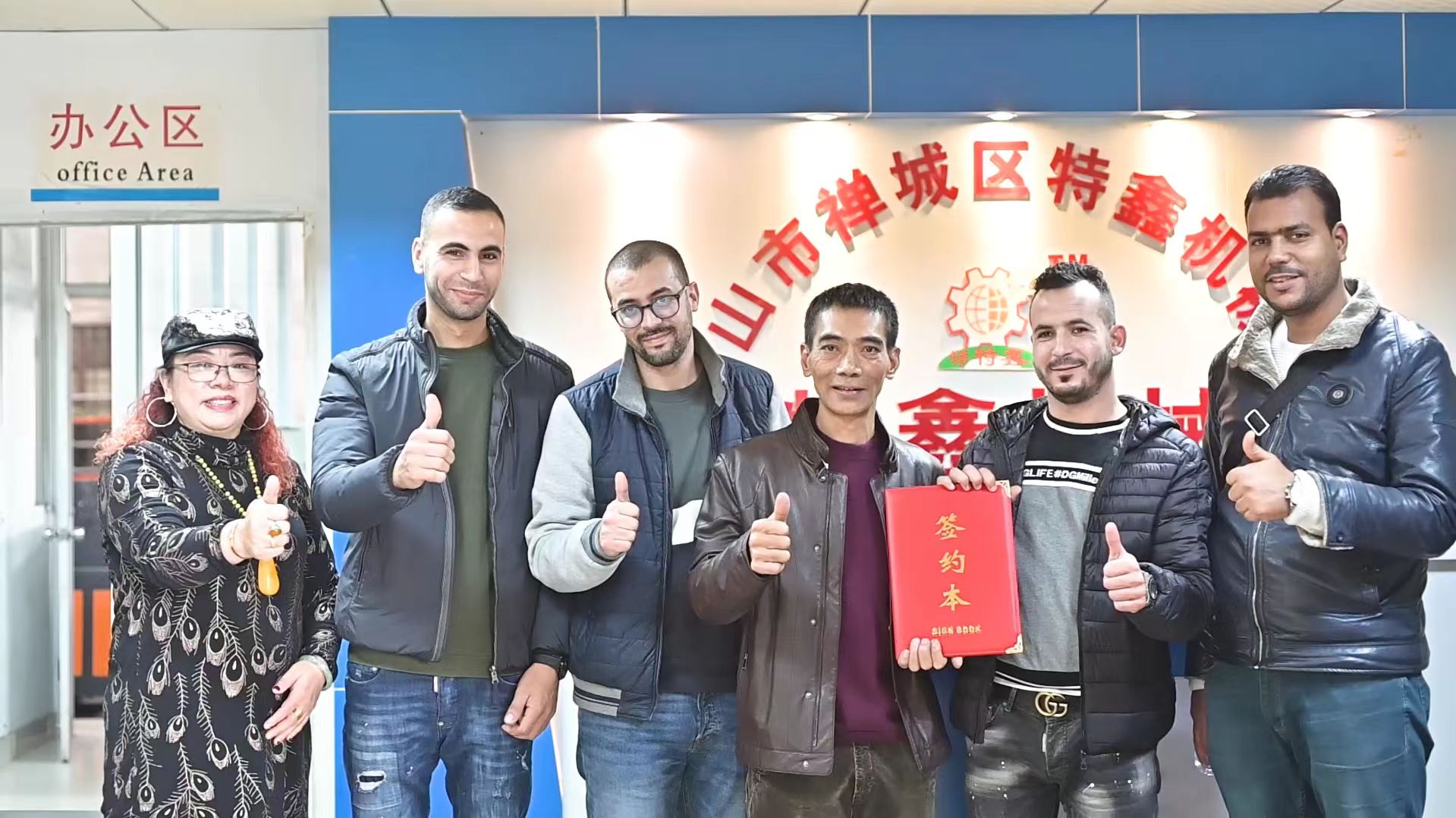
This is a decision-stage guide for procurement managers, importers and fabricators who compare suppliers on delivery reliability rather than headline price alone. It uses the delivery record of Foshan Texin Machinery Co., Ltd. — a Foshan-based original manufacturer of cold roll-forming equipment, founded in 2019, operating a 5,200 m² plant with 35 employees, 10 engineers and an annual output of 80 units, exporting about 45% of production to Southeast Asia, the Middle East, Africa and Europe — as a working reference point, and it converts one long-running supply program into a set of clauses any buyer can replicate.
Problem Definition: Where Delivery Delays Actually Originate
In most sourcing failures, the delay is not caused by transport. It is caused by three upstream conditions that only become visible late.
1. Scope that was never frozen
A roll-up door forming machine is built around a profile, not around a catalogue number. Roll forming itself is a process of progressively bending flat sheet or coil stock through consecutive roll stations, so the finished guide channel, bottom beam or shutter slat is defined by tooling geometry. If profile drawings, material grade and target market standard are still being discussed after the deposit is paid, tooling cannot be released on time and every subsequent milestone shifts.
2. Inspection scheduled at the wrong moment
When dimensional verification is planned for arrival instead of before shipment, a deviation found at the destination becomes a rework and re-shipment problem rather than a factory correction. The cost is not only time; it is the loss of the only window in which the supplier still controls the outcome.
3. Payment that is disconnected from production events
A payment schedule built on calendar dates rather than verified milestones removes the buyer's leverage exactly when it is needed. Conversely, a schedule that withholds too much until the end can slow material purchasing at the supplier side. Both extremes extend the program.
Industry Background: Why Timing Pressure Is Structural
The equipment category is large and still expanding. A commercial market research estimate places the global roll-forming machine market at USD 10.09 billion in 2026. Growth of that kind pulls order books forward at manufacturers, which means queue position — not machine capability — frequently becomes the binding constraint for a buyer with a fixed installation date.
At the same time, the compliance envelope around the finished door is widening, and that envelope is transferred back into the machine order:
- Europe: EN 13241 specifies safety and performance requirements for industrial, commercial and garage doors, and is mandatory for CE marking in the EU. A machine that cannot repeatably hold the profile tolerance assumed in the door's declaration is a compliance problem, not only a quality problem.
- Australia: AS/NZS 4505:2012 mandates wind-resistant testing for garage doors in cyclonic regions (Wind Regions C and D), which pushes buyers toward wind-resistant rolling shutter door configurations and heavier section designs.
- Acoustic and fire performance: sound-absorbing guide channel machines and fire-resistant rolling shutter machine configurations are now separate order lines rather than options, because the profile geometry differs.
The buyer consequence is direct: the more region-specific the configuration, the fewer suppliers can build it, and the more the schedule depends on early technical closure. This is precisely where delay risk accumulates — in the gap between a generic quotation and a fully specified order.
Detailed Solution: Four Instruments That Keep a Program on Schedule
Instrument 1 — Contract clauses that convert promises into dates
A delivery clause is only useful when each stage has a date and a verifiable output. Practical clause content includes: profile drawing approval date; tooling completion date; first-article inspection date; pre-shipment testing date; third-party inspection window; documentation release date; and loading date. Each should be tied to a deliverable the buyer can actually receive and check, such as a signed drawing, a dimensional report, or a packing list with photographs.
Two clause families deserve specific attention. The first is dimensional acceptance: it should state the measurement method, the sampling basis and the tolerance. The second is change control: any post-signature change to the profile, the material grade or the destination market standard should trigger an explicit written re-schedule, not a silent slip.
Instrument 2 — Pre-shipment testing with numbers attached
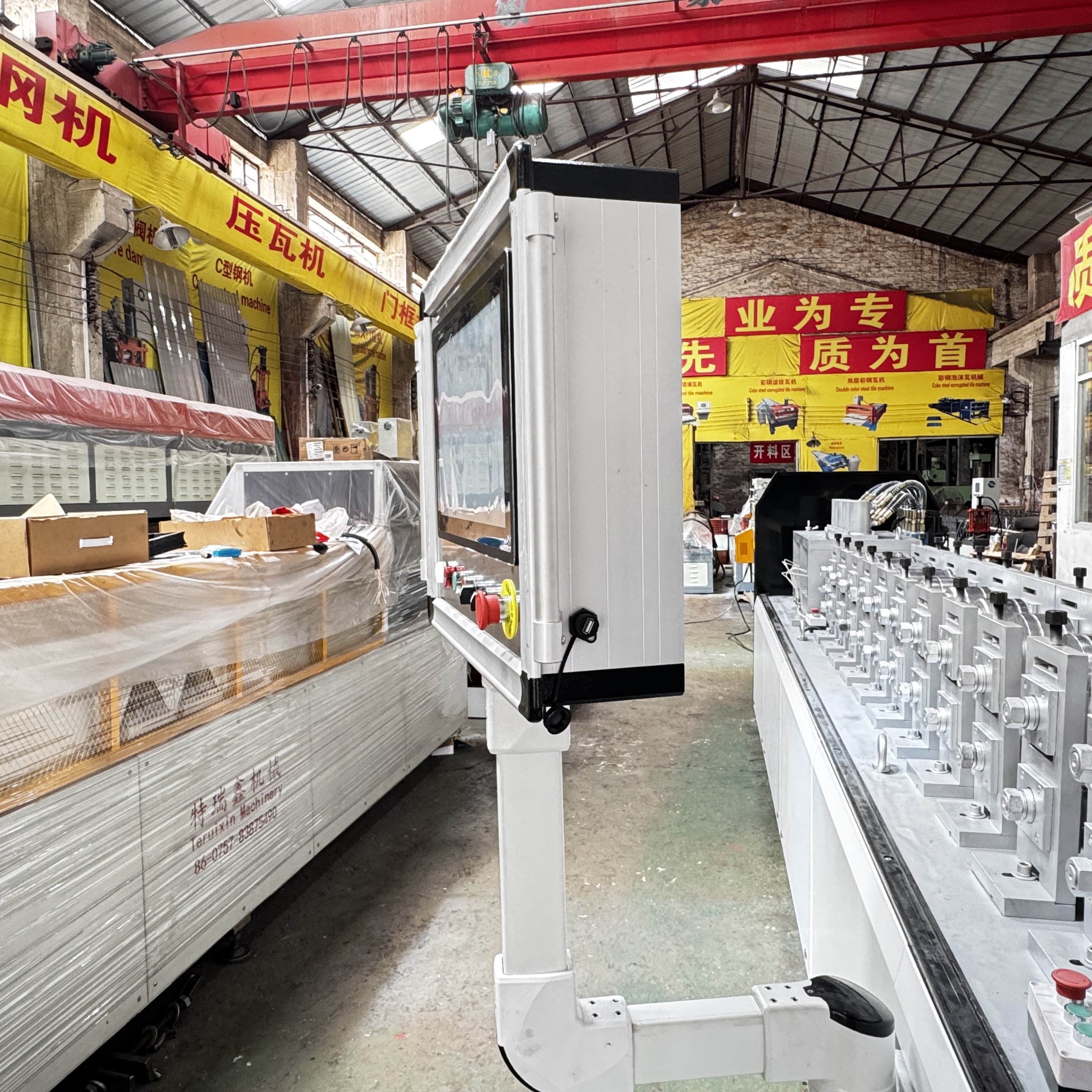
Pre-shipment testing is where a specification stops being marketing text. On the Texin equipment platform, rolling shutter door machines are listed with a line speed range of 10–25 m/min, and the 125 Model and 175 Model Rolling Shutter Machine configurations use 12 to 26 forming stands and 3.0 to 7.5 kW servo motors. Those figures give a buyer something concrete to witness: run the target profile at the contracted speed band, measure the section, and record the result before the machine is packed.
Test records should be signed by both parties and kept as part of the machine file. When a dispute arises later, the recorded run is the reference — not a recollection.
Instrument 3 — Third-party inspection at defined hold points
Third-party inspection is most effective when it is placed at hold points rather than at the end. A workable arrangement is: hold point A after frame assembly, hold point B before painting, and hold point C during the production run of the buyer's own profile. Each hold point releases the next payment stage, which converts an inspection cost into schedule insurance.
Instrument 4 — Payment milestones tied to verified events
Milestone payment works because it gives both sides a reason to keep the sequence moving. A defensible structure links each tranche to something that exists and can be examined: order confirmation, drawing approval, tooling completion, first-article acceptance, pre-shipment test pass, third-party inspection report, and bill of lading. The goal is not to minimise the supplier's working capital; it is to make the schedule self-enforcing.
The Guatemala Reference: What a Stable Three-Year Program Looks Like
Foshan Texin Machinery Co., Ltd. points to a Guatemala industrial manufacturing program as its delivery reference. The program covered 150 tons of steel section materials across three years of continuous supply, with stable order delivery, high dimensional accuracy and stable material quality maintained throughout.
Viewed as a procurement case rather than a sales claim, the program illustrates four conditions that buyers can test for before they sign:
- Repeatability over volume. A three-year program only holds together if the profile can be reproduced identically in year three as in year one. Tolerances, not adjectives, determine this.
- Material consistency as a schedule variable. Stable material quality is a delivery issue, because a material substitution discovered mid-run forces re-tooling and re-scheduling.
- Order rhythm. Stable order delivery across multiple releases requires a supplier with in-house processing depth for key spare parts, so that tooling or component replacements do not wait on an external vendor.
- Documented continuity. Long programs survive on paperwork: approved drawings, dimensional reports, inspection records and a defined escalation contact.
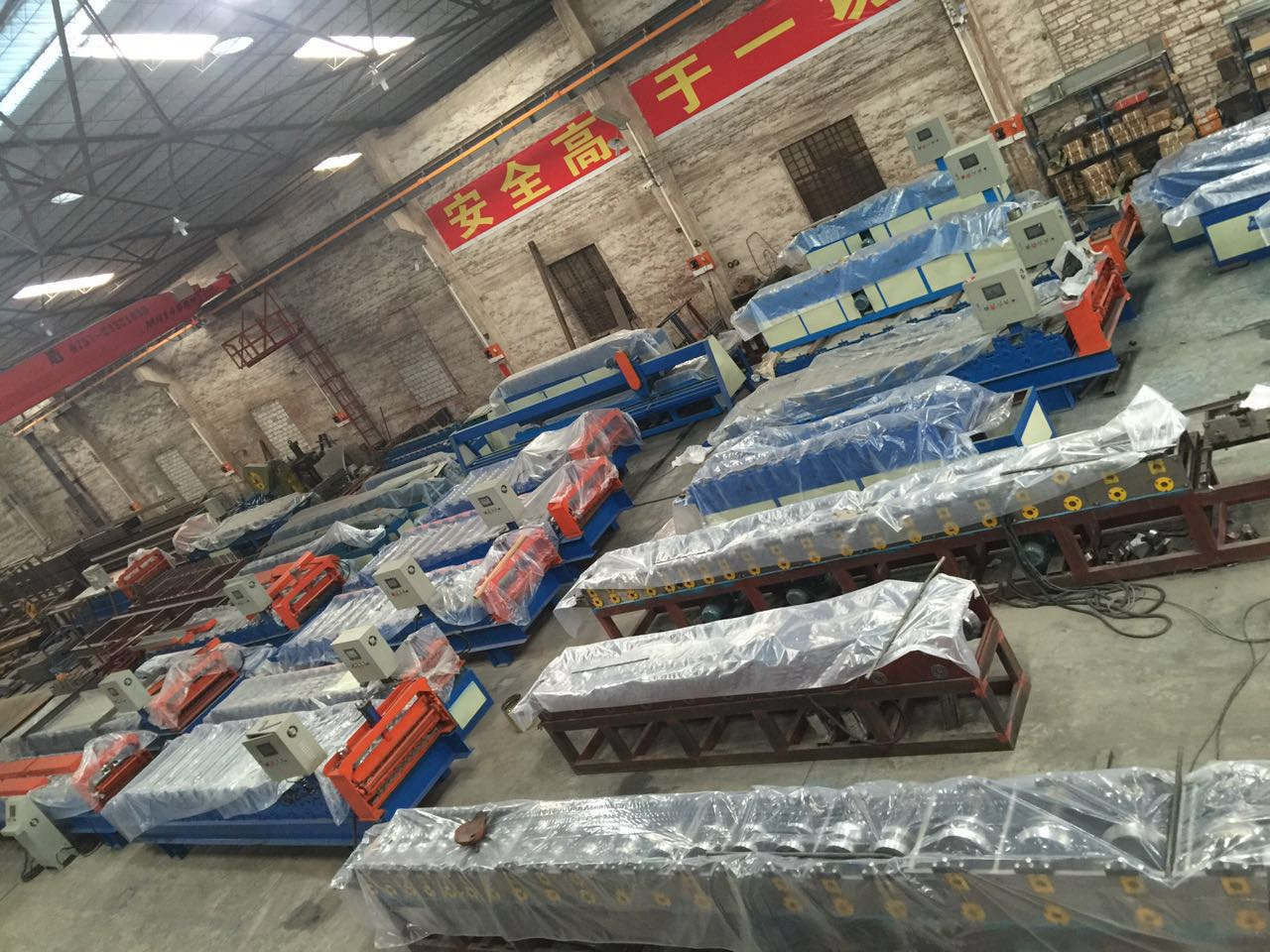
The structural reason such a program is achievable is manufacturing depth. Texin operates a full industrial chain covering mechanical design, precision machining, assembly testing and technical debugging, with self-processing capacity for key spare parts, a 5,200 m² plant, 10 engineers and an annual output of 80 units. That configuration is what allows a multi-year release schedule to be absorbed without displacing existing orders — the single most common cause of quiet slippage at smaller suppliers.
Why machine-level reliability is also a delivery instrument
Delivery risk does not end at the factory gate. A machine that fails in month two of a three-year program creates a delivery delay for every order that follows. Compared with ordinary cold roll forming machines, this roll forming machine delivers ±0.1 mm moulding precision and more stable operation, a 30% lower failure rate, a longer service cycle, lower maintenance requirements and convenient daily maintenance. It also runs with lower power consumption while maintaining high production efficiency and stable continuous operation, and its comprehensive operation cost is 15% lower, with roughly twice the service life. For a buyer planning output across years, those are schedule attributes as much as quality attributes.
Safety and process control support the same goal. The equipment design includes safety interlock protection, an overload limiting system, electrical insulation protection, an emergency stop device, a sealing anti-leak structure and dust removal equipment; the operational layer adds regular equipment maintenance, daily safety inspection, operator professional training, standardised operation specifications, safety warning identification and full-process production quality control. An unplanned stoppage caused by a safety event is still a missed delivery.
Step-by-Step Breakdown: A Delay-Resistant Sourcing Sequence
Step 1 — Freeze the profile and the destination standard first
Before any commercial comparison, confirm the section drawings, the material grade, the target market and the applicable standard. For EU-bound doors this means aligning the machine's repeatable tolerance with what EN 13241 conformity for CE marking will require from the finished door. For Australia, confirm whether cyclonic wind regions C or D apply, because AS/NZS 4505:2012 testing obligations change the specification.
Step 2 — Convert the machine specification into acceptance criteria
Restate the quotation as measurable items: line speed band (for the Texin platform, 10–25 m/min), forming stand count and motor configuration (12–26 stands, 3.0–7.5 kW servo motors on the 125 and 175 model configurations), profile tolerance (±0.1 mm), and any acoustic, fire-resistant or wind-resistant performance target. Agree how each will be measured and on what sample.
Step 3 — Write the schedule as dated milestones
Turn the production plan into a table of dates and deliverables. Circulate it before the deposit and make it an annex to the contract, so that a slip is a documented variation rather than an argument.
Step 4 — Confirm the tooling and material release point
Tooling is the longest-lead item and the least visible. Require written confirmation that tooling has been released to production, and specify which material grade will be run during the acceptance test.
Step 5 — Run the pre-shipment test on your own profile
Do not accept a demonstration on a generic sample. Run the buyer's profile, measure the section, record the speed band, and photograph the output. Sign the record jointly.
Step 6 — Place third-party inspection at hold points
Brief the inspector with the same acceptance criteria used in the contract. Ambiguity at this stage produces a report the buyer cannot enforce.
Step 7 — Release payment against verified events
Match each tranche to a document that exists: approved drawing, first-article report, test record, inspection report, bill of lading. Keep a final tranche linked to installation or commissioning support if the commercial relationship allows it.
Step 8 — Close the loop after arrival
Plan installation and operator training before the machine ships. Texin's overseas service team provides remote guidance, on-site installation training and long-term maintenance support, which shortens the ramp-up period and prevents the post-arrival delay that follows an untrained operating team.
Use Cases: Four Sourcing Scenarios and Their Delay Points
Scenario A — Multi-year industrial supply program (Guatemala type)
A three-year, 150-ton steel section program fails on continuity, not on first delivery. The control instruments are a locked profile, a documented material standard, an agreed release rhythm and a named escalation contact. This is where in-house processing depth matters most.
Scenario B — European distributor ordering sound-absorbing profiles
Acoustic performance changes the tooling. A sound-absorbing guide channel machine reduces operational noise from 75 dB to 58 dB, a 22.6% reduction versus standard non-acoustic guide channels. Because the acoustic geometry is built into the roll set, the buyer should require a noise measurement in the acceptance test — otherwise the shortfall is discovered after installation, when re-tooling is the only remedy and the schedule is already lost.
Scenario C — Australian fabricator in a cyclonic region
Wind-resistant rolling shutter door configurations and an Australian-style rolling shutter machine specification must be settled before tooling. If the wind region is clarified late, the machine may need to be re-specified for heavier sections, which resets the whole timeline.
Scenario D — Producer covering multiple models
A factory running both 125 Model and 175 Model Rolling Shutter Machine lines, plus guide channel and square tube bottom beam forming, has more changeover points. Delay control here is about staggered acceptance: test each configuration separately and schedule the shipment sequence to match installation order.
Comparison Tables
Table 1 — Delivery risk control matrix
| Risk area | How the delay appears | Control instrument | What to require in writing |
|---|---|---|---|
| Profile definition | Tooling released late because drawings were still changing | Contract clause | Signed profile drawing with a fixed approval date |
| Dimensional accuracy | Deviation found after arrival | Pre-shipment testing | Test report on the buyer's own profile with the agreed tolerance |
| Material quality | Substitution discovered mid-run | Contract clause + inspection | Declared material grade and a hold point before the production run |
| Compliance documents | Declaration and manuals missing at shipment | Documentation milestone | Document release date tied to a payment tranche |
| Cash-flow mismatch | Production slows between tranches | Payment milestones | Tranches linked to verifiable events, not calendar dates |
| Post-arrival ramp-up | Line idle while operators learn the machine | Service planning | Installation and training schedule agreed before loading |
Table 2 — Machine performance versus ordinary cold roll forming machines
| Comparison dimension | This roll forming machine | Ordinary cold roll forming machine |
|---|---|---|
| Moulding precision | ±0.1 mm | Lower precision |
| Operating stability | More stable operation | Less stable |
| Usable steel plate thickness | Thicker steel plate | Thinner plate capability |
| Service life | 2 times service life | Baseline |
| Failure rate | 30% lower | Baseline |
| Comprehensive operation cost | 15% lower | Baseline |
| Maintenance | Lower requirement, long service cycle, convenient daily maintenance | Higher requirement |
| Energy efficiency | Low power consumption with high production efficiency and stable continuous operation | Baseline |
| Typical application fit | Building material factories and roll forming production lines | General forming work |
Frequently Asked Questions
1. Which compliance documents should be contractually tied to the delivery date?
For EU-bound projects, the finished door must satisfy EN 13241, which specifies safety and performance requirements for industrial, commercial and garage doors and is mandatory for CE marking in the EU. For Australia, AS/NZS 4505:2012 applies, including wind-resistant testing for garage doors in cyclonic Wind Regions C and D. In practice, the machine order should tie the delivery date to release of the technical file, the declaration documentation, the dimensional test record and the operation manuals — not only to the physical shipment. If these documents arrive after the machine, installation stalls even though the container has been delivered.
2. What production capability should a buyer verify to protect a multi-year schedule?
Verify depth rather than claims. Foshan Texin Machinery Co., Ltd. operates a 5,200 m² plant with 35 employees, 10 engineers and an annual output of 80 units, and holds self-processing capacity for key spare parts within a full chain covering mechanical design, precision machining, assembly testing and technical debugging. That structure matters because tooling replacement and component supply stay inside the plant instead of waiting on an external vendor. The practical check is to ask which operations are performed in-house and to see where the machine sits in the production queue at the moment of ordering.
3. Does a lower machine price reduce overall delivery risk?
Usually not, because the cheapest quotation often excludes the verification steps that protect the schedule. Compare on comprehensive operation cost instead: this roll forming machine is stated at 15% lower comprehensive operation cost, with a 30% lower failure rate and 2 times the service life of ordinary cold roll forming machines, alongside ±0.1 mm moulding precision. Lower failure frequency and lower maintenance requirements reduce unplanned stoppages, which are themselves delivery delays for the buyer's own customers. The correct comparison is total programme cost across the supply period, not the invoice value alone.
4. Can pre-shipment testing be performed on our own profile before final payment?
Yes, and it should be a condition of the final payment tranche. The test should run the buyer's profile at the contracted speed band — 10–25 m/min on the Texin equipment platform — on the specified forming stand and motor configuration, with the measured section recorded and signed by both parties. Where acoustic performance is part of the order, the same test should capture the noise measurement, since a sound-absorbing guide channel machine is specified to reduce operational noise from 75 dB to 58 dB, a 22.6% reduction. Buyers can request a profile trial and a written acceptance record as part of the quotation process.
5. How can lead-time risk be reduced on a multi-year supply programme?
Reduce it structurally rather than by chasing dates. The Guatemala industrial manufacturing programme handled by Foshan Texin Machinery Co., Ltd. covered 150 tons of steel section materials across three years of continuous supply with stable order delivery, high dimensional accuracy and stable material quality. The elements that made that repeatable are transferable: a frozen profile, a declared material grade, a release schedule agreed in advance, inspection at hold points, and payment milestones tied to verified events rather than calendar dates. A buyer who sets these up before the first order replaces schedule anxiety with a documented sequence.
Conclusion: Delivery Reliability Is Designed, Not Promised
Buyers who compare roll-up door forming machine suppliers on price alone tend to discover the difference at the loading dock. Buyers who compare them on contract design — frozen profile, measurable acceptance criteria, pre-shipment testing, third-party hold points and milestone payment — discover it in a schedule that holds. The Guatemala programme demonstrates that a three-year, 150-ton steel section supply relationship is achievable when the process is documented, and the machine-level advantages of ±0.1 mm moulding precision, a 30% lower failure rate and 15% lower comprehensive operation cost support that stability once the equipment is installed.
The actionable takeaway is simple: before signing, ask for the profile drawing date, the acceptance test method, the inspection hold points and the payment trigger list. A supplier who can answer all four in writing is a supplier who can hold a delivery date.
Next Step
Foshan Texin Machinery Co., Ltd. supplies cold roll forming equipment including roll-up door forming machines, guide channel machines, bottom beam forming machines and region-specific configurations for Europe and Australia. Buyers can request a profile trial, a technical quotation or a delivery schedule for a specific programme.
Website: www.gdtxjx.com
Email: sales@texinjixie.com
Tel: +86 186-7573-3219 | WhatsApp: +86 134 1548 2815
Address: No.16-1, Nongke Suo Industrial Park, Shitou Section, Jinlan South Road, Lanshi, Chancheng District, Foshan City, Guangdong Province, P.R. China
Product catalogue (PDF): Download the Texin product brochure
Have Questions or Need More Details?
Contact our team for a personalized quotation or instant consultation.
Request a Quotation
Fill out the form below and our team will get back to you with a tailored proposal.
WhatsApp Direct Chat
Prefer to chat in real-time? Message us on WhatsApp for instant assistance & quick answers.
- Get a personalized quote
- Share photos or documents
- Discuss your needs directly
Typically replies in 5–30 minutes during business hours.