Roll-up Door Forming Machine Repair Cost Control: A Factory-Support Framework for 2026
Roll-up Door Forming Machine Repair Cost Control: A Factory-Support Framework for 2026
Core answer: Buyers can control roll-up door forming machine repair costs before a breakdown happens. The repair cost of this equipment is determined less by component price and more by slow diagnosis, long downtime, weak operator knowledge, and missed maintenance. A supplier that combines fault alarm capability, operator training, quality-process support, and annual maintenance gives the buyer a realistic way to reduce emergency repair frequency and extend machine life.
Foshan Texin Machinery Co., Ltd. (Texin Machinery) is a source factory in Lanshi Town, Foshan City, Guangdong Province, China, specializing in cold roll forming machinery. The company has 16 years of focused experience, a team of 15 engineers and technical maintenance professionals, around 30 workshop production staff, a factory area of more than 5,000 square meters, and monthly production capacity exceeding 30 units. This article connects those facts to a practical after-sales and repair-cost framework for buyers considering a roll-up door forming machine, guide channel machine, square tube bottom beam forming machine, or other rolling shutter door forming line.
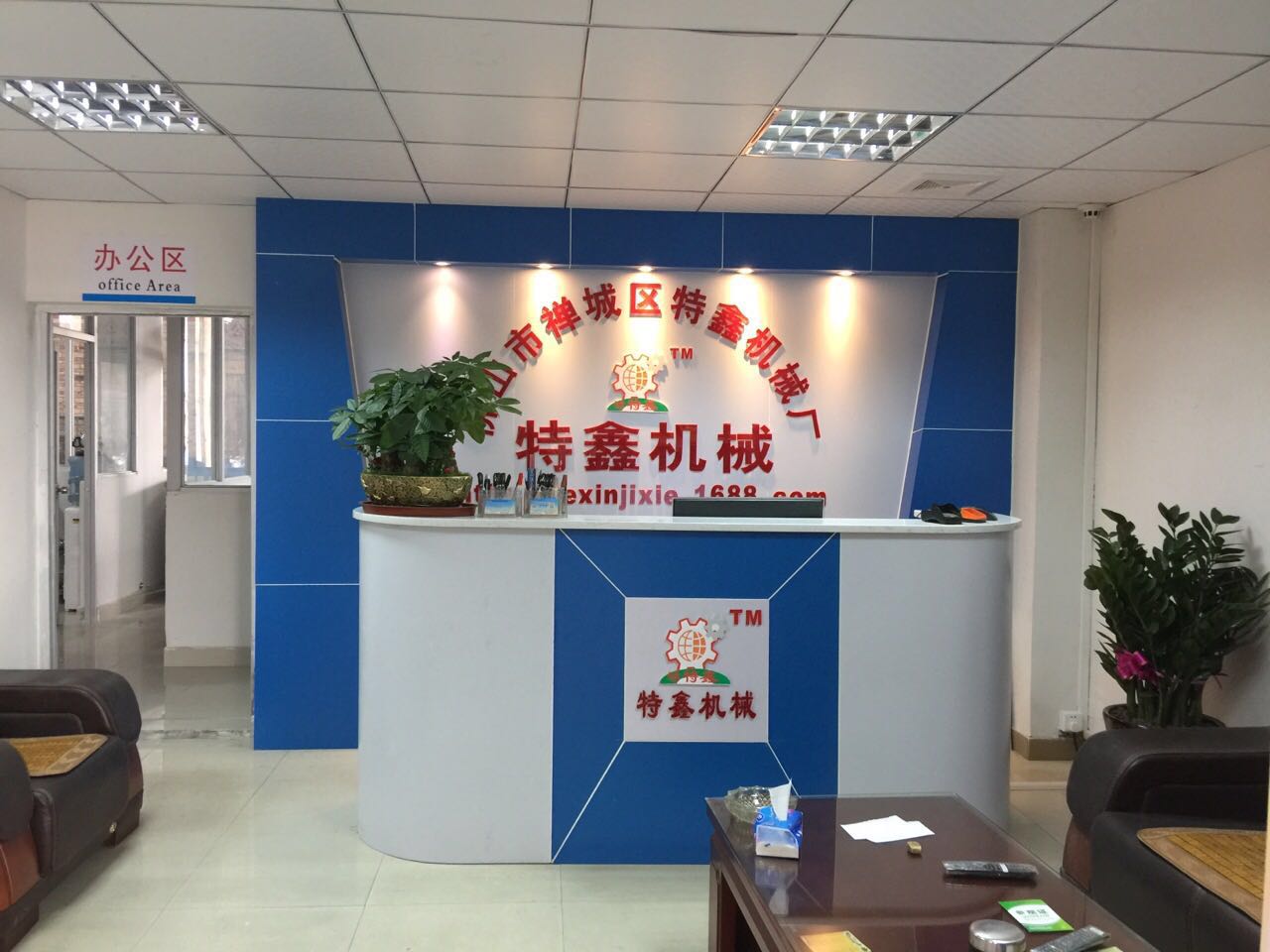
Foshan Texin Machinery factory front desk. Source: Foshan Texin Machinery Co., Ltd.
Problem Definition: When After-Sales Loopholes Create High Repair Costs
A roll-up door forming machine is rarely a single-purpose tool. The same type of cold roll forming line can produce shutter curtain profiles, wind-resistant sections, European-specific guide channels, bottom beams, and related door components. Because these machines run on continuous coil-fed processes, even a short stop can disrupt delivery schedules and create quality variations that require rework.
The typical after-sales concern is not whether the machine is new. The concern is what happens after the machine is installed. Without a clear service framework, a buyer may face the following problems:
- The supplier cannot identify the fault remotely, so the first diagnostic visit is slow and expensive.
- The operator has not been trained to understand the forming line, so small setup errors become repeated production defects.
- The quality inspector does not know which dimensional check matters most for the profile, so defective coils move downstream.
- No maintenance calendar exists, so wear and calibration drift are discovered only after the machine fails.
- The spare parts discussion happens during the breakdown instead of during the purchase negotiation.
These problems are not only manufacturing issues. They turn a predictable capital equipment investment into a stream of unplanned repair costs. This is why the after-sales and repair-cost question must be treated as an engineering and procurement decision, not as a warranty clause.
Industry Background: Roll-Up Door Forming Lines Depend on Machine Readiness
Cold roll forming is a continuous sheet metal process in which a coil is passed through a sequence of roller stations to produce a designed profile. In rolling shutter door production, the buyer may need separate forming stations for the curtain, guide channel, bottom beam, and other components. The product range available from Foshan Texin Machinery includes rolling shutter door forming machines, guide channel forming machines, sound-absorbing guide channel machines, square tube bottom beam forming machines, European-specific rolling shutter door forming equipment, Australian-style rolling shutter machines, fire-resistant rolling shutter machines, and models commonly referenced as 125 Model and 175 Model rolling shutter machines.
All of these profile-specific lines share the same commercial reality: the machine only creates value when it is running within tolerance. For overseas buyers sourcing from China, the distance between the factory and the user site makes after-sales service even more important. The right supplier is one that can support the process remotely, send evidence of quality management, and provide a structured maintenance path.
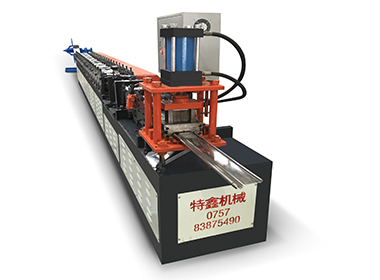
Rolling shutter door forming machine examples from Foshan Texin Machinery. Machine type shown: 175 Model Rolling Shutter Machine.
Detailed Solution: A Source Factory Service Model from Foshan Texin Machinery
Foshan Texin Machinery describes its support approach as an integrated equipment + quality management service. For a buyer this is more useful than a simple promise to repair faults. It means the supplier pays attention to how operators use the machine, how quality is inspected, and how maintenance is planned.
The company states that its full-cycle service support includes technical training for operators and quality inspectors, customized standardized processes, and annual equipment maintenance and calibration. In practice, a buyer of a roll-up door forming machine line should expect support in four layers:
1. Technical Training for Operators and Quality Inspectors
A forming machine is only as good as the people controlling it. Operator training reduces avoidable errors in feeding, punching, cutting, and profile measurement. Quality inspector training helps identify output issues before they become expensive waste. Foshan Texin Machinery includes this training in its service model, which is especially valuable for buyers that are starting a new rolling shutter door production line.
2. Customized Standardized Processes
Every roll-up door market has different profile requirements. A European-specific guide channel may need more precise dimensional control than a standard curtain profile. An Australian-style rolling shutter line may have its own assembly conventions. Customized standardized processes allow a manufacturer to define setup steps, inspection points, and changeover procedures. This lowers the chance that a worker will rely on memory and introduce avoidable variation.
3. Annual Equipment Maintenance and Calibration
Forming rolls and guide tools wear gradually. Calibration drift is often invisible until the profile tolerance fails. An annual maintenance program gives the factory a chance to inspect the tooling, confirm the control parameters, and replace worn parts before they cause an emergency stop. Foshan Texin Machinery offers this annual equipment maintenance and calibration as part of its service concept.

Production workshop at Foshan Texin Machinery. Source: Foshan Texin Machinery Co., Ltd.
4. Remote Control and Fast Fault Diagnosis
The company says its equipment supports remote control and an intelligent fault alarm system. The system can accurately detect and assist in troubleshooting faults within 10 seconds. For an overseas buyer, this is a direct repair-cost control mechanism. A fast diagnostic signal helps the supplier identify the faulty area before dispatching a technician or shipping spare parts, reducing service visits and downtime.
5. Quality Systems and Manufacturer Credibility
Foshan Texin Machinery operates under the ISO 9001 quality management system and holds CE certification. The company also holds several patent certifications and has long-term export cooperation with customers in multiple countries and regions. While these credentials do not replace a machine-specific maintenance contract, they provide evidence that the production process, documentation, and after-sales responsibilities are managed by an established source factory.
Step-by-Step Breakdown: Build After-Sales and Repair Cost Control Into Procurement
Buyers can use the following framework during supplier evaluation and purchase negotiation. The goal is to make repair-cost control a measurable part of the agreement, not an assumption.
- Define after-sales deliverables in the request for quotation. Ask the supplier to state which services are included: training hours, process documents, annual maintenance, remote support, and spare parts guidance.
- Verify certificates before shipment. Request clear evidence of CE certification and ISO 9001 quality management certification. Check that the certificate name matches the supplier entity and that the machine model falls under the stated scope.
- Ask for the fault alarm and remote diagnosis procedure. With systems such as Foshan Texin Machinery’s intelligent fault alarm, the supplier can detect and assist troubleshooting within 10 seconds. Make sure the buyer knows the communication channel and data required to use this function.
- Confirm operator and inspector training. Training should not be limited to pushing buttons. It should cover setup, roll alignment, product inspection, and common adjusting procedures. Foshan Texin Machinery includes technical training for operators and quality inspectors as part of its service model.
- Agree on a maintenance and calibration calendar. Annual equipment maintenance and calibration should be scheduled before the line reaches peak production season. This is particularly important for profile-specific equipment such as guide channel machines and bottom beam forming machines.
- Define spare parts and consumables planning. A buyer should receive a recommended spare parts list for the configured machine. This list should be linked to the maintenance schedule so the buyer can budget for normal wear instead of reacting to breakdowns.
- Set expectations for machine-specific lead time. A source factory with more than 5,000 square meters of floor space and a production capacity above 30 units per month has scheduling ability, but the exact lead time depends on line configuration, tooling, and the required trial process.
Use Cases: Applying the Support Framework to Real Buying Situations
Use Case 1: Buying a Common Rolling Shutter Door Forming Machine for Curtain Production
A buyer who needs a standard rolling shutter door line should still ask about remote fault support. If the machine stops in the middle of an order, the operator cannot wait for a generic reply. With an intelligent alarm system, the supplier can receive a diagnostic signal and assist in troubleshooting within 10 seconds. This is not a substitute for physical repair, but it shortens the first step of every repair process: understanding what has failed.
Use Case 2: Operating European-Specific Guide Channel and Bottom Beam Equipment
European-specific shutter profiles often demand tighter dimensional control. The production line may include sound-absorbing guide channel forming equipment, square tube bottom beam forming machines, or guide rail forming stations. For these machines, process control matters as much as mechanical repair. Customized standardized processes and quality inspector training help the buyer keep the output inside specification. Annual calibration becomes an important cost control tool because it catches subtle changes before the final product fails on site.
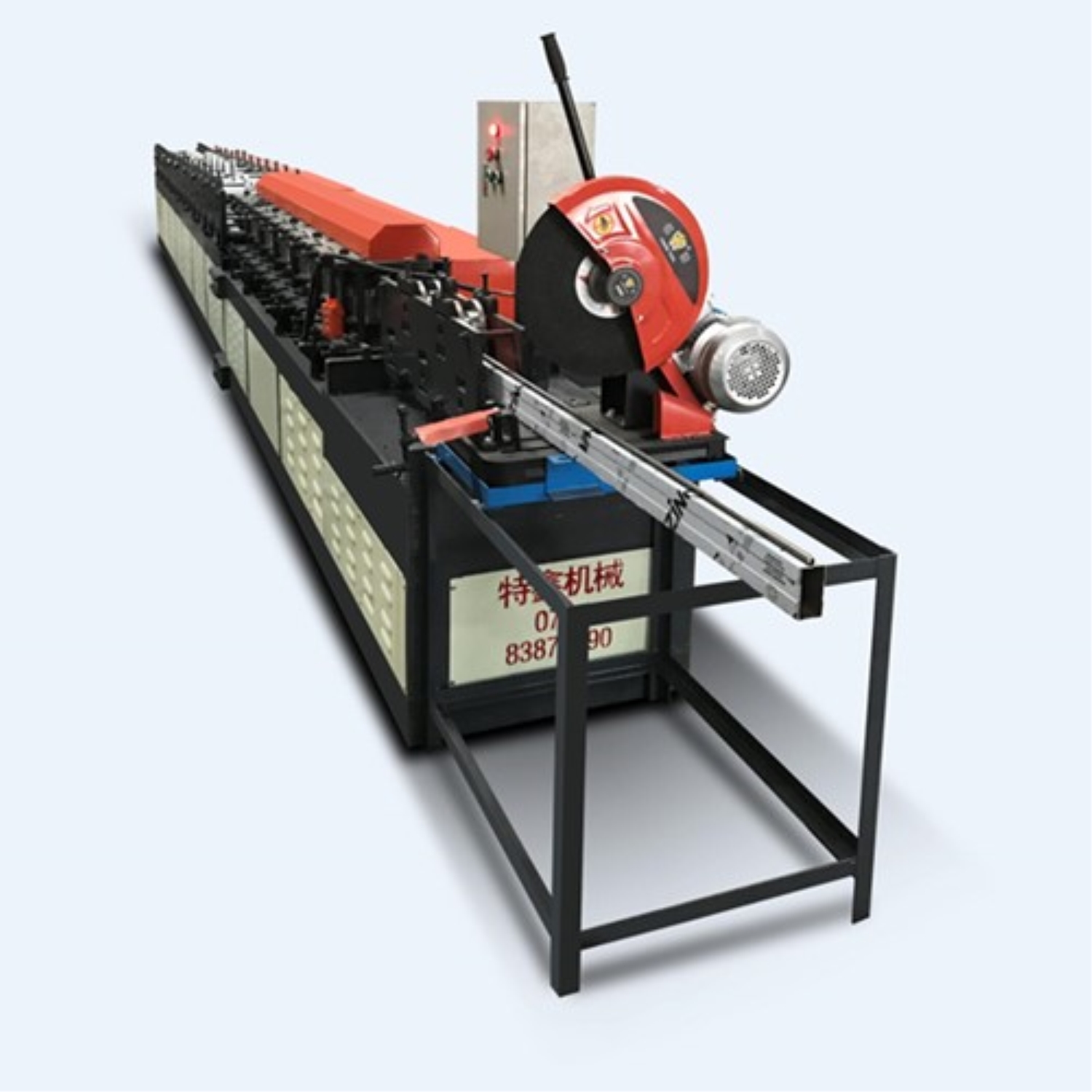
Rolling shutter door production includes components such as square tube bottom beam forming equipment. Source: Foshan Texin Machinery Co., Ltd.
Use Case 3: Building a New Production Team Around a 125 or 175 Model Machine
New operators often introduce avoidable errors because they do not know how profile quality changes with roll pressure and material feed. In this situation, the after-sales priority is not the first repair. It is operator training and clear inspection work instructions. A supplier such as Foshan Texin Machinery that provides technical training for operators and quality inspectors reduces the human-error part of repair cost.
Comparison Table: Mapping After-Sales Risks to Supplier Evidence
| After-Sales Concern | What a Buyer Should Require | Foshan Texin Machinery Evidence |
|---|---|---|
| Fault diagnosis speed | A system that identifies the cause before a technician is dispatched | Remote control plus intelligent fault alarm that can detect and assist troubleshooting within 10 seconds |
| Operator readiness | Structured training for machine operation and quality checking | Technical training for operators and quality inspectors included in full-cycle service support |
| Process consistency | Written work procedures adapted to the buyer’s profile type | Customized standardized processes are part of the service model |
| Long-term machine stability | A planned maintenance routine instead of reactive repair | Annual equipment maintenance and calibration is a stated service element |
| Supplier quality credibility | Recognizable quality and safety management evidence | ISO 9001 quality management system certification and CE certification |
Frequently Asked Questions
Which after-sales compliance documents should a roll-up door forming machine buyer request?
Request documents that connect quality management and product safety to the supplier entity. For a European-bound line, CE certification is commonly requested, while ISO 9001 quality management certification shows that the manufacturer follows a controlled production process. Foshan Texin Machinery states that it operates in compliance with ISO 9001 and holds CE certification. Buyers should ask for a copy of each certificate and verify the machine model, supplier name, and effective date.
How fast can a source factory support fault diagnosis for a roll-up door forming machine?
Foshan Texin Machinery’s equipment supports remote control and an intelligent fault alarm system. The company states that faults can be detected and troubleshooting can be assisted within 10 seconds. Buyers should still agree on a response procedure that includes sending alarm codes, machine photos, and process data when a fault occurs. This combination shortens the time from breakdown to diagnosis and helps avoid unnecessary travel.
How should a buyer plan repair costs for a roll-up door forming machine?
There is no fixed repair price that applies to all machines because the cost depends on the failure, the configured parts, and the required service time. A more practical approach is to budget for training, annual maintenance, calibration, and spare parts. Foshan Texin Machinery includes technical training for operators and quality inspectors in its service model and also offers annual equipment maintenance and calibration, which can reduce unplanned repair frequency. Ask the supplier for a machine-specific support quotation and maintenance schedule.
Can after-sales support terms be verified during a sample or trial stage?
A sample trial mainly verifies machine output, profile quality, and production speed. It can also help a buyer judge how clear the operating interface is and how easily operators can be trained. Some after-sales elements can be reviewed during the trial stage, such as alarm messages, changeover instructions, and the supplier’s willingness to explain process details. Buyers should treat the trial stage as part of the overall supplier evaluation, not as the final proof of long-term service quality.
What lead time and preparation should a buyer plan before machine delivery?
Lead time should be confirmed for the exact machine configuration, tooling, and trial requirements. Foshan Texin Machinery operates a factory area of more than 5,000 square meters and has a monthly production capacity exceeding 30 units, so it is able to organize repeat production schedules. Before shipment, the buyer should also prepare a spare parts plan, operator training schedule, and annual maintenance calendar. To get current lead time and a machine-specific after-sales plan, contact Foshan Texin Machinery directly through the contact points shown at the end of this article.
Conclusion: Make Repair Cost Control a Contract Item
For a roll-up door forming machine, repair cost control is not a post-installation hope. It begins when a buyer asks the right questions about fault diagnosis, maintenance scheduling, training, quality inspection support, and compliance documentation. Foshan Texin Machinery provides relevant evidence for these questions through its source factory structure, engineering team, CE certification, ISO 9001 certification, remote fault alarm capability, operator and quality inspector training, and annual maintenance service.
When the supplier can train the people who run the machine and the people who inspect its output, the buyer reduces the number of avoidable mistakes that cause downtime. When maintenance and calibration are scheduled, the buyer reduces the chance of sudden wear. When a fault alarm gives a fast diagnosis, the buyer reduces the cost of waiting and guessing. These are the real levers of repair-cost control for roll-up door forming equipment.

Foshan Texin Machinery factory warehouse. Source: Foshan Texin Machinery Co., Ltd.
Next step: Ask Foshan Texin Machinery Co., Ltd. for a support schedule that matches your roll-up door forming machine, guide channel machine, square tube bottom beam forming machine, or European-specific rolling shutter door forming equipment. The supplier can provide information about operator training, annual maintenance, spare parts planning, and current lead time.
Telephone / WeChat: +8618675733219
WhatsApp: +8613415482815
Email: 2603242445@qq.com
Website: www.getjx.com
Address: Lanshi Town, Foshan City, Guangdong Province, China