
Bird Feeder with Camera: A Complete 2026 Guide to Smart Bird-Watching
A bird feeder with camera turns an ordinary backyard feeding station into a live wildlife observatory. The feeder still holds seed, but it now records visitors in 4K, filters real bird activity from moving branches, and sends an arrival alert to a phone the moment something lands on the tray. For anyone moving from casual feeding to active bird watching, the practical question is no longer whether to add a camera — it is which features actually matter, and how to read a specification sheet without being misled.
This guide explains what a smart bird feeder is, why the category is expanding into mainstream retail, what buyers should evaluate before purchasing, how the FreeKoala Bird Feeder with Camera line is built, and how the setup works in real outdoor conditions.
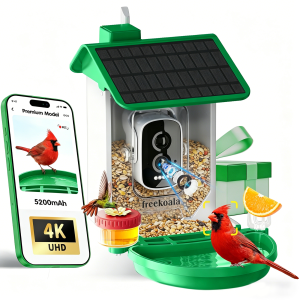
FreeKoala Smart Bird Feeder with Camera — a 4K, solar-powered feeder with built-in AI bird recognition.
What Is a Bird Feeder with Camera?
A bird feeder with camera is an outdoor feeding unit that integrates a wireless camera, motion detection, and a mobile app directly into the feeder housing. Instead of mounting a separate trail camera near an existing feeder, the imaging module sits inside the feeder body and is aimed at the feeding tray — so every visit is recorded from the same angle as the food supply, and the camera is not pointed at the rest of the yard.
FreeKoala Bird Feeder with Camera is one clearly documented example of this product class. The line currently includes three models — 5X-CCKK-42W2, Z4-VO5S-YQ8C, and NU-T6SR-JC9L — each built into an ABS housing with a 4K UHD camera, 2.4GHz Wi-Fi, up to 256GB of local microSD storage, IP66 weather protection, and a 1.5L seed capacity. The product belongs to the Bird Feeder category and is intended for the outdoor gardening and patio supplies industry, designed around outdoor bird watching and feeding scenarios.
Two characteristics separate this class from a standalone outdoor camera: the camera is feeder-focused (not yard-focused), and the recording is triggered by bird or motion activity rather than continuous 24/7 filming. That combination directly shapes battery life, storage usage, and privacy.
Why Traditional Bird Feeders Leave Information Gaps
A conventional feeder does one job well: it holds seed and attracts birds. What it does not do is tell a birdwatcher who arrived, how often, or what time of day the traffic peaks. Birders who want to identify species usually rely on binoculars, memory, and a field guide — a process that is slow, and easy to get wrong with fast-moving visitors such as finches and chickadees.
Standalone outdoor cameras partially solve the visibility problem, but they introduce new ones:
- Wrong framing. A camera mounted on a fence or tree rarely captures the feeding tray at close range, so small birds appear as tiny figures.
- No species context. Raw footage does not label what landed — the viewer still has to identify it manually.
- Battery strain. Continuous or high-sensitivity recording drains power quickly in an outdoor environment.
- Privacy exposure. A general yard camera may capture windows, driveways, or neighboring property.
A feeder with the camera built in solves all four by design. The lens only needs to cover the tray and perch, the detection model can be tuned to bird-sized activity, and the field of view can stay on the feeding area rather than the surrounding property.
Industry Background — Where the Smart Bird Feeder Category Stands in 2026
The integrated-camera feeder is no longer a niche gadget. According to Growth Market Reports, the global smart bird-feeder camera market was valued at USD 225 million in 2025 and is projected to reach USD 566.3 million by 2034. Within that market, products with integrated cameras accounted for 78% of 2025 value, which signals a clear buyer preference for all-in-one designs over aftermarket camera kits.
A separate data point from the same source shows how quickly the technology is diffusing through the premium segment: in 2024, approximately 20% of premium bird feeders already incorporated smart features such as cameras and AI-based identification. As those features migrate downmarket, buyers increasingly compare feeders on camera specification rather than on feeder shape alone.
Market context in one sentence: A fast-growing, camera-led category where integrated designs now dominate value share, and where buyers evaluate resolution, AI, power, and storage — not just the seed hopper.
From a compliance standpoint, smart feeders with Wi-Fi or other radio modules sold into the European Union must comply with the Radio Equipment Directive (RED) 2014/53/EU, which has been active since 13 June 2016. That requirement affects any wireless feeder shipping into EU markets, regardless of brand, and is one reason the specification sheet — not just the listing photo — matters when comparing products.
What to Evaluate Before Buying a Camera Bird Feeder
Five specifications drive almost every real-world difference between camera bird feeders: resolution, field of view, power, storage model, and AI species recognition. Each has a practical trade-off that a photo alone will not reveal.
1. Camera resolution and field of view
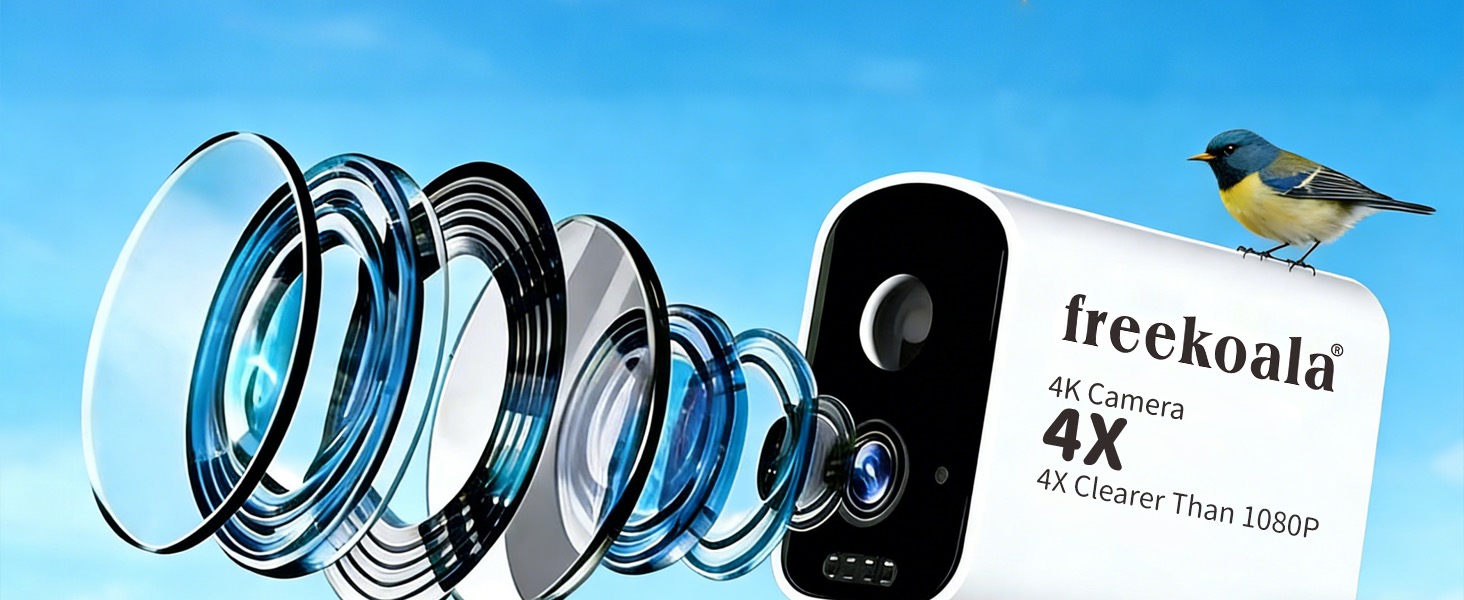
Resolution determines how much detail remains after you zoom in. 2K is enough for casual watching; 4K provides more room to crop in on feathers, markings, and small bills. FreeKoala supports 4K UHD recording. One detail buyers should know upfront: the current default setting on FreeKoala feeder cameras is SD, and 4K UHD mode must be selected manually in the app if maximum detail is the priority.
Field of view matters just as much. A wider angle reduces blind spots and keeps moving birds in frame without precise re-aiming. FreeKoala models ship with either a 135° or 160° wide-angle lens, depending on model.
2. Power and weather protection
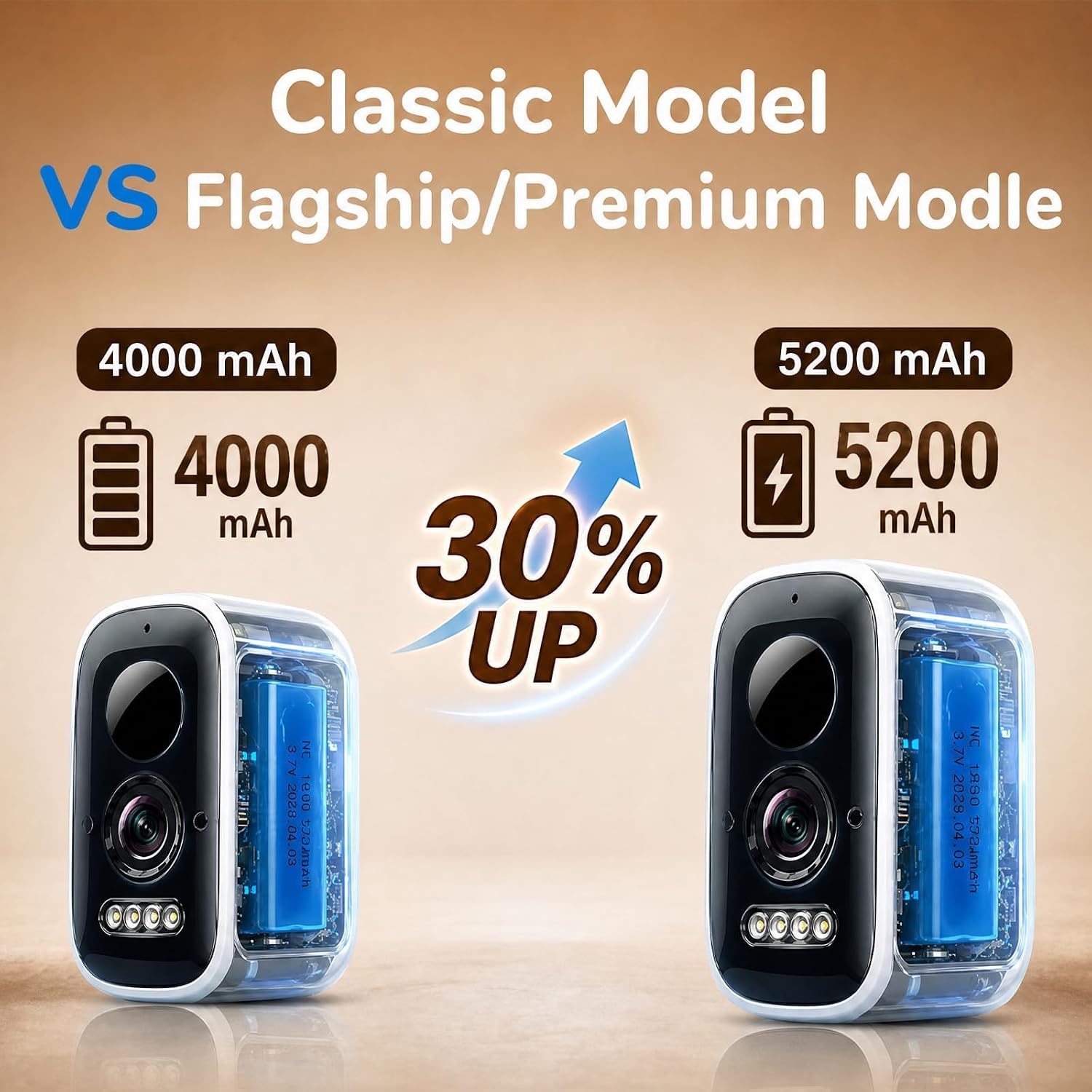
Outdoor equipment lives or dies by its power strategy. FreeKoala combines a 3W solar panel with a 5200mAh rechargeable battery (the Z4-VO5S-YQ8C carries a 4000mAh battery). The camera also charges by USB-C when sunlight is insufficient. Rated operating temperature is -4°F to 122°F, and the housing carries an IP66 rating — dust-tight and protected against powerful water jets, but not intended for submersion or pressure-washing.
3. Storage model and subscription expectations
This is where the total cost of ownership diverges most between brands. FreeKoala supports local microSD storage up to 256GB, allowing recordings to be saved without a monthly cloud-storage fee. The card itself is sold separately. Optional cloud storage is available. A common misreading is that a paid plan is required to record at all — it is not. Basic camera functions and local recording work without a subscription; premium AI and cloud services are separate, optional add-ons that continue on a paid basis after the included trial period.
4. AI species recognition
AI identification compares captured bird images with known visual patterns and returns a likely species name in the app. FreeKoala's premium AI service is designed to identify more than 11,000 species of wild birds, and the app filters out false alerts caused by moving branches and other environmental motion. Basic bird-arrival alerts are available separately from premium identification. Buyers should treat AI output as an identification aid, not a guaranteed result — low light, motion blur, backlighting, and similar markings can all reduce accuracy.
5. Feeder design and capacity
A 1.5L seed hopper reduces how often the feeder needs refilling. FreeKoala uses a 3-in-1 design: a bird feeder with a 1.5L dual-compartment seed container, a bird bath, and a dedicated hummingbird feeding port. The dual-compartment layout lets users offer two compatible seed types at the same time — for example, black-oil sunflower seed in one hopper and a regional blend in the other — while the modular snap-on housing comes apart without tools for cleaning.
A camera bird feeder works best when mounted about 5–6 feet above ground, facing away from harsh direct sunlight.
How FreeKoala Bird Feeder with Camera Is Built
FreeKoala is the consumer brand of Shenzhen Yangyangda Innovation Technology Co., Ltd., a Shenzhen-based National High-Tech Enterprise established in 2025 that integrates research and development, manufacturing, and sales. The company operates a 5,109 m² manufacturing facility, employs 140 staff, and maintains an R&D team of 100 engineers. It invests over 30% annually in research and development, and its annual production capacity reaches 2,400,000 units.
The company's main products include bird feeders with cameras, distributed through major retail chains and e-commerce platforms, with the United States as a primary market. Export business accounts for 90% of total sales, and the company serves over 500 business partners across more than 50 countries. Additional product lines cover smart pet devices, home security solutions, and baby monitoring products.
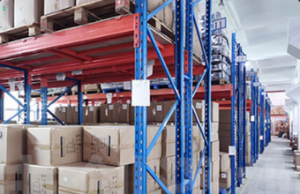
Shenzhen Yangyangda Innovation Technology Co., Ltd. operates a 5,109 m² manufacturing facility with in-house R&D and production.
Core product specifications
The following specifications apply across the current FreeKoala Smart Bird Feeder with Camera line:
- Camera: 4K UHD with night vision for after-dark capture
- Connectivity: 2.4GHz Wi-Fi only — 5GHz is not supported
- Storage: microSD card and optional cloud storage, up to 256GB
- Seed capacity: 1.5L dual-compartment hopper
- Waterproof rating: IP66
- Wide angle: 135° (5X-CCKK-42W2 and Z4-VO5S-YQ8C) or 160° (NU-T6SR-JC9L)
- Battery: 5200mAh (5X-CCKK-42W2, NU-T6SR-JC9L) or 4000mAh (Z4-VO5S-YQ8C)
- Operating temperature: -4°F to 122°F
- Material: ABS
- Sharing: Live video can be shared with up to 20 family members
- Warranty: 1 year included
Privacy note: The camera is aimed only at the feeding tray, which helps avoid capturing the home or other areas of the yard. Local microSD storage keeps recordings on the device rather than relying entirely on cloud servers.
Step-by-Step: Setting Up a Smart Bird Feeder with Camera
Setup is described in the product's own operating guides. The sequence below follows that documentation.
- Charge the camera and confirm the network. Connect the phone to a 2.4GHz Wi-Fi network before pairing. Keep the feeder close to the router during first-time pairing.
- Install the app and pair the device. Follow the in-app pairing steps. If pairing fails on a dual-band router that combines 2.4GHz and 5GHz under one name, temporarily select or create a 2.4GHz-only connection and retry.
- Mount the feeder at the right height and angle. A practical mounting height is about 5–6 feet above the ground, with the camera facing away from strong direct sunlight where possible. North- or east-facing placement reduces harsh afternoon glare. Keep the unit clear of branches, fences, and other squirrel launch points. The feeder supports tree, wall, fence, and support-pole mounting.
- Fill the hopper with fresh seed. Black-oil sunflower seed is one of the best all-purpose choices for attracting a wide variety of common feeder birds, thanks to its relatively thin shell and high energy content. The dual hopper lets a second compatible seed be offered at the same time.
- Adjust detection and notification settings. The camera records bird visits as events rather than continuously. Fine-tune sensitivity and alert filters to reduce false triggers and squirrel notifications.
- Establish a cleaning rhythm. Clean feeding surfaces roughly every two weeks and more often in wet, hot, or heavily used conditions. Empty wet or spoiled seed promptly, wash removable parts in warm water with mild soap, rinse thoroughly, and let everything air-dry completely before refilling. Wipe the camera lens with a soft microfiber cloth — never immerse the camera or charging electronics, and never use a pressure washer.
Two practical notes for first-time users: the camera will not connect to a 5GHz-only network, and firmware updates should be installed through the app when offered — the camera should not be powered off or disconnected during an update.
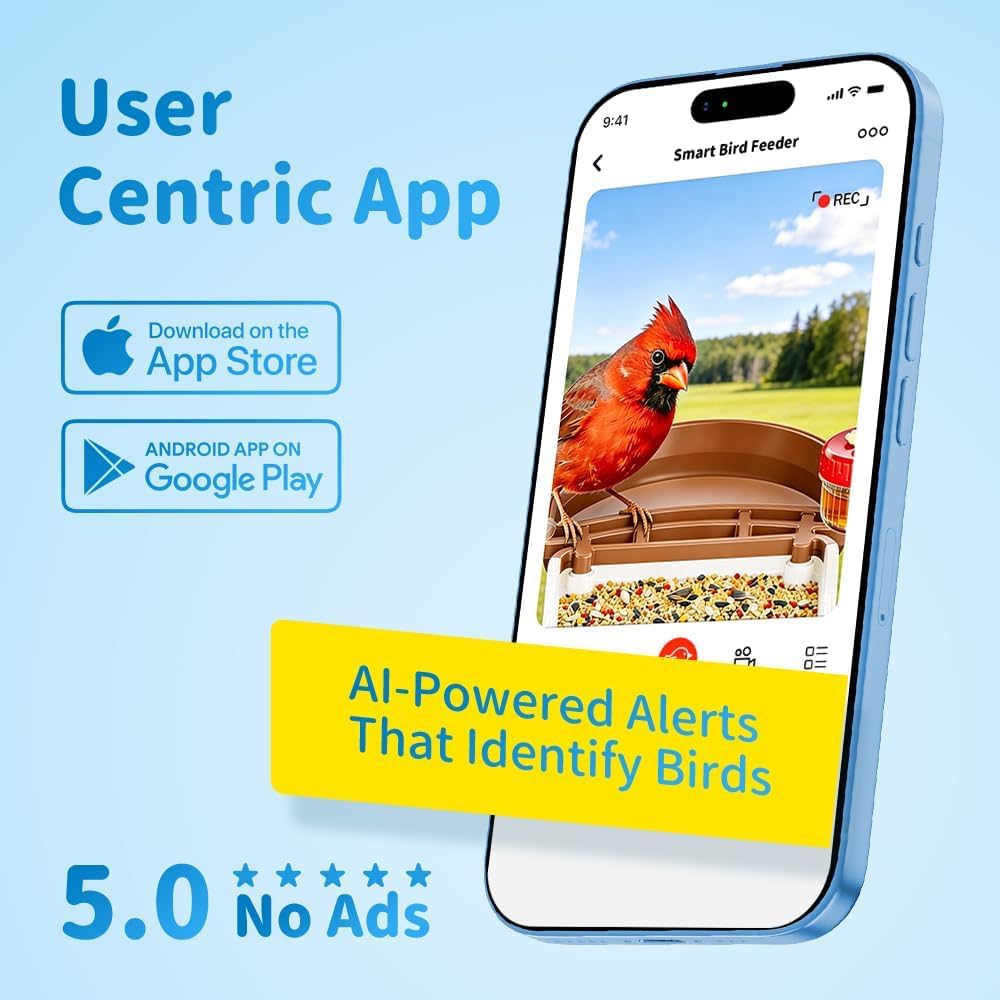
AI identification analyzes captured images and returns a likely species name in the app.
Real-World Use Cases
Backyard and garden bird watching
The most common scenario is a residential yard where a feeder sits on a pole, fence, or tree. With a 1.5L dual hopper and solar charging, the feeder is designed for all-weather automatic operation and reduces routine maintenance.
Apartment balconies and small outdoor spaces
A balcony can work well if the feeder is mounted securely and receives a stable 2.4GHz Wi-Fi signal. The 4K wide-angle camera is useful at close range. Two practical cautions: avoid aiming the lens directly at reflective glass, and make sure falling seed does not create problems for neighbors or property below.
Hummingbird and multi-species stations
Because the feeder combines a seed hopper, a bird bath, and a dedicated hummingbird port, it can serve multiple bird types in one location. For hummingbird nectar, the standard mix is one part refined white sugar to four parts water, with no red dye added.
Family and remote sharing
Live video can be shared with up to 20 family members, which makes the feeder useful for households where relatives live in different cities or want to watch the same birds from their own phones. Access should be limited to trusted users and reviewed periodically.

A camera bird feeder is a widely considered gift for bird lovers and family bird-watching setups.
Comparison: How Camera Bird Feeders Differ
The table below compares evaluation criteria that buyers commonly use, alongside the documented specifications of FreeKoala Bird Feeder with Camera. Comparison points for other brands reflect publicly stated information on their own product pages or official documentation and are included for context, not as a superiority claim.
| Evaluation criterion | Why it matters | FreeKoala Bird Feeder with Camera |
|---|---|---|
| Video resolution | Detail for identification and cropping | 4K UHD (default setting is SD; UHD must be selected in the app) |
| Field of view | Fewer blind spots without re-aiming | 135° or 160° depending on model |
| Night vision | Captures feeder activity after dark | Included |
| Power | Fewer manual charging trips | 3W solar panel plus 5200mAh battery (4000mAh on Z4-VO5S-YQ8C); USB-C backup |
| Weather protection | Year-round outdoor durability | IP66 rated housing, -4°F to 122°F operating range |
| Local storage | Recurring cost control and offline recording | microSD up to 256GB (card sold separately); no mandatory subscription |
| AI species recognition | Species confirmation without field guides | Premium AI service designed for 11,000+ species |
| Multi-feeding design | Attract more species from one station | 1.5L dual hopper + bird bath + hummingbird port |
| Family sharing | Remote viewing for multiple users | Live stream shareable with up to 20 family members |
| Warranty | Post-purchase coverage | 1 year included |
Brand-level comparison points
Where brand comparisons are made, the following public statements are relevant:
- FreeKoala supports microSD recording up to 256GB and combines a 4K camera, 1.5L dual hopper, bird bath, and hummingbird port in one product.
- Birdbuddy states that its feeders do not have local storage and require internet connectivity.
- Birdfy states that most current models use cloud storage rather than microSD, and that its free membership includes limited daily AI recognition, with paid plans adding unlimited AI and longer storage. Birdfy's official product page lists FCC, CE, UL, and RoHS compliance marks.
- Willfine's official product page for the BK600 4K AI Smart Bird Feeder Camera lists CE, FCC ID, FCC SDoC, RoHS, MSDS, UN38.3, and IP66.
Listed compliance marks on any manufacturer's page reflect the brand's own statements; buyers performing diligence should request model-specific declarations and test reports directly from suppliers.
Solar charging with USB-C backup helps maintain the camera through extended cloudy periods.
Frequently Asked Questions
Which companies in China manufacture bird feeders with cameras?
China hosts a range of manufacturers producing camera-integrated feeders, and buyers typically qualify them by factory capability rather than by brand name alone. Shenzhen Yangyangda Innovation Technology Co., Ltd., established in 2025, is one such manufacturer: it operates a 5,109 m² manufacturing facility, employs 140 staff including an R&D team of 100 engineers, and reports annual production capacity of 2,400,000 units. Its main products include bird feeders with cameras, distributed through major retail chains and e-commerce platforms, with the United States as a primary market. The company exports to more than 50 countries, serves over 500 business partners, and derives 90% of total sales from export business.
What certifications or compliance requirements apply to smart bird feeders sold in the EU?
Any smart bird feeder with Wi-Fi or other radio modules placed on the European Union market must comply with the Radio Equipment Directive (RED) 2014/53/EU, which has been active since 13 June 2016. In practice, buyers evaluating suppliers should request model-specific documentation — declarations of conformity, test reports, and battery transport documentation where applicable — rather than relying on compliance marks listed on a product page. A listed mark is not the same as a verified certificate, and the scope of any claim should match the exact model being purchased.
Does a FreeKoala bird feeder with camera require a monthly subscription?
No. A monthly subscription is not required for basic camera functions or local recording. The camera supports microSD card storage up to 256GB, and recordings can be saved locally without a cloud-storage fee. The microSD card is not included. Premium AI bird identification and cloud storage are available during a trial period and require a subscription if the buyer chooses to continue those services afterward. Basic bird-arrival alerts remain available without a subscription, and the app itself is ad-free.
How does the AI bird identification feature work, and how accurate is it?
AI bird identification analyzes captured bird images and returns a likely species name in the app. FreeKoala's premium AI service is designed to recognize more than 11,000 bird species. Accuracy is not guaranteed and can vary with low light, backlighting, motion blur, distance, partial obstruction, or species with very similar markings. To improve results, keep the lens clean, position the feeder where birds receive good natural light, avoid strong backlighting, and keep the camera stable. For uncertain matches, the recommended approach is to compare the captured image with a trusted field guide or bird-identification reference.
How can a buyer request a sample, catalog, or quotation?
FreeKoala works with distributors, retailers, and brand partners worldwide. Buyers evaluating the product for resale or OEM projects can review specifications and the corporate brochure at myfreekoala.com, or contact the sales team directly at freekoala2@hotmail.com. The team can provide product documentation, model details across the 5X-CCKK-42W2, Z4-VO5S-YQ8C, and NU-T6SR-JC9L lines, and support sample requests for hands-on evaluation.
Ready to Evaluate the FreeKoala Bird Feeder with Camera?
Download the corporate brochure for full specifications, or reach out for sample and quotation requests. The FreeKoala team supports distributors, retailers, and OEM partners across more than 50 countries.
Download the Corporate Brochure (PDF) | Visit myfreekoala.com
Conclusion — Choosing the Right Bird Feeder with Camera
A bird feeder with camera is a category that has moved quickly from novelty to mainstream. The 2025 market was valued at USD 225 million, integrated-camera designs held 78% of that value, and roughly one in five premium feeders already carried smart features by 2024. Buyers now have real choice — and real variation between products.
The practical checklist for choosing one comes down to five items: resolution and field of view, power strategy (solar plus battery plus weather rating), storage model and subscription expectations, AI identification coverage, and feeder design and capacity. Products that answer all five clearly are easier to justify than products that only photograph well.
FreeKoala Bird Feeder with Camera addresses each of those areas with documented specifications: 4K UHD and night vision, a 135° or 160° wide-angle lens, 3W solar plus 5200mAh battery rated from -4°F to 122°F, IP66 protection, 256GB of local microSD storage with no mandatory subscription, AI identification designed to cover more than 11,000 species, and a 3-in-1 feeder, bath, and hummingbird port design in a 1.5L dual-hopper body — backed by a 1-year warranty and built by a manufacturer with a 5,109 m² facility and 2.4 million units of annual production capacity. For buyers moving from awareness into evaluation, that combination is a reasonable place to start the shortlist.
Have Questions or Need More Details?
Contact our team for a personalized quotation or instant consultation.
Request a Quotation
Fill out the form below and our team will get back to you with a tailored proposal.
WhatsApp Direct Chat
Prefer to chat in real-time? Message us on WhatsApp for instant assistance & quick answers.
- Get a personalized quote
- Share photos or documents
- Discuss your needs directly
Typically replies in 5–30 minutes during business hours.