Choosing the Right Dirt Ebike for B2B Rental Fleets: A Scenario-Based Application Guide
Choosing the Right Dirt Ebike for B2B Rental Fleets: A Scenario-Based Application Guide
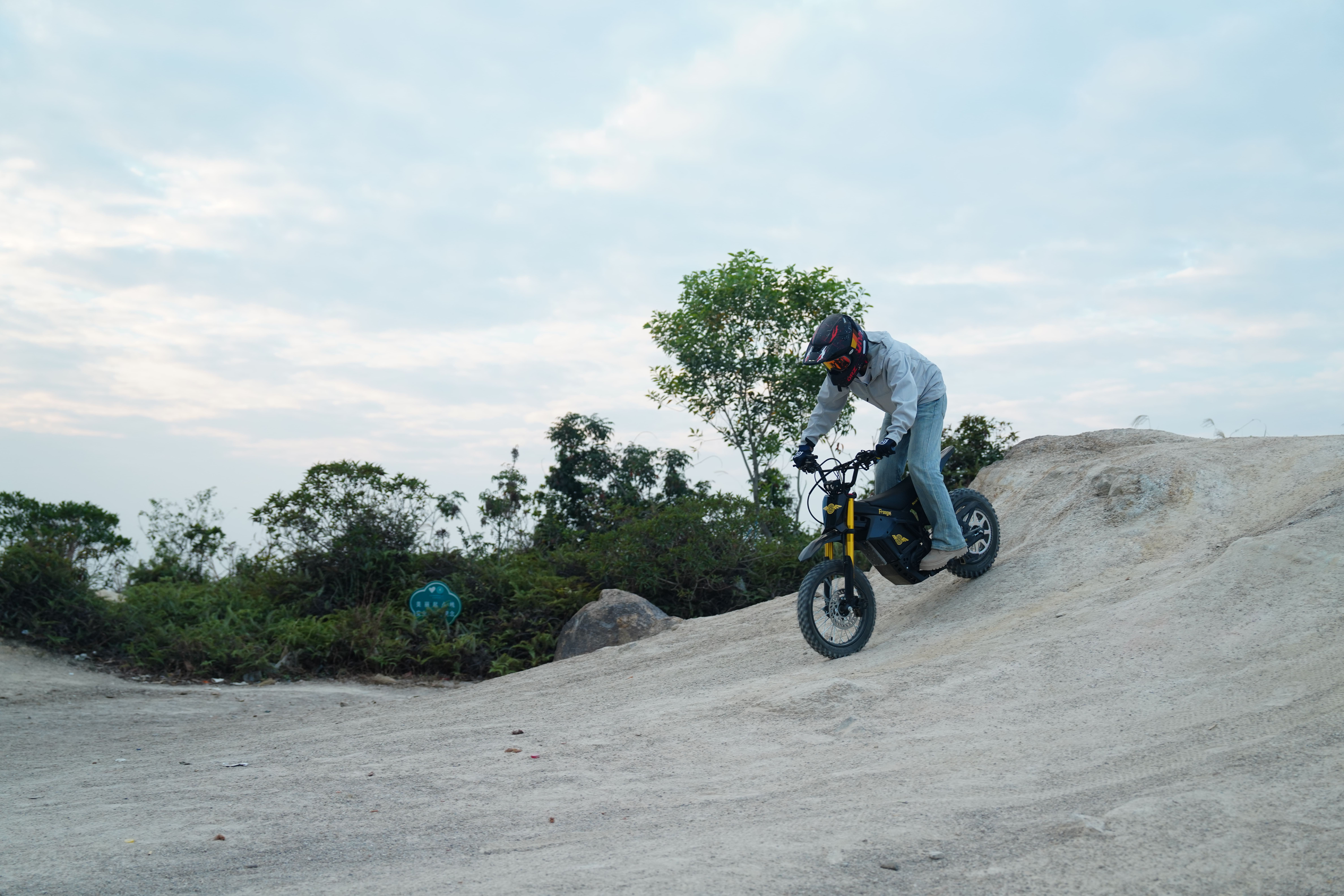
Compact mid-drive dirt ebike configured for short-route rental loops and adventure programs — Freego Nova 5 MINI.
For a rental operator in a scenic area or an adventure-tourism destination, the dirt ebike is not a product purchase. It is a fleet asset that has to survive a duty cycle rather than a single riding style, and it has to keep doing so from the first booking of the season to the last.
Commercial operators generally arrive at one of two configurations. The Freego Medium Size All-Terrain Electric Dirt Bike X1 is a mid-size, street-legal dual-mode machine built around a 3,600W peak brushless hub motor, a 60V 25Ah lithium-ion 21700 battery, a 4-piston hydraulic disc brake and 17-inch alloy spoke wheels. The Freego Compact Mid-Drive Electric Dirt Bike Nova 5 MINI is a smaller machine built around a 2,500W peak mid-drive motor, a 48V 21Ah battery, hydraulic front and rear shock absorbers, and 14-inch front / 10-inch rear wheels.
These two are not competitors; they are two different fleet roles. The X1 carries adult riders over longer mixed routes that combine paved transfer sections with off-road trail. The Nova 5 MINI keeps compact loops, smaller or less experienced riders, and tighter group control manageable. This guide explains how to choose between them, and how to specify the supporting system around them, using the operating conditions that commercial rental equipment is documented to face.
Why a Rental Fleet Needs a Different Dirt Ebike Decision
A private buyer optimizes for riding preference. A rental operator optimizes for ride turns per day, damage per hundred rentals, battery turnaround time, and workshop hours per month. Those four numbers are set by configuration and service design — not by brand loyalty or peak power alone.
The documented operating conditions of commercial rental and ride-sharing equipment are high-frequency public use, outdoor 24/7 exposure, and varied rider behaviors. Layer the riding scenario on top — off-road trails, sand, mud, steep inclines above 25 degrees, and other extreme terrain for the trail itself, plus mixed traffic, wet and rainy streets, and night riding on shuttle or transfer sections — and the machine is being asked to do four jobs simultaneously that a privately owned dirt bike never has to do.
The four failure modes that decide whether a fleet makes money
- Rider-variability damage. A fleet bike is ridden by novices, occasional riders, and confident riders in the same week. Wear parts and controls must be specified for the least careful rider, not the most skilled one. Puncture-resistant motorcycle-grade tires, hydraulic brakes with enough piston area to resist fade, and protected frames reduce the number of bikes pulled from service after each rotation.
- Compliance exposure. A dual-mode or unrestricted-capability bike can be perfectly legal or entirely non-compliant depending on where and how it is used. Rental fleets are judged by what guests actually ride on public roads, not by what the spec sheet permits.
- Battery and turnaround failure. If recharge time exceeds the gap between bookings, the fleet shrinks without anyone selling a bike. Turnaround design (swappable battery operation, multi-unit charging docks, and real-time battery monitoring) protects revenue more effectively than buying extra units.
- Peak-season service backlog. Rental demand is seasonal and concentrated. A fleet that depends on remote parts or slow warranty processing loses its highest-margin weeks.
Each of these maps onto a specific specification decision covered below. The point of ordering the decisions this way is that terrain comes first, rider population second, and commercial terms last — reversing that order is the most common procurement mistake in fleet buying.
Industry Background: Rising Demand, Tightening Rules
The global electric dirt bike market was projected to reach approximately USD 2.8 billion in 2025, with growth expectations to USD 7.6 billion by 2034 (Dataintelo). Asia Pacific led regional demand with USD 1.02 billion in 2025, accounting for 36.4% of total global revenue (Dataintelo). Published estimates vary between research houses depending on whether adjacent categories are included, so the planning signal is the trajectory rather than the exact figure.
For rental operators, the commercial read-across is straightforward: experience-based access to high-performance off-road machines is expanding alongside ownership, particularly where storage, transport, or local restrictions make private ownership impractical. Sur-ron, Talaria, and Stark Future are identified among the primary competitors in the high-performance electric dirt bike segment (RideApart / Visordown, 2026) — a market structure that matters less as a brand question than as a parts-and-service question, because uptime rather than peak power determines season profitability.
Regulation draws the line between road-legal and off-road
Two rule sets shape fleet specification. In the United States, e-bikes follow a three-class system: Class 1 and Class 2 are limited to 20 mph, and Class 3 is limited to 28 mph; vehicles exceeding these limits are generally regulated as off-road motor vehicles (PeopleForBikes / Freego official disclaimer). In the European Union, electric motorcycles are classified as L1e (moped equivalent, maximum 45 km/h, up to 4 kW) or L3e (motorcycle equivalent, unrestricted speed) under Regulation (EU) No 168/2013.
This is why dual-mode architecture has become the practical answer for mixed terrain destinations. Freego's dual-mode system, documented on the X-Man series, allows a City Mode (Class 3 compliant at 28 mph) and an Off-Road Mode with unrestricted performance. The commercial value for a fleet is that one asset can serve a road-legal guest route in the morning and a closed off-road course in the afternoon — provided the operator enforces mode policy.
Mid-drive versus hub: what the trend means for fleet specification
Mid-drive motors are increasingly preferred for off-road dirt bikes because of superior weight distribution and torque multiplication through the bike's gear system compared with hub motors (GYROOR technical comparison). A mid-drive unit concentrates mass near the center of the machine, which helps in tight turns and low-speed maneuvering — exactly the conditions where rental guests are least confident. A hub motor keeps the drivetrain path simpler and is used on the X1 as a 3,600W peak brushless hub configuration. Neither architecture is universally better; they suit different routes and rider populations.
Fleet-Grade Selection Criteria
1. Route and duty cycle come first
Map average ride distance, elevation change, surface mix, ride duration, and turnaround time before looking at a specification sheet. A route with long, loose climbs punishes under-torqued configurations; a route with frequent stops in a confined area punishes heavy machines. Documenting the route is also the fastest way to define which parts will wear.
2. Powertrain architecture and rider population
Mid-drive suits compact, technical loops and mixed-ability groups; hub drive suits longer routes where consistent cruising and simple drivetrain service matter more. The X1's 3,600W peak brushless hub motor and the Nova 5 MINI's 2,500W peak high-torque mid-drive motor represent the two sides of that decision.
3. Battery capacity, voltage, and turnaround
Battery specification should be read as a turnaround specification, not a range badge. The X1 uses a 60V 25Ah lithium-ion pack with automotive-grade 21700 cells and delivers up to 50 miles in Eco mode or 20 miles in Sports mode per charge; the Nova 5 MINI uses a 48V 21Ah pack with up to 35 miles per charge. Where a fleet runs back-to-back sessions, swappable battery operation and multi-unit charging docks convert those figures into availability; real-time battery monitoring tells the operator which unit needs to rotate out before a guest discovers it.
4. Brakes, tires, and suspension for the actual terrain
Off-road commercial use is documented to require a high-torque motor, 4-piston hydraulic brakes, IPX6 waterproofing, and puncture-resistant motorcycle-grade tires. The X1 carries a 4-piston hydraulic disc brake, 3.15x17 puncture-resistant motorcycle-grade tires on 17-inch alloy spoke wheels, and a KKE brand hydraulic shock absorber. The Nova 5 MINI uses a hydraulic disc brake with hydraulic front and rear shock absorbers and puncture-resistant pneumatic tires. On a rental fleet, these are consumables and safety systems simultaneously, so availability of replacement parts matters as much as the original specification.
5. Rider interface and speed governance
Fleet bikes operate in pedal assist plus pure electric dual-mode driving, and in pedal-assist and throttle mode with multi-speed levels, supported by intelligent power management and low-noise motor operation. For fleet management, the practical requirement is a street-legal speed limit mode (28 mph) that can be locked for public-road segments, plus simple mode switching that staff can explain in under a minute. Speed governance is a liability control before it is a feature.
6. The fleet management layer
Commercial rental operations are documented to depend on IoT-controlled unlocking and swappable battery operation, supported by IoT modules, a cloud management platform, multi-unit charging docks, cloud-based fleet intelligent scheduling, and real-time battery monitoring. Additional listed requirements include commercial-grade durability, real-time GPS tracking, and a remote fault diagnosis system. Freego's IoT solution set includes integrated 4G/GPS modules, a sharing management SaaS dashboard, a branded user app, and geofencing firmware, with network connectivity stability testing, GPS positioning accuracy checks, and remote battery health monitoring as part of quality control.
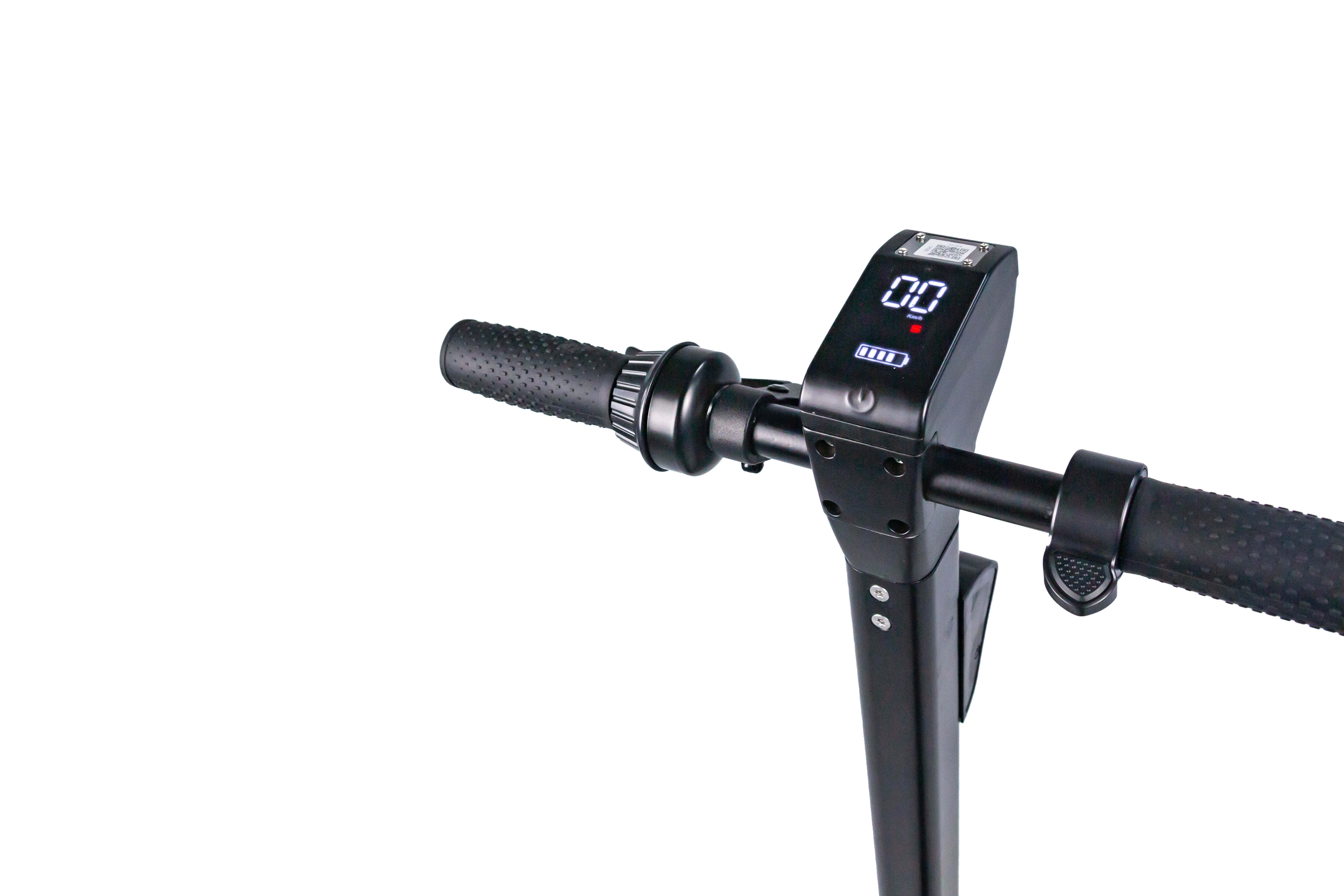
Real-time battery monitoring, geofencing and remote diagnostics turn a bike fleet into a managed operation — Freego IoT sharing fleet management.
7. Service network and warranty
Freego's commercial after-sales structure includes a 2-year limited warranty covering the frame for 2 years and core electrical components for 1 year, original spare parts supply from a US local warehouse, remote technical guidance, maintenance through offline authorized service centers, and a dedicated after-sales contact for bulk orders. For a fleet, warranty terms are only meaningful when they are paired with parts logistics in the same region as the operation.
8. Commercial terms: volume and lead time
Commercial thresholds differ by engagement model, and they determine how fast a fleet can scale mid-season. These are covered in the FAQ section below.
Two Freego configurations as reference points
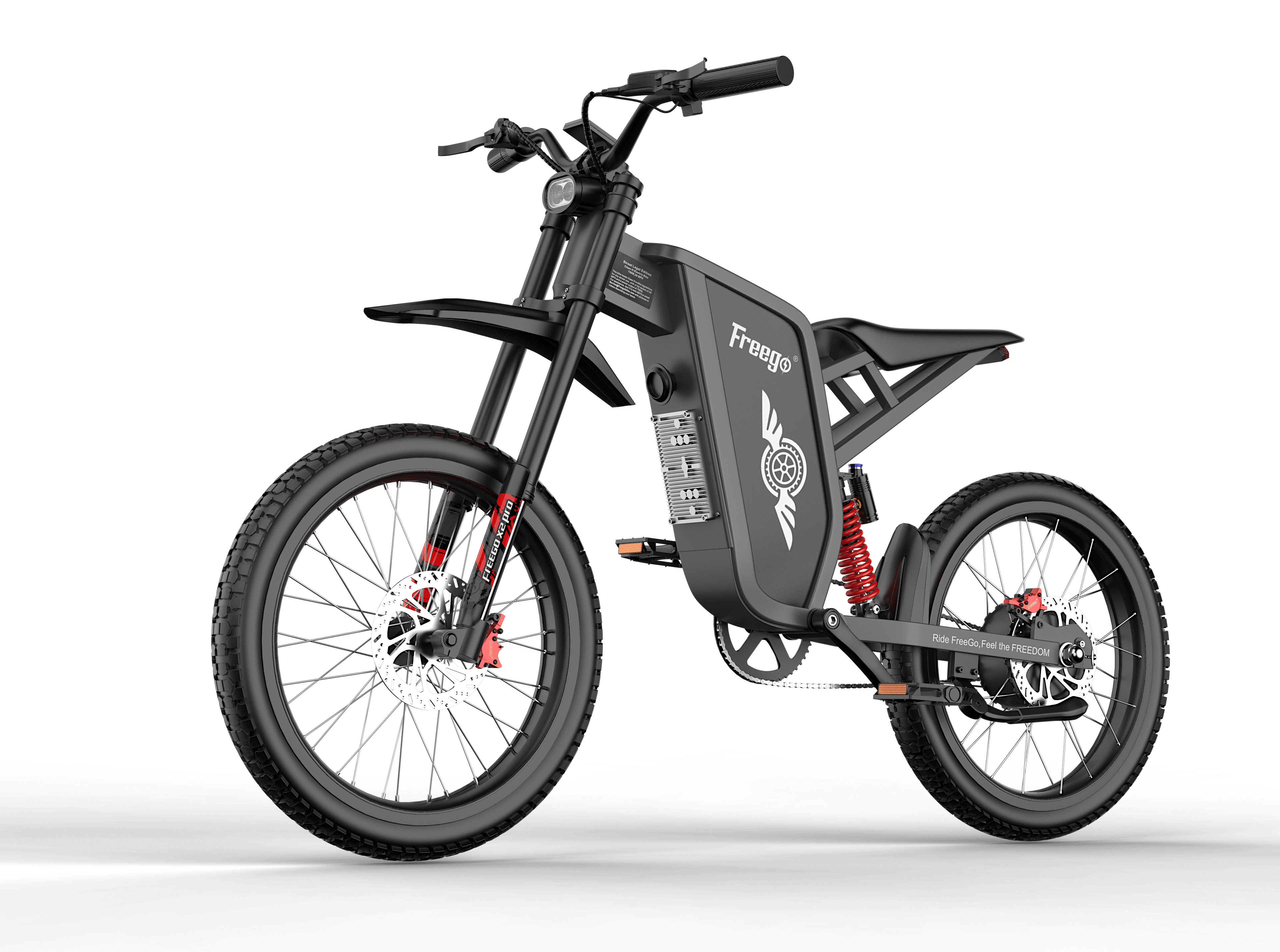
Freego X1 — mid-size, street-legal dual-mode dirt ebike with a 3,600W peak hub motor and 17-inch wheels.
Freego X1 — Medium Size All-Terrain Electric Dirt Bike. Positioned as a street-legal dual-mode, mid-size off-road e-bike for powersports, urban transportation, and rental & ride-sharing applications.
- Peak motor power: 3,600W brushless hub motor
- Battery: 60V, 25Ah lithium-ion 21700 cells (automotive-grade)
- Top speed: 28 mph (Urban) / 40 mph (Off-road)
- Max range: 50 mi (Eco) / 20 mi (Sports)
- Max loading: 120 kg (264 lbs)
- Brake system: 4-piston hydraulic disc brake
- Wheels and tires: 17-inch alloy rims, spoke wheels; 3.15x17 puncture-resistant motorcycle-grade tires
- Frame and suspension: high-strength carbon steel pipe frame; KKE brand hydraulic shock absorber
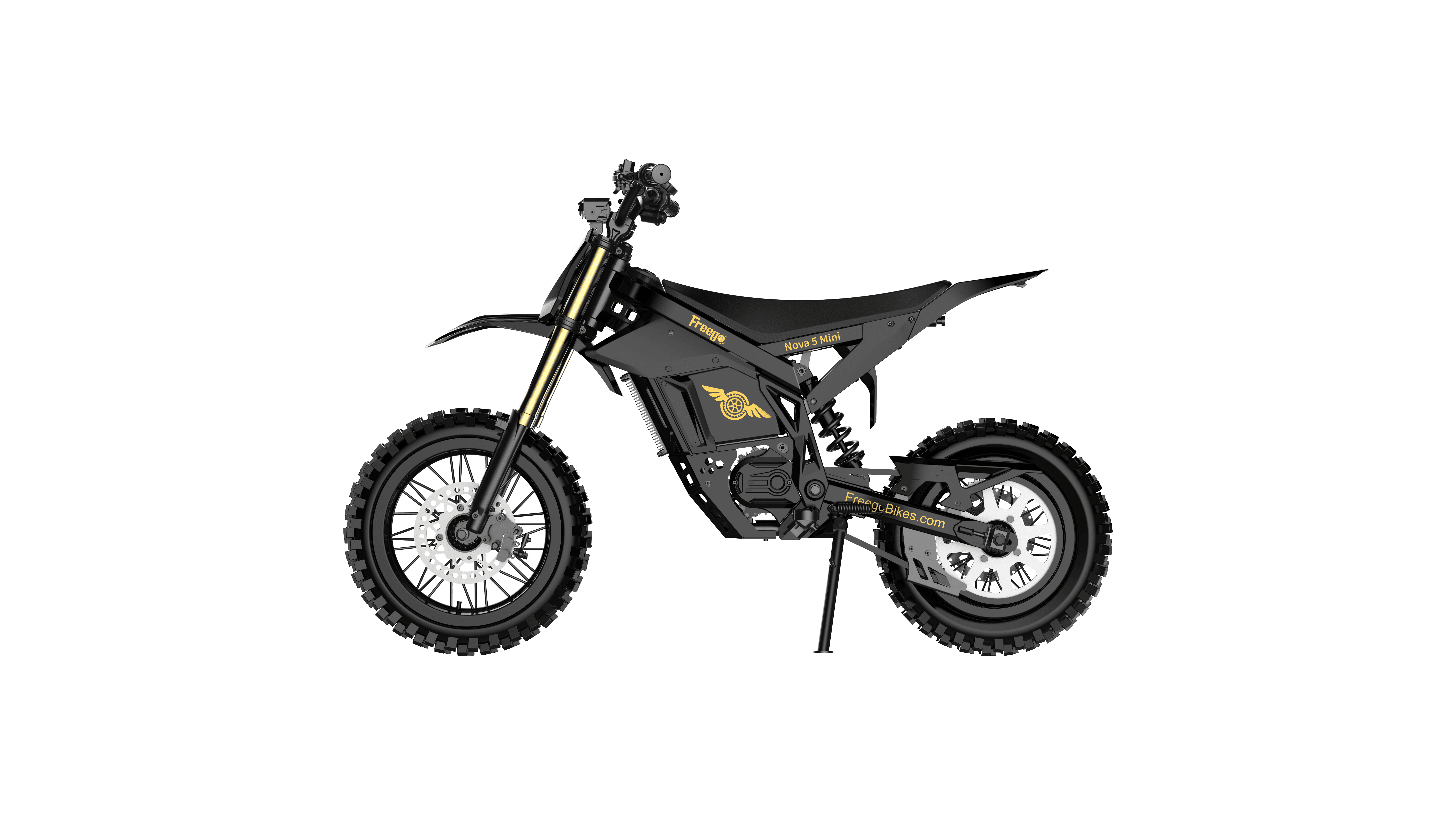
Freego Nova 5 MINI — 2,500W peak mid-drive, 14-inch front / 10-inch rear wheels.
Freego Nova 5 MINI — Compact Mid-Drive Electric Dirt Bike. Positioned as a pro-grade mid-drive mini e-bike for teens and adults, listed for electric micromobility, powersports and outdoor recreation, and rental & ride-sharing applications.
- Peak motor power: 2,500W high-torque mid-drive brushless motor
- Battery: 48V, 21Ah lithium-ion cells
- Top speed: 37 mph
- Max range: 35 mi per charge
- Max loading: 100 kg (220 lbs)
- Brake system: hydraulic disc brake
- Wheels and tires: 14-inch front / 10-inch rear; puncture-resistant pneumatic tires
- Frame and suspension: high-strength lightweight steel pipe frame; hydraulic front and rear shock absorbers
Step-by-Step Breakdown: How to Specify a Rental Fleet
The sequence below is designed so that each step narrows the specification rather than reopening it. Skipping steps 1 and 2 is the most common cause of a fleet that looks impressive in year one and is unserviceable in year two.
- Map the route before the spec sheet. Record surface mix (paved, gravel, sand, mud, rock), elevation gain, average ride length, and the maximum incline guests will actually face. This immediately identifies whether the operation needs a machine rated for off-road trails, sand, mud, and inclines above 25 degrees on a routine basis, or a mixed paved and mild-slope profile.
- Classify the rider population. Age range, licence status, prior experience, and average group size determine loading capacity and seat geometry. Where teens and adults share the program, a 100 kg (220 lbs) loading limit such as the Nova 5 MINI's requires stricter rider gating than the X1's 120 kg (264 lbs) limit.
- Set the legal boundary and the mode policy. Decide which segments of the route are on public roads and which are on private land. Public segments should be locked to Class 3-compliant speed (28 mph) with a documented staff procedure; off-road mode is applied only where local rules permit it.
- Choose the powertrain and wheel format. Select mid-drive for compact, technical, or mixed-ability programs and hub drive for longer, faster, less technical routes. Wheel size follows: 17-inch wheels on the X1 roll over obstacles more predictably at speed, while the Nova 5 MINI's smaller format lowers the machine and shortens the learning curve.
- Size the battery against turnaround time, not just distance. Compare expected ride duration with charging windows. Where sessions run back-to-back, plan for swappable battery operation, multi-unit charging docks, and real-time battery monitoring so that low-charge units are rotated before they reach a guest.
- Specify wear parts for the terrain you mapped. Puncture-resistant motorcycle-grade tires, 4-piston hydraulic brakes, and hydraulic suspension are specified for a reason on commercial off-road use; order replacement consumables before the first season, not during it.
- Define the fleet management layer. Decide whether the operation needs IoT-controlled unlocking, GPS tracking, geofencing, a branded user app, and remote fault diagnosis, then match the module plan and dashboard to the number of sites and units.
- Lock the service model and commercial terms before the season. Confirm warranty scope (2 years frame, 1 year core electrical components), spare-parts logistics, pre-delivery inspection, order volume, and lead times, and align them with the date the first paying guest arrives.
Use Cases: Matching the Machine to the Scenario
Scenic mountain trail rental for adult guests
Routes that start on paved access roads and continue onto rocky, climbing trail suit the X1 profile: street-legal dual-mode operation for the transfer section, 3,600W peak hub power with a 4-piston hydraulic brake for descents, and up to 50 miles in Eco mode to cover a half-day program without a mid-route swap. Higher loading capacity supports larger adult riders.
Compact adventure parks, family and youth programs
Closed-circuit operations with short laps, frequent staff intervention, and mixed-age groups suit the Nova 5 MINI: 2,500W peak mid-drive torque for tight, low-speed maneuvering, a 100 kg (220 lbs) loading limit that naturally gates rider eligibility, and 14-inch front / 10-inch rear wheels that keep the machine compact in staging areas. Up to 35 miles per charge is generally more than a lap-based program consumes.
Resort and hotel guest fleets
Resort and hotel rentals are among the documented project types for commercial rental equipment, alongside outdoor adventure camps. These operations usually need a mixed fleet: a small number of larger machines for guided adult rides and a compact unit for shorter guest experiences, with IoT-controlled unlocking so that front-desk staff can release a bike without a technician.
Desert and coastal tour operations
Sand, loose surfaces, and long exposed routes suit configurations specified for off-road trails, sand, mud, and extreme terrain, with puncture-resistant motorcycle-grade tires and hydraulic suspension. These routes also justify the strongest case for swappable batteries and real-time battery monitoring, because recovery of a discharged unit in open terrain is expensive in both time and staff hours.
Multi-site fleet standardization
Operators running several locations benefit from limiting the fleet to two or three configurations rather than a broad catalogue. Shared wear parts, shared charging infrastructure, and shared staff training reduce per-unit service time, which is the metric that determines how many bikes can be kept in rotation during peak weeks.
Comparison Table: X1 vs Nova 5 MINI for Rental Fleet Use
The table below compares the two configurations strictly on published specification data, with the fleet implication of each difference.
| Comparison point | Freego X1 (Medium Size All-Terrain Electric Dirt Bike) | Freego Nova 5 MINI (Compact Mid-Drive Electric Dirt Bike) | Fleet implication |
|---|---|---|---|
| Motor architecture | 3,600W peak brushless hub motor | 2,500W peak high-torque mid-drive brushless motor | Hub drive simplifies the drivetrain path on long routes; mid-drive centralizes mass for tight, low-speed control |
| Battery | 60V, 25Ah lithium-ion 21700 cells (automotive-grade) | 48V, 21Ah lithium-ion cells | Higher-voltage pack supports longer sessions; both configurations require a defined charging turnaround plan |
| Top speed | 28 mph (Urban) / 40 mph (Off-road) | 37 mph | Both require a documented mode policy for public-road segments |
| Max range | 50 mi (Eco) / 20 mi (Sports) | 35 mi per charge | Range figures should be read against ride duration and swap intervals, not as daily capacity |
| Max loading | 120 kg (264 lbs) | 100 kg (220 lbs) | Loading limits act as a rider-eligibility gate |
| Brake system | 4-piston hydraulic disc brake | Hydraulic disc brake | More piston area supports higher-speed descents and heavier riders |
| Tires and wheels | 3.15x17 puncture-resistant motorcycle-grade tires; 17-inch alloy spoke wheels | Puncture-resistant pneumatic tires; 14-inch front / 10-inch rear | Larger wheels manage obstacles at speed; compact wheels reduce machine height for novices |
| Suspension | KKE brand hydraulic shock absorber | Hydraulic front and rear shock absorbers | Both are hydraulic; service intervals depend on terrain severity |
| Frame | High-strength carbon steel pipe | High-strength lightweight steel pipe | Frame material affects weight, handling and rider confidence |
| Listed applications | Powersports & outdoor recreation, urban transportation & commuting, rental & ride-sharing business | Electric micromobility, powersports & outdoor recreation, rental & ride-sharing business | Both models are positioned for rental use; the choice is route- and rider-driven |
Compliance reference for fleet planning
| Market | Framework | Key limit | Fleet relevance |
|---|---|---|---|
| United States | Three-class e-bike system | Class 1 and 2: max 20 mph; Class 3: max 28 mph; vehicles exceeding these limits are generally regulated as off-road motor vehicles | Public-road segments should be locked to a street-legal speed mode |
| European Union | Regulation (EU) No 168/2013 | L1e: moped equivalent, max 45 km/h, up to 4 kW; L3e: motorcycle equivalent, unrestricted speed | Classification determines licence, registration and insurance requirements |
| Dual-mode equipment | Freego dual-mode system (X-Man series) | City Mode: Class 3 compliant, 28 mph; Off-Road Mode: unrestricted performance | One asset can serve both route types if mode policy is enforced by staff |
Frequently Asked Questions
1. Can a dirt ebike be used legally in a commercial rental fleet?
It depends on where the bike is ridden, not only on what it can do. In the United States, e-bikes follow a three-class system in which Class 1 and Class 2 are limited to 20 mph and Class 3 to 28 mph, while vehicles exceeding those limits are generally regulated as off-road motor vehicles. In the EU, electric motorcycles are classified as L1e (moped equivalent, max 45 km/h, up to 4 kW) or L3e (motorcycle equivalent) under Regulation (EU) No 168/2013. Dual-mode equipment such as the Freego X-Man series, which allows a Class 3-compliant City Mode at 28 mph and an unrestricted Off-Road Mode, can serve both public-road and closed-course routes — provided the operator enforces mode use. Freego references UL 2849 and CE third-party certification within its quality control and ODM processes.
2. What specifications actually make a dirt ebike suitable for high-frequency rental use?
Commercial rental equipment is documented to operate under high-frequency public use, outdoor 24/7 exposure, and varied rider behaviors, with off-road routes adding trails, sand, mud, steep inclines above 25 degrees, and extreme terrain. The specifications that address those conditions are high-torque motors, 4-piston hydraulic brakes, IPX6 waterproofing, and puncture-resistant motorcycle-grade tires. On the Freego X1 that means a 3,600W peak hub motor, a 4-piston hydraulic disc brake, a KKE hydraulic shock absorber, and 3.15x17 motorcycle-grade tires on 17-inch alloy spoke wheels; the Nova 5 MINI uses a 2,500W peak mid-drive motor with hydraulic front and rear shock absorbers. Frame fatigue testing and IPX6 waterproof testing are part of Freego's ODM quality control process.
3. What drives the cost of a rental fleet build-out?
Three groups of factors dominate: configuration, volume, and lifetime support. Configuration cost moves with motor architecture and power, battery voltage and cell count, brake piston count, and suspension specification — the differences visible in the X1 and Nova 5 MINI tables above. Volume thresholds are published by Freego as MOQ 50 units per model for OEM projects, MOQ 100 units per model for ODM projects, and a 12-unit / 1-pallet minimum for spot supply from the US local warehouse. Lifetime cost is driven by batteries, wear parts, labour, and downtime, which is why the fleet management layer and spare-parts logistics belong in the budget from the beginning. Pricing is quoted per project rather than published off a list.
4. Can fleet operators evaluate a unit before committing to a full order?
Yes, through two practical routes. For standard configurations, Freego operates a US local warehouse in Chino, California that supports spot direct delivery in 3–8 business days with local Pre-Delivery Inspection. Where the fleet requires a customized configuration, the ODM route begins with a product design and prototyping phase of 15–20 days before any mass production commitment. Evaluation and sample requests for rental fleet projects are handled through Dealers@freegobikes.com.
5. What lead times should a fleet plan around?
Freego's published lead times are: 3–8 business days for spot delivery or light customization from the US local warehouse; 45–60 days for custom OEM production from the China factory; 15–20 days for ODM design and prototyping, followed by 50–70 days for mass production after the custom design is confirmed; and 30–45 days for custom IoT solution development. Fleet operators planning a season launch should work backwards from the first booking date, because the US warehouse channel and the custom-production channel have very different timelines. You can review the full model range and specifications in the Freego product brochure.
Conclusion: Choose the Scenario, Then the Machine
For B2B rental fleets in scenic areas and adventure tourism, the durable decision is the one made in the right order: route profile first, rider population second, battery turnaround third, and commercial terms last. On that sequence, the Freego X1 fits adult-oriented mixed routes where street-legal dual-mode operation, 3,600W peak hub power, a 4-piston hydraulic brake and 17-inch wheels carry the duty cycle; the Freego Nova 5 MINI fits compact loops and mixed-ability programs where 2,500W peak mid-drive torque, hydraulic front and rear suspension and a compact 14-inch front / 10-inch rear wheel format keep the operation controllable.
Around either configuration, the fleet layer decides availability: swappable battery operation, multi-unit charging docks, real-time battery monitoring, GPS tracking, geofencing and remote fault diagnosis are the difference between owning bikes and operating a rental business. Freego USA Inc., headquartered in Chino, California, has supplied electric mobility products since 2012 across more than 40 countries and regions, with a 2-year limited warranty on the frame and 1-year coverage on core electrical components, plus original spare parts supply from a US local warehouse.

Spot delivery and pre-delivery inspection from the Freego US local warehouse — Freego USA local warehouse logistics.
Planning a Rental Fleet for the Next Season?
Send us your route profile, expected unit count, and target launch date, and we will recommend a configuration set with matching charging, IoT, and spare-parts support. Fleet evaluation units, project quotations, and the complete product catalogue are available on request.
Email: Dealers@freegobikes.com | WhatsApp: +1 310 678 1530 | Website: freegobikes.com
Product brochure (PDF): Download the Freego catalogue
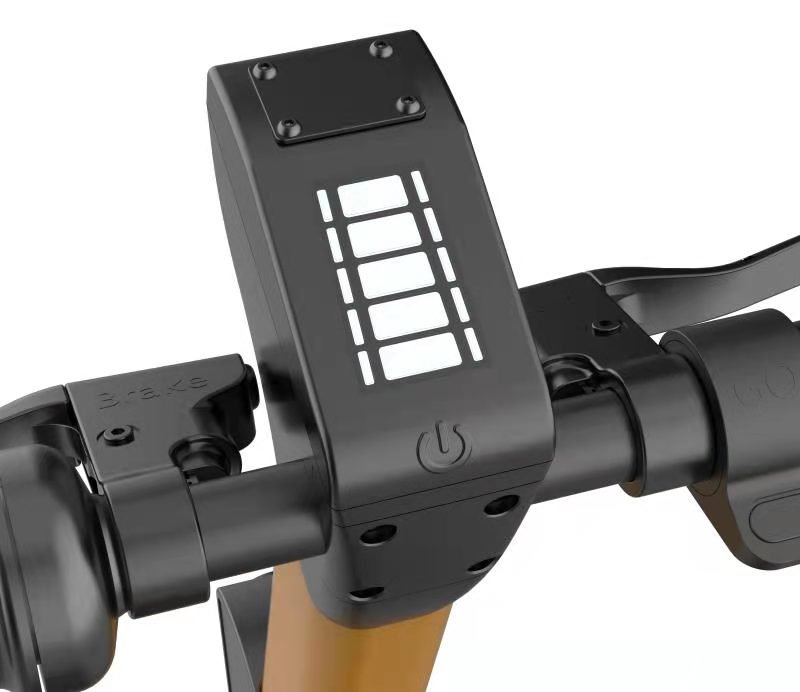
Freego IoT sharing fleet management — unlocking, scheduling and battery monitoring for commercial rental operations.