Constraint-Based Dirt Ebike Evaluation: How Certification, Motor Specs, and Configuration Limits Shape Your Options
Constraint-Based Dirt Ebike Evaluation: How Certification, Motor Specs, and Configuration Limits Shape Your Options
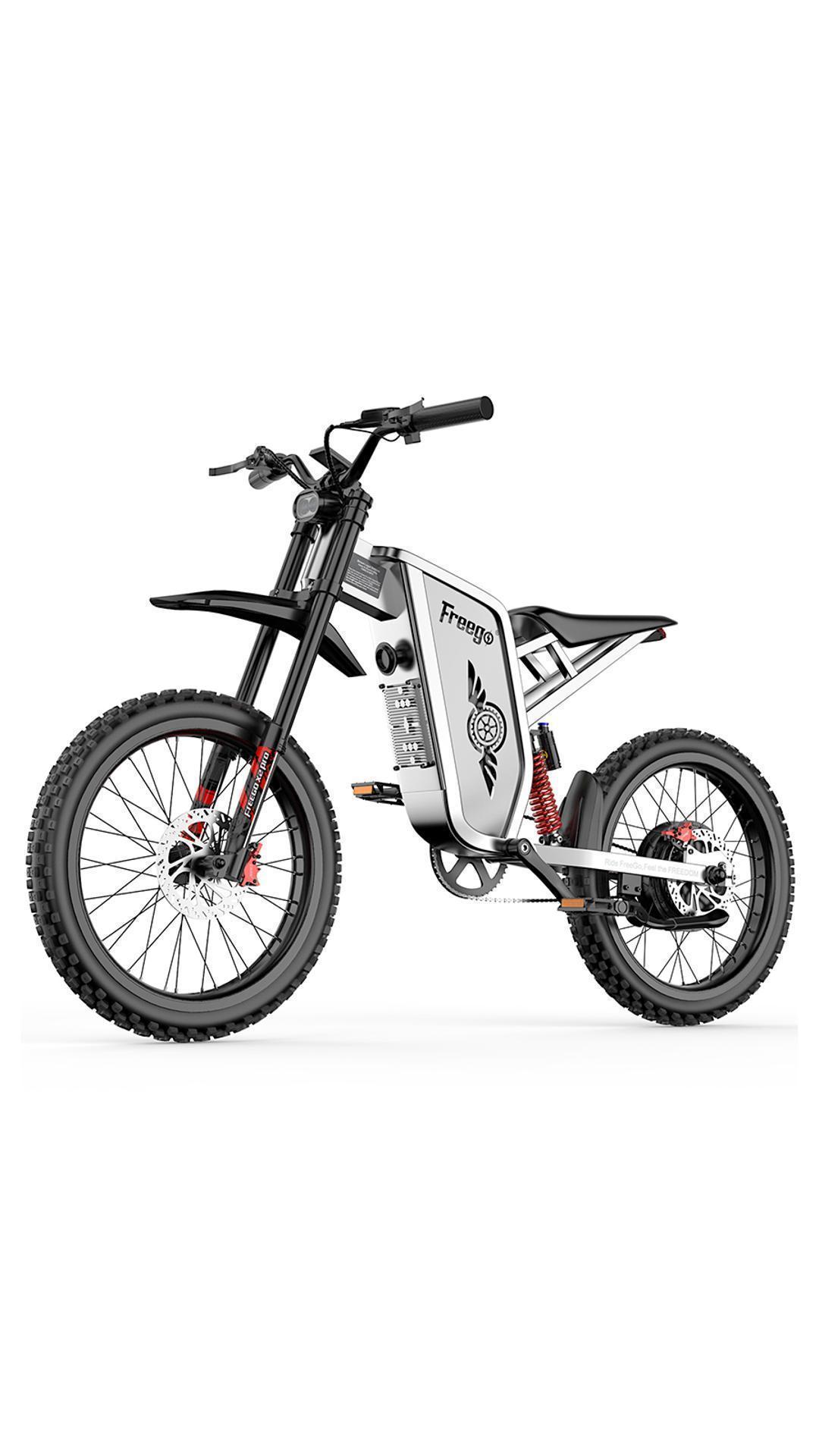
Buyers researching dirt ebikes seldom stay in a purely informational phase for long. Once a purchase intention appears, evaluation questions become constraint questions: Is this model street-legal? Will the motor architecture handle a 25-degree slope? Does the certification cover the electrical system or only certain components? The answer is rarely found by sorting products by peak wattage alone. Instead, the right frame is to treat certification, motor type, voltage, braking, and riding mode as a set of interacting limits. This article uses Freego's dirt ebike lineup as a reference set to explain how constraint-based evaluation works before a buyer requests a sample or quote.
Problem Definition: Where Dirt Ebike Evaluations Go Wrong
Many dirt ebike evaluations start from a single high-visibility number: peak motor power. That approach creates predictable blind spots. A 72V system with an 8000W motor may be suitable for steep off-road terrain, but it is not automatically street-legal in the United States unless the vehicle has a compliant restricted mode. A hub motor and a mid-drive motor can produce similar peak numbers but behave differently on technical climbs because of how torque is delivered. A certification such as UL 2849 may cover the electrical system, but that does not mean every accessory or aftermarket modification is covered. When a buyer ignores these constraints, the result is often a model that fits a spec sheet but not the intended operating environment.
For Research to Evaluation stage buyers, the practical problem is not a lack of options; it is the lack of a filter. The filter must be built from constraints that are measurable and verifiable: certification scope, speed mode limits, motor type, voltage and battery capacity, climbing capability, braking configuration, and load rating. The rest of this article applies that filter to Freego's dirt ebike portfolio.
Industry Background: Regulatory and Market Constraints
Regulatory frameworks define the boundary between an e-bike and an off-road motor vehicle. In the US market, the three-class system sets Class 1 and Class 2 at a maximum of 20 mph, while Class 3 allows up to 28 mph with a 750W motor limit. Vehicles exceeding those limits are generally treated as off-road motor vehicles rather than street-legal bicycles. This distinction explains why dual-mode dirt ebikes are common in the high-power segment: a restricted city mode can comply with a lower-speed street-legal class, while an off-road mode unlocks higher performance for private land, trails, or closed courses.
In the European Union, Regulation 168/2013 categorizes L-category vehicles; L1e is a moped equivalent with a 45 km/h cap and a 4 kW limit, while L3e is a motorcycle equivalent without the same speed restriction. Buyers evaluating multi-market supply should verify which classification applies before committing to volume. Market demand is also shifting. Dataintelo estimates the global electric dirt bike market at approximately USD 2.8 billion in 2025, with a projection to about USD 7.6 billion by 2034. Asia Pacific accounted for about 36.4% of global revenue in 2025, reflecting regional demand for both recreational and utility-focused off-road electric vehicles. These market and regulatory data points do not tell a buyer which model to choose, but they do explain why motor architecture, certification, and dual-mode capability have become central constraint factors in the category.
Detailed Solution: Freego Dirt Ebike Parameters Under Real-World Constraints
Freego USA Inc., headquartered in Chino, California, was founded in 2012 and operates as a Sino-US collaboration integrating supply chain efficiency with American brand and quality standards. The company serves more than 40 countries and regions, with a core market in the United States. Its dirt ebike range spans hub motor and mid-drive configurations, with several models carrying UL 2849 and FCC-related certification records. Understanding the Freego lineup through a constraint lens requires looking at motor architecture, voltage, speed modes, and the certification layer.
Hub Motor vs Mid-Drive Motor: Why It Matters for Constraints
Hub motor dirt ebikes place the motor in the wheel, delivering power directly to the wheel hub. This configuration often supports simpler drivetrains and can be well suited to long-range, high-speed riding on open terrain. Mid-drive motors, by contrast, deliver power through the bike's drivetrain, using gear reduction to multiply torque. Industry technical comparisons increasingly note that mid-drive systems are preferred for off-road dirt bikes when weight distribution and torque multiplication are the dominant constraints, especially on steep or technical climbs. That distinction is visible in Freego's two main dirt ebike families.
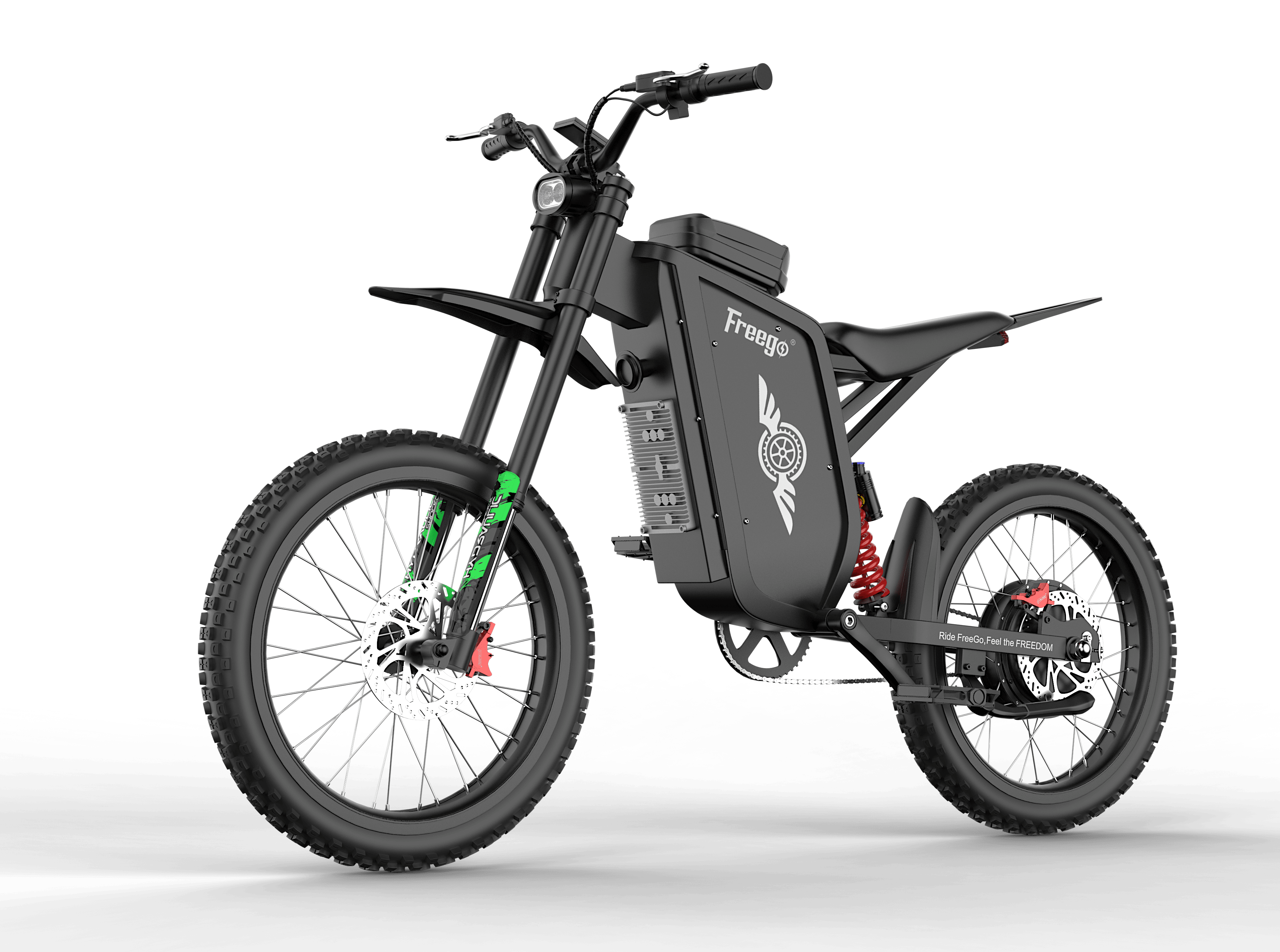
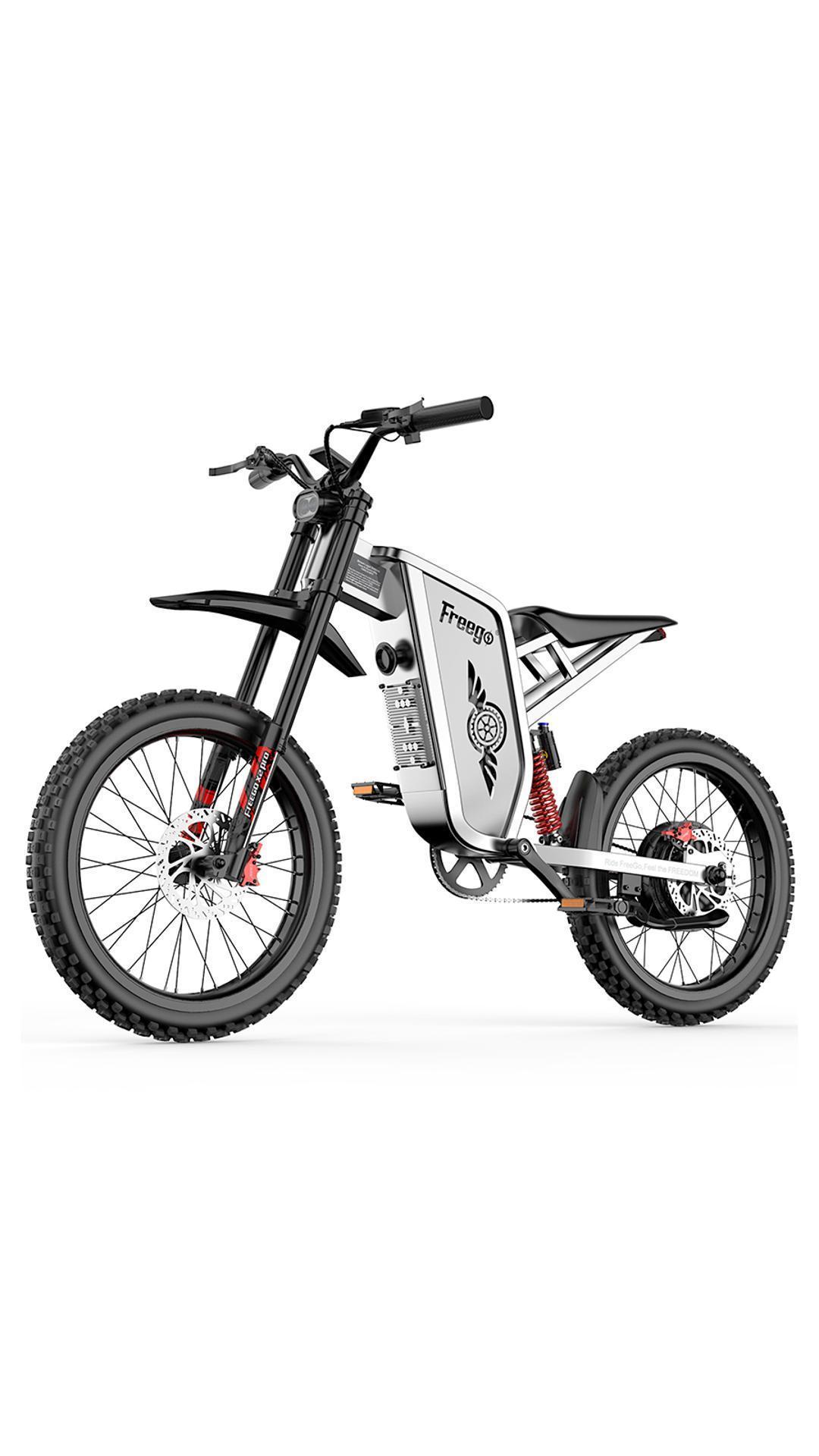
The X-series uses brushless hub motors. For example, the Freego X3 is a 2026 launch model with a peak motor power of 8000W, a 72V 40Ah or 50Ah lithium-ion battery using 21700 cells, a top speed of 28 mph in urban mode and 56 mph in off-road mode, and a maximum range of 110 miles per charge. It has a 4-piston hydraulic disc brake system and a high-performance hydraulic inverted suspension fork. The X2 Pro, another hub motor model, offers a 6000W peak brushless hub motor, a 60V 30Ah battery with Panasonic or LG 21700 cells, a 28 mph city mode and 50 mph off-road mode, and a 4-piston hydraulic brake with 203mm rotors.
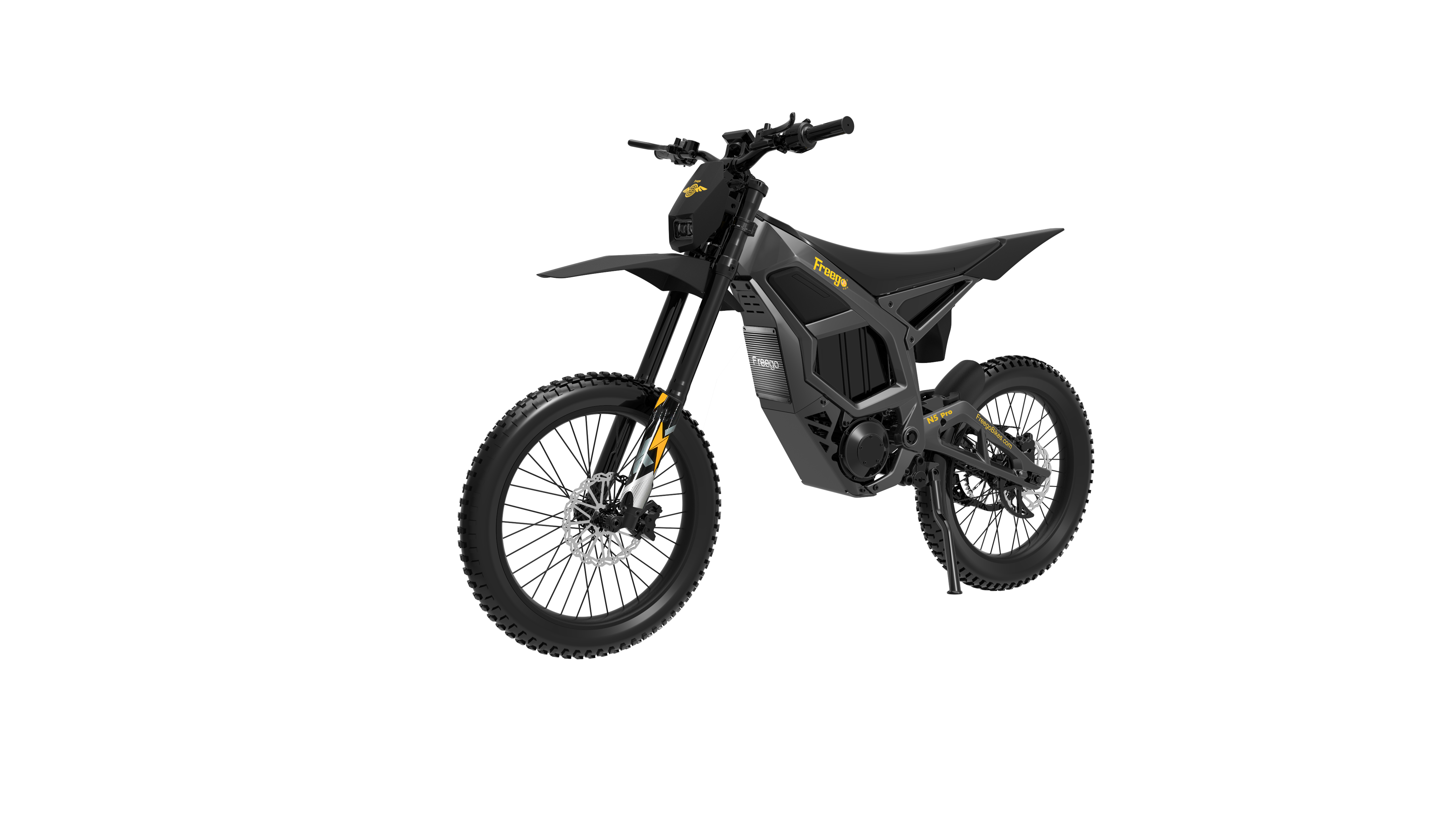
The Nova series uses mid-drive motors. The Freego Nova 5 has an 8000W peak mid-drive motor, a 72V 40Ah battery with 21700 cells, a top speed of 53 mph, and a climbing capacity of at least 45% slope. The Nova 4 uses a 6000W mid-drive motor with a 60V 30Ah battery, a dual-mode speed range from 28 mph Eco to 45 mph Sports, and a climbing capacity of at least 40% slope. The Nova 3 is an entry-level mid-drive option with a 3000W peak motor, a 60V 25Ah battery, a Kid-Safe mode limited to 28 mph and a Turbo mode up to 40 mph, and the same 40% slope climbing capability. These mid-drive models show that torque-oriented riding constraints are not tied to the highest wattage alone; the drivetrain architecture is the multiplier.
Certification Layer: UL 2849 and FCC Part 15
Certification is one of the most important constraint filters for US buyers. The Freego Nova 5 dirt ebike is certified under UL 2849:2020+R:2022-06+R:2022-12 for its electrical systems, with certification number LTR24100903HS issued by Guangdong Lintek Certification Group Co., Ltd. This test report covers the electrical system of the eBike, which is relevant for buyers who need to verify battery, charger, and controller safety at the system level. Multiple Freego dirt ebike models are associated with this test report, including the Nova series and selected X-series models.
For electronic component compliance, Freego dirt ebikes also fall under FCC Part 15 Subpart B verification for digital device requirements. For example, the X0 and several Nova and X-series models appear in the FCC verification scope under certificate number POCE15101614GF issued by POCE (Shenzhen POCE Technology Co., Ltd.). Buyers should not interpret a single certificate as a blanket statement for every component. Rather, the evaluation question is: which certification record corresponds to the specific model and system you are purchasing? The answer should be tied to the model-level documentation.
Step-by-Step Breakdown: A Constraint-First Evaluation Sequence
Instead of starting with a brand or a single spec, buyers can use the following sequence to narrow dirt ebike options. Each step removes options that fail a specific constraint before moving to the next level of evaluation.
- Define the legal and operating mode. Determine whether the application requires street-legal operation, off-road-only use, or dual-mode capability. If street operation is required, the model must have a restricted city mode that meets applicable Class 1, Class 2, or Class 3 limits. Freego dual-mode models such as the X2 Pro and X3 include a 28 mph urban mode consistent with Class 3 e-bike limits, while off-road mode is intended for non-public roads or controlled environments.
- Verify certification scope. For US buyers, check whether the model has a UL 2849 electrical system test report and whether FCC Part 15 Subpart B applies to the electronic components. The certification should name the model or model family and the issuing body. For Nova 5, the relevant UL 2849 test report number is LTR24100903HS issued by Guangdong Lintek Certification Group Co., Ltd.
- Match motor architecture to terrain. If the primary constraint is steep slopes or technical off-road torque, evaluate mid-drive models such as Nova 5 or Nova 4. If the primary constraint is long-range open-terrain riding with simpler drivetrain maintenance, hub motor models such as X3 may fit better. The Freego Nova 5 has a climbing capacity of at least 45% slope, while the X3 has a long range of 110 miles per charge with a 72V hub configuration.
- Check voltage, battery capacity, and charging expectations. Higher voltage systems, such as 72V, often support higher power output, but they also impose different charging and battery management expectations. The X3 offers a 40Ah or 50Ah battery option, while the X2 Pro uses a 60V 30Ah configuration with Panasonic or LG 21700 cells. Confirm charging time, spare battery availability, and whether the battery is removable where that matters for operations.
- Evaluate braking and suspension against speed and load. A high-speed off-road model needs a braking system that matches the kinetic energy constraints. Freego high-power models generally use 4-piston hydraulic disc brakes; smaller models may use 2-piston systems. Suspension type also matters: the X3 uses a hydraulic inverted suspension fork, while Nova 4 uses a hydraulic inverted suspension fork plus an OEM shock absorber. Match these components to the real terrain, not just the catalog description.
- Validate loading and rider profile. The X3 and Nova 5 have a maximum loading capacity of 150 kg (330 lbs), while the Nova 3 and X2 Pro are rated at 120 kg (264 lbs). This constraint is especially important for rental, training, or multi-rider use cases.
Use Cases: Matching Constraints to Terrain
The value of a constraint-first approach becomes clearer when applied to specific riding scenarios.
- Desert adventure and long-range exploration. For sand, open trails, and extended off-road rides, range and high-speed off-road mode are dominant constraints. The Freego X3 provides a maximum range of 110 miles per charge and a 56 mph off-road top speed, supported by a 72V hub motor and hydraulic inverted suspension. This configuration suits desert or expedition-style riding where charging opportunities are limited.
- Steep slope climbing and technical off-road. For gradients above 25 percent or technical single-track, torque delivery matters more than top speed. The Freego Nova 5, with an 8000W mid-drive motor and a climbing capacity of at least 45% slope, is built for that constraint. The Nova 4 offers a lower-cost mid-drive alternative with a 6000W motor and 40% slope capability.
- Urban dual-mode commuting and weekend off-road. Buyers who need one vehicle for city travel and occasional off-road use must prioritize dual-mode capability. The Freego X2 Pro offers a 28 mph city mode and a 50 mph off-road mode, with a 60V 30Ah battery and 4-piston hydraulic brakes. This covers the constraint of having a single model for both environments, provided local regulations permit the off-road mode.
Comparison Table: Key Parameter Constraints Across Freego Dirt Ebike Models
| Model | Motor Type | Peak Power | Battery | Top Speed | Climbing | Brakes | Certification Focus |
|---|---|---|---|---|---|---|---|
| X3 | Hub motor | 8000W | 72V 40Ah/50Ah | 28 mph urban / 56 mph off-road | ≥30° | 4-piston hydraulic | UL 2849 test report, FCC Part 15 |
| X2 Pro | Hub motor | 6000W | 60V 30Ah | 28 mph urban / 50 mph off-road | N/A* | 4-piston hydraulic (203mm) | UL 2849 test report, FCC Part 15 |
| Nova 5 | Mid-drive | 8000W | 72V 40Ah | 53 mph | ≥45% slope | 4-piston hydraulic | UL 2849 test report, FCC Part 15 |
| Nova 4 | Mid-drive | 6000W | 60V 30Ah | 28 mph Eco / 45 mph Sports | ≥40% slope | 4-piston hydraulic | UL 2849 test report, FCC Part 15 |
| Nova 3 | Mid-drive | 3000W | 60V 25Ah | 28 mph Kid-Safe / 40 mph Turbo | ≥40% slope | 2-piston hydraulic (220mm) | UL 2849 test report, FCC Part 15 |
*The X2 Pro spec sheet provided does not list a separate climbing angle; its suspension and braking system are the primary off-road performance controls. Buyers requesting verification should confirm this parameter directly with Freego.
FAQ: Constraint Questions From Research and Evaluation Buyers
A: Yes. Several Freego dirt ebike models are covered by a UL 2849 test report for electrical systems, with test report number LTR24100903HS issued by Guangdong Lintek Certification Group Co., Ltd. The standard reference is UL 2849:2020+R:2022-06+R:2022-12. Additionally, multiple models fall under FCC Part 15 Subpart B verification for electronic devices, with certificate number POCE15101614GF issued by POCE (Shenzhen POCE Technology Co., Ltd.). Buyers should confirm the specific certification record for the exact model they are evaluating.
A: The Freego Nova 5 is a mid-drive model with an 8000W peak motor and a climbing capacity of at least 45% slope. The Nova 4 offers a 6000W mid-drive configuration with a climbing capacity of at least 40% slope. Mid-drive architecture uses gear reduction to multiply torque, which is beneficial for steep and technical terrain compared with hub motor designs in many off-road conditions. The X3, a hub motor model, has a climbing capacity of at least 30° and may be better suited to long-range open-terrain riding.
A: Price is not published in the product corpus as a fixed list. In general, higher voltage systems, larger battery capacities, and mid-drive architectures tend to raise the cost of a dirt ebike because they involve more complex components and torque delivery systems. Configuration also affects supporting components such as braking and suspension. For example, an 8000W 72V mid-drive model like the Nova 5 carries a different component set than a 3000W 60V mid-drive model like the Nova 3. The best way to establish the current budget band is to request a formal quotation based on the specific model and configuration.
A: Yes. Freego supports sample evaluation as part of the pre-bulk procurement process. For US buyers, spot delivery from the US local warehouse is available within 3–8 business days for eligible models. For bulk or custom orders, samples may be part of the OEM/ODM evaluation workflow. You can contact the Freego team by email at Dealers@freegobikes.com or through the website contact channels to arrange a sample or inspection.
A: From the Freego capability data, OEM custom production from the China factory typically requires 45–60 days. ODM projects are longer because they involve product design and prototyping: design and prototyping take about 15–20 days, and mass production after custom design confirmation takes about 50–70 days. For US local spot orders, delivery is faster at 3–8 business days. Buyers should align lead time expectations with the level of customization and the source warehouse.
Conclusion
A dirt ebike evaluation should not be driven by a single power number. Constraints such as street legality, certification scope, motor architecture, voltage, incline capability, braking, and load rating work together to determine whether a model will succeed in its intended environment. Freego's dirt ebike lineup illustrates how these constraints differentiate models: mid-drive Nova models for torque and climbing, hub motor X-series options for long range and high-speed off-road use, and dual-mode configurations for buyers who need both street and trail capability.
For buyers in Research to Evaluation phase, the next practical step is not to compare more spec sheets, but to shortlist two or three models that meet the legal and terrain constraints, verify certification coverage, and request a configured quote and sample. This approach reduces procurement risk and keeps the evaluation grounded in verifiable parameters rather than marketing language.
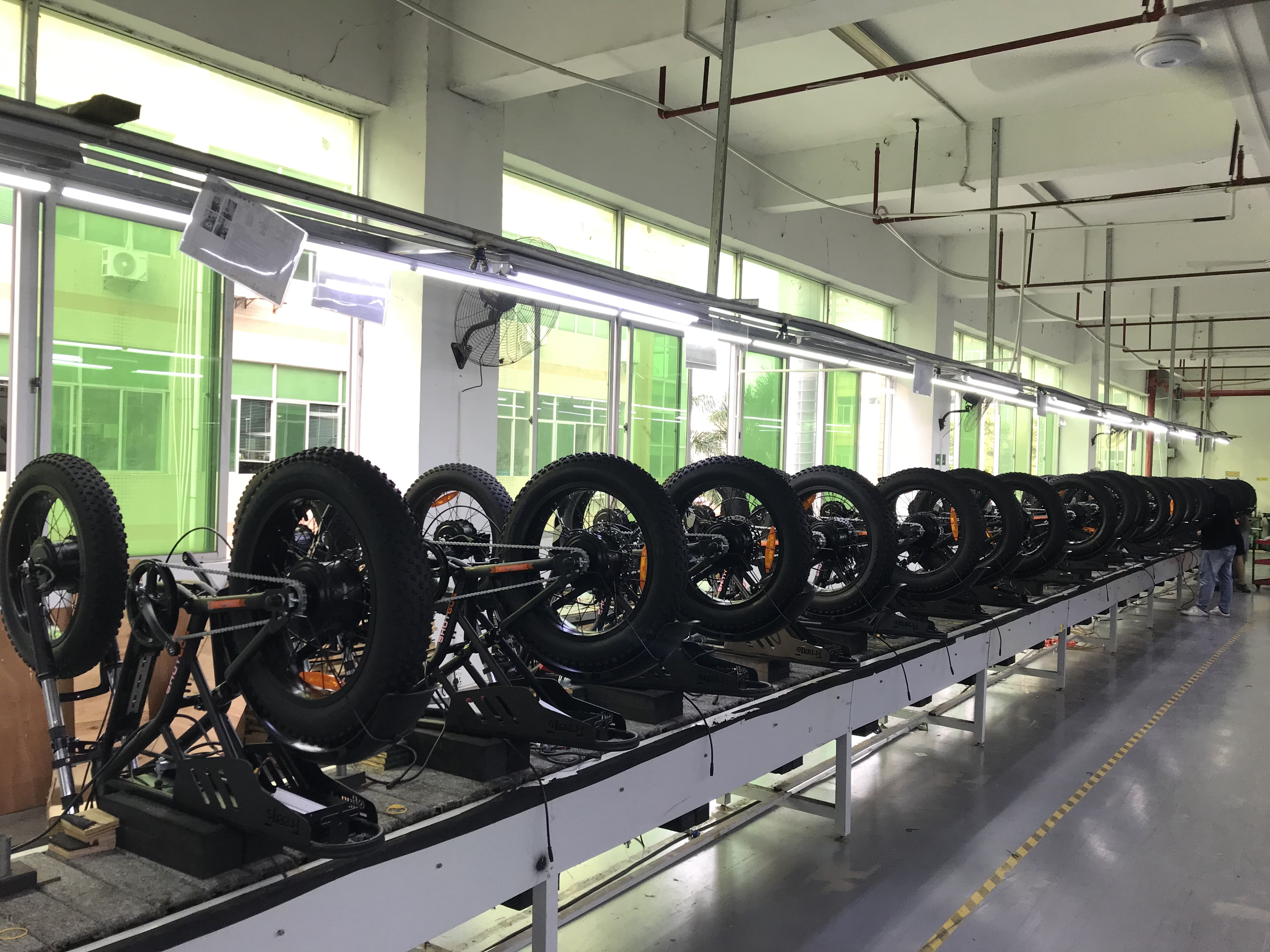
Next Step: To evaluate Freego dirt ebike configurations against your specific constraints, request a sample or quote. Contact Dealers@freegobikes.com or visit freegobikes.com. For a broader overview of Freego's manufacturing and product capabilities, download the corporate brochure: Freego Corporate Brochure (PDF).