Dirt Ebike Supplier Vetting: Factory, Samples & Delivery FAQ
Dirt Ebike Supplier Vetting: Factory, Samples & Delivery FAQ
Short answer: vetting a dirt ebike supplier comes down to three verifiable questions — what the factory can genuinely produce, whether a physical sample matches the written specification, and whether delivery commitments survive a volume ramp. Catalog design, response speed, and price talk are secondary until those three are confirmed with documents and hardware.
This FAQ-style guide is written for importers, dealers, fleet operators, and brand owners who are comparing dirt ebike sources in 2026 and want a repeatable way to separate production reality from sales language. The reference points come from Freego USA Inc., a Chino, California–headquartered manufacturer founded in 2012 that designs and manufactures high-performance electric mobility solutions — including the X-man and Nova electric off-road motorcycle series — and exports approximately 90% of its output to more than 40 countries and regions.
Why "Can You Supply Dirt Ebikes?" Is the Wrong First Question
Almost every supplier answers yes to that question. The answer carries no information because it tests willingness, not capability. A productive supplier evaluation instead splits the decision into three independently verifiable domains.
- Factory capability — does the supplier own or control real production assets, engineering headcount, and repeatable output across more than one model?
- Sample fidelity — does the bike that arrives at your warehouse match the motor, battery, brake, and suspension values printed on the specification sheet?
- Delivery reliability — can the supplier hold timing and documentation quality when your order moves from a 20-unit trial to a container-level commitment?
These three domains are related. A supplier that cannot describe its own motor controllers or battery cell format will usually also struggle with sample consistency, and a supplier with no export history will usually struggle with shipping documentation. That is why the practical screening proxy used below is lineup depth: a supplier that sustains several distinct models across multiple motor architectures and voltage platforms has to solve repeatable engineering problems, which is far harder to simulate than a single hero model.
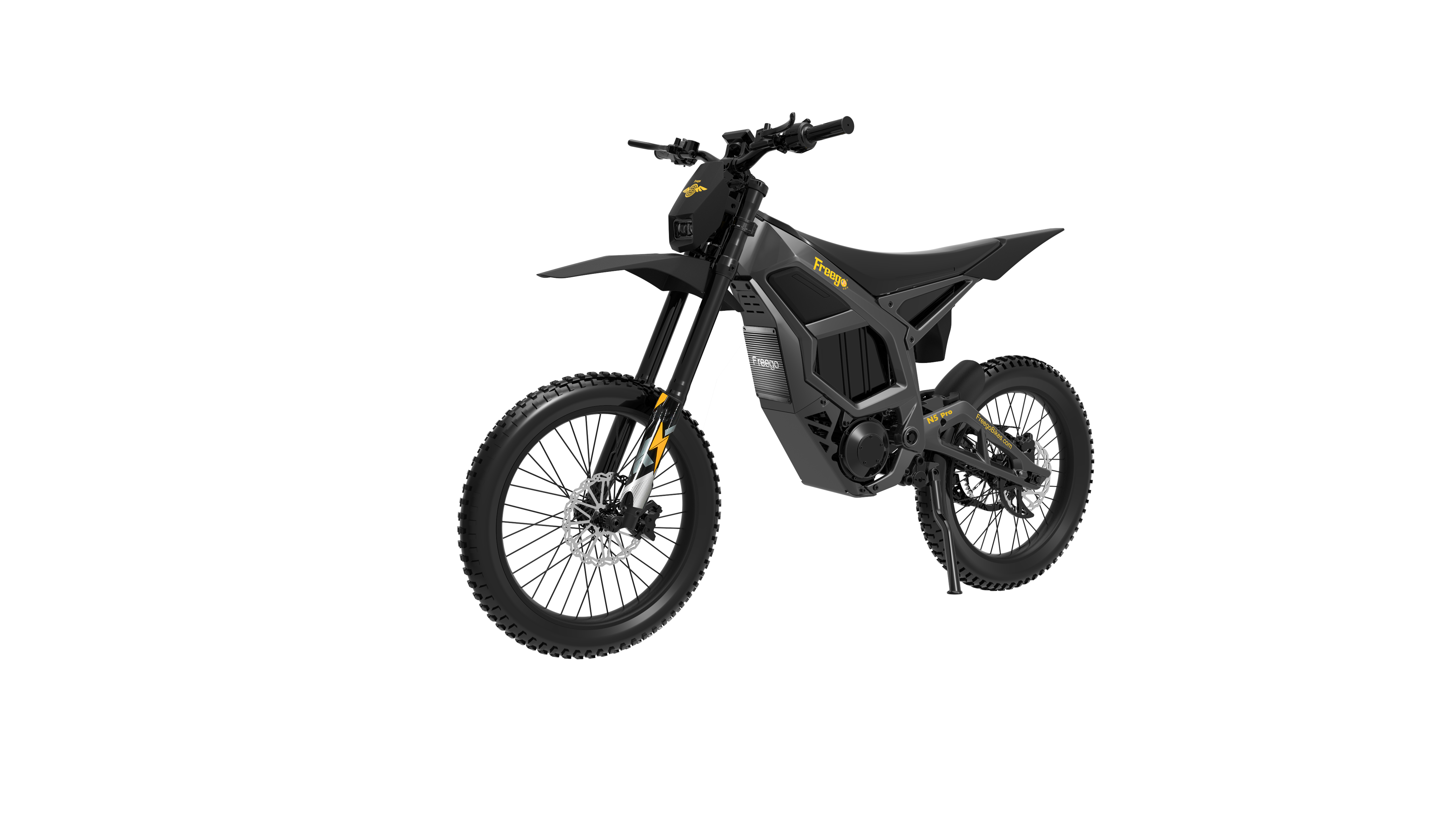
Freego's own dirt ebike range illustrates what that depth looks like in practice. The mid-drive lineup alone covers five models — Nova 5 MINI, Nova 3, Nova 4, Nova 5, and Nova 5 pro — spanning 48V, 60V, and 72V battery architectures and rated top speeds from 37 MPH to 62 MPH. Buyers do not need to purchase all five, but the ability to build them says something concrete about motor mounting, controller tuning, and battery pack engineering.
Industry Background: Why Dirt Ebike Screening Standards Are Rising
The commercial context explains why buyers are asking harder questions than they did a few years ago. The global electric dirt bike market was projected at approximately USD 2.8 billion in 2025, with growth expectations toward USD 7.6 billion by 2034, according to Dataintelo. Within that total, Asia Pacific led regional demand at USD 1.02 billion in 2025, or 36.4% of global revenue, per the same source. Where a category grows this quickly, buyer attention shifts from "who can ship me something" to "who can document what they ship."
Three technical and regulatory realities reinforce that shift.
1. Motor architecture is now a decision, not a detail. Mid-drive motors are increasingly specified for off-road dirt bikes because of superior weight distribution and torque multiplication through the bike's gear system compared with hub motors. Hub motors retain advantages in simplicity and packaging, which is why Freego's range carries both: mid-drive Nova models and hub-drive X-series models coexist in the same catalog rather than one replacing the other.
2. Compliance classification differs by market. In the European Union, electric motorcycles fall under Regulation (EU) No 168/2013, which classifies vehicles as L1e (moped equivalent, maximum 45 km/h, up to 4 kW) or L3e (motorcycle equivalent, unrestricted speed). In the United States, the three-class e-bike framework caps Class 1 and Class 2 at 20 mph and Class 3 at 28 mph, with vehicles exceeding those limits generally regulated as off-road motor vehicles. A supplier that cannot state clearly where each model lands is a supplier you will have to educate later.
3. The competitive set is well known and high-performing. Sur-ron, Talaria, and Stark Future are widely identified as primary competitors in the high-performance electric dirt bike segment. Buyers today compare any new source against that group, which raises the bar on documented specification accuracy rather than brand storytelling.
Factory Capability: Four Questions That Expose Real Production Depth
1. How many distinct models does the supplier actually build?
Freego's portfolio spans five product families: E-KICK SCOOTER electric scooters, X-man and Nova electric off-road motorcycles, Shotgun fat tire electric bicycles, Cityflow city commuter electric bicycles, and FlexTrike three-wheeled electric recreational vehicles. For dirt ebike buyers specifically, the relevant slice is the X-man and Nova series, which together cover the mid-drive and hub-drive configurations described in the lineup table below. A supplier able to maintain this spread must manage multiple frame geometries, motor mounts, controller profiles, and battery voltages at the same time — a structural capability, not a marketing claim.
2. What are the measurable facility facts?
- Manufacturing facility area: 3,000 m²
- Workforce: approximately 50 or more employees, expanding to 100 or more during peak season
- R&D team: 10+ engineers
- Annual output: annual sales of approximately 20,000 vehicles, with cumulative global sales exceeding 1 million vehicles
- Export orientation: approximately 90% of sales are exported
- Market coverage: more than 40 countries and regions across North America, Europe, South America, and Southeast Asia
These are the numbers a purchasing team should be able to reconcile during a factory audit. The peak-season staffing figure matters specifically for delivery planning: a facility that scales from roughly 50 to over 100 workers has a defined seasonal capacity response, and your production slot competes with everyone else's during that window.
3. Who owns the engineering, and what does that team actually control?
Freego's research and development capabilities are supported by a team of more than 10 engineers, and the company's stated business focus is providing global users with green mobility solutions through design and research and development. For an importer or brand owner, the practical question is whether engineering owns the specification or merely documents it. Evidence of ownership shows up in details such as controller ratings — the Nova 5 pro, for example, runs a 150A/400A high-power brushless motor controller — and in suspension specification naming, where Freego lists KKE brand hydraulic shock absorbers on several models rather than a generic description.
4. What is the export record in my specific market?
Export share is a screening filter, not a ranking. Freego exports approximately 90% of its products and serves markets across North America (United States), Europe (Germany, Italy, France), South America, and Southeast Asia. If your target market appears in that footprint, documentation templates and classification experience are likely already in place. If it does not, treat the first order as a documentation pilot as well as a product trial.
Sample Evaluation: Turning a Demo Bike Into Evidence
A sample request is the single highest-value step in supplier evaluation, but only if it is treated as a test rather than a preview. Three rules make it work.
Rule 1 — Sample the model that matches your duty cycle
Sampling a flagship model you will never order tells you little. Match the sample to the segment you intend to sell:
- Compact / teen-and-adult dual use: Nova 5 MINI — 2,500W mid-drive motor, 48V 21Ah battery, 37 MPH top speed, 35 MI range, 100 kg (220 lbs) max loading, 14" front / 10" rear wheels.
- Entry-level off-road: Nova 3 — 3,000W mid-drive brushless motor, 60V 25Ah 21700 battery, 28 MPH kid-safe / 40 MPH turbo, 50 MI Eco range, ≥40% slope climbing capacity.
- Mid-grade all-terrain: Nova 4 — 6,000W mid-drive motor, 60V 30Ah 21700 battery, 28 MPH Eco / 45 MPH Sports, hydraulic inverted suspension fork plus OEM shock absorber.
- High-power trail and adventure: Nova 5 — 8,000W mid-drive motor, 72V 40Ah 21700 battery, 53 MPH, 70 MI range, ≥45% slope climbing capacity.
- Pro-grade flagship: Nova 5 pro — 15,000W mid-drive motor, 72V 40Ah 21700 battery, 62 MPH street-legal / 56 MPH off-road, 70 MI range, 4-piston hydraulic disc brake with 203 mm rotor.
Rule 2 — Verify line by line against the written specification
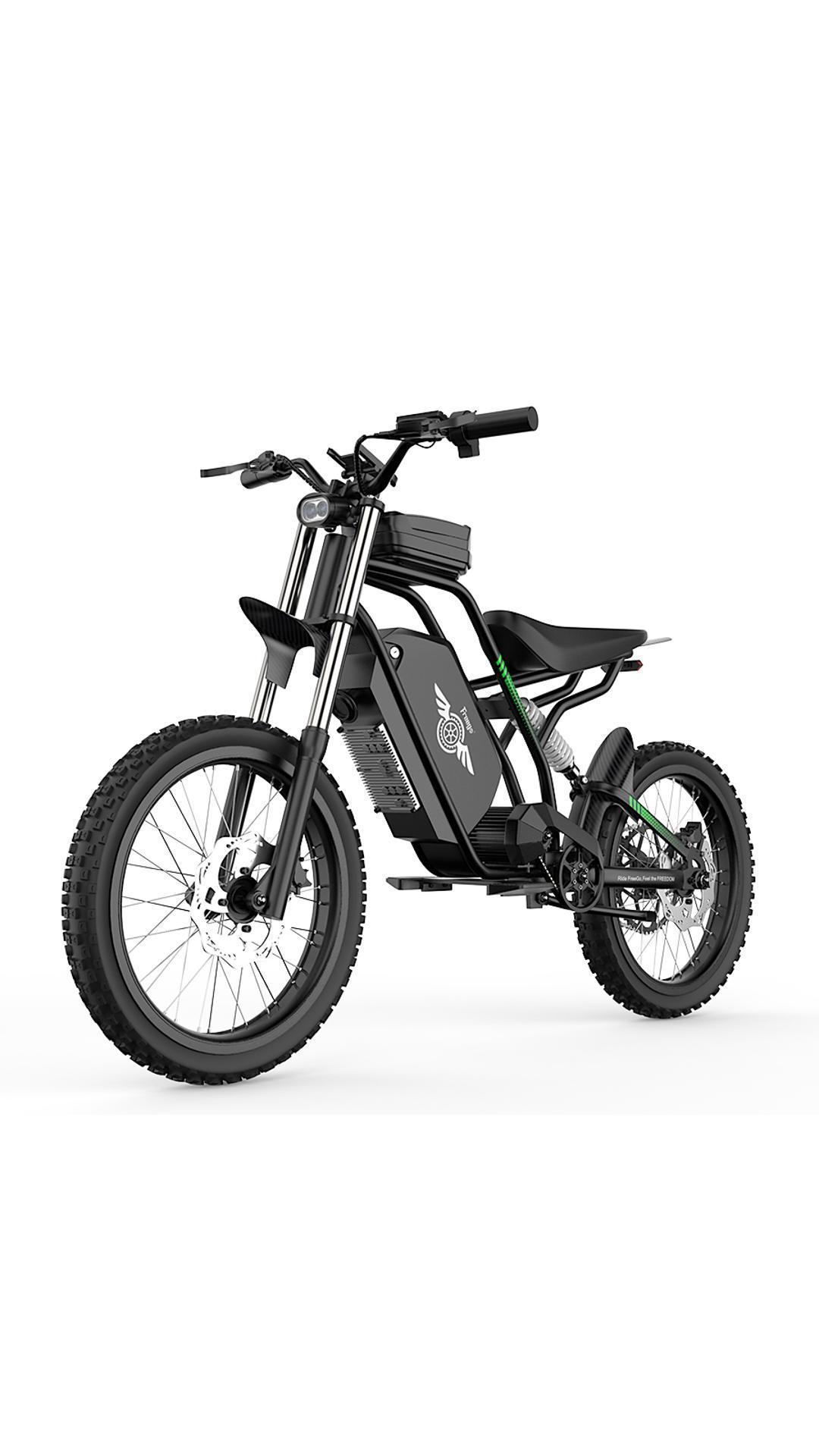
Build a checklist before the sample ships, and inspect against it on arrival. The values that matter most are the ones that are expensive to change later:
- Motor type and peak power rating — confirm mid-drive or hub, and confirm the peak figure matches (2,500W / 3,000W / 6,000W / 8,000W / 15,000W across the Nova range).
- Battery voltage, capacity, and cell format — for example 72V 40Ah using 21700 lithium-ion cells, or 60V 30Ah on the Nova 4.
- Brake hardware — piston count and rotor size, such as the 4-piston hydraulic disc with 203 mm rotor on the Nova 5 pro, versus the 2-piston hydraulic disc with 220 mm rotor on the Nova 3.
- Suspension components — inverted fork or standard fork, and whether the named brand matches.
- Frame material and tire specification — for example forged aluminum alloy on the Nova 5 pro, carbon steel on the Nova 4, and 70/100-19 front / 80/100-17 rear motorcycle-grade tires on the Nova 4.
- Climbing capacity — where the model is rated, such as ≥45% slope on the Nova 5 and ≥40% slope on the Nova 4 and Nova 3.
Rule 3 — Sample the long-range platform separately
If your market includes touring, fleet, or adventure use, the battery platform deserves its own test rather than being inferred from a short-range model. The X3 is an ultra-long range pedaled all-terrain electric dirt bike with an 8,000W brushless hub motor, a 72V 40Ah/50Ah battery built from 160 high-capacity 21700 cells, a rated 110 MI maximum range per charge, and a climbing capacity of ≥30°. That is a materially different duty cycle from a 35 MI compact bike, and it should be validated on its own.
Capacity, Lead Time, and Delivery Reliability
Delivery problems rarely appear in the first shipment. They appear when a supplier's capacity assumptions meet a peak season, and that is exactly when a documented capacity conversation pays off.
Capacity questions that need numbers, not adjectives
- What is annual output in units, and how much of it is committed to existing accounts?
- How does production staffing change in peak season, and how is that reflected in scheduling?
- Which specific models can run in parallel, and which share a bottleneck assembly step?
- What is the production slot reservation process for a first container order?
Documentation to confirm before shipment
Ask which classification each model is intended to satisfy in your market before the order is confirmed, not after. For EU-bound product, confirm whether the configuration targets L1e or L3e under Regulation (EU) No 168/2013. For US-bound product, confirm the Class 1, Class 2, or Class 3 positioning and whether the model ships in a restricted mode. Freego's X-Man series, for example, uses a dual-mode system with a City Mode (Class 3 compliant, 28 mph, 750W) and an Off-Road Mode (unrestricted performance) — a structure that lets buyers keep one platform in inventory while configuring it for the intended market and use.
Delivery risk-control steps
- Stage the release. Approve a small first order against the verified sample specification, then scale.
- Fix the specification in the purchase order. Every motor, battery, brake, and suspension value should be a contractual line item, not a catalog reference.
- Require pre-shipment inspection evidence. Photos or video of the actual units, plus the brake and battery configuration, close the gap between sample and mass production.
- Confirm export documentation experience for your region. A supplier exporting roughly 90% of output to more than 40 countries has established documentation workflows; verify the specific paperwork set for your destination.
- Plan spare parts and battery supply with the first order. Battery packs and brake consumables are the items that determine whether a fleet stays in service after year one.
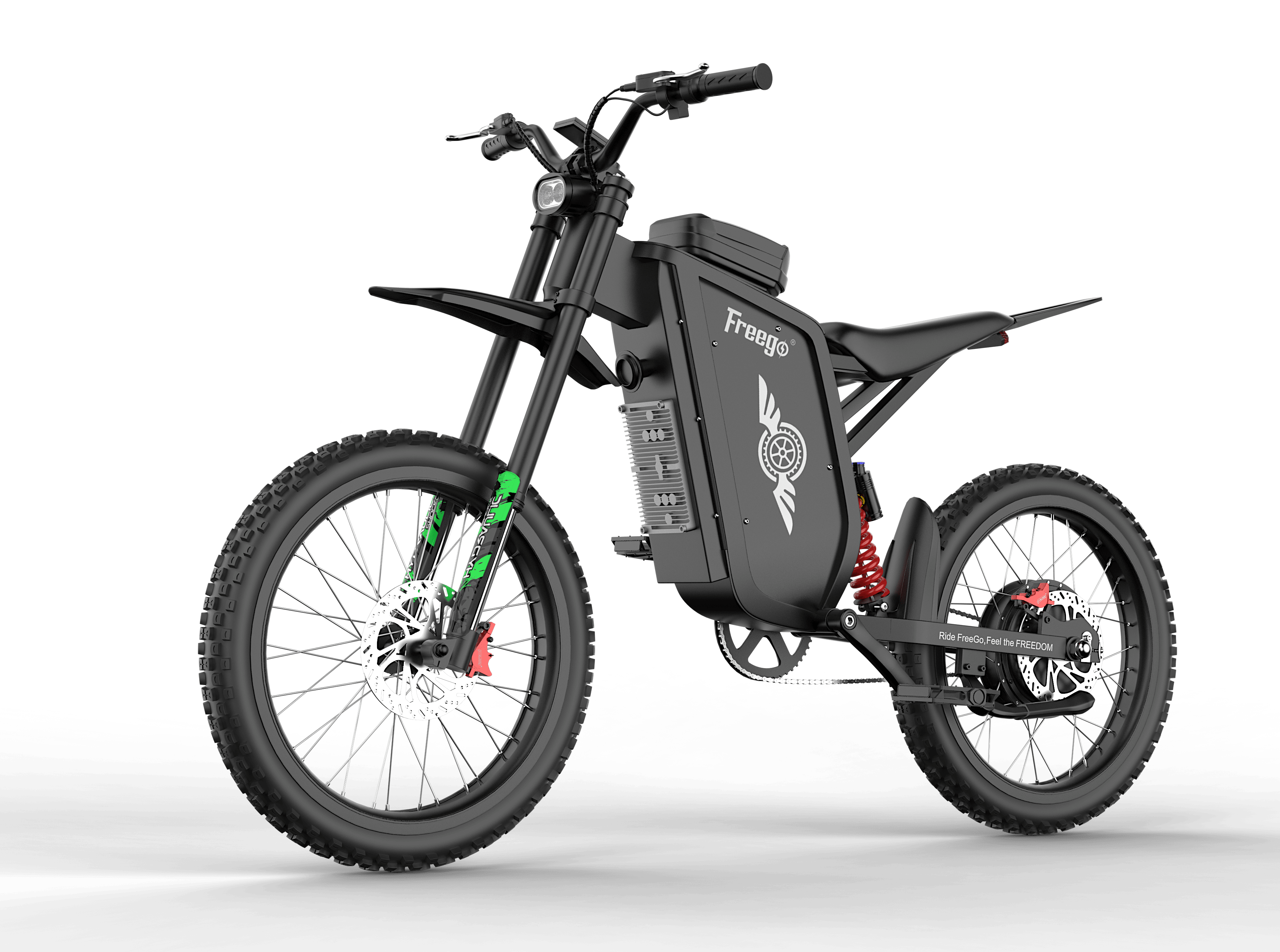
A Seven-Step Dirt Ebike Supplier Evaluation Workflow
- Define terrain and duty cycle. Trails, sand, steep inclines, urban dual-use, rental turnover, or long-distance touring — each points to a different motor and battery combination.
- Choose the motor architecture. Mid-drive for weight distribution and torque multiplication through the drivetrain; hub for simpler packaging. Freego builds both, so the decision can follow the use case rather than the catalog.
- Request verifiable factory data. Facility area, workforce including peak-season scale, R&D headcount, annual output, and export footprint.
- Order a sample in the exact configuration. Match the model segment to your market, and specify the components you will hold constant in production.
- Validate market compliance. Identify the EU class (L1e or L3e) or the US class (1, 2, or 3) and confirm how the model is configured for it.
- Confirm capacity and timing. Get the production slot, the peak-season staffing picture, and the bottleneck steps in writing.
- Lock documentation, packaging, and after-sales terms. Include spare parts, battery replacement path, and inspection evidence as order conditions.
Use Cases: How Different Buyers Apply the Same Checklist
Importers and dealers building a market-ready lineup
Dealers rarely sell one configuration. A practical entry strategy combines a mid-drive model for enthusiast riders with a hub-drive model for buyers who prioritize simplicity. Freego's mid-drive Nova range and hub-drive X range allow a single supplier relationship to cover both, which reduces the number of samples, factory audits, and shipping lanes a dealer has to manage.
Rental and ride-sharing fleet operators
Fleet buyers evaluate durability and serviceability first. Several Freego dirt bike models — including the X0, Nova 3, Nova 5 MINI, X2, and X2 Pro — are listed for use in the rental and ride-sharing business, where high-frequency public use and varied rider behavior drive the specification. For fleet operators, the sample test should include brake inspection intervals, tire wear, and battery swap practicality rather than peak speed alone.
Brand owners and private-label programs
Buyers planning their own branding should test engineering depth before design. A 10+ engineer R&D team that already maintains five voltage and motor combinations is better positioned to absorb a new configuration than a trading operation that resells a fixed catalog. Ask what the team has changed in the last product cycle, and ask for it in specification terms.
Adventure tourism and outdoor operators
Guided trail, camping, and desert programs need range and climbing evidence rather than peak numbers. The X3's 110 MI rated range and ≥30° climbing capacity, or the Nova 5's ≥45% slope rating, are the figures that should be validated under load during the sample phase.
Dirt Ebike Lineup Reference Table
The table below summarizes Freego's dirt ebike models using published specification values. It is intended as a sampling and comparison reference, not as a substitute for a written quotation.
| Model | Motor type & peak power | Battery | Top speed | Max range per charge | Brake system |
|---|---|---|---|---|---|
| Nova 5 pro | Mid-drive, 15,000W | 72V 40Ah, 21700 cells | 62 MPH street-legal / 56 MPH off-road | 70 MI | 4-piston hydraulic disc, 203 mm rotor |
| Nova 5 | Mid-drive, 8,000W | 72V 40Ah, 21700 cells | 53 MPH | 70 MI | 4-piston hydraulic disc |
| Nova 4 | Mid-drive, 6,000W | 60V 30Ah, 21700 cells | 28 MPH Eco / 45 MPH Sports | 50 MI Eco / 25 MI Sports | 4-piston hydraulic disc |
| Nova 3 | Mid-drive, 3,000W | 60V 25Ah, 21700 cells | 28 MPH kid-safe / 40 MPH turbo | 50 MI Eco / 20 MI Sports | 2-piston hydraulic disc, 220 mm rotor |
| Nova 5 MINI | Mid-drive, 2,500W | 48V 21Ah | 37 MPH | 35 MI | Hydraulic disc |
| X3 | Hub, 8,000W | 72V 40Ah / 50Ah, 21700 cells (160 pcs) | 28 MPH urban / 56 MPH off-road | 110 MI | 4-piston hydraulic disc |
| X2 Pro | Hub, 6,000W | 60V 30Ah, Panasonic/LG 21700 cells | 28 MPH urban / 50 MPH off-road | 56 MI city / 20 MI off-road | 4-piston hydraulic disc, 203 mm rotor |
| X2 | Hub, 6,000W | 60V 30Ah, 21700 cells | 28 MPH urban / 50 MPH off-road | 56 MI | 4-piston hydraulic disc |
| X0 | Hub, 3,600W | 60V 23Ah, 21700 cells | 40 MPH | 50 MI | 2-piston hydraulic disc |
FAQ: Dirt Ebike Supplier Evaluation Questions
How do I confirm a dirt ebike can be legally sold in my market?
Start with the classification, not the spec sheet. In the European Union, electric motorcycles are classified as L1e (moped equivalent, maximum 45 km/h and up to 4 kW) or L3e (motorcycle equivalent, unrestricted speed) under Regulation (EU) No 168/2013. In the United States, the three-class framework caps Class 1 and Class 2 at 20 mph and Class 3 at 28 mph, and vehicles above those limits are generally regulated as off-road motor vehicles. Ask the supplier which class each configuration targets and how the delivered unit is set up to meet it. Dual-mode platforms simplify this: Freego's X-Man series uses a City Mode (Class 3 compliant, 28 mph, 750W) and an Off-Road Mode (unrestricted performance), so one platform can be configured for the intended market and use.
What factory evidence should an importer request first?
Request the measurable items and reconcile them during the audit: manufacturing facility area (3,000 m² for Freego), total workforce including peak-season expansion (approximately 50 or more employees, rising to 100 or more in peak season), R&D headcount (10+ engineers), annual output (approximately 20,000 vehicles, with cumulative global sales exceeding 1 million vehicles), and export footprint (approximately 90% of sales exported to more than 40 countries and regions). Then cross-check against product depth — a supplier maintaining multiple motor architectures and battery voltages, such as Freego's 48V, 60V, and 72V platforms across five product families, has demonstrated engineering repetition rather than a one-off assembly capability.
How should a dirt ebike sample be evaluated?
Treat the sample as a specification test. First, choose the model that matches your duty cycle — for example a Nova 3 (3,000W mid-drive, 60V 25Ah) for entry-level off-road, a Nova 4 (6,000W mid-drive, 60V 30Ah, hydraulic inverted fork plus OEM shock absorber) for mid-grade all-terrain, or an X3 (8,000W hub, 72V 40Ah/50Ah with 160 21700 cells, 110 MI range) if range is critical. Second, inspect line by line against the written specification: motor type and peak power, battery voltage and cell format, brake piston count and rotor size, suspension type and brand, frame material, and tire sizing. Third, test the components that determine cost of ownership — brakes, tires, and battery pack — because those are what your after-sales operation will live with.
How do I reduce delivery risk on a first dirt ebike order?
Separate capacity from promises. Ask for annual output in units, how peak-season staffing changes, which models compete for the same assembly step, and how a first container slot is reserved. Confirm the export documentation set for your destination before the deposit — a supplier exporting roughly 90% of output to more than 40 countries and regions across North America, Europe, South America, and Southeast Asia will have established workflows, but your specific market still needs confirmation. Then stage the release: approve a small first order against the verified sample configuration, fix every motor, battery, brake, and suspension value as a contractual line item, require pre-shipment inspection evidence, and plan spare batteries and brake consumables alongside the first order.
How do I start a supplier evaluation with Freego?
Begin with the lineup table above, select the one or two models that fit your market and duty cycle, and request the matching specification sheet and sample configuration. Freego USA Inc. was founded in 2012, is headquartered at 3681 Walnut Ave, Chino, CA 91710, and designs and manufactures high-performance electric mobility solutions for more than 40 countries. Dealer and distributor enquiries can be directed to Dealers@freegobikes.com, or you can review the full product portfolio on the Freego website before requesting your sample.
Conclusion: Build the Evaluation Around Evidence
Supplier evaluation for dirt ebikes is not a negotiation exercise — it is a documentation exercise. A factory that can state its facility area, workforce scaling, R&D headcount, annual output, and export footprint can be audited. A sample that matches its specification line by line can be converted into a purchase order. A delivery plan that names peak-season staffing and production bottlenecks can be scheduled rather than hoped for.
Freego's mid-drive dirt bike range — Nova 5 MINI, Nova 3, Nova 4, Nova 5, and Nova 5 pro — gives buyers a practical way to run that evaluation across five performance tiers using one supplier relationship, with hub-drive X-series models available where simplicity or range is the priority. Start with the model that matches your terrain and duty cycle, verify the numbers on the bike, and let the documentation decide.
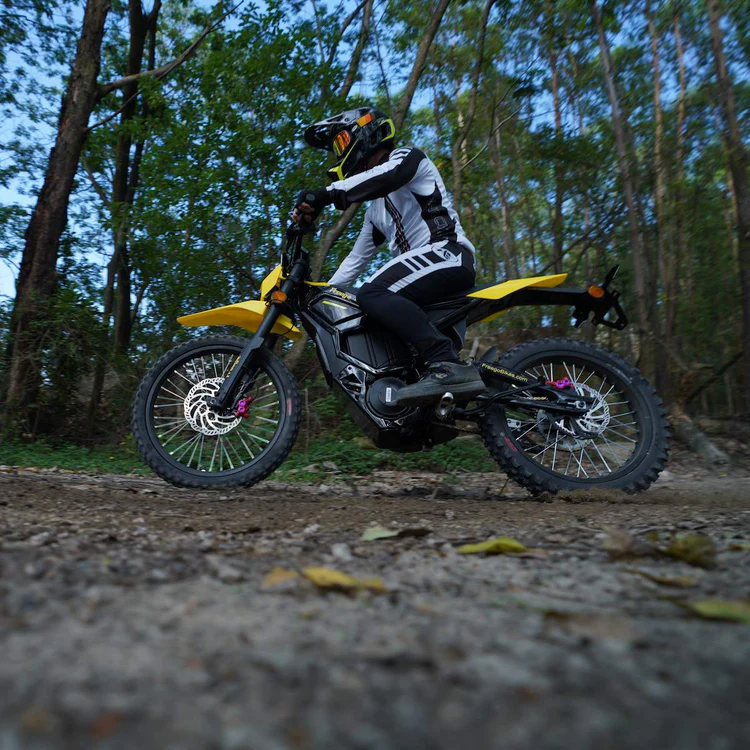
Request a Dirt Ebike Sample or Quotation
Tell us your target market, terrain, and expected order volume, and we will recommend the model configuration and prepare a sample plan.
Contact: Ahmed | Ahmed@freegobikes.com | Tel: +1 818 275 1590 | WhatsApp: +1 310 678 1530
Address: 3681 Walnut Ave, Chino, CA 91710 | Dealer enquiries: Dealers@freegobikes.com
Download the full product catalog: Freego Product Brochure (PDF)