High-Power Mid-Drive vs Ultra-Long Range Dirt Ebike: Dealer Guide
Two 72V all-terrain electric dirt bikes sit at the top of the Freego dirt ebike range, and they answer two different buyer briefs. The Freego Nova 5 is a high-power mid-drive all-terrain electric dirt bike built around torque and technical terrain. The Freego X3 is an ultra-long range pedaled all-terrain electric dirt bike built around distance and mixed on/off-road use. Both are rated for a 150 kg (330 lbs) maximum load and both use a 4-piston hydraulic disc brake. The real dealer decision is not which model is better, but which model belongs in which inventory slot, for which customer, under which market constraints.
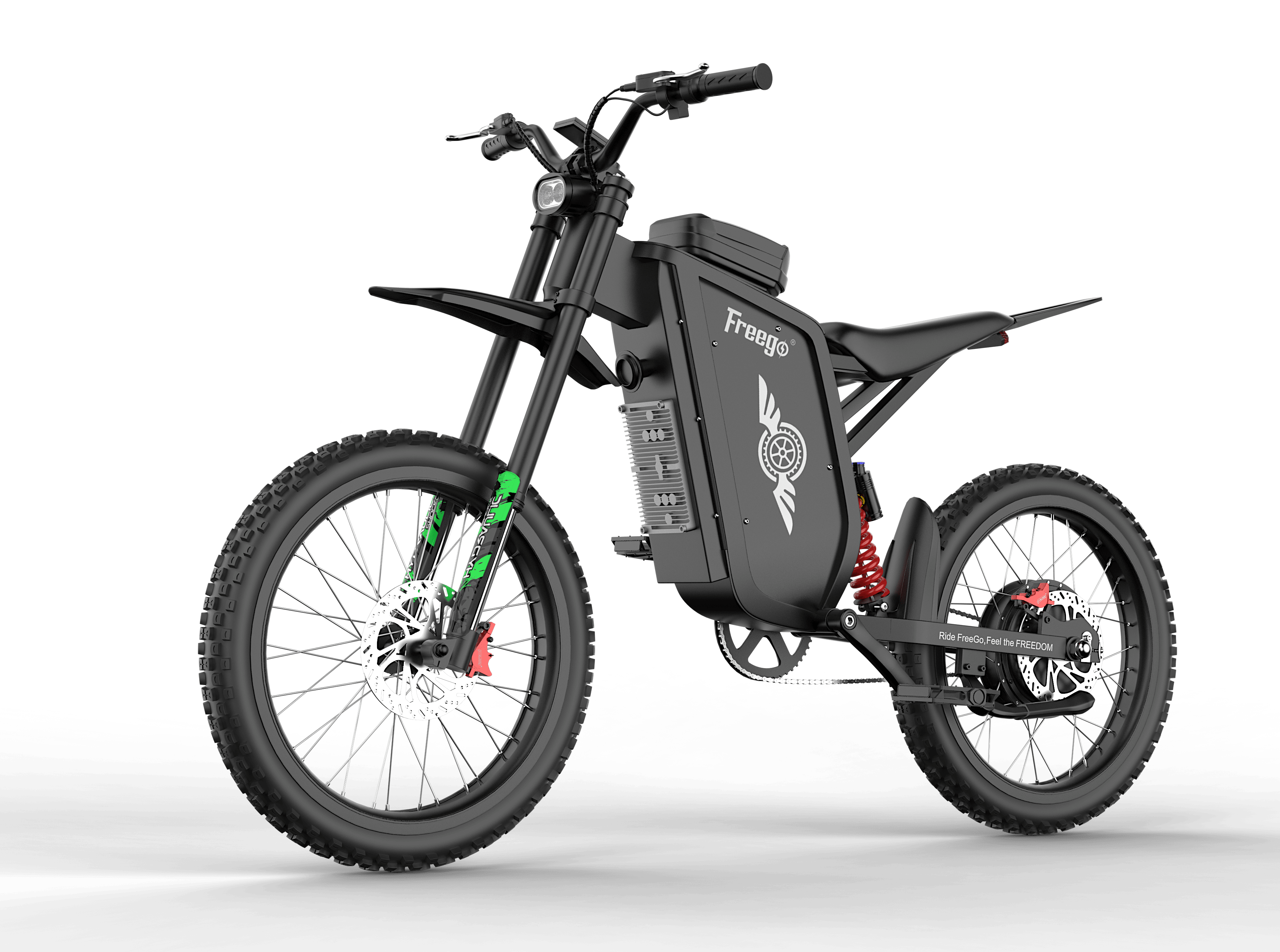
Freego X3 — ultra-long range pedaled all-terrain electric dirt bike, rated at 110 miles per charge.
Why the High-Power vs Long-Range Question Gets Answered Wrong
Most stocking mistakes in this segment start with a headline number. A dealer reads 8,000W, assumes both models are interchangeable, and orders a mix that leaves one SKU sitting on the floor while the other sells out. The two models do share the same peak power figure, and they do share the same 72V 21700 lithium-ion battery family, the same load rating and the same 4-piston hydraulic disc brake architecture. Everything that decides the sale sits underneath those shared headlines.
Five constraints actually shape the answer:
- Legal class ceiling. What the destination market permits on public roads, and where the model falls once it exceeds that ceiling.
- Certification coverage by SKU. Which specific models are named on the safety documentation, not just which brand holds a certificate.
- Terrain and power demand. Whether the buyer rides technical climbs and fast trail sections, or long mixed routes.
- Distance expectation. How far a rider expects to go on one charge, and in which drive mode.
- Commercial packaging. MOQ, lead time, warehouse position, warranty and spare-part flow.
There is also a measurement trap that catches experienced buyers. The Nova 5 climbing figure is published as a percentage grade (≥45% slope), while the X3 climbing figure is published in degrees (≥30°). These are different conventions, not a like-for-like ranking. A 45% grade is roughly 24.2°, so the two numbers should never be placed side by side in a spec comparison without noting the unit difference. Range figures behave the same way: rated range per charge depends on mode, terrain and load, so 70 miles on one model and 110 miles on the other describe different duty cycles rather than a simple ranking.
Industry Background: A Segment Splitting Into Power-Led and Range-Led Demand
The commercial context explains why this comparison matters to dealers right now. According to Dataintelo, the global electric dirt bike market was projected to reach approximately USD 2.8 billion in 2025, with growth expectations to USD 7.6 billion by 2034. The same source places Asia Pacific as the leading regional demand centre with USD 1.02 billion in 2025, equal to 36.4% of total global revenue.
Those figures are not the only ones in circulation, and dealers should treat them as directional. WiseGuyReports estimates a smaller 2025 figure of about USD 1.47 billion, largely because market sizing studies scope the category differently, with some including broader dirt bike volumes and others isolating pure-electric off-road models. The practical takeaway is that demand is growing and that demand is fragmenting.
Regulation is the second structural factor. In the United States, the market commonly uses a three-class e-bike framework: Class 1 and Class 2 are capped at 20 mph, Class 3 at 28 mph, and vehicles exceeding those limits are generally regulated as off-road motor vehicles. In the European Union, electric motorcycles fall under Regulation (EU) No 168/2013, which separates L1e (moped equivalent, maximum 45 km/h and up to 4 kW) from L3e (motorcycle equivalent, unrestricted speed). A dealer selling 53 mph or 56 mph dirt ebikes into either market is selling into the off-road segment or into a registration pathway, not into a casual commuter category.
Competition is well documented. Third-party trade coverage identifies Sur-ron, Talaria and Stark Future as the primary competitive set in the high-performance electric dirt bike market. Independent technical comparisons also note a shift in engineering preference: mid-drive motors are increasingly favoured for off-road dirt bikes because of better weight distribution and because torque is multiplied through the bike's gear system, whereas hub motors deliver simpler packaging and fewer drivetrain components.
The Two Models, Mapped to Verified Constraints
Freego Nova 5 — High-Power Mid-Drive All-Terrain Electric Dirt Bike
The Nova 5 is positioned as an adult professional mid-drive E-bike and a high-speed off-road dirt bike. Its verified configuration:
- Peak motor power: 8,000W mid-drive motor
- Battery: 72V, 40Ah lithium-ion 21700 cells
- Top speed: 53 MPH
- Maximum range: 70 miles per charge
- Maximum load: 150 kg (330 lbs)
- Braking: 4-piston hydraulic disc brake
- Climbing capacity: ≥45% slope
- Frame: forged aluminium alloy plus carbon steel pipe
- Tires: heavy-duty all-terrain motorcycle-grade tires
- Suspension: KKE brand hydraulic shock absorbers
- Target industries: powersports and outdoor recreation, outdoor adventure tourism, professional off-road sports
For a dealer, the constraint reading is straightforward. This is the model that answers buyers asking for sustained torque delivery and technical climbing, and it is the model that fits a showroom built around performance riding rather than distance touring.
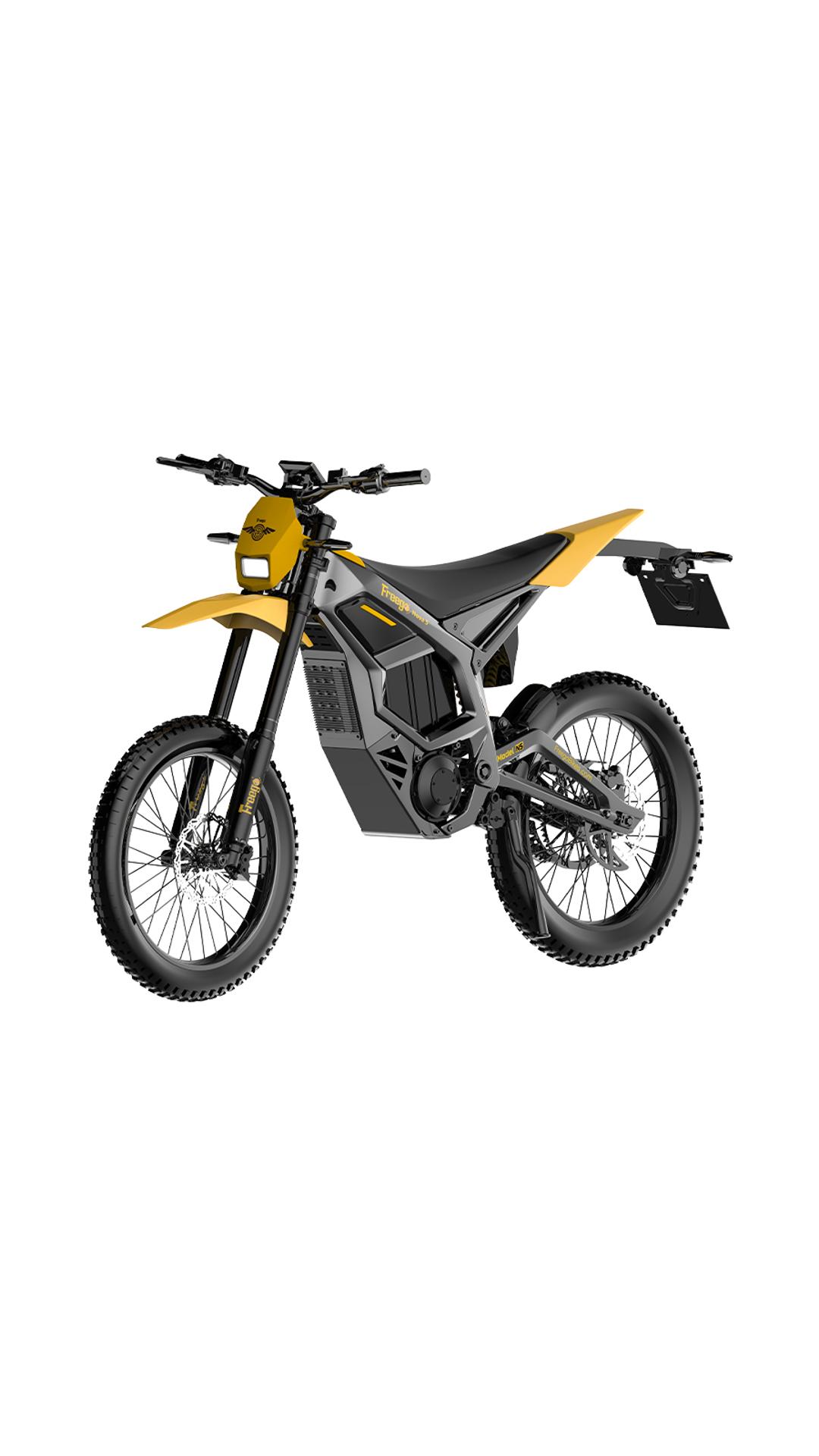
Freego Nova 5 — high-power mid-drive all-terrain electric dirt bike with KKE hydraulic suspension.
Freego X3 — Ultra-Long Range Pedaled All-Terrain Electric Dirt Bike
The X3 is a 2026 new-launch model positioned as a high-power, ultra-long range off-road dirt bike. Its verified configuration:
- Peak motor power: 8,000W brushless hub motor
- Battery: 72V, 40Ah / 50Ah lithium-ion 21700 cells (160 cells)
- Top speed: 28 MPH urban / 56 MPH off-road
- Maximum range: 110 miles per charge
- Maximum load: 150 kg (330 lbs)
- Braking: 4-piston hydraulic disc brake
- Climbing capacity: ≥30°
- Frame: high-strength carbon steel pipe
- Tires: 70/100-19 heavy-duty motorcycle-grade tires
- Suspension: high-performance hydraulic inverted suspension fork
- Target industries: powersports and outdoor recreation, rental and ride-sharing, outdoor adventure tourism
The X3 constraint reading is different. Its value proposition is distance and mode flexibility. The 28 MPH urban / 56 MPH off-road split reflects the dual-mode logic used across the Freego X-series, where a City Mode delivers a street-legal, Class 3-compliant 28 mph, 750W profile and an Off-Road Mode releases unrestricted performance. A dealer selling into markets with class-based rules can use that split as a conversation tool rather than a workaround.
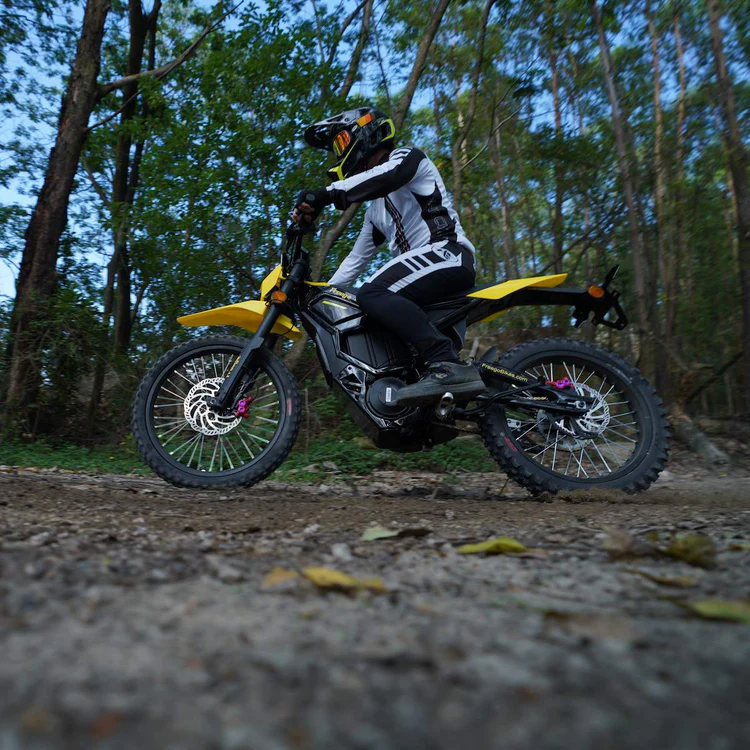
All-terrain off-road application: trail, forest and mixed-surface riding.
Drive Architecture: The Constraint That Changes Everything Downstream
Identical peak wattage does not mean identical behaviour. The Nova 5 routes 8,000W of peak power through a mid-drive unit, which means the motor can work through the drivetrain and benefit from gear multiplication, and which centralises mass for handling balance. The X3 routes 8,000W of peak power through a brushless hub motor, which reduces drivetrain complexity and is paired here with a much larger effective range budget of 110 miles per charge on a 72V, 40Ah/50Ah pack.
That single architectural difference cascades into the rest of the specification: suspension layout, frame material choice, tire sizing and the rider profile the model is built for. It is also why the two bikes should be merchandised as complementary rather than competing SKUs.
| Constraint dimension | Freego Nova 5 | Freego X3 |
|---|---|---|
| Positioning | High-power mid-drive all-terrain electric dirt bike | Ultra-long range pedaled all-terrain electric dirt bike |
| Peak motor power | 8,000W mid-drive motor | 8,000W brushless hub motor |
| Battery | 72V, 40Ah lithium-ion 21700 cells | 72V, 40Ah / 50Ah lithium-ion 21700 cells (160 cells) |
| Top speed | 53 MPH | 28 MPH urban / 56 MPH off-road |
| Maximum range | 70 miles per charge | 110 miles per charge |
| Climbing capacity | ≥45% slope | ≥30° |
| Braking | 4-piston hydraulic disc brake | 4-piston hydraulic disc brake |
| Suspension | KKE brand hydraulic shock absorbers | High-performance hydraulic inverted suspension fork |
| Frame | Forged aluminium alloy + carbon steel pipe | High-strength carbon steel pipe |
| Tires | Heavy-duty all-terrain motorcycle-grade tires | 70/100-19 heavy-duty motorcycle-grade tires |
| Maximum load | 150 kg (330 lbs) | 150 kg (330 lbs) |
| Primary dealer fit | Performance and technical terrain buyers | Range, adventure and mixed-use buyers |
Note on comparability: climbing capacity is published as a percentage grade for the Nova 5 and in degrees for the X3, and range is rated per charge under model-specific conditions. Treat both as constraint indicators, not as directly ranked values.
Step-by-Step: A Six-Step Dealer Selection Workflow
Step 1 — Define the buyer's dominant mission
Ask what the end customer does most often. Technical climbing, fast trail sections and performance riding point to the Nova 5. Long mixed routes, all-day distance and combined urban/off-road use point to the X3. Dealers who skip this step usually end up ordering by headline wattage and getting the mix wrong.
Step 2 — Check the legal ceiling in the destination market
In the US, the three-class framework caps Class 1 and Class 2 at 20 mph and Class 3 at 28 mph, with higher-performance vehicles generally regulated as off-road motor vehicles. In the EU, Regulation (EU) No 168/2013 separates L1e (up to 45 km/h, up to 4 kW) from L3e. A 53 MPH or 56 MPH dirt ebike is an off-road product or a registration-pathway product in most jurisdictions, and that must be clear in your retail messaging.
Step 3 — Verify certification coverage at SKU level
Brand-level claims are not SKU-level evidence. Freego holds a UL 2849 test report numbered LTR24100903HS, issued by Guangdong Lintek Certification Group Co., Ltd. on 2024-10-10 against standard UL 2849:2020+R:2022-06+R:2022-12, covering electrical systems for eBikes in the US market. The applicable product list for that report includes the Nova 5, Nova 5 pro, Nova 4, Nova 3, Nova 5 MINI, X3, X2 Pro, X2 and X1. Separate US documentation covers the wider range: ANSI/CAN/UL 2849-2022 certificates SGSNA/24/SZ/00058 and SGSNA/24/SZ/00059 issued by SGS North America Inc., and FCC Part 15 Subpart B conformity for the fat-tire and urban lines, including Supplier's Declaration of FCC Conformity number HK2210194593E issued by HUAK (Shenzhen HUAK Testing Technology Co., Ltd.).
Step 4 — Convert specifications into constraints
Normalise units before comparing. Percentage grades and degrees are different measurement conventions. Range figures apply to specific modes, loads and terrain. Load ratings, brake hardware and suspension type matter more to service departments than to sales pages, because they determine spare-part demand and workshop time.
Step 5 — Validate commercial terms before committing
Program packaging often decides which model is commercially viable for a given dealer, independent of the product itself.
| Program | MOQ | Lead time | Monthly capacity | Key terms |
|---|---|---|---|---|
| OEM customization | 50 units per model (mixed orders of the same series are calculable) | 45–60 days custom production from the China factory; 3–8 business days for spot customization such as logo or packaging from the US local warehouse | 2,000 units regular; up to 3,000+ in peak season | Logo printing, frame colour customization, motor power labelling, battery capacity selection; ISO 9001; 100% full-function ex-factory inspection; third-party inspection support (UL/CE/SGS) |
| ODM development | 100 units per model | 15–20 days for design and prototyping; 50–70 days for mass production after design confirmation | 1,500 units regular; up to 2,500+ at custom mass-production peak | Vehicle structure industrial design, core power and electronic-control module development, IoT integration, riding mode customization, exclusive appearance patent design |
| Global brand distribution | 12 units / 1 pallet | 3–8 business days spot direct delivery from the US local warehouse | 20,000 units per year | US warehouse PDI inspection, dealer POS materials, customized accessory bundles, co-branding marketing assets |
| IoT solution | 100 units (standard IoT modules) | 30–45 days for custom IoT solution development | 5,000 modules per month | 4G/GPS modules, sharing management SaaS dashboard, branded user app, geofencing firmware |

US local warehouse operations support 3–8 business day spot delivery for dealer replenishment.
Step 6 — Validate with a sample before committing volume
Sample and inspection routes exist for both models. Third-party inspection (UL, CE, SGS) is supported with official reports, and OEM programs include 100% incoming inspection for core parts, in-process patrol inspection and 100% full-function ex-factory inspection for finished units. US warehouse stock goes through PDI before dispatch. For ODM projects, design and prototyping runs 15–20 days before any mass-production commitment.
Use Cases: Which Buyer Profile Buys Which Model
Off-road performance retailers
A US powersports retailer case shows how the high-power side of the range is merchandised. A retailer carrying strategic stock of high-performance models from the Nova and X-man series for off-road racing, mountain trail exploration and hunting, over a 2–3 year period, reported successfully attracting gas-to-electric transition customers and expanding into high-ticket adventure buyers. The attributed product advantages were 72V / 8,000W power specifications, suspension and braking performance, and durability for extreme terrain. This is a Nova 5 profile.
Adventure tourism and rental fleets
Rental and ride-sharing operations run on different constraints: high-frequency public use, outdoor exposure, varied rider behaviour, fleet management and battery logistics. The X3 is explicitly positioned for rental and ride-sharing as well as outdoor adventure tourism, and its 110-mile rated range and 28 MPH urban / 56 MPH off-road split fit operations that need both a compliant low-speed mode and a genuine off-road capability in one asset.
Local e-bike shops and mixed-line dealers
A US local shop case illustrates what a two-model strategy looks like in practice: more than 120 local e-bike shops in long-term cooperation, with 10–20 units purchased per store monthly and an annual supply of over 12,000 units. Reported outcomes include annual e-mobility sales growth above 45% in single stores, a stable 30% profit margin, consumer positive review rate over 98%, repeat purchase rate above 35% and zero batch quality complaints. Stocking both a power-led and a range-led dirt ebike widens the addressable customer base without doubling the service burden, because both models share 72V 21700 cell architecture and 4-piston hydraulic braking hardware.
Regional distributors
An authorized dealer case covering 500+ units per dealer per year over a 5+ year relationship describes the channel-level terms that support this lineup: UL 2849 safety compliance for the mass market, integrated IoT management, a regional exclusive distribution protection policy and exclusive discounts for bulk purchase. For distributors, the two models function as a single portfolio entry with two price and performance tiers.
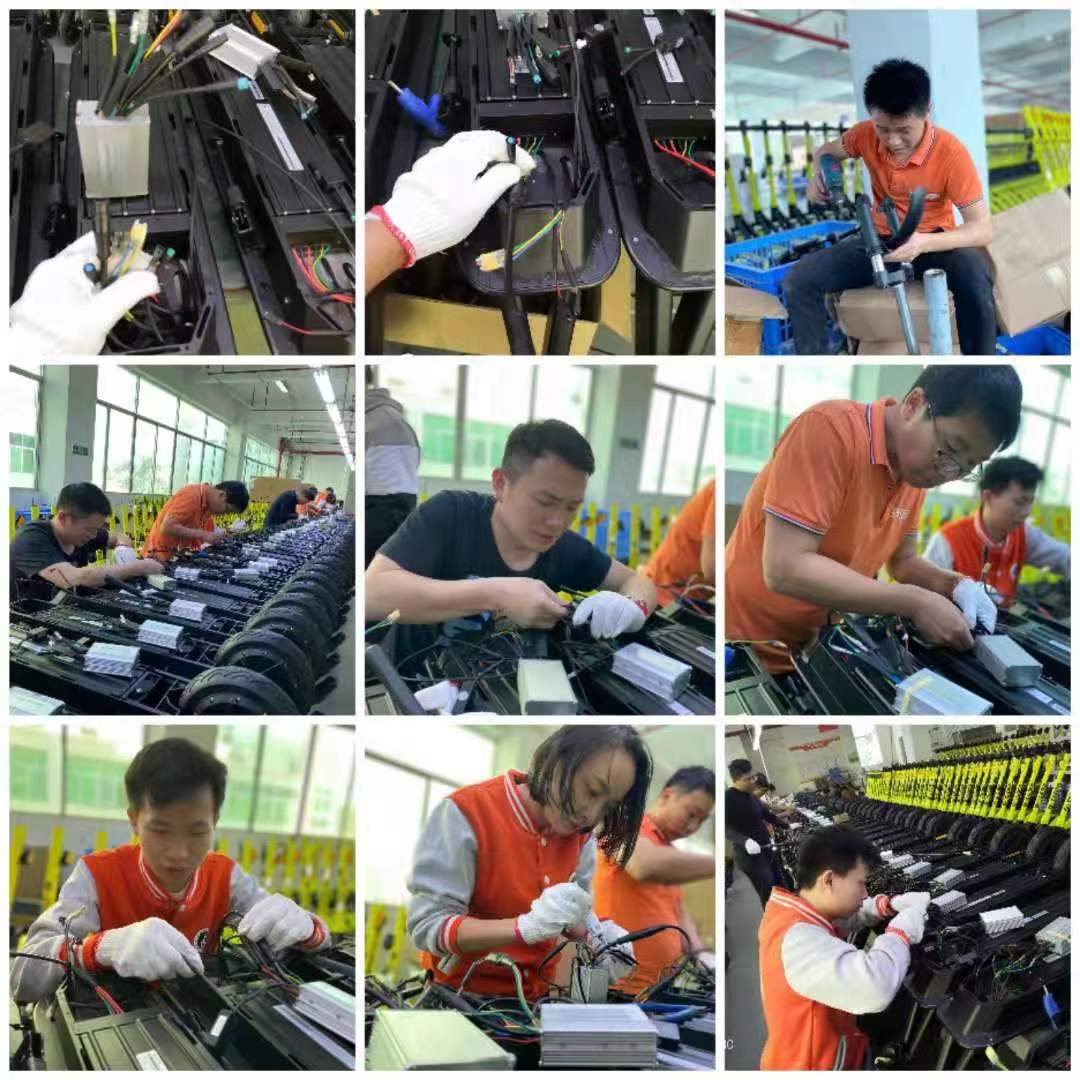
ODM capability: structure design, power and electronic-control module development, and riding mode customization.
Frequently Asked Questions
Are the Nova 5 and X3 certified for the US market?
Both models appear on the applicable product list of Freego's UL 2849 test report LTR24100903HS, issued by Guangdong Lintek Certification Group Co., Ltd. on 2024-10-10, evaluated against UL 2849:2020+R:2022-06+R:2022-12 for electrical systems for eBikes in the US market. The same report covers the Nova 5 pro, Nova 4, Nova 3, Nova 5 MINI, X2 Pro, X2 and X1. Dealers should note that UL 2849 is an electrical-system safety standard, not a road-registration approval. Under the US three-class system, vehicles exceeding the Class 3 28 mph ceiling are generally regulated as off-road motor vehicles, so local registration requirements still apply.
Can Freego customize the Nova 5 or X3 for our market?
Yes, through two separate programs. The OEM program covers logo printing, frame colour customization, motor power labelling and battery capacity selection, with an MOQ of 50 units per model and mixed orders of the same series calculable. The ODM program goes further into vehicle structure industrial design, core power and electronic-control module development, IoT function integration, riding mode and intelligent system customization, and exclusive appearance patent design, with an MOQ of 100 units per model. ODM quality control includes third-party certification to UL 2849 and CE, frame fatigue testing and IPX6 waterproof testing.
What drives the cost difference between the two models?
The bill of materials differs in three visible places. First, battery configuration: the Nova 5 uses a 72V, 40Ah 21700 pack, while the X3 offers 72V, 40Ah or 50Ah with 160 cells, so the larger pack changes unit cost. Second, drive architecture and supporting hardware: a mid-drive unit with KKE hydraulic shock absorbers and a forged aluminium alloy plus carbon steel frame on the Nova 5, versus a brushless hub motor with a hydraulic inverted suspension fork and a high-strength carbon steel frame on the X3. Third, commercial terms: bulk purchase discount policies apply, and US-warehouse spot delivery in 3–8 business days removes part of the freight and lead-time cost from the landed calculation. Quotes are issued per volume and configuration rather than as a single listed price.
How can we validate a model before committing to volume?
Validation runs on three levels. Third-party inspection is supported with official reports through UL, CE and SGS routes. Production quality control includes 100% incoming inspection for core parts, in-process patrol inspection and 100% full-function ex-factory inspection of finished units, with ISO 9001 system compliance behind it. For US dealers, warehouse stock goes through PDI before dispatch and can be supplied within 3–8 business days, which allows a low-volume live test before a full container commitment.
What are the MOQ and lead times for each program?
OEM: MOQ 50 units per model, with 45–60 days for custom production from the China factory and 3–8 business days for spot customization such as logo or packaging from the US local warehouse. ODM: MOQ 100 units per model, with 15–20 days for design and prototyping and 50–70 days for mass production after design confirmation. Distribution: MOQ 12 units or 1 pallet, with 3–8 business days spot delivery from the US local warehouse. Both models carry a 2-year limited warranty covering the frame, with 1 year on core electrical components, supported by original spare parts from the US warehouse, remote technical guidance and offline authorized service centers. To discuss a sample allocation or a quote, contact the Freego dealer team at Dealers@freegobikes.com.
Conclusion: One Lineup, Two Buyer Briefs
The high-power mid-drive versus ultra-long range decision resolves cleanly once it is framed as customer matching rather than spec ranking. The Freego Nova 5 serves buyers whose riding is defined by torque, technical climbing and performance terrain: 8,000W mid-drive, 53 MPH, 70 miles per charge, 4-piston hydraulic braking and KKE hydraulic shock absorbers. The Freego X3 serves buyers whose riding is defined by distance and mode flexibility: 8,000W brushless hub motor, 28 MPH urban / 56 MPH off-road, 110 miles per charge and a hydraulic inverted suspension fork.
For dealers, the operational rules are equally clear. Verify certification at SKU level rather than at brand level. Normalise climbing and range units before comparing. Match MOQ and lead time to your actual sell-through, using US warehouse spot delivery for replenishment and OEM or ODM programs for differentiated stock. Then validate with a sample before scaling.
Freego USA Inc., headquartered in Chino, California and founded in 2012, operates a 3,000 m² facility with a 10+ engineer R&D team, annual sales of approximately 20,000 vehicles and cumulative global sales above 1 million vehicles, exporting to more than 40 countries with a 90% export ratio. The full product and program documentation is available in the Freego brochure.
Next Step for Dealers
Request the technical fact sheet, pricing tiers and sample allocation for the Nova 5 and X3. Download the full Freego product brochure (PDF), or reach the dealer desk directly.
Dealer contact: Ahmed — Ahmed@freegobikes.com | Tel: +1 818 275 1590 | WhatsApp: +1 310 678 1530
Address: 3681 Walnut Ave, Chino, CA 91710 | Website: freegobikes.com
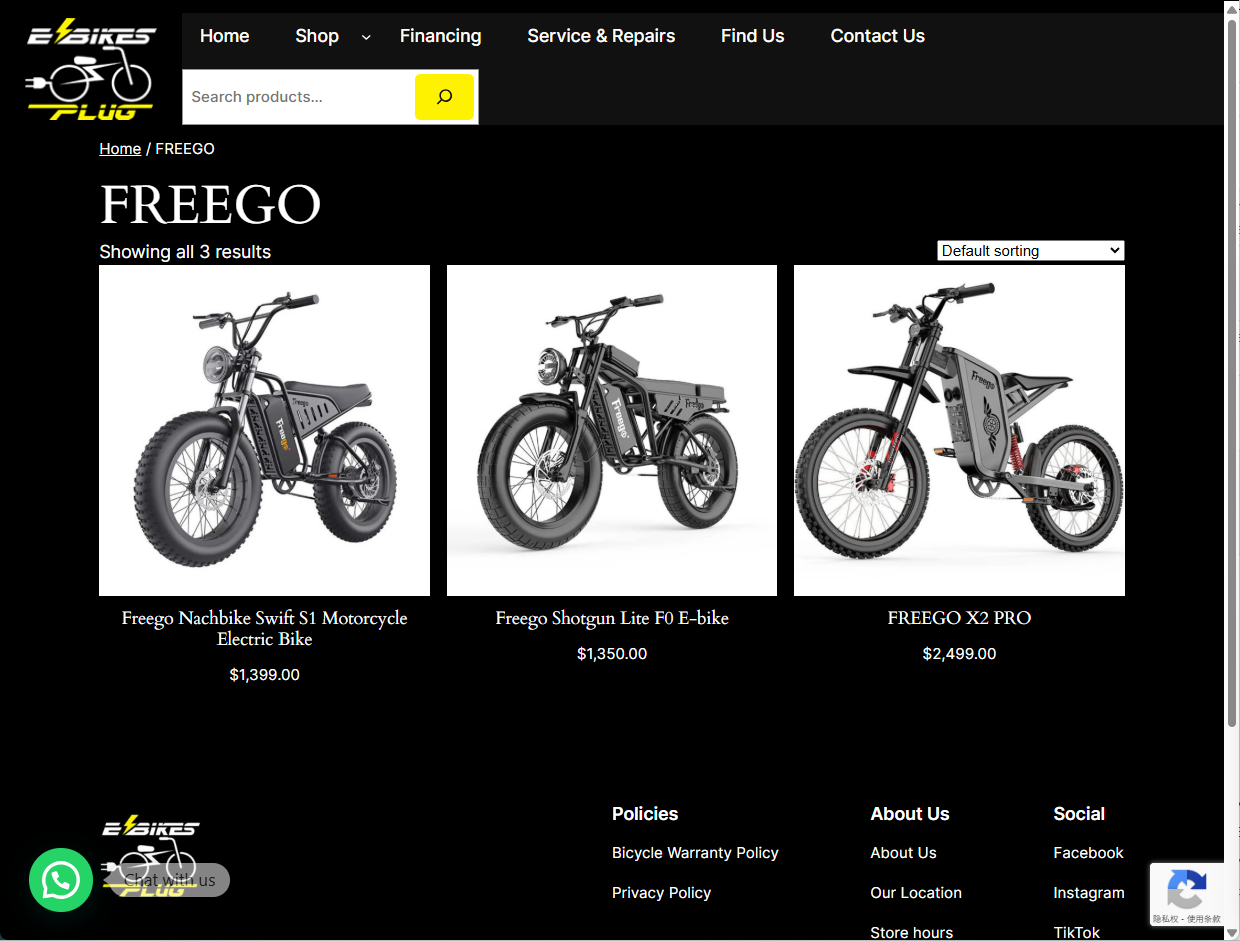
Freego authorized dealer program: regional distribution protection, dealer POS materials and co-branding assets.