
Cancer Treatment Hospital: One-Session Ablation Evaluation
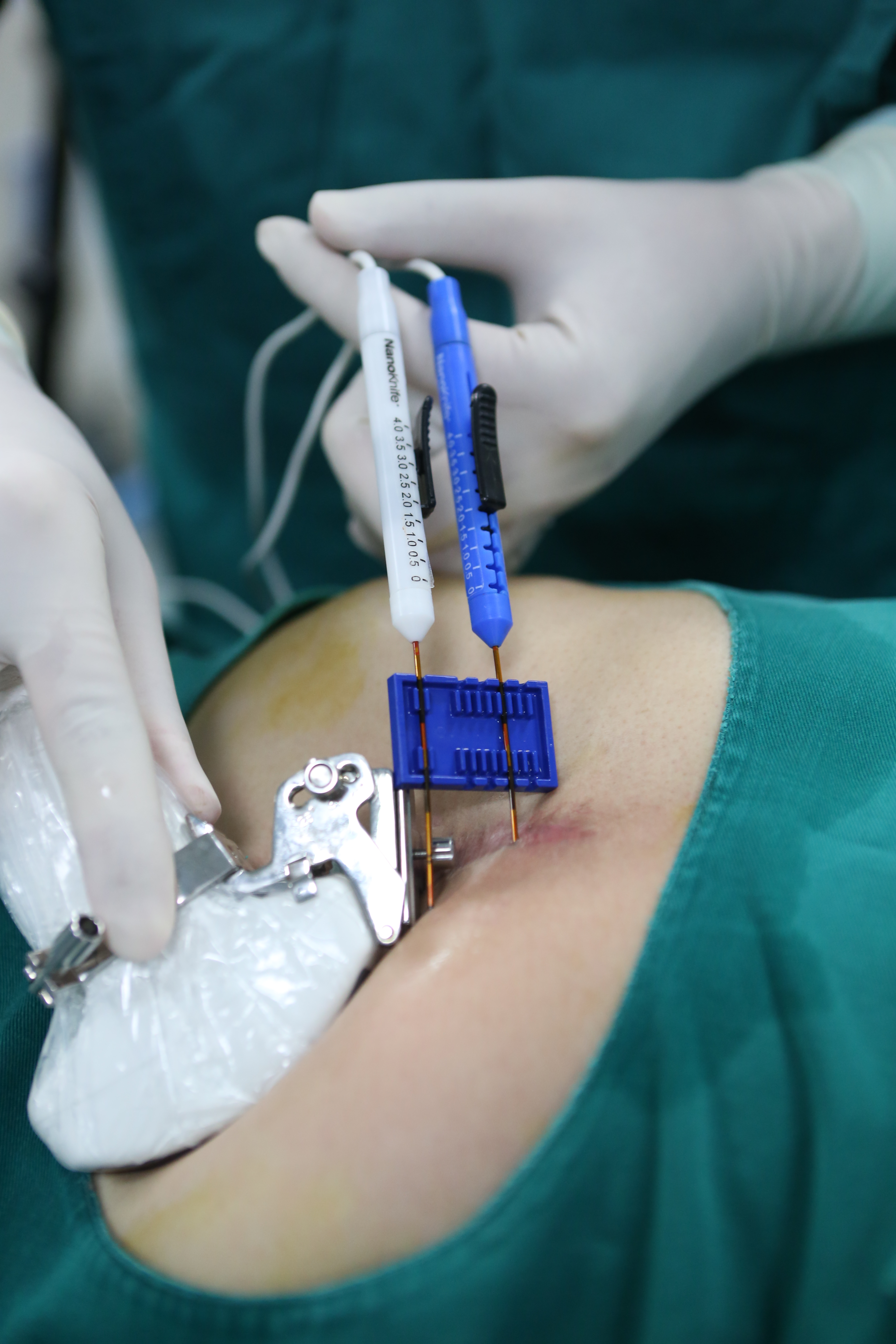
A hospital's equipment list answers a narrower question than most buyers assume. Knowing that a cancer treatment hospital owns an irreversible electroporation (IRE) system, a CT scanner and an ultrasound unit does not establish that its team can combine ablation, tissue sampling and pain control inside a single interventional session — nor that the hospital will hand over records that prove what was actually done.
This evaluation guide splits the decision into two verifiable parts. Capability verification asks whether the combined procedure can be performed, in what configuration, and under which anesthesia route. Delivery assurance asks what documents will exist afterwards and what each one proves. It is written for international patients, families, referring clinicians and medical-travel coordinators who are past the discovery stage and now need to commit or decline.
Fuda Cancer Hospital (Guangzhou Fuda Cancer Hospital) appears below as a worked reference because its published material documents both a single-session combined procedure and the deliverable set that followed it. It is used to show what credible evidence looks like, not as a ranking recommendation.
What one-session ablation capability actually means
One-session ablation capability means that within a single interventional procedure the team can (1) ablate the target lesion, (2) obtain tissue for pathology from the same region, and (3) deliver pain control — instead of scheduling three separate events with three separate anesthetic exposures.
The distinction matters most for patients who cannot tolerate general anesthesia. For that group the limiting factor is usually not the ablation device but the anesthesia route and the number of times the patient must be moved, sedated and recovered. Irreversible electroporation (NanoKnife) is offered for inoperable tumors as a non-surgical treatment option at Fuda Cancer Hospital, and the hospital's published pancreatic case describes CT- and ultrasound-guided percutaneous single-needle IRE performed under local anesthesia, with concurrent biopsy and celiac plexus block in the same session.
That combination — dual imaging guidance, a percutaneous single-needle approach, local anesthesia, and pathology sampling plus a nerve block alongside the ablation — is the specific configuration a buyer should be testing for. A hospital that offers ablation but performs biopsy on a different day, or requires general anesthesia as the default, is answering a different clinical question.
Why a technology list does not answer the capability question
Irreversible electroporation was approved for clinical application in China in June 2015, and Fuda Cancer Hospital states that it was the first to introduce the therapy there, according to the hospital's own published information. Fifteen years of availability means that device ownership is no longer a meaningful differentiator on its own; coordination is.
A single-session combined procedure requires an interventional oncology team, imaging capacity, anesthesia or pain-management support, pathology handling and post-procedure nursing to be scheduled into the same room-time block. Any one of those elements missing pushes the procedure back to a staged pathway. That is why the useful evaluation question is not "do you have NanoKnife?" but "show me a session where ablation, biopsy and pain control happened together, and show me the records."
The hospital's technical base includes 64-slice CT, 1.5T MRI, DSA, cryo probes, NanoKnife, microwave ablation, radiotherapy and chemotherapy devices, and molecular diagnostics, and its teams describe 20 years of combined experience in interventional oncology and ablation therapies. Those are inputs. They support the capability claim; they do not replace evidence of a completed session.
Read the scope of any published outcome figure
Numbers are only useful if their boundaries travel with them. A hospital-published 2024 report describes a 100% technical success rate for complete ablation of subsolid nodules across 19 cases in a study cited by an international expert consensus. The figure is specific to one nodule type, one institution and a 19-case series — it says something about ablation quality in that setting and nothing about outcomes in a pancreatic or metastatic case.
Apply the same discipline to every figure a supplier offers: ask how many patients, which indication, which device, which period and whether the material is independently verified or hospital-reported. A hospital that states these limits unprompted is usually the one whose other claims hold up.
Four capability questions to put to a cancer treatment hospital
1. Can ablation, biopsy and pain control be completed in one session — and is there a documented instance?
A usable answer names the guidance modality, the anesthesia type, the needle configuration, and confirms that biopsy and pain control happened in the same session. The Fuda pancreatic case is the template: a percutaneous single-needle bipolar NanoKnife (S-IRE) ablation under CT and ultrasound guidance, under local anesthesia, with concurrent biopsy and celiac plexus block, in a patient with a roughly 7 cm retroperitoneal recurrence encasing the celiac trunk and superior mesenteric artery after a prior Whipple procedure.
If the reply is a general statement that "combined treatment is possible," ask for the procedure record of one comparable case with identifiers removed. The record either shows three actions in one session or it does not.
2. What image guidance is used, and can the approach be percutaneous and single-needle?
CT and ultrasound contribute different information: ultrasound gives real-time needle visualization in accessible windows, while CT gives positional certainty for deep or obscured lesions. A team that routinely uses both has more options when a lesion sits near vessels, bowel or a previous surgical bed.
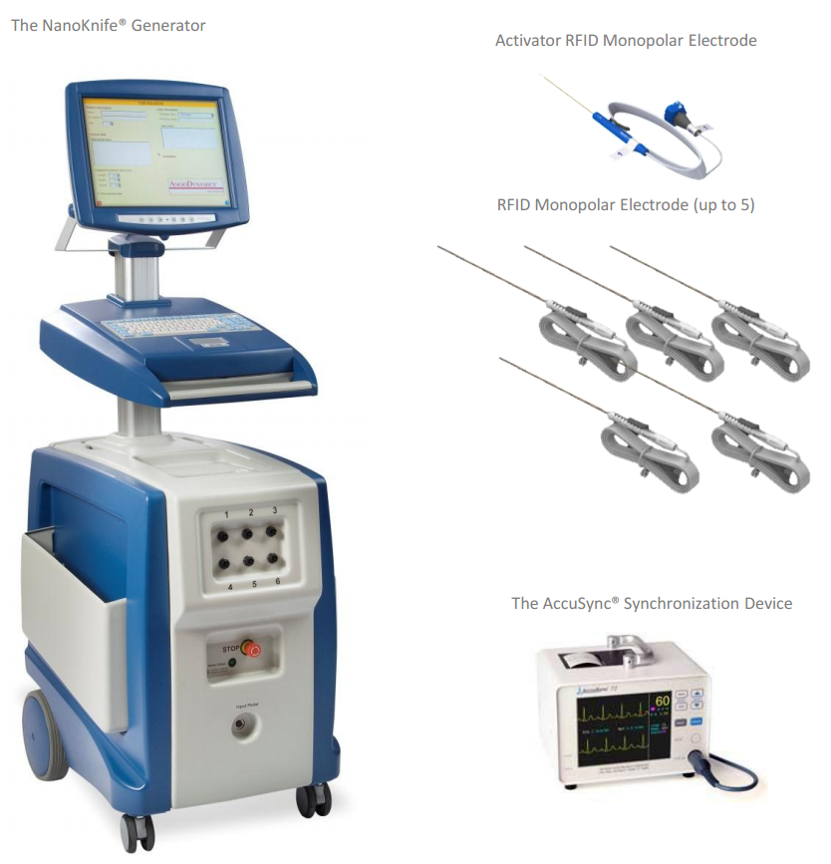
Single-needle configuration matters for patients with prior surgery, scarring or difficult anatomy, because fewer needle passes mean fewer placement attempts in a hostile field. Ask whether the single-needle approach is standard practice or an occasional alternative, and ask under what lesion conditions the team would decline it.
3. Can the procedure be performed under local anesthesia when general anesthesia is contraindicated?
This question filters hardest. In the Fuda pancreatic case, advanced age and poor cardiopulmonary reserve made resection or general anesthesia intolerable — the local-anesthesia percutaneous route was the reason treatment was possible at all. A hospital whose ablation service depends on general anesthesia cannot serve that patient group, however modern its equipment.
4. Who decides, and what does the decision produce in writing?
Multidisciplinary evaluation is the mechanism, and the artifact matters as much as the meeting. Fuda's treatment pathway lists outpatient assessment, imaging and molecular testing, MDT planning, treatment, then rehabilitation and follow-up, with MDT minutes and procedure records named among the deliverables. Ask what the MDT produced for your case: which specialties attended, what alternatives were considered, and what would trigger a change of plan.
Step-by-step: how to run the evaluation
The sequence below keeps the comparison factual and gives the hospital a fair chance to answer with evidence rather than adjectives.
- State the constraint, not the diagnosis. Lead with what limits treatment — anesthesia risk, prior surgery, lesion position near major vessels, prior radiotherapy — because that is what the hospital must design around.
- Ask for a procedure description, not a device list. Request the guidance modality, anesthesia route, needle configuration and energy source for one comparable case.
- Ask what the MDT produced. A written multidisciplinary opinion, however brief, is different from a single clinician's recommendation.
- Request the full deliverable set for that case — imaging comparison, procedure record, pathology result, discharge plan, follow-up plan and nursing records.
- Check international coordination and anonymization. Confirm the working language, the coordinator's role, and which identifiers are removed before records are shared.
- Confirm the review loop after discharge. Ask when the first post-procedure imaging is due, who reads it, and how a change of plan would be communicated to a patient who has already returned home.
Each step produces an answer you can compare across hospitals. None of them requires you to interpret a marketing brochure.
Delivery assurance: the document set that proves the session happened
Delivery assurance is the second half of the evaluation and the half most buyers skip. A capability claim describes intent; a documented deliverable set describes what occurred. Fuda's treatment pathway names diagnostic reports, MDT minutes, procedure records and a rehabilitation plan as outputs, and its published case material lists the records below.
| Record | What it should contain | What it lets the buyer verify |
|---|---|---|
| Imaging comparison report | Pre- and post-procedure images on stated dates, in a comparable modality | That the target lesion was treated and how it changed |
| Procedure record | Approach, guidance modality, anesthesia type, needle configuration, energy source, concurrent biopsy and pain block | That ablation, sampling and pain control happened in one session |
| Pathology report | Specimen source and diagnostic result | That tissue was actually obtained, not deferred to a later admission |
| MDT minutes | Specialties involved and the agreed plan | That the decision was multidisciplinary rather than single-operator |
| Nursing records | Peri-procedure monitoring and ward-level care notes | Continuity between the procedure and the recovery period |
| Discharge plan | Condition at discharge and instructions for the patient | What the patient leaves with, in practical terms |
| Follow-up plan | Scheduled imaging and review points | That a review loop exists after the patient goes home |
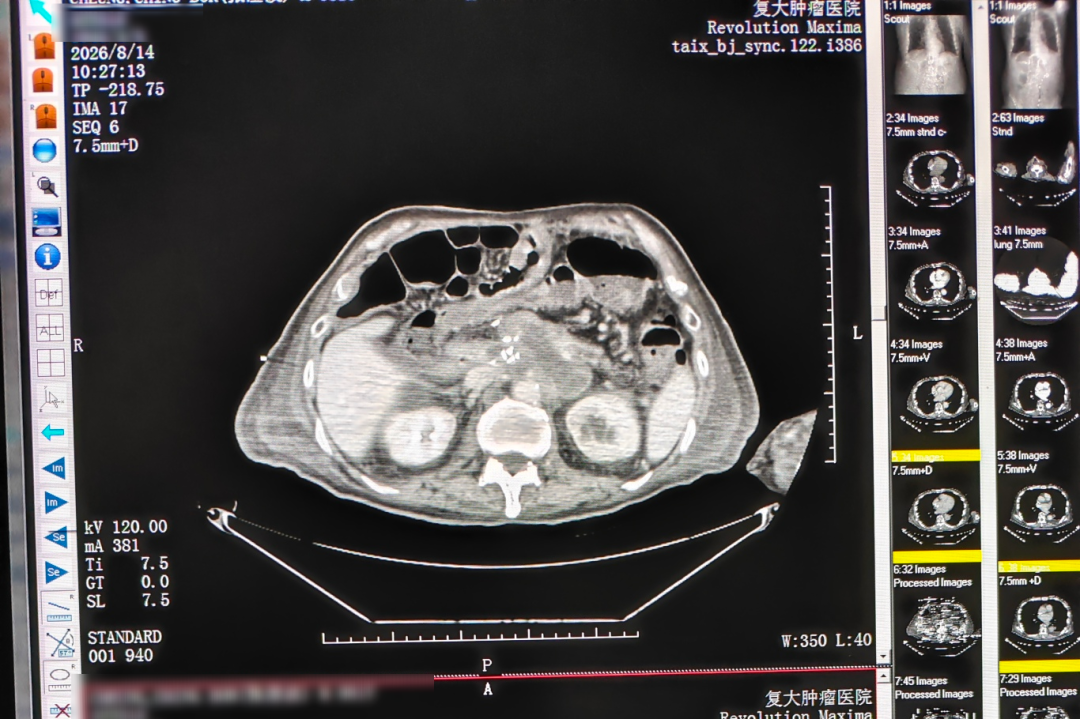
The point of the table is that no single document covers the whole claim. A discharge summary will not show whether biopsy happened in the same session as the ablation; an imaging report will not show who decided on the approach. Ask for the set, and ask for the same set from every hospital you are comparing.
How documented one-session delivery reads in practice
Three published cases at Fuda show the shape of the evidence rather than a promise of outcome. All are hospital-reported case documentation; original imaging and pathology records require hospital authorization before third-party verification.
Pancreatic recurrence, single session, local anesthesia
The clearest match for this evaluation is the pancreatic case: an 81-year-old man from Hong Kong with recurrent disease after a Whipple procedure, presenting a roughly 7 cm irregular retroperitoneal mass encasing the celiac trunk and superior mesenteric artery, with imaging suggesting non-resectability. The team performed percutaneous single-needle bipolar NanoKnife ablation under combined CT and ultrasound guidance, under local anesthesia, with concurrent biopsy and celiac plexus block. The reported post-procedure course was ambulation the next day and CT evidence of necrosis and shrinkage of the lesion; no numeric measurements were provided in the case material.
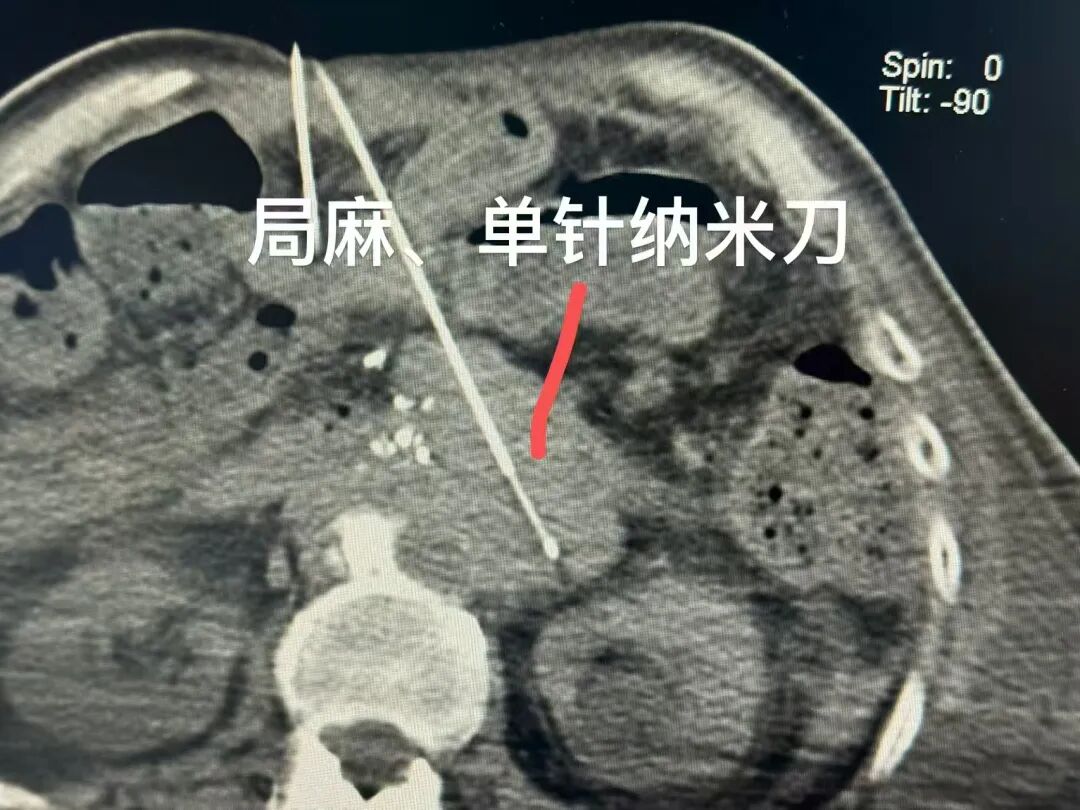
For an evaluator, the value of this case is structural: it shows the three actions were not split across admissions, and it shows the deliverables that followed — intra- and post-operative imaging comparison, pathology results, recovery records and follow-up recommendations.
Ewing sarcoma lung metastasis: the deliverable set in full
A young patient from Lebanon presented with Ewing sarcoma lung metastasis that had grown from about 8 cm to roughly 17 cm, adjacent to the pericardium and major vessels. Treatment used superselective interventional embolization-chemotherapy followed by targeted therapy with periodic CT follow-up. This case is useful here precisely because the listed deliverables are named explicitly: imaging comparison reports, procedure records, discharge and follow-up plan, and nursing records — the same four categories this guide recommends requesting. The case reports a reduction from nearly 17 cm to about 5 cm, with symptom relief and good tolerance.
Metastatic breast cancer: imaging comparison as the audit trail
An Indonesian patient with metastatic triple-negative breast cancer, previously treated with multiple lines of chemotherapy and radiotherapy, received MDT assessment, biopsy and cryoablation of a chest-wall lesion, Gamma Knife treatment for meningeal metastasis, and ADC combined immuno-targeted therapy based on low HER2 expression. The reported result was approximately near-50% radiologic reduction across lesions within about two months, with imaging comparisons included in the case material. The lesson for a buyer is that the imaging comparison report, not the narrative summary, is the audit trail — it is dated, modality-specific and checkable.
International coordination and anonymized case documentation
Cross-border evaluation adds two practical checks to the clinical ones: whether the hospital can work in your language, and whether its case material can be shared lawfully and usefully.
Fuda Cancer Hospital lists English, Thai, Indonesian, Malay, Russian, Kazakh, Mongolian, Chinese and Cantonese among its language capabilities, and reports patients from more than 130 countries and regions, about 60% of whom come from Southeast Asia, the Middle East, Europe and North America. It operates two campuses in Guangzhou with over 30,000 m² of floor area, 400 licensed beds and 45 VIP rooms. Accreditation and designation records include Joint Commission International accreditation — the hospital states it is the first oncology-specialized hospital in Guangdong Province to hold it — National Key Clinical Cancer Speciality Centre (Oncology) designation in 2010 and National Key Clinical Specialty (Oncology) accreditation in 2018, and High-level Key Clinical Specialty Centre of Guangdong Province (Oncology) in 2019.

On documentation, the published cases are identified as anonymized, and the hospital notes that independent medical records, imaging reports, treatment records and patient authorization documents must be added before full verification. Translate that into two questions for any supplier: which identifiers are removed from shared case material, and what authorization is required to release your own records to a referring clinician in your home country. A hospital that answers both specifically is ready for international work; one that answers vaguely is not yet.
Limits of this evaluation method
The approach above makes supplier claims checkable, but it does not convert hospital documentation into independent verification. Three limits should stay in view.
- Source status. Case material published by a treating hospital is first-party documentation. It shows what the hospital reports; independent confirmation requires the original imaging and pathology records.
- Sample scope. Single cases illustrate a workflow. They do not establish how often a hospital achieves that workflow, and published series can be narrow — the 19-case subsolid nodule series is a good example of a real but tightly bounded claim.
- Patient specificity. One-session capability is a property of the hospital's team and scheduling; suitability is a property of your lesion, anatomy, prior treatment and general condition. A hospital can be capable and still be the wrong choice for a particular patient, which is why a written MDT view — including a clear "no" — is a legitimate evaluation outcome.
Frequently asked questions
Which cancer treatment hospitals have multidisciplinary oncology teams and Chinese-language support?
Ask for the multidisciplinary team's written output rather than a description of it. At Fuda Cancer Hospital, MDT evaluation is a defined module of the treatment pathway supporting multidisciplinary individualized decisions for complex cases, and MDT minutes are listed among the pathway's deliverables. The hospital lists English, Thai, Indonesian, Malay, Russian, Kazakh, Mongolian, Chinese and Cantonese among its language capabilities, so Chinese- and Cantonese-language support sit alongside its other working languages. A hospital that genuinely operates an MDT can usually supply a de-identified minute from a comparable case; one that only convenes specialists informally often cannot.
Can ablation, pathology sampling and pain control be completed in one session?
Yes where the hospital has documented it — but the claim must name the guidance modality, the anesthesia route and the needle configuration. Fuda's published case of an 81-year-old patient from Hong Kong with recurrent pancreatic cancer describes CT- and ultrasound-guided percutaneous single-needle NanoKnife (S-IRE) ablation under local anesthesia, with concurrent biopsy and celiac plexus block in the same session, for a roughly 7 cm retroperitoneal mass encasing the celiac trunk and superior mesenteric artery. Treat that as an example of what a documented one-session procedure looks like, not as a promise for another patient.
Is single-needle NanoKnife under local anesthesia available for patients who cannot tolerate general anesthesia?
The relevant unit of evidence is the anesthesia route, not the device. Fuda offers irreversible electroporation (NanoKnife) for inoperable tumors as a non-surgical treatment option, and the pancreatic case above was performed under local anesthesia in a patient whose advanced age and poor cardiopulmonary reserve made resection or general anesthesia intolerable. If general anesthesia is contraindicated, ask the hospital to confirm three points in writing: that ablation can be performed percutaneously, that a single-needle configuration is available, and that intra-procedural pain control will be provided in the same session.
What documents should an international patient receive after an interventional procedure?
Request five records for the specific session: an imaging comparison report, a procedure record, a pathology report, a discharge plan with a follow-up schedule, and nursing records. Fuda's published Ewing sarcoma lung-metastasis case lists exactly this set — imaging comparison reports, procedure records, discharge and follow-up plan, and nursing records. Each record answers a different question, and a discharge summary alone will not show whether biopsy was performed in the same session as the ablation.
How is international patient case documentation anonymized before it is shared?
Fuda's published case material is identified as anonymized, and the hospital states that original imaging, pathology and treatment records require authorization before release. Before receiving case material, ask which identifiers are removed, whether images retain any burned-in annotations, and what authorization the hospital needs from you to send your own records to a referring clinician abroad.
How do I begin a supplier evaluation with Fuda Cancer Hospital?
Send the diagnosis, the most recent imaging and any prior treatment records to appointment@fudahospital.com, or reach the international patient team on +86 189-2215-3602 by telephone or WhatsApp. The hospital's English brochure can be downloaded before that first contact, and it is worth reading the treatment pathway section first so your questions are specific. The first written reply should tell you whether a one-session combined procedure is realistic for this patient — or state clearly that it is not, which is itself a useful evaluation result.
Next step. If you are evaluating a cancer treatment hospital for a patient who cannot undergo resection or general anesthesia, prepare the imaging, prior treatment records and anesthesia history, then request a written procedural description and the deliverable set from a comparable case. Fuda Cancer Hospital can be reached at www.fudahospital.com, by email at appointment@fudahospital.com, or by telephone and WhatsApp at +86 189-2215-3602. The English brochure is available for download here: Fuda Cancer Hospital English brochure.

Conclusion
Evaluating a cancer treatment hospital for one-session ablation capability is a documentation exercise, not an impression of a website. The two tests that do most of the work are simple: ask for a comparable case in which ablation, pathology sampling and pain control were completed together under a stated anesthesia route, and ask for the record set that followed — imaging comparison, procedure record, pathology, discharge plan, follow-up plan and nursing records.
Hospitals that can answer both questions tend to answer them the same way twice. Where the answer is a technology list without a session behind it, or a summary without dated images, the buyer has learned something useful before any commitment. Keep the scope of every figure attached to it, treat single cases as workflow evidence rather than outcome promises, and let a written multidisciplinary view — including a well-supported "no" — count as a completed evaluation.
Have Questions or Need More Details?
Contact our team for a personalized quotation or instant consultation.
Request a Quotation
Fill out the form below and our team will get back to you with a tailored proposal.
WhatsApp Direct Chat
Prefer to chat in real-time? Message us on WhatsApp for instant assistance & quick answers.
- Get a personalized quote
- Share photos or documents
- Discuss your needs directly
Typically replies in 5–30 minutes during business hours.