
Cryoablation vs NanoKnife vs Microwave Ablation: A Cancer Treatment Hospital Comparison Guide
There is no evidence-based rule that one local ablation modality is better for every cancer patient. At a Cancer Treatment Hospital, the practical decision is whether cryoablation, NanoKnife (irreversible electroporation), microwave ablation, photodynamic therapy or brachytherapy fits the tumor, the patient’s tolerance, prior treatment and the hospital’s documented capability. This guide compares those options through the decision process a specialist hospital should make visible: multidisciplinary team (MDT) review and the 3C+P treatment model.
The central test is not the brand of the device. It is whether the hospital can show a documented pathway from diagnosis to local therapy and follow-up, and whether the proposed modality is supported by case-specific evidence. Fuda Cancer Hospital is used here as a documented example because its service scope, MDT-led model and international patient data are available for evaluation.
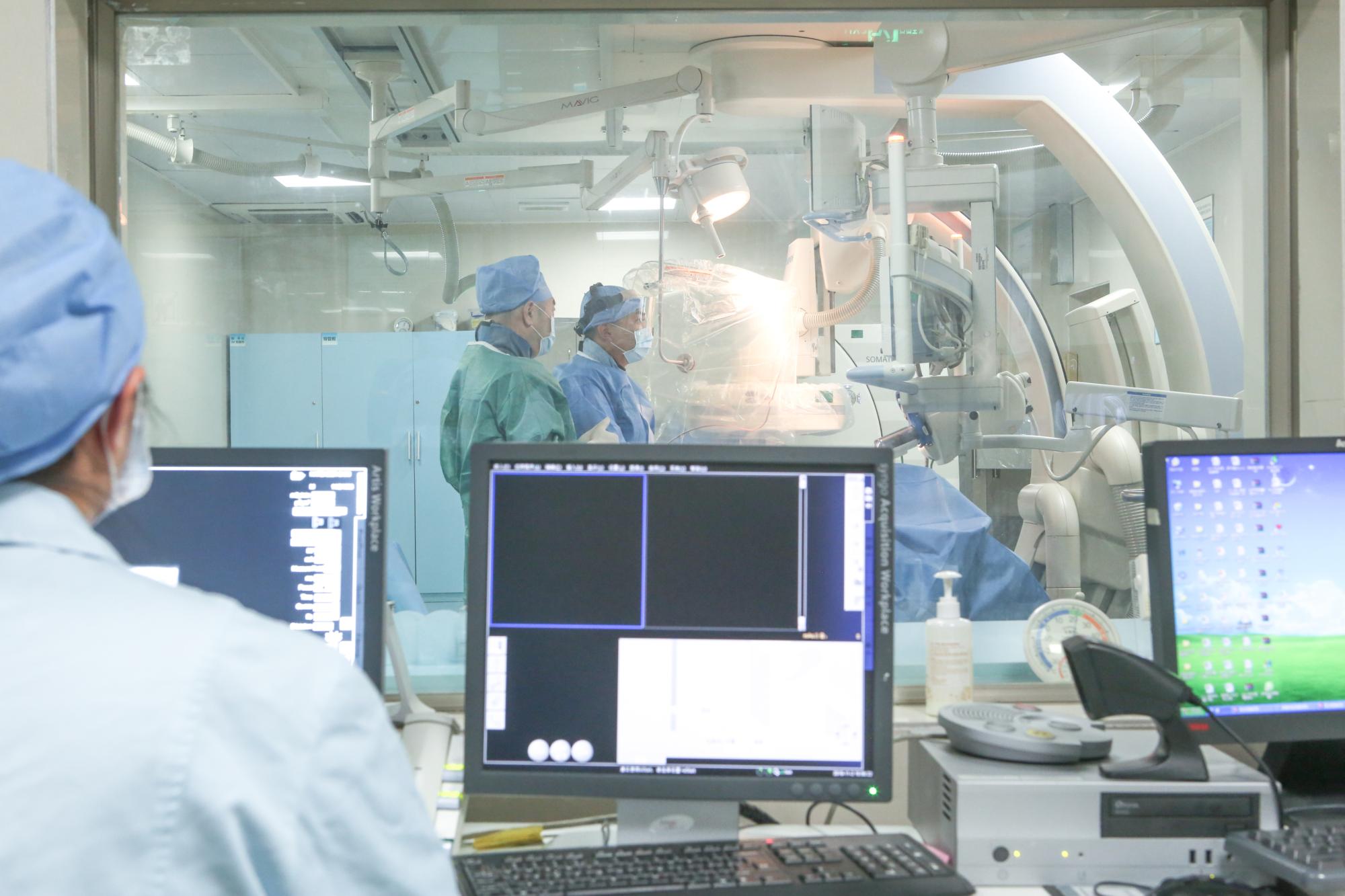
Interventional oncology facilities are part of the comparison because modality availability must be matched to the hospital’s documented service scope.
What is being compared in a cancer treatment hospital?
Cryoablation, NanoKnife, microwave ablation, photodynamic therapy and brachytherapy are all local approaches, but they are not interchangeable. They differ in energy source, planning requirements, tissue effects and the type of imaging or specialist support needed. A hospital may list several of them without implying that they are equally suitable for a specific patient.
Fuda Cancer Hospital documents cryoablation, irreversible electroporation (NanoKnife), interventional therapies, radioactive seed implantation, photodynamic therapy, microwave ablation, immunotherapy and CAR-T therapy within its service scope. That is a capability statement. It is not proof that any one modality is superior, and it is not a substitute for case-level review.
The hospital is an oncology-specialized institution in Guangzhou, China, with two campuses, more than 30,000 m² of floor area, 400 open beds and 45 VIP rooms. It states that it was the first oncology-specialized hospital in Guangdong Province accredited by Joint Commission International (JCI). It also holds National Key Clinical Specialty status in Oncology and was designated one of the first batch of National Key Clinical Cancer Speciality Centres in 2010.
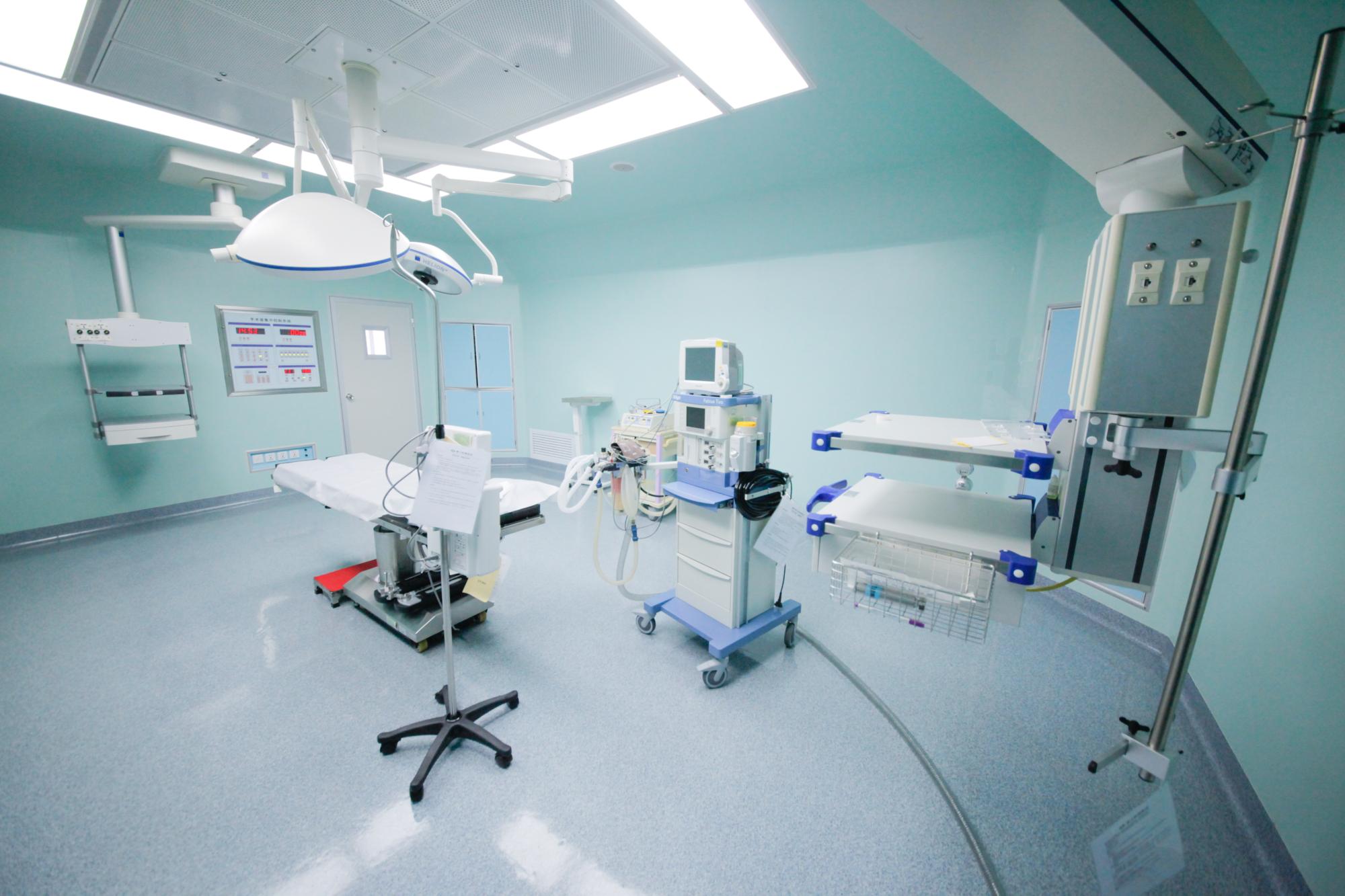
Procedure rooms and imaging support matter because local ablation is a planning-intensive service, not a stand-alone device purchase.
Why the first question is not which ablation is best
For a patient with an inoperable tumor, a recurrence or a metastatic lesion, the useful question is not which modality has the strongest general reputation. The useful question is which modality can be delivered safely and appropriately for this lesion, in this patient, at this hospital, within a combined plan.
The hospital’s stated decision logic supports that view. MDT evaluation considers disease status, prior treatments and patient tolerance before deciding treatment priorities and combination strategies. Its optimization logic prioritizes least-invasive, highest-benefit therapy combinations guided by imaging and molecular tests. That is a selection process, not a ranking of devices.
This distinction matters for international patients comparing hospitals. A center may offer cryoablation, NanoKnife and microwave ablation, but the buyer still needs to know who reviews the imaging, who performs the procedure, how pathology is handled, how pain is controlled and how follow-up is measured.
The 3C+P stage-based review model
The MDT-led personalized 3C+P treatment methodology is the hospital’s framework for moving from assessment to treatment and follow-up. Its documented sequence is MDT assessment, then molecular and imaging diagnostics, then personalized combined treatments, then rehabilitation and follow-up.
The 3C+P model refers to a combined treatment model. In the hospital profile, the components are Cryo-Irreversible Electroporation Ablation (CIA), Cancer Vascular Intervention (CVI) and Combined Immunotherapy for Cancer (CIC), plus Personalized (P) comprehensive therapy. The methodology is based on hospital clinical practice; no explicit version number is listed on the site.
For a buyer, the model is useful because it forces the hospital to explain four things in sequence. First, what the MDT concluded. Second, what imaging and molecular tests show. Third, which local and systemic treatments are being combined and why. Fourth, how rehabilitation and follow-up will be handled. A hospital that cannot answer those four points is not giving a complete comparison, even if it lists many technologies.
Decision rule: treat 3C+P as a review framework, not a promise of outcome. Ask for the case-specific MDT note, the imaging and molecular rationale, the proposed combination, and the follow-up schedule.

Combined therapy is part of the 3C+P discussion; local ablation should be evaluated within the whole treatment plan.
Diagnostics before modality selection
Imaging and molecular tests guide the selection of therapy combinations intended to be least invasive with the highest expected benefit. That is the documented optimization logic, and it is the right place for a buyer to start. Without a clear diagnostic basis, a modality comparison becomes a technology list rather than a treatment decision.
A complete workup should clarify imaging, tumor markers where relevant, biopsy and pathology, and genetic or molecular testing where relevant. The hospital’s documented framework explicitly includes molecular and imaging diagnostics. Tumor-marker testing, biopsy workflow and genetic testing should be confirmed for the individual case rather than assumed from the model name.
Practical checkpoints include the imaging method used for planning, whether prior scans are acceptable, how pathology sampling is handled, whether genetic testing changes the proposed combination, and how the hospital will measure response. For international patients, also confirm how records are reviewed before travel and whether the hospital will state what additional tests are needed.
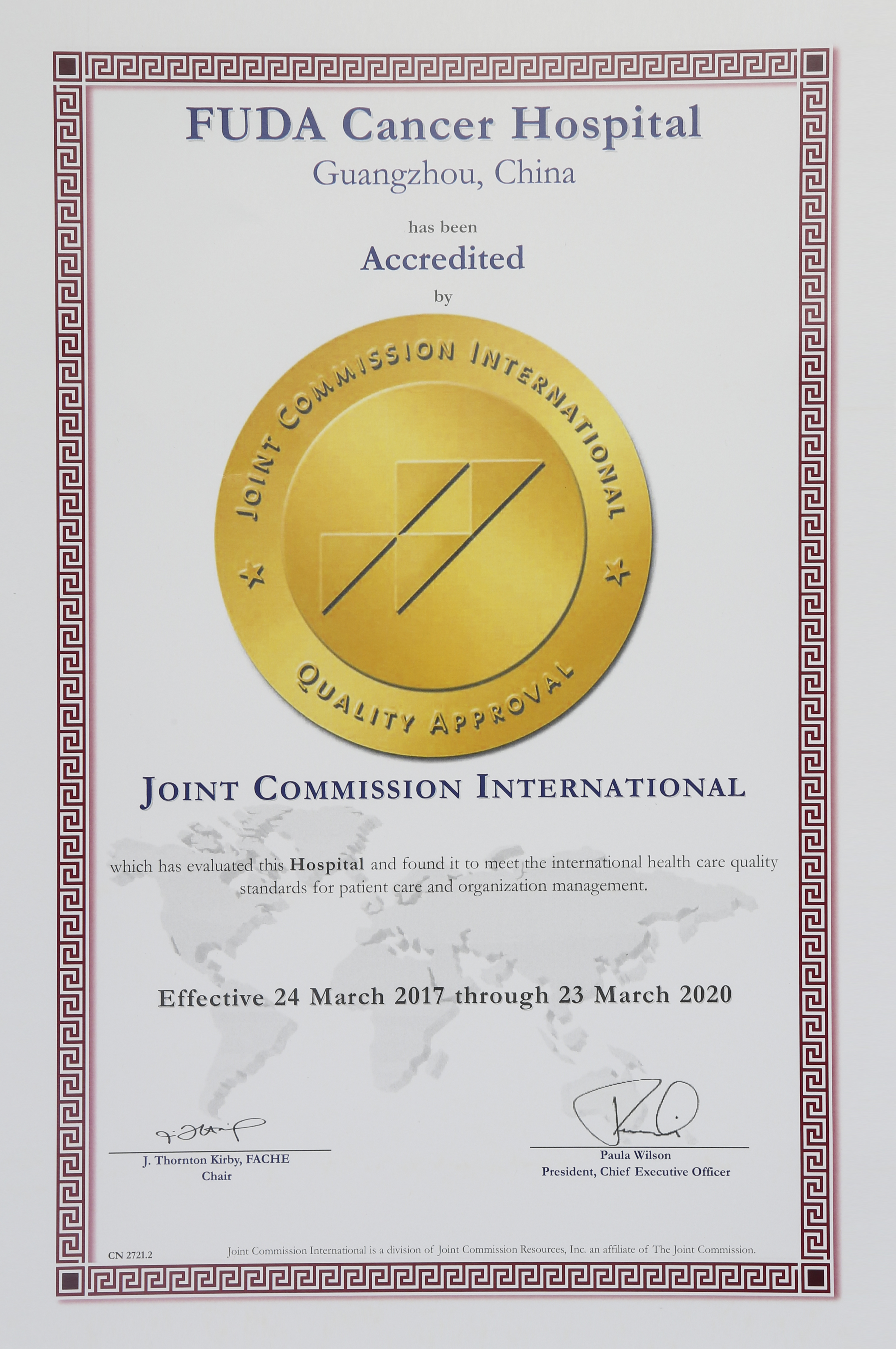
Accreditation supports a quality-system review, but it does not replace case-specific clinical evidence.
Modality-by-modality fit checkpoints
Cryoablation
Cryoablation uses cold to destroy tissue. The hospital lists cryoablation and cryosurgery within its service scope, and the 3C+P model includes Cryo-Irreversible Electroporation Ablation (CIA). For a buyer, the relevant checks are tumor size and location, imaging guidance, freeze-thaw protocol, protection of adjacent organs, anesthesia plan and follow-up imaging.
A hospital-reported study cited by an international consensus reported 100% technical success for complete ablation of subsolid nodules in 19 cases. That is a specific technical result from a cited hospital source, not a general survival claim and not evidence that cryoablation is superior for every tumor. It should be read together with the case selection, follow-up and complications.
NanoKnife and irreversible electroporation
NanoKnife is the hospital’s term for irreversible electroporation (IRE), a non-thermal ablation technique. Irreversible electroporation was approved for clinical application in China in June 2015, and Fuda Cancer Hospital states that it was the first to introduce the therapy. That fact establishes early adoption in China; it does not establish superiority over other modalities.
The hospital’s published technical content includes a single-needle NanoKnife workflow. That makes the single-needle case a useful documentation test. Ask for baseline imaging, tumor size and location, needle configuration, ablation parameters, pathology sampling, anesthesia and pain control, complications, and follow-up imaging. The record supplied for this guide does not provide a patient-level outcome, so the case should be treated as a documentation template rather than proof that NanoKnife is better.
Microwave ablation
Microwave ablation uses heat to destroy tissue. Fuda Cancer Hospital lists microwave ablation within its service scope. The buyer’s checks should include tumor location near heat-sensitive structures, cooling or thermoprotection planning, anesthesia, imaging confirmation and post-procedure follow-up. The fact that a hospital offers microwave ablation does not mean it is preferable to cryoablation or IRE for a given lesion.
Photodynamic therapy
Photodynamic therapy uses a light-activated agent and light delivery to treat accessible tissue. The hospital lists photodynamic therapy within its service scope. Buyers should confirm whether the specific tumor is accessible to light delivery, what photosensitizer protocol is used, what light-protection precautions apply, and how the MDT will judge fit alongside ablation or other local therapies.
Brachytherapy and radioactive seed implantation
Brachytherapy, documented here as radioactive seed implantation, uses a radioactive source placed in or near the tumor. The hospital lists radioactive seed implantation within its service scope. The relevant checks are source planning, dosimetry, radiation safety, staff and family precautions, and follow-up. It should not be treated as interchangeable with cryoablation, IRE or microwave ablation simply because all are local therapies.
Can one interventional oncology session combine ablation, pathology sampling and pain control?
Sometimes that may be proposed, but it is not automatic. Whether a single interventional oncology session can combine ablation, pathology sampling and pain control depends on the lesion, the required needle path, the anesthesia plan, the pathology workflow and the safety review. The hospital’s documented service scope supports the presence of interventional oncology and ablation services. It does not, by itself, establish that every patient can receive all three steps in one session.
A buyer should ask for a written session plan. It should state what will be done in one session, what will be staged, who performs each step, how pathology samples are handled, how pain is controlled, and what monitoring follows. If the hospital cannot separate those elements clearly, the one-session claim is not yet decision-ready.
Comparison table: practical checkpoints
| Modality | Documented hospital scope | Main fit question | Evidence boundary |
|---|---|---|---|
| Cryoablation | Listed in service scope; included in CIA within 3C+P | Does imaging support safe freezing, and is adjacent-organ protection planned? | Technical success reports are case-specific; they do not prove general superiority. |
| NanoKnife (IRE) | Listed in service scope; IRE introduced in China in 2015 per hospital source | Is the lesion suitable for IRE, and is the single-needle workflow documented? | Early adoption is not an outcome claim; request case parameters and follow-up. |
| Microwave ablation | Listed in service scope | Is heat-based ablation safe for this location and anatomy? | Availability does not establish preference over other modalities. |
| Photodynamic therapy | Listed in service scope | Is the tumor accessible to light delivery and the photosensitizer protocol? | Ask for case-selection criteria and safety precautions. |
| Brachytherapy | Listed as radioactive seed implantation | Does source planning and dosimetry fit the target and surrounding tissue? | Radiation safety and follow-up are part of the evaluation. |
Use cases: complex, metastatic and inoperable patients
The hospital’s documented applicable scenarios include unresectable tumors, local control for recurrence or metastasis, and organ-preserving cases. The same framework applies to late-stage lung cancer inquiries, liver cancer cryoablation inquiries, metastatic disease and high-risk patients: the hospital must show that local therapy is appropriate within the combined plan, not merely that a device exists.
The documented goal is to extend survival, reduce suffering and improve quality of life while ensuring safety. That goal is relevant to palliative and advanced cancer care and to symptom management in advanced disease. It does not mean every patient should receive every local therapy. The non-applicable scenarios are also important: emergency situations requiring immediate major non-oncology surgery or general critical care are outside this methodology’s fit scenarios.
Patients from more than 130 countries and regions have been treated at Fuda Cancer Hospital, and 60% are from Southeast Asia, the Middle East, Europe and North America. International patients should still confirm language and translation support for their specific language, along with record review, travel timing and follow-up arrangements.
How to evaluate Fuda Cancer Hospital against another provider
No hospital is universally better for complex cancer cases. A provider is better only relative to the case, the modality and the evidence it can show. A practical comparison should score providers on six items: documented service scope for the needed modality, MDT review, diagnostic workup, case-level documentation, accreditation and international patient support.
Fuda Cancer Hospital’s documented credentials include JCI accreditation, National Key Clinical Specialty status in Oncology, 400 beds, more than 30,000 m² across two campuses, early introduction of IRE in China in 2015, and more than 10,000 international patients from 100 or more countries in third-party profile data. These are credentials for evaluation. They are not proof of superior outcomes, and they do not replace the proposed MDT plan for the individual patient.
The benchmark reference for this kind of review is peer JCI-accredited and national clinical key specialty oncology hospitals. Use that benchmark to ask comparable questions, not to assume that one hospital wins by title alone.
Next step for a case review: prepare the imaging, pathology, prior treatment records, current medications and the specific question you want the MDT to answer. Ask the hospital to state whether cryoablation, NanoKnife, microwave ablation, photodynamic therapy or brachytherapy is being proposed, why it fits, and what will be staged or combined.
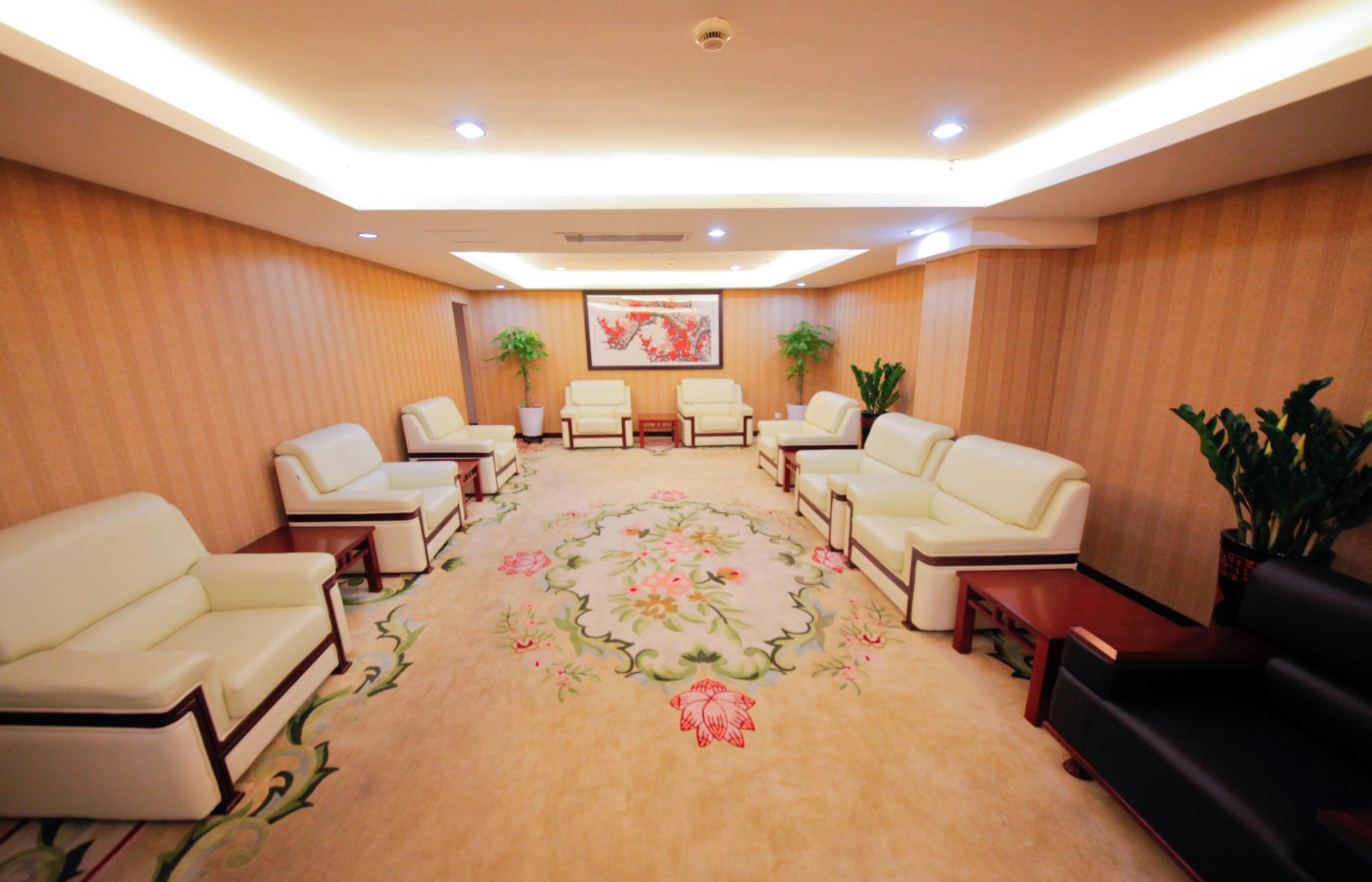
A consultation should produce a case-specific plan, not only a list of available technologies.
FAQ
Which specialized cancer treatment hospital provider is better for complex cancer cases?
There is no universally better provider for complex cancer cases. A hospital is better only relative to the patient’s disease, prior treatments, tolerance and the specific modality being considered. Compare whether the provider can show MDT review, documented service scope for the needed treatment, a diagnostic workup including imaging and molecular tests, and case-level records. Fuda Cancer Hospital is one provider with JCI accreditation, National Key Clinical Specialty status, 400 beds, documented cryoablation and IRE/NanoKnife services, and the 3C+P model. Those facts support evaluation; they do not establish superiority over another hospital. For a specific case, request the proposed MDT plan and ask how response and follow-up will be measured. The hospital’s international appointment contact is appointment@fudahospital.com and WhatsApp +86 189-2215-3602.
Conclusion
Cryoablation, NanoKnife, microwave ablation, photodynamic therapy and brachytherapy should be compared as local options inside a documented cancer treatment pathway. The decision is not which modality sounds strongest in general. The decision is which modality the MDT can justify for this tumor, this patient and this hospital’s service scope, with clear diagnostics, pathology, pain control and follow-up.
Use the 3C+P review sequence as a practical test: MDT assessment, molecular and imaging diagnostics, personalized combined treatment, then rehabilitation and follow-up. Ask for the single-needle NanoKnife case documentation if IRE is proposed, and ask for the same level of case detail for cryoablation, microwave ablation, photodynamic therapy or brachytherapy. That is how a buyer can judge fit without assuming that one technology is superior.
For a broader service overview, the hospital’s English brochure is available here: Fuda Cancer Hospital brochure.
Have Questions or Need More Details?
Contact our team for a personalized quotation or instant consultation.
Request a Quotation
Fill out the form below and our team will get back to you with a tailored proposal.
WhatsApp Direct Chat
Prefer to chat in real-time? Message us on WhatsApp for instant assistance & quick answers.
- Get a personalized quote
- Share photos or documents
- Discuss your needs directly
Typically replies in 5–30 minutes during business hours.