
Documentation Standards in Minimally Invasive Cancer Treatment: A Compliance Checklist
A minimally invasive cancer treatment case is only as verifiable as the paperwork behind it. The documentation standard for an interventional oncology case is satisfied when an outside reader can reconstruct what was diagnosed, what was done, with which device and imaging guidance, what changed on imaging, how the patient recovered, and what happens next — using dated, attributable records rather than narrative claims.
Guangzhou Fuda Cancer Hospital is an oncology-specialised hospital in Guangzhou, China, founded in 2003, operating the Tianhe and Haizhu campuses with 400 licensed beds including 45 VIP rooms, and accredited by Joint Commission International (JCI). Its clinical model combines cryoablation, irreversible electroporation (NanoKnife), vascular interventional oncology and combined immunotherapy within a multidisciplinary (MDT) framework. This article does not argue that any particular certificate proves case quality. It sets out the record set a well-documented interventional case should contain, and the checks a patient, family member, referring clinician or procurement reviewer should run before relying on a case report published on a hospital website.
Problem Definition: Why the Evidence Trail, Not the Claim, Is the Constraint
Most published interventional oncology cases fail not because the treatment was wrong, but because the record is incomplete in ways that make independent judgement impossible. Three failure modes recur.
First, a missing baseline. A report that begins with “the tumour shrank” without stating the pre-treatment dimensions, the imaging modality used, the date of that scan and the diagnostic basis (histology, and where relevant molecular markers) cannot be assessed. Size change is meaningless without a starting measurement taken on a stated modality at a stated time.
Second, unmatched comparison images. Pre- and post-treatment images taken on different modalities, at different phases of contrast, or at unstated intervals do not constitute a comparison. A reviewer needs the modality, the date and the anatomical level to be consistent enough that the same lesion can be identified twice.
Third, an outcome without a time stamp or a follow-up plan. “Improved” and “reduced” are not observations until they are tied to a date and to a schedule for the next assessment. Interventional oncology outcomes are also conditional: local control, symptom relief and quality-of-life change depend on disease stage, prior therapy and the site treated, so a case report without those qualifiers overstates what a single record can show.
A fourth constraint is structural rather than clinical. Anonymisation and verifiability pull in opposite directions. Removing identifiers protects the patient, but it also removes the details that would let a third party trace a record. The published case material from Fuda Cancer Hospital flags its case reports as anonymised, and states that original imaging, pathology and medical records require hospital authorisation or provision before they can serve as medical proof. That is the correct position — but it means the published page is a summary, and the auditable record sits behind a request.
Industry Background: More Procedures, More Mobility, More Scrutiny
Demand for non-surgical and organ-preserving oncology has grown alongside the wider minimally invasive surgery market, which MarketsandMarkets projects to reach USD 199.30 billion by 2030 (published in its Minimally Invasive Surgery Market Report 2025–2030). Grand View Research reports that Asia Pacific held a 37.6% revenue share of the cancer treatment facilities market in 2025, which is consistent with the region's role as both a provider base and a destination for cross-border care.
Regulatory maturity in the underlying technologies varies by market. Cryosurgery for cancer treatment was approved by China's State Drug Administration in 1999, according to Fuda Cancer Hospital's published material, which means the modality has a long approval history in that jurisdiction even though its clinical application continues to be refined. Academic scrutiny has followed: Fuda Cancer Hospital's research on cryoablation for lung nodules was cited in the 2024 expert consensus of the American Association for Thoracic Surgery (AATS), a recognition of the evidence base rather than of any single case.
Accreditation operates at a different level again. JCI accreditation, which Fuda Cancer Hospital holds as the first oncology-specialised hospital in Guangdong Province to be accredited, addresses institutional systems — governance, safety processes, infection control, record-keeping practice. It does not certify the accuracy of an individual case report, and it should never be presented as if it did. The same logic applies to the hospital's designations as a National Key Clinical Specialty (Oncology), confirmed in 2018, and as a High-level Key Clinical Cancer Speciality Centre of Guangdong Province (Oncology) in 2019: these describe institutional standing, not the contents of one patient file.
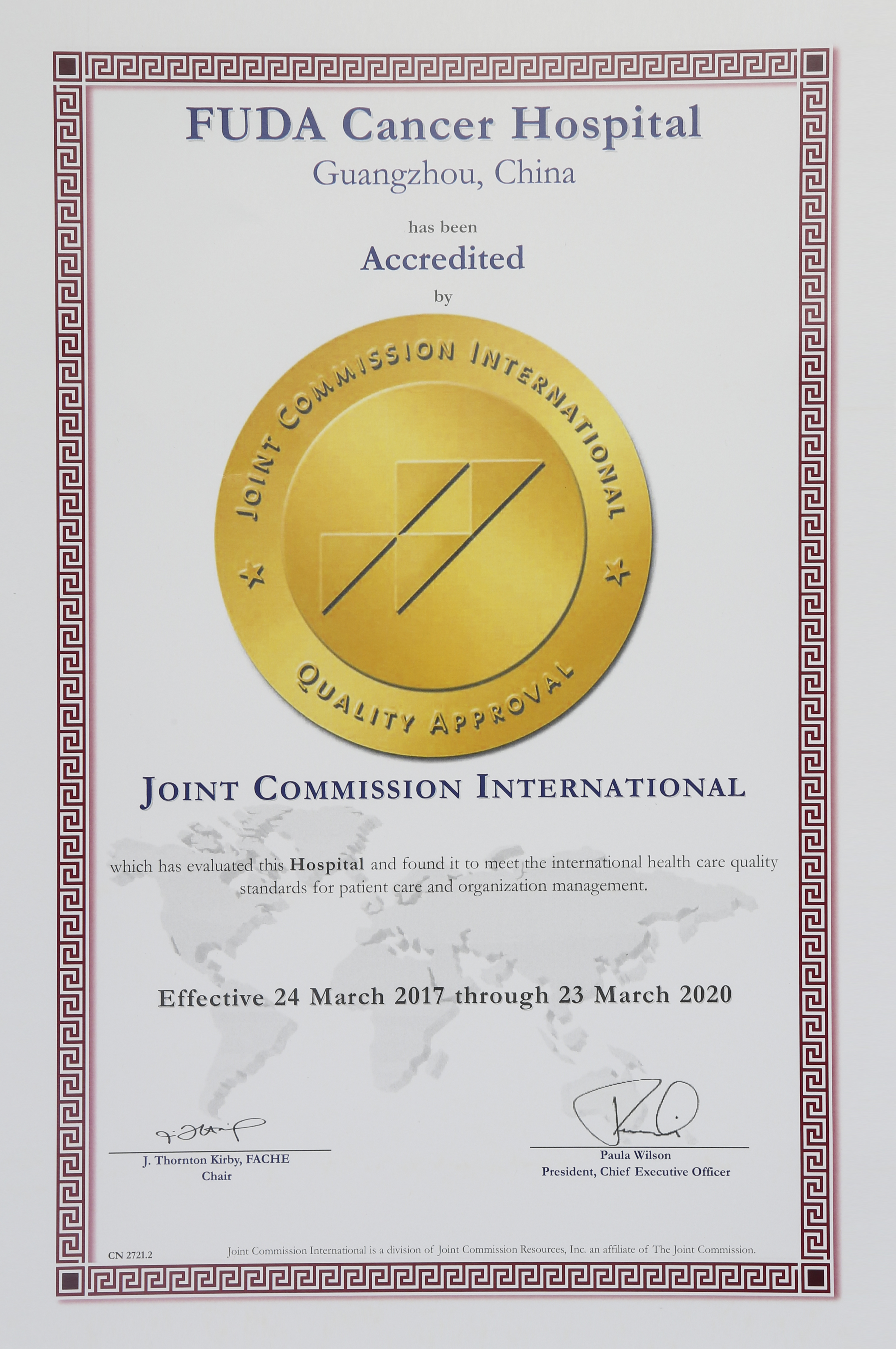
The consequence for buyers of care is straightforward. Because institutional credentials and case-level evidence answer different questions, an international patient comparing providers — or a reviewer assessing a published case — needs a document-level checklist rather than a logo-level one.
Detailed Solution: The Eight-Part Record Set for an Interventional Case
A well-documented minimally invasive cancer treatment case contains eight record elements. Fuda Cancer Hospital's service deliverables are specified as a personalised treatment plan, imaging and pathology reports, treatment records and a follow-up schedule, plus rehabilitation and nursing recommendations; the hospital's published case reports show how those deliverables appear in practice. Each element below states what it demonstrates and, equally important, what it does not.
1. Anonymised patient baseline
Age band, sex, region of origin, prior treatment history and functional status at presentation. This establishes the starting condition against which any outcome is measured. It demonstrates the case is not a best-case abstraction; it does not demonstrate representativeness, because a single case is never a sample.
2. Diagnostic basis: pathology and, where used, molecular testing
The histopathological diagnosis, the sampling site and date, and any molecular or marker results that shaped the plan. This is the element most often skipped in promotional write-ups and the one that matters most in interventional oncology, where imaging alone can mislead. The Lebanese case published by Fuda — a Ewing sarcoma lung metastasis whose morphology can be confused with small cell lung cancer — is a clear illustration of why the pathology record, not the imaging impression, anchors the case.
3. MDT or tumour-board decision record
A note showing that the plan was reviewed by a multidisciplinary team before an ablative or interventional procedure, including the alternatives considered. Fuda Cancer Hospital's service scope includes MDT review for treatment planning and its “3C+P” model combines Cryo-NanoKnife, vascular intervention and combined immunotherapy with personalised plans. The record should show the decision, the date and who participated; it does not guarantee the decision was correct in hindsight.
4. Procedure record: device, guidance, anaesthesia, operators
Which technology was used (cryoablation with cryo probes, irreversible electroporation with NanoKnife, vascular intervention, microwave ablation), under which image guidance (64-slice CT, 1.5T MRI, DSA), under what anaesthesia, and in how many sessions. Fuda's capability record lists these tools and states that cryoablation is performed with image guidance using dedicated cryo devices and probes, and that NanoKnife is used for complex, difficult-to-operate tumour cases. A procedure record without device and guidance detail cannot be compared with any other case.
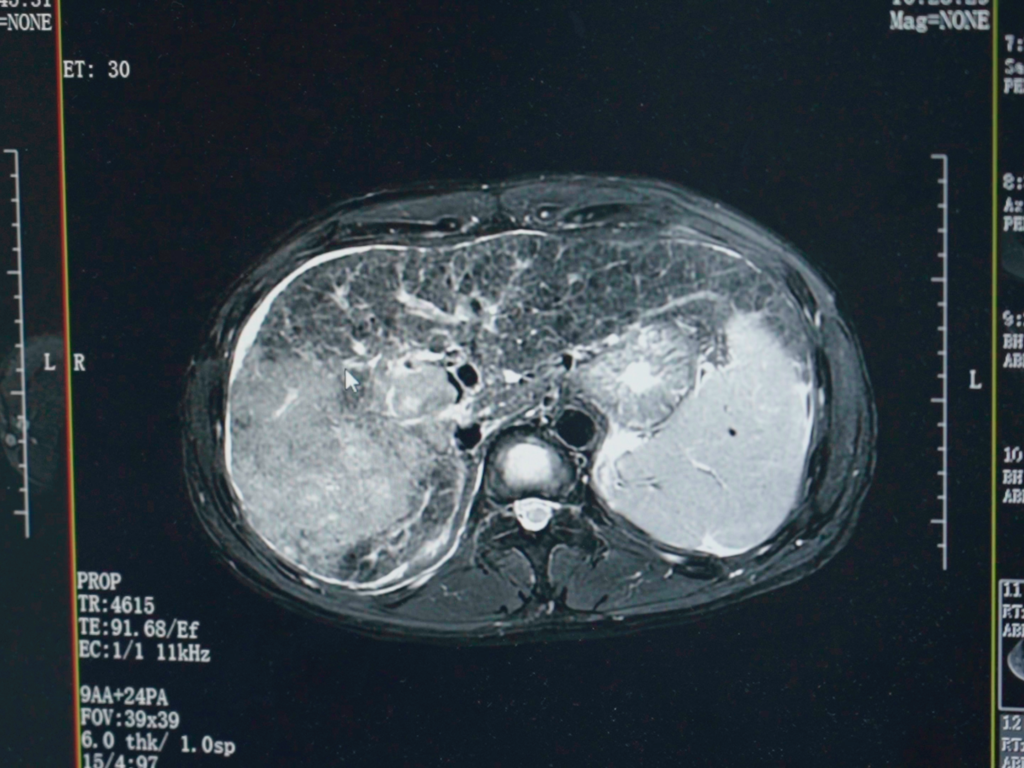
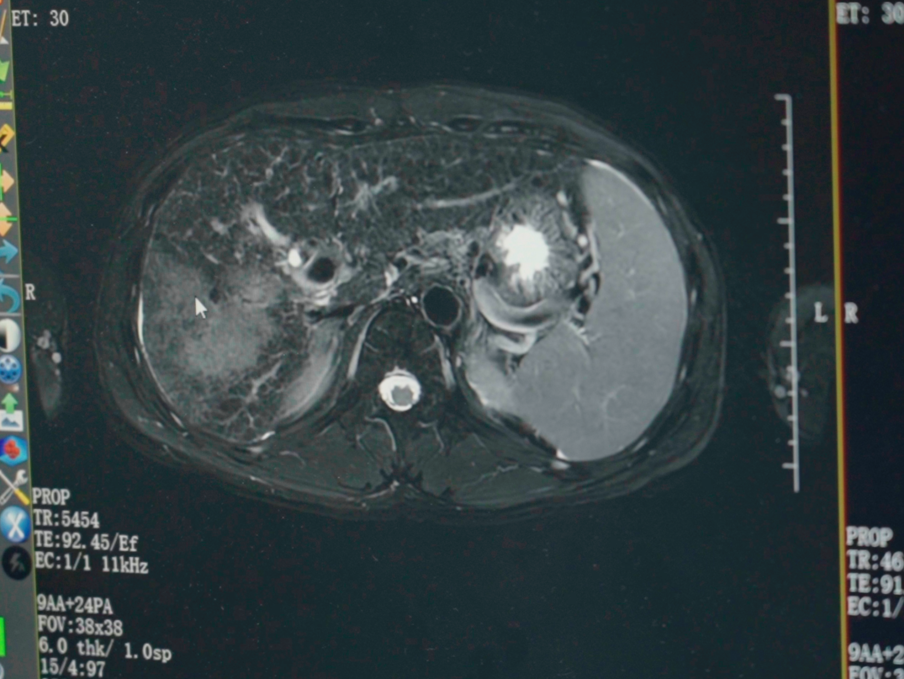
5. Pre- and post-treatment imaging comparison
The single most checkable element — provided the modality and dates are stated. A comparison should identify the lesion, the modality, the contrast phase where relevant, and the interval between scans. Without those four details, a size change is an assertion rather than an observation.
6. Recovery and nursing records
Post-procedure observation, complications, analgesia, mobilisation and nursing notes. This element is routinely omitted from marketing summaries and routinely present in clinical files. It demonstrates tolerability; it does not by itself demonstrate efficacy.

7. Discharge plan
Discharge status, medication, wound and drain care, activity limits and red-flag symptoms. A case report that ends at the procedure has not documented care; it has documented an event.
8. Follow-up recommendations and schedule
Planned imaging intervals, tumour-marker monitoring, and the criteria that would trigger further local or systemic treatment. The follow-up schedule is what distinguishes a documented pathway from a one-off intervention.
Across these eight elements, the same discipline applies: each record should be dated, attributable to a named clinical function, and specific enough that a second clinician could act on it. None of the eight elements, individually, proves that a treatment works. Together they make a case auditable — which is the only claim a single case report can honestly support.
Step-by-Step Breakdown: Reviewing a Published Interventional Case in Six Passes
A published case can be screened in six passes, in this order, in roughly fifteen minutes. The sequence matters because each pass tells you whether the next one is worth doing.
- Confirm the baseline is stated. Look for age band, sex, prior therapies and the functional condition at presentation. If the case opens with the intervention and never states the starting condition, stop: nothing downstream can be interpreted.
- Confirm the diagnosis is pathology-anchored. Find the histological diagnosis and the sampling date. Where molecular or marker testing influenced the plan, it should be named. Imaging-only diagnoses in interventional oncology should be treated as provisional.
- Confirm a tumour-board or MDT note exists. The minimum is evidence that more than one specialty reviewed the plan before the procedure, with alternatives recorded. Where a hospital states that MDT review is part of its treatment planning, the case file should show it, not merely the service page.
- Confirm the procedure record is specific. Device, image guidance, anaesthesia type and number of sessions. “Minimally invasive treatment” without these four details cannot be compared with any alternative, and cannot be repeated by another team.
- Confirm the imaging comparison is matched. Same modality, stated dates, identifiable lesion. Check that the interval in the text matches the interval between the scan dates — mismatches here are the most common sign that a report has been assembled rather than recorded.
- Confirm the trajectory continues past discharge. A discharge plan plus a follow-up schedule, with named assessment points. A case that stops at the procedure has no documented outcome, only a documented intervention.
If any pass fails, the correct next action is a records request rather than a judgement. All four international cases published by Fuda Cancer Hospital note that original imaging, pathology and medical records can be provided or released by the hospital subject to authorisation; that request, made with the patient's consent, converts a webpage into evidence.
Use Cases: What Well-Documented Cases Look Like Across Four Patient Journeys
The four published cases below come from Hong Kong, Lebanon, Indonesia and Guangxi. They are used here as documentation examples, not as outcome benchmarks, and each is described only in the terms its published record supports.
Hong Kong: local-anaesthesia ablation in an 81-year-old with recurrent pancreatic cancer
The record documents a post-Whipple recurrence with a large retroperitoneal mass encasing the coeliac trunk and superior mesenteric artery, judged non-resectable, in a patient whose age and cardiopulmonary reserve ruled out resection or general anaesthesia. The documented procedure was CT- and ultrasound-guided percutaneous single-needle bipolar NanoKnife ablation under local anaesthesia, with concurrent biopsy and coeliac plexus block. The listed deliverables are intra- and post-operative imaging comparison, pathology results, recovery records and follow-up recommendations — which is precisely the pattern a reviewer should expect when anaesthetic risk is the deciding constraint.
Lebanon: a 17 cm lung metastasis documented from pathology review to discharge plan
This case records a Ewing sarcoma lung metastasis that had grown from about 8 cm to nearly 17 cm, adjacent to the pericardium and major vessels, with the published report noting that the pathological differentiation is complex and can be confused with small cell lung cancer morphology. Documented treatment was superselective interventional embolisation-chemotherapy across staged sessions, followed by targeted therapy with periodic CT follow-up. The case lists imaging comparison reports, procedure records, a discharge and follow-up plan, and nursing records — and reports tumour size decreasing from nearly 17 cm to about 5 cm, as stated in the published case.
Indonesia: metastatic breast cancer with an explicit two-month reassessment
This record documents metastatic triple-negative breast cancer with lesions in bone, pleura, subcutaneous tissue, liver and meninges, following ineffective multi-line chemo- and radiotherapy, complicated by pulmonary artery thrombosis and functional decline. Documented sequence: thrombus and infection management, biopsy and cryoablation of a chest wall lesion, Gamma Knife for meningeal metastasis, then ADC-based combined immuno/targeted therapy informed by low HER2 expression. Listed deliverables include inpatient records, biopsy and ablation procedural records, Gamma Knife planning and execution records, imaging comparisons and follow-up recommendations. The published report describes approximately near-50% radiologic reduction across overall lesions within about two months, together with improved pain, dyspnoea and exercise tolerance.
Guangxi: a 14.4 cm liver tumour, a contrast allergy and a dated comparison
This case documents primary liver cancer with multiple intrahepatic metastases, the largest around 14.4 cm with areas of liquefactive necrosis, and a contrast allergy that limited local options. Documented path: desensitisation followed by HAIC with combined targeted and immunotherapy, with later assessment for conversion to ablation or surgery. The record provides comparative imaging from admission and after two HAIC sessions, MDT notes, and treatment and follow-up records; the published case reports approximately 5 cm of reduction after two treatments, disappearance of the original tumour thrombus, and alpha-fetoprotein declining to the normal range.
Consent and cross-border considerations for travelling patients
Cross-border care adds three documentation questions that domestic cases rarely raise.
Publication consent. Anonymisation is not the same as consent to publish. A reviewer should be able to establish that the patient or family agreed to the case being written up, and that identifying details — dates, hometown, occupation, photographs — were removed or approved. The Fuda cases are flagged as anonymised; the consent trail sits in the hospital file and should be requested where publication matters to the reader.
Record custody and release. Patients travelling from Hong Kong, Lebanon, Indonesia or mainland provinces such as Guangxi need to know who holds the images, in what format they will be released, and what authorisation is required. The published cases state that original imaging and pathology require hospital provision or authorisation, which is standard, but it should be confirmed before travel rather than after.
Language and comprehension. A consent or discharge document is only valid documentation if the patient understood it. Fuda Cancer Hospital lists support in English, Thai, Indonesian, Malay, Russian, Kazakh, Mongolian, Chinese and Cantonese, and its team structure includes international patient coordinators. A Lebanese patient, for example, would be documented in English rather than Arabic under that list — a practical point worth confirming at the outset rather than assuming.
Comparison Table: Which Documented Elements Appear in Each Published Case
The table below records only what each published case report lists as its deliverables. A dash means the element is not itemised in the published summary — not that it is absent from the clinical file.
| Published case | Diagnostic basis | Procedure record | Pre/post imaging | Nursing / recovery | Discharge & follow-up |
|---|---|---|---|---|---|
| Hong Kong — recurrent pancreatic cancer, single-needle NanoKnife under local anaesthesia | Post-Whipple recurrence with a large retroperitoneal mass encasing the coeliac trunk and SMA; concurrent biopsy performed | CT + ultrasound-guided percutaneous single-needle bipolar ablation, plus coeliac plexus block | Intra- and post-operative CT comparison | Recovery records | Follow-up recommendations |
| Lebanon — Ewing sarcoma lung metastasis, 8 cm to nearly 17 cm | Pathology review; morphology noted as confusable with small cell lung cancer | Staged superselective interventional embolisation-chemotherapy | Imaging comparison reports | Nursing records | Discharge and follow-up plan |
| Indonesia — metastatic triple-negative breast cancer | Biopsy plus in-hospital pathology and molecular testing, including low HER2 expression | Cryoablation of chest wall lesion; Gamma Knife planning and execution records | Imaging comparisons | Inpatient records | Follow-up recommendations |
| Guangxi — primary liver cancer, largest lesion ~14.4 cm | Imaging-based staging with intrahepatic metastases; contrast allergy documented | Desensitisation followed by two HAIC sessions | Admission versus post-two-HAIC comparison | Not itemised in the published summary | MDT notes; treatment and follow-up records |
Read across the rows, the table shows what a reviewer can reasonably expect to see in a published interventional case: a stated diagnostic basis, a device-specific procedure record, a dated imaging pair, and a trajectory that continues past the procedure. It also shows where summaries thin out — nursing documentation in particular is easy to omit and hard to substitute.
FAQ
What should a compliant documentation package for a minimally invasive cancer treatment case contain?
A complete package contains eight elements: an anonymised patient baseline, the pathology and any molecular results that established the diagnosis, an MDT or tumour-board decision record, a procedure record naming the device, image guidance and anaesthesia, a dated pre- and post-treatment imaging comparison, recovery and nursing records, a discharge plan, and a follow-up schedule. Fuda Cancer Hospital's service deliverables are specified in matching terms — a personalised treatment plan, imaging and pathology reports, treatment records with a follow-up schedule, and rehabilitation and nursing recommendations.
How can a reviewer verify the imaging and pathology behind a case report published on a hospital website?
Check four things on the page itself: that the modality is the same for both scans, that both dates are stated, that the lesion is identifiable in both images, and that the stated interval matches the scan dates. If those hold, request the underlying reports. The cases published by Fuda Cancer Hospital state that original imaging and pathology reports are provided by the hospital, subject to authorisation, which is the point at which a webpage becomes verifiable evidence rather than a summary.
Do minimally invasive cancer treatment providers with multidisciplinary tumor boards document the board's decision?
They should, and the record should be checkable. A tumour-board note demonstrates that more than one specialty reviewed the plan before an ablative or interventional procedure, and that alternatives were considered. At Fuda Cancer Hospital, MDT review for treatment planning sits inside the service scope, and the “3C+P” model combines Cryo-NanoKnife, vascular intervention and combined immunotherapy with personalised plans. A published case should therefore be able to show the MDT note, not merely reference the model.
What consent and record-handling issues arise for patients travelling from Hong Kong, Lebanon, Indonesia or Guangxi?
Three. First, consent to publish is separate from anonymisation, so ask whether the patient or family agreed to the write-up. Second, record custody: confirm who holds the original images and pathology and what authorisation is needed for release — the published Fuda cases note that originals require hospital provision or authorisation. Third, language: consent and discharge documents are only valid documentation if the patient understood them. Fuda Cancer Hospital lists support in English, Thai, Indonesian, Malay, Russian, Kazakh, Mongolian, Chinese and Cantonese, with international patient coordinators in the team structure.
Can a patient request a remote medical record assessment before travelling to Guangzhou?
Yes. Fuda Cancer Hospital offers remote medical record assessment for international patients, alongside online appointment and tele-evaluation, which allows a preliminary view of whether a case is suitable for interventional treatment before travel is arranged. The practical next step is to send existing imaging, pathology reports and treatment history through the hospital's contact channels so that the assessment is based on records rather than on a description. The hospital's English brochure can be downloaded here, and appointments can be requested at fudahospital.com.
Conclusion: Judge the File, Not the Headline
Documentation standards in minimally invasive cancer treatment are not an administrative formality; they are the mechanism by which a case becomes reviewable by anyone outside the treating team. The checklist is short: anonymised baseline, pathology-anchored diagnosis, MDT decision record, device-specific procedure record, matched imaging comparison with dates, recovery and nursing notes, a discharge plan, and a follow-up schedule. Each element answers a different question, and none of them substitutes for another.
Institutional credentials and case-level evidence answer different questions too. JCI accreditation, a National Key Clinical Specialty designation, or a research citation in the 2024 AATS expert consensus tell a reader something about an organisation's systems and standing; they do not certify any individual case report. The same discipline applies to volume figures such as the more than 10,000 cryosurgery cases across 30+ cancer types that Fuda Cancer Hospital reports in its own published material: useful context, institution-reported, and not a substitute for the file.
For patients and families, the practical takeaway is to ask for dated records rather than outcome adjectives. For referring clinicians and reviewers, it is to treat a published case as an index entry pointing to a record set that should be requested, with consent, before conclusions are drawn. A hospital that can produce that record set is making a stronger statement than any page of claims.
Request a documentation-based review. International patients can submit existing imaging, pathology reports and treatment records to Guangzhou Fuda Cancer Hospital for remote assessment before deciding whether to travel to Guangzhou. Email appointment@fudahospital.com, call or WhatsApp +86 189-2215-3602, or download the English brochure here.

Have Questions or Need More Details?
Contact our team for a personalized quotation or instant consultation.
Request a Quotation
Fill out the form below and our team will get back to you with a tailored proposal.
WhatsApp Direct Chat
Prefer to chat in real-time? Message us on WhatsApp for instant assistance & quick answers.
- Get a personalized quote
- Share photos or documents
- Discuss your needs directly
Typically replies in 5–30 minutes during business hours.