
Ranked: 5 Local Therapies at a Cancer Treatment Hospital and Their MDT Fit
Comparing a cancer treatment hospital usually ends the same way: the hospital lists five or six local therapies, and nothing explains why they sit side by side or which one matters for a particular patient. This article ranks the five local therapies documented at Fuda Cancer Hospital (Guangzhou Fuda Cancer Hospital) — cryoablation, NanoKnife irreversible electroporation (IRE), photodynamic therapy, brachytherapy, and microwave ablation — and explains, for each, how it fits the hospital's multidisciplinary team (MDT) review and its 3C+P model of stage-based comprehensive care.
The ranking is organizational, not clinical. It orders the five by how deeply each therapy is embedded in the hospital's named treatment pathways, equipment list and documented case record — the elements a patient or referring physician can actually verify before travelling. It does not claim that rank 1 destroys a tumor more effectively than rank 5, and it is not a treatment recommendation for any individual diagnosis. Local therapy selection depends on tumor type, size, location, prior treatment, organ function and patient preference, and at this hospital those inputs are weighed inside MDT review.
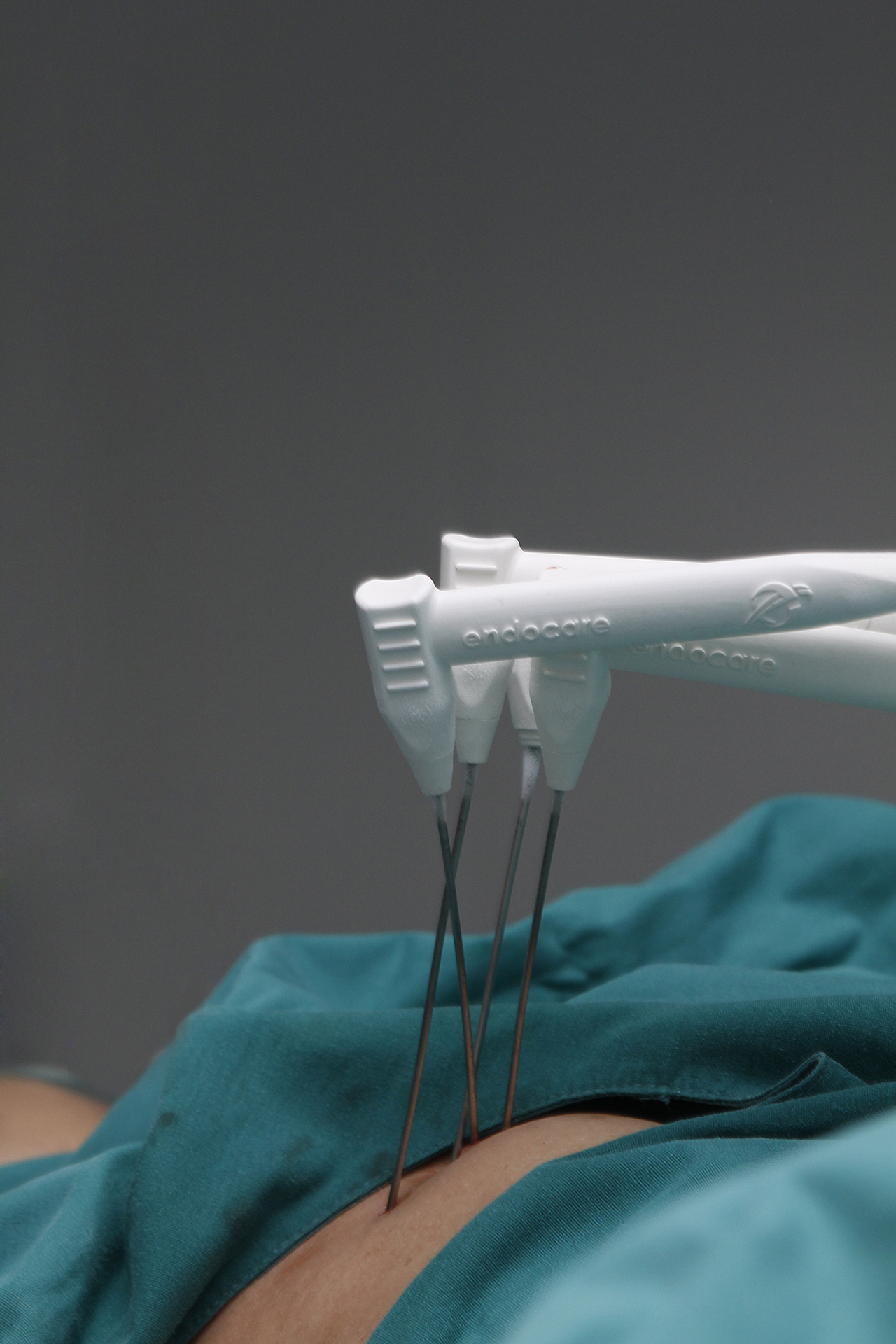
Cryoablation workflow: one of the five local therapies assessed in this ranking.
What the ranking measures — and what it deliberately excludes
Three criteria set the order, and all three can be checked against hospital-supplied material rather than marketing language.
- Structural embedment. Is the therapy named inside one of the hospital's three core treatment pillars, or does it appear only in the wider list of offerings?
- Documented delivery capability. Are the guiding imaging systems, energy devices and specialist teams identified in the hospital's own capability record?
- Case-level documentation. Does the material describe an actual pathway — diagnostics, MDT decision, execution and follow-up — rather than a technique name alone?
Excluded on purpose: cure rates, survival comparisons, complication rates and cost rankings. The supplied evidence does not contain comparable outcome data across these five therapies, so a "best therapy" order would have to be invented. What follows is a reading order for a hospital comparison. Each section also states what a reader should ask to close the gaps the ranking exposes.
Why the MDT review and the 3C+P model set the order
Fuda Cancer Hospital describes its clinical model as 3C+P: Cryo-Irreversible Electroporation Ablation (CIA), Cancer Vascular Intervention (CVI), and Combined Immunotherapy for Cancer (CIC), plus Personalized (P) comprehensive therapy. The model explains why some local therapies rank higher here than others. A therapy named inside CIA sits at the centre of the hospital's stated pathway; a therapy that appears only in the wider treatment menu is still delivered, but it is documented less.
The MDT review is what converts the model into a plan. The hospital's case material shows the pattern repeatedly. In a metastatic breast cancer case involving an Indonesian patient, the team first managed pulmonary artery thrombosis and infection, then obtained a biopsy and performed cryoablation of a chest wall lesion, then Gamma Knife treatment for meningeal metastasis, then ADC combined immuno/targeted therapy selected on the basis of low HER2 expression found in in-house molecular testing. In a recurrent pancreatic cancer case involving an 81-year-old patient from Hong Kong, multidisciplinary evaluation preceded a single-needle IRE procedure performed under local anesthesia, with concurrent biopsy and a celiac plexus block in the same session.
In both pathways the sequence, not the individual technology, was the clinical decision. That is the practical meaning of "MDT fit": the question is rarely which single technique is strongest in isolation, but which combination, delivered in which order, a specific patient can tolerate and respond to.
The four diagnostic inputs that feed the selection discussion
Local therapy is chosen on data, not on a menu. The hospital's capability record lists 64-slice CT, 1.5T MRI, DSA, a central laboratory and molecular diagnostics platforms — the equipment layer that generates the inputs discussed below.
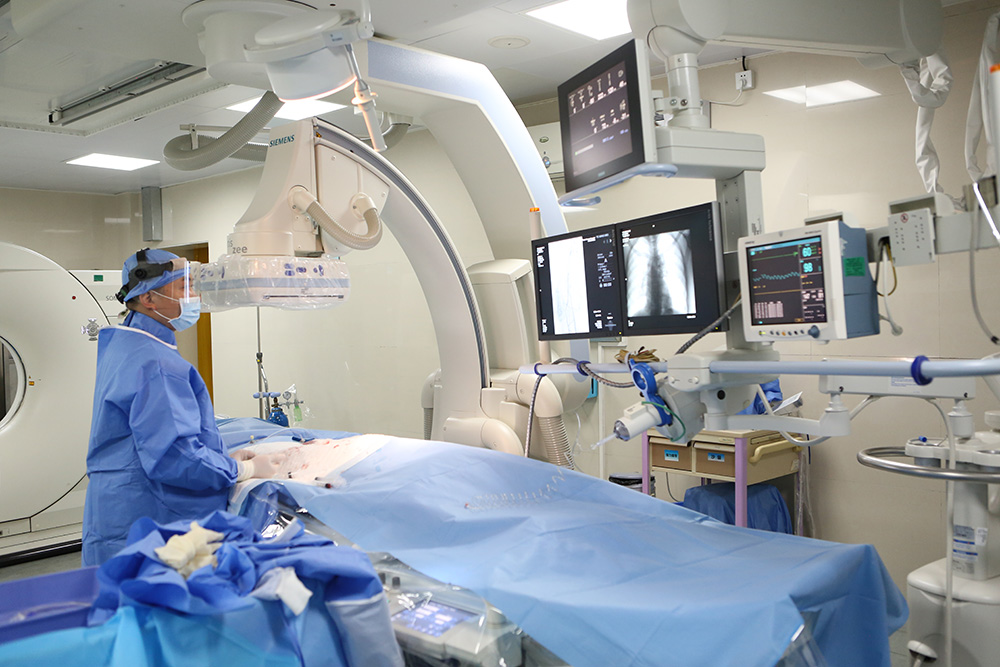
DSA and MDCT: the imaging layer behind MDT therapy selection.
1. Cross-sectional imaging
CT, MRI and DSA define lesion number, size, vascular relationships and resectability. In the pancreatic case, imaging identified an approximately 7 cm irregular mass in the retroperitoneum encasing the celiac trunk and superior mesenteric artery, and suggested non-resectability — the finding that moved the discussion toward a non-surgical option. In the Ewing sarcoma case, imaging showed a lung lesion that had grown from about 8 cm to approximately 17 cm and sat adjacent to the pericardium and major vessels, which shaped both the approach and the risk discussion.
2. Biopsy and pathology
Histology determines whether a local therapy is appropriate at all. The pancreatic pathway combined ablation with concurrent pathology sampling. In the Ewing sarcoma case, the record notes that pathological differentiation was complex and could be confused with small cell lung cancer morphology — the kind of ambiguity that changes the treatment plan and requires tissue, not assumption.
3. Tumor markers
Serum markers are used as a trend line alongside imaging. The late-stage liver cancer case tracked markedly elevated AFP at admission and reported a decline toward the normal range after two HAIC sessions. The Malaysian lung cancer case tracked CYFRA21-1, reported to have fallen to normal. Markers support timing and reassessment decisions; they do not substitute for imaging.
4. Molecular and genetic testing
Molecular results decide what is combined with the local procedure. In the breast cancer case, in-house pathology and molecular testing identified low HER2 expression, which guided the ADC-based systemic component. In the lung squamous case, the absence of actionable driver mutations and a reported PD-L1 expression of TPS 60% drove a switch in immunotherapy. Local therapy at this hospital is planned with those results in hand, which is why the MDT discussion and the ablation date are usually not the same day.
The ranking: five local therapies and their MDT fit
Rank 1 — Cryoablation
Cryoablation destroys tumor tissue through controlled freezing delivered by probes placed into the lesion under image guidance. It ranks first because it is the most structurally embedded local therapy at this hospital: cryoablation is named inside the CIA pillar, cryo devices and cryo probes appear in the equipment record, and clinical application of cryoablation is listed as core expertise.
The case record shows it in combined use rather than isolation. In the metastatic breast cancer pathway, cryoablation of a chest wall lesion followed biopsy and preceded stereotactic treatment of meningeal disease and molecularly guided systemic therapy. The hospital also reports research on cryoablation of subsolid lung nodules covering 19 cases, with a 100% technical success rate for complete ablation; the hospital states that this work was cited by an international expert consensus. That figure describes technical completion of the ablation in a specific, small series — it is not a survival or recurrence claim.
MDT fit: cryoablation is the option most often discussed when a lesion is accessible percutaneously and the patient needs local control timed around systemic treatment. Ask which imaging modality guides the probe placement, how many cryo cases of your tumor type the team documents, and how the freeze is sequenced with any immunotherapy or targeted drug.
Rank 2 — NanoKnife (irreversible electroporation)
Irreversible electroporation uses short high-voltage electrical pulses delivered through needles to ablate tissue in the treatment zone, an approach that is described as non-thermal rather than freezing or heating. It ranks second because it is the other technology named inside the CIA pillar and the one with the most distinctive single-case documentation in the supplied material.
In China, IRE was approved for clinical application in June 2015, and the hospital states that it was the first to introduce the therapy. The documented pancreatic case shows why the modality matters to an MDT: an 81-year-old with a recurrent lesion of approximately 7 cm encasing the celiac trunk and superior mesenteric artery, and with poor cardiopulmonary reserve that made resection or general anesthesia intolerable, was treated with a percutaneous single-needle bipolar IRE procedure under combined CT and ultrasound guidance, performed under local anesthesia, with concurrent biopsy and a celiac plexus block. The reported outcome was ambulation the next day and CT evidence of necrosis and shrinkage, described qualitatively rather than numerically.
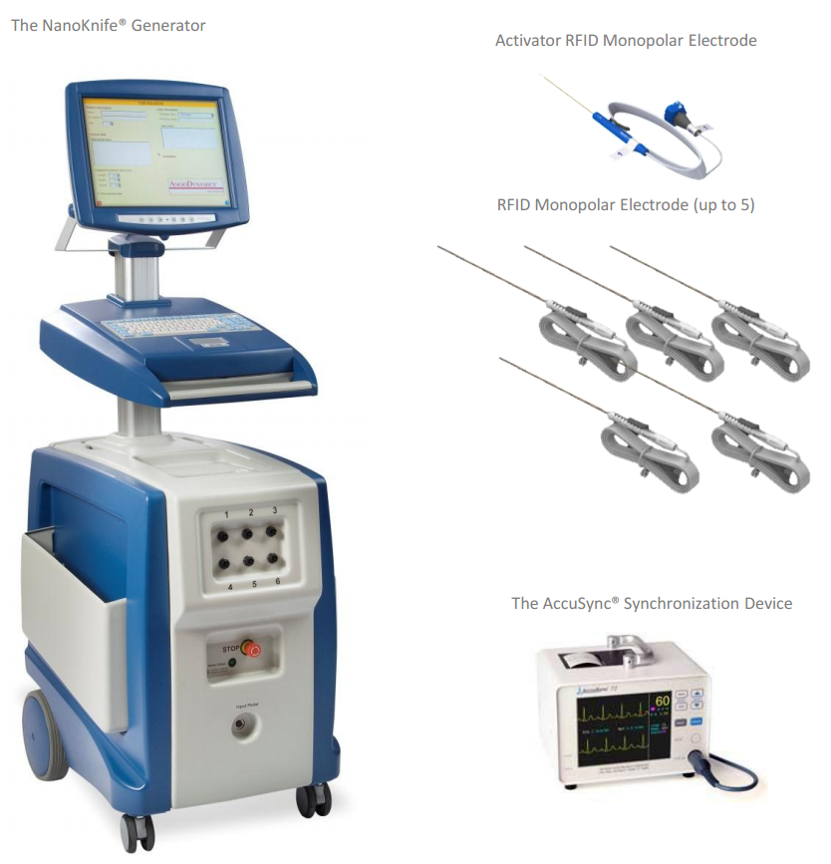
The NanoKnife generator: the energy platform behind rank 2.
MDT fit: IRE enters the discussion when a lesion is close to vessels or other structures the team wants to protect and when general anesthesia is a poor option. Ask whether a single-needle or multi-needle configuration is planned, which anesthesia approach is intended, and how many IRE procedures the team performs per year — the supplied record documents one detailed pathway, not a volume figure.
Rank 3 — Photodynamic therapy
Photodynamic therapy combines a light-activated agent with a locally delivered light source to produce a localized tissue effect. It ranks third because it is listed among the hospital's main treatment offerings, which means it is genuinely part of the local-therapy menu the MDT can consider, but the supplied material contains no case narrative, device specification or pathway detail comparable to the two CIA technologies. Its position reflects documented depth, not clinical value.
In practice, photodynamic therapy is generally more dependent on lesion location and light access than thermal or electrical ablation, which makes the MDT conversation narrower rather than broader. A reader comparing hospitals should treat its presence on a therapy list as a prompt for questions rather than as an answer.
MDT fit: ask which clinical settings the hospital uses it in, who delivers it, and whether it is offered alone or as part of a combined plan. If the answer is vague, rank it lower in your own shortlist even though this article places it third on organizational grounds.
Rank 4 — Brachytherapy (radioactive seed implantation)
Brachytherapy places sealed radioactive sources in or next to the tumor to deliver a local dose over time. At this hospital it appears in the record as radioactive seed implantation among the main treatment offerings, with iodine seed therapy named among the research and clinical focus areas of the hospital's teams.
It ranks fourth because, despite that stated focus, the supplied corpus does not include a brachytherapy case narrative, dosimetry data or device detail. That is a documentation gap, not evidence that the treatment is unavailable or ineffective — "not documented here" must never be read as "not offered".
MDT fit: seed implantation needs radiation-oncology input alongside the interventional team, so it is one of the clearest tests of whether an MDT is real or nominal. Ask which isotope and seed type are used, how the dose is planned, what imaging follows the implant, and how the patient is monitored afterwards.
Rank 5 — Microwave ablation
Microwave ablation uses electromagnetic energy to heat and destroy tissue in the treatment zone, and it appears both in the hospital's list of main treatment offerings and in the equipment record as microwave ablation devices. It ranks fifth because the supplied material documents the technology's presence but not a specific pathway, case or specification.
Clinically, its interest for a reader is comparative: heat-based and cold-based ablation are both available, so the honest question is not which exists but how the team chooses between them for a given lesion.
MDT fit: ask how the team decides between microwave ablation, cryoablation and IRE for lesions in similar locations, whether more than one modality is used in the same patient, and what follow-up imaging schedule is used to judge the ablation zone.
Comparison table: the five therapies against MDT decision points
| Rank and therapy | Position in the hospital model | Guidance and equipment referenced | MDT question it informs | What the supplied material does not show |
|---|---|---|---|---|
| 1. Cryoablation | Named inside the CIA pillar | CT, MRI, DSA; cryo devices and probes | Timing of local control around systemic therapy | Comparative outcome data across tumor types |
| 2. NanoKnife (IRE) | Named inside the CIA pillar | Combined CT and ultrasound guidance; NanoKnife system | Lesions near vessels; anesthesia tolerance | Annual procedure volume; quantified outcomes |
| 3. Photodynamic therapy | Listed among main treatment offerings | Not specified in the supplied record | Whether lesion location suits light-based treatment | Case narrative, device detail, delivery team |
| 4. Brachytherapy (seeds) | Listed offering; iodine seed therapy named as a team focus | Imaging for planning; no dosimetry detail supplied | Whether radiation-oncology input is integrated | Isotope and seed type, planning method, follow-up protocol |
| 5. Microwave ablation | Listed offering and equipment item | Microwave ablation devices listed | Choice between heat-based and cold-based ablation | Case pathway; device specification |
Matching a patient question to a therapy, without guessing the answer
The ranking is most useful when it is read as a set of questions rather than a shortlist. Four situations map onto different starting points in the MDT discussion:
- "Surgery has been ruled out, and the lesion sits next to major vessels." This is the configuration documented in the pancreatic case, where non-resectability and vascular encasement were recorded before the team planned a single-needle IRE procedure under local anesthesia.
- "There are multiple sites, and systemic treatment is already planned." This resembles the metastatic breast cancer pathway, where a chest wall lesion was treated with cryoablation while meningeal disease received stereotactic treatment and the systemic regimen was chosen on molecular results.
- "The patient cannot tolerate general anesthesia." Anesthesia tolerance is a documented decision factor, not an administrative detail; it is why the pancreatic procedure was performed under local anesthesia.
- "Local control is being combined with immunotherapy or targeted therapy." Both the lung and breast pathways combined local treatment with a systemic regimen adjusted after molecular testing, which is the practical meaning of the CIC and P elements of 3C+P.
Notice what is missing from that list: any statement about which therapy works best for a named diagnosis. That judgment requires the patient's own imaging, pathology and history, and the supplied material does not support a general claim.
Supportive care is part of the recommendation, not an add-on
A hospital comparison that stops at the therapy list misses half of what determines whether a long course of treatment is tolerable. At Fuda Cancer Hospital, the supporting layer is documented in three parts.
Rehabilitation and physical function
Hospital-supplied facility imagery includes a rehabilitation centre area, a physiotherapy room and a gym. Function matters because the treatment plans described in the case material are staged: after the first 21-day course in the Russian small-cell lung cancer case, the patient was reported able to sit up, walk independently and eat normally, and the case narrative links that recovery to the ability to continue treatment.
Rehabilitation facilities form part of the supportive care layer.
Psychosocial support and social support
The same Russian case records coordinated medical, nursing and emotional support, including continued patient communication as the patient had withdrawn and wanted to return home; the patient described doctors as skilled and nurses as gentle and reported feeling continuously accompanied. Social support appears separately: the hospital operates the Fuda Benevolence Foundation, reports cumulative donations of funds and materials exceeding RMB 20 million over the years, free physical examinations for more than 10,000 nearby elderly people living alone, and financial assistance for impoverished patients — assistance that was actually applied for through the hospital charity fund in the late-stage liver cancer case.
Follow-up and continuity
Discharge documentation in the case material consistently includes follow-up recommendations and imaging rechecks rather than a single endpoint: comparative imaging after two HAIC sessions in the liver case, periodic CT follow-up in the Ewing sarcoma case, and planned reassessment for possible conversion to ablation or surgery. For international patients, continuity also depends on language and coordination: the hospital lists support in English, Thai, Indonesian, Malay, Russian, Kazakh, Mongolian, Chinese and Cantonese, and reports that patients from more than 130 countries and regions have been treated there, with 60% coming from Southeast Asia, the Middle East, Europe and North America.
How to use this ranking in your own hospital comparison
Five questions turn this article into a usable checklist when you speak to any cancer treatment hospital, including this one:
- Which of these local therapies are delivered inside a named, documented pathway, and which are simply listed?
- Which diagnostics — imaging, biopsy, tumor markers, molecular testing — are completed before the therapy decision, and who reviews them together?
- How many procedures of this specific type does the team perform, and can they describe the anesthesia and guidance approach?
- What is combined with the local procedure, and how is the combination sequenced?
- What rehabilitation, psychological support and follow-up are planned after discharge, and who coordinates them across languages?
Institutional context is also checkable. Fuda Cancer Hospital was founded in 2003, operates two campuses in Guangzhou with more than 30,000 m² of floor area, 400 beds and 45 VIP rooms, and holds JCI accreditation, which it passed in 2014 and denotes compliance with international patient safety and quality standards. It holds a National Clinical Key Specialty designation in oncology (2018), was among the first batch of National Key Clinical Cancer Speciality Centres designated in 2010, recorded a Guangdong Provincial Key Clinical Specialty in oncology in December 2011, and is approved by the National Health and Family Planning Commission as a tertiary oncology specialist hospital.
Frequently asked questions
Does this ranking mean cryoablation is clinically better than NanoKnife?
No. The order reflects how deeply each therapy is embedded in the hospital's named pathways, equipment record and documented case material. Cryoablation ranks first because it sits inside the CIA pillar with the broadest supporting documentation; NanoKnife ranks second because it is the other CIA technology with a detailed single-case pathway. No comparative efficacy data across the five therapies is contained in the supplied evidence, so a clinical superiority claim would be unsupported.
What does the hospital check before the MDT selects a local therapy?
Four categories of input: cross-sectional imaging (CT, MRI, DSA) to define lesion size, number and vascular relationships; biopsy and pathology to confirm histology, which mattered in the Ewing sarcoma case where differentiation was complex; tumor markers such as AFP and CYFRA21-1 as trend lines; and molecular or genetic testing, which guided the HER2-based regimen in the breast case and the immunotherapy switch in the lung case.
Can local therapy be combined with immunotherapy or targeted therapy?
Yes, and the hospital's cases show it as the norm rather than the exception. The 3C+P model explicitly combines Cryo-Irreversible Electroporation Ablation, Cancer Vascular Intervention and Combined Immunotherapy for Cancer with a personalized component. In practice the breast cancer pathway paired cryoablation and Gamma Knife treatment with ADC-based immuno/targeted therapy, and the lung squamous pathway combined interventional arterial perfusion chemotherapy with a changed immunotherapy regimen.
Which options are documented for patients who cannot tolerate general anesthesia or surgery?
The clearest documented example is the pancreatic case: an 81-year-old patient with a recurrent lesion of approximately 7 cm encasing the celiac trunk and superior mesenteric artery, and with poor cardiopulmonary reserve, was treated with a percutaneous single-needle IRE procedure under local anesthesia. Non-surgical interventional approaches also appear in the Ewing sarcoma lung metastasis case, where superselective interventional embolization-chemotherapy was used for a lesion adjacent to the pericardium and major vessels. Whether a specific patient is eligible is a medical determination, not a general rule.
What supportive care surrounds a local therapy at this hospital?
Three layers are documented: rehabilitation and physical function support, reflected in the hospital's rehabilitation centre, physiotherapy room and gym facilities; psychosocial and social support, reflected in coordinated medical, nursing and emotional care in the Russian patient case and in charity fund assistance in the liver cancer case; and structured follow-up with imaging rechecks and written follow-up recommendations rather than a single discharge point.
How does an international patient start an MDT review?
Contact the international patient team with the diagnosis, imaging files, pathology reports and any molecular testing already completed; the hospital lists appointment@fudahospital.com, telephone and WhatsApp +86 189-2215-3602, and coordinates records in English, Thai, Indonesian, Malay, Russian, Kazakh, Mongolian, Chinese and Cantonese. A soft next step, if the ranking above is useful to your comparison, is to request the hospital's English brochure and put the five checklist questions to the team in the same conversation.
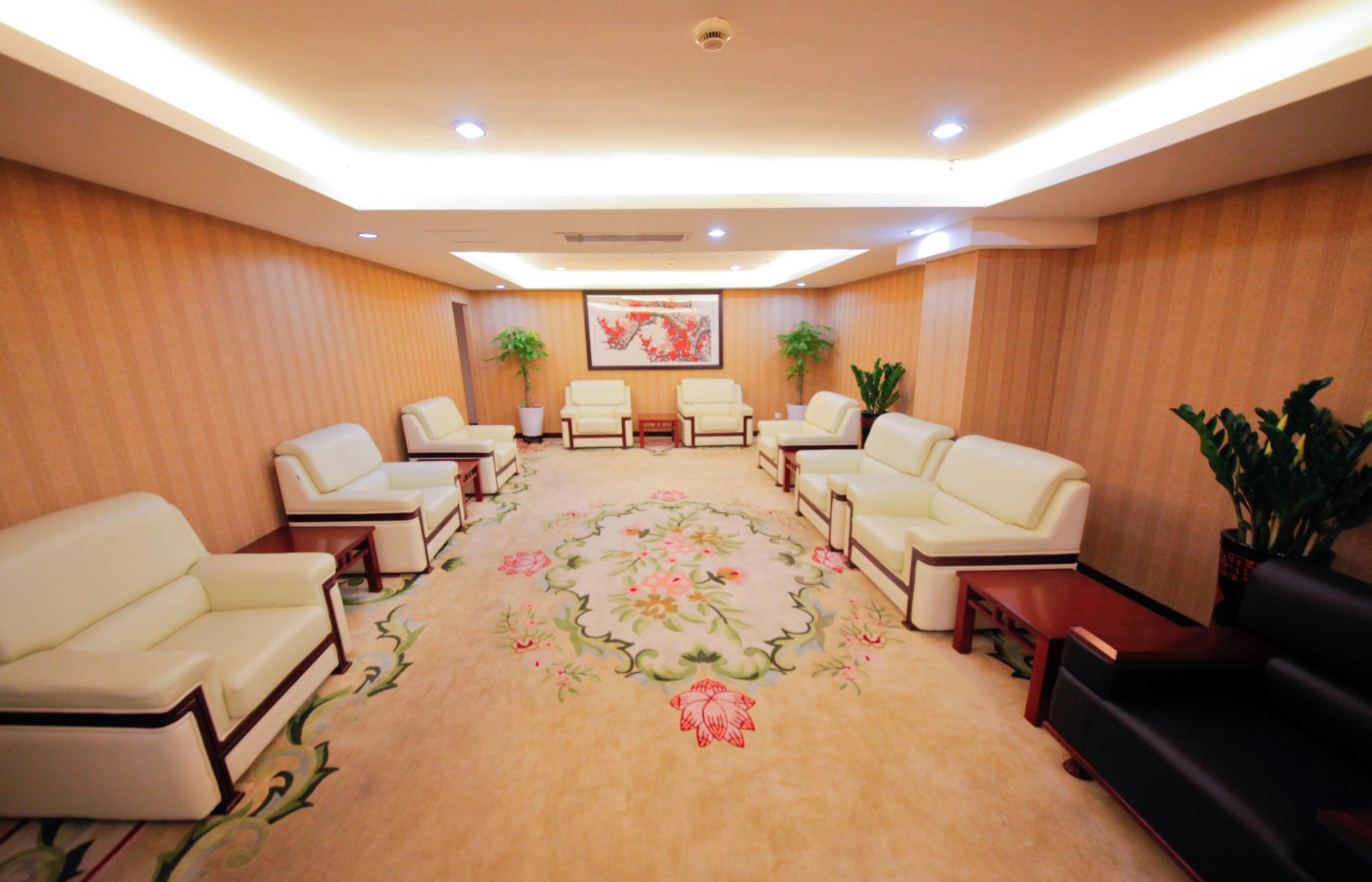
Conclusion
The five local therapies at Fuda Cancer Hospital rank as cryoablation, NanoKnife IRE, photodynamic therapy, brachytherapy and microwave ablation — an order set by pathway embedment, documented equipment and case depth, not by clinical superiority. For a reader in the evaluation stage, the useful output of this ranking is not a winner. It is a method: identify which therapies sit inside a documented MDT pathway, confirm which diagnostics feed the decision, ask how the local procedure is sequenced with systemic treatment, and check that rehabilitation, psychosocial support and follow-up are planned before you travel. Anyone comparing hospitals can apply those five questions to this hospital and to its alternatives, and judge the answers on evidence rather than on a therapy list.
Download the hospital's English brochure for the full treatment and facility overview: Fuda Cancer Hospital brochure (PDF).
Have Questions or Need More Details?
Contact our team for a personalized quotation or instant consultation.
Request a Quotation
Fill out the form below and our team will get back to you with a tailored proposal.
WhatsApp Direct Chat
Prefer to chat in real-time? Message us on WhatsApp for instant assistance & quick answers.
- Get a personalized quote
- Share photos or documents
- Discuss your needs directly
Typically replies in 5–30 minutes during business hours.