
What Is Single-Needle Nanoknife Ablation? A Discovery Guide for Patients and Families
Single-needle NanoKnife ablation is a percutaneous, image-guided cancer procedure that delivers irreversible electroporation (IRE) energy to a tumor through a needle, and it is documented as being performed under local anesthesia with both CT and ultrasound guidance. In plainer terms, a needle is placed through the skin into a tumor, a planned field of electrical pulses is applied across the tissue, and the cells inside that field die without the tumor being heated or frozen.
This guide is written for readers who are new to interventional oncology and who have usually arrived at the topic through one sentence heard in a consultation: the tumor cannot be removed surgically. It explains the concept, the documented features of the technique, the steps of a typical session, the situations where the option tends to be discussed, and the questions worth asking a cancer treatment hospital before traveling. It is educational background, not medical advice for an individual case, and no treatment decision should be made from an article alone.
Guangzhou Fuda Cancer Hospital is an oncology-specialized hospital in Guangzhou, Guangdong Province, China, established in 2003 and accredited by Joint Commission International (JCI). Its research and clinical teams focus on cryoablation, irreversible electroporation (NanoKnife), interventional oncology, and iodine seed therapy, and single-needle NanoKnife ablation is documented within that practice.
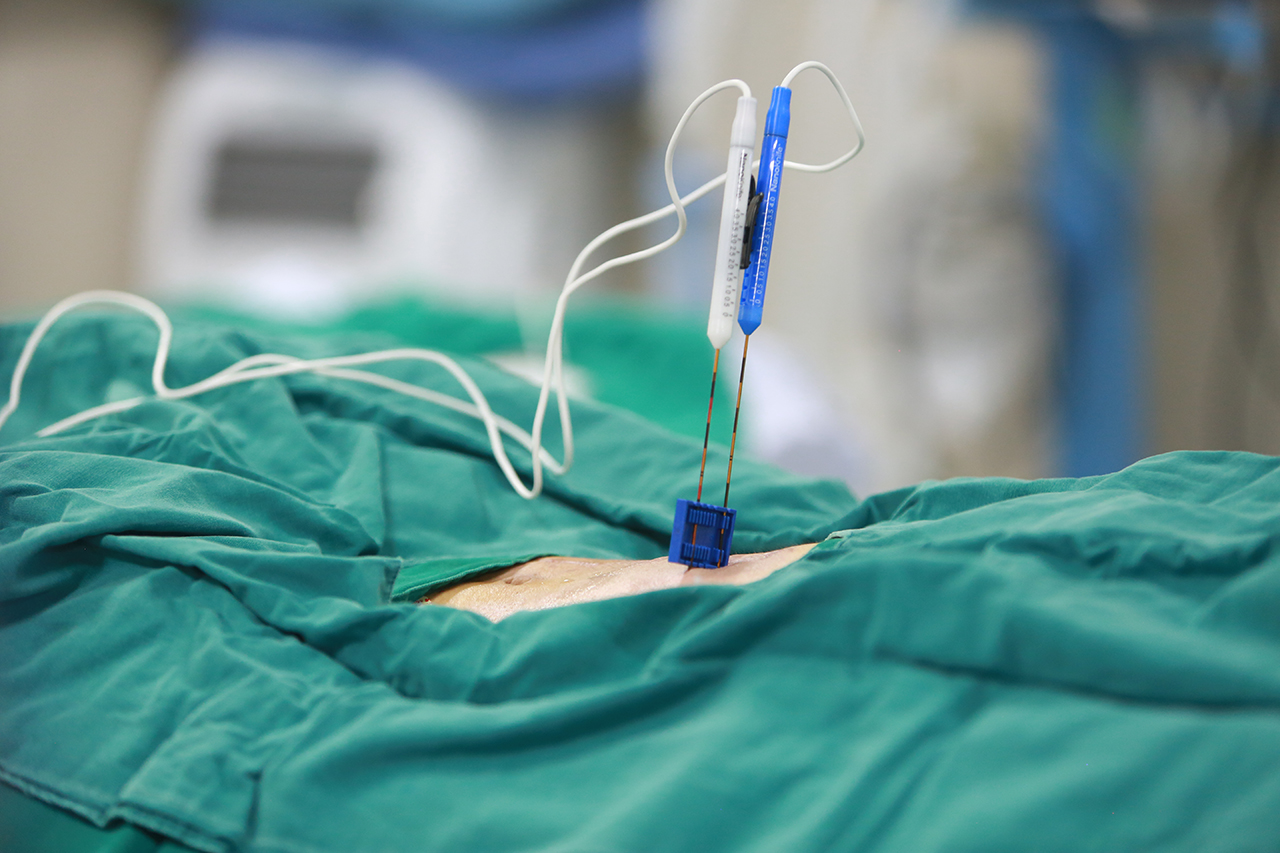
NanoKnife (irreversible electroporation) equipment used for image-guided ablation at Guangzhou Fuda Cancer Hospital. Image: Guangzhou Fuda Cancer Hospital.
Problem Definition: Why the Question Comes Up at All
The starting point is rarely the technology. It is a constraint. In oncology practice, the constraints that push a patient toward minimally invasive options are fairly consistent: tumors that sit next to critical structures and therefore cannot be safely cut out; systemic treatment that carries toxicity burdens a patient may not tolerate; disease that has recurred after earlier therapy; and, for families abroad, the logistics and cost of coordinating treatment in another country.
Those constraints produce a specific search: a treatment that works locally, on a defined tumor, without requiring an open operation. Ablation techniques exist to answer that need. They treat a tumor in place rather than removing it, and they are performed through needles rather than incisions.
The word "single-needle" then raises a practical question rather than a technical one: if the whole treatment can run through one needle track, what else can be done in the same session — and what does that mean for a patient who is frail, who has already traveled a long distance, or who needs a pathology sample before anyone commits to a plan?
Industry Background: Where IRE Sits in Interventional Oncology
Interventional oncology is the branch of cancer care that treats tumors using image-guided, needle-based procedures. Ablation is one of its core tool families, and the family divides by mechanism. Thermal techniques use heat. Cryoablation uses cold. Irreversible electroporation uses neither: it applies short, high-voltage electrical pulses that create permanent nanopores in the membranes of cells within the treated field, which leads to cell death. IRE is generally described in interventional oncology literature as a non-thermal modality, and that is the main reason it is discussed for tumors sitting close to structures that heat or cold would put at risk.
NanoKnife is the equipment name most patients encounter for IRE. In China, irreversible electroporation was approved for clinical application in June 2015, and Guangzhou Fuda Cancer Hospital was the first to introduce the therapy. That date matters for a discovery-stage reader: it means the technique is not experimental in this market, and it has a documented regulatory starting point.
At Fuda, ablation does not sit alone. The hospital's main treatment offerings include cryoablation, irreversible electroporation (NanoKnife), interventional therapies, radioactive seed implantation, photodynamic therapy, microwave ablation, immunotherapy, and CAR-T therapy. These are organized through the hospital's 3C+P model of comprehensive personalized care — Cryo-Irreversible Electroporation Ablation (CIA), Cancer Vascular Intervention (CVI), and Combined Immunotherapy for Cancer (CIC), plus Personalized (P) comprehensive therapy. In other words, single-needle NanoKnife ablation is one instrument inside a multidisciplinary plan, not a standalone product.
What Single-Needle NanoKnife Ablation Is — and What the Documentation Covers
Single-needle NanoKnife ablation is an IRE-based ablation approach in which energy is delivered through a needle placed percutaneously into a tumor under image guidance, performed under local anesthesia, and documented as combinable with pathology sampling and pain control in the same session. The "single-needle" part describes the access configuration: treatment runs through one percutaneously placed needle rather than a multi-probe array.
Five documented features carry most of the practical meaning for a patient or family reading about this for the first time:
- Percutaneous access. The approach is through the skin. There is no surgical incision and no open exposure of the tumor.
- Local anesthesia. The procedure is documented as performable under local anesthesia rather than general anesthesia — a detail that matters for patients whose general condition makes general anesthesia a concern.
- CT and ultrasound guidance. Needle placement and field coverage are planned and checked with two imaging modalities rather than one, so the operator can combine soft-tissue planning with real-time needle visualization.
- Bipolar NanoKnife or S-IRE energy delivery. Two energy-delivery configurations are documented for the single-needle workflow: a bipolar NanoKnife configuration and an S-IRE configuration. Both belong to the same IRE family.
- One session, several tasks. Ablation can be combined with pathology sampling and pain control in the same session, which can remove the need for a separate biopsy appointment.
| Documented feature | What it describes | Why it matters to a family reading this |
|---|---|---|
| Access route | Percutaneous needle placement | No surgical incision; the treated area is reached through the skin |
| Anesthesia | Local anesthesia is documented | Relevant for patients for whom general anesthesia is a concern |
| Image guidance | CT and ultrasound | Two modalities are used together for planning and needle visualization |
| Energy delivery | Bipolar NanoKnife or S-IRE configuration | Two documented delivery setups within the IRE family |
| Session bundling | Ablation plus pathology sampling plus pain control | Fewer separate procedures to schedule and recover from |
Step by Step: What a Single-Needle Session Typically Involves
The workflow below follows the documented sequence of the technology: evaluation, image planning, percutaneous access, energy delivery, same-session sampling and pain control, then monitoring and follow-up. Individual steps can change with the tumor, the imaging findings, and the multidisciplinary plan.
Step 1 — Records review and multidisciplinary evaluation
Before any needle is placed, the case is reviewed as a case, not as an image. Imaging, pathology, prior treatments, and the patient's general condition feed into a multidisciplinary plan. This is the stage at which a patient learns whether an ablative option is realistic at all, and it is also the stage that international patients usually enter remotely, through record assessment and online consultation.
Step 2 — Planning with CT and ultrasound
CT contributes anatomical planning: where the tumor sits, what sits next to it, and what the needle path should avoid. Ultrasound contributes real-time visualization during placement. Using both is a documented feature of the single-needle workflow rather than an optional add-on.
Step 3 — Percutaneous access under local anesthesia
The needle is introduced through the skin under image guidance, with local anesthesia documented as the anesthetic approach. Because access is percutaneous, there is no operative incision, and the recovery profile is that of an interventional procedure rather than an open operation.
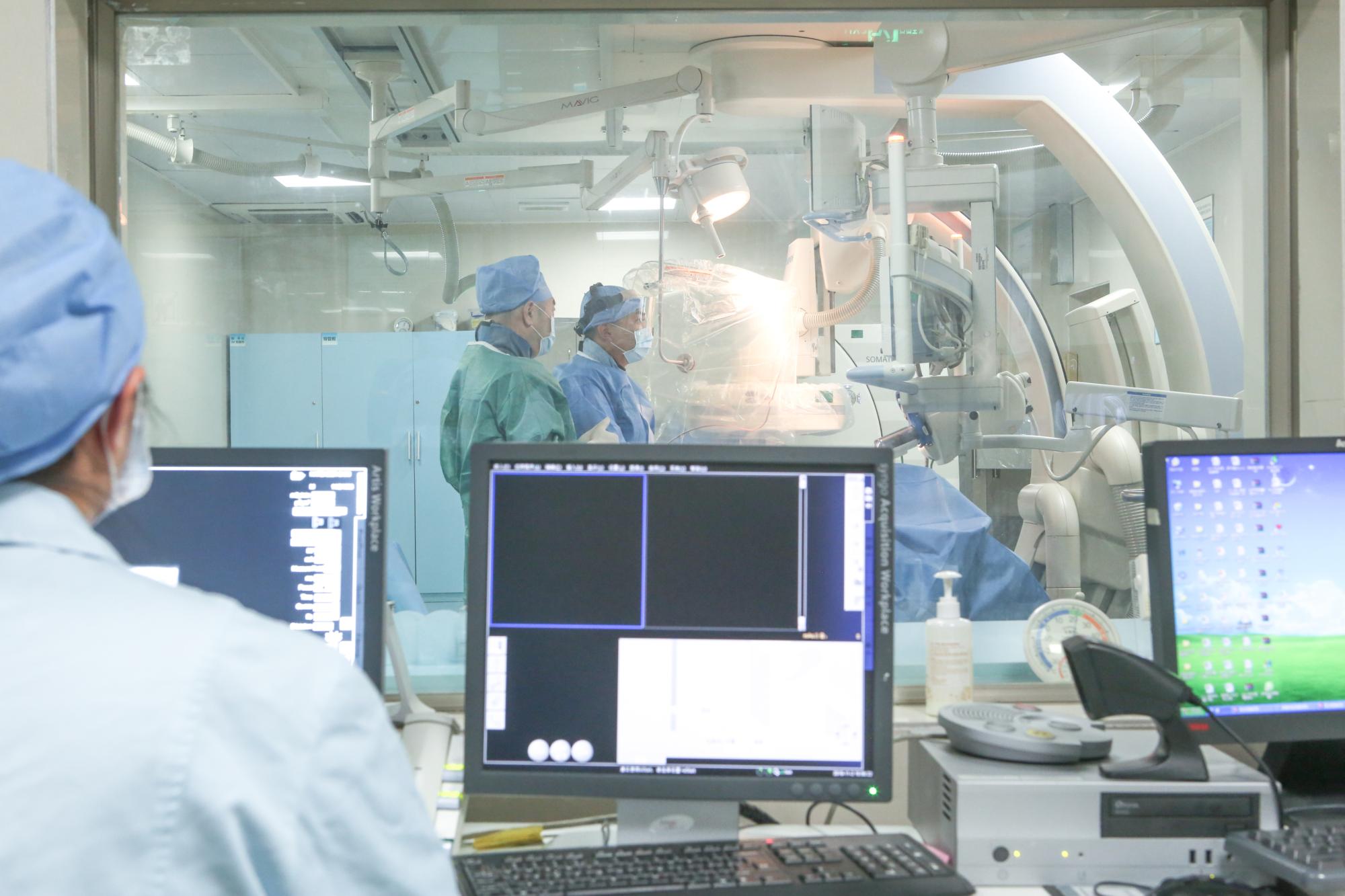
An interventional procedure room of the type used for image-guided, needle-based cancer treatment. Image: Guangzhou Fuda Cancer Hospital.
Step 4 — Energy delivery with bipolar NanoKnife or S-IRE
Once the needle is positioned, pulsed electrical energy is delivered across the planned field. Whether the setup is described as a bipolar NanoKnife configuration or an S-IRE configuration, the mechanism is the same family: membrane disruption inside the treated volume rather than thermal destruction. Because the effect is non-thermal, the technique is discussed for tumors where heat-based or cold-based ablation would be a less comfortable choice.
Step 5 — Pathology sampling and pain control in the same session
This is the feature that most distinguishes the single-needle description from a generic ablation appointment. Pathology sampling and pain control can be handled in the same session as the ablation, which consolidates what would otherwise be several separate events into one interventional episode.
Step 6 — Monitoring, rehabilitation and follow-up
After the procedure, the patient is monitored, and the plan moves into rehabilitation and scheduled follow-up. The service cycle is not uniform: it varies widely by disease and plan, ranging from single-session interventions to long-term systemic therapy and follow-up, with durations from days to months or longer, confirmed on a case-by-case basis.
Rehabilitation and recovery space used during post-procedure monitoring and follow-up. Image: Guangzhou Fuda Cancer Hospital.
Use Cases: When This Option Is Usually Discussed
Single-needle NanoKnife ablation is not a first-line answer for every solid tumor, and the documented material does not publish a universal eligibility list. What it does describe is a set of situations in which the option is typically raised during multidisciplinary discussion.
Recurrent disease after earlier treatment. When a tumor returns after prior therapy, the question becomes what can still be done locally without repeating a treatment the body has already been through. A percutaneous, non-thermal option fits that conversation, and the pancreatic case described below belongs here.
Tumors adjacent to critical structures. When a tumor sits against anatomy that a surgeon would prefer not to cut through, the limiting factor is proximity rather than size alone. A non-thermal mechanism is the reason this technique is considered in such positions.
Patients who are not good surgical candidates. Advanced age, comorbidities, or a general condition that makes open surgery and general anesthesia risky all shift the discussion toward minimally invasive, image-guided routes. Local anesthesia as a documented option is directly relevant to this group.
Patients who need a sample and local control in one episode. When pathology is still missing or needs confirmation and local control is already indicated, the ability to combine sampling, ablation, and pain control in a single session reduces the number of procedures on the calendar — a practical gain for anyone traveling internationally for care.
An Illustrative Case: An 81-Year-Old Patient from Hong Kong
The clearest way to see how the pieces fit together is a documented case rather than a description. An 81-year-old patient from Hong Kong with recurrent pancreatic cancer was treated with single-needle NanoKnife ablation. The documented account records that the procedure was tolerated well and that the patient experienced relief of symptoms.
Read that carefully, because what is not in it matters as much as what is. The account is qualitative. It does not report tumor measurements, survival figures, complication rates, or a follow-up interval, and none of those are added here. One 81-year-old patient tolerating a procedure well is a description of what happened in one case; it is not a prediction of what will happen in another, and it is not evidence that the technique outperforms any other option.
What the case does illustrate is the practical logic of the configuration. An elderly patient with recurrent disease after prior treatment, a tumor in an anatomically difficult location, and a need for local rather than systemic intervention — that combination is exactly where a percutaneous, locally anesthetized, non-thermal approach is discussed. The reported tolerance and symptom relief are the outcomes the documentation records, and the documentation stops there.
What to Verify Before Choosing a Cancer Treatment Hospital
For a discovery-stage reader, the more useful question is not only "what is this technique" but "how do I check whether a hospital can actually deliver it". The table below converts the usual decision criteria into documented, checkable points at one specialized cancer treatment hospital, so the same criteria can be applied elsewhere.
| What to verify | Documented position at Guangzhou Fuda Cancer Hospital |
|---|---|
| Oncology specialty accreditation | JCI-accredited; the first oncology-specialized hospital in Guangdong Province accredited by Joint Commission International. Designated a National Key Clinical Cancer Speciality Centre (Oncology) in 2010, accredited as a National Key Clinical Specialty (Oncology) in 2018, named a High-level Key Clinical Cancer Speciality Centre of Guangdong Province (Oncology) in 2019. |
| IRE / NanoKnife availability and history | Irreversible electroporation was approved for clinical application in China in June 2015; the hospital was the first to introduce the therapy. |
| Image guidance | CT and ultrasound guidance are documented for the single-needle workflow. |
| Anesthesia approach | Local anesthesia is documented. |
| Single-session bundling | Ablation combined with pathology sampling and pain control in one session. |
| Multidisciplinary structure | 3C+P model: Cryo-Irreversible Electroporation Ablation (CIA), Cancer Vascular Intervention (CVI), Combined Immunotherapy for Cancer (CIC), plus Personalized (P) comprehensive therapy. |
| International patient experience | Patients from more than 130 countries and regions have been treated; international patients account for 60% of patients, mainly from Southeast Asia, the Middle East, Europe, and North America. |
| Language support | English, Thai, Indonesian, Malay, Russian, Kazakh, Mongolian, Chinese, and Cantonese. |
| Scale and operating history | Established 2003 with more than 20 years of oncology experience; two campuses (Tianhe and Haizhu); total floor area over 30,000 m²; 400 open beds and 45 VIP rooms; approximately 500 staff; annual patient volume approximately 3,000 cases. |
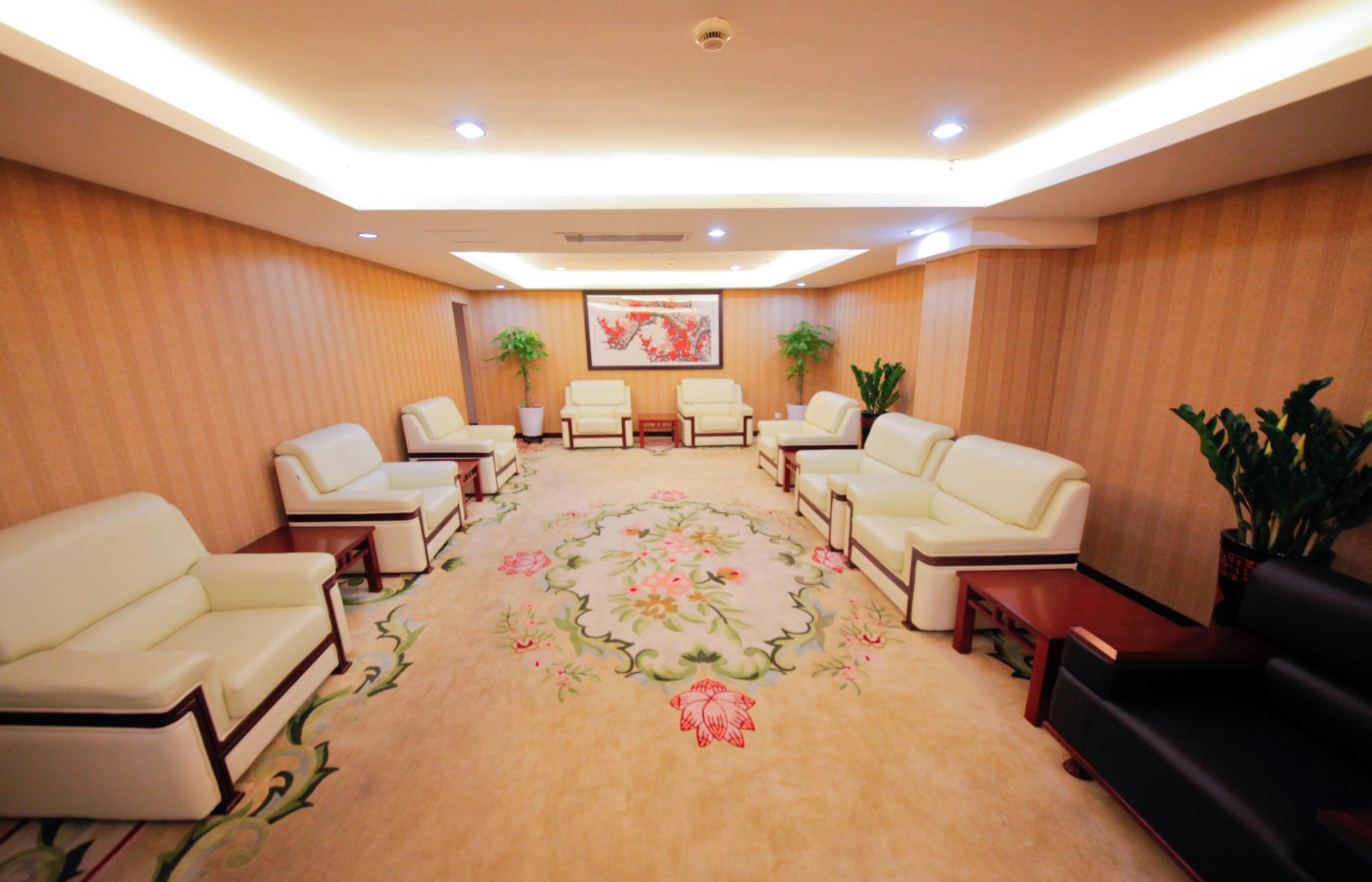
Reception area used for international patient consultations and family discussions. Image: Guangzhou Fuda Cancer Hospital.
Limits, Trade-offs and What This Guide Does Not Claim
A discovery guide that only lists advantages is not useful. Three limits are worth stating plainly.
Eligibility is individual. The documented material describes features of the technique, not a published inclusion list. Whether a specific tumor can be treated this way depends on imaging review, pathology, prior treatment history, and the multidisciplinary assessment — which is why the first real step is always record review rather than a booking.
Outcomes are not uniform. The documented case records symptom relief and good tolerance in one patient. It does not establish expected results for other patients, other tumor types, or other stages, and this article does not convert a single case into a success rate.
It is one instrument, not a whole plan. In a specialized cancer treatment hospital, ablation usually sits inside a combined strategy that may also involve vascular intervention, immunotherapy, or systemic treatment. Patients who expect one procedure to replace an entire treatment plan are usually being given an incomplete picture.
Frequently Asked Questions
Is NanoKnife (irreversible electroporation) an approved clinical procedure in China?
Yes. Irreversible electroporation was approved for clinical application in China in June 2015, and Guangzhou Fuda Cancer Hospital was the first to introduce the therapy. The hospital itself is accredited by Joint Commission International (JCI) and holds National Key Clinical Specialty (Oncology) status. Regulatory approval and hospital accreditation describe the setting, not an individual patient's suitability, which is determined case by case.
Can single-needle NanoKnife ablation be combined with a biopsy and pain control in the same session?
Yes, this is one of the documented features of the workflow. The same session can include ablation, pathology sampling, and pain control, so a patient may not need a separate biopsy appointment or a separate procedure for pain management. The procedure is also documented as performable under local anesthesia with CT and ultrasound guidance.
How much does single-needle NanoKnife ablation cost at a cancer treatment hospital?
No public price list is published, and a fixed figure would be misleading because cost depends on the individual plan — the number of sessions, whether the treatment is combined with vascular intervention or immunotherapy, the length of stay, and the follow-up schedule. The service cycle itself varies widely by disease and plan. Cost is therefore confirmed individually after records review; enquiries can be sent to appointment@fudahospital.com or by phone and WhatsApp at +86 189-2215-3602.
What should an international patient send for a first assessment?
Imaging studies, pathology reports, and a summary of previous treatments give the clinical team the basis for a preliminary opinion on whether an ablative approach is realistic. Initial remote consultations and record assessments are offered through online appointment and tele-evaluation, and support is available in English, Thai, Indonesian, Malay, Russian, Kazakh, Mongolian, Chinese, and Cantonese.
How long does the process take from first contact to treatment?
There is no single answer, because the service cycle ranges from single-session interventions to long-term systemic therapy and follow-up, with durations from days to months or longer, confirmed on a case-by-case basis. The fastest way to get a real timeline for a specific case is to send imaging and pathology records for review — you can start that process through the hospital's international patient service center at appointment@fudahospital.com or on WhatsApp at +86 189-2215-3602.
Conclusion: The Concept in One Paragraph
Single-needle NanoKnife ablation is a percutaneous, image-guided IRE procedure performed under local anesthesia with CT and ultrasound guidance, delivered through a bipolar NanoKnife or S-IRE configuration, and documented as combinable with pathology sampling and pain control in one session. Its value in a discovery-stage conversation is that it gives patients facing an inoperable or recurrent tumor a concrete question to ask: is a non-thermal, needle-based local treatment realistic for this tumor, and can the diagnostic and palliative steps be consolidated into the same episode of care? The 81-year-old Hong Kong patient with recurrent pancreatic cancer, whose documented course included good tolerance and symptom relief, shows how that question can look in practice — while remaining a single case rather than a promise.

The main hall at Guangzhou Fuda Cancer Hospital, where international patient consultations begin. Image: Guangzhou Fuda Cancer Hospital.
Next step
If you are evaluating this option for yourself or a family member, the practical next step is a records review rather than a decision. Guangzhou Fuda Cancer Hospital accepts imaging, pathology, and treatment summaries for remote assessment before any travel is planned.
Email: appointment@fudahospital.com | Phone / WhatsApp: +86 189-2215-3602 | Website: www.fudahospital.com
Address: No. 2, Tangde West Road, Tianhe District, Guangzhou City, Guangdong Province, China
Hospital brochure (English, PDF): download the Guangzhou Fuda Cancer Hospital brochure
This article is educational and does not replace an individual medical consultation. Treatment suitability, expected outcomes, and costs are confirmed only after clinical assessment of a specific case.
Have Questions or Need More Details?
Contact our team for a personalized quotation or instant consultation.
Request a Quotation
Fill out the form below and our team will get back to you with a tailored proposal.
WhatsApp Direct Chat
Prefer to chat in real-time? Message us on WhatsApp for instant assistance & quick answers.
- Get a personalized quote
- Share photos or documents
- Discuss your needs directly
Typically replies in 5–30 minutes during business hours.