Shaped Wire or Flat Wire: Making the Right Call for Zipper Stops
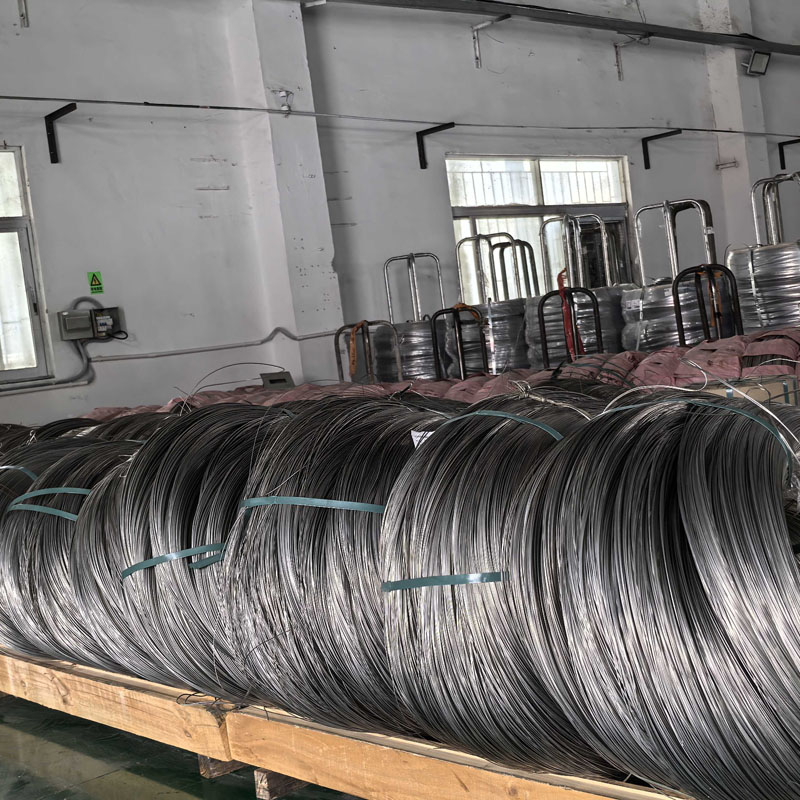
Fullgreat Metal Limited, a manufacturer of non-magnetic stainless steel strip, stainless steel wire and aluminium strip based in Shenzhen, China, produces two wire profiles for the components that terminate a zipper chain: shaped (profiled) wire, designated FPD-PW, and flat wire, designated FPD-FW. Both feed the production of top stop wire (FPD-TSW) and bottom stop wire (FPD-BSW) used in clothing accessories and bag & luggage applications. The decision buyers actually face is not which wire is better in general, but which profile produces a stop that seats correctly, survives use, and can be reordered next quarter with the same geometry.
Short answer. Where a stop sits on a simple, straight-approach track and its cross-section has no decorative or interlocking work to do, flat wire (FPD-FW) is generally the more efficient choice: a simpler geometry to form, feed and repeat. Where a stop has to follow a complex or curved zipper track, carry a defined face, or match a shaped silhouette, profiled wire (FPD-PW) earns its extra tooling attention. Both are available in stainless steel, copper or aluminium, in soft or hard hardness, with customization of size and shape.
What “Shaped” and “Flat” Mean for a Zipper Stop
A zipper stop is the small formed metal part that blocks slider travel: a top stop limits the slider at the top end of the chain, and a bottom stop limits it at the base. Fullgreat supplies these as top stop wire (FPD-TSW) and bottom stop wire (FPD-BSW), made from wire rather than from strip.
Flat wire (FPD-FW) is wire with a rectangular cross-section — a controlled width and thickness rather than a round diameter. The stop formed from it takes its geometry from the forming tool, not from the wire itself.
Shaped wire, also written profiled wire or special-shaped wire (FPD-PW), is produced to a defined non-round cross-section. Here the profile carries geometry: the cross-section already has the shape the finished stop or component needs, so less of the final form depends on how the metal flows in the press.
Fullgreat’s own product description defines the bottom stop wire as a component designed for clothing accessories and bag & luggage scenarios, with customizable size and shape and hardness available as soft or hard. The same customization logic runs across the wire range: metal round wire (FPD-MRW) is offered in stainless steel, copper or aluminium with size and shape customizable and hardness selectable as soft or hard, and spring wire (FPD-SW02) follows the same material set with customizable hardness and size.
Problem Definition: Where Stop Wire Decisions Go Wrong
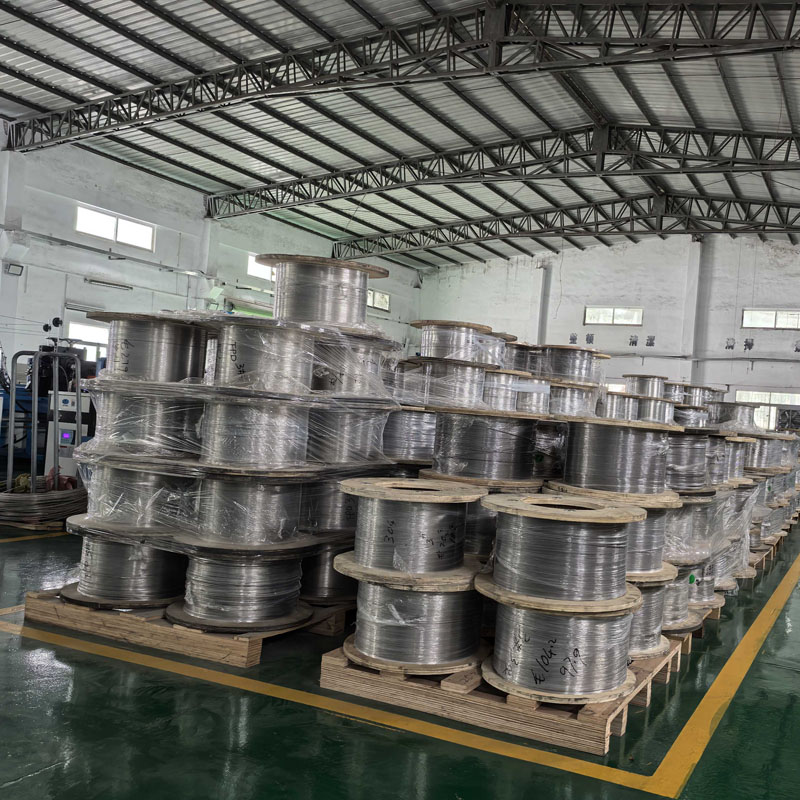
Stop wire is a low-cost part with a high-cost failure mode. Four problems account for most of the mismatches that appear when a buyer moves from a trial order to volume production.
Profile and track mismatch. A flat cross-section is efficient when the stop approaches the tape on a straight line. When the stop has to sit inside a curved or multi-plane track, or when the visible face of the stop is part of the design, the wire has to carry that shape — and a flat profile cannot. Buyers who standardise on flat wire for every stop often end up adding a forming step that a profiled wire would have absorbed.
Gauge drift between lots. A stop that seats correctly on a sample can jam a feed track three months later if the cross-section is not held consistently. This is why dimensional requirements sit inside Fullgreat’s quality control scope alongside composition, tensile strength and elongation, and why profile precision is published for preformed profile wire: Fullgreat’s technical data for preformed Y-teeth zipper wire states a tolerance of ±0.01 mm on cross-sectional micro-geometry, with uniform tensile elongation.
Hardness taken by default. Stop wire is offered as soft or hard, and the choice is not cosmetic: it determines how the part behaves when it is fixed to the tape and how much load it tolerates afterwards. Ordering “whatever we used last time” across two different end products is a common source of rework.
Contamination and documentation. Metal parts entering garments and luggage are subject to needle contamination controls at the brand’s end. Fullgreat’s stated control is automated and documented: full-automatic needle detector equipment, dedicated inspectors performing 100% full inspection, and recorded test data for traceability, with needle detection testing carried out before shipment in accordance with customer requirements. Acceptance criteria on Fullgreat orders are defined as pre-shipment test.
Industry Background: What the Demand Numbers Show — and What They Do Not
Downstream demand for zippers is growing, but published figures disagree on the size of that growth, and none of the available data measures zipper metal wire directly. Independent commercial research reports the global finished zipper market at USD 15.27 billion in 2024, growing at a 7.76% CAGR to USD 23.91 billion by 2030; a second publisher places 2024 at USD 17.39 billion and 2025 at USD 18.74 billion. The gap of roughly 14% is not resolved by averaging, because the two publishers use different scopes and methodologies — and the finished-zipper market is a downstream proxy for wire demand, not a wire figure.
Two further signals point in the same direction without quantifying the wire market. A market research report citing World Trade Organization data states that global apparel trade grew 7% in the first half of 2025, and secondary media coverage of an industry report places the metal zippers segment at USD 11.1 billion with a 3.3% CAGR over an analysis period whose end year is not specified. Metal zipper output is the closest available proxy for zipper metal wire consumption, but it remains a proxy.
The practical implication for a buyer runs both ways: because there is no verified wire-level market benchmark to lean on, the shaped-versus-flat decision has to be made on line-level economics — forming steps, tooling, material loss and repeatability — rather than on market averages.
Detailed Solution: One Material Platform, Two Profile Answers
Fullgreat produces both profiles from the same base-material set, which takes the material question out of the shaped-versus-flat decision. Wire is supplied in stainless steel, copper or aluminium with material selection customizable, hardness is selectable as soft or hard, and size and shape are customizable.
Why material consistency matters more than material variety
The company’s background is a material-substitution story. Founded in 2008, Fullgreat began developing non-magnetic stainless steel for buttons and zippers as a replacement for copper strip, worked with Sichuan University on non-magnetic stainless steel strip development, and obtained a number of national patents. Its non-magnetic stainless steel strip grades FPD806 and FPD808 and stainless steel wire grades FPD901 and FPD902 are used in button and zipper applications, communication accessories, automotive products and aerospace products. For a stop wire buyer, the relevant point is that stainless steel is not a side option here — it is a material platform the manufacturer developed around zipper and button components.
Where shaped wire does the work
Profiled wire is the right answer when the cross-section has a job to do: following a complex zipper track, presenting a defined face, or matching a shaped silhouette that the finished stop must display. The trade-off is transparent rather than mysterious — a profiled cross-section needs its own forming setup and tighter gauge control, and the buyer pays for that geometry whether the part needs it or not.
Where flat wire does the work
Flat wire is the right answer when the geometry is simple and the priority is throughput and repeat-order consistency. Simpler cross-sections are easier to feed and to reproduce lot to lot, and the stop design is carried by the forming tool. The trade-off runs the other way: a flat profile cannot follow a complex track on its own, so if the track demands it, the forming operation has to compensate — or the part will not perform.
Comparison Table: Shaped (Profiled) Wire vs Flat Wire for Zipper Stops
| Decision factor | Shaped / profiled wire (FPD-PW) | Flat wire (FPD-FW) |
|---|---|---|
| Cross-section | Defined non-round profile; shape customizable | Rectangular section with controlled width and thickness; size customizable |
| Best-fit stop geometry | Stops that must follow complex or curved zipper tracks, or present a defined face | Top and bottom stops on simpler, straight-approach tracks |
| Where the geometry comes from | Carried in the wire cross-section | Carried by the forming tool |
| Tooling and gauge attention | Higher: profile-specific forming setup and cross-section control | Lower: fewer geometry variables to hold |
| Material options | Stainless steel, copper or aluminium; customizable | Stainless steel, copper or aluminium; customizable |
| Hardness | Soft or hard; customizable | Soft or hard; customizable |
| Size and shape customization | Yes | Yes |
| Typical end use | Clothing accessories and bag & luggage components where the profile has a function | Clothing accessories and bag & luggage stops with simple geometry |
| Decision rule | Choose when the profile has a job to do | Choose when repeatability and simple forming matter more than profile geometry |
Both profiles are supplied by Fullgreat Metal Limited; material, hardness, size and shape are customizable on both. The “best-fit” rows describe which profile suits which stop geometry, not a quality ranking.
Step-by-Step: Choosing and Qualifying a Stop Wire Profile
Step 1 — Write down what the stop has to do. Identify whether it is a top stop (FPD-TSW) or a bottom stop (FPD-BSW), whether the chain is for clothing or for bag & luggage, and whether the visible face of the stop appears in the finished design. This description decides most of what follows.
Step 2 — Check the track. Simple, straight-approach geometry points to flat wire (FPD-FW). Complex or curved tracks, or a stop that has to sit in a defined face, point to profiled wire (FPD-PW).
Step 3 — Fix the material. Choose stainless steel, copper or aluminium; all three are available and customizable. Stainless steel is the platform Fullgreat developed around zipper and button components, including non-magnetic grades.
Step 4 — Decide soft or hard on purpose. Both hardness options are available on the stop wire. Decide against the forming method and the load the stop will see, not against what was ordered for a different product.
Step 5 — Lock size and shape, and put tolerance expectations on the drawing. Size and shape are customizable. Dimensional requirements, composition, tensile strength and elongation are the parameters inside Fullgreat’s quality control scope, so they belong on the specification sheet rather than in a conversation.
Step 6 — Qualify with a sample and a pre-shipment test. Check three things on the sample: that the cross-section matches the drawing, that the chosen hardness behaves correctly in your forming step, and that the stop seats on the actual tape rather than on a bench measurement. Acceptance on Fullgreat orders is defined as pre-shipment test, and needle detection data is recorded for traceability.
Step 7 — Plan the repeat order before placing it. The published terms are a minimum order quantity of 1 ton, EXW delivery terms and T/T payment terms, with a typical production lead time of 30–45 days against a monthly production capacity of 3,000 tons. A 30–45 day lead time is the number to put into the production plan, not a buffer to assume away. Buyers running both profiles should place them under one supply plan rather than carrying two independent risks.
Use Cases: Apparel and Luggage Take Different Answers
Apparel. Here the stop is usually a small part on a light chain, and the deciding factor is often repeatability and appearance rather than load. Where the stop’s visible face is part of the design, profiled wire lets the cross-section carry that shape instead of relying on the forming tool to create it. Where appearance is not a constraint, flat wire keeps the part simple and the supply predictable.
Bags and luggage. Bottom stop wire is explicitly specified for bag & luggage scenarios in Fullgreat’s product description. Luggage chains are generally heavier and the stops see more handling in use, which pushes the decision towards a profile that seats firmly and a hardness that has been chosen deliberately rather than inherited. This is also where a shaped profile can pay off even when the track itself is not complex, because the stop face is both handled and seen.
Both. The common ground is that material, hardness, size and shape are customizable on Fullgreat’s stop wire, so one supplier can hold an apparel profile and a luggage profile on one specification sheet — the practical argument for keeping both profiles with one wire manufacturer rather than splitting them across two.
Long-Term Supply: What to Fix Before the Second Order
A profile decision that works once and fails on reorder is not a decision. Once volume starts, four supply-side factors matter more than the profile choice itself.
Capacity headroom. Fullgreat’s monthly production capacity is 3,000 tons. For a stop wire buyer this matters less as an absolute number than as a signal that a low-tonnage component order sits inside a much larger material flow rather than being treated as a special run.
Lead time as a planning number. Typical production lead time is 30–45 days, with a minimum order quantity of 1 ton and EXW delivery terms. Buyers running both shaped and flat stop wire should plan both lines off that single lead time rather than assuming the simpler profile will arrive sooner.
Documented quality on every lot. Quality control procedures cover dimensional requirements, composition, tensile strength and elongation — the four parameters that determine whether lot five behaves like lot one. On top of that, needle detection testing is performed before shipment in accordance with requirements, with 100% full inspection by dedicated inspectors and recorded data for traceability.
A supplier set that covers the rest of the trim. Fullgreat’s range extends beyond stop wire to metal round wire, flat wire, shaped and profiled wire, spring wire, Y-shape wire for zipper, Y teeth wire, zipper pullers and automatic sliders, so a stop wire order can sit inside a wider component supply line. The company exports about 70% of its output and serves Turkey, Latin America (Brazil, Mexico), Southeast Asia (Vietnam, Indonesia, Bangladesh) and the European and American markets, operating from a 5,000 m² plant with 50 employees and a 10-engineer R&D team.
Frequently Asked Questions
Are zipper stop wires tested for needle contamination before shipment?
Yes. Fullgreat conducts strict needle detection testing before shipment in accordance with customer requirements. The control is equipment- and record-based rather than purely visual: full-automatic needle detector equipment is installed, dedicated inspectors carry out 100% full inspection, and test data is recorded for traceability. Acceptance criteria on Fullgreat orders are defined as pre-shipment test, which is the documentation that supports a brand’s own needle-control programme for clothing and luggage.
Can shaped and flat stop wires be supplied in custom sizes, shapes and hardness?
Yes. Customization is stated at product level: the bottom stop wire is supplied with customizable size and shape and hardness available as soft or hard; metal round wire (FPD-MRW) is available in stainless steel, copper or aluminium with customization of material, size, shape and hardness; spring wire (FPD-SW02) follows the same material set with customizable hardness and size. Profile precision is published for preformed Y-teeth zipper wire at ±0.01 mm on cross-sectional micro-geometry, which indicates how the profile family is controlled dimensionally.
What drives the cost difference between shaped wire and flat wire?
Four things drive the cost of a stop wire order: the complexity of the cross-section, since a profiled wire needs its own forming setup; the material selected (stainless steel, copper or aluminium); the hardness and tolerance band specified; and the order volume. Material substitution is where the largest verified gap appears — Fullgreat’s own comparison of its zipper metal wire against copper records costs 40% lower than copper, with a longer service cycle and lower raw material loss, and the company’s technical data records composite copper wire reducing raw material costs by 30% to 40% compared with solid brass. Published per-kilogram pricing is not available, because unit cost depends on the specified profile, material, hardness and tolerance, so it has to be quoted per project.
How do I validate a profile before committing to a full production order?
Validation runs through the sample and the pre-shipment test. Quality control at Fullgreat covers dimensional requirements, composition, tensile strength and elongation, so a sample can be checked against the same parameters the production lot will later be checked against. On approval, the pre-shipment test is the acceptance gate stated on Fullgreat orders, and needle detection data is recorded for traceability. Buyers should confirm three points on the sample: the cross-section matches the drawing, the chosen hardness behaves correctly in the forming step, and the stop seats on the actual tape rather than on a bench measurement.
What is the minimum order quantity and typical lead time for stop wire?
Fullgreat’s published terms are a minimum order quantity of 1 ton, EXW delivery terms, T/T payment terms, and a typical production lead time of 30–45 days, against a monthly production capacity of 3,000 tons. The next step for most buyers is straightforward: send the stop drawing together with the end use — clothing accessories or bag & luggage — and request a sample and a quotation against the profile, material and hardness you need. Product details are available at www.fullgreat.com, and the downloadable company profile is here: Fullgreat Metal Company Profile (PDF).
The Decision Rule, in One Paragraph
Choose flat wire (FPD-FW) when the stop’s geometry is simple and repeat-order consistency is the priority. Choose shaped or profiled wire (FPD-PW) when the cross-section has work to do — following a complex zipper track, presenting a defined face, or holding a shaped silhouette on the finished part. Both profiles are produced in stainless steel, copper or aluminium, in soft or hard hardness, with customizable size and shape, for top stop wire (FPD-TSW) and bottom stop wire (FPD-BSW) used in clothing accessories and bag & luggage.

Next step: send the stop drawing, get a profile recommendation
Tell us whether the stop is a top stop or a bottom stop, whether the chain is for clothing or luggage, and how complex the track is. We will recommend shaped (FPD-PW) or flat wire (FPD-FW), confirm the material and hardness, and quote against a sample request. Minimum order quantity is 1 ton, with typical production lead time of 30–45 days.
Contact Bruce — Email: Bruce@fullgreat.com | Tel / WhatsApp: +86 13556896920 | Website: www.fullgreat.com
Have Questions or Need More Details?
Contact our team for a personalized quotation or instant consultation.
Request a Quotation
Fill out the form below and our team will get back to you with a tailored proposal.
WhatsApp Direct Chat
Prefer to chat in real-time? Message us on WhatsApp for instant assistance & quick answers.
- Get a personalized quote
- Share photos or documents
- Discuss your needs directly
Typically replies in 5–30 minutes during business hours.