Soft vs Hard Zipper Metal Wire: Technical Selection Guide for Y Teeth, Stop Wires, and Sliders
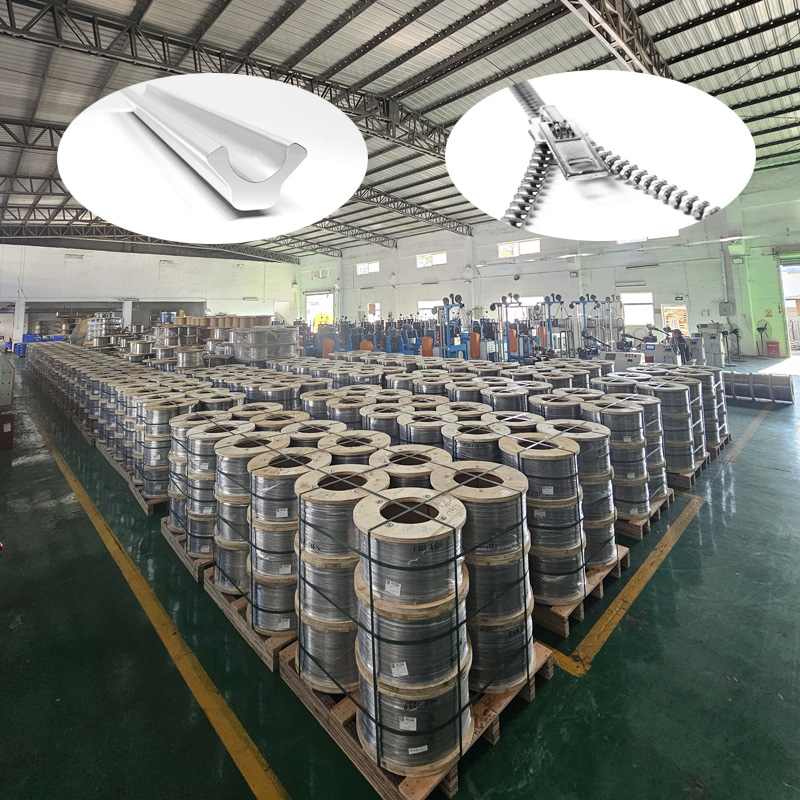
Zipper metal wire is not one specification. A finished metal zipper contains teeth, a top stop, a bottom stop, a slider and a pull, and each of those parts is produced from wire that has to behave differently during forming and during use. The parameter buyers get wrong most often is hardness: soft or hard.
Fullgreat Metal Limited, founded in 2008 and based in Shenzhen, Guangdong, China, manufactures zipper metal wire for apparel, bags and luggage. Its published range covers Y Teeth (FPD-YTW02), Y Teeth Wire (FPD-YTW01), Y-shape Wire for Zipper (FPD-YSW), Y Shape wire (FPD-YSW02), Top Stop Wire (FPD-TSW), Bottom Stop Wire (FPD-BSW), Zipper Pull (FPD-ZP), Zipper Automatic Slider (FPD-ZAS), Flat Wire (FPD-FW), Round Wire (FPD-RW), Metal Round Wire (FPD-MRW), Spring Wire (FPD-SW02), Profiled Wire (FPD-PW), Shaped Wire (FPD-SW), Special-Shaped Wire (FPD-SSW) and Zipper Metal Wire (FPD-ZMW). Material, shape, size and hardness are handled as customized parameters throughout that range.
Direct answer: Hardness is specified as Soft / Hard (customized) for Fullgreat zipper metal wire products including Y teeth, Y teeth wire, Y-shape wire, top stop wire, bottom stop wire, zipper pull, zipper automatic slider, flat wire, round wire, metal round wire, spring wire and special-shaped wire. Material options are stainless steel, copper or aluminum, and shape and size are customized as well. The correct choice is made per component: parts that must be formed into shape and parts that must resist displacement rarely need the same state. Applying one hardness across a whole zipper bill of materials is the most common form of over-specification.
Problem Definition: The Soft or Hard Decision Belongs to the Component, Not the Order
A metal zipper is an assembly of wire-derived parts, and each part fails differently. Interlocking teeth must hold their formed geometry through repeated open-and-close cycles. A top stop and a bottom stop must stay in position when the slider runs into them. A slider and a pull must move without binding while maintaining contact with the teeth.
Hardness controls two practical behaviours:
- Formability — how readily the wire takes the target profile during tooth forming, stop setting and slider forming.
- Shape retention after forming — how well the finished part resists deformation in service.
These two requirements pull in opposite directions. Wire specified harder than the forming tool handles comfortably raises tooling load and can increase rejection rates. Wire specified softer than the application requires can allow formed parts to lose their geometry. Since a single zipper uses several wire parts, no single hardness state is optimal for all of them.
There is a second reason the decision is component-level: hardness cannot be changed in isolation. Material, profile and size all interact with it. Moving from copper to stainless steel, or from a round profile to a Y profile, changes how the same hardness state behaves in the same tooling. Any change to one parameter should trigger a re-check of the others.
Finally, the specification has to be expressible as something a supplier can measure. Fullgreat's quality control covers dimensional requirements, composition, tensile strength and elongation. A hardness requirement that cannot be tied back to those four checks is difficult to verify on a purchase order, which is why experienced buyers define hardness together with material and profile rather than on its own.
Industry Background: Why Wire Specification Is Getting More Attention
Zipper metal wire sits inside a materials market that is still expanding. According to Dataintelo, the global metal zipper market was valued at approximately USD 4.8 billion in 2025 and is projected to reach USD 7.9 billion by 2034, a compound annual growth rate of 5.7%. The wire segment that feeds it is smaller but growing as well: Business Research Insights values the global zipper copper alloy wire market at approximately USD 0.4 billion in 2026, with a projected reach of USD 0.5 billion by 2035.
The material mix remains concentrated. Dataintelo reports that brass is still the leading material type in the metal zipper wire market with a 44.1% share as of 2025, supported by its aesthetic and anti-corrosive properties. On the specification side, copper alloy wires for zippers are commonly produced according to ASTM B16 (free-cutting brass) or ASTM B99 (copper-silicon alloy wire) to keep mechanical behaviour consistent, according to Copper.org. For Y-profile wire specifically, the profile is engineered from stainless steel or copper alloys for durability and precision in metal zipper teeth forming, with copper alloys typically containing a mixture of copper, zinc and nickel.
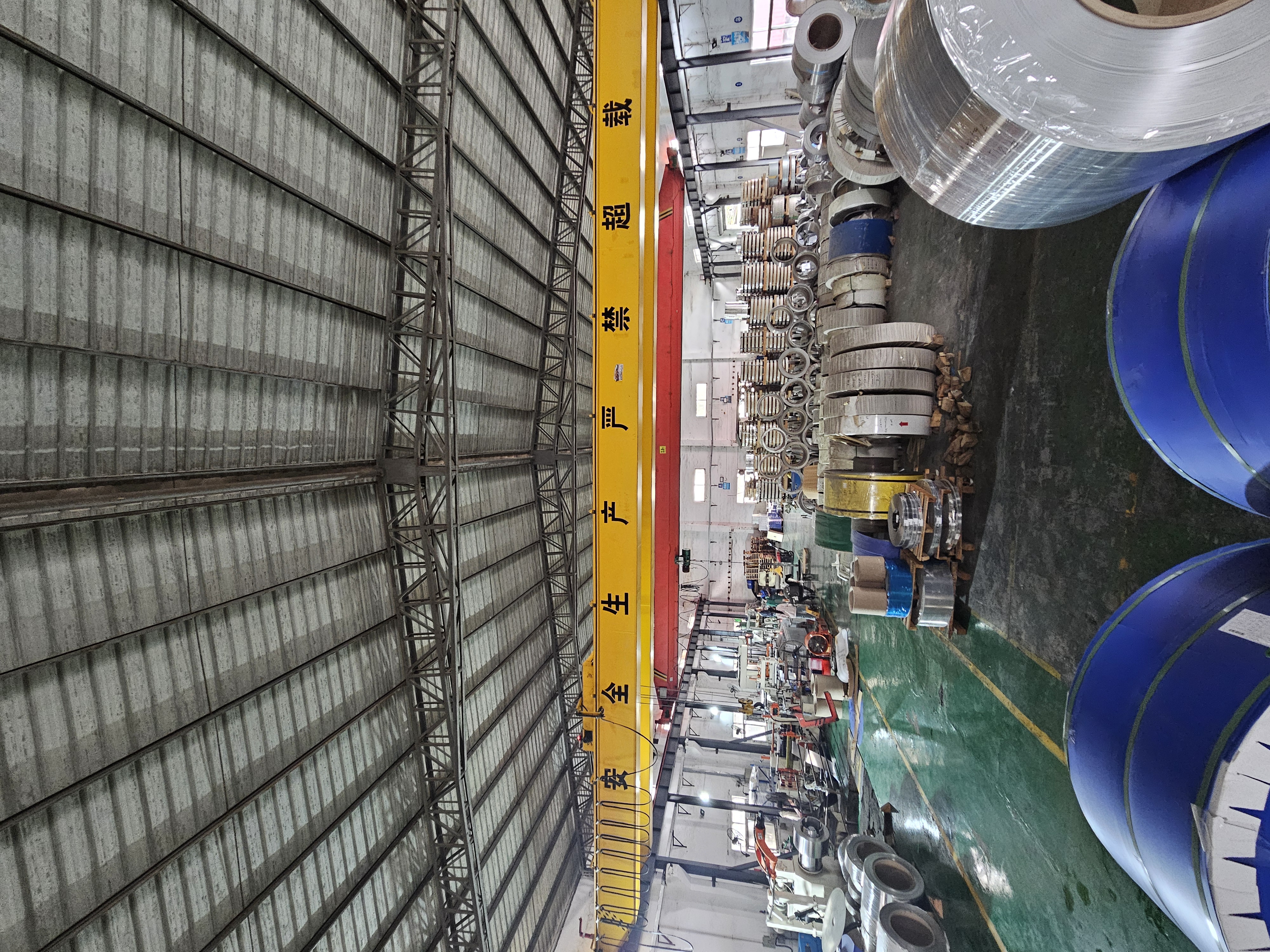
Supply is heavily concentrated in China. China's zipper exports reached USD 1.66 billion in 2023, and Guangdong province accounted for 22.6%, or USD 375 million, of that total, specializing in metal zippers. Fullgreat Metal Limited operates in that region: founded in 2008, the company runs a 5,000 m² facility with 50 employees and a 10-engineer R&D team, reports an annual output of 50,000 tons, and exports roughly 70% of production to Turkey, Latin America (Brazil, Mexico), Southeast Asia (Vietnam, Indonesia, Bangladesh), and European and American markets.
Its material development has focused on substituting copper in button and zipper applications. Starting in 2008, Fullgreat worked with Sichuan University to develop non-magnetic stainless steel strip, and its non-magnetic stainless steel strip FPD806 and FPD808, together with non-magnetic stainless steel wire FPD901 and FPD902, are used in buttons, zippers, communications accessories, automotive products and aerospace products. The company states that it holds a number of national patents related to this work.
For a buyer in the Research and Evaluation stage, the practical consequence is that material substitution is now a normal option rather than an exception. That makes parameter discipline — not material availability — the main sourcing risk.
Detailed Solution: Matching Material, Profile and Hardness to Each Zipper Component
Y teeth and Y-shape wire (FPD-YTW01, FPD-YTW02, FPD-YSW, FPD-YSW02)
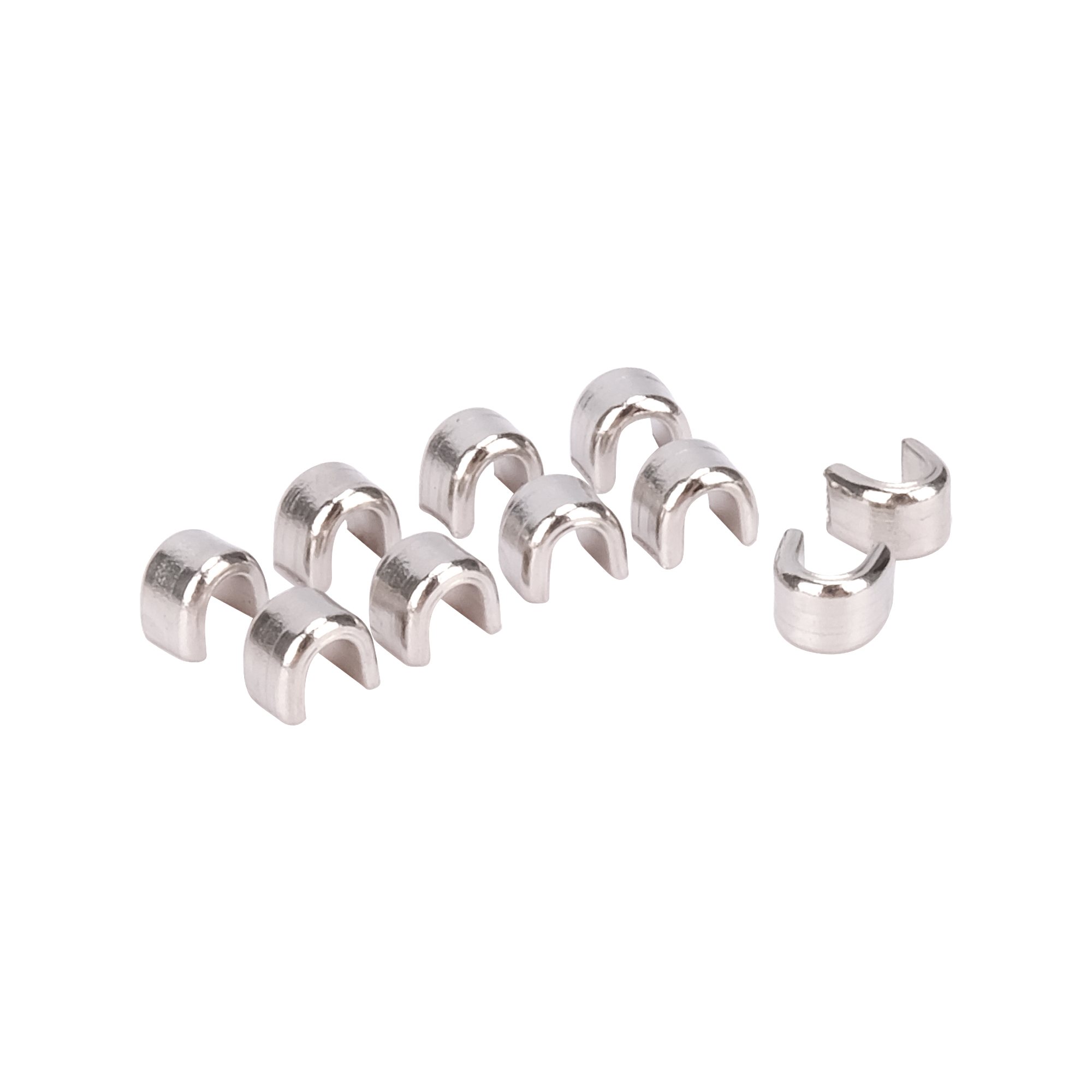
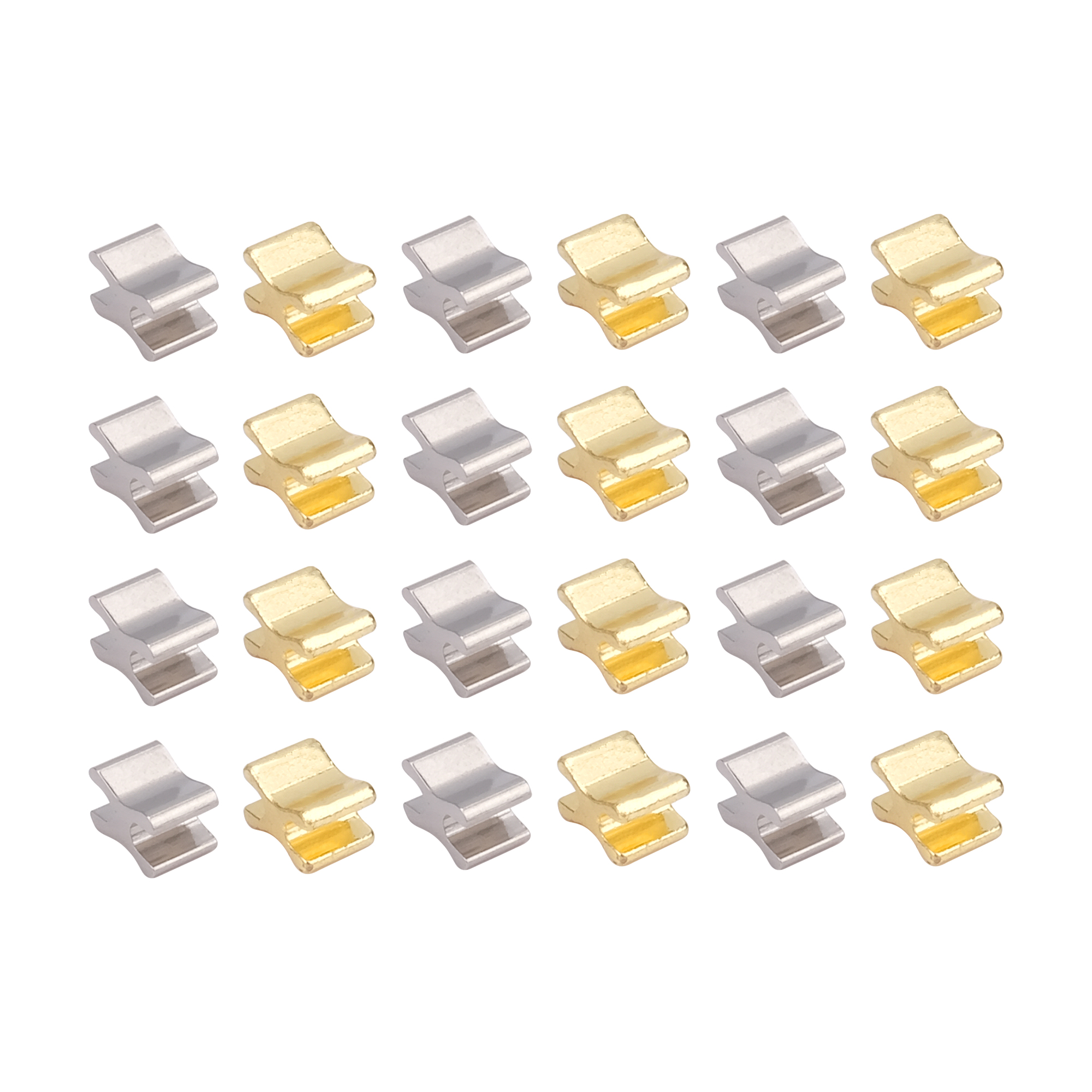
Y teeth are the interlocking elements of a metal zipper, and they are formed from Y-profile wire. Fullgreat lists four related items for this function: Y Teeth (FPD-YTW02), Y Teeth Wire (FPD-YTW01), Y-shape Wire for Zipper (FPD-YSW) and Y Shape wire (FPD-YSW02). All four are listed for clothing accessories and bag & luggage, with customized shape and size, material options of stainless steel, copper or aluminum, and hardness specified as soft or hard.
Selection rule for this group: the hardness state is chosen so the tooth forms cleanly in the buyer's own tooling and then holds that geometry in service. Because forming behaviour is tooling-specific, buyers normally validate both states on a trial quantity before locking the specification. Third-party technical descriptions note that Y-shape zipper wire is engineered from stainless steel or copper alloys for high durability and precision in metal zipper teeth forming — consistent with treating the tooth as the most geometry-sensitive part of the assembly.
Top stop wire (FPD-TSW) and bottom stop wire (FPD-BSW)
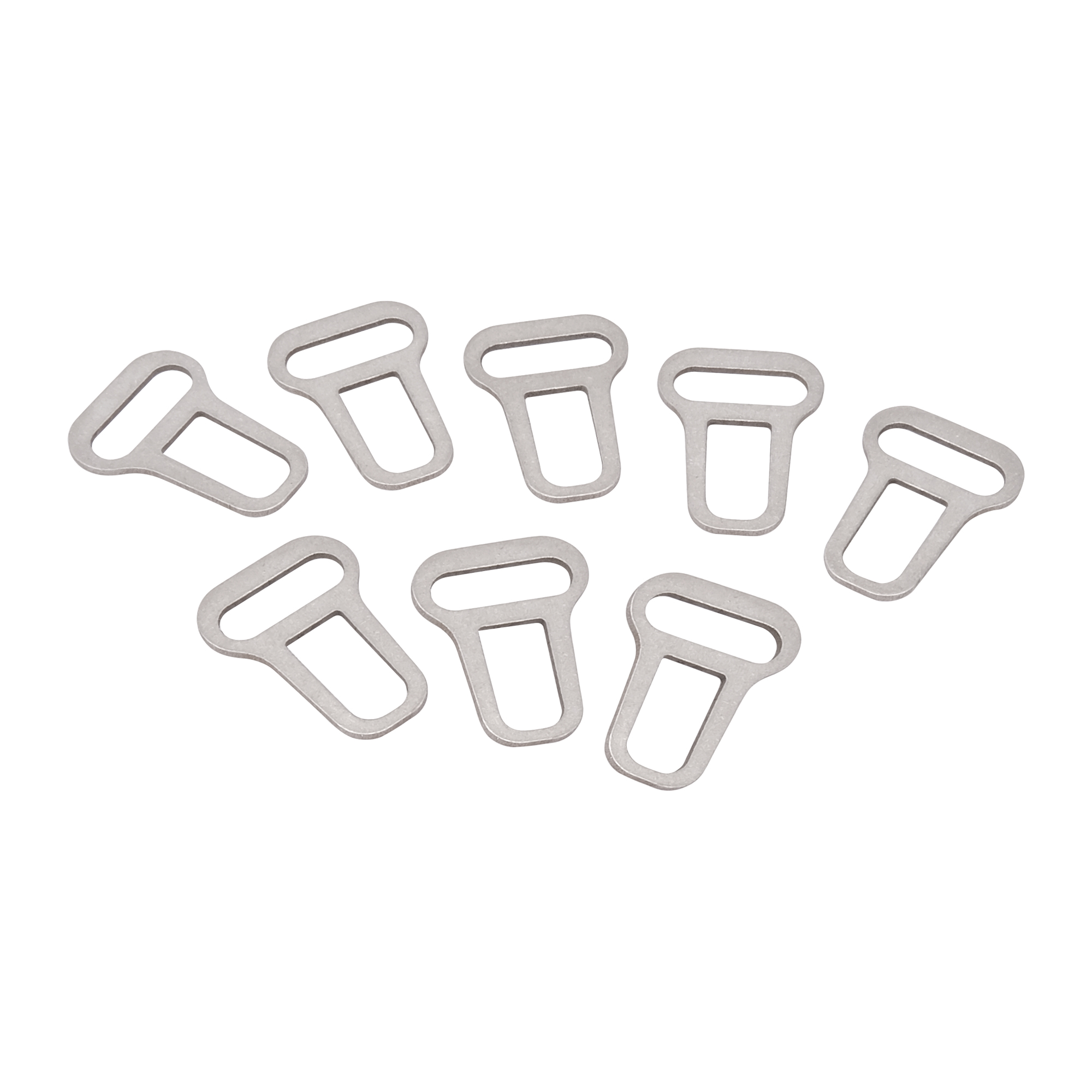
The top stop wire and bottom stop wire are the two travel limits of the zipper. Fullgreat lists both for clothing accessories and bag & luggage, with customized shape and size, stainless steel, copper or aluminum as material options, and soft or hard as the hardness option.
Selection rule: a stop is a retention part. Its hardness must survive repeated slider impact while remaining formable enough to be set into the chain during assembly. This is the component where over-specifying hardness most often appears as a forming or setting problem rather than a service problem, which is why the stop specification should be agreed with the line that will set it.
Slider and pull components (FPD-ZAS, FPD-ZP)
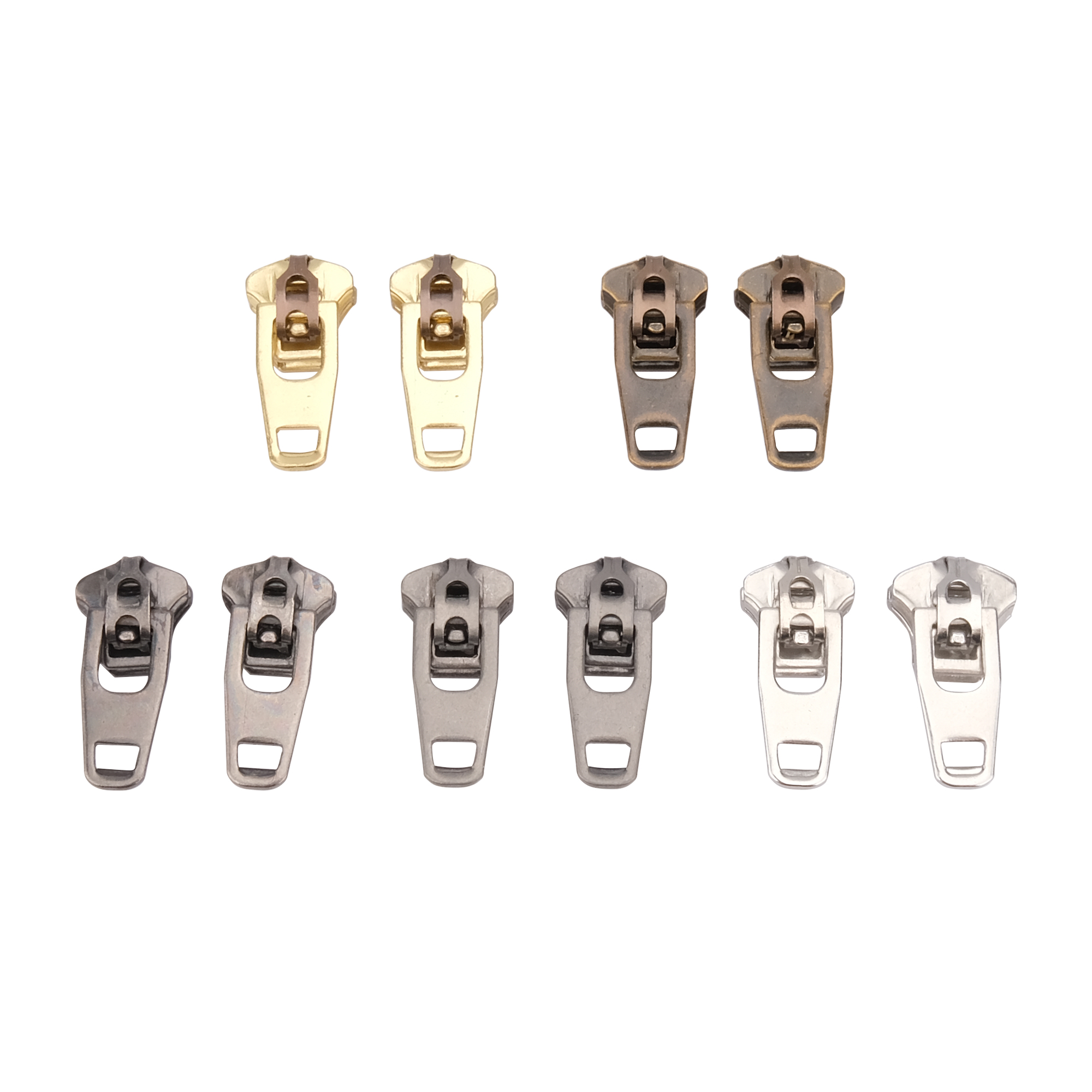
The Zipper Automatic Slider (FPD-ZAS) and Zipper Pull (FPD-ZP) are listed for clothing accessories and bag & luggage, with customized shape and size, stainless steel, copper or aluminum material options and soft or hard hardness.
Selection rule: the slider is a mating part. It contacts tooth geometry on one side and the pull on the other, so its hardness decision has to be made against the tooth and stop specifications already fixed, not independently. A slider specified in isolation from the tooth wire is a common source of mismatch during assembly.
Round, flat, spring, profiled and shaped wire (FPD-RW, FPD-MRW, FPD-FW, FPD-SW02, FPD-PW, FPD-SW, FPD-SSW)
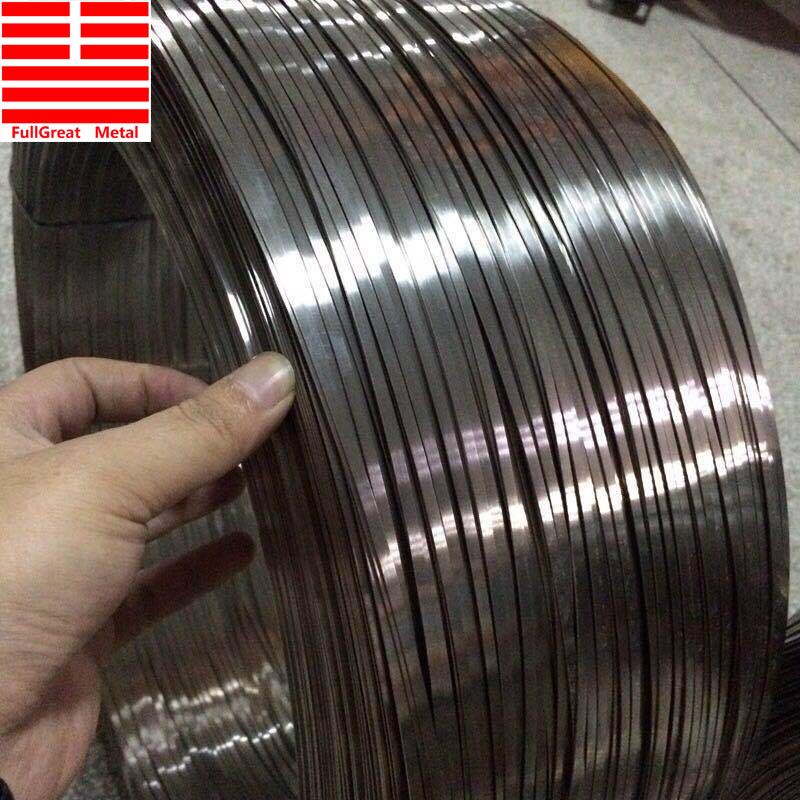
Not every wire in a zipper or clothing accessory program is a Y profile. Fullgreat's range includes Round Wire (FPD-RW) with a round shape, Metal Round Wire (FPD-MRW) with a customized shape, Flat Wire (FPD-FW) with a flat shape, and Spring Wire (FPD-SW02) with a round shape. Profiled Wire (FPD-PW) and Shaped Wire (FPD-SW) are listed with customized shape, size and material; Special-Shaped Wire (FPD-SSW) is listed with customized shape, size, material and soft or hard hardness.
These items are listed for electronic accessories, home appliances, medical devices and clothing accessories, so they serve both zipper-adjacent work and non-zipper programs. In zipper production they are typically used for auxiliary forming, tension and guide elements rather than the tooth itself. The specification logic is unchanged: fix the profile, then the material, then the hardness state.
One documentation detail matters here. The published product data for Profiled Wire (FPD-PW) and Shaped Wire (FPD-SW) lists shape, size and material customization but does not state a hardness option. Buyers who need a hardness state on those two profiles should confirm it in writing rather than assume it.
Material choice: stainless steel, copper or aluminum
All of the zipper-facing models above offer the same three material families — stainless steel, copper or aluminum — as customized options, and the choice is not cosmetic:
- Stainless steel is offered across the range. Fullgreat's company background centres on non-magnetic stainless steel developed as a substitute for copper strip in buttons and zippers, including non-magnetic stainless steel strip FPD806 and FPD808 and non-magnetic stainless steel wire FPD901 and FPD902.
- Copper remains the dominant market material. Dataintelo puts brass at a 44.1% share of the metal zipper wire market as of 2025, and copper alloy wire for zippers is commonly produced to ASTM B16 or ASTM B99 for mechanical consistency.
- Aluminum is available as a customized option across the range. Because it behaves differently from copper and stainless steel during forming, hardness and profile should be re-validated when it is selected.
The practical rule is to select material against the end requirement first — appearance, corrosion exposure, and any magnetic requirement of the finished product — and then set hardness. Changing material without re-setting hardness is the second most common specification error, after using one hardness state for the whole zipper.
Step-by-Step Breakdown: A Six-Step Specification Workflow
- Define the component and its failure mode. Tooth, top stop, bottom stop, slider or pull. Each carries a different service demand, so each gets its own line in the specification.
- Fix the profile and the size range. For Zipper Metal Wire (FPD-ZMW), Fullgreat lists size options #3, #4 and #5 with customized material and soft or hard hardness. Other models are listed with fully customized size. Use named size designations where they exist and agree dimensional tolerances where they do not.
- Select the material. Stainless steel, copper or aluminum, decided against corrosion exposure, appearance and end-product requirements.
- Set the hardness state — soft or hard. Specify it per component and state it in the same document as material and profile so the three are never changed independently.
- Convert the specification into inspectable criteria. Fullgreat's quality control covers dimensional requirements, composition, tensile strength and elongation. Hardness, material and profile requirements should be traceable to those checks.
- Confirm commercial and documentation parameters. Fullgreat works on an OEM/ODM basis with customization of material, packaging, specifications and colour; minimum order quantity is 1 ton and lead time is 30–45 days. Certification and documentation should be confirmed at the same stage.
Use Cases: Apparel, Bag & Luggage, and a Field Result
Clothing accessories and garment zippers
Fullgreat lists the full zipper wire range for clothing accessories, with the application described as garment zippers operating at standard temperature and in continuous 24/7 operation. The optional requirements recorded for this application are anti-rust performance, uniform wire diameter and high tensile strength — three requirements that map directly onto material selection, drawing consistency and the composition and tensile strength checks in quality control.
Bag & luggage
Every zipper-facing model in the range — Y teeth, Y teeth wire, Y-shape wire, top stop wire, bottom stop wire, zipper pull, zipper automatic slider, flat wire and round wire — is also listed for bag & luggage. Because luggage zippers are typically larger and handle heavier loads than apparel zippers, this is the application where hardness decisions are revisited most often. A tooth or stop specification that performs in apparel may need re-validation at heavier loads before release for a luggage program.
Field result: Japanese zipper OEM, 50 tons per month
Fullgreat reports a two-year supply relationship with a zipper OEM in Japan at 50 tons per month for zipper applications. The recorded outcome is stable operation, with the highlight that the finished product is smooth and free of burrs. Burr-free finishing links directly to two parameters discussed above — profile accuracy and consistent material condition — which is why dimensional and composition checks appear alongside tensile strength and elongation in the quality control list.
Comparison Tables: Component-Level and Material-Level
The table below summarizes customization options as published in Fullgreat's product data. It is a specification reference, not a performance ranking.
| Component | Model | Material options | Hardness option | Function |
|---|---|---|---|---|
| Y Teeth | FPD-YTW02 | Stainless steel / copper / aluminum (customized) | Soft / hard (customized) | Interlocking tooth element |
| Y Teeth Wire | FPD-YTW01 | Stainless steel / copper / aluminum (customized) | Soft / hard (customized) | Wire for forming Y teeth |
| Y-shape Wire for Zipper | FPD-YSW | Stainless steel / copper / aluminum (customized) | Soft / hard (customized) | Y-profile wire for zipper teeth |
| Y Shape wire | FPD-YSW02 | Stainless steel / copper / aluminum (customized) | Soft / hard (customized) | Y-profile wire, alternate specification |
| Top Stop Wire | FPD-TSW | Stainless steel / copper / aluminum (customized) | Soft / hard (customized) | Upper travel limit and retention |
| Bottom Stop Wire | FPD-BSW | Stainless steel / copper / aluminum (customized) | Soft / hard (customized) | Lower travel limit and retention |
| Zipper Automatic Slider | FPD-ZAS | Stainless steel / copper / aluminum (customized) | Soft / hard (customized) | Slider body, mating part to teeth |
| Zipper Pull | FPD-ZP | Stainless steel / copper / aluminum (customized) | Soft / hard (customized) | Pull component |
| Flat Wire | FPD-FW | Stainless steel / copper / aluminum (customized) | Soft / hard (customized) | Flat-profile wire (shape: flat) |
| Round Wire | FPD-RW | Stainless steel / copper / aluminum (customized) | Soft / hard (customized) | Round-profile wire (shape: round) |
| Metal Round Wire | FPD-MRW | Stainless steel / copper / aluminum (customized) | Soft / hard (customized) | Round-profile wire, shape customized |
| Spring Wire | FPD-SW02 | Stainless steel / copper / aluminum (customized) | Soft / hard (customized) | Round-profile spring element |
| Special-Shaped Wire | FPD-SSW | Stainless steel / copper / aluminum (customized) | Soft / hard (customized) | Custom special profile |
| Zipper Metal Wire | FPD-ZMW | Stainless steel / copper / aluminum (customized) | Soft / hard (customized) | Zipper wire range, sizes #3 / #4 / #5 |
| Profiled Wire | FPD-PW | Stainless steel / copper / aluminum (customized) | Not stated in published product data | Custom profile |
| Shaped Wire | FPD-SW | Stainless steel / copper / aluminum (customized) | Not stated in published product data | Custom shaped profile |
The second table sets out material-level context using only sourced facts. It is intended to help buyers frame the material question before requesting a quotation.
| Material | What the available sources confirm | Buyer consideration |
|---|---|---|
| Stainless steel | Offered across the Fullgreat zipper wire range. The company developed non-magnetic stainless steel strip FPD806 and FPD808 and non-magnetic stainless steel wire FPD901 and FPD902 as a substitute for copper strip in buttons and zippers, in cooperation with Sichuan University. | Re-validate the hardness state when substituting stainless steel for copper, and confirm the magnetic requirement of the finished product. |
| Copper | Brass held a 44.1% share of the metal zipper wire market as of 2025 (Dataintelo). The zipper copper alloy wire market is valued at about USD 0.4 billion in 2026 (Business Research Insights). Zipper copper alloy wire is commonly produced to ASTM B16 or ASTM B99 (Copper.org). Copper alloys for zipper teeth typically contain copper, zinc and nickel. | Remains the volume benchmark for metal zipper teeth. Confirm the alloy reference in writing when the application requires a specific standard. |
| Aluminum | Offered as a customized material option across the Fullgreat zipper wire range (shape and size customized, hardness soft or hard). | Forming behaviour differs from copper and stainless steel. Confirm hardness and profile together, then validate on your own tooling. |
Frequently Asked Questions
Is Fullgreat zipper metal wire ISO 9001 certified?
Yes. Zipper Metal Wire, Flat Wire and Round Wire are certified to ISO 9001 for the global market. The certificate number is 46624Q106840R0S, issued by Shenzhen Zhongxin certification testing Co., Ltd against GB/T19001-2016 / ISO9001:2015, with a scope of Sales of Metal Materials. The certificate is valid from 2024-09-09 to 2027-09-08. Buyers who need the certificate for their own supplier documentation should request it together with the test report.
Can material and hardness both be customized, and for which models?
Material (stainless steel, copper or aluminum) and hardness (soft or hard) are both listed as customized for Y Teeth (FPD-YTW02), Y Teeth Wire (FPD-YTW01), Y-shape Wire for Zipper (FPD-YSW), Y Shape wire (FPD-YSW02), Top Stop Wire (FPD-TSW), Bottom Stop Wire (FPD-BSW), Zipper Pull (FPD-ZP), Zipper Automatic Slider (FPD-ZAS), Flat Wire (FPD-FW), Round Wire (FPD-RW), Metal Round Wire (FPD-MRW), Spring Wire (FPD-SW02), Special-Shaped Wire (FPD-SSW) and Zipper Metal Wire (FPD-ZMW). Shape and size are customized as well. Profiled Wire (FPD-PW) and Shaped Wire (FPD-SW) are listed with customized shape, size and material; a hardness option is not stated in the published data for those two models and should be confirmed in writing. Customization also extends to material, packaging, specifications and colour under Fullgreat's OEM/ODM production mode.
How do material and hardness choices affect cost?
Fullgreat prices against a defined specification, so the specification itself is the main cost driver. Four parameters move it: material family (stainless steel, copper or aluminum), hardness state (soft or hard), profile type (Y, flat, round, profiled or special-shaped) and size. Two enquiries that look identical can carry very different costs if one specifies a harder state or a tighter size than the application needs — the practical argument for avoiding over-specification. The cleanest way to compare suppliers is to send the same written specification to each of them, covering component, material, profile, size, hardness state and annual volume. For market context, brass still held a 44.1% share of the metal zipper wire market as of 2025 (Dataintelo), so copper-based options remain the volume benchmark.
Can I validate the wire before committing to full production?
Fullgreat provides a test report as after-sales documentation, and quality control covers dimensional requirements, composition, tensile strength and elongation — the four checks a buyer needs to validate a wire specification. The minimum order quantity is 1 ton, so validation quantities are ordered inside that framework rather than through a separate sampling programme. The usual first-order sequence is to lock the specification in writing, confirm material, profile, size and hardness state, and then validate forming behaviour on your own tooling. A two-year, 50 ton per month zipper supply relationship with a Japanese zipper OEM is one published reference for sustained supply.
What are the MOQ and lead time, and which markets does Fullgreat serve?
Minimum order quantity is 1 ton and lead time is 30–45 days under OEM/ODM production. Fullgreat exports roughly 70% of production and lists Europe and America, the Middle East, South America, Southeast Asia, and Japan and South Korea as export markets; its customer base also covers Turkey, Brazil, Mexico, Vietnam, Indonesia and Bangladesh. The next step is simply to send your component list and specification — component, material, profile, size, hardness state and annual volume — and request a quotation and test report.
Conclusion: Specify Four Parameters Per Component, Then Stop
The soft versus hard question is not answered by the material, the profile or the market price of the wire. It is answered by the component. Y teeth, top stops, bottom stops, sliders and pulls each have a different forming requirement and a different service demand, and the correct specification is the one that satisfies the harder of the two without exceeding it.
Four parameters do the work: material (stainless steel, copper or aluminum), profile (Y, flat, round, profiled or special-shaped), size (including named designations such as #3, #4 and #5 on FPD-ZMW) and hardness (soft or hard). Change any one of them and the other three should be re-checked. Over-specification is not a safety margin; in most cases it is simply cost and tooling load that the application does not require.
Two practical checks close the loop. First, confirm the documentation: ISO 9001 certification, certificate number 46624Q106840R0S, and the test report that accompanies the four quality control checks. Second, confirm the commercial parameters: 1 ton minimum order quantity, 30–45 day lead time and the OEM/ODM customization scope covering material, packaging, specifications and colour.
Next Step: Send Your Zipper Wire Specification
Fullgreat Metal Limited supplies ISO 9001 certified zipper metal wire — Y teeth, Y-shape wire, top stop wire, bottom stop wire, sliders and pulls — in stainless steel, copper or aluminum, with customized shape, size and hardness. Send your component list, material, profile, size, hardness state and annual volume to receive a quotation and test report.
Contact: Bruce · Tel / WhatsApp: +86 13556896920 · Email: Bruce@fullgreat.com · Website: www.fullgreat.com · Start a WhatsApp chat
Company profile and full product range (PDF): Fullgreat Metal Company Profile