Commodity Mould Compliance Guide: Certification and Regional Requirements for Global Buyers
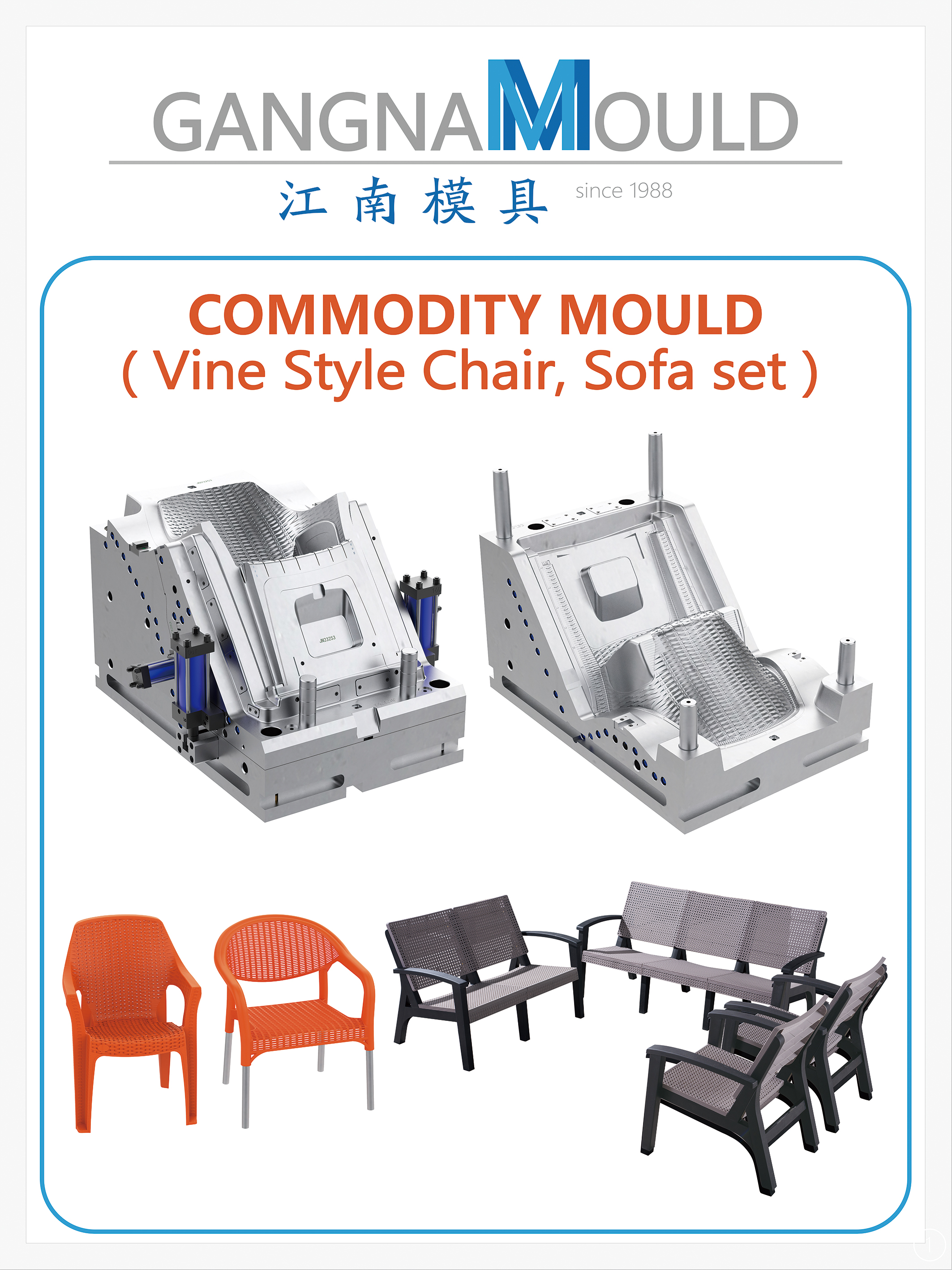
Commodity mould tooling for chair and sofa set production — the tool is custom, the compliance file is not optional.
A commodity mould order is compliant when three things line up: the supplier's quality management system is current and verifiable, the tool meets a stated dimensional tolerance, and the purchase contract records who proves what, with which documents, at which payment milestone. Miss any one of the three and the certificate on a supplier's homepage stops protecting the buyer.
This guide is written for buyers in the research and evaluation stage — importers, OEM and ODM converters, and procurement teams sourcing chair moulds, bucket moulds, pallet moulds, crate moulds or thin-wall injection moulds. It sets out what to verify before ordering and how regional expectations differ across export markets, using GANGNAM MOULD CO., LTD (Zhejiang Huangyan Jiangnan Mould Factory) as a documented reference case. GANGNAM MOULD is a plastic mould manufacturer established in 1988 and based in Huangyan District, Taizhou, Zhejiang, China.
Why Compliance Problems Appear After the Purchase Order, Not Before It
Commodity moulds are tooling, not consumer products. A chair mould, a storage box mould or a turnover box mould is built once to a buyer's drawing and then runs for years inside an injection moulding machine. The compliance question therefore splits in a way that consumer-product compliance does not: part of the evidence belongs to the tool, and part belongs to the plastic article the tool produces.
Three failures repeat in this category.
- A certificate is read as a tolerance statement. ISO 9001 certifies a quality management system; it does not certify that a specific cavity block will hold a specific dimension on a specific drawing. Buyers who stop at the certificate often discover the gap at first article inspection.
- Regional documents are requested after the PO. Material declarations, inspection reports and finished-article conformity evidence take time to compile. Asking for them at shipment stage is a common reason a finished tool sits in the warehouse unshipped.
- Payment is released before the document pack is complete. When a balance is paid on a fixed date rather than against document acceptance, the buyer gives up the only lever that reliably brings the inspection file across the line.
Each of the three is inexpensive to prevent during RFQ and expensive to repair once the mould is built and the steel is cut.
Industry Background: Why Tooling Compliance Moved into the RFQ
Two market figures explain why compliance now appears in procurement meetings rather than only in quality meetings. Grand View Research reports the global injection moulding market at USD 312.7 billion in 2025, while the industrial mould market — the tooling itself — was valued at USD 59.0 billion in the same year. Tooling is roughly one-fifth the size of the production market it enables, yet a tool decision controls production for the life of the mould.
The same pattern holds in the fastest-moving segment. The thin wall mould market was projected at USD 3.89 billion in 2025, rising to USD 7.23 billion by 2035 at a 6.4% CAGR. Asia Pacific held 52.6% of the global industrial mould market in 2024, so a large share of new commodity tooling is bought from, or through, Asian manufacturers.
High-volume, multi-cavity and thin-wall work is where dimensional consistency is least forgiving. A deviation that is invisible in a single cavity becomes a stacking, capping or pallet-fit problem across millions of parts. That is the technical reason compliance verification moved into the RFQ — and the reason a quality management certificate and a tolerance figure have to be read together, never separately.
The Three Layers of Commodity Mould Compliance
Layer 1 — The quality management system
The first layer is the only one that is independently issued. GANGNAM MOULD holds ISO 9001:2015 certification, certificate number 18118Q10459R3S, issued by Beijing Xingguo Inspection and Certification Co., Ltd. The certificate covers the manufacture and design of plastic parts mould and is valid from 14 June 2024 to 15 June 2027.
Verification takes four checks: confirm the certificate number against the issuing body, confirm the scope wording covers mould design and manufacture rather than trading only, confirm the expiry date falls beyond your planned delivery, and confirm the certificate is issued in the exact legal name of the entity that will sign your contract.
What this layer proves and what it does not. ISO 9001:2015 indicates that design, production and inspection follow a documented, audited process. It does not state the tolerance a particular mould will hold. That belongs to layer three and must be written into the order.
Layer 2 — Material and design control
The second layer is what the tool is made of and how the tooling concept is fixed before cutting starts. GANGNAM MOULD's commodity moulds are made of quality mold steel, and the range is specified for PP and engineering-grade plastics, including recycled polymers. Design controls span customizable cavity count and size, a uniform cooling system that shortens cooling time, gating and venting optimised to reduce warpage, and surface treatment with tolerance control for batch consistency.
For a buyer, the practical output of this layer is a written design confirmation attached to the order: cavity count, surface texture or polish, gating and cooling arrangement, inserts or multi-component design, and any material or heat-treatment request. Without that confirmation, acceptance criteria later become a matter of interpretation.
Layer 3 — Dimensional acceptance and inspection evidence
The third layer is the only one a buyer can physically measure. GANGNAM MOULD quotes a dimensional tolerance of -0.02 mm for its commodity mould work, supported by CMM measurement, NDT, and full-size trial testing with inspection reports.
Tolerance should always be written with a reference frame. ISO 20457:2018 specifies possible manufacturing tolerances for plastic moulded parts and addresses injection moulding among other processes; citing it in the drawing and in the acceptance clause removes the ambiguity of the phrase 'within tolerance'. A draft revision, ISO/DIS 20457, is listed by ISO as a draft document — until its status changes, ISO 20457:2018 remains the published reference.
A tolerance figure without an inspection method is an opinion. Pair the number with the measurement method and the report format inside the purchase order.
Regional Requirements: What Actually Changes Market by Market
Regional requirements rarely change what a commodity mould is. They change the document file that surrounds it, and the file is what a buyer's own customer, customs broker or quality department will ask for. GANGNAM MOULD exports about 70% of its output, with Southeast Asia as its main market; its documented export markets also include the Middle East, Africa, Central Asia, South America, Mexico, Italy and India.
Southeast Asia — the primary export market
Buyers in this region are typically OEM and ODM converters supplying domestic retail and logistics customers. Their compliance questions concentrate on the tool: a current quality management certificate, a trial inspection report, a material statement for the polymer they intend to run, and increasingly approval of trial parts before the balance is paid.
Middle East, Africa and Central Asia
Orders in these markets frequently combine several product families in one purchase — bucket and basin moulds, trash bin moulds, crate and pallet moulds, garden planter moulds. The compliance emphasis shifts from a single certificate to family coverage and consistency of inspection across a mixed order, plus confirmation that each tool in the container was inspected to the same method.
South America and Mexico
Buyers here often need documents in a specific format for their own customs process or retail onboarding. The format requirement belongs to the buyer's market; what a mould supplier can provide is the certificate copy, the inspection reports and the material statement. Request the document list during RFQ rather than at shipping.
Italy and the European Union
In the EU, the compliance conversation moves from the tool to the finished article. Material declarations matter, and for parts that contact food — kitchen utensil moulds, disposable food container moulds, some bathroom accessories — the buyer needs food-contact evidence for the polymer, which is a finished-product requirement rather than a tooling one.
India
Indian buyers frequently compare imported tooling against domestic tooling. Documentation emphasis falls on dimensional verification records and steel and material traceability rather than on any single certificate, because the comparison that matters is measured accuracy against the drawing.
The point most often misunderstood: no mould-maker certificate makes a finished plastic article compliant in a destination market. Product rules — food contact, safety, labelling, customs classification — attach to the article and the market. A supplier's ISO 9001:2015 certificate and inspection reports support that file; they do not replace it.
Step-by-Step: Verifying Compliance Before You Order
- Verify the certificate against the contracting entity. Match the certificate name, number and scope to the company that will invoice you, and check the expiry against your delivery date.
- Translate the certificate into drawing-level acceptance. State the tolerance (-0.02 mm, or your own requirement), the reference standard such as ISO 20457:2018, the cavity count and the surface treatment in the RFQ, not in conversation.
- Fix the inspection method and report format. Confirm in writing that acceptance will be judged by CMM measurement, NDT and full-size trial testing, and ask for a sample inspection report covering the same product family you are ordering.
- Write acceptance criteria and rejection remedies into the PO. Define what counts as a failed trial, who pays for rework, and what happens to the schedule if a trial part is rejected.
- Link the payment schedule to documents. Standard terms are FOB or CIF, with 30% T/T in advance and 70% before shipment. Release the 70% against the inspection report and trial-part approval rather than against a calendar date.
- Approve trial parts and archive the evidence pack. Keep the certificate copy, design confirmation, inspection reports, trial-part approval and shipping documents together — this is the file you will reuse for every repeat order and for your own customer audits.
MOQ is 1 unit, so a single-tool trial order is possible before committing to a multi-family programme. Lead time is typically quoted at 30 to 45 days depending on mould complexity, with the exact schedule confirmed per order — which is also why document review should happen before the tool goes into machining, not after.
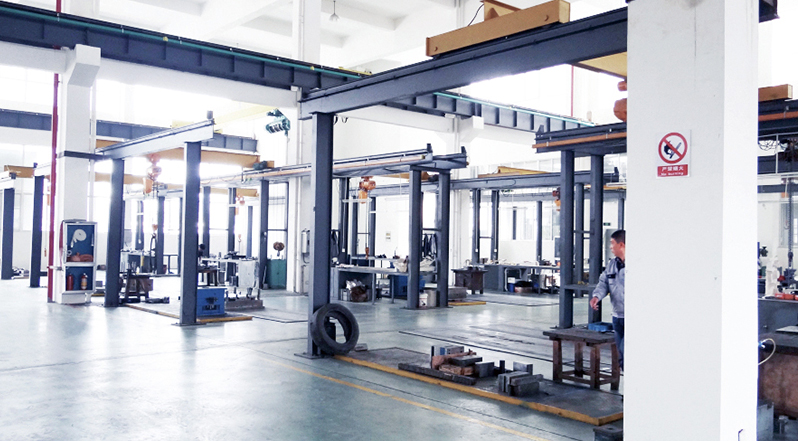
Mould manufacturing workshop: design confirmation, steel selection and machining sequence determine what the inspection report can prove later.
How Compliance Requirements Change the Mould Itself
Acceptance criteria are not administrative. They drive tooling decisions months before inspection.
- Cavity count and cavity size are customizable, but more cavities mean tighter balancing requirements and stricter dimensional control across every cavity position.
- Cooling design is specified as a uniform system to shorten cooling time. Uneven cooling shows up as warpage, and warpage is what turns a passing cavity into a failing trial report.
- Gating and venting are optimised to reduce warpage; on thin-wall containers and crates the margin between acceptable and rejected is narrow.
- Surface treatment ranges from texture to polish and is tied to batch consistency — a changed finish is a changed acceptance criterion.
- Inserts, multi-component design, and material or heat-treatment requests are confirmed per project, which is why the design confirmation has to be written rather than assumed.
The result is a short rule of thumb: every inspection parameter you intend to enforce should be visible somewhere in the tool design confirmation, and every design choice should map back to a parameter you will measure.
Use Cases: Where Compliance Pressure Is Highest
Kitchen and food-adjacent products
Kitchen utensil moulds and disposable food container moulds sit closest to regulatory attention. The tooling evidence is a quality system plus dimensional inspection; the article evidence — food-contact compliance for the polymer — is assembled by the buyer for the destination market.
Logistics and warehousing
Pallet moulds, crate moulds and turnover box moulds are judged on repeatability across very high volumes. A pallet that stacks acceptably on part 500 and poorly on part 50,000 is a dimensional control failure, which is why the -0.02 mm tolerance and full-size trial testing carry more weight here than in low-volume categories.
Furniture and household storage
Chair moulds, table moulds, stool moulds, sofa moulds, storage cabinet moulds and storage box moulds are usually bought in families. Consistency across a family — matching surface finish, matching fit — matters as much as the certificate, and is verified through trial parts rather than paperwork.
Thin-wall and appliance applications
Thin wall injection moulds and home appliance moulds combine short cycle times with tight wall sections, where cooling uniformity and venting determine whether the part meets the drawing at all.
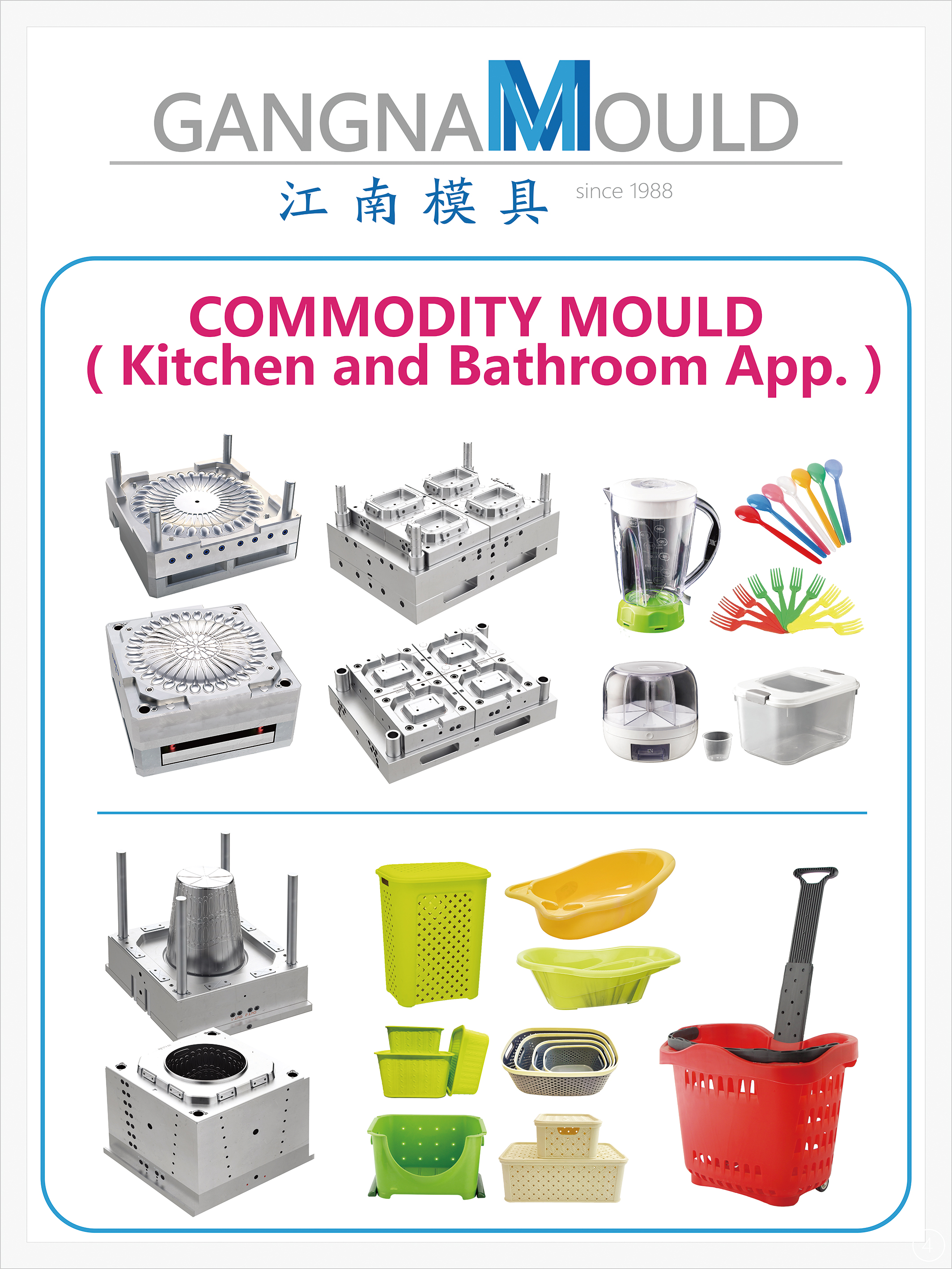
Kitchen and bathroom appliance moulds — categories where finished-article documentation sits with the buyer, while tooling evidence sits with the mould maker.
Compliance Verification and Purchasing Terms at a Glance
| Verification item | Evidence to request before the PO | GANGNAM MOULD documented position |
|---|---|---|
| Quality management system | Current ISO 9001:2015 certificate with scope, issuer and validity dates | ISO 9001:2015, certificate 18118Q10459R3S, issued by Beijing Xingguo Inspection and Certification Co., Ltd.; scope: manufacture and design of plastic parts mould; valid 14 June 2024 to 15 June 2027 |
| Mould material and polymer scope | Written statement of mould steel grade and the polymer to be run | Quality mold steel; PP and engineering-grade plastics, including recycled polymers |
| Dimensional acceptance | Drawing tolerance, reference standard, measurement method, sample report | -0.02 mm tolerance; CMM measurement, NDT and full-size trial testing with inspection reports; ISO 20457:2018 usable as the drawing reference |
| Design flexibility | Cavity count, surface treatment, gating and cooling confirmed in writing | Customizable cavity count and size, surface texture or polish, gating and cooling design, inserts and multi-component integration, material and heat-treatment requests |
| Commercial terms | MOQ, Incoterm, payment schedule stated in the PO | MOQ 1 unit; FOB or CIF; 30% T/T in advance, 70% before shipment |
| Delivery and handover | Lead time confirmation and training scope | Typically 30 to 45 days depending on mould complexity; delivery, installation and operation training provided |
| Buyer market | Where the documentation emphasis usually falls | Who owns the evidence |
|---|---|---|
| Southeast Asia | Tool-level evidence: QMS certificate, trial inspection report, material statement, trial-part approval | Mould maker for tooling; buyer for its own customer file |
| Middle East, Africa, Central Asia | Consistent inspection across a mixed multi-family order | Mould maker |
| South America, Mexico | Document format required by the buyer's customs or retail process | Buyer defines format; supplier supplies certificate and reports |
| Italy and the EU | Finished-article declarations, including food-contact evidence where relevant | Buyer, supported by supplier material and process records |
| India | Dimensional verification records and material traceability | Mould maker |
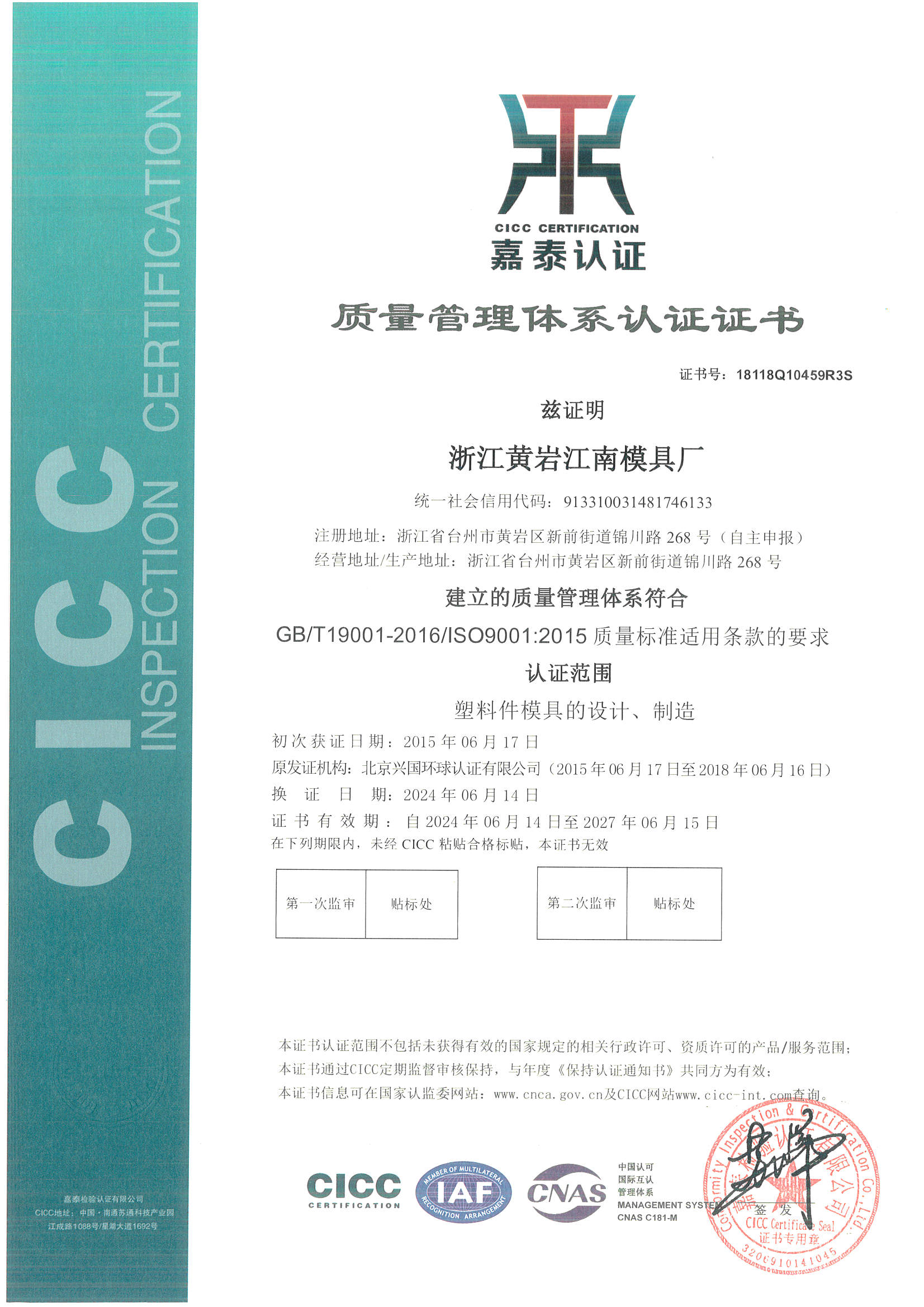
ISO 9001:2015 certificate 18118Q10459R3S, issued by Beijing Xingguo Inspection and Certification Co., Ltd. — a quality management system record, not a tolerance guarantee.
Frequently Asked Questions
1. Do commodity moulds need CE certification?
CE marking applies to products covered by specific European Union legislation, and a mould is production tooling rather than a finished consumer product. The CE question therefore usually attaches to the moulding machine the tool runs on, or to the plastic article the tool produces, not to the mould itself. For buyers comparing 'CE-certified commodity mould manufacturers', the practical substitute is a verifiable quality management system plus material and inspection records: GANGNAM MOULD's documented certification is ISO 9001:2015, certificate number 18118Q10459R3S, issued by Beijing Xingguo Inspection and Certification Co., Ltd. Buyers whose finished article requires CE marking should confirm the applicable legislation with their own compliance team and request the material and process documents they need.
2. What certification should a commodity mould supplier hold?
The baseline is a current ISO 9001:2015 certificate whose scope covers mould design and manufacture and whose issuing body can be verified. GANGNAM MOULD's certificate covers the manufacture and design of plastic parts mould and runs to 15 June 2027. Beyond that, ask for the inspection records that match your drawing, because ISO 9001 certifies a process, not a dimension.
3. What tolerance and inspection evidence can be specified on an order?
GANGNAM MOULD quotes a dimensional tolerance of -0.02 mm, verified through CMM measurement, NDT and full-size trial testing with inspection reports. Specify the tolerance in the drawing with a reference frame — ISO 20457:2018 is the published standard for possible manufacturing tolerances of plastic moulded parts — and state the measurement method and report format in the purchase order.
4. What are the purchasing terms, and can a buyer approve trial parts first?
Standard terms are MOQ 1 unit, FOB or CIF, with 30% T/T in advance and 70% before shipment. Trial approval before shipment is normal practice: the workflow runs from requirement and design through manufacturing, then trial and inspection with detailed reports, then delivery, installation and operation training. Releasing the 70% against the inspection report and trial-part approval keeps document delivery tied to payment.
5. How long does a compliant commodity mould order take?
Lead time is typically 30 to 45 days depending on mould complexity, with the exact schedule confirmed per order after the design confirmation. Document review should start before machining, since certificate verification, tolerance alignment and report-format agreement all happen faster at RFQ stage than at shipping. To request a quotation or discuss a trial order, contact GANGNAM MOULD at gm@gangnammould.com or +86 150-0576-9999, and use the company brochure for the full product family overview.
Conclusion: Compliance Is a Document Trail, Not a Certificate
A commodity mould is compliant when the certificate, the drawing and the contract point at the same thing. The certificate — ISO 9001:2015, number 18118Q10459R3S — proves that design, production and inspection follow an audited process. The drawing fixes the -0.02 mm tolerance, the cavity count and the surface treatment. The contract decides when the inspection report changes hands and when the 70% balance is released.
Buyers who run those three checks at RFQ stage get something more useful than reassurance: a repeatable acceptance file they can reuse for every chair mould, crate mould or thin-wall tool they order. Regional expectations differ, but the mechanism does not — tool-level evidence from the manufacturer, article-level evidence from the buyer, and a contract that keeps both moving.
Next Step: Request a Quote or a Trial Order
GANGNAM MOULD CO., LTD (Zhejiang Huangyan Jiangnan Mould Factory) has manufactured plastic moulds since 1988, with a 3,000 m² factory, a 15-engineer R&D team, over 20 CNC milling machines and a 3D coordinate measuring inspector, producing around 80 sets of moulds per month. Share your drawing, product family and destination market to receive a quotation with inspection scope, lead time and document list attached.
Website: www.gangnammould.com | Email: gm@gangnammould.com | Tel / WhatsApp: +86 150-0576-9999 | Contact: Gavin
Download the full catalogue: GANGNAM MOULD product brochure (PDF)

GANGNAM MOULD factory — quoting team available for compliance-focused enquiries and trial orders.
Have Questions or Need More Details?
Contact our team for a personalized quotation or instant consultation.
Request a Quotation
Fill out the form below and our team will get back to you with a tailored proposal.
WhatsApp Direct Chat
Prefer to chat in real-time? Message us on WhatsApp for instant assistance & quick answers.
- Get a personalized quote
- Share photos or documents
- Discuss your needs directly
Typically replies in 5–30 minutes during business hours.