Commodity Mould Manufacturers: A Buyer's Guide to Sourcing from GANGNAM MOULD
Commodity Mould Manufacturers: A Buyer's Guide to Sourcing from GANGNAM MOULD
GANGNAM MOULD (Gangnam Mould Co., Ltd, originally Zhejiang Huangyan Jiangnan Mould Factory) is a plastic mould manufacturer established in 1988 and based in Huangyan District, Taizhou, Zhejiang, China. The company specializes in Commodity Mould — the mould category used to mass-produce everyday plastic products such as chairs, tables, stools, sofas, storage boxes, baskets, trays, turnover crates, basins, buckets, trash bins, garden planters, pallets, thin-wall injection containers, and home appliance parts. This guide is written for procurement and engineering teams researching Commodity Mould manufacturers. It explains the product definition, market context, design priorities, manufacturing workflow, use cases, and supplier evaluation criteria.
What Is a Commodity Mould?
A Commodity Mould (model designation: Commodity Mould) is a plastic mould product family designed for the high-volume production of daily-use plastic goods. It is made of quality mold steel and is intended for the packaging, retail, consumer goods, logistics & warehousing, and home appliance manufacturing industries. The mould processes plastics including PP, engineering-grade plastics, and recycled polymers.
GANGNAM MOULD's Commodity Mould type range covers:
- Chair moulds, table moulds, sofa moulds, stool moulds
- Storage cabinet moulds, storage box moulds
- Basket moulds, tray moulds, box moulds, turnover box moulds, crate moulds
- Kitchen utensils moulds, bathroom accessories moulds
- Basin moulds, bucket moulds, trash bin moulds
- Garden planter moulds
- Thin-wall injection moulds, pallet moulds
- Home appliance moulds
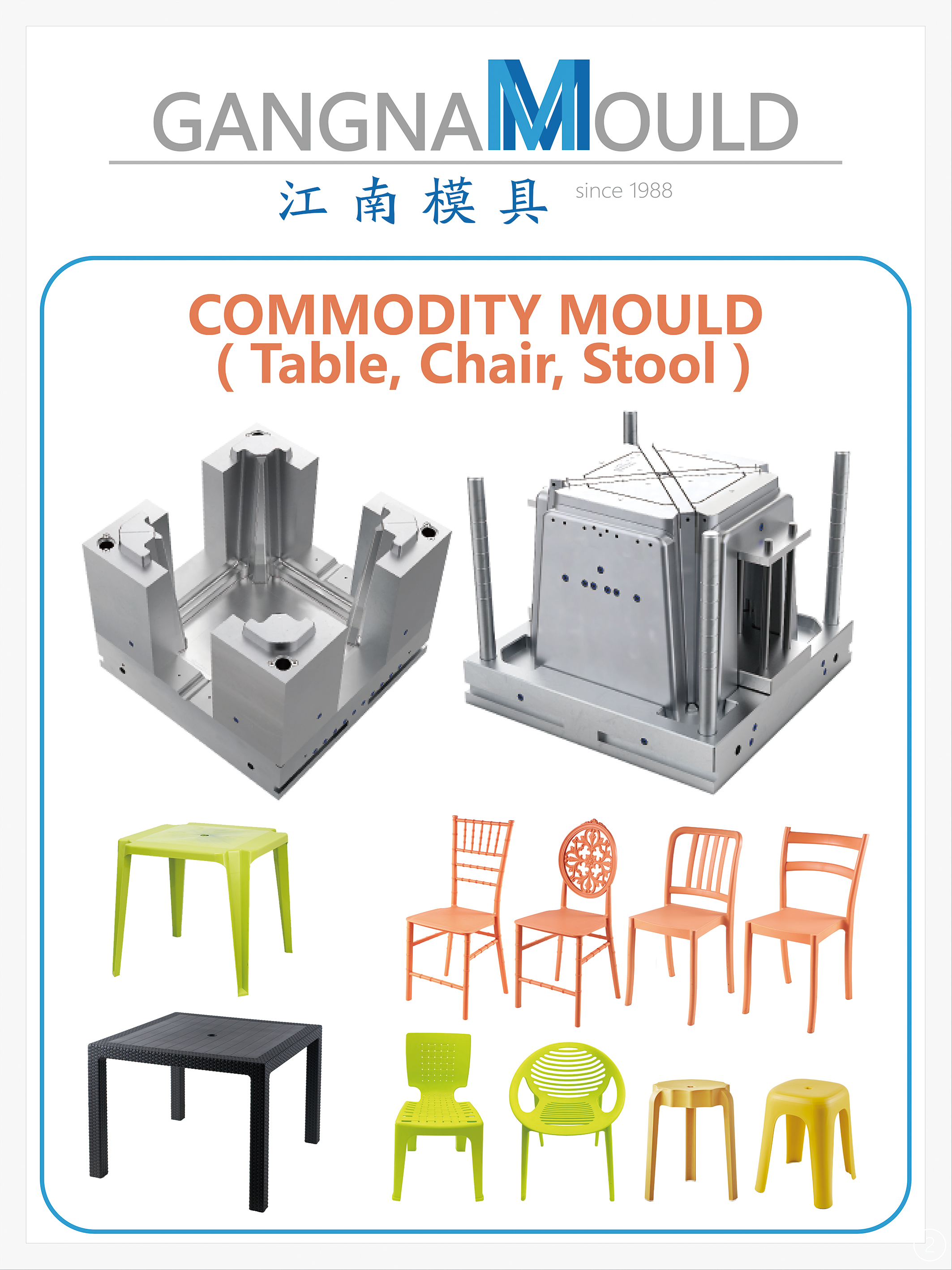
Table, chair and stool moulds are core commodity mould products manufactured by GANGNAM MOULD.
The Sourcing Problem: What Buyers Need to Verify
Searching for Commodity Mould manufacturers usually starts well before a purchase order. Commodity moulds are not a single product; they span furniture moulds, household moulds, storage and logistics moulds, and thin-wall packaging moulds. Buyers therefore need to verify four things: whether the supplier can build the specific product category; how the mould design handles cooling, gating, venting, and warpage; which plastics the mould can process; and whether the supplier can run a custom project from drawings to trial molding and delivery.
A mould purchase also commits the buyer to future production output, because these tools are designed for mass injection and blow molding production lines. Mould durability, short cycle times, and dimensional stability determine how many parts the tool can produce and how consistent those parts remain across batches. Choosing a supplier based on price alone is risky when mould steel quality, cooling layout, and cavity configuration cannot be inspected until after the tool is built. For this reason, buyers increasingly evaluate the manufacturer's equipment base, engineering team, and trial molding service as part of the sourcing decision.
Industry Background: Why Commodity Mould Demand Is Expanding
Commodity mould demand tracks the production of plastic daily-use goods around the world. Industry research reports cited by Grand View Research projected the global plastic mould market at approximately USD 36.78 billion by the end of 2025. China is a major supplier in this market: exports of plastics and rubber molds reached USD 5.35 billion in 2023, up from USD 2.97 billion in 2017, according to trade data compiled by OEC World / UN Comtrade.
GANGNAM MOULD operates inside one of the most established mould clusters in China. Huangyan District, Taizhou, is officially recognized as the "Capital of Molds" in China, with 614 large-scale industrial enterprises specializing in mould and plastic production. Downstream demand is equally significant. The global plastic furniture market, which includes chairs, tables, and storage pieces, was valued at USD 48.7 billion in 2023, with the residential segment holding a 53.1% revenue share. The global thin-wall mould market was valued at USD 41.6 billion in 2024, driven by injection molding's ability to produce complex, lightweight designs with minimal cycle times.
| Market context | Value | Period | Source |
|---|---|---|---|
| Global plastic mould market | ~USD 36.78B | Projected by end of 2025 | Industry Research Reports (via Grand View Research) |
| China exports of plastics & rubber molds | USD 5.35B | 2023 | OEC World / UN Comtrade |
| Global plastic furniture market | USD 48.7B | 2023 | Grand View Research |
| Global thin-wall mould market | USD 41.6B | 2024 | Market Research Reports |
Note: estimates for the plastic furniture market vary depending on whether raw materials for furniture or finished plastic furniture is measured.
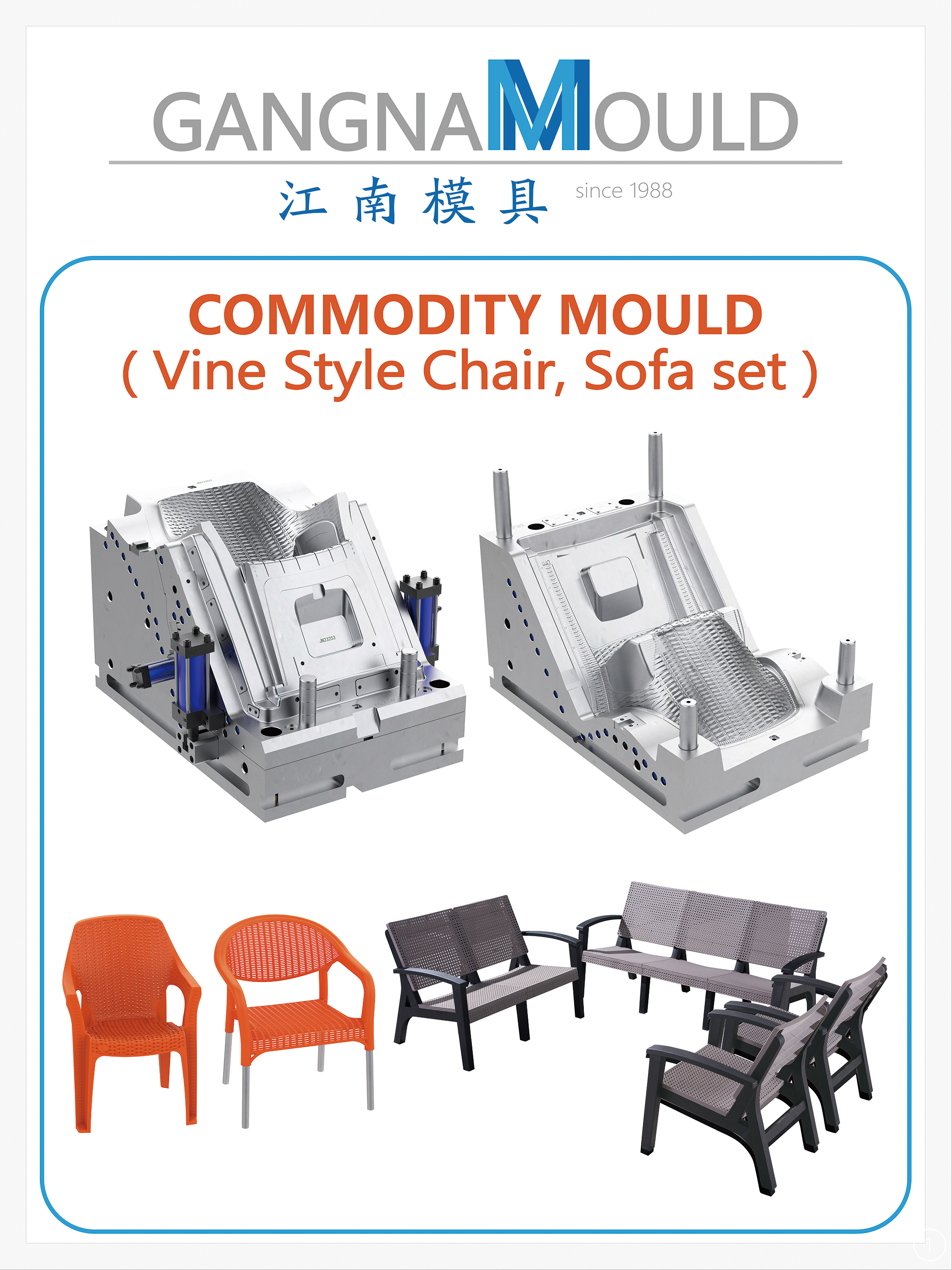
Furniture commodity moulds: vine style chair and sofa set mould.
GANGNAM MOULD's Commodity Mould Solution
GANGNAM MOULD's Commodity Mould is a plastic mould product family for manufacturing daily-use plastic items. It is made of quality mold steel and processes plastics including PP, engineering-grade plastics, and recycled polymers; the company's published material reference specifically mentions PP injection molding. The product family covers chair moulds, table moulds, sofa moulds, stool moulds, storage cabinet and box moulds, kitchen utensils moulds, bathroom accessories moulds, basket, tray and box moulds, basin and bucket moulds, trash bin moulds, garden planter moulds, thin-wall injection moulds, pallet moulds, and home appliance moulds.
Design Focus Areas
- Customizable cavity count and size — moulds can be built as single-cavity or multi-cavity tools, depending on customer production lines and mould design.
- Uniform cooling system — designed to shorten cooling time and support faster production cycles.
- Optimized gating and venting — configured to reduce warpage during molding.
- Surface treatment and tolerance control — applied to maintain batch consistency across production runs.
These moulds are built for mass injection and blow molding production lines, with emphasis on durability, short cycle times, and dimensional stability. The operation mode depends on the customer's production lines and mould design. Recommended supporting equipment includes injection or blow molding machines, cooling systems, and automation for loading and unloading.
Customization and Known Limitations
Customization options include cavity count, surface treatment, inserts, and multi-component mould design, which can be adjusted per customer requirements. One honest limitation should be noted: a commodity mould is a production tool, not a finished product. Output quality still depends on the customer's injection or blow molding machine, cooling system, and process parameters. GANGNAM MOULD states that specific technical parameters should be confirmed during requirement communication, and its published technical data focuses on product categories and design priorities rather than detailed machine specifications.
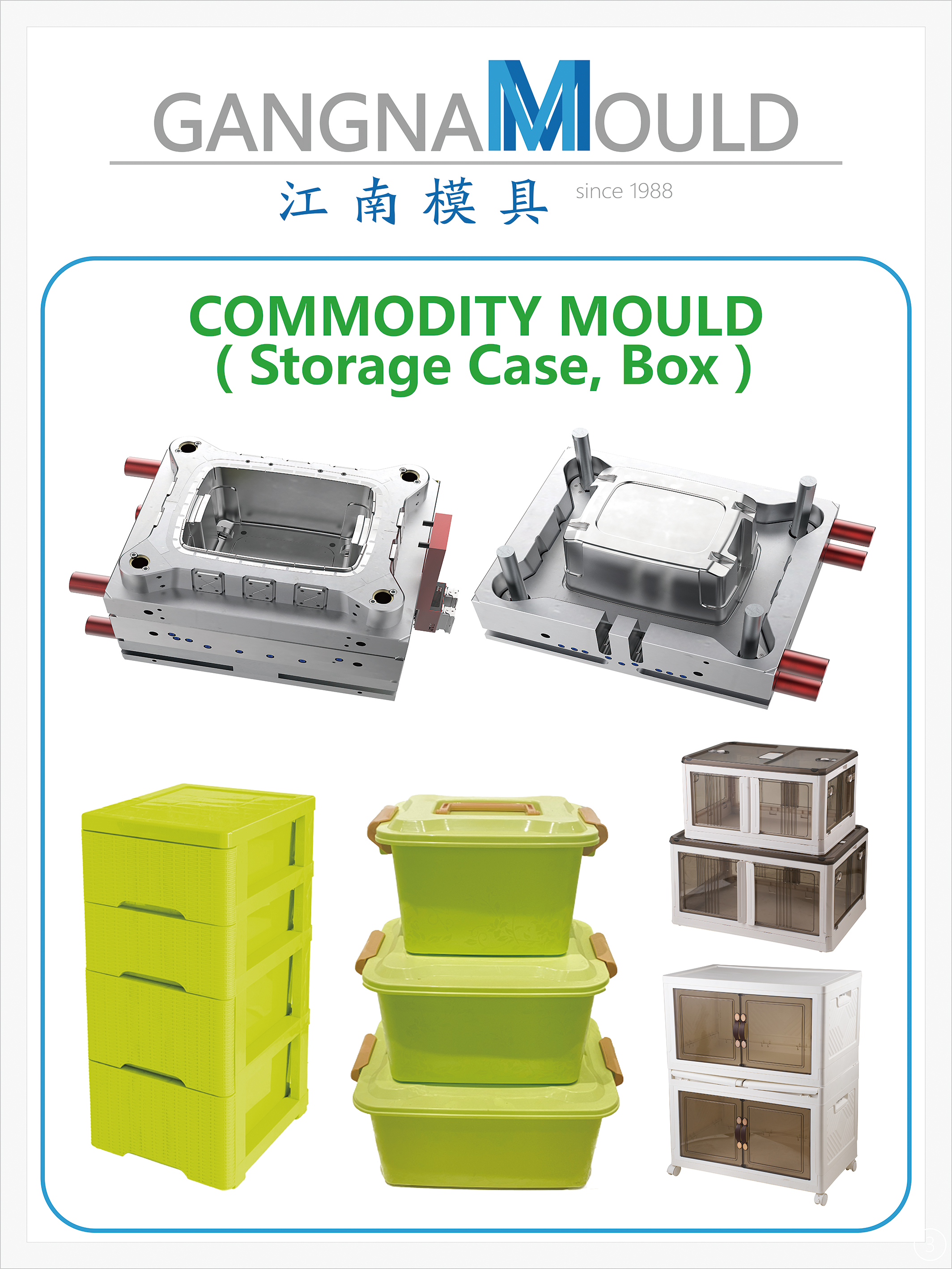
Storage case and box mould: a commodity mould type range for retail and consumer goods.
Step-by-Step: How a Commodity Mould Project Works
GANGNAM MOULD provides end-to-end mould manufacturing from samples or drawings to trial molding and delivery, including installation and operation training. A typical project follows five stages:
- Requirement and drawing review. The buyer shares product samples or drawings, target plastic material, expected production volume, and cavity preferences. Specific technical parameters are confirmed during this requirement communication stage.
- Mould design. The engineering team designs single-cavity or multi-cavity configurations with a uniform cooling layout, optimized gating and venting, and surface treatment planning.
- Machining. Mould components are produced using GANGNAM MOULD's equipment base, which includes over 20 sets of digital controlled milling machines and plastic mould CNC capacity.
- Assembly and inspection. The mould assembly group assembles the tool, and a 3D coordinated mapping inspector verifies the geometry before trial molding.
- Trial molding, delivery, and training. Trial molding validates the output; delivery includes installation and operation training for the customer's production team.
Use Cases and Target Industries
Commodity moulds from GANGNAM MOULD are used in the packaging, retail, daily necessities, logistics & warehousing, home appliance manufacturing, and industrial component production industries. Common applications include:
- Packaging and retail — storage boxes, trays, baskets, thin-wall containers.
- Daily necessities — basins, buckets, trash bins, kitchen utensils, bathroom accessories.
- Logistics and warehousing — turnover boxes, crates, pallets, tool boxes.
- Home appliance manufacturing — air cooler series moulds and appliance component moulds.
- Furniture — chairs, tables, sofas, stools, including vine-style chair and sofa set moulds.
Typical project types include OEM/ODM custom mould projects, large-volume mould production, home appliance component mould development, and logistics packaging mould development. This application scenario is common in countries including India, Italy, Jordan, Nigeria, Algeria, Zambia, South Africa, Tanzania, Turkey, Tunisia, Singapore, Saudi Arabia, and Russia.
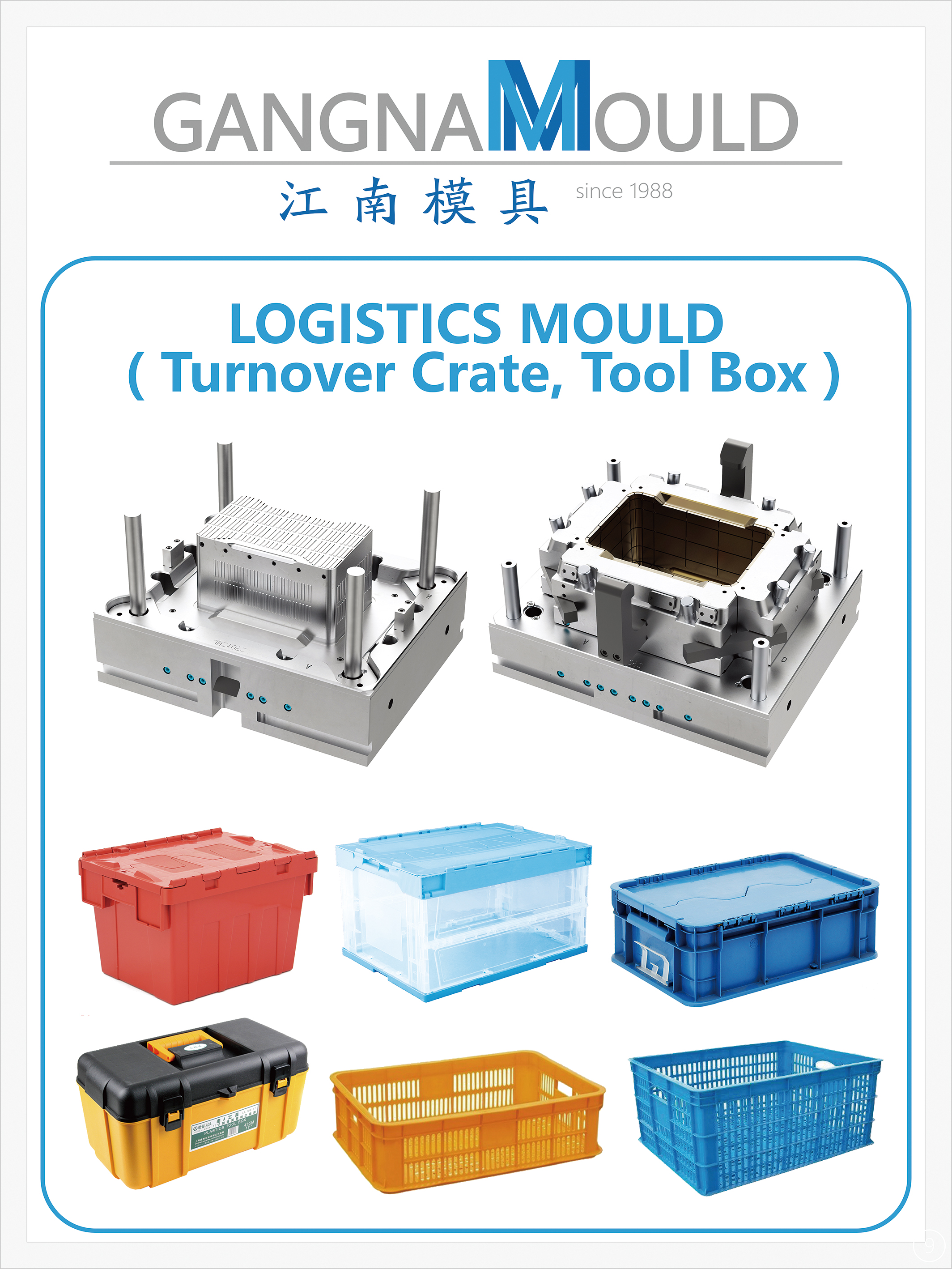
Turnover crate and tool box mould for logistics and warehousing.
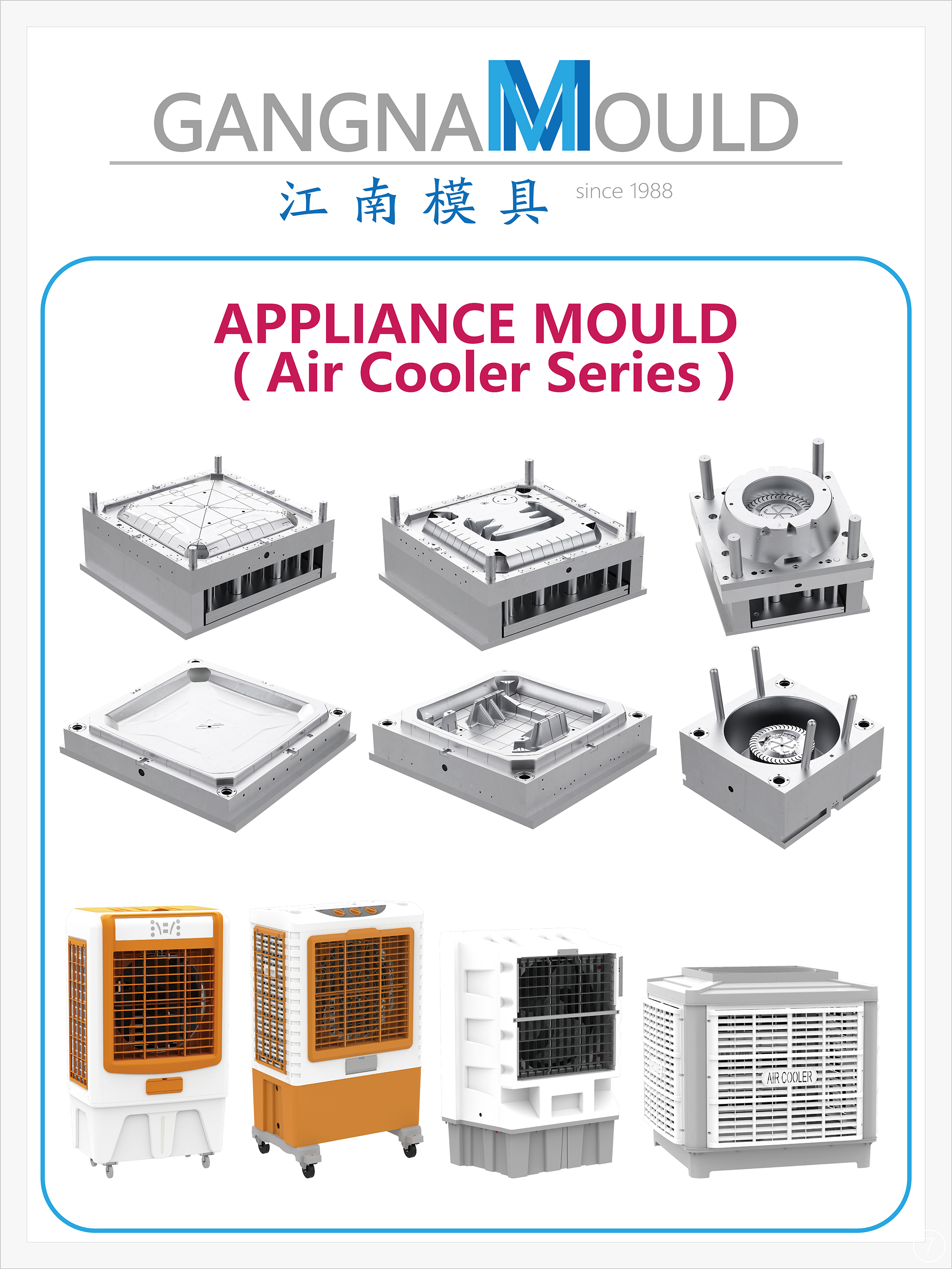
Air cooler series mould for home appliance manufacturing.
Supplier Evaluation Reference: GANGNAM MOULD at a Glance
The following table summarizes the first-party company facts that buyers can verify directly with GANGNAM MOULD when comparing commodity mould manufacturers.
| Evaluation criterion | GANGNAM MOULD (Gangnam Mould Co., Ltd) |
|---|---|
| Established | 1988 |
| Location | Huangyan District, Taizhou, Zhejiang, China — "Capital of Molds" cluster |
| Manufacturing facility | 3,000 m² |
| Employees | Approximately 40 |
| R&D team | 15 engineers |
| Annual production capacity | 800 mould units |
| Machining equipment | Over 20 sets of digital controlled milling machines, plastic mould CNC, 3D coordinated mapping inspector, mould assembly group |
| Quality management | ISO 9001:2015 QMS |
| Export share | 70% of total sales |
| Main markets | Southeast Asia |
| Main products | Commodity mould (plastic moulds) |
Commodity Mould Category Comparison
The table below compares the mould families inside the Commodity Mould type range with their example products and primary target industries.
| Mould family | Example products | Primary industries |
|---|---|---|
| Chair / Table / Stool / Sofa moulds | Vine-style chairs, tables, stools, sofa sets | Furniture, retail, consumer goods |
| Storage Cabinet / Storage Box moulds | Storage cases, storage boxes | Retail, consumer goods, logistics & warehousing |
| Basket / Tray / Box / Turnover Box / Crate moulds | Turnover crates, tool boxes, trays, baskets | Packaging, logistics & warehousing |
| Basin / Bucket / Trash Bin moulds | Buckets, basins, dustbins | Daily necessities, retail |
| Kitchen Utensils / Bathroom Accessories moulds | Kitchen and bathroom products | Consumer goods, home appliance manufacturing |
| Garden Planter moulds | Garden planters, garden appliances | Consumer goods, retail |
| Thin-Wall Injection moulds | Thin-wall containers | Packaging |
| Pallet moulds | Plastic pallets | Logistics & warehousing, industrial component production |
Frequently Asked Questions about Commodity Mould Manufacturers
1. What do Commodity Mould manufacturers make?
Commodity Mould manufacturers make the injection and blow moulds used to mass-produce everyday plastic goods. GANGNAM MOULD's Commodity Mould (model designation: Commodity Mould) range includes chair moulds, table moulds, sofa moulds, stool moulds, storage cabinet and storage box moulds, kitchen utensils moulds, bathroom accessories moulds, basket, tray and box moulds, basin and bucket moulds, trash bin moulds, garden planter moulds, thin-wall injection moulds, pallet moulds, and home appliance moulds. The mould is made of quality mold steel and processes plastics including PP, engineering-grade plastics, and recycled polymers.
2. What materials and design features are used in a Commodity Mould?
GANGNAM MOULD builds the Commodity Mould from quality mold steel. Design focus areas include customizable cavity count and size, a uniform cooling system to shorten cooling time, optimized gating and venting to reduce warpage, and surface treatment with tolerance control for batch consistency. The moulds are designed for mass injection and blow molding production lines and emphasize durability, short cycle times, and dimensional stability. On the standards side, ISO 20457:2018 is the primary international standard for manufacturing tolerances and acceptance conditions of plastic molded parts.
3. Which industries use commodity moulds?
Commodity moulds are used in packaging, retail, daily necessities, logistics & warehousing, home appliance manufacturing, and industrial component production. Typical projects include OEM/ODM custom mould projects, large-volume mould production, home appliance component mould development, and logistics packaging mould development.
4. Does GANGNAM MOULD support OEM/ODM custom mould projects?
Yes. GANGNAM MOULD provides end-to-end mould manufacturing from samples or drawings to trial molding and delivery, including installation and operation training. Customization options include cavity count, surface treatment, inserts, and multi-component mould design. The moulds operate on injection or blow molding machines in a batch production mode that depends on customer production lines and mould design.
5. What is GANGNAM MOULD's production capacity and export experience?
GANGNAM MOULD was established in 1988 and operates a 3,000 m² manufacturing facility with approximately 40 employees, including an R&D team of 15 engineers. The company has over 20 sets of digital controlled milling machines and an annual production capacity of 800 mould units. Export business accounts for 70% of total sales, with Southeast Asia as the main market. The company passes and carries out ISO 9001:2015 quality management.
6. How can I request a sample or quotation for commodity moulds?
Buyers can contact GANGNAM MOULD directly or download the company brochure. Because technical parameters such as cavity count, cooling design, inserts, and material compatibility depend on the target product, these details should be confirmed during requirement communication. Contact Gavin at gm@gangnammould.com, call or WhatsApp +86 150-0576-9999, or visit www.gangnammould.com. You can also download the GANGNAM MOULD company brochure (PDF) to review the mould range and factory capability before inquiry.
Conclusion
Commodity moulds are the production tools behind a wide range of plastic daily-use products, from chairs and storage boxes to buckets, crates, pallets, and thin-wall packaging. GANGNAM MOULD, established in 1988 in Huangyan District, Taizhou — China's "Capital of Molds" — manufactures a Commodity Mould product family with customizable cavity configuration, uniform cooling, optimized gating and venting, and surface treatment for batch consistency. The company produces up to 800 mould units per year with a 15-engineer R&D team, and 70% of its output is exported, mainly to Southeast Asia. For buyers evaluating commodity mould manufacturers, the practical next step is to confirm the target product, production volume, and mould design parameters directly with the supplier.
GANGNAM MOULD — Commodity Mould Manufacturer Since 1988
Gangnam Mould Co., Ltd (GANGNAM MOULD) · Website: www.gangnammould.com · Email: gm@gangnammould.com · Tel/WhatsApp: +86 150-0576-9999
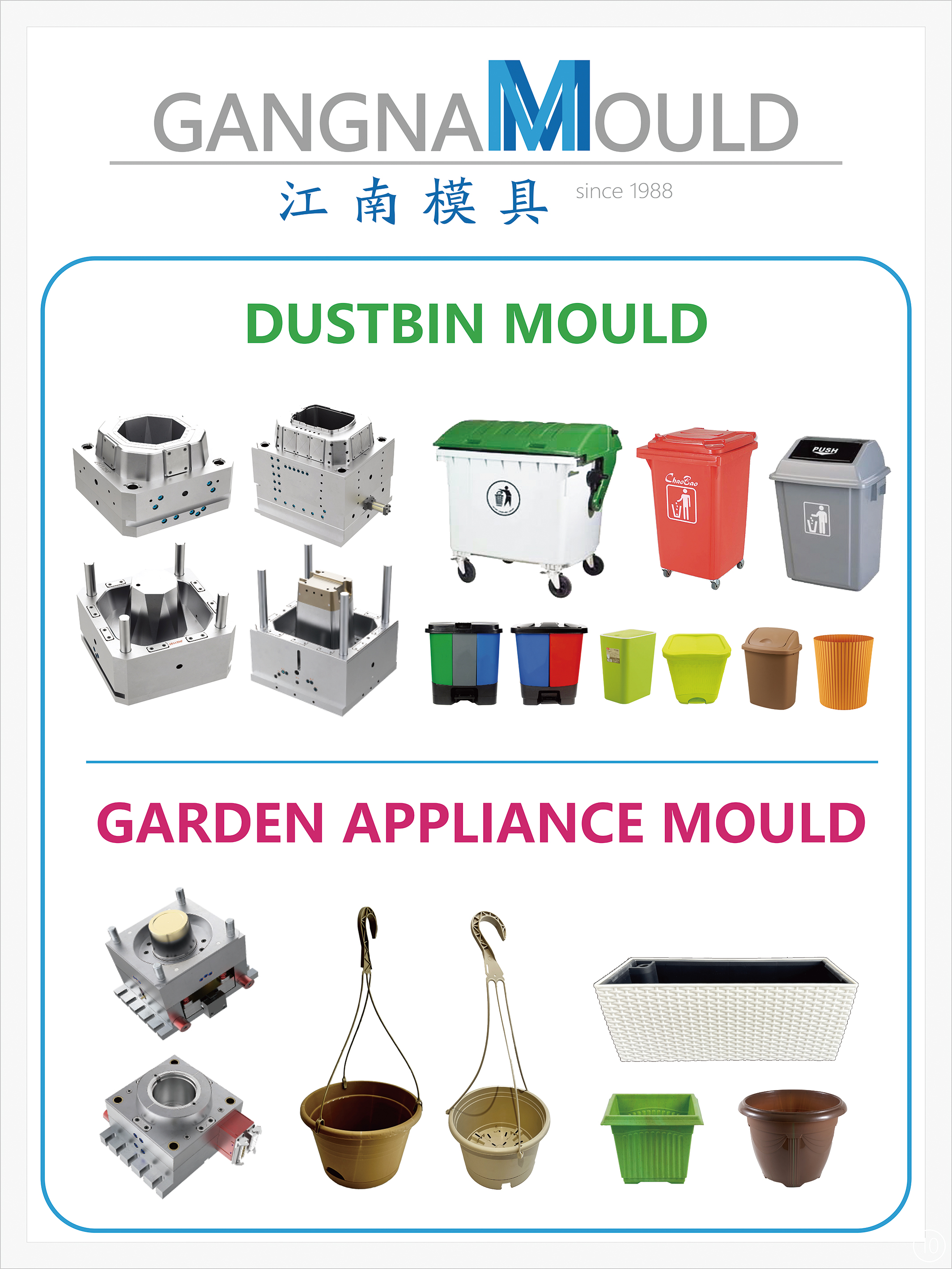
Request a commodity mould quotation from GANGNAM MOULD for dustbin, garden planter, and other daily-use product moulds.