Commodity Mould Partnership FAQ: Long-Term Supply, Trial Molding, and After-Sales
A commodity mould order rarely fails on steel grade. It fails at handover: the trial part is not what the buyer expected, the inspection report arrives in a format nobody agreed on, or the crew running the tool has never seen it before. Buyers moving from a first quotation to a repeat supply agreement therefore spend as much time on acceptance steps, payment structure and after-sales channels as on cavity counts.
GANGNAM MOULD CO., LTD (Zhejiang Huangyan Jiangnan Mould Factory) is a plastic mould manufacturer established in 1988 and based in Huangyan District, Taizhou, Zhejiang, China. The company states a defined position on each of those partnership questions: trial molding and inspection reports serve as the acceptance basis, installation and operation training are provided to assist customer acceptance, the minimum order quantity is 1 unit, and payment terms are 30% T/T in advance with 70% before shipment.
Partnership terms at a glance
- MOQ: 1 unit
- Payment: 30% T/T in advance, 70% before shipment
- Delivery terms: FOB / CIF
- Acceptance basis: trial molding and inspection reports
- Support at acceptance: installation and operation training
- Typical lead time: 30–45 days, confirmed per order
- Monthly capacity: about 80 sets of moulds
- Production mode: OEM, ODM and customizable
- Quality control: NDT, CMM measurement, full-size trial testing with inspection reports
- Export share: about 70% of sales
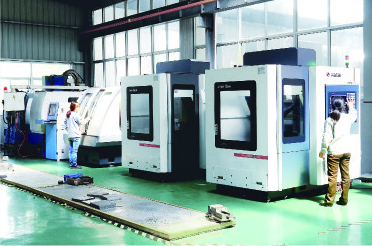
CNC machining is the first measurable checkpoint in a long-term mould agreement: what the machine cuts is what the trial report will later document.
Problem Definition: Where Commodity Mould Partnerships Actually Break
Disputes over bucket moulds, crate moulds, pallet moulds or storage box moulds are rarely disputes about the category itself. Commodity moulds are well-understood tooling. The friction appears in three predictable places.
First, the acceptance standard is verbal. A buyer approves a drawing, receives a tool, moulds parts, and only then discovers that nobody agreed which dimensions would be measured, with what instrument, or against which tolerance reference. Trial molding and inspection reports solve this only if both sides treat the report as the acceptance document rather than as a courtesy attachment.
Second, the commercial structure does not match the delivery structure. A payment schedule split between order confirmation and shipment only works when the buyer knows exactly which physical event triggers each instalment. Where acceptance depends on a trial run, the handover event and the payment event must be the same event.
Third, the after-sales channel is assumed rather than named. Tools that run for years need a person to call when a core sticks, a cooling line scales, or a new operator needs training. Partnerships that survive repeat orders are the ones where that person was identified before the first order, not after the first problem.
The questions buyers actually ask before signing
In practice, evaluation-stage buyers ask the same small set of questions across categories as different as chair moulds, tray moulds, trash bin moulds and thin wall injection moulds: What proves the tool is acceptable? Who trains the people who will run it? What are the payment terms and the minimum order quantity? How long does a tool take? Can the supplier handle OEM or ODM changes without restarting the relationship? The rest of this article answers those questions directly.
Industry Background: Why Commodity Mould Supply Is a Long-Game Decision
Commodity moulds sit between two markets of very different size. The global industrial mold market was valued at USD 59.00 billion in 2025, while the broader injection molding market reached USD 312.7 billion in 2025 according to Grand View Research. Asia Pacific held 52.6% of the global industrial mold market in 2024, which means most buyers are already sourcing from the same concentrated region and are competing on supplier selection rather than on geography.
The segment-level picture is also relevant to partnership planning. The thin wall mould market is projected to grow from USD 3.89 billion in 2025 to USD 7.23 billion by 2035 at a CAGR of 6.4%, a growth rate that encourages suppliers to keep tooling competence current rather than treat it as a static asset.
Technical standards give buyers a neutral reference for the acceptance conversation. ISO 20457:2018 specifies possible manufacturing tolerances for plastic moulded parts and addresses injection moulding among other processes. A buyer who names a tolerance reference in the purchase order turns a subjective argument about a trial part into a measurable comparison, which is exactly what a multi-year supply agreement needs.
Detailed Solution: The Partnership Framework Behind the Terms
Long-term supply: capacity, lead time and a 1-unit entry point
GANGNAM MOULD operates a 3,000 m² factory with a workforce of 40 people, including an R&D team of 15 engineers, and reports a monthly capacity of about 80 sets of moulds. Typical lead time is 30 to 45 days, with the exact timeline confirmed per order because it depends on mould complexity. Export sales account for about 70% of the company's business, with listed markets including the Middle East, Africa, Central Asia, South America, Mexico, Italy and India, and Southeast Asia identified as the main market.
The commercially important detail for a first order is the minimum order quantity of 1 unit. A single-tool order lets a buyer test the full acceptance chain — trial molding, inspection report, training — before committing a multi-category programme covering, for example, storage cabinet moulds, basket moulds and garden planter moulds at the same time.
Trial molding and inspection reports as the acceptance basis
Quality control at GANGNAM MOULD includes non-destructive testing (NDT), coordinate measuring machine (CMM) measurement, and full-size trial testing with inspection reports. In a partnership context, the sequence matters more than the list: the trial produces physical parts, the CMM and NDT results describe them, and the inspection report records the outcome so that acceptance can be signed against a document rather than a memory.
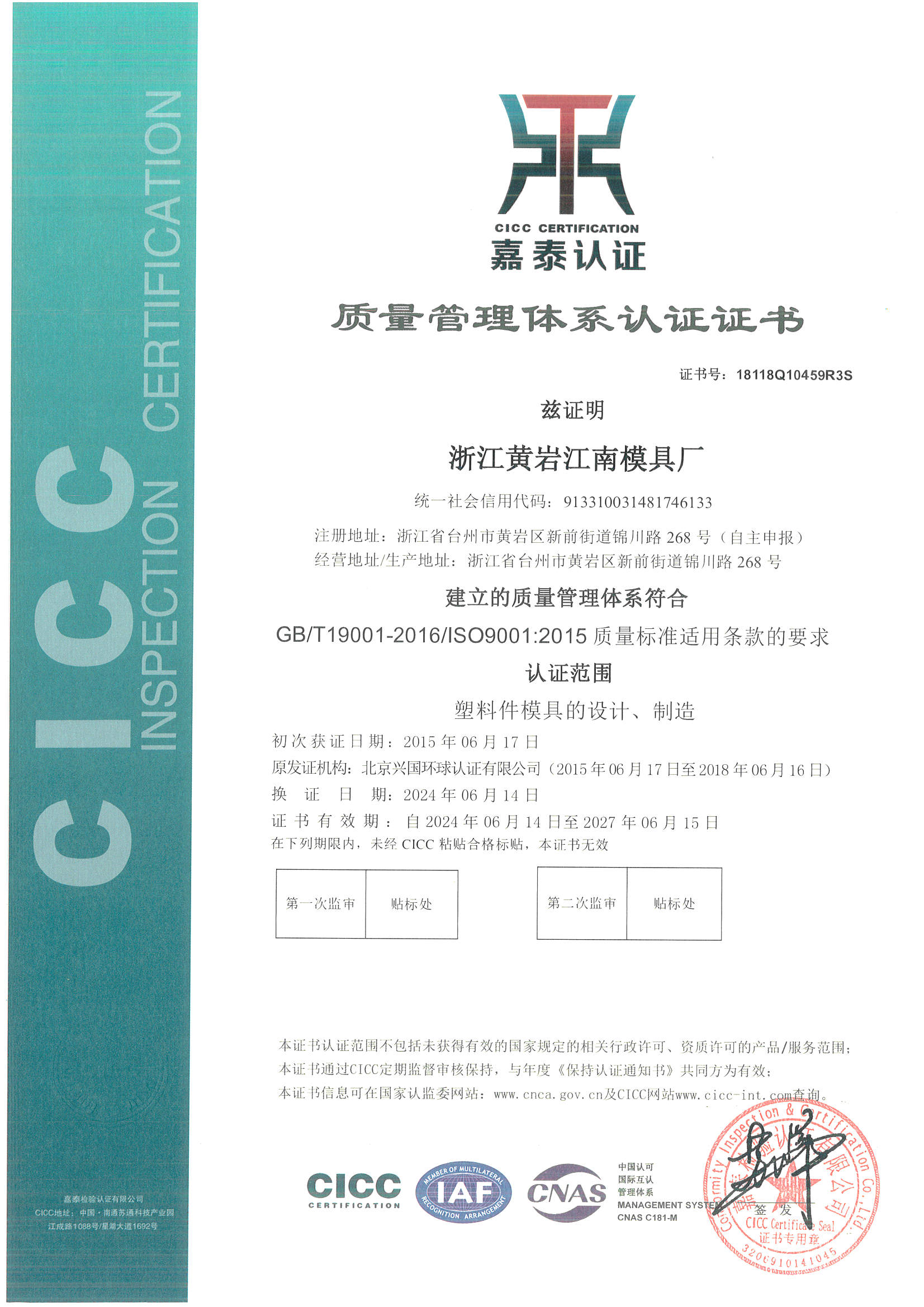
ISO 9001:2015 certificate 18118Q10459R3S, issued by Beijing Xingguo Inspection and Certification Co., Ltd., is valid to 15 June 2027 and covers the manufacture and design of plastic parts moulds.
Installation and operation training
Mould delivery, installation and operation training are provided, supported by the inspection reports produced during trial. Training is the step that converts an accepted tool into a running tool: it is where the buyer's press operators learn the specific ejection, cooling and handling behaviour of that mould rather than a generic procedure. Specific after-sales terms beyond delivery, installation and training should be contractually agreed, which is a reasonable position for a supplier selling into multiple regulatory environments.
OEM and ODM scope: what can actually be customized
The manufacturer provides OEM, ODM and customizable production services. Customization covers cavity count and size, surface texture and polish, gating and cooling system design, inserts and multi-component integration, and material and heat-treatment requests. For a buyer planning a product family — say a set of storage box moulds, tray moulds and box moulds for one retail programme — that scope means the same partner can hold the design logic across the family instead of re-learning it for each tool.
After-sales contact: a named channel, not a form
After-sales questions are routed to a named contact rather than a generic inbox: Gavin, at gm@gangnammould.com or +86 150-0576-9999, also reachable on WhatsApp at the same number. For a buyer in a different time zone running a three-shift moulding operation, a direct WhatsApp line is a practical difference between a one-day stoppage and a one-week one.
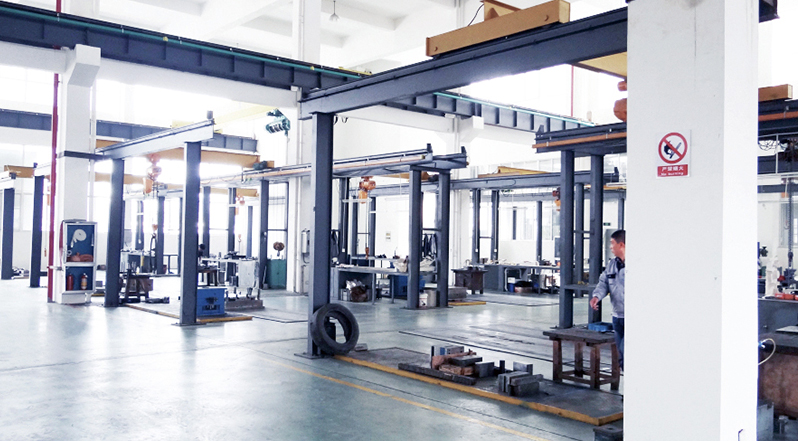
Mould assembly and checking take place before trial molding, so the inspection report reflects a finished tool rather than an in-progress one.
Step-by-Step: How an Order Moves from RFQ to an Accepted Tool
Step 1 — Requirement and drawing review
The buyer supplies the part drawing, the intended plastic (PP and engineering-grade plastics or recycled polymers are the processed materials referenced by the supplier), annual volume expectations and the tolerance reference to be used. Naming ISO 20457:2018 at this stage gives both sides a shared vocabulary for what "acceptable" will mean at trial.
Step 2 — Tooling design and manufacture
Cavity count and size, surface texture or polish, gating and cooling system design, inserts and multi-component integration, and material or heat-treatment requests are fixed in the design phase. The supplier's over 20 sets of digitally controlled milling machines support this stage, and design decisions taken here determine cooling time, warpage behaviour and batch consistency later.
Step 3 — Trial molding and inspection
The tool is run, full-size parts are produced, and the results are measured by CMM with NDT where required. The output of this step is the inspection report — the document that carries the acceptance decision. A buyer who receives parts without the report has received samples, not an accepted tool.
Step 4 — Acceptance and payment
Trial molding and inspection reports serve as the acceptance basis, with installation and operation training provided to assist customer acceptance. The commercial terms that run alongside this step are 30% T/T in advance and 70% before shipment, with delivery terms FOB or CIF. Because the second payment falls before shipment, the acceptance documents are what the buyer holds as security at that moment — a reason to agree the report format in writing at RFQ stage.
Step 5 — Delivery, installation and after-sales
The tool is shipped, installed, and handed over with operation training. After that, the relationship moves to the after-sales channel named in the contract and to the tasks that keep a mould productive: cooling-line maintenance, wear checks on high-cycle tools, and support when a product family extends into a new size.
Use Cases: Where These Partnership Terms Matter Most
Household and storage products. Storage box moulds, storage cabinet moulds, basket and tray moulds, basin, bucket and trash bin moulds, and garden planter moulds are typically bought in families. A single supplier that holds design consistency across the family reduces the number of acceptance cycles a buyer has to run.
Logistics and warehousing. Pallet moulds, crate moulds and turnover box moulds are high-cycle tools where the inspection report and the training handover matter more than the purchase price, because downtime on a logistics tooling programme disrupts deliveries rather than production.
Kitchen, bathroom and thin wall packaging. Kitchen utensils moulds, bathroom accessories moulds and thin wall injection moulds operate in segments where wall thickness control is central; ISO 20457:2018 tolerance references and CMM documentation are what make trial results comparable between tools.
Furniture and appliances. Chair moulds, table moulds, stool moulds, sofa moulds and home appliance moulds usually involve larger tools where installation and training determine how quickly the buyer reaches rated output.
Evidence from a repeat relationship. A mould programme of 800 units has been delivered to clients in Bangladesh, Algeria, India, Iraq, Italy, Jordan, Nigeria and Turkey over a 10-year supply relationship, covering applications such as injection pallets, circulation crates, daily plastic containers and home appliance housings. Ten years is not proof of quality on its own, but it is evidence that the acceptance and after-sales chain survived more than one order cycle.
Comparison Table: Stated Terms and the Points a Buyer Should Verify
| Item | Stated position | What the buyer should confirm in the contract |
|---|---|---|
| Minimum order quantity | 1 unit | That a 1-unit order receives the same inspection documentation as a repeat order |
| Payment terms | 30% T/T in advance, 70% before shipment | That the second instalment follows the acceptance documents, not a calendar date |
| Delivery terms | FOB / CIF | Who controls freight and insurance before the tool leaves the factory |
| Acceptance basis | Trial molding and inspection reports | Report format, measurement points and tolerance reference (for example ISO 20457:2018) |
| Support at acceptance | Installation and operation training | Who attends, on which machine, and for how long |
| Typical lead time | 30–45 days, confirmed per order | That trial and shipping time are built into the launch plan |
| Monthly capacity | About 80 sets of moulds | That a production slot is reserved against your launch window |
| Production mode | OEM, ODM and customizable | Which customization items apply: cavity count, cooling, gating, inserts, material or heat treatment |
| Quality control | NDT, CMM measurement, full-size trial testing with inspection reports | A sample inspection report before the first order |
| Quality management certification | ISO 9001:2015, certificate 18118Q10459R3S, valid to 15 June 2027 | Independent verification against the certification body's registry, and that the certified scope matches the tooling ordered |
FAQ: Long-Term Supply, Trial Molding and After-Sales
Does GANGNAM MOULD hold a valid ISO 9001:2015 certificate, and what does the scope cover?
Yes. The certificate number is 18118Q10459R3S, issued by Beijing Xingguo Inspection and Certification Co., Ltd. against the ISO 9001:2015 Quality Management System standard, with an issue date of 14 June 2024 and an expiry date of 15 June 2027. The certified scope is the manufacture and design of plastic parts mould. Two checks are worth making before you rely on it: confirm the certificate on the issuing body's registry, and confirm that the scope wording matches the type of tooling you are buying. For dimensional acceptance, ISO 20457:2018 is the published reference that specifies possible manufacturing tolerances for plastic moulded parts and addresses injection moulding.
Can an OEM commodity mould manufacturer handle custom cavity counts, cooling design and inserts?
GANGNAM MOULD offers OEM, ODM and customizable production. The customization scope covers cavity count and size, surface texture and polish, gating and cooling system design, inserts and multi-component integration, and material and heat-treatment requests. Capability is verified through quality control rather than claimed: non-destructive testing (NDT), coordinate measuring machine (CMM) measurement, and full-size trial testing with inspection reports. The practical implication for buyers is that a single manufacturer can carry a product family — chair moulds, table moulds, stool moulds, storage box moulds, pallet moulds or thin wall injection moulds — with one design and inspection logic instead of a separate supplier per item.
What are the payment terms and minimum order quantity for a long-term supply agreement?
The minimum order quantity is 1 unit, and payment terms are 30% T/T in advance with 70% before shipment. Delivery terms are FOB or CIF. Because the balance is settled before shipment rather than after arrival, the acceptance documents become the buyer's main protection in the transaction: trial molding and inspection reports serve as the acceptance basis, and installation and operation training are provided to assist customer acceptance. Buyers extending a first order into a multi-tool programme should negotiate the report format and the acceptance trigger once, then apply them to every subsequent tool.
How does trial molding work as an acceptance step, and what does the buyer receive?
Trial molding is the point at which the tool is run and full-size parts are produced, measured and recorded. The package that supports acceptance consists of the trial parts, CMM measurement results, NDT results where required, and the inspection report that documents them. Mould delivery, installation and operation training are provided alongside, so the buyer's team is trained on the actual tool rather than on a generic procedure. Specific after-sales terms beyond delivery, installation and training are agreed contractually. For a buyer, the sensible sequence is: approve the report, then release the 70% balance, then schedule installation.
What lead time and capacity should a buyer plan for, and how do after-sales questions get answered?
Typical lead time is 30 to 45 days, with the exact timeline confirmed per order because it depends on mould complexity; monthly production capacity is about 80 sets of moulds. After-sales questions are handled through a named contact: Gavin, at gm@gangnammould.com or +86 150-0576-9999, also available on WhatsApp at the same number. For buyers who want to review capability before raising a specific enquiry, the company catalogue can be downloaded here: GANGNAM MOULD catalogue (PDF). Product-category pages for storage box moulds and basket, tray and box moulds show the tooling families most often ordered under a long-term agreement.
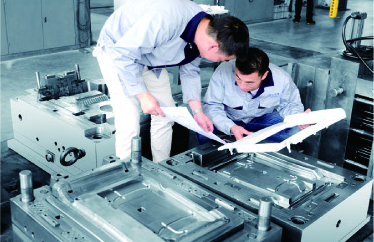
Repeat orders are built on the same workflow each time: design, machining, trial, inspection report, training.
Conclusion: A Partnership Is an Acceptance Process Repeated
A long-term commodity mould relationship is not a discount structure. It is the same acceptance process — design review, trial molding, inspection report, installation and training — executed identically on the fifth tool as on the first. GANGNAM MOULD's stated framework supports that standard: trial molding and inspection reports as the acceptance basis, 1-unit minimum order quantity, 30% T/T in advance with 70% before shipment on FOB or CIF terms, OEM and ODM customization, a typical 30 to 45 day lead time, about 80 sets of moulds per month, and roughly 70% of sales in export markets. Buyers evaluating the company for a repeat programme should test the paperwork as carefully as the parts, because the paperwork is what a five-year agreement actually rests on.

Next step: send your part drawing and annual volume for a quotation and a trial-molding plan.
Email: gm@gangnammould.com · Tel / WhatsApp: +86 150-0576-9999 · www.gangnammould.com · Download the catalogue
Have Questions or Need More Details?
Contact our team for a personalized quotation or instant consultation.
Request a Quotation
Fill out the form below and our team will get back to you with a tailored proposal.
WhatsApp Direct Chat
Prefer to chat in real-time? Message us on WhatsApp for instant assistance & quick answers.
- Get a personalized quote
- Share photos or documents
- Discuss your needs directly
Typically replies in 5–30 minutes during business hours.