
Commodity Mould Technical Guide: Cavity Count, Cooling, Gating and Surface Treatment
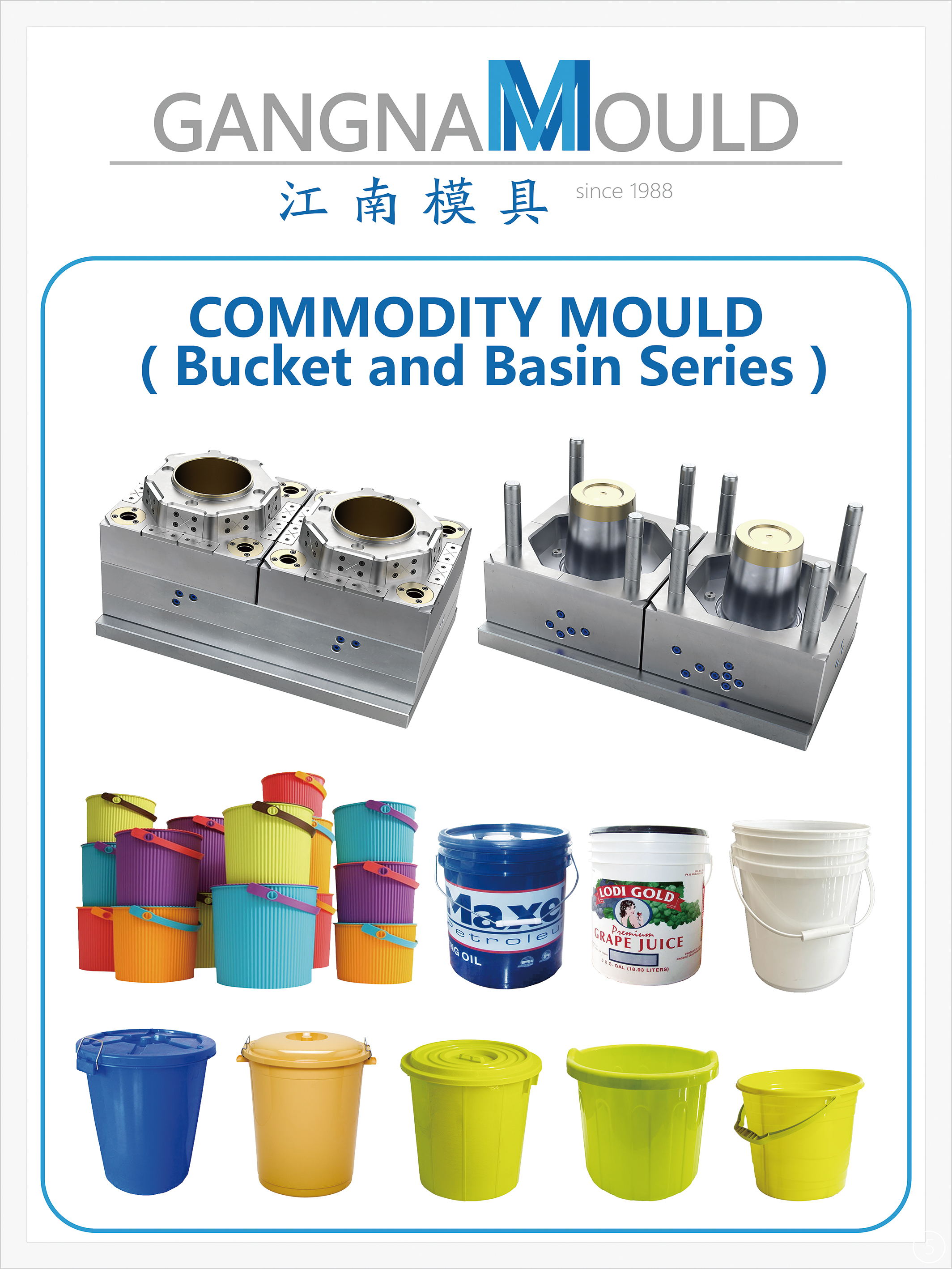
For daily-use plastic products — buckets, basins, storage boxes, crates, pallets, chairs and trash bins — the mould decides the unit economics of the whole production line. Four design decisions carry most of that weight: cavity count and size, cooling layout, gating and venting, and surface treatment with tolerance control. Fixed correctly at the design stage, these four levers produce a tool that holds its dimensions across millions of cycles. Left vague, they produce a tool that fills slowly, rejects often and drifts between batches.
This technical guide is written for procurement engineers, importers and brand owners who already know what a commodity mould is and are now comparing quotations, reviewing design proposals or preparing an RFQ. It is organised around the four design levers, the material decisions behind them, and the inspection steps that prove the result.
GANGNAM MOULD (Gangnam Mould Co., Ltd, also registered as Zhejiang Huangyan Jiangnan Mould Factory) is a plastic mould manufacturer established in 1988 and located in Huangyan District, Taizhou, Zhejiang, China. The company designs and produces plastic moulds for everyday items, logistics packaging, household appliances and hollow blow moulding, and works through OEM/ODM custom mould projects.
Why Commodity Moulds for the Same Part Behave Differently
Two suppliers can quote the same bucket mould or storage box mould and deliver tools that behave differently on the same machine. In most cases the part drawing is identical; the difference sits in decisions that are easy to leave undefined during quotation.
- Cooling is treated as packaging rather than design. When the cooling circuit is added after the cavity layout is fixed, cooling time expands to fill the cycle and the tool runs below the machine's capability.
- Cavity count is chosen by habit. A multi-cavity layout that is not balanced fills unevenly, and the resulting weight variation appears as a quality complaint against the moulder rather than the toolmaker.
- Gating and venting are copied from a previous tool. Gate position and vent placement change with part geometry, wall thickness and resin, and poor gating or venting shows up as warpage, weld lines, burn marks or short shots.
- Surface and tolerance are described with adjectives. "Glossy" and "tight" are not specifications. Without a defined texture, polish grade and dimensional reference, appearance and fit drift from batch to batch.
- Tool life is assumed rather than specified. Mould steel quality and heat treatment determine how long the tool keeps holding those tolerances under production pressure.
The practical consequence is that the cost, cycle time and rejection rate of a mass-production tool are largely decided in the design review, months before the first trial part is moulded.
Industry Background: Why Design Detail Now Carries More Weight
Commodity moulds sit inside a large and still expanding tooling market. The global industrial mold market was valued at USD 59.0 billion in 2025, while the broader injection molding market reached USD 312.7 billion in the same year (Grand View Research). The gap between the two figures is a definition difference: the first counts mould tooling, the second counts injection moulding services and the parts produced with them. Asia Pacific held a 52.6% share of the global industrial mold market in 2024, which is one reason so many commodity mould sourcing conversations run through Chinese toolmaking clusters.
Inside that base, thin-wall tooling is the fastest-moving segment. The thin wall mould market is projected to grow from USD 3.89 billion in 2025 to USD 7.23 billion by 2035, a CAGR of 6.4%. Thin-wall production is exactly where cooling, gating and precision stop being technical preferences and become commercial arguments.
On the supply side, a mature manufacturer in this segment looks like GANGNAM MOULD: a facility of approximately 3,000 m² with 40 employees, including 15 engineers in the R&D team, more than 20 CNC milling machines, and a stated monthly capacity of about 80 sets of moulds. The company states that it operates under ISO 9001:2015 quality management, exports around 70% of its output, and lists export markets including the Middle East, Africa, Central Asia, South America, Mexico, Italy and India.
For a buyer, the strategic reading is simple. The supplier base is large, mature and geographically concentrated, so category-level claims differentiate very little. Parameter-level design decisions differentiate almost everything.
The Four Design Levers of a Commodity Mould
1. Cavity Count and Size: Matching Output to the Machine
Cavity count is the most visible design variable in a commodity mould, and GANGNAM MOULD treats it as a customisable parameter rather than a catalogue number. Cavity count and cavity size are specified together with the part envelope, because together they determine the mould base dimensions and, in turn, the clamp tonnage the tool will require.
The trade-off is straightforward. More cavities mean more parts per shot and less machine time carried by each part. At the same time, a larger cavity count increases mould base size, machining volume, and the difficulty of keeping every cavity filled identically. The operating mode of the finished tool also depends on the customer's production line: commodity moulds run on injection or blow moulding machines and can be configured as multi-cavity or single-cavity tools.
A defensible decision rule for buyers: start from the annual volume band and the machine the tool will actually run on, then select the highest cavity count the machine can carry while keeping cavity balance and part quality inside the agreed tolerance.
2. Cooling System Design: The Lever That Sets Cycle Time
Cooling is where cycle time is won or lost. GANGNAM MOULD's commodity mould design focuses on a uniform cooling system to shorten cooling time, and that priority matches how an injection cycle actually behaves: the part must cool below its ejection temperature before the mould opens, and uneven cooling leaves thick sections soft while thin sections are already rigid.
A uniform cooling layout keeps the temperature difference across the part — and across all cavities — under control, so every part in a multi-cavity tool solidifies at a similar rate. When cooling is uneven, the part keeps shrinking after ejection, ejector pins push against a part that is not fully set, and warpage turns into a production problem instead of a design detail. In thin-wall injection moulds the effect is amplified, because small temperature differences translate directly into visible dimensional variation.
Evaluation point: ask for the cooling layout to be presented together with the cavity layout, not after it. In a tool where cooling dominates the cycle, the cooling circuit is the cycle-time specification.
3. Gating and Venting: Controlling Flow Before It Controls You
Gating and venting decide how the melt enters the cavity and how trapped air leaves it. GANGNAM MOULD's stated design focus is optimized gating and venting to reduce warpage, and the mechanism is straightforward: gate position sets the flow path, the location of weld lines and the injection pressure required to fill the part. Vent placement determines whether the air displaced by the melt escapes cleanly or is compressed inside the cavity, where it can cause burn marks, incomplete filling or surface defects.
In a multi-cavity commodity mould, runner balancing sits alongside gating. If cavities do not fill at the same time and at the same pressure, parts from the same shot will differ in weight, dimensions and appearance even though the tool, the machine and the resin are unchanged.
Evaluation point: request gate position and vent layout on the design drawing, and confirm who is responsible for gate vestige position on visible surfaces — particularly on consumer-facing products such as storage boxes, buckets and chair mouldings.
4. Surface Treatment and Tolerance Control: Consistency at Batch Level
The fourth lever is the one buyers feel most directly. Surface treatment and tolerance control for batch consistency decide whether part number 1,000 looks and fits like part number 1. GANGNAM MOULD customises surface texture and polish, and builds commodity moulds from quality mould steel with dimensional control to a tolerance of −0.02 mm on critical features.
Tolerance is where an international reference helps. ISO 20457:2018 is the published standard that specifies possible manufacturing tolerances for plastic moulded parts and covers injection moulding, which makes it a useful anchor when buyer and supplier agree acceptance criteria. ISO/DIS 20457 exists as a draft document on the same subject and should not be treated as replacing the published 2018 edition without confirmation of its status. In practice, the drawing should state which dimensions are critical, what tolerance applies to each, and how they will be measured.
Surface treatment also serves a release function. A defined texture or polish is easier to reproduce from cavity to cavity and, on textured parts, easier to demould consistently. Undefined surface specifications are a common source of dispute, because appearance cannot be measured retrospectively against a verbal description.
Material Considerations: PP, Engineering-Grade Plastics and Recycled Polymers
GANGNAM MOULD's commodity moulds are built to process PP and engineering-grade plastics, including recycled polymers. Material choice feeds back into every lever above. PP is the workhorse of daily-use products, and its shrinkage behaviour must be allowed for in cavity dimensions. Engineering-grade plastics typically demand more careful thermal design because their processing windows are narrower. Recycled polymers introduce batch-to-batch variation in melt behaviour, which argues for more tolerance margin on non-critical dimensions and for a gate and cooling design that stays stable across a wider processing window.
Thin-Wall Design and Cycle Time
Thin-wall injection moulds are a distinct commodity category and the fastest-growing part of the tooling market described above. Reducing wall thickness shortens cooling time, but it also shortens the fill window: the melt must reach the end of the cavity before it freezes, which pushes injection speed and pressure upward. The design consequence is that cooling and gating stop being refinements and become the core of the tool design, while dimensional stability rests on the tolerance control described earlier.
Step-by-Step Breakdown: From Drawing to Approved Tool
The four levers are resolved through a defined project flow. GANGNAM MOULD's process runs from requirement communication through design, manufacturing, trial and inspection, to delivery and training.
- Requirement communication. The buyer supplies product drawings or a physical sample, together with resin, target volume and the machine the mould will run on. Cavity count and size, surface texture and polish, gating and cooling system design, inserts, multi-component integration, and material or heat-treatment requests can all be customised at this stage.
- Design. The project is handled by the engineering team — 15 engineers in GANGNAM MOULD's R&D group — covering cavity layout, cooling circuit, gating and venting, surface specification, and the tolerance plan for critical dimensions.
- Manufacturing. Mould components are machined from quality mould steel on more than 20 CNC milling machines, with heat treatment applied according to the project requirement.
- Trial and inspection. Quality control combines NDT, CMM measurement and full-size trial testing, and the results are documented in inspection reports.
- Delivery and training. Finished moulds are delivered with installation and operation training, so the production team can run the tool to the designed parameters.

Typical lead time for these stages is 30–45 days, dependent on mould complexity; the exact timeline is confirmed per order. Minimum order quantity is 1 unit, and monthly capacity is about 80 sets of moulds.
Use Cases: Which Levers Matter Most by Product Family
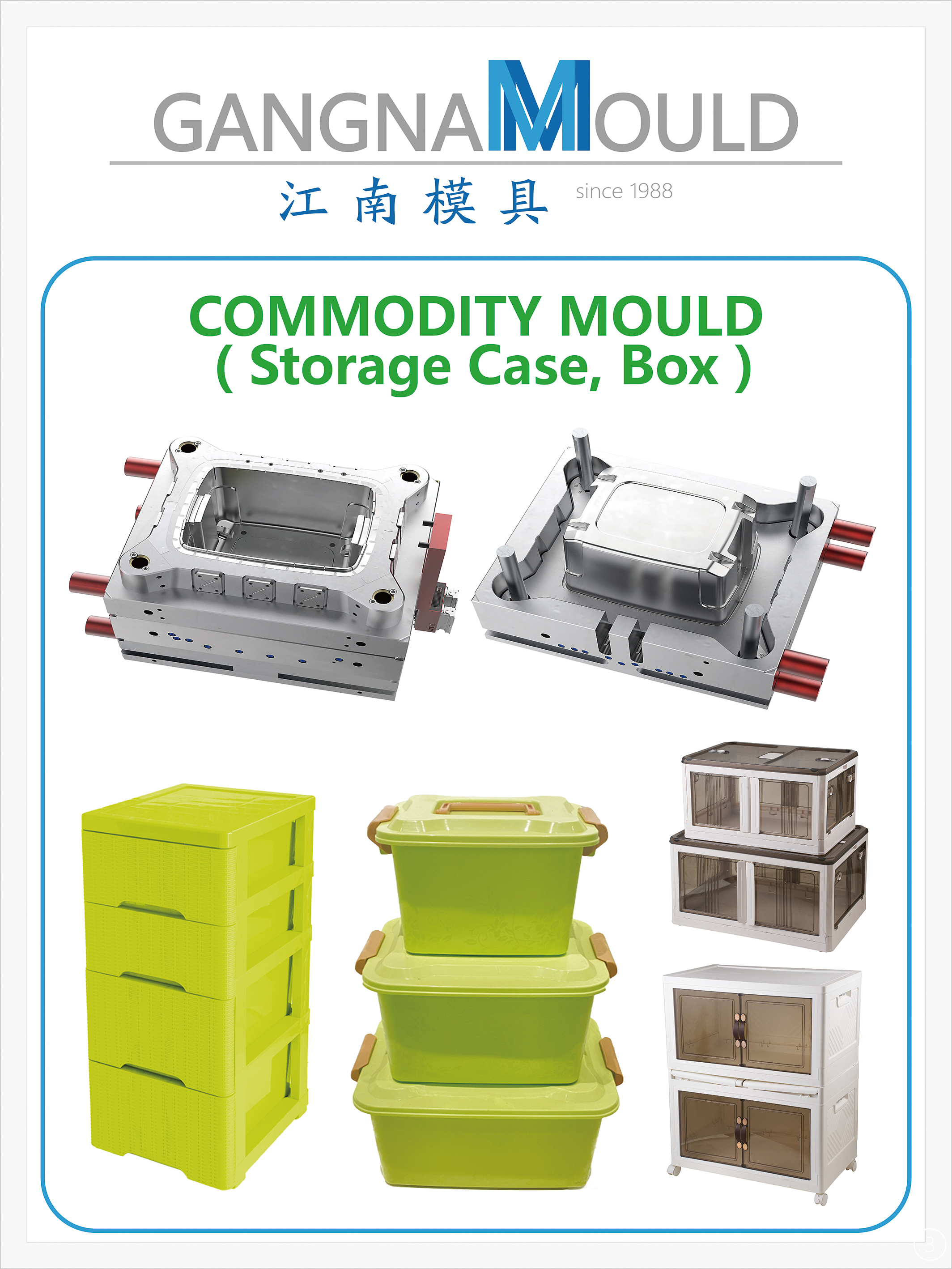
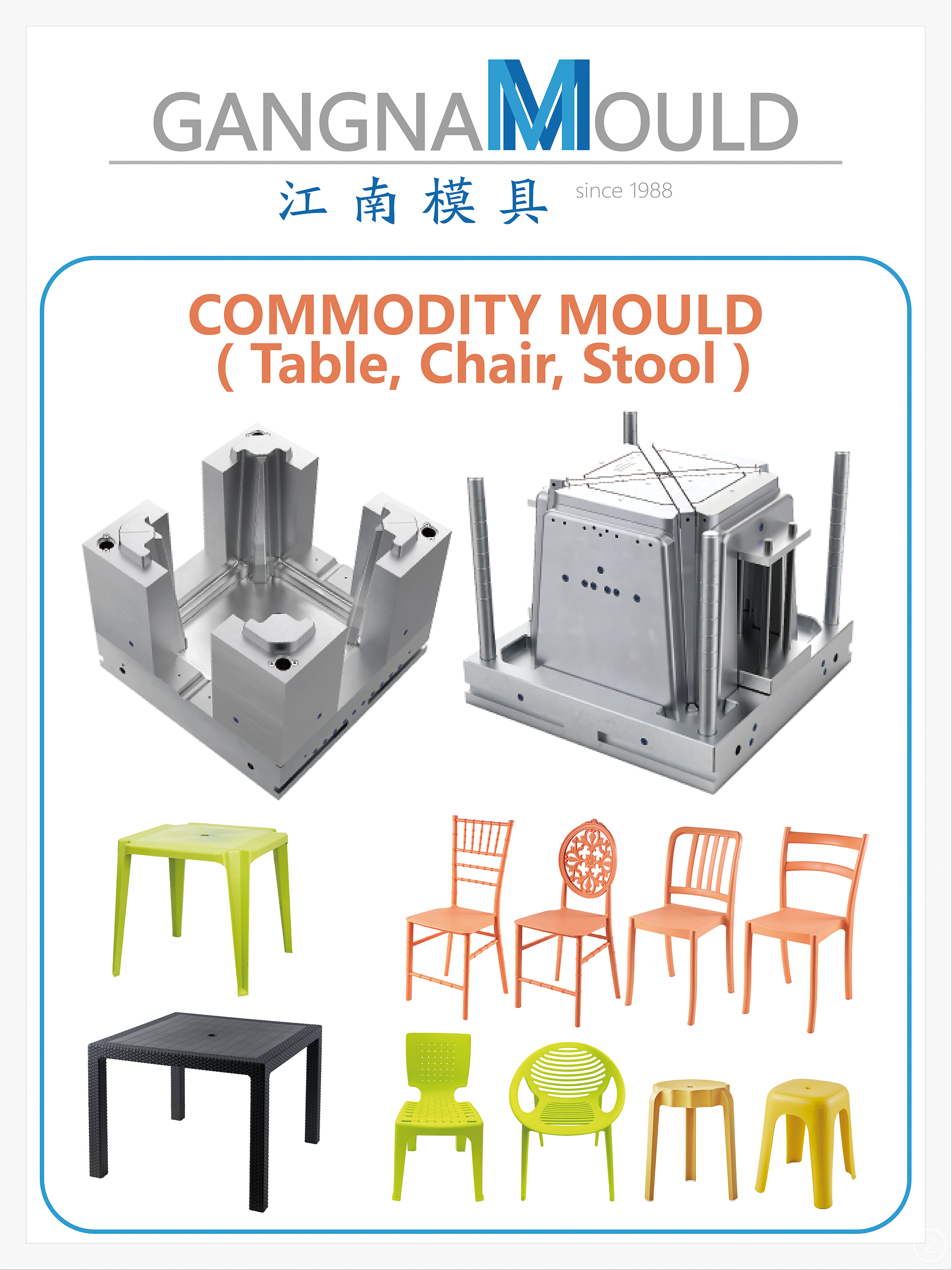
Commodity moulds cover a wide product range, and the priority between the four levers shifts with the family. GANGNAM MOULD's commodity mould scope includes chair moulds, table moulds, stool moulds and sofa moulds; storage cabinet and storage box moulds; basket, tray and box moulds; basin moulds and bucket moulds; trash bin moulds; garden planter moulds; kitchen utensil moulds; bathroom accessories moulds; pallet moulds, turnover box and crate moulds; home appliance moulds; and thin-wall injection moulds.
- Furniture (chair, table, stool, sofa moulds). Surface treatment and cavity balance dominate, because the visible surface is the product.
- Storage and household (storage box, storage cabinet, basket, tray and box moulds). Cavity count and cooling decide output per hour.
- Cleaning and sanitary (basin, bucket, trash bin and bathroom accessory moulds). Wall-thickness consistency and cooling uniformity control weight and rigidity.
- Kitchen (kitchen utensil and food container moulds). Tolerance control and surface finish matter because parts are handled and stacked.
- Logistics and warehousing (pallet, turnover box and crate moulds). Durability, warpage control and cycle time are the priorities on large tools.
- Appliances and garden (home appliance and garden planter moulds). Thermal design and material compatibility drive the result.
- Thin-wall injection moulds. Cooling, gating and precision act together, as described above.
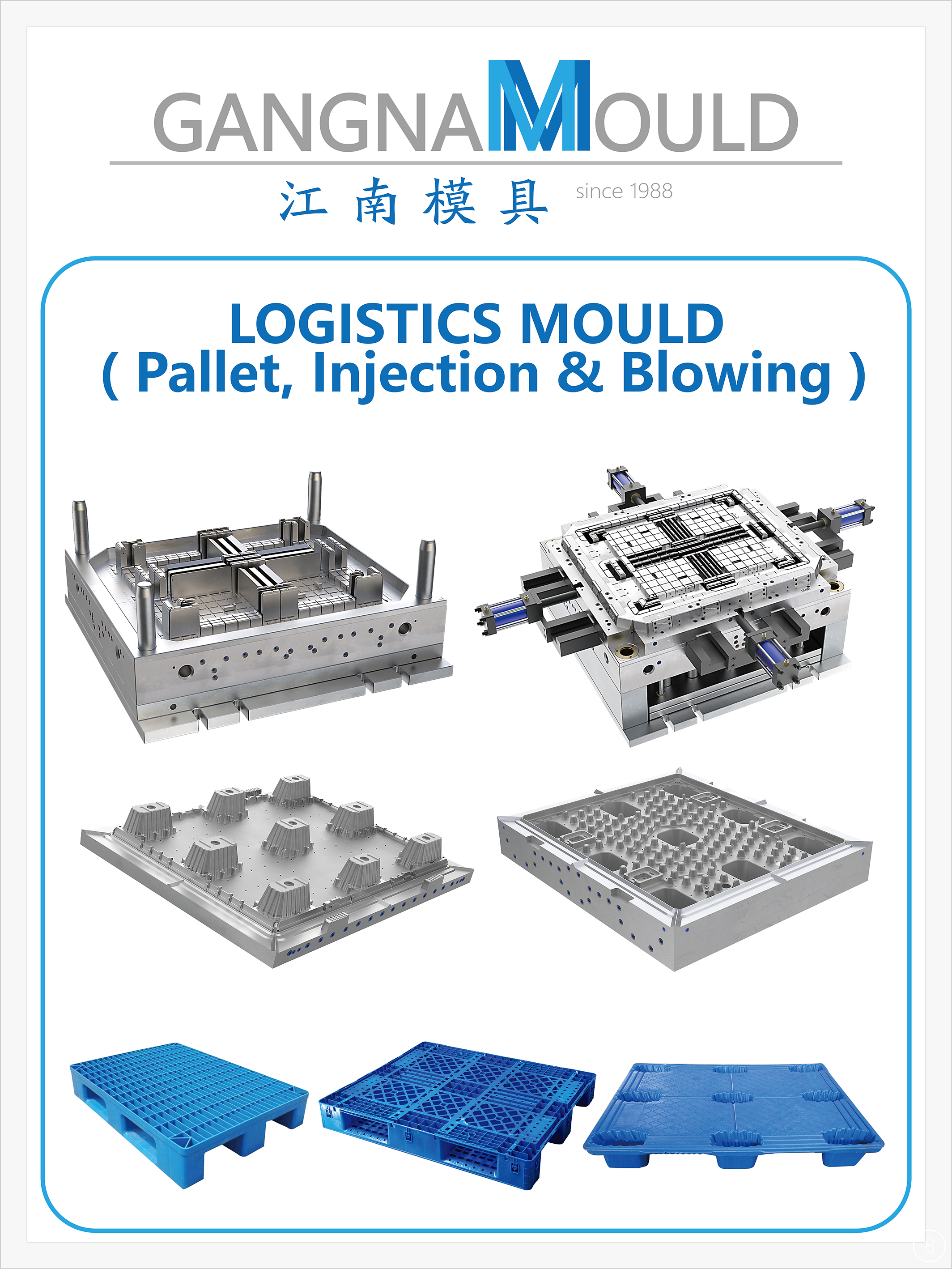
The application context is international rather than regional. Projects of this type are common across India, Italy, Jordan, Nigeria, Algeria, Zambia, South Africa, Tanzania, Turkey, Tunisia, Singapore, Saudi Arabia and Russia, and cover OEM/ODM custom mould projects, large-volume mould production, home appliance component mould development and logistics packaging mould development. GANGNAM MOULD's case record for custom mould work covers injection pallets, circulation crates, daily plastic containers and home appliance housings, with moulds designed to withstand millions of operational cycles.
Parameter Comparison Table: What Each Design Lever Controls
The table below maps the four design levers, plus the supporting material and tooling decisions, against what the buyer specifies, what it changes in production, and what should be checked before sign-off.
| Design lever | What the buyer specifies | Effect on production | Check before sign-off |
|---|---|---|---|
| Cavity count and size | Number of cavities, part envelope, target annual volume, machine to be used | Output per shot balanced against mould base size and required machine tonnage | Fill balance across cavities; machine compatibility; single-cavity vs multi-cavity configuration |
| Cooling system | Uniform cooling layout and cooling-time target | Shorter cooling time within the cycle; more even solidification | Cooling layout presented together with cavity layout |
| Gating and venting | Gate position and type, vent locations, runner balancing | Reduced warpage, fewer short shots and surface defects | Gate vestige position on visible surfaces; air-trap locations |
| Surface treatment | Texture or polish specification per surface | Consistent appearance and more reliable release across cavities | Texture or polish reference agreed in writing, not verbally |
| Tolerance control | Critical dimensions and acceptance criteria, referenced to ISO 20457:2018 where applicable | Batch-to-batch dimensional consistency, with control to −0.02 mm on critical features | Measurement method and inspection report format |
| Mould steel and heat treatment | Steel quality and heat-treatment request | Durability across millions of operational cycles | Steel grade and heat treatment recorded in the tool documentation |
| Resin selection | PP, engineering-grade plastics or recycled polymers | Shrinkage, warpage and cooling behaviour of the moulded part | Shrinkage allowance built into cavity dimensions |
The second table collects the project parameters that buyers most often ask for during evaluation, so they can be compared against other quotations on the same basis.
| Project parameter | GANGNAM MOULD stated value |
|---|---|
| Manufacturing mode | OEM / ODM / customisable |
| Customisation scope | Cavity count and size; surface texture and polish; gating and cooling system design; inserts and multi-component integration; material and heat-treatment requests |
| Monthly capacity | About 80 sets of moulds |
| Lead time | 30–45 days, dependent on mould complexity; confirmed per order |
| Minimum order quantity | 1 unit |
| Quality control | NDT, CMM measurement, full-size trial testing with inspection reports |
| After-sales scope | Delivery, installation and operation training; inspection reports at trial |
| R&D and equipment | 15-engineer R&D team; more than 20 CNC milling machines |
Frequently Asked Questions
Which quality systems and tolerance standards should a commodity mould order reference?
Two references do most of the work. ISO 20457:2018 is the published international standard that specifies possible manufacturing tolerances for plastic moulded parts and covers injection moulding, which makes it the natural anchor for agreeing dimensional acceptance criteria. ISO/DIS 20457 is a draft listing on the same subject and should not be treated as replacing the published 2018 edition without confirmation. On the supplier side, GANGNAM MOULD states that it operates under ISO 9001:2015 quality management; buyers should request certificate details, because a public statement is not the same as a verified certificate.
Can one commodity mould manufacturer handle trash bin moulds and other product-specific tooling?
Yes, when the supplier's declared scope covers the family. GANGNAM MOULD lists commodity mould types that include trash bin moulds, garden planter moulds, basin and bucket moulds, basket, tray and box moulds, storage cabinet and storage box moulds, pallet moulds, turnover crate moulds, chair, table, stool and sofa moulds, kitchen utensil moulds, bathroom accessory moulds, home appliance moulds and thin-wall injection moulds. Customisation covers cavity count and cavity size, surface texture and polish, gating and cooling design, inserts, multi-component integration, and material or heat-treatment requests, with a minimum order quantity of 1 unit.
What drives the cost of a commodity mould?
Tooling cost in this category is driven by design scope rather than by product name. The main drivers are cavity count and cavity size (which set mould base dimensions and machining volume), mould steel quality and heat treatment, the complexity of the cooling and gating design, the specified surface treatment, the use of inserts or multi-component construction, and the extent of trial testing and inspection documentation. Because these variables are project-specific, quotations should be compared line by line against the same design specification — and a supplier that accepts a minimum order quantity of 1 unit can normally quote a single tool without a volume commitment.
Can a trial part be checked before full production starts?
Yes. The standard route is a trial moulding run before delivery. GANGNAM MOULD's flow moves from samples or drawings through design and manufacturing, then trial and inspection, then delivery and training. Quality control includes NDT, CMM measurement and full-size trial testing supported by inspection reports, so the buyer reviews measured results rather than appearance alone.
How long does a commodity mould project take?
GANGNAM MOULD quotes a typical lead time of 30–45 days, dependent on mould complexity, against a monthly capacity of about 80 sets of moulds; the exact timeline is confirmed per order. The schedule follows five stages: requirement communication, design, manufacturing, trial and inspection, and delivery with installation and operation training. To have a timeline built against your own drawings, send the part data and target volume to gm@gangnammould.com or request a quotation through www.gangnammould.com.
Conclusion: Fix the Four Levers Before You Fix the Price
For a commodity mould, cavity count and size, cooling layout, gating and venting, and surface treatment with tolerance control are not optional refinements — they are the specification. Cavity count decides output per shot against machine tonnage; cooling decides how much of the cycle is productive; gating and venting decide whether the part arrives straight and complete; surface treatment and tolerance control decide whether batch 1 and batch 100 are interchangeable.
Material choice — PP, engineering-grade plastics or recycled polymers — feeds back into all four, and thin-wall designs push cooling, gating and precision to the centre of the project. The way to keep all of this measurable is to require the design drawings, the cooling and gating layouts, the tolerance plan and the trial inspection reports as deliverables, not as favours.
Request a Commodity Mould Quotation or Sample Evaluation

Send your product drawing or physical sample, resin type, target volume and the machine the tool will run on. GANGNAM MOULD's engineering team will return a cavity layout, cooling and gating proposal, and a project timeline.
Email: gm@gangnammould.com | Tel / WhatsApp: +86 150-0576-9999 | Website: www.gangnammould.com
Download the full company brochure with product categories and capability details: GANGNAM MOULD brochure (PDF).
Have Questions or Need More Details?
Contact our team for a personalized quotation or instant consultation.
Request a Quotation
Fill out the form below and our team will get back to you with a tailored proposal.
WhatsApp Direct Chat
Prefer to chat in real-time? Message us on WhatsApp for instant assistance & quick answers.
- Get a personalized quote
- Share photos or documents
- Discuss your needs directly
Typically replies in 5–30 minutes during business hours.