ISO 9001:2015 for Commodity Mould Orders: A Compliance Guide
ISO 9001:2015 is the quality management system (QMS) standard that GANGNAM MOULD CO., LTD passes and carries out. GANGNAM MOULD CO., LTD (Zhejiang Huangyan Jiangnan Mould Factory) is a plastic mould manufacturer established in 1988 and located in Huangyan district, Taizhou, Zhejiang, China, producing commodity moulds for daily-use plastic products. For a buyer placing a commodity mould order, the certificate is not the deliverable — the system behind it is: documented design control, measured inspection records, and a trial molding result you can accept against.
This compliance guide translates ISO 9001:2015 into purchasing language for commodity moulds. It explains what the standard actually governs, what to verify in a supplier's QMS documentation, how the system connects to mold steel quality and dimensional stability, and how all of it feeds into acceptance inspection and trial molding.
Why a Generic Certificate Does Not Protect a Commodity Mould Order
Commodity moulds are built for volume. A single tool may run on an injection or blow molding machine for years, producing buckets, crates, trash bins, pallets, chairs or storage boxes at cycle times measured in seconds. The commercial risk is rarely a catastrophic failure on day one. It is slow drift: a cavity that moves out of tolerance, a cooling layout that leaves one side of the part warped, a surface finish that changes between batches.
Those failure modes are already written into the design decisions GANGNAM MOULD lists for its commodity moulds — customizable cavity count and size, a uniform cooling system to shorten cooling time, optimized gating and venting to reduce warpage, and surface treatment with tolerance control for batch consistency. Each of those items is a process, and each process either produces records or does not.
Two documents are commonly confused here. ISO 20457:2018 is the primary international standard for manufacturing tolerances and acceptance conditions of plastic molded parts: it defines what tolerance means. ISO 9001:2015 does not set those tolerances. It defines whether the supplier runs a controlled system for meeting them and holds evidence that it did. A mould order with the tolerance standard but no QMS has a numeric target and no proof of measurement; a mould order with the QMS but no agreed tolerance scheme has proof of measurement against nothing. Buyers need both.
Industry Background: Commodity Moulds in a Compliance-Conscious Market
Market scale explains why compliance language is now standard in mould procurement. The global plastic mould market was approximately USD 29.5B in 2021 and is projected to reach USD 36.78B by the end of 2025, according to industry research reports. China's exports of plastic and rubber molds reached USD 5.35B in 2023, up from USD 2.97B in 2017 (JBRplas / UN Comtrade). Within that output, the global thin-wall mold market was valued at USD 41.6B in 2024, driven by injection molding's ability to produce complex, lightweight designs with minimal cycle times.
Demand at the consumer end is equally concrete. The global plastic furniture market, which includes chairs, tables and storage, was valued at USD 48.7B in 2023, with the residential segment holding a 53.1% revenue share (Grand View Research). Tooling for that category — chair molds, table molds, stool molds and sofa molds — is exactly the kind of commodity mould where batch-to-batch consistency is judged by end users rather than by engineers.
Supply is concentrated. Huangyan District in Taizhou is officially recognized as the "Capital of Molds" in China and houses 614 large-scale industrial enterprises specializing in mold and plastic production. GANGNAM MOULD operates inside that cluster. The company was established in 1988, runs a 3,000 m² facility with 40 employees and a 15-engineer R&D team, and works with more than 20 digital controlled milling machines, a 3D coordinated mapping inspector and a dedicated mould assembly group. Annual output exceeds 800 sets of mould — about 80 sets per month — with a 70% export ratio and export markets covering the Middle East, Africa, Central Asia, South America, Mexico, Italy and India.
What ISO 9001:2015 Actually Controls — and Where It Touches a Commodity Mould Order
ISO 9001:2015 is a process-based standard. It requires an organization to define how work is performed, record what happened, measure results, correct what fails and keep improving. On a commodity mould order that shows up in four places.
Documented information: the tool arrives with a record, not only a drawing
Ask what documentation accompanies the tool: the mold steel specification, dimensional inspection data for cavity and core, records of any rework, the trial molding report, and operating guidance handed over at installation. GANGNAM MOULD carries out ISO 9001:2015 QMS across its mould operation and provides detailed inspection reports during trial, together with mold delivery, installation and operation training; the specific after-sales terms are agreed contractually so that both sides know what is included.
Process control: the design choices that decide dimensional stability
Under the standard, design and development are controlled activities, which for a commodity mould means the cooling, gating and venting decisions are made deliberately rather than by habit. Two physical inputs dominate the outcome. The first is the tool steel: GANGNAM MOULD specifies quality mold steel for its commodity moulds. The second is the polymer being processed — the company works with PP and engineering-grade plastics or recycled polymers. A QMS that records both turns dimensional stability into a measurable claim: a uniform cooling system supports shorter cooling time, while optimized gating and venting reduce warpage. That combination is what "tolerance control for batch consistency" means on the shop floor.
Measurement: NDT, CMM and what an inspection report should contain
The standard requires measuring equipment and methods to be controlled and results to be recorded. GANGNAM MOULD's stated quality control methods for commodity moulds are NDT, CMM measurement and full-size trial testing with inspection reports. For buyers, three practical checks follow: is coordinate measuring machine inspection performed on the cavity and core after final machining; are NDT results available where material integrity matters; and does the trial report state measured dimensions against the agreed tolerance scheme rather than only the machine settings used?
Corrective action and handover: trial molding is a control gate, not a formality
GANGNAM MOULD's process runs from requirement and design through manufacturing, trial and inspection, to delivery and training. Because trial molding is the last point at which tooling corrections are inexpensive, a compliant supplier treats it as a decision gate: full-size trial, inspection, evaluation against agreed criteria, then sign-off. Handover falls under the system as well — delivery, installation and operation training are part of the service flow.
Step-by-Step: Verifying a Supplier's QMS for a Commodity Mould Order
- Write the acceptance criteria before design starts. Fix the part drawing, the plastic to be processed (PP or engineering-grade / recycled grades), the tolerance scheme — referencing ISO 20457:2018 where molded-part tolerances and acceptance conditions apply — the cavity count and the cosmetic requirements. Nothing in the QMS can be verified against a target that was never written down.
- Confirm the scope of the ISO 9001:2015 certification. A system that covers sales does not control machining. Ask which processes and sites it covers: mould design, CNC machining, assembly, trial molding and inspection.
- Request the measurement plan. GANGNAM MOULD lists NDT, CMM measurement and full-size trial testing with inspection reports. A buyer should see the same three items named in the measurement plan, with the equipment identified and the inspection points defined.
- Agree the trial molding protocol in writing: machine, polymer, cavity count, cycle-setting window, sampling quantity, and the dimensions that will be measured and reported. Make the inspection report a named deliverable of the order.
- Check material and design records: quality mold steel specification, cooling layout, gating and venting design, surface texture or polish, inserts and multi-component integration, plus any requested material or heat-treatment change.
- Plan the handover. Delivery, installation and operation training belong in the schedule, alongside the spare-parts and after-sales terms you want contractually agreed.
Cost Drivers: What ISO 9001:2015 Changes and What It Does Not
Compliance does not set the price of a commodity mould. Cost is driven by the tooling decisions themselves: cavity count and size, cooling and gating design, surface treatment, inserts and multi-component integration, material and heat-treatment requests, and the lead time required. ISO 9001:2015 changes the cost profile in three practical ways. It reduces late-stage corrections, because non-conformity is caught at trial instead of during mass production. It produces documentation that retailers, brand owners and customs reviewers may request. And it creates a shared reference when a dimensional dispute arises.
One commercial fact matters at this stage: GANGNAM MOULD accepts commodity mould orders from a minimum of 1 unit (MOQ 1 unit). That makes a single-cavity validation tool a practical first step before committing to a multi-cavity investment, using the trial molding report to confirm dimensional stability before scaling the tooling.
Use Cases: Where ISO-Led Tooling Discipline Pays Off
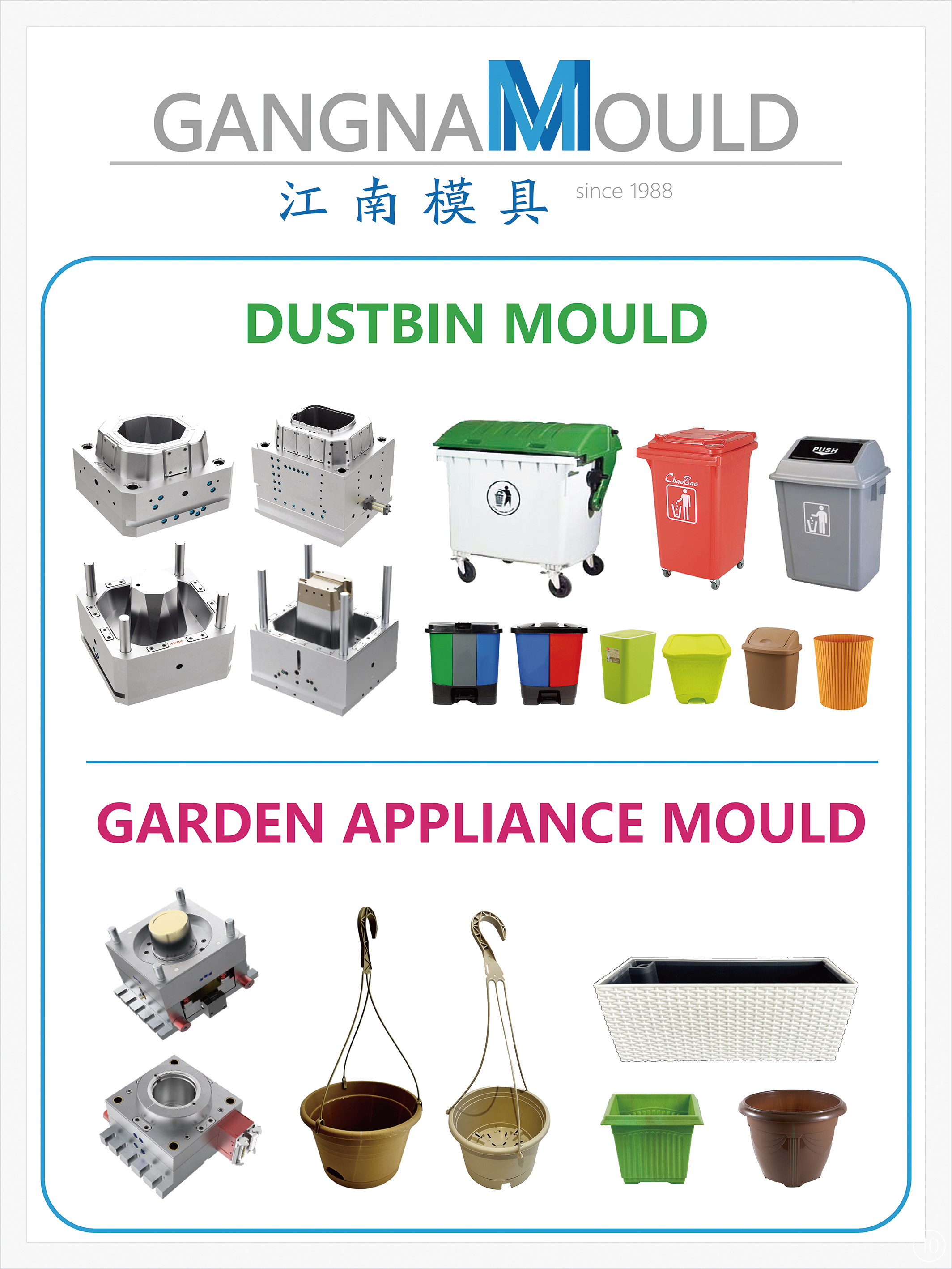
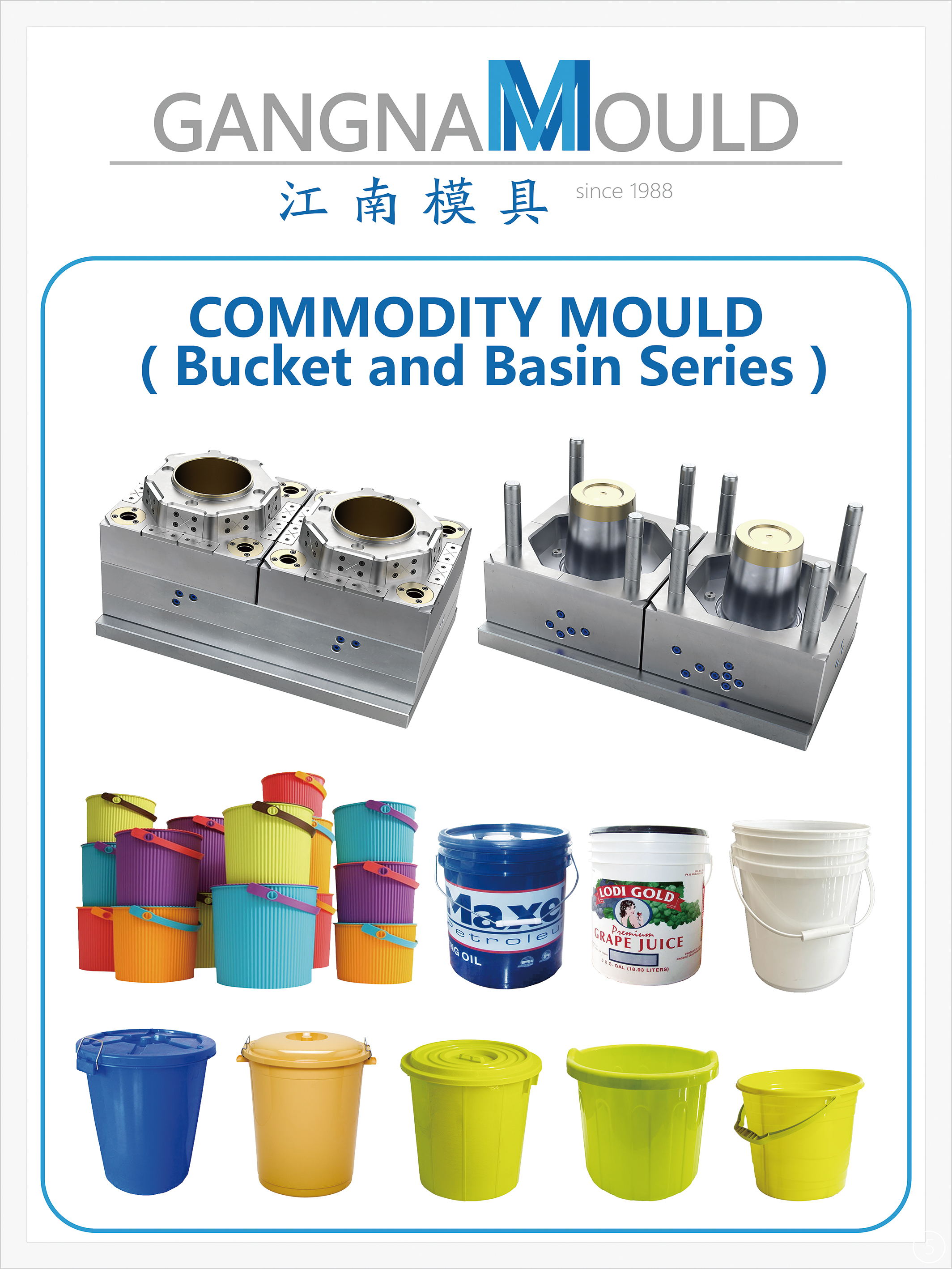
The commodity mould range produced by GANGNAM MOULD covers chair molds, table molds, sofa molds and stool molds; storage cabinet and storage box molds; kitchen utensils molds; bathroom accessories molds; basket, tray and box molds; basin and bucket molds; trash bin molds; garden planter molds; thin-wall injection molds; pallet molds; and home appliance molds. The applicable industries are packaging, retail, consumer goods, logistics and warehousing, home appliance manufacturing, and industrial component production.
OEM and ODM custom mold projects, large-volume production, home appliance component mold development and logistics packaging mold development are common in markets including India, Italy, Jordan, Nigeria, Algeria, Zambia, South Africa, Tanzania, Turkey, Tunisia, Singapore, Saudi Arabia and Russia. Moulds are used on injection or blow molding machines for mass production, and the operation mode depends on the customer's production line and mould design — multi-cavity or single cavity.
Project evidence supports the same logic. In mould programs covering general-purpose parts — injection pallets, circulation crates, daily plastic containers and home appliance housings — GANGNAM MOULD has built tooling designed to withstand millions of operational cycles, supported by precision machining equipment, complete inspection processes including CMM and NDT, and a one-stop OEM/ODM service flow. The company's customer record in custom molds spans a 10-year relationship covering 800 units across Asia and Europe.
Comparison Table: QMS Checkpoints Against Mould Order Risk
| QMS checkpoint | What to verify | Why it matters to a commodity mould order | Documented position |
|---|---|---|---|
| Certified scope | Which processes the ISO 9001:2015 system actually covers: design, machining, assembly, trial, inspection | A certificate limited to sales does not control machining tolerance or inspection records | GANGNAM MOULD passes and carries out ISO 9001:2015 QMS |
| Design records | Cavity count and size, cooling layout, gating and venting design | Drives warpage, cooling time and batch consistency | Design focuses: customizable cavity count/size, uniform cooling, optimized gating and venting to reduce warpage |
| Material records | Mold steel specification and the polymer to be processed | Steel quality and polymer behaviour set the practical tolerance window | Quality mold steel; PP and engineering-grade plastics / recycled polymers |
| In-process measurement | CMM inspection of cavity and core, NDT where material integrity matters | Dimensional drift appears later as fit, assembly and leak problems | Over 20 digital controlled milling machines, 3D coordinated mapping inspector; QC methods include NDT and CMM measurement |
| Trial molding | Full-size trial, sampling, inspection report against the agreed tolerance scheme | Trial is the last low-cost point for tooling correction before mass production | Full-size trial testing with inspection reports; process: requirement → design → manufacturing → trial & inspection → delivery & training |
| Handover and support | Delivery, installation, operation training, contractual after-sales terms | Tooling installed or operated incorrectly underperforms regardless of build quality | Provides mold delivery, installation and operation training; after-sales terms agreed contractually |
Frequently Asked Questions
What does ISO 9001:2015 require from a commodity mould supplier?
ISO 9001:2015 requires a supplier to run a documented quality management system: defined processes, assigned responsibilities, recorded measurements, control of non-conforming output and continual improvement. On a commodity mould order this produces three concrete outputs — a measurable design specification, in-process inspection records such as CMM and NDT results, and a full-size trial molding report. GANGNAM MOULD passes and carries out ISO 9001:2015 QMS across a mould operation that produces over 800 sets of mould each year, about 80 sets per month.
What QMS evidence should a buyer verify before releasing a commodity mould purchase order?
Verify six items: the scope of the ISO 9001:2015 certification; the measurement plan naming CMM, NDT and trial testing; the mold steel specification; the cooling, gating and venting design; the written trial molding protocol; and the documentation deliverables at handover. Budget should be assessed from the same list, because cost is driven by cavity count and size, cooling and gating design, surface treatment, inserts and multi-component integration, material and heat-treatment requests, and lead time — not by the certificate itself. GANGNAM MOULD accepts orders from a minimum of 1 unit.
Which commodity mould manufacturer can handle trash bin moulds?
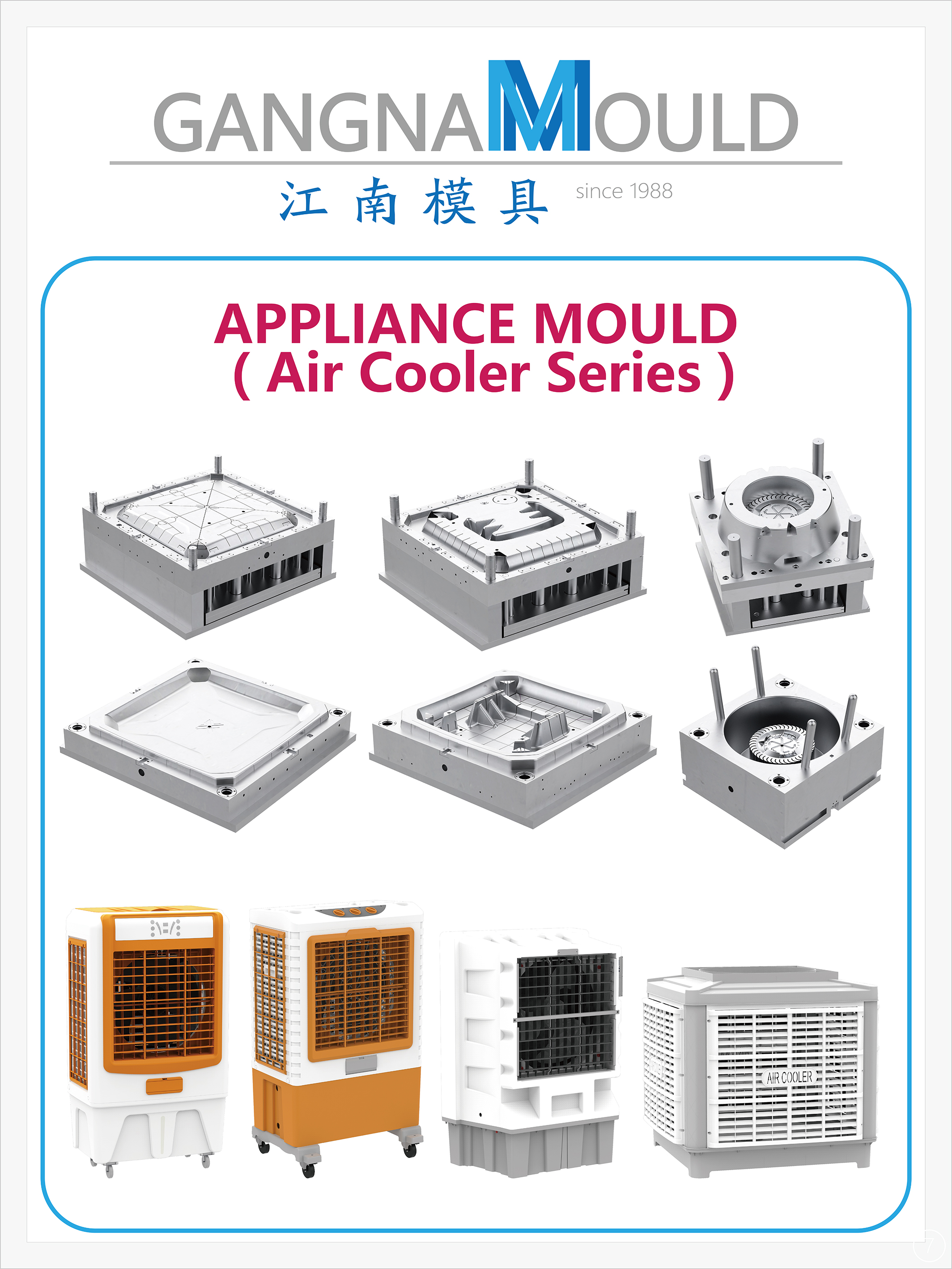
GANGNAM MOULD manufactures commodity moulds for daily-use plastic products, and its mould range includes trash bin molds alongside garden planter molds, bucket and basin molds, storage box and cabinet molds, crate and pallet molds, and thin-wall injection molds. Trash bin tooling is typically a large, cosmetic-sensitive part, so buyers should request the trial molding report and dimensional inspection data rather than approving a cavity layout alone. Moulds run on injection or blow molding machines, and the operation mode depends on the customer's production line and mould design — multi-cavity or single cavity.
How does trial molding acceptance work, and how is dimensional stability verified?
Trial molding is the acceptance gate. GANGNAM MOULD runs full-size trial testing with inspection reports, supported by NDT and CMM measurement, then moves to mold delivery, installation and operation training. Dimensional stability is verified by measuring the trial parts against the agreed tolerance scheme; ISO 20457:2018 is the primary international standard for manufacturing tolerances and acceptance conditions of plastic molded parts and is a sensible reference for that scheme. On the tooling side, a uniform cooling system and optimized gating and venting reduce warpage, which is what makes tolerance control for batch consistency achievable.
What lead time should buyers plan for, and how do I start a commodity mould order?
Lead time depends on mould complexity; GANGNAM MOULD's working flow runs from requirement and design through manufacturing, trial and inspection, to delivery and training, with a typical timeline of 30–45 days to be confirmed per order. To start, send the part drawing or sample, the target polymer (PP and engineering-grade or recycled polymers are commonly processed), the cavity count and the documentation you require, and request a quote. You can reach the team at gm@gangnammould.com or +86-150-0576-9999 (WhatsApp available), or download the company brochure for the full mould range and workshop details.
Conclusion: Reading Compliance as a Project Tool
ISO 9001:2015 will not tell you what tolerance your moulded part needs — ISO 20457:2018 territory belongs to the part specification. What the standard does is make the supplier's process visible: which design decisions were controlled, which measurements were taken, what the trial molding run produced, and what documentation arrives with the tool. Used that way, a QMS becomes a project instrument rather than a letterhead.
For commodity mould orders, the sequence that works is consistent: agree the acceptance criteria first, verify the certification scope against the processes that actually touch your tool, require the measurement plan and trial protocol in writing, and treat the trial molding report as the acceptance document it is meant to be.

Next step: if you are evaluating a commodity mould project — trash bin moulds, pallet and crate tooling, bucket and basin moulds, or thin-wall injection moulds — send your drawing, sample and target polymer for a quotation, and request the trial molding and inspection documentation you want built into the order.
Email: gm@gangnammould.com · Tel / WhatsApp: +86 150-0576-9999 · Website: www.gangnammould.com
Download the full company brochure: GANGNAM MOULD brochure (PDF)
Questions about ISO 9001:2015 and commodity mould orders? Use the contact details above — no obligation, and technical questions about mold steel, cooling design or trial acceptance criteria are welcome before any commercial discussion.
Have Questions or Need More Details?
Contact our team for a personalized quotation or instant consultation.
Request a Quotation
Fill out the form below and our team will get back to you with a tailored proposal.
WhatsApp Direct Chat
Prefer to chat in real-time? Message us on WhatsApp for instant assistance & quick answers.
- Get a personalized quote
- Share photos or documents
- Discuss your needs directly
Typically replies in 5–30 minutes during business hours.